


Processing
Likes
Comments
Share


@Fibro_Witch
Follow
This big, beautiful healthy girl has switched to flower. Cooler night time temps are yielding some red streaks on her stems. Excited to see what these flowers will look like. She smells fabulous! She was given some Coast of Maine 5-2-4 around her base yesterday, and I have some BT arriving tomorrow to thwart those pesky inchworms.

Likes
13
Share


@CURATI_DA_SOLO
Follow
Che dire! Una.delle.mie preferite in growbox! Sta crescendo veramente bene a mio preavviso! I rami sono veramente spessi e si preannuncia veramente una fioritura esplosiva secondo me! Molto buoni anche i nutrienti di BAC sotto stretta concessione del sig.fritz che volevo ringraziare veramente molto per avermi fornito i prodotti adatti per crescere al meglio le mie piante! Volevo anche ringraziare i ragazzi di Fast buds sempre per i splendidi "fagioli"! Queste genetiche autofiorenti sono veramente da urlo! Al prossimo aggiornamento che si preannuncia veramente, veramente di oro!

Likes
11
Share


@HAN_GROWER17
Follow
Una semana mas de vegetación para dar el inicio de la floración, realizamos ciertas podas en las ramas bajas.
Se ve un bonito color, además de que se ven plantas sanas y enérgicas!


Likes
5
Share


@CannaIGrow
Follow
This plant seems to have grown much denser and better than my first plant. I just got the ac infinity ventilation setup with controller 69 for my 2x2, still trying to learn, hopefully grow #3 goes even better. Stay tuned
Likes
2
Share

@420DeepGrow
Follow
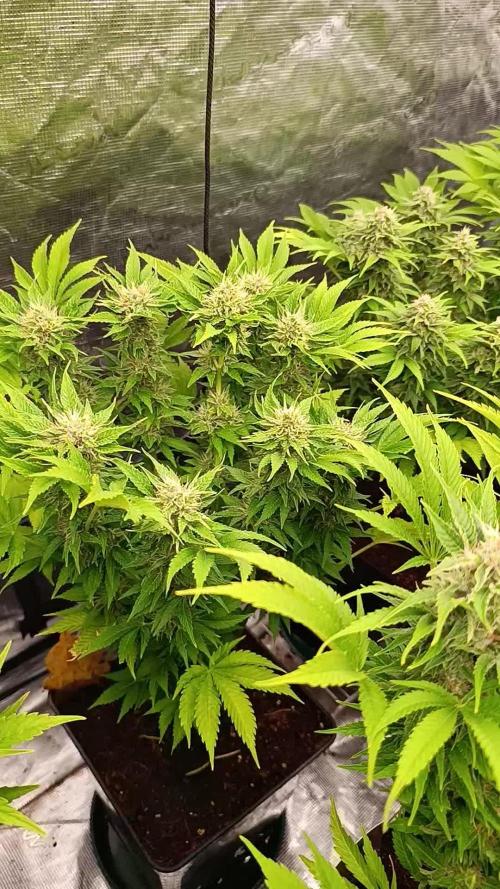
📆 Semana 7
El cultivo entra en la fase final de engorde, con el coco estable y una absorción eficiente. La planta centra su energía en la densidad y maduración de las flores.
Los cogollos siguen compactando y la capa de resina aumenta, cubriendo cada vez más las puntas y hojas cercanas.
El cultivo se mantiene estable, con buen color y aromas cada vez más intensos.
Seguimos creciendo fuerte 💪!

Likes
70
Share


@Fatnastyz
Follow
Day 50 - Day 3 - 9/2
- Moved up to 3/4 strength of Plagron today, no extras, just about 5ml of cal mag. 850ppm @ 5.8ph.
- 9" tall today still
Day 51 - Day 4 - 9/3
- 9.5" tall! woohoo!!
- Gave 4 liters today, wash her out a bit but kept ppm same.
- Runoff coming out about 1000 ppm.
Day 52 - Day 5 - 9/4
- 10" Tall
- Gave another 4 liters today, but added in some power buds for some fun!
Day 53 - Day 6 - 9/5
- 10" tall still
- Accidently added my additives before my bloom today....I mean I'm just using one additive i guess, LOL the Power Buds. Well....I'm not remaking, she can yell at me if she doesn't like it LOL
- Still giving 3/4 strength at about 850 ppm
Day 54 - Day 7 - 9/6
- 10.5"
- Went a little under today, gave only about 710 ppm at 6.1 ph. 4 liters.
- Noticed a couple of tips today, will bring her back down, probably go back to 1/2 strength over the next few feedings.
- Still on 5ml of cal mag.
Day 55 - Day 8 - 9/7
- Lowered her today, Gave about 13ml of bloom, no additives. 15ml/gal is 3/4 strength btw LOL. 660ppm @ 5.8ph.
- First runoff was in the 900s, so gave full 4 liters to lower a bit, but only made it to the 800s.
- Went ahead and just made a small cal mag rinse of about 250ppm and a bit of SLF real quick to bring her ppm down some more. Gave her 2 liters. Got her to 720ppm @ 5.7ph runoff.
- 10.5"
- Will go to normal feed tomorrow at 1/2 strength (10ml/gal).
Day 56 - Day 9 - 9/8
- IT'S MY 24TH ANIVERARY TODAY!!! 24 years, 2 beautiful boy that are all grown up now, and 12 wonderful cats. It's been an amazing journey!
- Week 2 of Flower starts today!
- 11" tall
- Normal feed, but at 1/2 strength now, about 636 ppm @ 6.0 ph. Added some power buds too today. Gave 2 liters.
- Runoff was 700ppm @ 6.1. Perfect!
- Think I found her sweet spot, 1/2 strength at about 650 ppm for now....at least till next week LOL
**Happy Anniversary, Babe!
Well, she started to hold on to some salts after her flip into flower. She liked that small flush I gave. I will keep her low on the ppm side. She'll be dropping that cal mag soon too! Don't want to forget that, I forgot to drop it in Trillianz and got some orange leaves.
I swear, I have to rely on Alexa to remind me of EVERYTHING! Maybe I smoke too much....
Slushie is gorgeous! Loving those bushy leaves and the cats are too! Nice pretty color too. She should start stretching more soon. Can't wait.

Likes
11
Share


@giglia976
Follow
i am starting to harvest the ladies,i already harvested 5 of them and each one is better then the other,the last is absolutely incredible,i like taking them when there about 40 percent amber,and boy oh boy they are better then what i expected,i am toking as i text because we all know when we run out ,you better do what you can,so im looking at my first ladie i harvested and she was just dry enough to smoke ,i like to cure them for awhile but if im out,lol so i rolled one and im zoomen,i cant imagine how good all these ladies are gonna be,yeeeeee haaaaaaa,i got 7 oucces of dence bud from the most recent and three before her.i have 12 to go,im in heaven,thank you weed gods.stay high friends

Likes
3
Share


@julian100614
Follow
Comenzamos su 2° semana de vegetación y 3°de vida y lo hacemos con mucha fuerza 💪🏻 😃
Hemos realizado su 1er transplante a una maceta de 7L para que siga desarrollandose y terminar en una de 15L 💪
Tambien empezamos aplicar los primeros nutrientes para vegetación y vamos reduciendo suavemente los de germinación para que no sufra estrés 😁

Likes
7
Share


@Rasta_Ant
Follow
All looking a little bit sick this week bit root bound in those tiny cups I think. I've repotted into 3.5 litre pots see if they perk up be under 600w hps next week so they shold shoot right up in no time


Likes
20
Share


@Elysian_gardens710
Follow
AK-47 Goxuak Autoflower by Genehtik is a truly awesome plant and really really fun to grow! My 1st thought was I wish I had know more when I ordered the seeds. I only bought 1 from the single seed centre .com 🤦♂️ Of all the plants our house sitters watched for us back in week 7, this is the only one they regularly ask about and want to know when its finished. Even they loved growing it! And they only spent a week with her and aren't gardeners 😄
Ashoka started in a Jiffy tomato pod and was transplanted almost as an afterthought. In fact we ran out of containers and had to improvise with the water pitcher. (We didn't have high hopes) Oops. The pitcher turned out to be a big benefit in that I could see the roots and diagnose and potential issues.
She has been in the same Fox Farms; Happy Frog soil ever since planting the pod into the pitcher. The soil held up good too. Ashoka didn't start showing any deficiencies until the end of week 6, around the middle of her stretch. Correcting this was very easy, we added the recharge at first but it didn't quite do it. We had to feed her Advanced Nutrients Bloom and Grow for about 2.5 weeks. But this Goxuak really never complained : 1:😎
Low Stress Training (LST) for Ashoka was a breeze! At 14 days she was 4" tall and too short to train. She doubled in height in a week and we started training around day 24. Just in the nick of time too! She entered flower about a week after that and stretched like crazy!🤪 the AK-47 gave us about 3 full weeks of nice flexible branches to train before hardening up. We ended up with a pretty even canopy and some solid colas too
I wanted to touch on the lighting as there isn't a lot of options on this platform. Ashoka spent her life under 2 different lights. 1st, she sprouted and spent the first 4 weeks vegging under 2x Viparspectra 600w(250 true watts) LEDs at an 18/6 light cycle. She finished her flower and fade under A Optic 8 (500 true watts) LED. At 18/6
At around day 60 I started flushing her.(well my house sitter Sam did the first time) We used Cyco Kleanse and flushed 5 Gallons thru her until the ppm was down to 350ish, I did the next 2 flushes. The 2nd I used Kleanse again getting the runoff ppm to ~120. Her final week I stopped ph-ing the water and just watered tap. I also gave her the 3rd and final flush with straight Ice cold tap water. She really showed a great fade!! Some buds definitely colored up too!!
Finally the Harevst:
I put her in a 5Gal bucket of ice in complete darkness for 4 days.😈 This was done with the intent to help her produce more resin and frost up. I can't say if it truly worked. She absolutely doubled the trichome production in those 4 days, but idk if it was the time or the darkness and ice. 🤷♂️🤷♂️ I kept her in a sealed closet with a oscillating fan and humidifier at 75°and 63%RH. On the 3rd day I lowered the RH to 50%. She got trimmed and put into jars on the 5th day after harvest. I am monitoring the humidity and burping regularly (8-10x a day)
Smoke Report:
Creamy pepper with a cherry syrup aftertaste.🤣🤪 I've only smoked a bowl so haven't tested the ashes. But she is curing nice. A bit harsh yet I expect will go away after a couple more days. The high is perfect tho! Just what we wanted. It creeps up on u. But you will be confused by the time you finish the bowl. A very cerebral high(I chopped her whole trichomes were only 10% amber) that was great with good company. My girl andI are both veteran smokers, but this bud still made us both giggly(a rarity). It's a good social smoke and was fun to be on around others. The only downsides were it caused a mild confusion and paranoia. Like I would forget what I was talking about then worry ppl were laughing at me for it(they were though) 🤣🤣
I plan to report more feedback after it had cured a couple weeks. I'll invite others people's opinions as well. Right now I can definitely say the AK-47 Goxuak from Genehtik it an autoflower I would recommend to anyone, but especially new auto growers. I will be ordering more next season if they ate available. Genehtik has won me over. They genetics were extremely stable and safe. No herms no deficiencies nothing but greatness!
🌱🌱🌱
I had to share! I was looking on the breeder Instagram page( @Genehtik_chile) and they used a few of my pictures of Ashoka to represent their AK-47 Goxuak auto. I really feel honored by this. I have only been growing for 5 months and know I'm not good, but it's inspiring and motivating when the breeder of the strain give you an attaboy like this. Thanks Genehtik! Stay tuned for my next autoflower run!!

Likes
51
Share


@Chumpkilla
Follow
12/25/23 - Day 48 - Merry Xmas yall! The plant is looking great! She keeps on stretching up with the buds! PH and PPMs are looking great.
12/28/23 - Day 51 - So she has been growing like crazy. For sure this is the bushiest plant I have had in here yet! The undergrowth is insane, the canopy is filling up with buds, its a good day to be Skunk#1 plant. She might be drinking water too fast and messing up the ratios of nutes to water but that's easily fixable by making sure she is topped off every day.
Everything is going as expected. Ill update again in another day or so.
Likes
4
Share


Likes
14
Share


@Smile_gan
Follow
At week 13 of Pineapple express. It nearly to finish. I think her will ready to harvest in next week.

Processing
Likes
33
Share


@BADKUSS
Follow
Hello everyone ,
Here is the phase of completed stretch, and the fertilizer fertilizer contribution are 100%, flowering starts very well and the appearance of the first pistil are visible everywhere.
For the height of the plants I find it reasonable and thus keeping all this world a good size the luminous penetration will be excellent ... until now hene no sign of problem for my plants I think that the flowering will follow its rhythm .. to see in the coming weeks ...
now place to photos ...

Likes
18
Share


@Stonyways
Follow
flower week 8,
2nd week of flush and my 15th week of crappy sleep due to this VIVOSUN 4"high cfm fan. I would just get rid of it as it does not owe me anything (2 full grows) but I am planning on gifting my old complete set up to someone I know that's in need.
and shit.... Spider Farmer never even got back to me....so my next grow will include my first HLG to supplement the Spider....
no contest this month due to...... well I gotta move. I don't think id be winning any contest but on the off chance I would.... address change. lol
HAPPY FRIDAY
Processing
Likes
8
Share


Likes
Comments
Share

@sellem
Follow
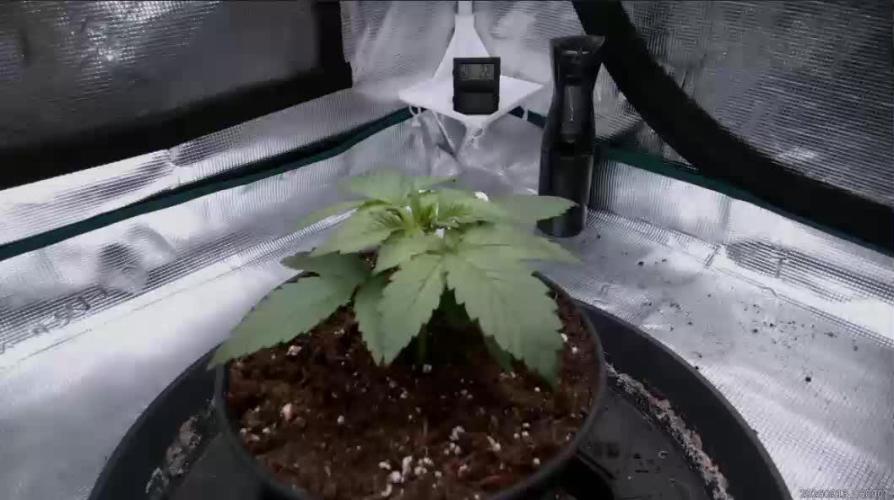
Week 3 saw her getting transplanted into her forever-home, a 20L airpot. Also, same as with my whiteberry, instead of using stakes or topping to train her, i heavily defoliate the fan leaves of the main stem for now. Whiteberry took to that very, very nicely, lets see how she will perform with it. However, so far, everything is looking a-ok
Watered her 800 ml 1ml/L Power Roots, 2.5ml/L Grow at the beginning of week 3, then 3 Liters after the transplant on Day 17. Transplanted into the same plagron terra lightmix, amended with some rice husks and limestone, as well as a good dosage of mycorhizzae for the roots. So far, so good 😎

Processing
Likes
32
Share


@Platinouuu
Follow
Seguimos en este lindo caminar con mis hijas! ya prontito a probar el fruto.

Likes
7
Share


@KannaKullektiv
Follow
Hiiigh friends 🙌
Welcome to the last week. 🍀
She is harvested, dried and cured. An amazing taste for sure! 🍑
See you next run 👋
Arturo for KannaKullektiv
🙏