The Grow Awards 2026 🏆
Likes
Comments
Share
Likes
14
Share
Not sure if I missed a week on the diary. They are looking great apart from a little bit of yellowing on the lower part of the plants, pretty sure it's N deficiency. I was also slightly over doing the CalMag so that's been cut out this week. Bloom nutes are now full strength as well. Got the start of some nice buds coming on now & I'm. Hoping they'll add a fair bit of weight in the last 4 weeks, pretty sure this will be my most successful auto grow so far.
Likes
176
Share
@DevilsBud
Follow
Hallo fellow growers. Happy to be in week 3 of veg with Cookies Gelato . I def enjoy how they are developing into something beautiful. Hopefully with all the love there getting They will continue to grow happily ☺️ I maybe going to be doing some Topping at one of plants in the end of the week and start little LST test with the LST clips see if they work Day 15 Veg Phase 💪🌿👍 Day 16 Veg Phase Today i am going do some LST test on the cookies gelato #2 . The other plant i am going to leave alone for now #1 is going a lil slower then #2 and maybe i am going to do nothing to #1 and see if there is a difference . I am still learning and want to try out all Dif grow techniques . Also later today i have topped the #2 too hope it all goes well Day 17 Veg Phase I think topping has worked will see in few days if heals up quickly so far so good 🤞 Also the soil was way to dry and i think i put almost 1 liter per plant extra the sides where bone dry and that is not good for roots to move true dry soil Day 18 Veg Phase Overwatering was not harmful at all they are still growing strong . So i might start giving them more water every 24 hours then they would normally get . Also i recommend the LST CLIPS 👌👌💯 Also have bin LST the main on both plants Day 19 Veg Phase I have bin pulling the main on both plants further to the side bit by bit don't want to overstress them . It will also be the only thing i am Going to do to the plants. And let topping heal and the LST on the main get more of a bend . The LST clips going to use later in stage Day 20 Veg Phase Did some more LST on main of plant #2 Plant #1 got topped and some more LST Day 21 Veg Phase Leaving the girls alone today to let them heal and grow Have nice weekend growmies 🤘🤘
Likes
24
Share
@Rit031
Follow
This week still raining......... Fertilizer this week 1) Monopotassium phosphate (KH2PO4) 45.7 grams with 500 ml of water + Mono-ammonium phosphate (NH4H2PO4) 45 grams with 500 ml of water. Mix both together and use only 5 ml per liter of water. 2) General root stimulants 1 ml per liter of water. 3) 4 eggs mixed with 1 tablespoon brown sugar + 4 tablespoons curd. Mix together.then lived it for 1week .Then used 2.5 ml per 1 liter of water. 4) Calcium nitrate {Ca (NO3) 2} 3.5 grams, mixed with 1 liter of water, set aside. Prepare a mixture of 3.5 grams of magnesium sulfate and 3.5 grams of boric acid mixed in 1 liter of water. Then mix all 2 liters of liquid The ratio used to put plants is 3-5 ml per 1 liter of water. 5) EDTA chelate 1 ml per 1 liter of water. 6) 0.5 grams of amino acids per 1 liter of water. 7) Bat manure.
Likes
13
Share
Recette du tco pour 20 litres. (Grammes : gr) 50gr biochar 250gr zéolite 3gr granulé Micro-Organisme IT45 10gr pollen d’abeilles 10gr levure de bière 3gr endomychorize 10gr consoude 20gr vers de farine 10gr cendre coque de ricin 12gr ortie microniser 15gr Kelp 10gr spiruline 10gr de cbd living soil 20ml de miel liquide 30ml de mélasse 20ml d’acide humiques et fluvic Mettre tous les ingrédients (sauf la mélasse ,l’acide h/f et le miel) dans un filtre 400micron, le placer dans un seau avec de l’eau (10litres). Rajoutez le miel et 10ml de mélasse Y mettre un micro bulleur alimenter sur une pompe à air et faire oxygéné le mélange pendant 24h. Rajout de 10ml de mélasse après 12h le début de la mise en route de la pompe. A la fin des 24h rajoutez le restant de mélasse et d’acide h/f, mettez y en plus 10litres d’eau au mélange. Reste plus qu’à arroser! j’y ai incorporé 7litre de mélange La veille j’ai préparé le pot à l’arrosage avec 500ml d’eau et 2gr de Bacillus IT35 Amyloliquefaciens X5 Bacillus Amyloliquefaciens : rhyzosphère, probiotiques. Aspersion et arrosage. Utilisable pour toutes cultures. La bactérie Bacillus Amyloliquefaciens se fixe dans la rhizosphère en se nourrissant des exsudats racinaires. En contrepartie, elle stimule la croissance racinaire en sécrétant des métabolites de croissance et solubilise le phosphore en sécrétant des phytases (enzymes). Effet probiotique consistant en l’utilisation de micro-organismes bénéfiques pour la nutrition et la santé des plantes. La spiruline, le plus riche et le plus complet des amendements organiques La Spiruline est une algue aquatique connue comme complément alimentaire, la Spiruline est aussi un amendement organique et écologique très complet. D'une grande qualité nutritive, elle apporte à vos plantes une quantité de nutriments, dont l'azote, phosphore, potassium, minéraux, acides aminés, vitamines, chlorophylle et protéine. Le charbon végétal actif est capable d’absorber jusqu’à cinq fois son poids propre en eau ainsi que les éléments nutritifs qui s’y trouvent. Il joue ainsi le rôle de catalyseur et d'amplificateur pour les fertilisants traditionnels, qu'ils soient d'origine organique ou minérale. Ce pourquoi il est idéal pour activer un sol et pour les thés de compost oxygénés. Le charbon végétal améliore la diffusion et la disponibilité des éléments nutritifs dans le sol et offre des conditions propices au développement des micro-organismes. Le Biochar peut être introduit dans une grande variété de sols. Il est particulièrement efficace dans les sols pauvres, difficiles et acides. Pour faire agir rapidement et efficacement sa capacité d’amendement, le charbon végétal est enrichi et biologiquement activé avec des micro-organismes. Le Biochar se comporte ainsi comme un structurateur et un activateur dans le but de valoriser les sols. Composition : • Charbon végétal actif 31%
• Matière organique 33%
• Matière sèche 75%
• C/N : 17
• PH : 7,2
• Azote (N) : 2,1 % dont 1,2 % azote organique
• Phosphore (P205) : 0,74%
• Potassium (K20) : 1,18%
• Calcium (Ca) : 6,8%
• Magnésium (MgO) : 0,65% Le pollen est l'ingrédient de base de la fabrication du miel par les abeilles. Riche en vitamines et minéraux, il est qualifié « d'aliment parfait », y compris pour les plantes ! Les zéolithes sont des roches cristallines, présentant des capacités d'adsorption particulièrement importantes vis à vis des polluants que l'on rencontre dans l'eau et dans certains liquides, ainsi que dans l'air et les gaz. Elles sont extrêmement poreuses comme les charbons activés et elles peuvent être chargées électriquement pour opérer comme des échangeurs d'ions. La zéolithe est un produit naturel qui respecte notre environnement. Utilisé dans le milieu industriel depuis de longues années déjà, ce minerai aux propriétés filtrantes particulières commence à se vulgariser dans le domaine de la piscine privée, de l'aquariophilie, des bassins d'agrément, de la récupération des eaux de pluie, ou encore de la culture des bonsaïs et autres plantations diverses par exemple... 4 points techniques majeurs : - Grâce à leur propriété hydrophile, les zéolithes peuvent adsorber l'eau jusqu'à 30% de leur poids total et sans aucune variation de volume : pas de gonflement en présence d'eau ni de craquement en cas de déshydratation comme certaines argiles. Les zéolithes sont d'ailleurs de puissants agents anti-mottant (anti-agglomérant). Cette propriété est très appréciée dans le cas des terrains de golf et autres aires de jeux. - Les zéolithes ne captent pas l'eau de façon irréversible, elles se comportent comme une réserve au voisinage des racines. Celles-ci peuvent capter l'eau en fonction de leur besoin. Les zéolithes permettent ainsi de réduire les besoins d'arrosage jusqu'à 35 %. - Une zéolithe se comporte comme une "Zone de Stockage" qui retient l'azote et les éléments minéraux nutritifs au voisinage des racines et les relâche lentement en fonction des besoins de la plante. Cela se traduit par une croissance harmonieuse mais rapide du végétal. - La capacité d'adsorption et l'énorme rapport surface/volume des zéolithes, vont permettre à la fois la rétention de la solution du sol et une bonne oxygénation au voisinage du système racinaire. Les zéolithes favorisent donc l'organisation biologique des sols en contribuant au développement de la micropopulation. L'apport en nutriments (N, P, K) est réduit de 20 à 25 %. Ces derniers, adsorbés par la zéolithe, sont beaucoup moins sensibles au lessivage et à l'évaporation. Composition minéralogique : * Chabasite 70 % * Phillipsite 2 % * Feldspath 5 % * Augite 3 % * Illite - Mica 2% Analyse atomique: * Sio2 52 % * AL2o3 17 % * CaO 5,7 % * K2O 6,1 % * MgO 2 %, * Na2O 0,6 % * Fe2O3 3,6 % Amendement calcaire, dolomie et gypse avec préparation microbienne à base de Bacillus Amyloliquefaciens IT45 et Saccharomyces cerevisiae LYCC6420 Formulation : micro granulés (1 – 1,6 mm) à base de rhizobactéries favorisant la croissance des plantes qui se multiplient et colonisent rapidement la zone des racines, et de levures Saccharomyces cerevisiae souche LYCC ayant un effet probiotique. Les PGPR produisent des enzymes qui solubilisent le phosphore à partir de complexes inorganiques et organiques dans le sol et stimulent la croissance des racines efficaces augmentant ainsi la zone d'interception des éléments nutritifs. Les levures LYCC permettent une occupation de la rhizosphère par une flore bénéfique. Composition :
• Matière sèche : 96,8%
• Matière organique : 91,5%
• N total : 6,6% dont N soluble dans l'eau 0,17%
• P total : 2%
• K total : 1,7% Micro-granulés : 
• Oxyde de calcium (CaO) total : 30%
• Oxyde de magnesium (MgO) total : 7%
• Anhydride sulfurique (SO3) : 13% La levure de bière est une matière vivante qui permet un meilleur fermentation pour les thés de compost oxygénés notamment conseillé pour accompagner les croissances ou apporter un gros coup de pousse pendant la floraisons. La levure stimule la vie des sols également à l'arrosage direct en apportant tout aussi bien que dans le TCO sa population l'espèce micro-bactérienne positive pour votre sols ainsi que des oligo-éléments et diverse vitamines. Composition : • 2,8% (N) total dont 1% (Norg), • 2,3% (P205) • 1,6% (K20) • 35% de MO • C/N : 8. PH : 8,4. Sous forme de poudre mouillable. Il contient des spores du champignon mycorhizien Rhizophagus Irregularis MUCL57891 avec des levures inactivées spécifiques. 2000 spores/gramme d’endomycorhize Rhizophagus Irregularis MUCL57891 et Saccharomyces Cerevisiae LYC6420 inactivée. Se connecte efficacement au système racinaire et forme un vaste réseau souterrain de filaments, qui agissent comme des extensions pour atteindre les nutriments et l’eau au-delà de la rhizosphère Composition : • Poudre contenant 2000 spores/g. d’endomycorhizes Rhizophagus irregularis La Consoude (Symphytum Officinale) est une plante présentant de nombreuses propriétés. Particulièrement riche en Potassium (K) organique, la consoude est une alliée idéale pour les périodes de floraison. La consoude a tout pour plaire : riche en vitamine B12, elle agira également comme stimulateur racinaire, mais aussi comme biostimulant cellulaire, grâce aux alcaloïdes, aux allantoïnes et jusqu'à 30% de protéine ! 100% déjection de vers de ténébrions.
Très riche en microorganismes, le guano de vers de farine est une matière directement composté par les vers. En effet, c'est bien la digestion de matières végétales par des larves, insectes ou autres arthropodes qui valident le processus de compostage, que ce soit en zone de production de cultures d'insectes, pour le compost maison ou la dégradation de litière forestière. Les bactéries et autres champignons obtenus grâce au système digestif de nos vers, permettent la dégradation accélérée des éléments nutritifs dans vos supersoils, et les symbioses permettant l'assimilation des éléments nutritifs. Cette bio-activation intense mettra dans vos sols, à la disposition de vos plantes, un panel tellement varié de nutriments frais qu'il nous est aujourd'hui technologiquement impossible de pouvoir tous les nommer et de les compter. Le guano de vers de farine fournit une grande polyvalence. Très équilibré, il s'utilise en entretien ou en apport ciblé seul ou en complément de d'autres amendements ou fertilisants organiques. Il agit comme un puissant activateur de sol et/ou de substrat. Cendre coque de ricin NPK 0,1-18,6-16,5. 0,1% (N-Azote), 18,6% (P205-Phosphore), 16,5% (K2O-Potasse), 11,7%(Ca0), 9,1 (Mg0) - Origine : Inde ACTION SOL • rend rapidement accessible au sol Phosphore, Potasse, Magnésium et Calcium. ACTION PLANTE • Apport aux stades agronomiques propices. • Produit riche en éléments fertilisants : combinaison NPK 35%. • Régularité de l’apport, milieu et fin de floraison. . Favorise la sénescence. Analyse chimique : • NPK 0,1-18,6-16,5 • N-Azote 0.1% • P205-Phosphore 18,6% • K2O-Potasse 16,5% • CaO-Calcium 11,7% • MgO-Magnésium 9,1% Ortie bio micronisée Stimule la vie du sol et la végétation. Composition : • 2,8% (N) total dont 1% (Norg), • 2,3% (P205) • 1,6% (K20) • 35% de MO • C/N : 8. PH : 8,4 KELP poudre
ascophyllum nodosum
- amendement sol Croissance et floraison - Meilleure germination - Meilleur développement racinaire Meilleure assimilation - Résistance aux stress osmotiques - Augmente la production de chlorophylle = plantes plus vertes = lumière mieux captée - Lutte contre le stress osmotique - Développement des Micro-Organismes dans le sol – Riche en vitamines, fer, iode, oligo-éléments, hormones de croissance auxines et cytokinines - Idéal en épandage et pour les thés de compost oxygénés. Important : notre Kelp est un goémon noir mais il n'est pas le varech bien moins fertile de la même famille qui est l'algue qui pullule et pollue la Bretagne, notre algue pousse uniquement à plus de 50 mètres de fond dans les grands courants froids au large de la Norvège.
Likes
78
Share
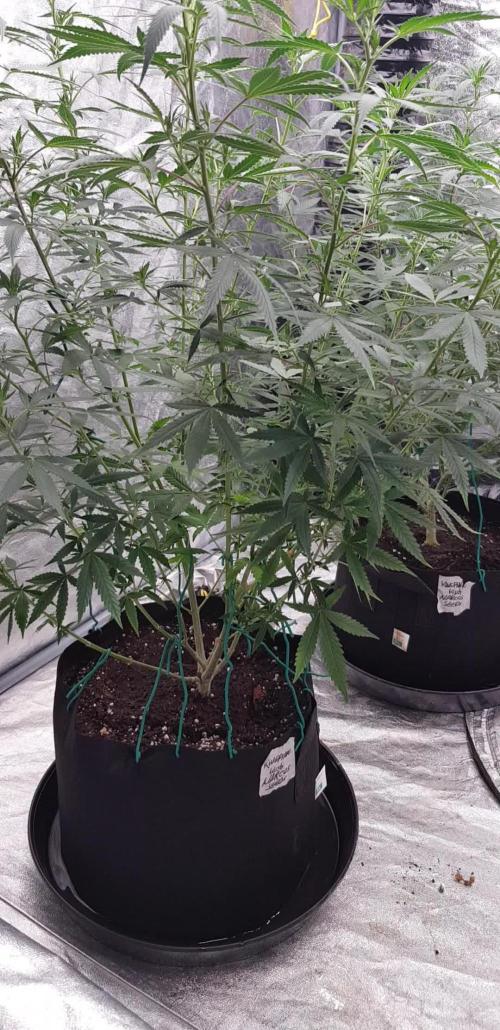
June 9th - nutrient delivery on the 11th will also see a fence with 6” square holes, be wrapped around the 15 gallon pots for branch support. The 3 pots can then be anchored to the ground for Stability. - dressing the substrate surface (x 3) with a Mulch featuring Worm Castings. Then watering 14th - visited and fed, dinner posted above. 2nd feed in the feed-feed-water cycle. - plant continues to grow and continues to be beat-up by the high winds in that agricultural corridor. Shot a short video of how tough the winds have been. Weed is bloody tough. Then again its a weed - ea plant fed 1.5 gal ahead of this coming hot humid week ! 15th - last day of the week
Likes
21
Share
Hey guys . My cutting heating broke 3-4 weeks ago, which was fixed immediately and everything went wonderfully. Now, 3 days ago, the central heating broke down in the entire room, so that at night I only have temperatures of around 13 degrees :-( . One or the other lady is slowly starting to see a phosphorus blockage, as this can no longer be absorbed at temperatures below 15 degrees, like many other nutrients :-( . A friend looked at the heating yesterday and came to the conclusion that a real company had to do it, which is by no means possible for a stranger to enter my room. I quickly ordered heating mats for all the boxes so that the ladies could at least get warm feet. That's all I have this winter full can do . Let's hope everything will be fine 🙏🏻. As soon as the heating mats are attached in the coming days, I will post them in the pictures. Now for the update. Despite the severe cold, the ladies are still doing well and have made good progres . The ladies only had to be watered once this week, each time with 1 l, because it absorbs the water very slowly because of the cold and I don't want to overwater it. I took every single plant in the pot to take a close look at their roots. These are snow white and look very healthy 🙏🏻. It was also the last time neem oil sprayed so that the last trips are finally gone. Otherwise everything was checked and a lot of planning was done, like I do with the heating mats. Since a friend had the same problem in one winter and the heating mats got 10 degrees plus on the pots, I am very confident that it will at least bring something for the last cold month 😃 🙏🏻. I'll start flowering tomorrow by switching to 12 / 12 h because the ladies mustn't get too high because the small flowering tent is only 160 cm high :-) until then have fun and stay healthy 🙏🏻 👇🏼👇🏼👇🏼👇🏼👇🏼👇🏼👇🏼👇🏼👇🏼👇🏼👇🏼👇🏼 You can buy this Nutrients at : https://greenbuzzliquids.com/en/shop/ With the discount code: Made_in_Germany you get a discount of 15% on all products from an order value of 100 euros. 👇🏼👇🏼👇🏼👇🏼👇🏼👇🏼👇🏼👇🏼👇🏼👇🏼👇🏼👇🏼 You can buy this strain at : Clearwater Seeds Water 💧 💧💧 Osmosis water mixed with normal water (24 hours stale that the chlorine evaporates) to 0.2 EC. Add Cal / Mag to 0.4 Ec Ph with Organic Ph - to 5.8 - 6.4 MadeInGermany
Likes
126
Share
** video in 2 parts Sweet and sour showing interesting gold color on her leaves and some curled tips so i flushed her with canna flush and will dry her for a few days.. i dont know whats the provlem except the cold nights for the last few days. Would like to hear opinions.. Grapefruit from dinafem is amazing smell - very fruity and sweet.. Sweet and sour and spliffs strawberry share almost the same smell but sweet and sour is more hubba bubba chewing gum, intensive sweetnes... Remo chemo still no distincitve smell, just sweet.. amazing trichome production. Ayahuasca isnt purple and smells like a bag of nuts and petroleum. Very odd i am afraid i wont like.her...
Likes
3
Share
@DrWeedd
Follow
og kush was harvested after a good wash - i will keep posted how much the dry result crirical kush and chocolop will start their wash in the end of this week
Likes
30
Share
It was another great week here in the grow room plants have come leaps and bounds low stress training is really having a huge effect on canopy density and i cannot be happier
Likes
4
Share
day 70 was harvest day !! really fast strain, 24h light ON really played a big role as well frosty buds and amazing strawberry smell, now lets dry it !!
Likes
3
Share
@BossHogg6
Follow
I started flushing (RO water) a little earlier than I wanted. My concern is around the limbs/branches holding up during too many more water changes. The plant yoyos work fine, but I have to remove them to change the water, then they fall over (some hard) with the branch close to snapping.
Likes
4
Share
@Shotter
Follow
These have been on water there entire lifes I'm I am a new grower and learned the hard way have now got a full parcel of green buzz liquids on the way
Likes
14
Share
Aug 16: Tropicana Cookies FF is a really fast flowering plant. I’m getting excited for the flowering progress cuz it looks like it is going to be a big one. Very exciting and we’re still only at mid-August so the timing is very good for a strong finish in September without it dragging into October.
Likes
20
Share
Que pasa familia, última semana de floración de esta farm cheese de genofarm, y que decir, es increíble vaya aroma y vaya flores repletas de tricomas. Lleva su limpieza de raíces ,después se controló ph temperatura y humedad todo el cultivo, de principio a fin. Variedad de 10 para trabajar en indoor, ideal para SOG .
Likes
11
Share
🌿 Nectar Drip – Week 5 Report Early Vegetative Development (12/12 from Seed) Zamnesia Seeds x TICAL – Pack #268 Note on timing: This is labeled as Week 5 in GrowDiaries / Grow Iris, even though in real growth rhythm we are closer to Week 3 of true vegetative development. This offset comes from starting the diary early and using photo-heavy germination documentation. We’ll continue to clarify this each week for transparency and consistency. ⸻ 🌱 Growth Overview – Training Reveals Character This week confirmed something important: training doesn’t slow a plant — it reveals it. Last week, we began Low Stress Training (LST) on one selected plant using clamps to gently guide the main stem close to horizontal. At the time, she was the smallest plant of the Nectar Drip group. This week, her response has been nothing short of beautiful. Despite being smaller, she reacted with: • accelerated side branching • clear apical redistribution • strong node activation • healthy, vibrant green growth She is opening up, spreading out, and showing structure — not by force, but by invitation. ⸻ ✂️ Training Focus – Low Stress, High Precision The trained plant is now the focus of this week’s report, because she’s telling us a story worth listening to. What’s being done: • Main stem gently bent and held near-parallel to the soil • Leaves progressively opened and repositioned • Lower growth sites intentionally exposed to light • No snapping, no crushing, no stress points This is classic Low Stress Training (LST) — the goal is not control, but redirection. What we’re seeing: • Lower branches actively pushing upward • Tighter internodal spacing • A wider, flatter structure • Balanced energy distribution She’s currently entering her fourth node, and already the lower growth is responding like it knows it’s been invited to participate. You can clearly see this in the macro photos — the symmetry, the confidence, the way each branch is waking up. ⸻ 📸 Macro Session – When the Plant Earns the Spotlight This week, the trained plant earned her moment. She was taken into the studio for a dedicated macro session — and she deserved it. The photos reveal: • clean, healthy tissue • vibrant green coloration • active growth points • no signs of stress or hesitation Up close, it becomes obvious: this plant isn’t struggling — she’s thinking. ⸻ 🌿 The Other Plants – Natural Expression The remaining Nectar Drip plants are not being trained as intensively. For them: • leaves are gently tucked • some bending is done to guide light penetration • no structural manipulation beyond basic canopy management They are: • taller • more vertical • opening naturally • branching in their own rhythm They look fantastic — healthy, lush, and confident — but their expression is clearly different from the trained plant. Same genetics, same room, same feed… different guidance. This contrast is exactly why this approach is valuable. ⸻ 🌡️ Environment & Room Conditions (Unchanged) Conditions remain consistent with last week: • Relative Humidity: ~65% • Day Temperature: ~26 °C • Night Temperature: ~18 °C • CO₂: ~666 ppm • Lamp Distance: ~1.70 m • Substrate Temperature: ~22 °C • Solution Temperature: ~22 °C Airflow continues to increase slightly, encouraging movement and stem strength without stress. ⸻ 💡 Light – Growing Into Intensity PPFD continues its gradual rise: • Previously: ~500 PPFD • Current range: 500 → 600 PPFD, depending on plant height Once again, the plants are growing toward the light, not being forced into it. This progressive increase matches structure and development perfectly. ⸻ Nutrition – Stay the Course Nutrition remains unchanged, because the plants are clearly happy. • Terra Grow • Power Roots • Pure Zym • Sugar Royal • Vita Race (foliar) Leaf color, posture, and response all confirm that stability is working. This is a deliberate mix of mineral precision and biological support, based on experience and personal philosophy. As always: everything shared here reflects my own experience, opinions, lessons, and mistakes, offered openly to the community. ⸻ 🔮 What to Expect / What Not to Expect Expect: • continued lateral development on the trained plant • more defined structure • increased canopy complexity • visible divergence between trained vs untrained plants Do Not Expect: • instant size catch-up • explosive vertical growth • stress reactions The trained plant may not become the tallest — but she may become the most interesting. ⸻ 🤝 Gratitude Much love and respect to: • Zamnesia Seeds • TICAL (artist and collaborator) • Plagron • Future of Grow And thank you to everyone following this journey — supporters, critics, silent readers, and longtime friends. ⸻ 🌟 Week 5 Summary • Training is working • Genetics are solid • Differences are emerging • Structure is forming • The story is getting richer She was the smallest. She’s responding the strongest. And she’s just getting started. Growers love always 💚 FOR DISCOUNT CODES AND MORE JUST FOLLOW THE LINK https://website.beacons.ai/dogdoctorofficial 📲 Don’t forget to Subscribe and follow me on Instagram and YouTube @DogDoctorOfficial for exclusive content, real-time updates, and behind-the-scenes magic. We’ve got so much more coming, including transplanting and all the amazing techniques that go along with it. You won’t want to miss it. GrowDiaries Journal: https://growdiaries.com/grower/dogdoctorofficial Instagram: https://www.instagram.com/dogdoctorofficial/ YouTube: https://www.youtube.com/@dogdoctorofficial ⸻ Explore the Gear that Powers My Grow If you’re curious about the tech I’m using, check out these links: 🔆 Lighting & Environmental Control • Future of Grow — Advanced LED lighting technology https://www.futureofgrow.com/ DISCOUNT CODE: DOG20 • Lumiflora — Under-canopy LED lighting https://lumiflorade.com/ • TrollMaster — Environmental controllers and automation gear (past collaboration) ⸻ Genetics • Zamnesia Seeds — Genetics used in this project https://www.zamnesia.com/ ⸻ 🌱 Soil, Substrates, Boosters & Root Support • Plagron — Substrates, bio mixes, and supportive products https://plagron.com/en/ ⸻ 🎒 Storage, Curing & Preservation • Grove Bags — Curing and storage solutions https://grovebags.com/ ⸻ 📸 Photography Equipment & Tools (Not sponsors, but part of my creative toolkit) • Sony A6700 • Sony full-frame macro lens + few more • Stacking photography workflow - learning • iPhone (for behind-the-scenes shots) We’ve got much more coming as we move through the grow cycles. Trust me, you won’t want to miss the next steps, let’s push the boundaries of indoor horticulture together! As always, this is shared for educational purposes, aiming to spread understanding and appreciation for this plant. Let’s celebrate it responsibly and continue to learn and grow together. With true love comes happiness. Always believe in yourself, and always do things expecting nothing and with an open heart. Be a giver, and the universe will give back in ways you could never imagine. 💚 Growers love to all 💚 📸 P.S. – The Eye Behind the Lens All photos in this diary (for now — except for the ones showing the camera, which I took with an iPhone) are taken with a Sony A6700 paired with a Sony full-frame macro lens and a few more. Photography is part of the story — it’s how we share the fine textures, the glow, and the quiet details that words can’t always capture. I’ve also started experimenting with photo stacking — a technique where multiple images, each taken at a slightly different focus point, are layered together to create one perfectly sharp image from front to back. It’s not digital enhancement or AI; it’s pure photography — a way to reveal the plant’s beauty in microscopic depth, from trichome to petal. You’ll even see a few shots of "ghost me" capturing the shots — camera, lens, setup — because every grow deserves not just to be cultivated, but documented like art. FOR DISCOUNT CODES AND MORE JUST FOLLOW THE LINK https://website.beacons.ai/dogdoctorofficial NEW DISCORD - Official Server Invite Link : https://discord.gg/ksjAkA5T74
Likes
10
Share
This week was fun making videos for all 👀 eyes to see hopefully you enjoyed them as much as I like making them...
Processing
Likes
20
Share
@BudXs
Follow
Solo cup challenge continues to press along. Not much change, plants are in veg, growing and healthy. Still a few weeks before the flowers start so I hope to get a bit of size going before it does. Having fun and really like looking at the other entries in this contest. Check out WildeWeed, Butterstotch and BeanswithPork, silky, larimar, fireman
Likes
8
Share
@SkunkyDog
Follow
Hallo zusammen 🤙. Sie wächst sehr schön und macht keine Probleme.
Likes
Comments
Share
Gettin bigger steam size are around backwood size 😎
Likes
13
Share