The Grow Awards 2026 🏆 









Likes
Comments
Share
@Zzenith
Follow
Welcome to the flowering !
Leave a LIKE man :) I think we deserve it
Day 29
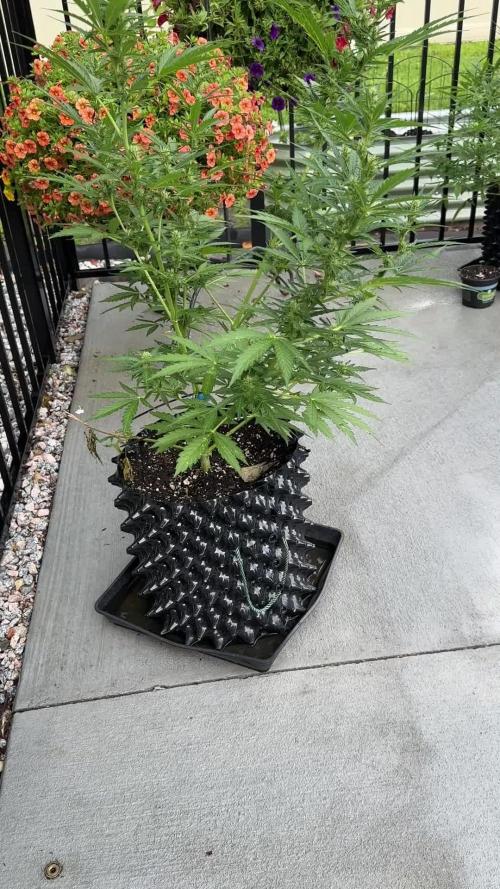
I got all sweated up in 33°c heat, doing lst under Spiderfarmer, tough work. I felt like black person in slavery period, working on a sugar cane field. Damn that's rough. I did bunch of work on making and adjusting pink rope lines around tent, so I can later spread her real well, did lots of LST, and we will see in several hours how she will respond to it.
She responds quick and well. This and next week, I will continue doing LST to maximize area coverage.
Day 30
As I expected, monstrous stretch is coming this and next week. Brace yourselves whoever likes and follows !
Day 33
I see very nice stretch, however we have in places lots of stems, and they are all promising. I don't see how to defoliate it efficiently, so I started removing big leaves 2 days ago, and I am doing it everyday.
We still have around 7-10 days of good stretch left so hopefully they will even each other out, before MAJOR defoliation time comes.
Day 35
I am happy with this plant, even tho I'd wish it to be bushy, but genetics... Barney even mentioned that this is a "COMPACT" plant, but in my hands, she's very far from Compact, she is occupying almost 120-120 tent fully.

Processing
Likes
13
Share
@Cheesefarmer420
Follow
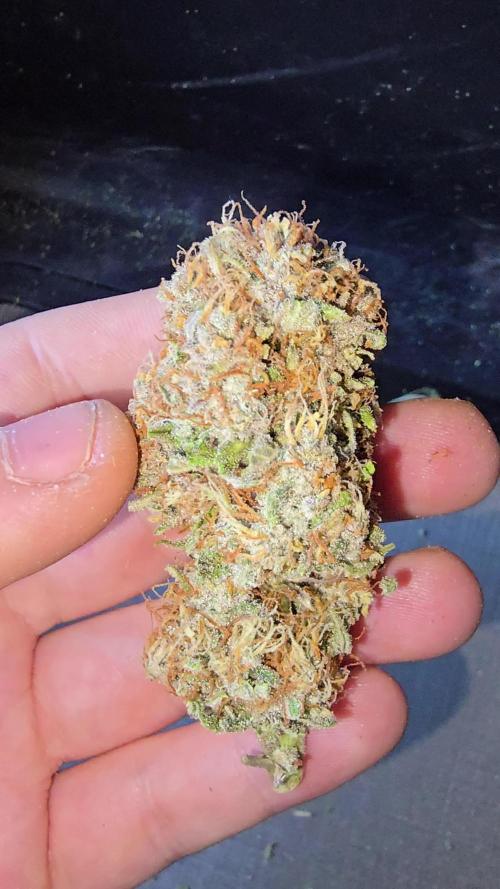
This plant has a solid stench of pure ripe lemons. So much aroma and color in every bud, purples, to dark green, to lime green, to solid frost. This one definitely a fun strain to watch grow and tend too for the last few months. She’s definitely a hungry girl, seemed to be the only strain out of the three that accepted and thrived with full feed nutrients. Would definitely recommend this Strain to someone For a nice uplifting day smoke, also seems to do me good for some pain and stress relief.
Likes
2
Share
@Growstopher
Follow
3.23.25
Fastbuds LSD-25 auto #1
Germination 1st week
Only watering with spring water. Going to be using foop nutrients with Humboldts secret cal/ mag and nectar for the gods ph up and down!
Here we go!


Likes
2
Share
@Bread_n_Buds
Follow
Our friends at Zamnesia have always been an asset to the world of cannabis, lately in case you haven't noticed they've been unleashed with the production of new strains of the highest quality.
White truffle is a novelty of these last times, go and read the description it will make your mouth water.
In this diary you will find the plant worked with the techniques in this case the first topping was carried out, we cleaned everything else creating the Mainfold and we are going to work everything with the main lining. We are at the first topping and we have two mini branches growing. Topping 1t 2nd internode here to stay low and parallel to the soil.
The other can be found in the adjacent diary worked without the application of techniques that involve cuts to preserve its speed.
Comparison is the spice of experience.
We have started the Plagron fertilization program, we are in 100% organic configuration, the soil is recycled Promix + 1/3 fresh soil + 10% Perlite + RQS Mycorrhiza Mix (4gr in the mix, 1 gr under the small fiber pot).
We are administering // 1 ml/l of Power Roots - 1 ml/l of Pure Zym - 1 ml/l of Sugar Royal - 3 ml/l of Alga Grow
I have doubts about the compatibility of Pure Zym with mycorrhizae. If in doubt, ask the experts, don't mix too much at random.
https://plagron.com/en
Doubts about Pure Zym / Mycorrhizae compatibility have been dispelled, they can go well together according to Plagron experts. If someone tells you that enzymes eat mycorrhizae, which in principle may seem possible, explain to them that it is not true.
https://www.royalqueenseeds.it/growing/452-easy-roots-mix-di-micorrhize.html
Give this strain a try, it is an autumnal delicacy ---- // https://www.zamnesia.io/en/11184-zamnesia-seeds-white-truffle.html
Brief description of Zamnesia // Enhance your cannabis grows with the latest US genetics. The result of crossing GG with Peanut Butter Breath, White Truffle boasts a first-rate lineage, taking the best of some of America's finest cultivars. And as you'd expect, she has a lot to offer: a high THC content, irresistible flavors and a relaxing, carefree high. Oh, and let's not forget that she's incredibly easy to grow too! Buy your seeds today and enjoy easy harvests of delicious, USA-made bud.
The whole world of growing and more can be found at Zamnesia, just take a look around the site and you'll find "the best that nature has to offer" in all shapes and colours.
And as you'd expect, she has a lot to offer: a high THC content, irresistible flavors and a relaxing, carefree high. Oh, and let's not forget that she's incredibly easy to grow too! Buy your seeds today and enjoy easy harvests of delicious, USA-made bud.
The whole world of growing and more can be found at Zamnesia, just take a look around the site and you'll find "the best that nature has to offer" in all shapes and colours.
The new strains are fantastic and the old ones are no exception...
p.s. no hermaphrodites so far, can you growers say the same?
---- // www.zamnesia.com

Likes
9
Share
@GrowPassionItalyChris
Follow
Da oltre venti anni che coltivo e sono sempre più felice della qualità proposta da queste magnifiche banche semi! Complimenti di cuore a chi ha selezionato e creato queste varietà autofiorenti. Crescono rapidamente,resistono agli afidi e alcune sfiorano il metro di altezza, tutte insieme sembrano una mini foresta! Iniziano a fiorire gradualmente ed essendo molto diramate tutte è spettacolare nel vederle! Appare la prima resina e sono in ottima salute. Sono felice fino ad adesso perché se guardate foto e video vi rendete conto che qui nel centro Italia in outdoor biologico abbiamo il migliore clima che si possa desiderare anche se questo 2023 fino a metà maggio ha piovuto tantissimo e ci sono stati sbalzi di temperatura, ciò non è stato un problema per queste varietà così forti e abbondanti! Adesso la magia è iniziata, il caldo è arrivato e non vedo l'ora di vederle piene di infiorescenze tutte! Si procede felicemente, un abbraccio a tutti!


Likes
14
Share
@fruits_effect
Follow
Last Update: This week I haven't do any defoliation, that make me dying😂
This girl pistil burned extremely I think because i use spidermite killer haha
This is around 3 week of flower i starting smell like umm fake lemon or something.
Likes
33
Share
@Wicked_Stix
Follow
This girl is finally starting to put on a little stretch, but she is still by far the shortest plant of the bunch. I lifted her up about 3 inches so she doesnt get completely smothered out over the next week. I will lift her another 3 inches if she doesnt make more upward progress soon. I moved her to the front of the room for easy access since she need daily defoliation being as bushy as she it. She is definitely different than any in house strain I have seen. Besides that she is a happy girl. Starting to see a few pistils and she is transitioning. The scrog setup is working great for the plants that have grown through it. It is really going to help me put each top where I want it and keep them spread out so more of those lower branches can make their way up. So far everything is running nice and smooth just the way we like it.

Likes
35
Share
@MadeInGermany
Follow
Info:
Unfortunately, I had to find out that my account is used for fake pages in social media.
I am only active here on growdiaries.
I am not on facebook instagram twitter etc All accounts except this one are fake.
Flowering day 50
since time change
to 12/12 h.
Hey guys :-)
The lady is in her final phase :-).
The buds swell more and more and smell more and more fruity.
You can now see how the lady turns her leaves yellow and uses up her last nutrients.
The next time it is poured, it is poured with GBL Clean Fruits and 10% drain.
Then it is allowed to stand again for 12-14 days before it comes into the darkroom before the harvest 👍.
As always, the tent was cleaned and everything was cleaned up.
I wish you a lot of fun with the update and stay healthy 🙏🏻
You can buy this Nutrients at :
https://greenbuzzliquids.com/en/shop/
With the discount code: Made_in_Germany you get a discount of 15% on all products from an order value of 100 euros.
You can buy this Strain at
https://www.amsterdamgenetics.com/product/super-silver-haze/
Type:
Super Silver Haze
☝️🏼
Genetics:
Haze x Skunk #1 x Northern Lights
Type:
70% Sativa – 30% Indica
👍
Vega lamp:
2 x Todogrow Led
Quantum Board 100 W
💡
Bloom Lamp :
2 x Todogrow Led
Cxb 3590 COB 3500 K 205W
💡💡☝️🏼
Soil :
Canna Coco Professional +
☝️🏼
Nutrients :
Green Buzz Liquids :
Organic Grow Liquid
Organic Bloom Liquid
Organic more PK
More Roots
Fast Buds
Humic Acid Plus
Growzyme Big Fruits
Clean Fruits
Cal / Mag
Organic Ph - Pulver
☝️🏼🌱
Water: Osmosis water mixed with normal water (24 hours stale that the chlorine evaporates) to 0.2 EC. Add Cal / Mag to 0.4 Ec Ph with Organic Ph - to 5.8 - 6.4

Likes
4
Share
@ThatsmyGrow
Follow
The grow with Papaya was definitely worth it. Incredible buds, a great smell that permeates the entire tent.
I'm looking forward to my next grow with this strain.


Likes
8
Share
@ProKush27
Follow
By the start of the week I’ve noticed magnesium deficiency on plant A and B, so I started adding Biobizz Calmag on Froglord’s kind recommendation.
Otherwise I started slow defoliation process and I’m currently removing around two leaves per day.
Plants definitely grew larger than expected but I’m not mad :D. They’re taking a bit longer, but it should be worth it. I’m expecting harvest on plants C and D soon.
Likes
9
Share
@Susquihanna
Follow
So after the hailstorm last week, one of my colas were broken. I taped it together and used wire ties to hold it together and it has survived. It continued to grow an inch and is flowering! I thought for sure I had lost this cola. I also used the "question" forum here on grow diaries regarding my broken cola and like the responses I received. We have had some very cool nights and warm days but my Skunk has continued to thrive.
The one thing I think is very interesting to notice is how crooked the buds look on this plant. Is it because I grew two colas or because of the trauma from a broken cola?? I have no idea but time will tell.
Please like and comment and come back!

Likes
38
Share
@DogDoctorOfficial
Follow
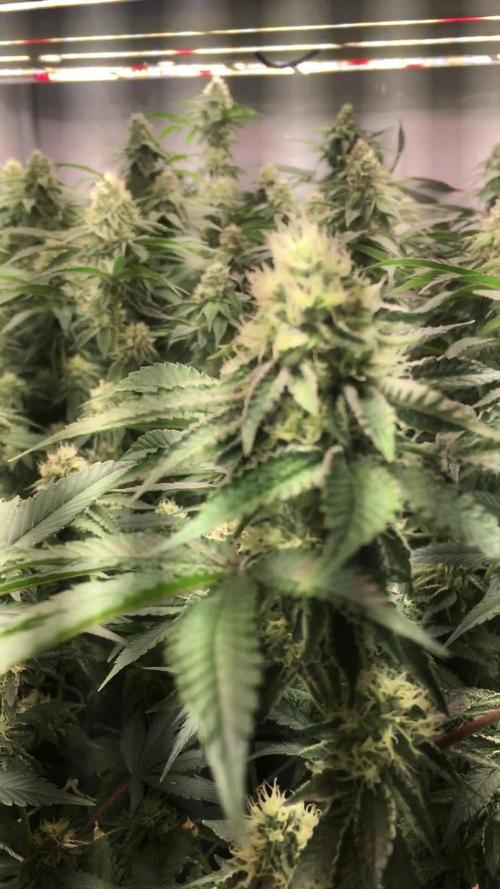
Get ready for another thrilling update on our magnificent Triton Biscotto Lime in Week 6 of veg. This girl is on fire, and we're taking her journey to new heights. Buckle up and prepare for some green-thumb adventures!
This week, we embarked on an important mission: Integrated Pest Management, or IPM for short. Now, before you imagine tiny superhero capes on mites and nematodes, let me explain. We introduced beneficial nematodes into the soil to combat unwanted pests and keep our garden in tip-top shape. These microscopic warriors wage a battle against harmful critters, defending our beloved Triton Biscotto Lime like true heroes.
But that's not all! We called in reinforcements in the form of Spical Ulti Mite and Swirskii. These beneficial mites are like our garden's own special forces, launching a full-scale assault on any unwanted pests that dare to enter our domain. It's like a botanical warfare with a twist of camaraderie and a sprinkle of microscopic excitement.
Now, picture this: Triton Biscotto Lime, surrounded by her nematode army and mite squad, ready to defend her green kingdom. It's a battle of epic proportions, where our fierce defenders work tirelessly to protect our plant from any unwanted intruders. And hey, who knew mites and nematodes could be such amazing allies in the quest for a thriving garden?
In addition to our IPM efforts, we continued to pamper Triton Biscotto Lime with love and care. We ensured she received the optimal lighting she deserves, with a mighty 500 PPFd (Photosynthetic Photon Flux Density). It's like giving her a VIP pass to a cosmic light show, fueling her growth and setting the stage for botanical greatness.
As we revel in the wonders of IPM and provide Triton Biscotto Lime with the best possible care, we can't help but marvel at the magic unfolding before our eyes. The harmony between our plant and these tiny defenders is like a cosmic dance, showcasing the power of nature's intricate balance.
And here's a fun little joke for you: Why did the mites and nematodes form a rock band? Because they knew how to harmonize and strike a chord with their garden audience!
In summary, Week 6 of veg has been a week of pest-fighting heroics and cosmic collaborations. Our Triton Biscotto Lime stands strong, backed by her nematode army and mite squad. Together, they create a force to be reckoned with, ensuring a healthy and thriving garden environment.
As we continue this green-thumb journey, let's celebrate the power of beneficial allies, the wonders of IPM, and the magic that happens when we join forces with nature. May Triton Biscotto Lime grow stronger with each passing day, and may our garden be a haven of harmony and botanical bliss.
Stay tuned for more thrilling updates, my fellow gardeners. Until next time, keep those mites and nematodes rocking and rolling, and may your green thumbs continue to flourish!
As always thank you all for stopping by for the love and for it all, hope you all surrounded with love , health and blessing of all kinds <3 <3 <3
Genetics :
TRITON BISCOTTO LIME - @SeedstockersOfficial
All info and full product details can be find in can find @
https://aptus-holland.com/
https://seedstockers.com
https://autopot.co.uk/
https://lumatek-lighting.com/
#aptus #aptusplanttech #aptusgang #aptusfamily #aptustrueplantscience #inbalancewithnature #trueplantscience #growerslove #dogdoctoofficial
With true love comes happiness <3 <3 <3 Always believe in your self and always do things expecting nothing in return and with an open heart , be a giver and the universe will give back to you in ways you could not even imagine so <3 <3 <3
More info and updates @
https://growdiaries.com/grower/dogdoctor/official
https://instagram.com/dogdoctorofficial
https://youtube.com/channel/UCR7ta4DKLFMg2xxTMr2cpIg
<3 <3 <3 Growers love to you all <3 <3 <3
<3<3<3 have a bunch of other journey going on, fell free to stop by and say hi, don be shy <3<3<3
Strain info :
Triton Biscotto Lime Fem seeds
You are standing before a feminised weed seed that comes blessed from the cradle, as she’s born from the cross of two genetics that are all the craze in the current cannabis scene. On the one hand, Oreoz Mintz, one of the winning horses of the new generation of the Girl Scout Cookies family; on the other, Lemon Tree.
This is an epic parental lineage that results in a hybrid with a slight sativa dominance and dazzling qualities, with a short flowering of just 8 weeks and THC levels that can reach up to 22%, causing a very energetic and euphoric effect which is perfect for social events or if you’re looking for top creativity.
Triton Biscotto Lime is a feminised strain that’s very easy to grow indoors, although she reaches her maximum potential when grown outdoors bathed by the sun of warm climates like the Mediterranean. She loves light and an aerated substrate, which allows for good oxygenation of the roots and helps the plant absorb the maximum number of nutrients. In return you will get dense and compact marijuana buds in a neon green colour which are sprinkled with amber pistils and covered in a glaze of beautifully crystallised trichomes.
As her name suggests, her aroma and flavour are a subtle mix of earthy sweetness with a citrus touch, calling to mind a tasty cookie dessert with a lemon base and some hints of Diesel. A highly addictive flavour that you’ll be happy to taste free of any guilt for wanting to repeat the experience over and over again.
So if you’re looking for a feminised marijuana seed that represents the best of the current cannabis scene, with high-calibre properties that contribute to her excellent reputation, then Triton Biscotto Lime has arrived on the market to meet your expectations. Try her now and become hopelessly devoted to her
- Friendly reminder all you see here is pure research and for educational purposes only -



Processing
Likes
13
Share
@Luv2Grow
Follow
Day 58 - Into week 9 now and she’s really budding up nicely but something is definitely a bit off with her. Most leaves on the top are starting to yellow quite a bit and I’m thinking she might be getting a bit of light burn because I had moved the lights pretty close. Was trying something new with this one and don’t think it’s working so backed the lights up to the normal height and hopefully she’ll be ok. Other than that, looking good and should be ready for more water in a couple days.
Day 59 - Buds are starting to swell a bit in certain areas and getting nice and frosty. Her smell is starting to get a bit stronger too. Still have quite a bit of time left with her and she’ll be ready for water tomorrow then the watering after that, she’ll get a dose of nutes.
Day 61 - Still going good and fattening up nicely. The soil was pretty dry so gave her about a gallon and a half of plain pH’d water today, next watering will be with nutes. So far it doesn’t look like any of the yellowing is getting any worse so I’m thinking it was light burn.
Day 63 - Ending week 9 and nothing major going on right now. Flowers are looking great and seems the bit of yellowing has slowed down or stopped but did remove a couple lower yellow and dead ones today. She’s already ready for water so tomorrow she’ll get a feeding of nutes.


Likes
36
Share
@Salokin
Follow
All is developing nicely, introduced cannazym and boost to the mix. Finally I have access to a better camera which you will see on the later pics. The cuttings I took seem to survive for now, with some outrooting their cubes already.

Likes
12
Share
@Cultiuherba
Follow
Han estriado bastante, siguen fuertes. Esta semana intensificare la defoliacion. Mantengo luz al 75%. Han estirado muchissimo, he tenido que subir el foco. Aumento la potencia de luz al 100%.

Likes
14
Share
@Rock_n_Roll_Randy
Follow
FOR EVERYTHING MARS HYDRO VISIT:
www.mars-hydro.com
www.marshydroled.ca
PROMO CODE: rocknroll
VISIT THE ALIEXPRESS STORE:
@marshydro_aliexpress
Instagram: @marshydropenny
https://youtube.com/channel/UChU5ZWwNi-DvnO3oWVU3ceA
Thanks for taking the time to read and check out my diary🤜🤛
FC-E6500 LED GROW LIGHT:
FC-E6500 grow light with 3978pcs OSRAM BridgeLux Diodes & Moso Driver, market-leading PPF 2.7 µmol/J, Max 2.5g yield/watt with 30% higher Average PPE, more cost-effective when compared to same style type lights. Only consumes 650W, perfectly cover 5x5ft (personal), 4x4ft (commercial) grow space. Innovative Precise Uniform Lighting-Built-in removable bars interval & dimmability enable the exact & dynamic PPFD control over each of the plant growing stages, FC-E6500 detachable bars deliverSuperior Heat Dissipation: Real Aluminum heatsink together with 6 slim profile passive cooled bars (THINNER & LARGER surface) and detachable Meanwell Driver, create less heat. save 50% hydro than other old grow lights! Driver can be mounted remotely on the side of a grow tent/rack or on an adjacent wall to remove heat from grow space. Full Spectrum UV IR LED: With Yield Max spectrum (660nm Osram enhanced Deep Red,2800k-5000k,730-740nm IR,380-410nm UV LEDs), Average PPFD the FC-E6500 LED grow lamp enables cultivators to produce BIG FAT Dense Buds, perfect for full-cycle hydroponic, soil, grow tent/grow room.
Dimmable Commercial Grow Light: Cost-efficient, easy dimming & daisy chain With a max up to 20 lights, IP65 Waterproof, master light easily controls the rest. Perfect for commercial & home horticulture.
FC4800 LED GROW LIGHT:
GET THE MAX FROM MARS👍: Welcome one of the newest members of the Mars Hydro family🤜🤛🤘. The Mars Hydro FC 4800 480W LED Grow Light can accommodate up to a 4' x 4' area for flowering. It has OVER 2000 LED chips consisting of the best selling Samsung LM301B diodes which has a Luminous Efficacy of: 220 lm/W
0.2 W, 3 V mid power,
Osram 660nm Diodes, Infrared light and UV LIGHT👍. It boasts the incredible efficiency of 2.8 µmol/J, maximum 2.5gram yield per watt with 30% higher Average PPFD. This High-intensity spectrum is beneficial for plants at all stages - from veg to bloom, and creates Big dense Buds👍. achieve 50% higher yields & quality compared with the old lights! Only consumes 480W for 4x4ft personal grows, and 3x3ft for commerical grow. It comes with a dimmer and daisy chain function with a maximum of up to 15 lights, the master light controls the rest👍. Wide 6-bar design offers even & wide canopy coverage and can maximizes your grow space. slim 180° FOLDABLE DESIGN... YES I SAID FOLDABLE🤘🤣 , making it compact and easy to install, it's IP65 WATERPROOF and will give you no worries while growing in a humid environment and makes it a flexible high performance commercial grow light for enormous SUPER FROSTY yields.😛😛😛. MARS GETS EM FROSTY BOYS👍
AWESOME HEAT DISSIPATION: The Low energy consumption FC4800 growing light has 6 passive-cooled bars and an aluminum heat-sink a removable driver you can upgrade later or have it outside your tent. with zero noise you can save up to 50% in your electricity bill compared to HID's or HPS lights!
It also has a removable driver so you can upgrade it in the future or have it outside your grow space for better heat control in your growroom👍
UPGRADED FULL SPECTRUM: Yield Max Spectrum with enhanced red (Top-Bin Samsung 3000k-5000knm, Osram 660nm Deep Red), speed up blooming & fruiting, perfectly suited for full-cycle growing. The FC4800 LED grow lamp was born for Big Buds, perfect for commercial, grow tent, grow room, hydroponics, and all soil grows.👍
THE BEST SAMSUNG DIODES: THE FC4800 has Top Bin genuine Samsung Osram Diodes, combined with remarkable 2.8 µmol/J Efficacy, 30% higher Average PPFD, 50% less energy consumption, to maximize your yields. They give you a TRUSTED 3 years warranty 100% Satisfactory guaranteed!!!
TSW2000 LED GROW LIGHT:
INCREASE YIELD AND CROP QUALITY WITH MARS HYDRO LED GROW LIGHTS: NEWEST SMD LED technology provides the highest PAR/LUMEN output (1122umol@18") and can make you get 30% higher yield compared to OLD blurple led lights. Max 2.5g yield per wattage and achieve maximum quality and quantity, much better than traditional HPS grow systems
LOW ENERGY CONSUMPTION LED GROW LIGHT: Consuming only 300W true output with 684 LEDS! It saves up to 50% energy than other led grow lights. Perfect for 3.5x3.5ft bloom stage, 4x4ft veg stage. Over 90% light energy can be absorbed by plants, it will have higher intensity in a MARS HYDRO grow tent with diamond design mylar, or by crossing over using multiple TSW2000
HIGH EFFICIENCY FULL SPECTRUM INDOOR GROW: 3000K 5000K and IR 660nm 760nm RED, makes it close to natural light, highly engineered to provide improved growing performance for plants at all stages of growing, rapid plant response from seed to flower; Uniform and wide-beam light distribution for your plant's optimal growth
8x8 1680D GROW TENT
The MARS HYDRO 8x8 Grow Tent interior is made of a unique diamond design mylar which is highly reflective. (Other companies mylar and reflective rate is as low as 50%, and it won't provide efficient light. They use thick 1680D oxford canvas, and being double stitched, it is tear proof and perfect for locking in the light. Their grow tent keeps 100% of the light inside the tent and helps your plants absorb more light. EXTRA-THICK material means No light leaks or rips at all.👍
Strong Stable metal corner adapters and poles are the trustful supporters of the tent. It's very sturdy, neither rusting or paint flaking off. quick and easy tool-free setup. They use heavy-duty metal zippers, with double layer black lining, by far the best on the market which creates a light-proof seal.
The Easy observation windows are made by double layers of cloth. Observe the growing conditions of your plants without opening the tent and avoid disturbing your plants. The observation windows also serves to dissipate heat and ventilate the air.
The tent includes 2 removable waterproof floor trays to hold soil and water. The removable tray can be taken out to wash easily.
They guarantee the grow tents are easy to install even if you've never done something like this before. Clear Instructions and no tools needed! They also offer 30-day unconditional refunds for quality problems. Just contact their friendly 24 hours customer service 👍
Likes
Comments
Share
@LokalGrenz
Follow
Having cal mag issues going to hit the grow store tomorrow am and see can I get some organic cal mag and see if that helps other than that no real issues
2/24
I’m going sit my dumb ass down and chill I did a defoliation and man I over did it I think it’s pretty aggressive and i don’t know what I was thinking I was just clipping away 🤦🏾♂️…… anyway got some calmag for the color issues only going 1/2 tsp see how that goes hopefully when the new growth and more stretch happens it’ll look a lot better I’m also bottom feeding the calmag hope that works too