


Likes
Comments
Share


@CuriosityWebster
Follow
Good plant overall, wish it was a bigger plant because bud structure is very nice
Had a little bit of spider mites but took care of it quickly, overall handled the heat very well and this one had no bud rot
Will run this stain again since I have some more seeds, hoping for a bigger phenotype next time :)


Likes
9
Share


@Chuckwaggon420
Follow
This week is packing on some nodes insane! Starting to get a little resin production going going to look like some fat nugs off this plant! Just been doing straight water with molases 2 tablespoons a gallon amping those sugars threw the roof for those oils in the plant! Burned it a lil bit pushing it to the max but seems to be fine packing it on. Has a crazy smell to it idk where to put it yet. Stay tuned stuff is gana get fat and frosty!!!

Likes
10
Share
@Arcadium
Follow
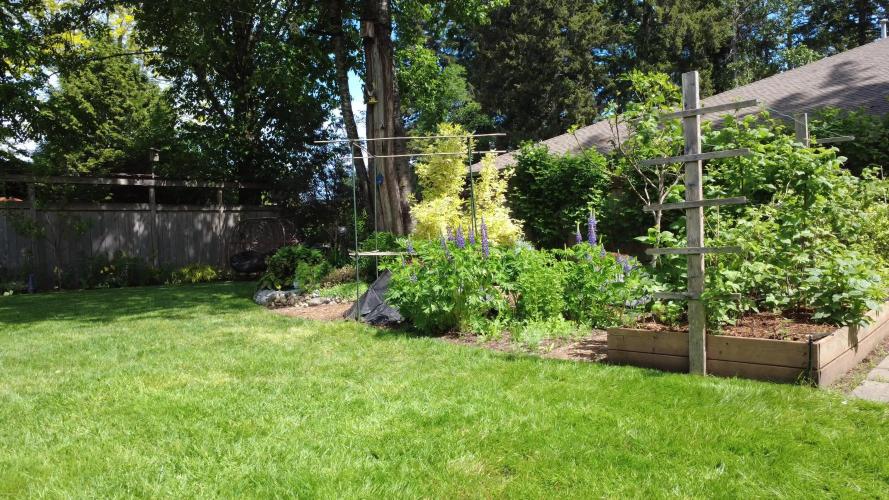
HOT wild heat wave roll through 30c. Had some minor yellow discoloration on the small one, maybe full does of silica +30c heatwave lockout?, didn't bother with PH, but she's still rolling through it.
4th round of topping on both, 32, one more before canopy is filled out and she'll go up. Then maybe one more top to even canopy out will see.
Some minor cattepilar damage, but I'm raising an army of Chickadees through nest boxes (bonus pics). A pair of chickadees can use 6000 to 9000 cattepilars to raise a brood to adults. Will hopefuy nab pics of the fledglings any day now, then will try and quickly clean out nest box and they're known to raise a second brood if the food is plenty, and it is
Compost tea tommorow, 5g bucket, 20ml fish / Kelp, 2 Tbsp molasses, aerated 24hr, then silica / diablo max 1/2 dose before watering.


Likes
7
Share


@darb35
Follow
The runtz are about 45cm start of this week and the tall LCC is 75cm.
She is also further into flower, but did not spread out so much in the tent.
RAK seems to be very good with high PPFD, for the LCC they need a bit less I can feel.
Likes
2
Share

@MaltaHerbman
Follow
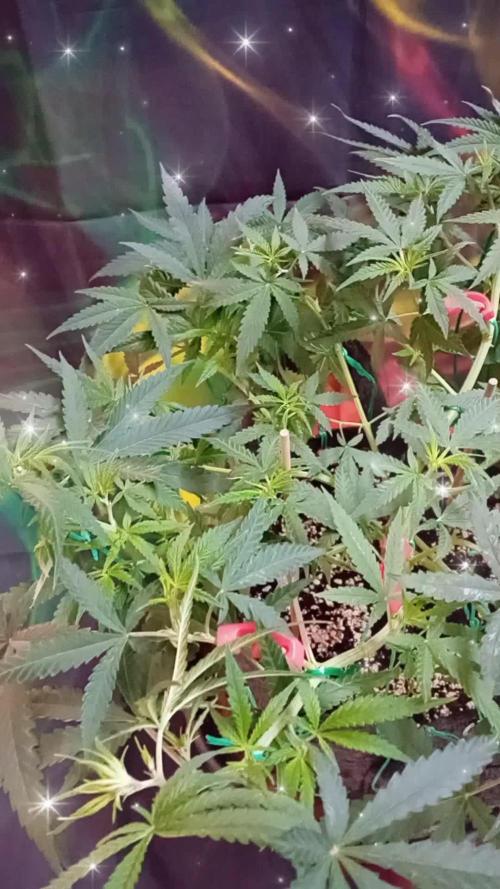
Dank Berry is really starting to show her structure after multiple toppings. She’s growing bushy with lots of healthy green leaves and new shoots forming. Excited to see how many bud sites she will build up before the flip.

Likes
35
Share


@StonedandSteady
Follow
9th W/Flower Harvest: No 9th Feed of #HumboldtCountysOwn this last few Weeks! I Flushed them out once a day with 1 Gallon of Cold Declorinated Tap Water for the last 7 days, letting thier pots dry out for 4/5 days and Checking the Triks every couple of days as well! Thier Packed, Stacked Up and Lights Upgraded!!! Cloned with my Steady's Saliva!!! We'll definitely Grow back to everything here soon! #Pre-Sexed 4/9/21 #Opium/#PabloEscobar *Fems* breed by Team #DivineSeeds #DivineSeedsSquad #DivineSeedsBreedingCompany I'm Very Excited and Extremely Gracious!!! These Cannabis plants are Camping out in the Closet for a week or so! Lol
My #PabloEscobar and #Opium *Fems* from #DivineSeeds Regs: SalamiLegF3's×2 and FireAlienRomulan look$ Outstandingly Awesome and Finished Up Phenomenally Fine into thier 9th week of Flower! Thanks Again for All the Love and Support my fellow Growmies and Growmets!!! These Magnificent and Magical Ladies were Growing in our 48×24×60 ViparSpectra Official Club 🌿 ®️ Grow Tent and under our #Osree QB1000w and #GrowStarStore Kokokala QB1000w but Finished out in Flower under our #BloomPlus BP1500w! #TNBNaturals The Enhancer Co2 Despersal canister and ph'd them w/ Declorinated watering w/ TNB ph Up and Down! Totally Top Quality Topz all Around! Thanks Again #GallowGlas420 #HarleyGrower #thehumancannabiniod #AlienBloodGenetix #TNBNATURALS #www.as420.ca #divineseeds #divineseedssquad #divineseedsbreedingcompany #HumboldtCountysOwn Family's and Teams!!! Your Genetics are Merry Magnificent, Mega Marvelous and Mighty Medical! Love um!!! I really Can't stress enough how Thankful and Grateful I am of All of you and what you've Shared with Us! Means the World!!! It's definitely a Pleasure being able to Grow with these Phenomenal Grow Lights! Please Enjoy! BudBrothers4-Life! Cheers Famz!!! Much Props and Much Topz!💯🔥#BloomPlus #Osree #GrowStarStore #Growatt #TNBNaturals #TNBTeam #HumboldtCountysOwn #GrowYourOwn #Bliss
Bloom Plus BP-4000
CA:https://www.amazon.ca/dp/B08DTDP5FF/ref=cm_sw_r_cp_awdb_imm_86Q7H2D5BGFYB9B6PR9K
US:https://www.amazon.com/dp/B08DTN3B84/ref=cm_sw_r_cp_awdb_imm_4B7XWCAS09M4V3W0AFJH
Bloom Plus BP-2500
CA:https://www.amazon.ca/dp/B08DTCYV9Y/ref=cm_sw_r_cp_awdb_imm_YDNA8G16PH3TB002VKGE
US:https://www.amazon.com/dp/B08DS53THM/ref=cm_sw_r_cp_awdb_imm_SX3AEDKRVAYQECF32BE4
Bloom Plus BP-1500
CA:https://www.amazon.ca/dp/B082XYLHRJ/ref=cm_sw_r_cp_awdb_imm_XEBFV7790EHT53B2J9B5
US:https://www.amazon.com/dp/B082XYLHRJ/ref=cm_sw_r_cp_awdb_imm_MB3PYZEVSQRZY096AB79
BloomPlus Instagram Link: https://instagram.com/bloom.plus?utm_medium=copy_link
Thanks Again Broski #SmokinPlantaz for Hosting your Bright and Tight Amazon Prime Day #BloomPlus-1500w Giveaway! I'm still Blinded by the Light!!! Lol (Song Pun) it's Ultimately Lit, Extremely Powerful and Brilliantly Bright! I also Love and Appreciate Everyone out here! Please! Go Over and Spread That Love to my Bro's YouTube Channel and Team #BloomPlus on their Instagram! I'll have thier Links posted ⬆️⬇️! BudBrothers4-L!!! Cheers Famz!!! Much Props and Much Pars!💯
SmokinPlantaz YouTube Channel Link: https://youtube.com/channel/UCDKJthWoS6-miAhq_lLb_-w
HumboldtCounty'sOwn:
Email: [email protected]
Phone: (707) 725-4119
Toll free: (866) 872-9434
Humboldt Bottling
Po Box 429 · Fortuna, CA 95540
HumboldtCounty'sOwn Website Link: https://humboldtcountysown.com/
HumboldtCounty'sOwn Instagram Link: https://instagram.com/humboldtcountysown?igshid=1qj809qkkwych
Vivosun Precision Pruner/Trimmer: https://www.amazon.com/gp/aw/d/B06Y1XVD1P?psc=1&ref=ppx_pop_mob_b_asin_image#
https://youtube.com/c/VIVOSUN
https://www.facebook.com/vivosun.official/
https://instagram.com/vivosun.official?utm_medium=copy_link
https://instagram.com/bloom.plus?utm_medium=copy_link
https://instagram.com/osree.light?igshid=1vrsbdyhzg2h8
https://instagram.com/growstarstore?igshid=2yjn0r00r6ru
https://instagram.com/divine.seeds?igshid=1r90iwe9xiwz8
https://instagram.com/thehumancannabinoid?igshid=17k159pumklkq
https://www.instagram.com/alienblood_genetix_official/
https://instagram.com/as420.ca?igshid=1f116alw054wp
The Grow Bags: https://www.as420

Likes
5
Share


@Bluntblazer66
Follow
Mar 31st
Week 16
Mar 30 Changed nutrients to straight Dense Bud Compactor 1 gram / litre @ 900-1000 ppm
April 1st I will add the rest of the nutrients to the exiting solution and check on ppm level
April 1st changed nutrients from straight Dense Bud Compactor to full range all listed nutrients
Added 8 litres of fresh water + 6 litres of the existing Dense Bud solution to come up with a mix concentration of 1100 ppm
Hopefully this will be the shit!

Likes
82
Share


@UnorthadoxDude
Follow
Hello growmies! Welcome to week six of An Epsilon Adventure! Massive thanks to both Shogun and Royal Queen Seeds for sponsoring this grow!
So here we are at week six and every one of these girls are at a slightly different stage, it is quite fascinating to watch them develop one after the other.
Today I made the last adjustment to the light possible. I removed the adjustable hangers and affixed a carabiner which I tightly tied to the top of the tent bar. There is about 1.5 inches of space between the top of the shade and the tallest part of the roof of the tent. Plant 1 is already taller than this, and it looks like plant 6 and maybe even plant 5 are going to join it. It's a madness. I am sure you have already looked at the photos but just in case you do what I do and read the diary first...
Here is my assessment at the beginning of week 6:
Plant 1:
Height: 1st (137cm) - what can I say about this ridiculous plant? Day 36... 137cm tall. I have had to raise the light to as high as it is physically possibly to raise it and it's still not high enough. She is done stretching now, she may add 3-5cm over the next week or so but I don't expect more than that, so her top of her main cola going to have to develop above the level of the light. Nothing I can really do, nothing wise anyway. What a monster plant.
Maturation: 4th - early into flower - bud sites developing, pistils just starting to explode.
Plant 2:
Height: 4th (111cm) - this plant has been there or there abouts as the tallest plant for most of the grow, but she has topped out at 111cm. She will gain some during flower but not much more than a few centimetres. Very impressive plant, loads of bud sites, really big strong secondary branches. This one is going to be colas galore.
Maturation: 3rd - well into flower - all white pistils
Plant 3:
Height: 6th (95cm) For some brief days the tallest plant in the room, she peaked early and is now the "shortest" at "only" 95cm for this "50-70cm" strain. She is utterly dwarfed by four of her five sisters in just about every department, being quite a bit smaller even than plant 4 (although I have removed the most lower nodes from this plant). Compared with her sisters she is almost a runt... except that she is 25cm taller than the strain top-end average and matches the maximal height of the previous tallest Epsilon F1 plant I am aware of. It's not that she is small, actually she's pretty big for an Epsilon F1, it's just that the rest of the girls are on another level altogether. Plants 1, 5 and 6 are all absolute beasts.
Maturation: 1st - well into flower - first shades of brown in some pistils.
Plant 4:
Height: 5th (98cm) although only 3cm taller than plant 3, overall she is a much larger plant. Her secondary nodes are the same height as plant 3.
Maturation: 2nd - well into flower - all white pistils
Plant 5:
Height: 3rd (113cm) - one of the two thick/short girls who have grown at a similar pace all along - she is further ahead than plant 6 but not by much and I think she will probably exceed 120cm this week, though I do not think she will outgrow plant 1 or 6.
Maturation: 5th - early into flower - bud sites developing.
Plant 6:
Height: 2nd (120cm) - my predictions were correct about this girl and her continued growth. I now think she might actually outgrow plant 1, which is quite worrying.
Maturation: 6th - early into flower - bud sites forming - by far the least mature plant of the six.
###
Week 6 Day 2 23:00 30/7
Photographed. Raised the light. Rotated the plants. Inspected, measured and reported on each plant.
###
Week 6 Day 3 23:00 31/7
It has not escaped my attention that the plants that are more advanced into flower have darkened and have some burnt tips. I need to flush them and lay off the base nutes a bit. These plants are just growing and maturing so quickly that I cannot keep up.
###
Week 6 Day 5 02:30 2/8
Fertigated 3l of nutrient mix, without either COCO A or B.
###
Week 6 Day 6 01:30 3/8
photographed
---
Thanks for reading growmies! 👊
==========
Tent: 120cm x 120cm x 180cm
Light: 600w HID Elite Dual Spectrum HPS + Angel Wing Reflector
Air: 5" duct fan system with carbon filter ~300 m3/hour + RAM 9" floor fan + 4" intake fan
Pots: Air Pruner Fabric Pots 30l - UGro XL Coco + horticultural grade perlite (~20%)
Seeds supplied by Royal Queen Seeds https://www.royalqueenseeds.com
Nutrients supplied by Shogun Fertilisers https://www.shogunfertilisers.com/en
==========
Likes
11
Share


@SoulMan_PeeWee
Follow
These ladies have been drinking up everything thrown their way which has caused me to feed/water them more frequently. They are still growing like champs and I anxiously waiting to witness the final result.
Processing
Likes
9
Share


@LittleBigTrees
Follow
These are about a month old.
I've no idea what they are as there from a long time ago and were mixed with a few varieties of autos and photoperiod. Hopefully they work out and are not Spanish sativa as that just gives me a headache after more than 0.25g in a day?? Anyone else ever have that?
Powerplant does the same if I use more than 0.50g in a day.
The only two strains that have that effect on me!
Likes
13
Share


@Drawer
Follow
The plant is doing fine, the light has been a bit to close to some buds so light bleaching appeared (Light is raised)
Getting close to harvest and the plant smells really sour and citrussy, its amazing.

Processing
Likes
32
Share


@Platinouuu
Follow
Saludos amigos, muchas bendiciones y feliz navidad. Pues como podemos ver, las niñas van super bien, alegres, olorosas y sobre todo saludables. Vemos que se estan tornando las hojas color vino, el olor que se puede apreciar es dulce y suave, claro está, se ven potentes, ya sus terpernos estan saliendo y dando de que hablar jajaja. Estopy muy contento como las veo. Hemos estado regandolas solo con agua y Té cada 20 días aproximadamente, solo depende como las vea. Solo trabajamos un poco de defoliación y un ajuste que otro a las tirillas colocadas. Deseandoles una navidad abundante, me despido amigos. Gracias por los mensajes y sugerencias. Dios los guarde y protejha! Buenos Humos

Likes
9
Share


@wheedtobeus420
Follow
Day 32 she’s exploded and the lady I was most excited to get going. I mean who doesn’t love a Russian 👌🏻 Can’t wait to watch her grow. She took very well to the leaf tucking and loving touches.
Likes
9
Share


@2Stones1Bird
Follow
Seedling stage lasts about 3/4 weeks
Dimmed the light to minimum about 51w, its on the very top of the tent as far as possible.
---------------------------------------------------------------------
#1- Started - 12/8/2020
#1- Sprouted - 19/8/2020
#1 - Watered - 26/8/2020
#1 - Watered - 6/9/2020
#1 - Watered - 13/9/2020 - Added a bit of GH Cal-Mag and some Great White Mycorrhizae (50ppm)
#1 - Watered - 20/9/2020 - Added a bit of GH Cal-Mag and some Great White Mycorrhizae (50ppm) didn't need to add more Great White only once every 2 weeks.
---------------------------------------------------------------------
#2 - Started - 27/8/2020
#2 - Sprouted - 31/8/2020
#2 - Watered - 1/9/2020
#2 - Watered - 8/9/2020
#2 - Watered - 15/9/2020 - Added a bit of GH Cal-Mag and some Great White Mycorrhizae (50ppm).
#2 - Watered - 20/9/2020 - Added a bit of GH Cal-Mag and some Great White Mycorrhizae (50ppm) didn't need to add more Great White only once every 2 weeks.
#2 - Topped - 21/9/2020


Likes
17
Share


@igloo57
Follow
1/1/22 - just looked
1/2 - watered
1/3 - just looked
1/4 - just looked
1/5 - Just looked
1/6 - Cut

Likes
9
Share


@Joliet
Follow
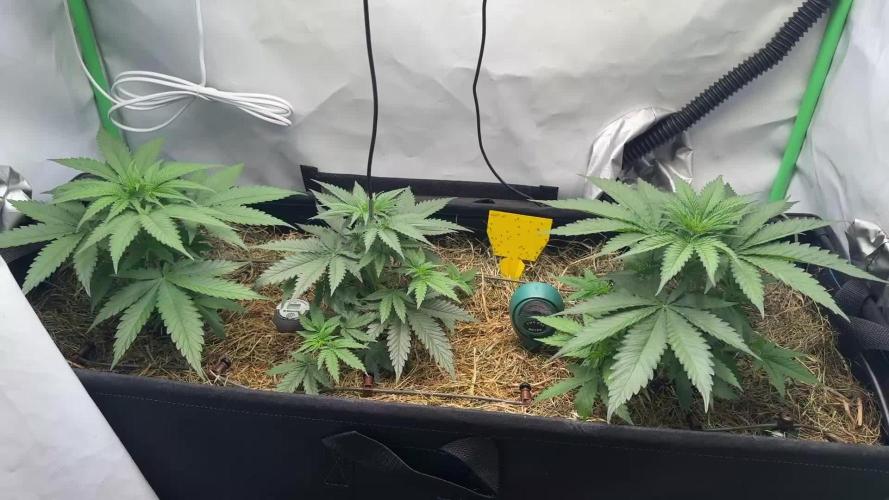
It's so hot weather and moisture, I think
I use nutrients according to Budlabs Apps for Flowering week 1



Likes
24
Share


@Basementganja
Follow
#4 phenotype has been selected as the winner phenotype out of the 12!
I've begun my "regular scale" grow in my 3x3 tent, using four similarly healthy rooted clones!
I used my hand as a wedge to separate moistened soil, to then gently position the roots down into the soil.
The soil was then gently pressed around the roots, and generously watered.
The plan is to train out these plants for 1 month, to different shapes (node amounts) too see which shape yields the highest amount of top quality.
I will lightly feed, as usual. Next run is when I will start pushing nutrients.. The comparison is important to me.