


Likes
Comments
Share


@eldruida_lamota
Follow
Vamos familia novena semana de floración de estás apollo black cherry de SeedStockers.
Que ganas tengo de ver el progreso de esta variedad, las plantas están sanas, se ven con buen color.
Ya estamos entrando en la recta final.
La cantidad de agua cada 48h entre riegos.
Esta semana quitamos ya los nutrientes de la gama Agrobeta.
Las plantas están bastante bien subió algo la temperatura esta semana pero por el momento no les afectó, a ver si consigo bajar un poco la temperatura estas próximas semanas y acabamos todo bien..
Estas próximas semanas veremos como avanzan, terminan de engordar y madurar las flores.
Mars hydro:
Code discount: EL420
https://www.mars-hydro.com/
Agrobeta:
https://www.agrobeta.com/agrobetatiendaonline/36-abonos-canamo
Hasta aquí todo, Buenos humos 💨💨

Likes
3
Share


@Easygrower
Follow
Hello growers welcome to harvest day 82 I did cut her down at day 75 so very quick plant indeed for the first 10 days I gave her water from my tap not ph at all from there she got bio grow/bloom until I see her first pistols from there I gave her bio grow/bloom/top max/bio heaven up to day 61 I then flushed for two weeks then cut her down I had her in a 20/4 light cycle from start to finish she was very easy to grow and has give me some very nice buds smelling like pear drops bang bang that’s it for now happy growing and be safe ✌️

Likes
184
Share


@Still_Smoq
Follow
#seedsman420growoff and #SeedsmanSeeds
📆 Week 13, 20-26 July 2024
20-26 July - Observed and let the plant grow.
📑 This has been another good week for the Pineapple OG! Although it may appear the flowers are not growing in this stage, be assured they are. It takes patience not to cut too early, one has to let the plant do the talking when it comes to maturity. I can’t imagine growing one for 3 months or more and then not have the discipline to allow it to fully mature before harvest. Looking like at least a couple of more weeks to go until finish.
🍶 23 July nutrient solution changed
🍽️ 23 July feeding schedule updated
💧 Using reverse osmosis water with EC/TDS at 0
🐉 Nutrient Solution EC 2.3 at 74 degree F
🔆 Light power at 75%, DLI 45 canopy coverage at 12hrs
😤 Using General Hydroponics, HGC728040, Dual Diaphragm Air Pump, 320 GPH
That is it for this week. Thanks for the look, read and stopping by.

Likes
19
Share


@sirstickyfingers
Follow
Day 39 flower!!
Not a whole lot to report, just watering every 2-3 days ph 6.5 tap water
Top dressed with gaia green bloom 284 with about 2 tablespoons per gallon and then about 2 cups of worm castings. I didnt use All purpose this time around as Im trying to taper off the nitrogen. Hopefully that doesnt come back to bite me
Hopefully the girls are done come May is what im hoping for


Likes
19
Share

@Kirsten
Follow
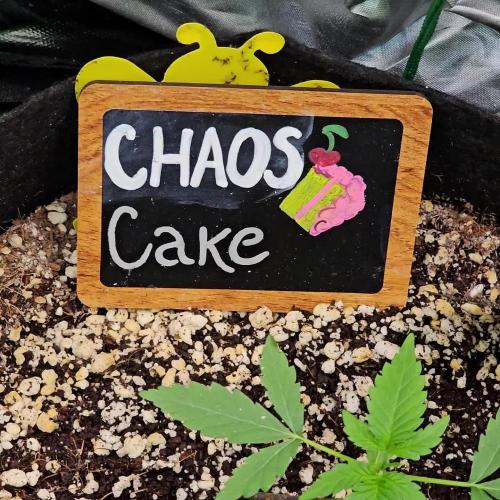
Unfortunately, I've let the Chaos Cake become too dry due to the fungus gnats, I had watered it too much, and afterwards, I just got a huge increase in the amount of fungus gnats.
So, I thought it was best to let it dry out for a while.
I think, however, I might have left it a little bit too long because it was incredibly dry.
So when I watered it, it actually made the plant fall over. So I've had to prop it up with some metal garden pegs.
Hopefully, she'll rectify herself if I make sure that the medium is properly. Watered.
Other than that, the plant is doing well. Hopefully, she'll start becoming a little bit more sturdy next week! 😅
I have added an additional 100Watt UVA/UVB lamp, as the uppermost canopy of Acapulco Gold is blocking pretty much everything in the tent.
Hopefully, this will aid the shorter plants in surviving until I can harvest it. There will be so much more space and lighting. Can't wait! 😅
Here is what I did this week.
28.9.25:
I watered with 1.5L of dechlorinated water PH'd to 6.2 with;
💜 Sea K .5TSP
💜 Biosys .5TSP
PH: 6.2
PPM: 565
The fungus gnats have really increased since I did a watering of the whole tent.
I have some more sticky traps set out, and I will not water for several days.
Once it has dried the top soil, I will add some more Diatomaceous Earth to the top 5cm.
Thanks for checking in this week, and see you in the comments 👌💚🙌🧡😁

Processing
Likes
23
Share

@eldruida_lamota
Follow
Como estamos familia, a día de hoy, viernes, llevamos exactamente 7 días en la fase de floración y todas ellas están marcadas por su sexo.
Todo va sobre ruedas, tenemos mínimas de 20,5 y maximas de 28,5 grados. la humedad no supera nunca el 60%.
Altura mínima lemon kush 25cm.
Altura maxima northern light xl 42cm.
•las power plant xl Han pegado un estirón serio, están empezando a ensanchar bastante.
•una marea verde desde semilla, con tan solo 5 semanas de crecimiento y un solo trasplante desde que se germinó, para controlar un mal crecimiento.

Likes
17
Share


@CanadianFillmore
Follow
Week 4 begins for Mandarin dreams and Divine storm. Both ladies are looking happy and I increased their feed by 1 liter each.
Thank you Mars-Hydro for the TSW2000 light, very happy with the light performance so far.
Thanks for stopping by growfessors 👽 tune in next week for another episode of growfessor theatre!


Likes
11
Share


@Saihtan
Follow
Second tallest plant in the room, shes been drinking every other day, lollipoped the base a bit this week and she is looking great! She's got roots sticking up over the the medium, so same comment about my big bud strain, I will be sure to have a tote with extra soil in it.

Likes
7
Share


@Herbz_Unkraut
Follow
everything looking good so far, plants are quite healthy
check www.sr-organics.com and get a 10% discount on this great 5in1 fertilizer with "UNKRAUT10"
Likes
5
Share


@HegauHillsFarmers_D23
Follow
In dieser Woche hat sich sehr viel getan , die Blüten sind herangereift und haben nochmal etwas an Volumen dazu gewonnen.😍
Der Geruch ist sehr stark und die Terpene intensiver geworden.
Es sind vorallem, Benzin und süße Düfte wahr zunehmen 🍬⛽️ Der Runtz Teil überwiegt leicht .
Die Skywalker OG Runtz Auto brauch nicht sehr lange um die Blüten auszureifen.
Deshalb habe ich hab dieser Woche, begonnen die Pflanze mit Flawless Finisch zu spülen und so auf die Ernte vorzubereiten 🍁🙌🏻


Likes
8
Share


@Hippity
Follow
Refilled the Botaniums today, 7 days after the previous fill, as I saw they were completely empty. One of the plants is starting to show a tiny bit of weird coloring on some leaves and the texture of the leaves is also a bit strange. The other plant looks completely healthy.

Processing
Likes
16
Share


@Matahierbas
Follow
This week all I wanted to see some kind of growth and I kinda see it, they both still look sad , the first plant looks like it's doing "ok" I do see new roots developing so that's a good sign.
The 2nd plant still some brownin' appears on some leaves I don't know BUT I do see new roots growing on her my question is: should I still keep her going? OR let her get the axe?
The deficiency still appears and I've done everything on the book but don't wonna give up on her (just yet) but I really don't know what to do with her? I wonna give her sometime see what she tells me or if u guys know what am doing wrong I would greatly appreciate

Likes
1
Share


@Growing_Spartan
Follow
August 10-15th
Flowers were popping and the tent looked happy and healthy


Likes
75
Share


@Mr_und_Ms_Lue_Roots
Follow
Hallo alle miteinander,
Leider einen Tag verspätet das Update, doch als wir gestern Abend noch feststellten, dass wir in dem Pot mit der Purple aus unserem Garten Ameisen bzw. Fliegende Ameisen im Substrat haben, sind wir erst einmal erschöpft ins Bett gefallen hehe. Wir bitte dahingehend um Verzeihung und ggf. Verständnis!
Vielen Dank im Voraus dahingehend 😉
So nun wird sich jetzt erst einmal mit SF- Nematoden um die Ameisen und auch zur Sicherheit gegen weiter Trauermücken gekümmert. Wir haben noch Zeot bis Anfang August und somit kann die Purple die sich im Wachstum befindet, noch ein wenig austoben. Insofern auch wiederum positiv, denn würden wir die Lampe anmachen, würde es wegen der Trocknung noch wärmer werden. Also soweit alles ok bis hierher. Nur die eine Auto von Fast Buds überrascht uns sehr 😄 Es lohnte sich sehr diesen Breeder auszuprobieren, keimrate von 2 Samen bis hier hin 100 %
Bisher sehr begeistert 😎
Ein kleines Tagebuch wird jetzt baldig auch existieren dahingehend 😎
Die Purple haben wir noch mal entlaubt damit sie besser Atmen kann und oder auch kein Schimmel sich bildet.
Ansonsten läuft alles wie gewohnt.
Vielen Dank im Voraus, an alle die vorbeigeschaut, geliket und oder auch Kommentieren! 😉
VG euer Team Roots✌️

Likes
7
Share

@vivibeats
Follow
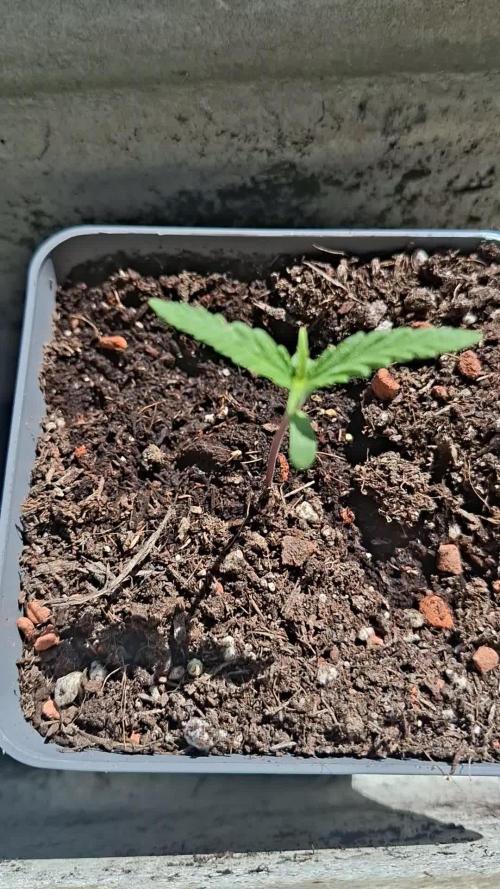
day 18 wheter is finaly good enoug so she coul stay outside except for the night


