


Likes
Comments
Share


@tresplantes
Follow
The Ladies Look Great on day 17 of flower i shaved them and defoliated
Pink runtz is the biggest and strongest
But the other two doing grat as well i Hope they dont Stretch any higher due to Space issues


Likes
16
Share


@Chocolopeison
Follow
Comenzando la semana 4 de floración y a las nenas le dimos una bienvenida para que comiencen de lleno esta fase de engorde.
Estos día bajamos a 2 riegos por día. Normalmente hacemos 3. Ya a mitad de semana volveremos a los 3 riegos.
A las nenas le sacamos prácticamente toda las hojas de abanico, ahora tenemos muchísima más penetración en la planta. Quizás tengamos problemas de altura pero ya estamos buscando la manera de resolverlo.


Likes
31
Share


@BigBadLion
Follow
Heeey! 👋
Another update! :D
This week I made another transplant, this time from the drink cups to a small 3.5 liter pot and I also applied some more mycorrhizas to my babies! 😃 From both of them Pistachio seems to be the one who's developing faster and Matcha is trying to catch her sister. The plants ended with about 19500 lumens! Couldn't rise them more because of heat issues 😟
The only tricky part this week was when I decided to add a bit of growing nutrients to my plants so I ended up watering them a lot after the transplant and the results were quite shocking! I barely added 2ml of total nutrients per liter but the runoff water I got was around the 1400 ppm which all honestly scared me a lot! That's way too much for two young plants (and I believe some of the excess nutrients can be seen on Matcha) nonetheless they are still developing so I'll just continue with water for now till they start to lose color (the Light Mix I used should have enough 'food' for at least 2 weeks, so that's good I believe!
Besides that everything went well. I'm using tap water for my humidifier and its sediments are being thrown into the air by it, but so far it seems my plants are doing well.
During the last 4 days the plants developed a lot in their new pots so I'm quite happy for that! If things go well next week I'll be moving them to their final container!
Thanks everyone for reading! I hope you'll all enjoy my new timelapses and photos! :D

Likes
2
Share

@Abraxasbot1812
Follow
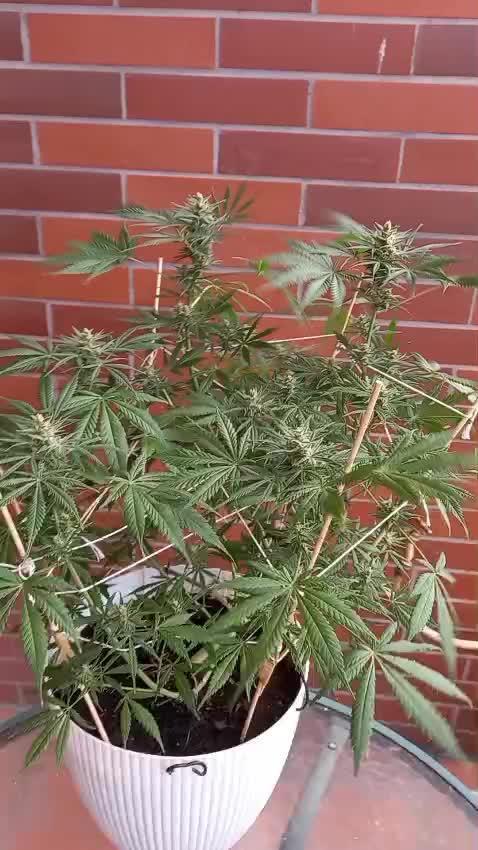
This are pictures taken on the first day into the fifth week of flowering for closet plant and seventh week of flowering for window plant. I've kept my daily routine of plucking anything that looks as male growth on window plant (After the first plucking session, I can hardly find any nanners). Also had a moment of OCD in which I tried to find all swollen bracts that contained anything similar to a developing seed. I read that plucking baby seeds out is not really helpful, quite the opposite actually. But I really wanted to learn to identify this sort of growth. I did find quite a few of them (and I'm pretty sure I caused some damage to the buds), but I still think that the plant will yield a decent harvest for my expectations. If anything, it's been a great learning experience.
Closet plant doesn't seem to be pollinated at all (I mist the air around both plants quite often to prevent this) , and its growth continues to amaze me. I think it's yield will probably double WP's harvest.
This week I dropped window plant's feeding. Giving it Bloom mix that's got way less nutrients. And starting on friday of this same week I'll start flushing the roots (this will continue for it's last 10 days).
I'm super excited about this last weeks for both plants. Next will be window plant's last week of life!! Harvest is so close!
I think I'll actually miss them.
Likes
19
Share


@Sti_Cazz
Follow
Day 70.
Watered with heavy nutes last Wednesday and just water today... Just wanna give em a little break and see...
The super silver haze is pretty much done. Will wait another week to get more Amber just a few seen atm.
The main cola must be 10 grams alone... Bets are on!
Definitely doing 100% better then last time... Guessing going to be 20/25 grams dry compared to last grow.

Processing
Likes
4
Share


@Ogbangbang2981
Follow
this week is like every other feed bat poo tea and straight water outdoors so sun takes care of her right through


Likes
15
Share


@Aleks555
Follow
42Fast Buds - Gorilla Zkittlez Auto 🌱
Today marks 70 days, and it's finally time to bring this incredible journey to an end. 💫 Honestly, I can hardly bring myself to cut her down, I've grown so attached to her, and she's just so beautiful. But the trichomes have turned a deep amber, and there's no more time to wait.
For the last 6 days, we’ve been flushing her roots with ice-cold water, watching as she transformed, her colors changing and becoming even more stunning. It wasn’t just a grow – it was a true process of evolution.
I want to give a huge thanks to 42FAST Buds for their amazing genetics and for allowing me to grow such a phenomenal strain. Gorilla Zkittlez Auto is an absolute masterpiece! 💥
Special thanks to Xpert Nutrients for their incredible fertilizers and ongoing support. Without you, we wouldn’t have achieved these remarkable results. You helped grow not just a plant, but a true work of art! 🌟
Processing
Likes
24
Share


@DaddyPrime
Follow
8/9 shes flowering💚 pistils everywhere. Been feeding with open sesame from fox farms and everythings looking awesome. I am concerned about how lanky she is. Her node spacing is tight but shes long and the branches are already drooping from the weight from pistils and new leaves lol fml im gonna have to get stakes/supports soon
8/10 shes loving the weather or the nutes, shes praying so fucking hard its beautiful

Likes
26
Share


@olli0420
Follow
this week is going really good! I am flushing right now with just plain water. I was supposed to harvest but I decided to give it another watering since the ppm values were the maximum recommended for harvest and I want as less fertilizer in my buds as possible😁 next time I'll water I'll give them 4/5 liters per plant and when the soil is kinda moist and about to dry I will give them 24 hrs of darkness to increase resin and then FINALLY chop everything off!
I'm really excited to try them! they smell really amazing.

Likes
50
Share


@Pr3m_85
Follow
Hi GD Family,
A big thank you to Green house Seeds Co, for selected to test their new US genetic.
My previously run was a #Wonder Pie came from this bank, and i'm verry happy of the result. So, I'm pressed to see what this strain has in the belly !!! 💪💪💪💪
------------------------------------------------------------------------------
Puted the seeds into a glass of mineral water to activate them. Then, putted them between two papels of towel until the germination.
------------------------------------------------------------------------------
The first four seeds did not germinate. I gave two more to germinate on June 20, in less than 24 hours, with the same method previously writed, the two germs came out !!! 😊😊😊
------------------------------------------------------------------------------
Peace to all ✌️🏼✌️🏻✌️🏿✌️✌️🏾✌️🏽


Likes
4
Share

@FireAntTheGrower
Follow
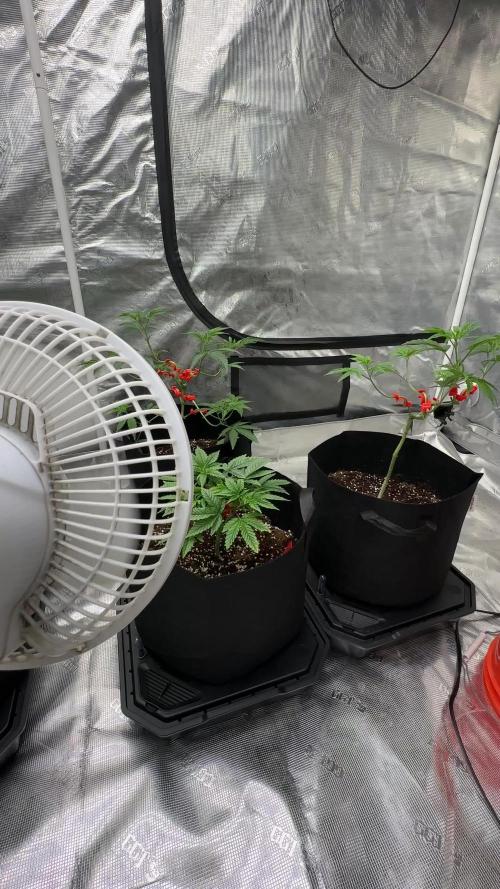
Going on 4th weeks in vegetative stage. Added more red lst clips to foam a table or even canopy as they grow towards the lights. Cut off lower branches that I knew not going to be as strong, but growing big buds due to activating the self watering system I set my ph low as it’ll uprising by next Friday. I’m juice bout this grow going to turn out 10x better plus got the cannatrol long been waiting. Let go :)


Likes
19
Share


@adam_pawloski87
Follow
This week went real well! All 5 of the Twenty20 Ogreberry Autos and the 1 Fastbuds Bruce Banner have successfully germinated and sprouted up from the soil!! This upcoming week we will start giving these girls a heavy feeding of nutrients PH d at 6.5 an see how they react , most likely will love it!! Temperature an humidity has been on point, through out the day we reach 70-75 degrees an a nice humidity of 65%which is always nice ! Hope you all enjoy an keep them eyes peeled for next week !! Peace, love, an positive vibes to all you Growmies out there! If any questions please feel free to ask , more then happy to help! Cheers everybody to another great grow!!!


Likes
11
Share


@HuckingFot
Follow
This strains aroma is intoxicating, first test on 8/26. Smoked 3/4 of a big bowl And the high is a 8/10. Will cure for another 2 weeks and reassess..... at 66% humidity right now, Amber jar burping 1-2 times a day.
9/9 second test. same great taste and smell. Accidentally got too high and forgot to cover jar so humidity is around 48%. Smoked 3/4 of a small bowl and was really high all night.

Likes
18
Share


@DeepRootsGrowTrees
Follow
PURPLE KUSH / KANNABIA SEEDS
WEEK #16 OVERALL
WEEK #4 FLOWER
This week she's doing great 👍 no issues buds are growing and getting nice trichome coverage!! She's looking healthy 👌!! Stay Growing!!
Thank you for stopping by and taking a look it's much appreciated!!
THANK YOU KANNABIA!!!
KANNABIA / PURPLE

Likes
167
Share


@PapaNugs
Follow
A great week overall. Self watering pots are doing great. Keeping things moist without having to water all the time. Buds are really swelling up at this point and starting to change colors. Exciting but I don't think next week will be harvest as advertised. I think it'll be two to three more weeks.
Lights at 100% power.
Here are the lights details:
Medic Grow Mini Sun-2 150W LED
Model: MN150-022
Spectrum mode: V1
Efficacy: 2.8 umol/J
Thanks for stopping by!
You can find the light on Grow Diaries:
https://growdiaries.com/grow-lights/medic-grow/mini-sun-2-150-watts
You can find the light on Medic Grow's website:
https://medicgrow.com/
