Likes
4
Share

@M420_GROWS
Follow
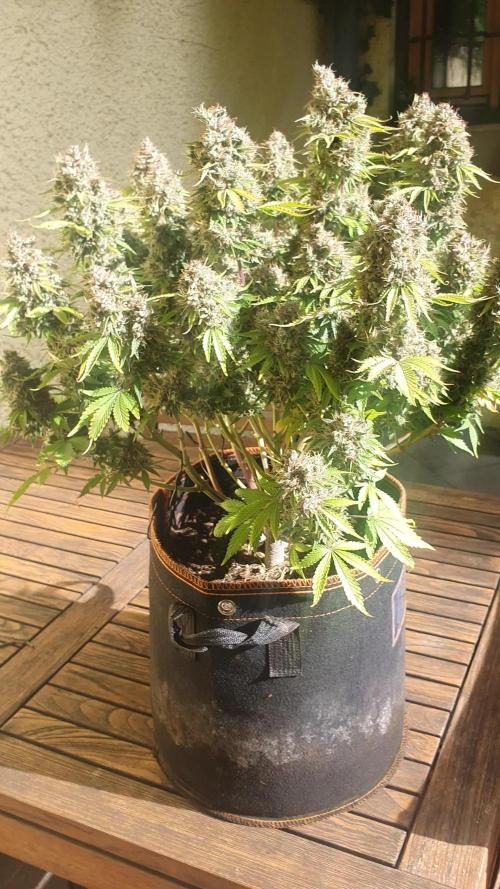
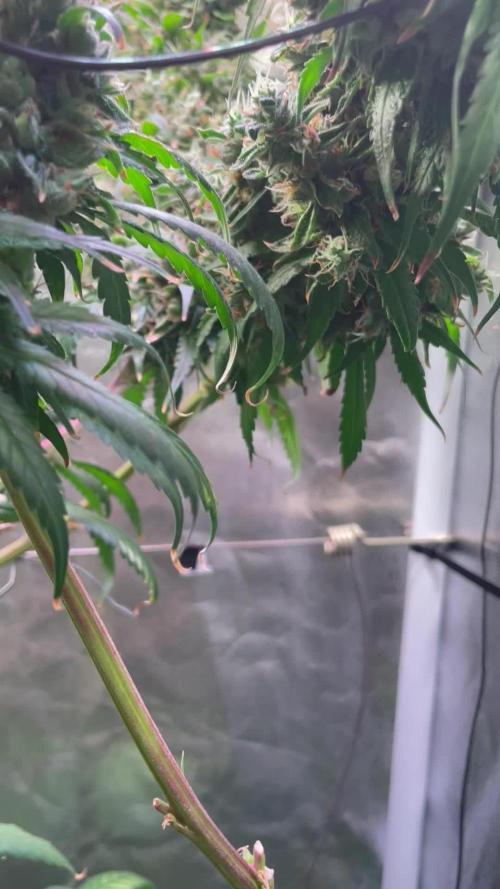
Still 60W 30-50k lux
D4: ~35% dried stigma
~70% milky trichs, almost no amber

Likes
2
Share


@ao_grows1978
Follow
Week 3 for the solo is officially complete. She's been growing with no trouble. Root development has been excellent. As you can see, I decided to mainline. Seeing as she's in a solo cup, I'm not too worried about stunting. I'm horrible at measuring the water intake, but the cup needs to be watered daily. It's as lite as a feather everyday.
Likes
7
Share


@Nikkov
Follow
Well, another week has passed and it has been growing not exactly as I expected, but they warned me about using only base fertilizers with an inert soil and a higher ambient temperature, I could have a not so good result, well, it's one more experience and I liked it and let's see how it will be until the end of the cycle because the next one I already ordered a starter kit from the advanced nutrients line! Let's Go!
Likes
72
Share


@BodyByVio
Follow
Day 65 : officially 1st day of flush . Changed the reservoir with fresh water and 1.2g/5 gallons of Yucca extract and 5ml/gallon of Cleanex from Botanicare .
Day 68- I did some defoliate. Few more days until harvest.

Likes
18
Share


Likes
49
Share


@masterofsmeagol
Follow
8/22 Defoliated what needed it.with all the rain I had to remove some yellow leaves. The container plants are affected the most as the wind drys those bags out in like a day. I'll have to check twice a day. Watered a gallon a plant yesterday before going to the hospital, then went back over after and gave everything at least another half gallon. I'm pretty sure everything got their 10%. Yesterday I upped the feeding regimen to 2.5 pints a plant. A little more on the ones that looked like they needed it most. I took some pretty good pictures. I hope that's not septoria on the leaf that I took a picture of in the fire pit. Glad I sprayed that BT. I'll have to keep up with it. I'm also considering an application of plant doctor just in case. I don't SEE anything fungal bur that would suck. Flowers arecexploding in growth. Just got a text from my father telling me how my plants are "budding big time" lol. I have the bamboo I need but there are still a few individual HUGE branches that will soon need more support.
Update: Wife felt A LITTLE better so I went to check the girls around 6pm. I found my canary starting to droop. I'm not sure If I gave a full two gallons to everything yesterday. One or two may have only gotten one and a half. I compared the weight with the weight of a 22 gallon bag of dry soil and realized it was definately time to water even though only one plant was drooping they were all dry. It may have been okay to leave it but i've let them dry out far too often already so I made sure EVERY PLANT got it's 10% of water (except containers) and I watered slower. I don't see any negative effects from the B.T. but i'm noticing some older leaves turning yellow on a couple plants as this explosive flowering continues. I"m just going to continue monitoring it. I hope I did the right thing and watered. If it was going to rain tonight I might have held off but they were super light. I also took a video and some pictures but my wife is using my phone to listen to music and calm down so i'll need to upload those pictures and videos tomorrow. I finished my defoliation right before dark. Good night guys. I took a nice 3 minute te video this morning but it won't upload or send to anyone.
UPDATE: BAGS HELD THERE WEIGHT!!! YES!! WE'LL GET A TINY BIT OF RAIN IF ANYTHING TONIGHT AND NOTHING TOMMOROW UNTIL THE NIGHT AND RAIN THE NEXT DAY SO ITS LOOKING PRETTY GOOD FOR MY WATERING. ID PREFER TO WATER IN MORNINGS BUT IVE HAD TO KINDA PLAY IT BY EAR. PLANTS LOOK AWESOME. IM SUPER EXCITED. SOME LEAVES ARE DROPPING BUT THAT'S TO BE EXPECTED. IT SEEMS LIKE BUDS DOUBLE IN SIZE ALMOST EVERYDAY!!!
8/23 Noticed damage on a lower branch that looks like earwig damage. I put sluggo plus pellets on the ground between the pallets but I don't think that will help much if they're in the soil. If they are there their aren't many. Or it could be some other pest. It's the very bottom branch that should've been pruned already anyway. Didn't water today as we are supposed to get an inch of rain between tonight and tomorrow. My canary was sagging but it was wet? The soil was definately heavier than the 22gallon bag I use to compare. It just dries out so fast in those bags. I'll check them throughout the day. Oh and I forgot that I only have the 3 10th planet's. I kept referring to another as a "different phenome" so i dug down and found the tag and it was a blueberry cheese. Since the light dep went bad almost half the garden is blueberry cheese. The flowers look much more saliva dominant then the tenth planet or the purple punch. The BIG CHEESE in the 50 in the back had really long saliva looking leaves which is much different than some of her sisters. Anyway things are still doing good. I hope the girls csn make it the day without water. I don't want to water a day before we get an inch of rain. It is sunny and 80 though so I'll play it by ear.
UPDATE: STOPPED AT THE GROW AROUND ONE. MY CANARY LOOKED DROOPING. I BROUGHT THE VIDEO AND PICTURES TO MY COMMERCIAL BUDDY. I DIDN'T WANT TO WATER BECAUSE WE ARE GETTING A HALF IN OF RAIN TOMM AND ANOTHER HALF IN THAT NIGHT. WE WERE ON THE SAME PAGE AND FIGURED TO SPLIT THE DIFFERENCE AS TWO PLANTS WERE SUBSTANTIALLY LIGHTER THAN THE REST. THE CANARY GOT A GALLON. I USED ABOUT 8 GALLONS OF WATER. THE 50 GOT ABOUT A GALLON AS IT WAS DRY AND DROOPING. PROBABLY SHOULDVE GAVE IT MORE. I USED A SMALL WATER CAN TO WATER THIS TIME. THE BAGS WEREN'T SUPER LIGHT BUT THE BREEZE IS PICKING UP AND NOW IT SAYS NO RAIN UNTIL 6AM. I HOPE THIS WAS THE RIGHT DECISION. THEY PROBABLY WOULD'VE MADE IT. A COUPLE MIGHT'VE TOTALLY DRIED OUT AND DROOPY. I WANT TO AVOID THAT AS I DONT WANT TO STRESS THE PLANTS. THE BUDS ARE REALLY EXPLODING! IM LOVING THIS LIQUID KOOL BLOOM! OH, I FOUND ANOTHER APHID AN AND ANTS ON MY PLANTS. FOUND "WHAT LOOKS LIKE EARWIG DAMAGE" ON SMALL LOWER BRANCHES THAT SHOULD'VE BEEN PRUNED ALREADY. IM PLANNING TO GO AT NIGHT WITH A SPRAY BOTTLE AND ALCOHOL AND SEE IF THAT'S THE DEAL. IF NOT THE PILLARS JUST ATE A BUNCH OF BT.
8/24 It was pouring this morning so I just ran down and shook off my plants. Didnt take any pictures or do a video as it was raining pretty hard. IT is now 11am and the rain has stopped. I did not go at night to check for earwigs due to my wife needing me do to her medical illness. I've been through a lot this week. That's why I asked my buddy before I DID ANYTHING. It's a GOOD thing my bags dry out so tast but it means I REALLY need to keep on top of it. I'll make sure I get sleep and a decent meal and I'll check things out later on today. If I see cause for alarm I'll come back at night. I'll go over to shake things off anyway.
UPDATE: Went over after the rain slowed and shook things off. The wind came up and I remembered I had a few plants that were only supported on the main stem. Those plants are strong as hell and have branches the diameter bigger than the main stalk of an indoor plant. Still, I used the fence and the stake that was securing the main stalk and made like a triangle of string attached to the fence and the garden stake. Essentially it just makes a large triangle of string (loose) around this strong compact plant so if the wind blows to hard during the storm it will give it some more support. That was my big purple punch. I added another stake to a blueberry cheese that I FIMed with those huge colas and made sure all the nail branches were tied up. I SHOULD go check for earwigs to tonight but I need sleep. If they're there, there aren't many. I think I used the correct "their's" lol I didn't mean to. I'm losing leaves that are turning yellow and falling off. I think a few may be hungry. I'll check the diary and feed again. I'll try my ph meter as well but I really don't trust it. Everything going in is good and when I phed the rainwater it was much lower.
8/25 RAINED ALL DAY OR MOST OF IT. FOR SOME REASON MY COMMENT IS GONE.
8/26 FED 3 GALLONS TO GARDEN EVERYBODY GOT 1.75 PINTS AT LEAST. Defoliated what needed it after the storm and fed three gallons to the garden of nutrient mix. Each plant got at least a powerade bottle (1.75 pints), the big cheese in the fifty got over two as did the two other 30s. I spread around what was left after and ended up with one powerade bottle of mix left. I should've just gave it to them but hindsight is 20/20. Some plants are yellowing up a little bit and it's climbing the plant. Sunny out today. Plants are exploding in flower and we've experienced some rain but it still concerns me. I'm also concerned about earwigs. Haven't seen any and actually (happily) found a couple aphids and ants. If the earwigs were bad there wouldn't be a single aphid around. I've seen ants on the plants so I'm sure there are some more aphids. The tiny branches that should've been pruned have damage that looks like previous years from earwigs. On one branch it looks like they chewed the stem of a secondary branch and it was just hanging there. I thought I killed all those bastards but if a couple got IN the grow bags it will be much harder to catch them. The damage isn't severe and it's on a branch I was going to prune anyway. It's just the point. They seem to love any plant with "blueberry" in it. They also seem to stay totally away from any thick indica buds though and prefer longer less dense buds. That's my take from dealing with earwigs for several seasons in a row. Even if present in small numbers I think I did enough so they won't have much of an impact even if they are there but I'm going to go check anyway. Boy things are looking good!
UPDATE: Went back over and it seems like a bunch of leaves yellowed on my "big cheese." I hope it's not leaf septoria. I also found one piece of bedroom on the very bottom of a plant. Just shit I shouldve pruned but still. I noticed some ants and a few aphids as well. I'm going to have to watch the yellowing and consider using plant doctor preventatively in case of fungal.
8/27 After that increased feeding I defoliated a shit ton of yellow leaves. The big cheese has lost quite a few fan leaves. It's not just fan leaves though. It seems some newer growth yellows on that plant too. I have a couple blueberry cheese that may have septoria. Or it could be overwater with all this rain. Considering a treatment of plant doctor. Buds are EXPLODING in growth.
UPDATE: Super sunny day spent in the E.R. Went back and checked the girls and they looked even BIGGER!!! I'm super stoked for this fall. Wondering if the leaves dropping from my big cheese is normal. I hope it's not fungal. If it is I have several products to treat it. I might throw a question up and see what ppl think. I've tried to upload this video three times!!! I hope it gets through this time. Won't go past 14% amd I've tried four times. It's a good video too! I'll upload tomorrow when I have better service. FINALLY!
8/28 Bags were wet and heavy as hell. It should be easy to tell when its time to water but my anxiety still fucks around with me. Showed my buddy a bunch of pictures and videos and addressed all my concerns. Mainly septoria. He doesn't think I've got it. He looked through everything and made me feel a lot better. Just senescence and maybe a little over watered from the rain. He said many growers cut the nitrogen right off at the stage of flower where some of my plants are at. That made me feel much better. The sun is out and it's upper 70s at 11. Plants are exploding in growth. Lighting was good this'll morning g so I took numerous photos and videos. I uploaded one but then I deleted all my large files which apparently included tge ones I did today. During my evening check up I'll take a couple more and upload them. Boy things are looking good. Knock on wood but this is looking like my best year ever!
UPDATE: WENT OVER ROGHT BEDORE DARK TO CHECK THE GIRPS. DEFOLIATED A SHIT TON OF LEAVES. IT WAS LIKE 80 TODAY. BAGS ARE STILL HEAVY HAS HELL. BUDS ARE REALLY EXPLODING. THEY LOOK BIGGER TONIGHT THEN THEY DID THIS MORNING AND IM GETTING A REALLY NICE SWEEET SKUNKY SMELL. FOUND A COUOLE APHIDS AMD I COULD DUE TO CLEAN OUT THE INTERIOR OF SOME OF TGE PLANTS. I SHOULD ALSO DO ANOTHER APP OF BT. IVE NOTICED THAT I HAVE SOME PEST ISSUES. NOT BAD ONES BUT STILL.

Likes
64
Share


@CBD_Sweden
Follow
This is a very easy plant to grow, in my case i had some problems the last 4 weeks with heat that i couldn't resolve.
I have had temperatures around 34 degrees Celsius when my light has bean on and around 25 when off.

Likes
12
Share

@BlaKX
Follow
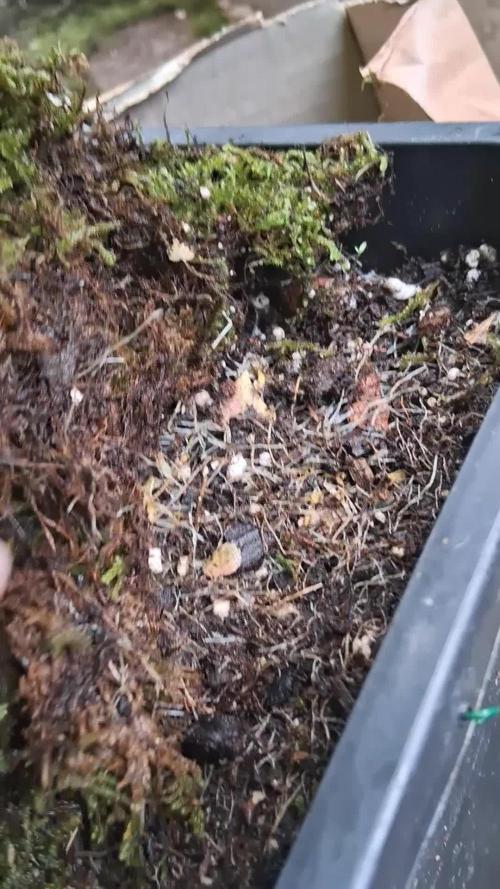
Ai Gude Growmies Plan B mit EPN Dünger und nur Wasser Gießen!
Musste wieder entlauben und Triebe stuzen da mehr Blatt Masse bei er Hitze leider 2 mal dazu führte das es substrat fast komplett austrocknete da ich nicht mit gerechnet habe das sie 3-4 L an einem Tag verbraucht.
Habe seit dem 1 Tag outdoor die topf Oberfläche mit moos abgedeckt weil es 1. Das Gießwasser aufsaugt and gleichmäßig an die erde abgibt habe noch nie gesehen das die Wurzeln so dicht unter der Oberfläche wachsen!

Likes
4
Share


@ibbzy
Follow
Slight accident this week where the red spectrum bar had popped of the railing and fell on the front row of babies and burnt them :( they’re recovering
Everything seems slow in this compost/coco soil mix but hey…chugging along.
I think I may go full coco next run.
I believe they should start focusing on bud now have top dressed once more with compost & 2-8-4.
Likes
1
Share


@Kusemono
Follow
Juju grow 2ml
Juju flowa Bloom 3 ml
Juju Green Mystic 3 ml
1liter Water
Each plant 130 ml

Processing
Likes
2
Share


@sanchelos
Follow
ростишка радует,замечаний нет,Шишка живёт со мной в комнате,вазон установил за системным блоком дабы создать обдув!


Likes
1
Share

@sunshinegroww
Follow
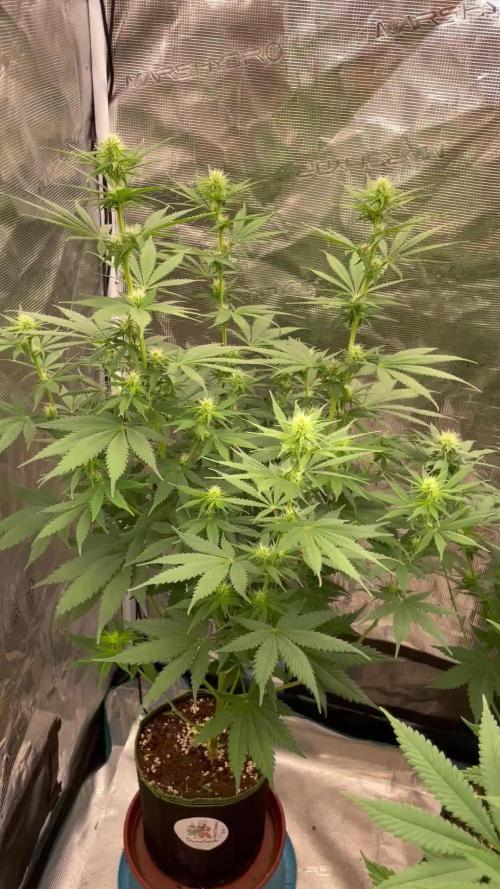
Well she had a slow start and now wow very happy girl and doing great she had lower part cleaned up so she can start pumping those top flowers
Likes
Comments
Share


@UGrowGuy
Follow
01/03 These girls are growing fast. I will turn up the lights and stake over the next couple days. I may or may not defoliate. Well see how they look tied up.
01/05 They like the flower nutes and are starting to stretch!
Likes
21
Share


@PeterSage
Follow
hi guys, so situation: i guess we are 2 week from the cut, if the weather keep this sunny and warm September.
update on the plant: first of all I'm pretty disappointed of the size of the colas, very very small, not nearly as thick as I would imagined. Since I've been growing a lot of autos recently I had more big colas with them than with this fem, just disappointing.
so now the problem is: why are the colas not that dense? yes, I had a problem with K (deficiency) at the start of flowering, but was in early stages, and i quickly added K to the solution.
my guesses:
-I used product of the line biobizz, the try pack, and I think they were just not good enough for a feminized plant, because the pH was right all the time so i don't think it was a block.
-didn't topped my plant, I know its a way to enhance the production, but I was curious to see the normal growth of the plant.
-grown in pot, maybe wrong pot? too hot in the summer?
-wrong substrate? (I mixed three different types, adding compost and manure, beside perlite and vermiculite of course)
-bad climate/genetics? (this year was heavy hot but a lot of rainy days too, often in spring)
the quality seems fine, nice smell and very sticky on the hand but very very small buds :(
the last week an invasion of borer, I hate those fuckers, it's impossibile to control them, as soon as I stopped the foliar application of neem/aloe they arrived, really annoying.