


Likes
Comments
Share


@AlpenZilla
Follow
We are at the beginning of the 9th week of flowering. The trichomes are slowly beginning to change color.
I'm now going on vacation for 9 days, I couldn't have planned it any shittier. But anyway, I've decided to keep them growing and then probably harvest them straight after my vacation.

Likes
75
Share

@Natrona
Follow
Divine Seeds Auto Contest Candy Outside Grow
👉Sponsored Grow👈
W10 F6
8/3-9
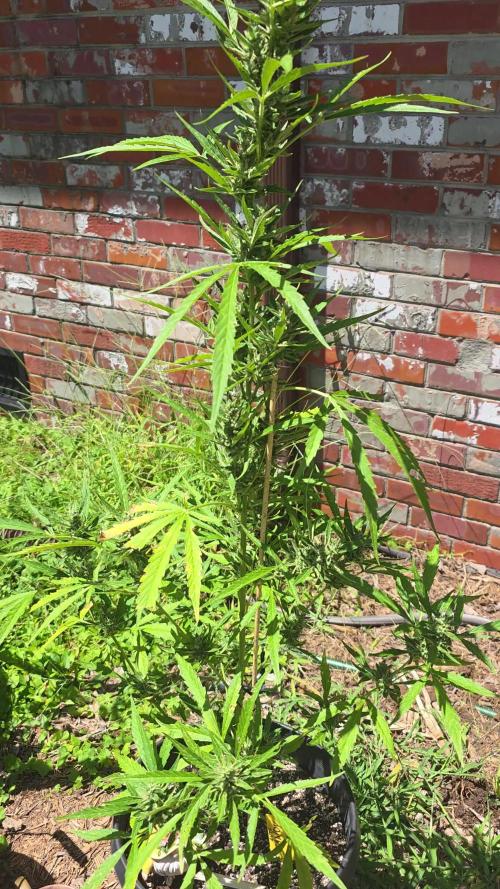
I wish I could share this week’s weather with you. It was sunny and comfortable in the 70-80s with 50% humidity. This means that whatever the temperature is, the air feels like it, not 10-15 degrees hotter.
My Auto Candy is a tall lady and has good node spacing so there is space for air flow. When I went outside this afternoon, the sun was hitting the main stalk, and she was shimmering. Looking at the bud structure, the leaves are more spread out than the other outside gals with minimal sugar leaves.
So far, she is easy to grow and resistant to fungus and pests.
Thank you all for your continued support and encouragement. Your likes and comments motivate me to keep sharing my journey. Let’s continue to learn to grow together!
Stay green, growers love 💚🌿
💫Natrona💫

Likes
9
Share


@TheWeedaltor
Follow
A strong and with amazing flavors auto flowering strain, tasty and body strong, probably one of the best indica auto flowering I ever grown! Congratulations for FastBuds, a great breeder in the auto flowering game 💪🏻

Likes
26
Share


@1Right_Angle
Follow
Sunday Jan 3; Transitioning from Veg to Flower Nutes is in progress.
Tonight sees 2/3 Bloom / 1/3 Veg and that’s it.
- dropped tent temp down to 26C and humidity seems steady just under 50%
- feeding schedule has been every other day. Stretching that to every 3 days after tonight
** water volume is my conundrum **
Do I add more water for the plant ?
Am I giving enough Nutrients to the plant for it to grow big?
Question Time ! &. Results:
Volume of water was raised again for dinner tonight. 2.5 g between both plants. On the great advice I received today from 2 growers, and my desire to increase the amount of food that the plants see; the volume of water will go up and the time between feedings will resemble more of a 4 & 2 day cycle.
Other Changes—-
*”hand-weighing the pots” to get a Feel for moisture content, will become a regular task.
**Giving the plants an extra day to absorb larger feedings, will become part of a staggered routine to help keep them on the Dry-Side
Mad growth again today (sun p.m.), with the last taste of Medi-One out of the way early in week 3. A 4 day liquid-break and then 100% flower food.
Jan 4 saw the plant looking well hydrated. No obvious run-off from yesterday’s feeding, says a deep watering has not happened yet.
I will give the soil moisture a chance to recover, and increase next weeks Volume of water (aka nutrition) slightly once again.
Breaking new ground ie: past a gallon per plant indoors and watering based on actual Needs. looking for real progress
Jan 6th: next dinner is listed above, either tonight or tomorrow it will be used, based on how Dry the plants feel tonight
Today is day 3 since the last watering. If possible I’ll hold-out till tomorrow. is Desert-like.
Leaves are still pert. And the
~13 gallons or so of soil still feels bloody solid.
So I’ll wait till a 4th day and feed it tomorrow. Fresh pictures uploaded w/ a video
Jan 7: Fed each plant after 4 days without food or water, and they look great. Upped water volume 1/4 gal ea., (1.5 gal total ea.) and this will start the desired 4/2 watering schedule. Amount goes up each of next couple weeks. (Then taper off nutes and h2o in the last weeks is the plan)
-plants looked great after 4 days without water. Here’s one for patience.
-if the plant growth and bud development are any indication... the plant on the left appears to be a week ahead of the plant on the right.
The one on the right just seems to be taking off now.
Jan 8 Uv-B use has been s/d for the time being ~ 3 or 4 weeks. I am going to wait until there are actual buds on the branches, before making good use of the wavelength.
* also behind that decision is the fact that the plant Under the Light, is solidly 4” behind the other since I started adding short periods of uv-b exposure. (The plants were exactly equal up until I started exposing the R plant for 1/2 the CMH exposure. ie: 6 hours)
The plant lagging behind in reach and bud development, is the uv-b plant. And that’s only been using it since Dec 31st !
As it stands articles are saying to use the Uv-B later in flower. OK, I’m in !
Taking action on an observation.
Sat Jan 9:
- opening the tent tonight there was a 3” stretch over the course of the nite/day on the left. And it looks like the plant on the right is kicking-in as well. Slower, but happening.
Like the whole L plant grew 3”

Likes
93
Share


@Hou_Stone
Follow
Day 61 / Flowering 28
Genetics = (Wedding Cake x Gelato #33) x Hawaiian Snow
They are getting big!
I made a HST on the main buds of 2 plants 👊
---------------------------------------------
💧Watering
On average I water each pot with:
Day 59 : 1 Liter
Day 63 : 1 Liter with 0.3 Gram of BoosterPK+
I alternate watering, one with booster in my water and the next without.
I add Bioenhancer once every 14 days +/-.
I add very few nutrients to my water because I have already placed Bio Nutrients directly in my soil 😉 (BioGrow & BioBloom added on week 1 & 5)
------------------------------------------------------------
🔥❄️Temperature of the week :
Day : 21-24°C (Humidity : 55-70%)
Night : 16-19°C
------------------------------------------------------------
🚀Equipment of the week ⭐️ :
Lamp Led 300W : power 95% at 35cm
Extractor+ carbon filter ON 24/24h
2 fans ON 12/24h
My oscillating fan stopped working this week😵 I replaced it with 2 normal fans
------------------------------------------------------------
📜Links :
USA x Landrace LE Seeds : (Seeds of this Limited Edition is in restocking)
https://shop.greenhouseseeds.nl/feminised-cannabis-seeds/usa-and-landrace-limited-edition/
Food for your plants 🔥🔥👍
https://www.greenhousefeeding.com/
👨🚀My Instagram 🌱❤️️:
https://www.instagram.com/hou_stone420/
------------------------------------------------------------
☮️Thanks for your visit💚☮️

Likes
51
Share


@Chumpkilla
Follow
2/17/24 - Day 103 - The flush starts today! By Thursday I'll be giving her the chop.
2/19/24 - Day 105 - Flush is going well. Buds are still plumping up nicely.
2/21/24 - Day 107 - Ok this is the last day shes at the end of the Flush. Ill start a new week tomorrow, when I open the box up at 9am its chop time! I spent the day preparing, cleaning my workspace. Gathering all my tools, gloves, drying racks, etc. Here are the last pictures you guys are going to see of her growing. Enjoy!
Likes
34
Share


@TommyBVRSA75
Follow
Así que semana 13 y quan hermosos podrían estar mis superlativos cultivars. Qué hay que decir de algo así?!? Hoy he decidido a colgar un vídeo para que tengáis muy presente las cosas...y si, es impresionante lo que es la cobertura de azúcar y algodón que hojas y super cogollos tienen. Y casi todo sale a la perfección, por qué estamos en el apex del invierno con temperaturas exteriores que hoy están sobre los 17ºC de máxima y 3ºC (!!!) de mínimo...la humedad es alta y si logramos tener los niveles en 70% en interior es un mal menor, por qué afuera hoy la humedad incluso con sol está sobre los 90% (mi ciudad está rodeada por uno de los mayores rios de la Península Ibérica; de la costa atlantica y de un enorme pinar y aquí los 90% de humedad relativa es algo muy normal, así que hay que tirar del deshumificador y intentar que en interiores basar las tasas sobre los 70/75% y no es perfecto, pero para mí, mucho mejor que estas tasas de humedad relativa en floración, es poder tener una temperatura interior en luces encendidas sobre los 23ºC y eso para canabicas en invierno, es un regalo de la naturaleza.
Os invito a que miréis la cobertura de algodón dulce que hay en las ramas y los super cogollos que los cultivars de Ripper me están dando...a la gente de Ripper, habrá que darles el Premio Nobel de los cultivos canábicos pues las genéticas de esta gente, que palabras hay para clasificar lo que esta gente está poniendo en el mercado...es que hay quien se gaste la friolera de millones en tener anunciado en casi todo lo que sea algo que tenga que ver con luces, semillas, sustratos y nutrientes...son lo que llamo "bancos McDonald's" esos que te colgan fotos de cogollos que se comen de colores y de formas inusuales y muchas veces se confirma la idea que lo que suena muy colorido y apetecible con luces y Photoshops, después en lo que a humo dice respecto, se queda a años luz.
Ya es muy visible que hay una nítida maturación de los cogollos con algunos pistilos ya marrones y ámbar.
Con eso se ha adecuado la alimentación para el empuje de "rippen" final y si echáis un vistazo a lo que se está propinando a los cultivars ya estamos con un PPM muy respectable (a un nivel muy alto - nunca menor a 1500 PPM, lo que significa que estamos con unas tasas de mS/cm elevadísimas y esto es una estrategia en mi opinión muy normal cuando entramos en recta final de cultivo y si hay que darle flush muy pronto y como mi procedimiento de flush es muy basado en llenar el tanque hidropónico con agua con algo de cloreto de sódio (la sal tiene la función osmótica de integrar los sales de NKP y otros macro y micro nutrientes que estén en exceso) y darle a igual en las últimas semanas el More Grams de Cannaboom y el Explota Cogollos de Agrobeta que también por fuerza de osmosis y por la elevadísima dosis de Dióxido de Potasio, no solo para integración de esta sal, pero por qué las concentraciones en esta proporción, si es verdad que contribuyen para el adensamiento de cogollos (más que darles tamaño y eso es lo que Agrobeta nos vende, pero quién conoce el "Explota Cogollos" sabe que más que el tamaño, lo que el sal de potasio hace es desidratar los cogollos y con eso el peso de los cogollos aumenta por la agregación de las resinas en los cogollos.
Pues como veis, la alimentación final a la planta es basada en un auténtico bombazo del P y K y así para que tengáis algo presente la "alimentación" es sencillamente un aporte extremo de esos componentes vitales de la floración: el RedBoom de Cannaboom que es un multiplicador y indutor de floración masivo; el Mega PK 56-35 (que sin contar con alguna de las "bombas atomicas" de Grotek) es el mayor aporte de fósforo existente en el mercado; después el Terpenum que es un bioactivador que termina siendo redundante el aporte de potasio y también algo al que no se da mucho relieve pero es un elemento que en floración tiene un peso específico muy grande en la calidad final, el azufre que poco es hablado y que por ejemplo para la producción de THC es indispensable y la calidad del material está proporcionalmente relacionada con la presencia de azufre.
Después como ya hablé el More Grams con esa función de "secado de agua" siendo llenado el espacio celular de agua con las resinas y terpenos. Y para final, algo se aporta un par de veces a la semana que para mí son importantes en este momento final de grow - el Explota Cogollos de Agrobeta y el aporte orgánico de Gold Green, que a igual que el Explota Cogollos basa su acción mucho más en el potasio que en el fósforo.
En fin... más no hay que deciros y tan solo dejaros que por vosotros podáis comentar lo que vuestros sentidos, vos enseñen.
Y para que tengáis algo único, os he dejado también una magnífica foto de microscopio con la floresta de glândulas de resina y terpenos para que las estructuras que le dan lo maravilloso a nuestra bella cannabis. El mundo microscopio nos enseña lo cuan increíble es la masa de nuestros grows...
El Dios Jah está muy presente y seguro lo que está temporada de fotodependientes y lo que de manera extraordinaria, la gente de Ripper Seeds va perfeccionando hace años, resulta en estas maravillas botanicas y canábicas.
El Dios Jah que nos guarde siempre de los peligros - desde el grow y a patógenos menos pensados en los momentos finales - desde hongos en el secado hasta un ataque como por ejemplo un compañero que cogió Phytophora en las últimas semanas y literalmente los cogollos se "pudrieron" (lo nunca visto y eso que le dije que tomara mucho cuidado con la retención de agua del flush...a veces cosas tontas te pueden hacer mandar a la basura todo el esfuerzo y trabajo de una temporada y hay que estar pendiente de detalles y más pedir siempre y si eres gente de fé como yo, que algo más alto pueda protegerte.
Con ello terminamos otra semana y muy importante 420 siempre y mucho más ese abrazo verde donde quiera que estés.
Disfruta el video y algumas fotos macro de las más impresionantes y me lo tomaré muy mal que no dejes tu like y tu comentario.

Likes
4
Share

@blablamesh
Follow
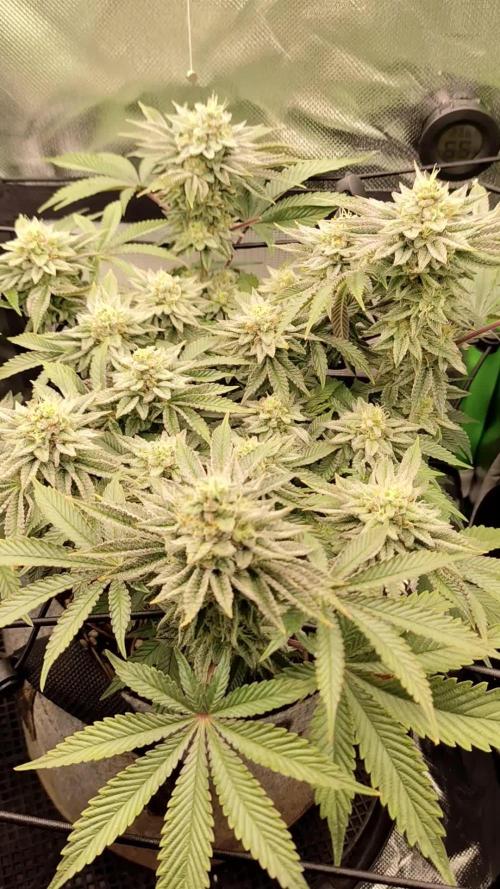
The buds start getting thicker and thicker. Currently I feed the plant with 1.5 EC. This trichomes are mostly clear and starting to get cloudy. Here and there are some amber one's, but they look tiny and old, not sure what happend there. As of now I am planning to give the nutrient solution for at least a couple of days, but I also want to make sure there is one week where I can only give water to maybe get some more colours out of the plant (I really hoped for it to be purple?).
Processing
Likes
7
Share


@Alejangrow
Follow
I defoliated them a lot and gave them some transition nutes to get them ready for the flip to flower in 7 days. ✂️💉
Oh they grow so fast.⏰😢😭

Likes
69
Share


@Qutro
Follow
Hi there,
Here we go with the 4th week of veg.
As soon as they woke up from the stress of the transplant, they were given another dose of training session . We topped them on the first day of the week. Not yet, but two days later we removed 4-4 large fan leaves each and it became clear how much the lower branches of Marshmallow OG didn’t develop in the shade. I already had the feeling that this variety was not genetically stable. These shots looked quite mutant. They seem to adapt more slowly to the hard plant trainings I use most of the time. On this day we also bent the branches with a tent hook to allow better light penetration to the lower parts.👨🏻🌾🌱
They show quite strong indica characteristics at this early stage of the vegetation which is also clearly visible in the shape of the leaves.
It is possible that the planned 6-week veg won’t be enough, as they need much more time to regenerate than most varieties I’ve grown so far. Never mind, maybe even this way the possibility of a harvest before Easter can be maintained.
After the hard training session they got only half dosage of nuts as they lost a lot of foliage. On the last day of the week watered them again with full dosage. 💦
All in all, they seem healthy but not very happy. I'm adjusting to them a bit and hopefully we'll be just fine for next week.
Running the Ts3000 on 65% 42 cm above the canopy which means 450-480 ppfd. 💡🌞
Have a lovely weekend everyone!


Likes
19
Share


Likes
50
Share


@BATMAN_GROWS
Follow
Same story really guys just waiting for her to ripen up them trichomles shes fattened up.a little since her double flush think maybe next week will be the one just watching them closely want them.just a little more milky close to the hint of amber but not to much. I kinda know it's close as I've seen mini batman and superman hanging around with wolverine and shit and them little recalls usually show.up.around harvest time to pitch in for a stinky sticky fee of course 😂🤣🦇 hoping she can power through and produce some amazing tasting bidd she already smells so fruity literally like a bag of skittles way more potent than the last skittles I grew this baby sure has done me proud cant wait to see what she ways in at.


Likes
2
Share


@ChitownCannaChica
Follow
Again— my fault on this one— coo po ups and wold have been better if I would have ran individual dwc per auto— screwed them up in the veg/flower transition- regardless the terps are insane


Likes
24
Share


@Highness
Follow
Finishing the first week of flowering. Unfortunately I'm having issues with lack of nutrients, probably a PH issue. I've bought a PH meter and some PH up and down products but I'm still figuring out how it works. I've removed some leaves as well.

Likes
31
Share


@Mrs_Larimar
Follow
2024-09-07
This was a very effective Week, it started with Rain an Wind
then it turned over to very hot and sunny
exactly what we need here.
The Outdoor tangie still looks super fresh and green, only minor signs of
getting ready
the colas are very glitery and you see alot of potential
already super frostyhere.
the revegetating Plant looks fine too.
she produces some flowers.too.

Likes
24
Share

@BlaKX
Follow
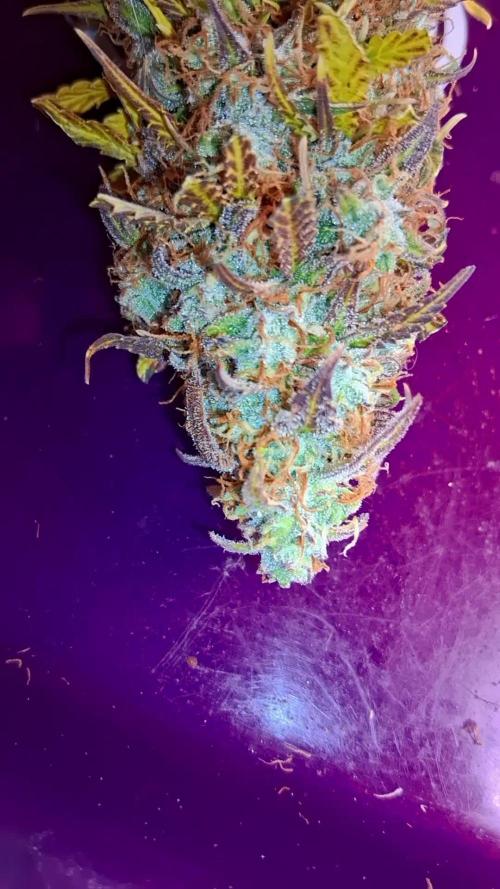
Der Ernte Zeitpunkt nach 4 Tagen trocken phase war optimal das Chlorophyll in Den Blättern war abgebaut und hat ihre letzte Kraft in den Blüten gesteckt!


Likes
15
Share

@Skunky420
Follow
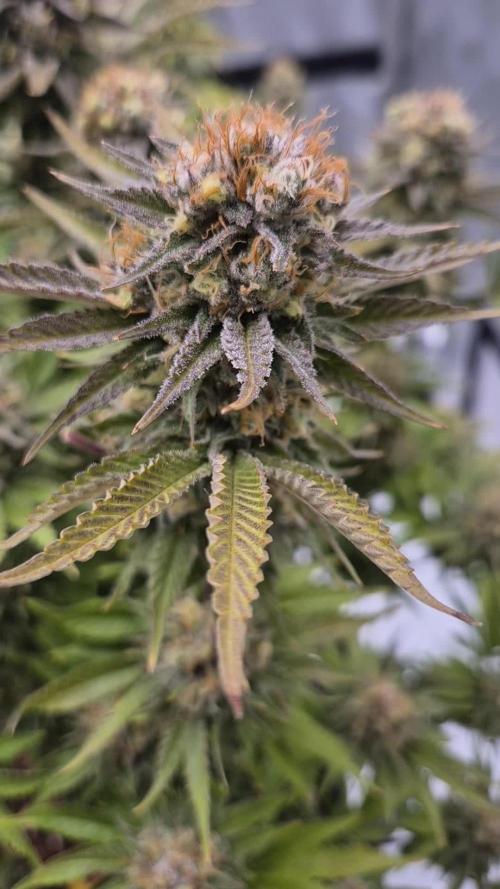
Beginning of the 8th week of flowering, final watering with Biobizz fertilizer (about 1/2 dose) before starting the flush in 2-3 days to allow the trichomes time to develop some amber trichomes in addition to the majority of milky ones
I've defoliated the front one quite a bit, as it has the most buds compared to the other two, because its structure is more compact and I want to avoid mold.
