


Likes
Comments
Share


@FarmerJons12
Follow
First trichomes are getting milky. Getting very sticky as well
I love the nice and sweet, fruity smell of her. Can’t believe it made it to this point.
Even if it’s not much…extremely happy to look towards my first harvest
Update: Decided to cut her next week. Going for high thc-level, just testing it...maybe too early:).
Sending her to 48 hours of darkness next Monday

Likes
Comments
Share


Likes
15
Share


@Uwish
Follow
Hello guys,
Here I am again to present you a new run, still with the best leds of the market nevertheless as I changed my growing space from 120x120 to 150x150. So I had to update the material inside...
I will run with 3 EVO 5-150 lamps of 320W or 960W with Bluetooth dimmers.
For the Hydro system, it will be the V-SYSTEM from Alienhydroponics.
In fertilizers I am always with Advanced Nutrients.
I work with osmosis water.
Currently, 4 clones took on 4.
Once the roots are ready, I will transfer the cuttings from the propagator to the V-SYSTEM.
------------------------
since the 16/08, when I transplanted the plants in the RDWC system, I noticed some points that I will mention below and correct next time.
1. The cuttings are too small, allow enough time so that I can completely fill my pots with clay balls.
2. Cut out the bottom of the pots from the cuttings.
3. 3/4 of the cuttings are touching the water, so one is late. Next time when transplanting, add more water, up to the basket in order to immerse all the plants and not to create a difference between each one, consequence now I have 3 that are ready to explode and one that will struggle behind, problem corrected today by increasing the volume of water.
4. The b-52 is a real pain in the ass in RDWC, you have to clean the 2 filters almost every day, with this new soup I'm testing without and I think I'll continue like this just with the base sensi grow A and B, as I use Root rot X, I won't use voodoo juice since all the bacteria would be killed.
5. Use of Voodoo Juice is useless if using Root Rot X which will kill the bacteria.
I don't know why but when I transplanted in the RDWC, I put my set up in growth mode, except that the plants were not ready for it, moreover, I made a FIM on each. So I lost some days, these last days I went back to a ppdf of 150, now that my roots touch the water, I declare growth 0 on 22/08, I will do between 21 and 28 days of growth. And as my roots are doing well and touching the water I'll go to a PPFD of 300
++

Likes
21
Share


@Jays_Not_Here_Man
Follow
A-Day 53 (into week 8) B&C-Day 49 (end of week 7)
A - She is stacking well, and feeling greasy! The smell is coming on stronger everyday, frost is just starting to build up. There is a distinct transition as the leaves go through veg to early flower to late flower. Uniform all around, not very tall, but she is hardy and thiccc!
B- Full flower now, so many tops! She has shown to be a slower flower developer than A, but the flowers she are developing are almost completely uniform all across the 🌱! I assume because there are so many they will be a little slower. I put her ties back on, and the middle shoots exploded with new stretch and growth, so she is still in that stretch/flower stage.
C- what can I say, patience is a virtue. She is looking lush and vigorous. With this being a slightly longer to finish auto strain, she has had time to recover from a) being a runt, B) having slow growth, c) having almost no training and lighter nutrient feeds her whole existence. This is also my control for Topping, she was not, A and B were. This strain is clearly hardy and able to withstand multiple techniques, we’ll see what the end the result is compared to her sisters.
All three plants received a full nutrient feed x2 this week. That was: 3 gallons dechlorinated water mixed with 12 ml Micro, 12 ml Bud, 20 ml Grow, and 6 ml Sensi Extra CalMag, PH’d to 6.2. And another very low feeding of 1/3 that mixture mixed into 3 gallons of water. Ive heard many growers who instead of just watering, they will do a much lower strength of nutrients included in their watering, and ultimately never not feed their plants nutrients until flush. Thoughts?

Likes
18
Share


@TheItalianGrower
Follow
Hi guys, the first week has come to end. Girls grow up well. I dropped the light about 10cm to avoid stretching.
I have used few nutrients but from next week I increase the dosage.
Stay tuned 😜😎

Likes
2
Share


@Vet4weed
Follow
Plants are getting too big for enough light coverage, so had to buy a second grow light.
As noted before, the plant was getting out of hand and growing at many different heights making it difficult to set the optimum light distance. So, I went a little crazy and did some serious pruning (yes, during flowing, I know). Also trimmed off a number of fan leaves that were either beginning to yellow or were otherwise blocking valuable light from the many of the smaller buds. Fortunately my plants are very resilient and are finally at mostly equal heights now.
Hindsight 20/20: I now have a better idea of how to route my plants using the ScrOG method. I found a well written blog that answered all the questions I had that other article didn't.
Bottom line: Instead of allowing the main branches to grow through the netting and re-route the offshoots, I've found it's better to keep the main branches under the netting and allow the off-shoots to grow through instead. Think of it as the plant growing sideways.

Likes
27
Share


@Smokepurple137
Follow
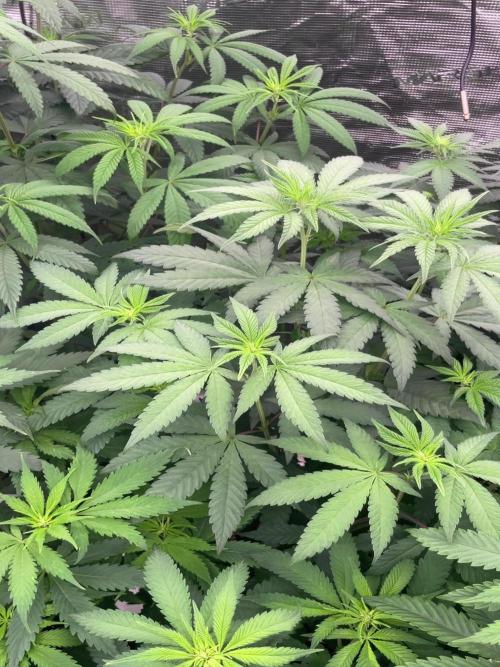
All doing perfect not alot to say, defoliated on 18/1/21 and tied a few branches where I could to make a little more room. Maybe 3weeks then ripen +flush Daily updates

Likes
17
Share


@YorkshireGardeneruk
Follow
They popped up 2nd of January after germination. Biobizz soils mixed just using oxy plus for first couple of weeks as well as silicone

Likes
31
Share


@420DeepGrow
Follow
Gracias al equipo de AnesiaSeeds, Marshydro, XpertNutrients y Trolmaster sin ellos esto no sería posible.
💐🤯 39%Thc Wham Boom:
Sube al ring con WHAM BOOM de Anesia Seeds, donde la energía electrizante de Wham choca con las vibraciones frías de RS54, creando una variedad que es todo equilibrio, potencia y sabor. Este peso pesado feminizado ofrece una mezcla perfecta de 50% Sativa y 50% Indica, proporcionando una experiencia que te hará flotar de euforia mientras tu cuerpo se sumerge en una serena relajación.
WHAM BOOM es una productora prolífica, con rendimientos en interior de 600g/m² y en exterior que alcanzan la asombrosa cifra de 900 - 1200g por planta. Con una floración de entre 65 y 70 días, esta variedad está lista a principios de octubre, lo que la convierte en una competidora ideal para los cultivadores que aspiran a una cosecha de campeonato. Con una imponente presencia de 100-140 cm en interior y 160-220 cm en exterior, WHAM BOOM se alza como testimonio de su destreza genética.
🏠 : Marshydro 1.50 x 1.50 x 1.80, carpa 100% estanca con ventanas laterales para llegar a todos los lugares durante el grow
https://marshydro.eu/products/diy-150x150x200cm-grow-tent-kit
🌬️💨 Marshydro 6inch + filtro carbon para evitar olores indeseables.
https://marshydro.eu/products/ifresh-smart-6inch-filter-kits/
💻 Trolmaster Tent-X TCS-1 como controlador de luz, optimiza tu cultivo con la última tecnología del mercado, desde donde puedes controlar todos los parametros.
https://www.trolmaster.com/Products/Details/TCS-1
🍣🍦🌴 Xpert Nutrients es una empresa especializada en la producción y comercialización de fertilizantes líquidos y tierras, que garantizan excelentes cosechas y un crecimiento activo para sus plantas durante todas las fases de cultivo.
Consigue aqui tus Nutrientes:
https://xpertnutrients.com/es/shop/
📆 Semana 5:
Comienzan a formarse los cogollos, las hojas se llenan de resina cada dia y el olor es bastante fuerte. Parece que ha terminado de estirar. Practico una defoliación intensa para airear los futuros cogollos y dejar mas espacio en el cuarto de cultivo.
Agrupo de nuevo las macetas en su lugar optimo para asi rellenar por completo la carpa @marshydro.
Me quedé algo corto de nutrientes pero estoy muy contento con los resultados, cada vez le voy encontrando mas su punto optimo. Siempre es mejor quedarse corto que pasarse.

Likes
83
Share


@RunWithIt
Follow
She's chunking up so much and just continues to get smellier and smellier! This plant's been getting compost tea and overdrive/ph perfect bloom only until end of this week, then I'll begin flush!


Likes
9
Share


@Highclass
Follow
Day 43: 500ml + 2ml/l atazyme + 2ml/l top candy
Day 45: 600ml + 3ml/l biogrow + 2ml/l biobloom
#4* is in a biiger pot (11L) and shes getting out of control, biig branches coming out from the bottom, i love her structure.
Day 47: 600 ml. + 1ml/l calmag
Day 49: 800 ml + 2ml/l top candy + 2ml/l atazyme
Minor defoliation
Likes
26
Share


@PatriciaGant
Follow
Dane, We all should help one another. Human beings are like that.
We should live by each other’s happiness - not by each other’s misery.
We don’t want to hate and despise one another.
In this world there is room for everyone. And the good earth is rich and can provide for everyone.
The way of life can be free and beautiful, but we have lost the way.
Grow High and Give the world A smile. Have A Great Day.
What n°2 is lacking is n°1 compensating,
(day 11, dont know what to do ph is right ppm is right themperature is ok light is ok should be recovering within 3-4 days i hope.)
roots are already grown into water bucket.(should i picture them as well?)
ph lv is such a pain in the ass but grow speed is worth all the trouble in hydro.
(16 n°2 still not good i placed another one next to her with luck she recovers if not another one already in place to grow)
(19 all hope is lost she probably doesent make it i set replacement already so waiting for her sisters to pop out and take over)
(20 it is the same water in the buckets so im a little lost why one explode and the other one not,)
(21 n°2 complete reset, new water, new nutrients new clay. probably died cause to shock now)

Likes
107
Share


@DogDoctorOfficial
Follow
Get ready to step into the mesmerizing world of my Purple Lemonade FF, as we embark on an exhilarating journey through Week 6 of flowering.
A Standing Ovation for Fast Buds' Mastery
Hold onto your gardening hats because this week's update is an ode to @Fast_Buds, the creative geniuses behind this botanical masterpiece! With an immense shout-out, let's celebrate the magic they've woven into the Purple Lemonade FF. She's not just a plant; she's an embodiment of their dedication, expertise, and passion for excellence.
Trichome Wonderland: Where Magic Meets Science
Now, let's venture deep into the world of trichomes—a magical realm where science and enchantment collide. These tiny, glistening structures aren't just eye candy; they're the heart of the matter. Trichomes are like nature's jewelry, sparkling with resinous elegance. And guess what? They're not just about looks. These beauties are the treasure troves of cannabinoids, terpenes, and other compounds that make your plant a powerhouse of goodness.
Colors and Aromas: A Symphony of Abundance
As we dive into this purple symphony, let's take a moment to appreciate the colors. It's not just about visual appeal; those shades of purple are like whispers from the plant itself. They tell a story of cool nights, warm days, and the dance of chlorophyll and anthocyanin. And the aromas? They're a melodic overture to the flavors that await, a sensory adventure that will delight the senses.
Buds of Grandeur: Embrace the Beauty
Size, my friends, is a matter of grandeur in this garden. The buds have grown into mammoth proportions, dripping with resinous promises. Each nugget is like a tiny universe, a world of wonders waiting to be explored. It's a testament to our care, a tribute to the nurturing journey we've embarked upon.
Celebrating Nature's Artistry: A Glimpse Within
And now, as the sun sets on this week's chapter, here's a snapshot from the heart of the grow room. Feast your eyes upon the breathtaking sight of my Purple Lemonade FF, standing tall and proud amidst her leafy companions. It's a sight that encapsulates the joy of cultivation, the artistry of nature, and the wonders we've unlocked together.
Embrace the Journey, Savor the Beauty
As we venture onward, let's continue to embrace the journey and savor every moment. The trichomes, the colors, the growth—it's all a reflection of our dedication. With every leaf we nurture and every bud we tend, we're cultivating more than just plants; we're cultivating a connection to the heart of nature.
Thank you for joining me on this awe-inspiring voyage. Until the next chapter unfolds, keep those hearts and plants thriving!
Genetics - Fast Buds Purple Lemonade FF
Ligth - Lumatek ZEUS 465 COMPACT PRO
Food - Aptus Holland
#aptus #aptusplanttech #aptusgang #aptusfamily #aptustrueplantscience #inbalancewithnature #trueplantscience #fastbuds #dogdoctorofficial #growerslove
With true love comes happiness <3 <3 <3 Always believe in your self and always do things expecting nothing and with an open heart , be a giver and the universe will give back to you in ways you could not even imagine so <3 <3 <3
All info and full product details can be find in can find @
https://2fast4buds.com/
https://aptus-holland.com/
https://autopot.co.uk/
https://lumatek-lighting.com/
<3 <3 <3 Growers love to you all <3 <3 <3
" Arising from a cross between purple and citrus Cali genetics, Purple Lemonade FF (Fastflowering) offers a complex high made up of perfectly balanced cerebral and body effects that are ideal for daytime use. Expect an extremely enjoyable high that boosts your mood while deeply relaxing your whole body and getting rid of muscle pain. This meticulous cross produces up to 550 g/m2 of some of the most beautiful purple buds, with pinkish and reddish hues that will catch everyone’s attention. The beautiful purple buds are ready for harvest in 7-8 weeks and come hand-in-hand with unbelievably sugary citrus terps that are just as refreshing as a cold lemonade on a hot Summer day. It’s the ideal variety for the sweet-tooth stoner seeking strains that deliver both in quality and quantity of resin.
Bud Description
Purple Lemonade FF grows chunky, spade-shaped buds that boast a whole range of pinkish-purple hues with rich, dark orange pistils shooting out of every direction. This variety stands out for the, oftentimes, lilac trichomes that give them a gorgeous pink tint and make for outstanding purple concentrates. The buds give off a delicious tart lemon aroma that reveals a sweeter, more fruity scent as you break the buds open. Definitely a must for flavor chasers and those looking for pungent terpene profiles. Smoke Reports
Purple Lemonade FF offers an effect that’s just as unique as the flavor. Expect a potent uplifting high that gives you that energy boost you need to get things done while 100% happy and stress-free. The effect gradually transforms into a wave that works its way along the limbs and through the muscles, deeply relaxing your body and putting you in the right mindset to go through a busy day with a huge smile on your face. This is an excellent all-day smoke as it not only increases energy but can also help combat chronic pain, migraine and stress. Plant Appearance
This feminized photoperiod variety develops a thick and strong structure, growing a medium-sized main cola with multiple shorter side branches, typical of hybrid strains. Purple Lemonade FF develops fairly short internodal spacing with gorgeous purple buds growing stacked on top of each other, making it the perfect choice for growers of all levels looking to get lots and lots of top-shelf purple weed, as this variety can produce up to 550 g/m2 in a 7-8 week flower cycle.
Grow Tips
This is a super fast feminized photoperiod version that takes approximately 7-8 weeks to flower with a 5-week vegetation cycle,, this means you can have faster harvests by shortening the veg cycle or have a longer veg cycle for bigger yields. Purple Lemonade FF (Fastflowering) makes for a great candidate for growers of all levels as it’s a vigorous strain that will thrive with basic maintenance both indoors and outdoors. This is a resin powerhouse so make sure to have your trim bin close by as all the resinous sugar leaves will make for the most mouth-watering hash and extracts. Flavor
Expect a long-lasting citrus zest that taste just like it smells. Purple Lemonade FF reeks of a delicious blend of sweet fruits and tart citrus that’ll make your mouth water. On the inhale, expect sour flavors that taste just like lemon candy with hints of orange and a really subtle earthy background. And on the exhale, the citrus flavors open up, giving place to a more sugary berry fruitiness that leaves your whole mouth tasting like an extremely sweet weed-infused lemonade.


Likes
31
Share


@BigBadLion
Follow
Sorry for being late with this update! 😱
Plants are maturing well but I noticed Matcha is developing slower compared to Pistachio and I assume that's because the height of the lights are very different from each plant, but both are still going forward. A clear sign of maturity is Pistachio's brighter color leafs and the amount of "brown" pistils on both plants. Trichomes are developing well too.
Anyway, I think I will give Pistachio one more week and then see how Matcha develops to cut her.
I also started to defoliate my girls, there were tons of dying leaves!
See you all in my next update!


Likes
2
Share


@High_Grade_Dadli
Follow
Girls are doing well they are due a cut which will be sometime soon.. G4 is massive the main colar is eye level to me and about 5 nodes down from that are over my


Processing
Likes
6
Share


@Alejangrow
Follow
Had to keep them in veg for another week while something finished up in the flower room. ⏰ cant hurt right. 🤷♂️🏽
did some more cleaning up to prepare them for the flip. ✂️
