


Likes
Comments
Share


@Big_Rade_SCLA
Follow
Week 13 (Aug/1/2024-Aug/7/2024)
DAY85 - Nothing new. Water, check, repeat. Added Kelp Meal for nutrients this week. I am thinking how I will separate the plants this week--they're starting to bunch up together--staggered may be the best option to minimize space in the garden.
DAY 89 - Gave one of the girls to my buddy. Helped with the bunching of the plants in a limited space. They're a lot to handle when you harvest alone. Kept the tall one, the short two(LST), the different one in the 45 gallon pot, and the bushy one(LST-ish).
By the way: I include germination as part of the day count. So basically day 1 is when I put the seed in water. These seeds all rooted within 48 hours.


Likes
9
Share


@Gefjon_Grow420
Follow
Little white hairs are starting to show and she's really stretching new if you look at the pictures of last week


Likes
20
Share

@wolfvb
Follow
Week 6 - Dialing in the LST and Managing the Fade 🍁
Description:
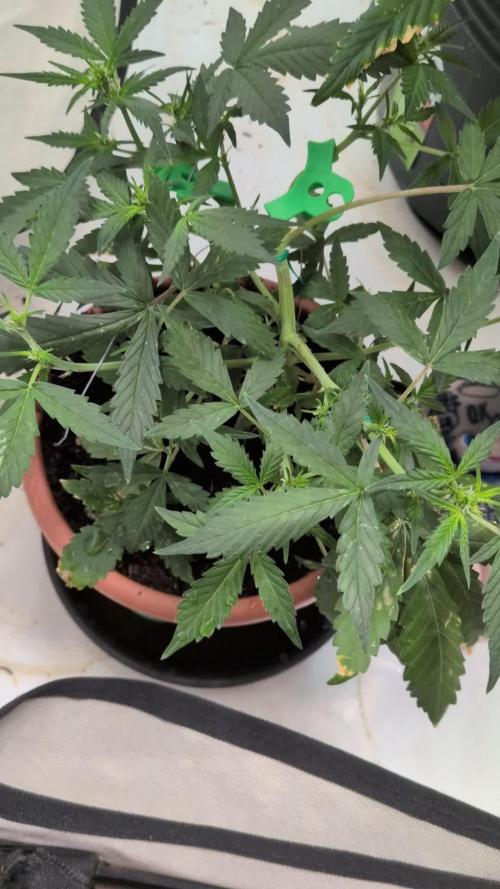
We are officially in Week 6! This week has been all about canopy management. I’ve continued with the Low Stress Training (LST) to pull the main stem down and expose those lower nodes to more light. You can see in the photos how she’s starting to bush out horizontally rather than just shooting up.
I am noticing a bit of yellowing and some "rust" spots on the older fan leaves. I’m currently checking my pH levels to make sure I’m not hitting a lockout. I’ll be keeping a close eye on the new growth to ensure the nitrogen levels are where they need to be as we prep for the flip to flower soon.


Likes
15
Share


@BruWeed
Follow
🍀13/06 - Empieza su tercera semana en etapa de floración.
🍀Se encuentra muy saludable y fuerte, hasta el momento no tuve ningún problema con ella.
🍀Ya los cogollos se pueden ver perfecto y hasta los tricomas.
🍀Esta semana solamente le puse Top bloom y Top candy.
🍀Cumple 69 días de vida en total desde su germinacion.
🍀En estos dias seguire subiendo mas imagenes.
🇦🇷😶🌫️🍀Podes seguirme en Insta gram como @bruweed_arg 🇦🇷😶🌫️🍀

Likes
3
Share

@DE_BW
Follow
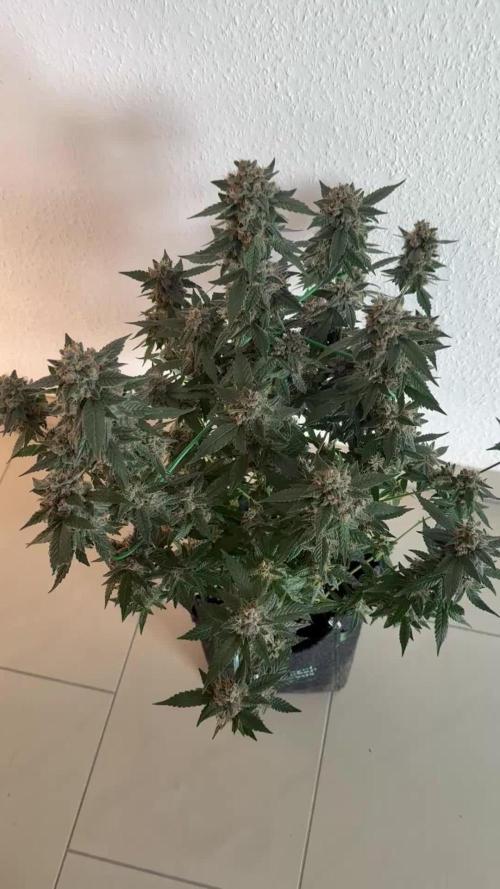
Last week. She is an absolute beast! Can‘t wait to harvest her.
D79: 2l with Flawless Finish. Harvest is in two days
D81: Harvest. Will update in a week

Likes
7
Share


@growerfromnc
Follow
She reeks ooh my God if you haven't grown this strain you gotta she smells horrible rotten fruit jet fuel sweet she looks wonderfull
All she is getting is water from here on out
Gallons on gallons start the Flushing
11/26/23

Likes
3
Share


@Earthsower
Follow
Not much water just a drizzle and she seems to be doing better this week. She is only about 10 cm but she looks like she’s co

Likes
17
Share
@squalino
Follow
🌿 Journal de Culture : Cherry Cola (Auto)
Date aujourd'hui
20/02
Date de sortie de terre : 22/01/2026
Âge : 29 jours (Semaine 5 - Fin de phase végétative / Début de stretch)
📊 Paramètres de Culture
Température : 23.3°C (Idéal pour cette étape)
Humidité : 55% (Parfait pour éviter les moisissures tout en gardant une bonne croissance)
Éclairage : Lumatek remis à 75%
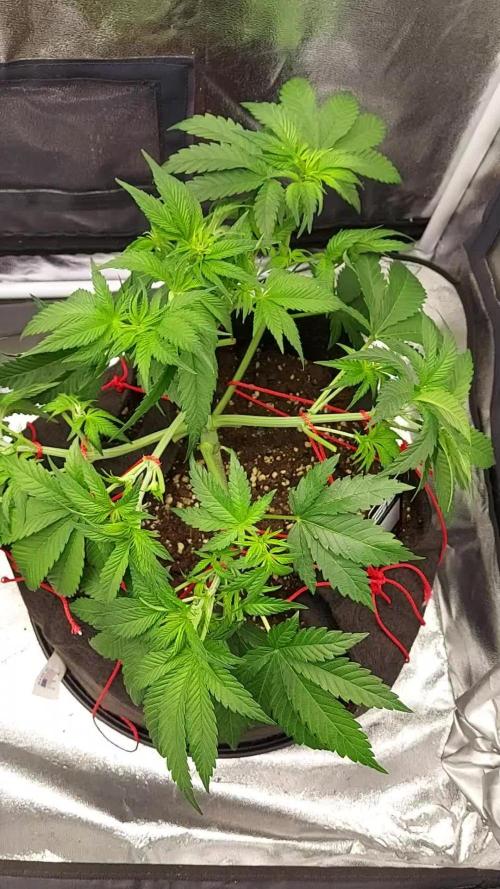
Technique : LST (Low Stress Training) visible avec les attaches rouges pour ouvrir la canopée.
📏 Suivi des Plantes
Plante #1 (La Grande)
Taille : 26 cm
Observations : Elle présente une structure très robuste. Les entre-nœuds sont serrés, ce qui annonce une plante compacte mais productive. Le palissage (LST) semble bien fonctionner, la lumière pénètre bien jusqu'au centre de la plante. Les feuilles sont larges, typiques d'une dominance Indica.
Plante #2 (La Petite)
Taille : 16 cm
Observations : Bien qu'elle soit plus courte de 10 cm, elle est extrêmement dense. Elle a un aspect très "buissonnant". Elle semble prendre un peu plus de temps pour s'étirer, mais sa santé est excellente. Les nouvelles pousses au centre sont d'un vert clair bien vif, signe d'une croissance active.
📝 Journal de Culture - Mise à jour du 21/02
Âge : 30 jours (Semaine 5 - Transition vers Floraison)
🛠️ Maintenance effectuée :
LST Ajusté : Renforcement du palissage avec les attaches rouges pour maintenir une canopée plate. Les branches secondaires sont maintenant bien dégagées.
Défoliation légère : Retrait stratégique de quelques grandes feuilles d'ombre sur les deux plantes pour maximiser la pénétration lumineuse au centre.
🌿 Observation des Plantes :
Plante #2 (La Petite) : Malgré sa taille compacte, la défoliation a révélé un nombre impressionnant de départs de branches. Elle répond très bien au palissage et reste d'un vert très sain.
Plante #1 (La Grande) : Elle continue de dominer mais l'ouverture de sa canopée est maintenant optimale. Les entre-nœuds reçoivent une lumière directe, ce qui limitera l'étirement excessif ("tigeage") lors du stretch.
💡 État du setup :
Lumatek à 75% : Intensité parfaite pour soutenir la poussée de croissance post-défoliation.
humidité de 55% à 60%
temperature 23 degrés celcius
aujourd'hui le 23/02/2026
uniquement plante 1 (pot léger)
1,5 litres d'eau PH 6,3
plante 2
pot encore humide
Likes
7
Share


@StonedandSteady
Follow
3rd w/ Flower: Buds Action and Everything is Supreme and Savory at thier 3rd week of Flower!
3rd Week of Flower: 3rd Flower Feed of #HumboldtCountysOwn and the Ladies Love the Bloom portion of Nutrients! They're Stacking Up Great and Filling Out thier Mighty Branches with Giant Gorgeous Budz! 5 Confirmed Females!!!
It's been a few days since I gave the Ladies thier 3rd Feed of #HumboldtCountysOwn Nutrients and they look Fantastically Divine!!! We'll definitely Grow back to everything here soon! 11th w/ Veg and Flowers Update #Pre-Sexed🚺 #SuperCropped #Defoliated #Lollipoped
Good Day and Happy Growing Everyone! These Ladies were Growing into thier 11th Week of Veg and Looking Totally Tight and Phenomenally *Femed* from the Right!
#Pre-Sexed 4/9/21 #Opium/#PabloEscobar *Fems* breed by Team #DivineSeeds #DivineSeedsSquad #DivineSeedsBreedingCompany and #SuperCropping continued! I'm Very Excited and Extremely Gracious!!!
Heck Yeah Growmies and Growmets!!! Check Out these Confirmed Females with thier Wild Pistol Hairs popping and I'm still Training and Widening them Out with #SuperCropping Everything looks Expanded and Growing Great!
After #SuperCropping the plant will Grow Bushier, Produce More Buds, and possibly even Produce More THC! This is how the plant naturally responses to danger and protects itself! Growers take advantage of this technique to get Bigger Yields and More Potent Buds than would be produced otherwise!
Getting Trained out into thier 11th Week of Veg and Looking Mighty Fine!!! Thier getting Humongous and Hearty in thier 10 gallon Grow Bag from Broski #www.as420.ca These Cannabis plants are Camping out in the Closet for a week or so! Lol
This is my 2nd run using the Osree.Light QB1000w and Everything is Mesmerizing!!!
My #Opium and #PabloEscobar *Fems* from #DivineSeeds Regs: SalamiLegF3's×2 and FireAlienRomulan look$ Outstandingly Awesome and Growing Up Phenomenally Fine into thier 11th week of Veg in our 2- 10 gallon The Grow Bags from Broski #www.as420.ca and also 2- 5 gallons as Well! Our others are Super and Breed by #thehumancannabiniod #AlienBloodGenetix #TNBNaturals #Foop
Yo!!! Thanks Again for All the Love and Support my fellow Growmies and Growmets!!! These Magnificent and Magical Ladies were Growing in our 48×24×60 ViparSpectra Official Club 🌿 ®️ Grow Tent and under our #Osree QB1000w and #GrowStarStore Kokokala QB1000w and our Purple Rose Cutting×2, Aloe Vera Cutting, Maters×3, Morel Mushroom, Lavender×3, Sunflowers×5 and The 5 Brand New and Fresh Starts are Wonderful with a Huge Hint of Fantastical Fire is my #SalamiLegF3×2 by Broski #thehumancannabiniod #DankFlowGenetics #EastCoastSeedBank #FireAlienRomulan by Broski #AlienBloodGenetix my #PabloEscobar and #Opium by Team #DivineSeeds #DivineSeedsBreedingCompany We Grow with #Growatt 600w with #FoopOrangicBioSciences and #TNBNaturals The Enhancer Co2 Despersal canister and ph'd them w/ Declorinated watering w/ TNB ph Up and Down! Totally Top Quality Topz all Around! Thanks Again #GallowGlas420 #HarleyGrower #thehumancannabiniod #AlienBloodGenetix #TNBNATURALS #FoopOrangicBioSciences #www.as420.ca #divineseeds #divineseedssquad #divineseedsbreedingcompany #BioFlux Family's and Teams!!! Your Genetics are Merry Magnificent, Mega Marvelous and Mighty Medical! Love um!!! I really Can't stress enough how Thankful and Grateful I am of All of you and what you've Shared with Us! Means the World!!! It's definitely a Pleasure being able to Grow with these Phenomenal Grow Lights! Please Enjoy! BudBrothers4-Life! Cheers Famz!!! Much Props and Much Topz!💯🔥 #Osree #GrowStarStore #Growatt #TNBNaturals #TNBTeam #FoopOrangics #GrowYourOwn #Bliss
HumboldtCounty'sOwn:
Email: [email protected]
Phone: (707) 725-4119
Toll free: (866) 872-9434
Humboldt Bottling
Po Box 429 · Fortuna, CA 95540
HumboldtCounty'sOwn Website Link: https://humboldtcountysown.com/
HumboldtCounty'sOwn Instagram Link: https://instagram.com/humboldtcountysown?igshid=1qj809qkkwych
https://instagram.com/osree.light?igshid=1vrsbdyhzg2h8
https://instagram.com/growstarstore?igshid=2yjn0r00r6ru
https://instagram.com/divine.seeds?igshid=1r90iwe9xiwz8
https://instagram.com/thehumancannabinoid?igshid=17k159pumklkq
https://www.instagram.com/alienblood_genetix_official/
https://instagram.com/as420.ca?igshid=1f116alw054wp
The Grow Bags: https://www.as420

Processing
Likes
88
Share


@Fergie
Follow
hey guys so the time has finally come cut both these girls tonight after 3 days total dark - smell is just amazing and buds rere so dense 😀 i have 5 full line of main cola and 1 rack on dry net of top cola had remove as no branch support and i also have 3 racks of lower case buds for hash or roisin . Overall though i could not be happier 😀 and i defo think i will be very close to my 1 kg target under a 600watt HPS bulb 😀 and finally getting above my best of 1.2g pw😀anyway til next week guys and my dry weight 😉


Likes
32
Share


@SirSmokeALot333
Follow
So week 10 started and for Gorilla Cookie and Strawberry Pie this gonna be the final last 10 days I think. Started to flush the soil with 6.6 pH water and clean fruits.
Gelato on day 61 still gonna need more time 2 weeks +
Don't know about her Budsizes the nugs looks a bit small for me, but the smell is really amazing.
Gelato 2 on day 35 starting to get in Flower.
GSC also day 35 still need some time think 3-5 days
And on Day 26 Cheese is going to flower too. She gonna stretch a lot I think never had such a plant like this.
Updates coming 👍
Last days from Week 10 for Strawberry Pie, Gorilla Cookies and Gelato.
I gonna chop Gorilla this weekend she's got the most amber on her it's about 10/90 . Should be good in 3 days + 48 H hours darkperiod.
Strawberry Pie still need 1 more week I think maybe just 4-5 days don't want her to be so much amber I prefer a good headhigh also she's indica.
Gelato still need more time to fatten up the buds. Maybe 10 days. Shes got a really interesting smell but the buds a bit small compared to SBP and Gorilla. But it's OK she's got the best structure and amazing symmetry.
Gelato 2 and GSC are doing well
And Cheese still looks a bit weird, potted her on Biobizz light mix without mixing florganics and coco. Maybe that's the point. I don't gonna use light mix next time. Allmix doing the job very good.
Updates coming in week 11
Likes
32
Share


@MadeInGermany
Follow
The Info:
Unfortunately, I had to find out that my account is being used for fake social media sites.
I am only active on growdiaries here.
I'm not on Facebook Instagram Twitter etc.
All accounts except this one are fake.
Have fun with the update.
Flowering day 61
change from time
to 12/12 h.
Hello everyone ☺️.
Today the time has finally come and the penultimate week of flowering has begun 😍.
She looks beautiful and her buds smell very tasty 👍.
The trichomes are 60% milky, 30% amber and 10% clear.
The lady comes in total darkness for 48 hours before the harvest.
Of course, as always, there will be a small interim update of the crop before the last big update.
Until then, I wish you all a lot of fun and stay healthy 👍🙏🏻
You can buy this Strain at :
www.Zamnesia.com
Type:
Banana
☝️🏼
Genetics:
OG Kush x unkown
👍
Vega lamp:
2 x Todogrow Led
Quantum Board 100 W
💡
Bloom Lamp :
2 x Todogrow Led
Cxb 3590 COB 3500 K 205W
💡💡☝️🏼
Soil :
Canna Coco Professional +
☝️🏼
Fertilizer:
Green House Powder Feeding
☝️🏼🌱
Water:
Osmosis water mixed with normal water (24 hours stale that the chlorine evaporates) to 0.2 EC. Add Cal / Mag to 0.4 Ec Ph with Organic Ph - to 5.5 - 5.8 .
Likes
11
Share

@MadeInGermany
Follow
Info:
Unfortunately, I had to find out that my account is used for fake pages in social media.
I am only active here on growdiaries.
I am not on facebook instagram twitter etc All accounts except this one are fake.
Flowering day 54
since time change
to 12/12 h.
Hi everyone :-) .
We are slowly getting closer to the end :-).
The lady puts her full energy into the flowers.
The leaves are beginning to fall.
I poured 3 times this week with 1.2 l each.
The trichomes were checked and the leaves were also checked for animals.
everything is great 👍.
The tent was cleaned and the electronics checked as well.
I wish you a lot of fun with this update.
Stay healthy 🙏🏻
You can buy this Strain at :
https://www.amsterdamgenetics.com/product/kosher-tangie-kush/
Type:
Kosher Tangie Kush
☝️🏼
Genetics:
Kosher Kush
X
Tangie
👍
Vega lamp:
2 x Todogrow Led
Quantum Board 100 W
💡
Bloom Lamp :
2 x Todogrow Led
Cxb 3590 COB 3500 K 205W
💡💡☝️🏼
Soil :
Canna Coco Professional +
☝️🏼
Fertilizer:
Green House Powder Feeding
☝️🏼🌱
Water:
Osmosis water mixed with normal water (24 hours stale that the chlorine evaporates) to 0.2 EC. Add Cal / Mag to 0.4 Ec Ph with Organic Ph - to 5.5 - 5.8 .

Processing
Likes
109
Share

@MadeInGermany
Follow
Welcome to the Green House CUP 🏆
Hi everyone :-)
I hope you are all fine 🙏🏻.
This week the lady has developed really well 😍👍, which probably has something to do with the Green House Powder feeding that she has been using for a few days 😎.
I will top her tomorrow for the first time. After a few more days, I will spontaneously decide whether to do LST or a few more times top :-)
Depending on what time allows and how it develops 🤗. It seems to be a very nice genetics.
This is how you are used to from Green House 😍🙏🏻.
I wish you all a good start to the week, stay healthy 🙏🏻 and let it grow 😎👍
Green House Seeds Company Cup 🏆
Type:
Wonder Pie
☝️🏼
Genetics:
Wedding Cake x OG Kush
👍😍
Vega lamp: 2 x Todogrow Led
Quantum Board 100 W
💡
Flower Lamp : 2 x Todogrow Led
Cxb 3590 COB 3500 K 205 W
💡💡☝️🏼
Earth: Canna Bio
☝️🏼
Fertilizer: Bio Grow Feeding ( GHSC ) , Enhancer ( GHSC ) , Bio Bloom ( GHSC)
☝️🏼🌱
Water: Osmosis water mixed with normal water (24 hours stale that the chlorine evaporates) to 0.2 EC. Add Cal / Mag to 0.4 Ec Ph with Organic Ph - to 6.0

Likes
6
Share

@all_about_420
Follow
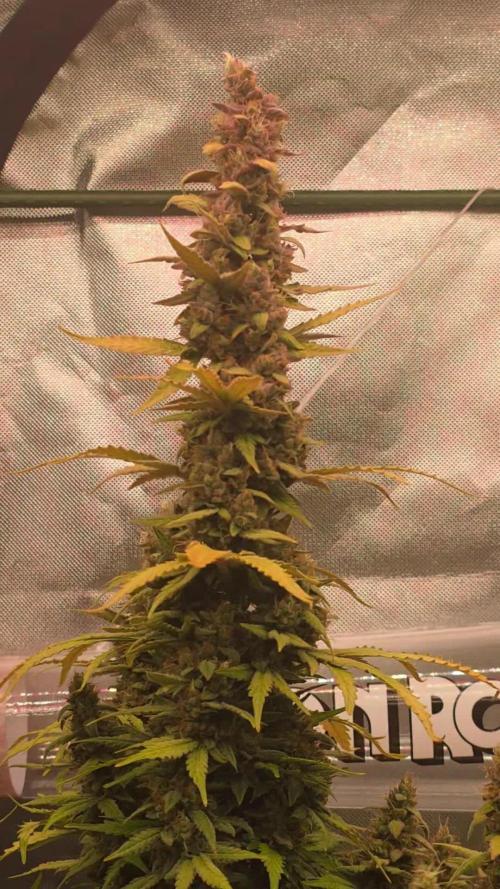
Wir stehen kurz vor der Ernte.
Die Farben und die Blätter sprechen für sich, das ist eindeutig der Herbst.
Dem Duft nach, könnte ich direkt reinbeißen.
Aufs ernten freue ich mich schon, da die Mimosa Cake mit eher weniger Blättern ausgestattet ist, so wie ichs gerne hab.
Das macht die Arbeit leichter und schöner...
Likes
30
Share


@coyote2thick
Follow
*clears throat* NOOB SPEAKING! So I fudged up and just realized that I’ve been using the kool bloom POWDER way too early. Never realized the difference between the liquid and powder. She seems to be doing good and fattening up fine. I’ve never seen a issues from using it too early. Smell fruity, spicy, and sweet.... maybe from the kool bloom being used too lol early I dunno. From what I read it may hurt the yield but with two week left in flower only time will tell 😞 thankfully I know it’s strong so only ever used very small amounts. Thoughts???

Likes
26
Share


@Rock_n_Roll_Randy
Follow
SORRY TO EVERYONE WHO TRIES TALKING TO ME....I STILL CANT TALK TO ANYONE BECAUSE I TRIED CHANGING MY EMAIL ON HERE AND IT MESSED EVERYTHING UP. I CANT LIKE ANYTHING OR COMMENT ON ANYTHING. THE WORST IS I CANT JOIN CONTESTS😪😢😭
FINALLY STARTING ANOTHER GROW. MY BACK HAS BEEN FUCKED FOR MONTHS. CANT WAIT!!!! IM DOING 24 AUTOFLOWERS FOR THIS GROW AND IN 5 WEEKS IM STARTING ABOUT 20 FEMINISED PHOTOPERIODS IN MY 5X5 WITH A TSW2000 SO THEY CAN BE READY TO MOVE INTO THE 8X8 TENT AFTER THE AUTOFLOWERS ARE FINISHED. HOPE MY TIMING IS GOOD🤞🤞🤞🤞 LOL