


Likes
Comments
Share


@Dictator
Follow
I made a topping for the plant and I transferred it to a 50-liter pot, removed the first branches, I am going to top it with 32 branches.
feels good 🌱💚


Likes
9
Share


@Polishsmoker_pl
Follow
Yoyo 🤙🏽 I've been away for a while, but the next update of the project is coming, after some minor problems with the lamp settings, I gave the bushes a little over 2 weeks more veg to regenerate and recover, which made my veg much longer, but oh well... the selection is over was also done and only the prettiest and strongest plants remained, already 11 liters of pots, it's getting dense, so today I change the light to 12/12 and let them start blooming. Apart from that, everything is fine, the girls are nice and healthy.
Day 53
Varieties:
1x Dosi berry from @theoutlawseeds
1x GMO Cookies from @panpestkapl
1x Persian Pie from @greenhouseseeds_
1x Forbidden Fruta Cake from @narcosseeds
1x Hardcore Mac from @nashageneticsofficial
1x Black Apple from lovecannabisseeds
Light - 18/6 Day/night
temperature - 28°C/23°C
Ph - 5.9
EC - 1.2
Box - @spiderfarmerofficial
Lamp - spiderfarmer SF4000
Soil and nutrients - @bac_online_nl @sr_organics_
And living soil
More updates coming soon 👊🏿😁💯

Likes
6
Share


@Finsfan
Follow
I planted this into its final container.. I did some light defoliation this week to expose all the bud sites in hopes they fatten up and then to frosty mcnuggets.. never really Defoliate autos but trying something new...
At that point of putting on its weight so I jumped the nutes up a bit more.
Had some slight light burn during veg and early flower.. brand new hlg blackbird.. I justvput it up to 70% at about 24 inches away.. 60% was too much during veg so kinda touch and go but keeping an eye on her.

Likes
5
Share


@Pechu420
Follow
End of cultivation of a landrace, probably Manga Rosa, due to the smell and flavor, in addition to other characteristics (sativa, long-flowering, style of flowers).
3.7 liters (1 gallon) = 58 grams / 2.04 oz (flowers without branches)
Using 120w lm301h-evo, together with another plant in the same environment.
Last week just water, two small flushes, to clean the soil a little, but nothing excessive. 7 days drying, dark, well-ventilated environment, without direct wind. And now cure for at least a month, trying a little each week.
I killed her when she was 93 days old, with 12 hours of light from the beginning, it seemed automatic. Because she is almost or completely sativa, perhaps another 2 weeks could be good for her, but I wanted a cultivation period of around 3 months, which was cool, but I believe that for a 90-day cultivation period, it is better to use some hybrid or indicates, as they develop faster. Sativas are aggressive in their expansionism and slow in flowering. Leaves and branches saved for later extraction, probably ice hash.
Likes
9
Share


@Sorkjess
Follow
Sigo abriendo doblando y atando las ramas laterales para abrir las niñas y que ocupen todo el espacio de la malla ,una de ellas va mucho mejor que la otra
Likes
13
Share


@DeepRootsGrowTrees
Follow
DIVINE OG KUSH / DIVINE SEEDS
WEEK #20 OVERALL
WEEK #7 FLOWER
This week she's stacking and getting some frosty dense buds that smell amazing. She's got a sweet gas smell to her. Stay Growing!!!
Thank you for stopping by and taking a look it's much appreciated!!
THANK YOU DIVINE SEEDS!!!
DIVINE SEEDS / DIVINE OG KUSH

Likes
Comments
Share

@GoodTimesOrganics
Follow
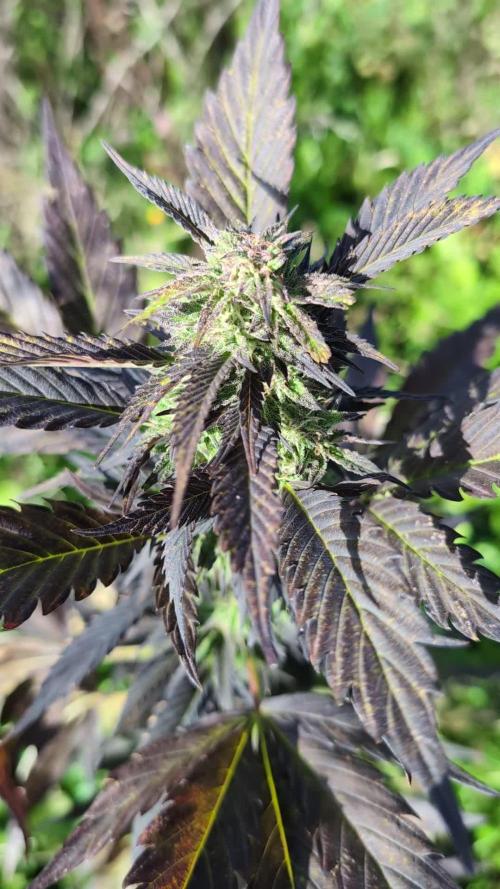
Hi liebe Community 💚 das Blue Cream Haze Outdoor-Projekt neigt sich langsam dem Ende zu.
Auch die herben und wechselhaften Bedingungen scheine der BCH nicht ganz zu schaden. Die Pflanze steht unter absolutem Stresstest und bis jetzt ist dennoch alles in Ordnung.
Klar ist die Pflanze relativ klein und da die Wachstumszeit nicht sonderlich lange war, sind die Blüten relativ klein.
Trotzdem scheint die Pflanze bis jetzt allen Bedingungen zu trotzen. Auch die erste Nacht mit knapp 0 - 1 Grad Celsius hat sie überlebt.
Ich bin top zufrieden.
🌱💚
Likes
2
Share

@The_Doctor_Green
Follow
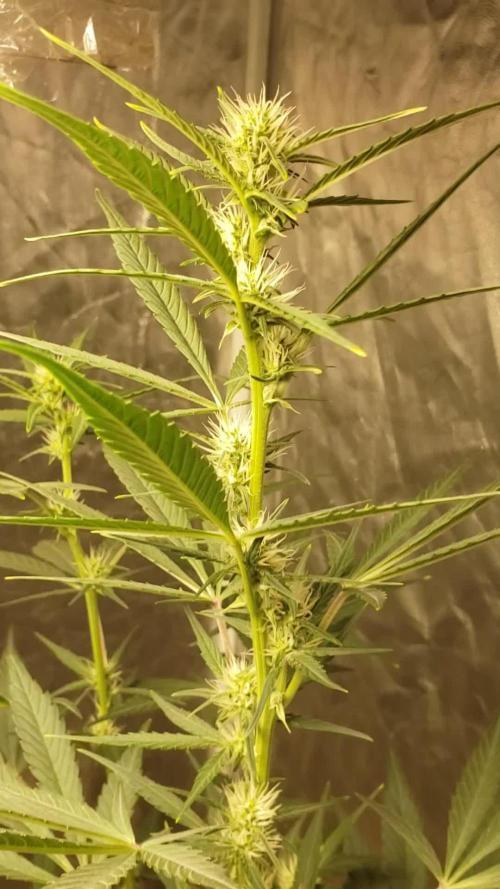
Hola a todos!!! , la planta ha crecido esta semana algo de 20 cms , al día de hoy ( dia 42).... me refiero a hoy 24/09😅.
Regue con top auto, top bloom, top candy 2ml x litro de agua, ayer (dia 41)
El resto de los días solo con agua

Likes
39
Share


@BelgianBudtender
Follow
Quick foreword:
I hate how Growdiaries does Harvest and Smoke separately and then messes up all the pictures. Please bear with me, I tried to label them all.
Wowsers, what a trip this contest grow turned out to be! I am so sorry to submit it one day before the deadline, life got in the way, but the good news is this lovely plant has had a chance to fully cure and she’s been helping me through big changes in my life.
Dry weights will be in the Smoke report. I have only input the mother’s dry weight as the total end dry weight. This is because this is a competition diary and the rule is one plant. Consider the clones a successful experiment. They are only here to document how hardy this plant is and how easy she is to clone. Remember, one of the clones was the top of the plant I cut off when topping her before flipping. I usually can never get those to root, but this plant clones very easily!
As always, the main plant was dried in a cardboard wardrobe box, modified to have a 5v USB fan extracting air at the bottom. This helps prevent mold but keeps moisture in for a slower dry, which leaves some more terpenes.
Drying took around two weeks. Trimming was a pain. I love the smell of this plant, but her lowers are so leafy. If you go back to around the weeks where I flipped, you can clearly see I left too many lower nodes and as a result I had too much of a bush.
The Micro DWC experiment ended up surprising me the most. Check out the smoke review for its weight and taste!
some people also asked me how far I keep my lights, I don't measure the distance, sorry. I use Photone on iOS and push the ppfd of my plants up to 1000 during flower.
The Soil clones and the main competition plant were planted in organic soil from a local garden center mixed with organic fertalizer tablets and worm castings, the clones were in 1L and 3 gallon pots and the main competition plant was planted in a 5 gallon growbag.
once the plants ran out of food I fed Plagron's Alga line.
the DWC clone used just Plagron Hydro A+B and extra PK 13/14 in flower, this is by far the cheapest and most effective way in my experience, it could be due to lack of skill in organics, but you can clearly see, my DWC plant is frostier than my soil ones, and they're the exact same phenotype.
I'll probably be going back to hydroponics, I'm not saying organic isn't the way to go, but for me personally, my skillset and way of growing better fits the artificial nutrients, and as a result my DWC plants flourish.
I feel more in control with DWC, I know exactly what's going on in my buckets, whereas with organics I'm often scratching my head in frustration.

Likes
71
Share


@Krisis
Follow
05/22/24. Going into week 3 flower
Everything seems to be going pretty good so far. Finally got a bit of stretch and definitely have some bud formation.
As things are still so freaking dark with these ladies leaves I am still not giving a feeding. Have given them water with silica and calmag when things seem dry.
Plant 1 seems much more leafy and with many more bud sites than plant 2. Most of plant 2’s growth has not made it up to the trellis sadly.
I will be doing some cleaning up of the stuff underneath the trellis and some selective defoliation today or tomorrow.
Lights now about 75% at about 20 inches up. Temperature has been 73-82 with around 50% humidity.
I think I covered everything for now. Thanks for lookin

Likes
27
Share


@RDWCGrowing
Follow
1/20/2023- So much to do pre grow and over the next 16 days, absolute first order of business is that I have to take down my current Grow---TIMBER-- Then I have a list of things I have to get done in order to be ready to start this grow 1 Feb.
With that said
T - 2 days until start 48 hour Flush
T - 2 days until Start 48 hours of Light
T - 4 days until TIMBER!!!
Items that need to be done before 1 Feb 2023
1. I need to clean the tent out
2. I need to clean the equipment- Proper Sanitization between grows in Hydro is a must!!!
3. I need to get the hole in the ceiling above my tent repaired- For my last grow I had a deep sink installed in my grow room, to make Hydroponics a little bit easier and have a water source in the same room. The seals on the pipes they were installing broke and leaked through the ceiling causing some damage all the way across my grow room, I was already weeks into my grow and couldn't risk them working above my tent and it would have been very awkward positon for them to be working in as well, so have to get this done quickly between chop and germination.
4. I have to install my new light- I was using a Vivosun 4000 and for this grow I am switching up to a Spider-farmer SF 7000.
1/20/23- For this upcoming grow I am working with M/F photo seeds so I ordered 4 Sex determination kits. I recieved my my 4 Sex determination testing kits from Rimrock Analytics today. I will be using these to test my plants at week 2 of Veg so that when/if I take clones I know I am taking them off females. As well as I don't want to accidently pollinate my tent during this grow I am looking for big beautiful buds not seeded buds. :-)
1/24/2023- Harvest of current grow- Started at 2:00pm and finshed wet trim and firt batch into the freeze dryer.
1/25/2023- Next batch into the freeze dryer and cleaning all my equipment for this Grow.
T-1 Day until the workers are supposed to be here to fix the hole in the Grow Room.
T-3 days until I instll my new Gorilla Grow Tent and my New Light Spider Farmer SE-7000 for this grow.
T-7 Days until Start of Germination
1/26/2023- Harvest is done ran through the Freeze dryer and dry tim completed.
1/27/2023- Grow Room repairs completed. Hole is gone Letting the paint dry before I install the new tent.
T-2 days until Install the New Gorilla Grow tent and the new Light
T-3 days until I put the hydro equipment in the new tent
T-5 days until Germination
1/29/2023- Day 0- Final Pre Germination activities
Germination Start T-3 days
The paint on the ceiling was dry and it was time to finish prepping for Germination. I got the following items knocked off my list.
New 4X4 Gorilla Grow Tent is up and ready
New Spider Farmer SE-7000 Light is installed- Thanks Moony Grows for the suggestion and for the Code that got me some money off and free shipping (Moonygrows)!! I turned the lights all the way up to max and set the timer to 18/6 0600-0000. I will keep an eye on the temperature and humidity without my plants and see how hot it gets with the new light.
I put my Hydro system back together and put in 40 gallons of water into it, time to monitor for leaks the next few days.
I Setup my cloning machine for Germination Days 3-11
1/30/2023
let me break down the situation, ROOM in the TENT.. Enough said.. No really I tried putting my exhaust system up in the new tent with my new light, The light is so big corner to corner that it really didn't give me enough room for the lights be be raised, with the exahust hanging the buckets my plants are Starting in are 2 and 1/2 feet off the ground, great for plenty of room for roots but not so great for upwards space for the plant to grow. In a 6' 11 tent with the exauhst in side and hanging that only gave me a little over 4 feet of grow room to play with. My last grow if you saw my diary, anyone could tell I was struggling to keep the buds off the lights. No good, Since space was such an issue I was running my carbon filter inside on the ground but It really needed to be up sucking the heat out not shooting the cool out. With that setup I was sucking air through the filter and pushing it out the tent at a bottom exhaust hole cold out. Wasn't doing me any good for my heat. I was hitting temps of up to 85 degrees. I bought a portable AC unit and have been running it in the grow room to try and keep temps below 85 and I have had to lower the power on my lights during grow also not ideal.. With that said a friend of mine MoonyGrows (Check out his diary) took the time to look at my issue send me a picture of my grow tent setup with detailed instructions on how to suck the air out from the top but putting my filter and fan on top of my tent so no room issue and I am sucking the air out from the top where the heat is instead of pushing the air out from the bottom where the cool is... THANK YOU MoonyGrows For taking the time to help me get this straightened out.. Now I have room and I have the exhausts working right and now my temps with everything at 100% are topping out at 80 this dropped the temp by 5 + degrees at 100% max.
T-2 days until Start of Germination
Prepped my seed tray with humidity dome
Prepped my Rapid Rooter plugs. I Used RO water, and I added a few drops of Hydrogen peroxide to Oxygenate the water. I then PH balanced between 5.7-6.0 the same that they will be getting in the Cloning Machine and when they get to thier final grow pod. I perfere the 5.8x range and I hit 5.84 for these rapid rooters. If you want to see a complete video on the process HowWeedGrow has an amzing video that shows step by step how to do it and explains it better than I ever could including how to plant the seeds. Which I will cover when I get to that step on Wed. https://www.howweedgrow.com/how-germinate-weed-seeds-cannabis-rapid-rooters/
1/31/2023
T-1 day until Germination Start
All set and ready have my Rapid Rooter plugs ready to go have my seeds out.. Have my seed tray warming up tonight. Tomorrow morning right into the Rapid Rooter then strait into the tray. I will spray the dome to start the humidity in there.
2/1/2023
Germination Day!!
Let the games begin!
0600am Put the seeds into the Root Riots. And then put the seeded Root Riots into their first home the Seed tray. I have them under the light 24/7. Sprayed the dome
7:30pm Sprayed the Dome to keep humidity going on the dome.
2/2/2023
Day 1 of Germination
Sprayed the Dome in the morning
Sprayed the Dome in the evening
2/3/2023
Day 2 of Germination
Roots are starting to come out the bottom of the root riot plugs and the heads are slowly popping out of Number 4 just below the surface.
Afternoon- Number 4 has popped up
Evening- Number 3 has popped up as well. Happy Dance!!
2/4/2023
Day 3 - Germination
Surprise Surprise Surprise- all 4 have now poked their heads up.. Happy day!! 100% Germination succeeded.
Now major milestone to track is how many are female and how many are male.
I will take look at the roots this afternoon/evening and see if they have enough root to go into the cloning machine for the next 7 days before they go into their Hydro Pods.
Day 3 - Germination - Evening..
Roots looked good and they were tall enough to make it into the cloning machine.
Now that they are all in the cloning machine I have switched the lighting to veg state 18 on 6 off.
2/5/2023
Day 4 - Germination - Morning
All the Ladies (fingers crossed) looking great stretching nicely and look nice and green, Photo synthesis underway....
UPDATE!! After a very interesting POD cast on FSTS by Dr. Bruce Bugsbee from Utah University, I have shifted my lighting to 24 hours on through seedling and then I am going to shift to 20 hours on the rest of Veg.
2/6/2023
Day 5 - Germination
While Checking on my conditions inside the new tent last night, I found that the Humidity was down to 39 Percent. I added an AquaOasis Cool Mist Humidifier, the reason I selected this humidifier is that I needed one that could be turned on and off utilizing my Inkbird Humidity Controller IHC200 that I have my Pro Breeze Dehumidifier currently running with.
Root structures are starting to get there about 1/4 of an inch.
2/7/2023
Day 6 - Germination
Everything seems on track more roots poking out of each today. They are each getting a little taller as well.
Checked in the evening and number 3 was drooping the Root riot plug on the bottome was dry and the roots were not in the water yet. I raised the water just enough that the longest root that was sticking out is now hitting the water.
2/8/2023
Day 7 - Germination
Everything looked good while checking in on them this morning number 3 is now full up and no droop again.
2/9/2023
Day 8 - Germination
T-2 days until Plant into Forever Pods and we start week 1 of Veg .. :-)
Surprising thing to me is that number 1 and 2 were later in popping then 3 and 4 but the roots are growing longer in 1 and 2.
2/10/2023
Day 9 - Germination
Number 1 and Number 2 are definitely ready for transplant today.. Based on how they were yesterday and where they are today I am hoping by tomorrow 3 and 4 are ready. Today they look to me where 1 and 2 did yesterday.. I really hope 3 and 4 catch up by tomorrow since..
T-1 day until transplant to new/ final home for grow.
Need the roots long enough to have some clay down in the basket to keep the root riot out of the water and only roots in the water..
2/11/2023
Day 10 - Germination
Today they got placed in thier forever Home, 7 days from Sprout and 7 days until Week 1 Start.
PPM- 180 this is water out of the Tap
Temp Water: 70.7
Temp Tent: 77
Humidity: 40% I have a humidifier going 24/7 to try and bring this up.. I also have Humidity Domes on each plant.
2/12/2023
Day 11 - Germination
Sprayed the domes, all are looking good.. Nothing much to do at this phase but Keep monitoring the PH level in the system and making sure they have a comfortable home.
T-6 days until Week 1 start
2/13/2023
Day 12 - Germination
Sprayed the domes, They were looking a little yellow today so I moved the light down to assist. Nothing much to do at this phase but Keep monitoring the PH level in the system and making sure they have a comfortable home.
T-5 days until Week 1 start
2/14/2023
Day 13 - Germination
Sprayed the domes, They were looking a little Florissant yellow today, with what looks like slight burn on the tips, I talked with a fellow grower and we agreed that It was probably that I was drowning them, Yes you can drown you plants even in Hydro, but only early on.. :-) It usually happens with the water being too high, which soaks not only the roots but the medium (root Riot plug in this case). I lowered the water from touching the bottom of the pot to about 1" away. This will probably take 3-4 days to resolve. I will continue my daily monitoring.
T-4 days until Week 1 start
2/15/2023
Day 14 - Germination
Sprayed the domes, continue my daily monitoring they look a little darker green instead of lime green now that I lowered the water levels in the system, so I think that I might have resolved the issue but it will take a few days for recovery to happen.
T-3 days until Week 1 start
2/16/2023
Day 15 - Germination
I looked in on them this morning, 3 and 4 look like they are doing well and recovering nicely. Number 1 not so much it has brown spots on the leaves, this very well can still be a side effect of the overwatering but I decide to go ahead and add Nutes earlier than I was planning just incase. I was going to wait until Saturday but I think intervention is necessary now especially after drowning them early on.
I added 1/2 what I am planning on adding for week 1 start. I also think I am going to adjust my chart to add 1/2 2 days after plant from now on. I don't think it would hurt it to have some Nutes to pull from.
.25ml/Gal Calmag = 12.5ml
1ml/gal GH FloraMicro= 50ml
1ml/gal GH FloraGro = 50ml
1ml/gal GH FloraBloom = 50ml
T-2 days until Week 1 start = I will drain the system and start it over on Saturday with Week 1 Nutes.
2/17/2023
Day 16- Germination
I didn't even want to post today after looking in on them this morning, 3 of the 4 are now showing signs of dronwing.. Brown spots on the leaves, the water levels were still too high.. I drained about another inch out of the tanks.. Will see how quick they recover.. I start week 1 tomorrow and will have to ensure my water levels are at least 1" away from the basket on this round.

Processing
Likes
Comments
Share


@Grownewgenetics
Follow
the two rainbows are on flowering Time and we also changed the ciclus for the san Fernando valley also from B.S.F. Seeds, we are expecting the TnB naturals #co2enhancerbottle

Likes
24
Share


@Rytmause
Follow
Last week flush for second week and than 2-3days of dark cut, hang up,and rest for week


Likes
4
Share


@letmegrow85
Follow
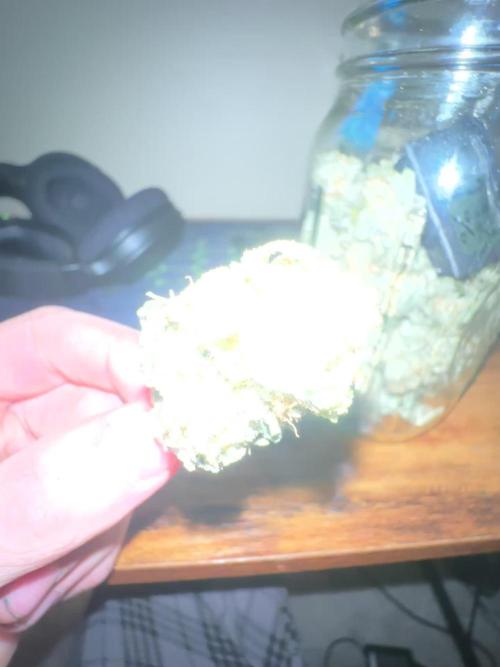
Und wieder ist eine Woche rum, 1ne von 3 habe ich geerntet, die anderen 2 lasse ich noch nen paar Tage stehen.
Soo, Nachtrag, die letzte Lemy85, da sind die Bud's richtig dick geworden.

Processing
Likes
19
Share


@Walters771
Follow
Change of lights as of middle of last week and a Change of schedule to fit with mine, 18-6 off at 13:00 back on 19:00. With temps in the UK atm I've been pretty lucky with my loft grow 🤞 the thinking was if there on through the night it'll keep temps up and the leccy bill down abit 😂 just plodding along still couple more weeks before the magic starts 🤙

Likes
13
Share


@Robeeriegenetics
Follow
Dropped light hours down to 16 . Topped off nutrient solution with 5.0 ph evened out .removed none chosen phenos to be flowered in separate room no longer tracking those we will only follow the chosen mothers clones i cut clones today as well had the lady friend clean floor with bleach and dawn put clones in ez cloner 32 systems
Processing
Likes
10
Share


@Dunk_Junk
Follow
9cm growth this week.
She is very short, very bushy. Not sure what I've done wrong... 😞
Processing
Likes
33
Share


@Ferenc
Follow
Day 50: Water intake is 150ml per plant, light schedule 18/6. Humidity is approx 50%. Fertilization continues the same way Monday, Wednesday, Friday Biobizz family, Tuesday, Thursday, Saturday bat guano and Epsom salt. Flowers are developing nicely and getting thicker. Plants love the new 600W Viperspectra:) All good so far! They are all approx 30-35 cm.
Day 53: Smell is getting stronger, really nice mix one.
Day 55: Nice smell comes out from this tent. Plants are nice buds are getting dense and the smell is getting stronger and stronger. All of them do well, some more some with less bud development but they all look happy.

Likes
11
Share


@JaysBuds
Follow
I'm clearly going to have some tucking and training ahead of me again this week...For anyone who wonders if heavy defoliation is detrimental - last week these plants were almost totally stripped and were ALL pulled back under the screen - and I'd said that you'd never know they were bare. Well, here we are a week later and we're pretty much doing the same thing again!
I'm blindly hoping to avoid tucking much more. The screen is full and the girls are powerlifting it off the floor - we'll have to get some weights on to keep the canopy level, but what do we really expect from Bruce Banner?? I've also got my fingers crossed that we can manage the rest of the stretch with defoliation, though that's probably unlikely and we'll be working a very full scrog and tent for the next few weeks (based on some diaries it's about 4 weeks of stretch before they settle into a solid budset - I wish I had read that before vegging the screen to 80% capacity!