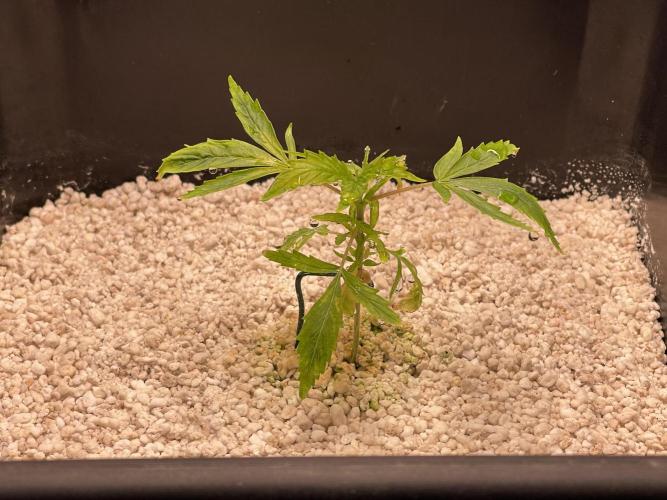
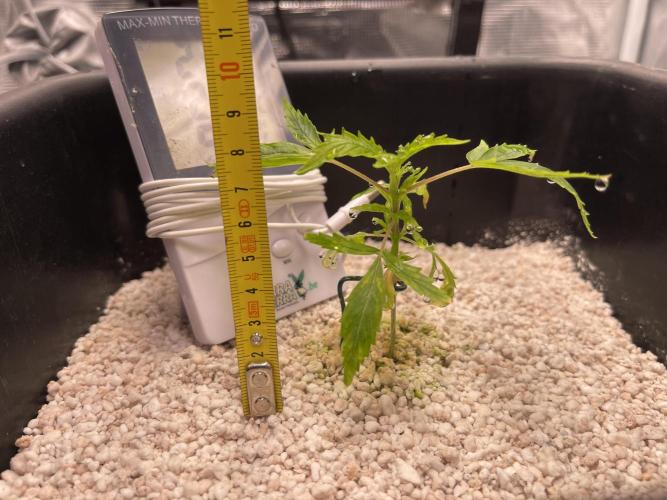
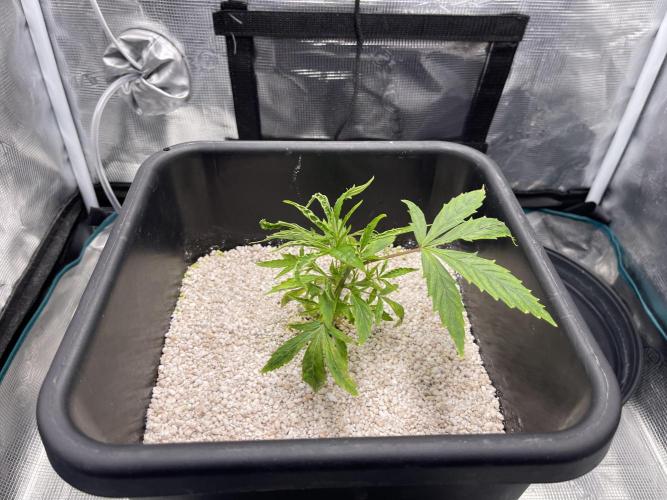
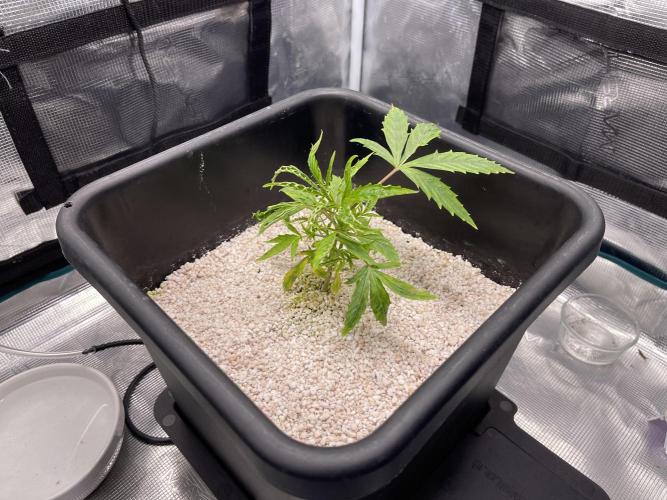
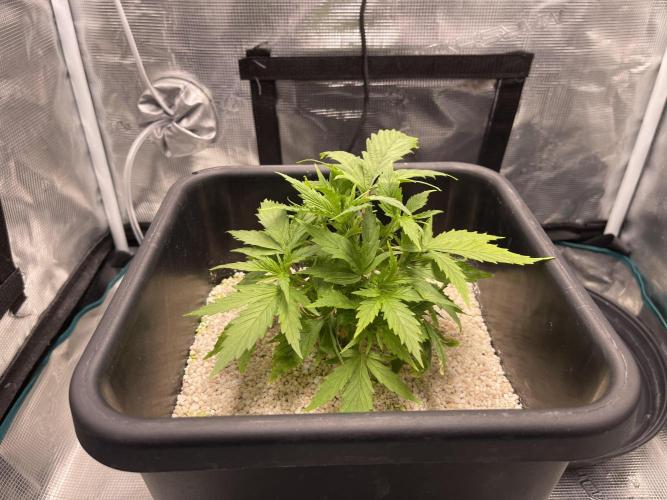
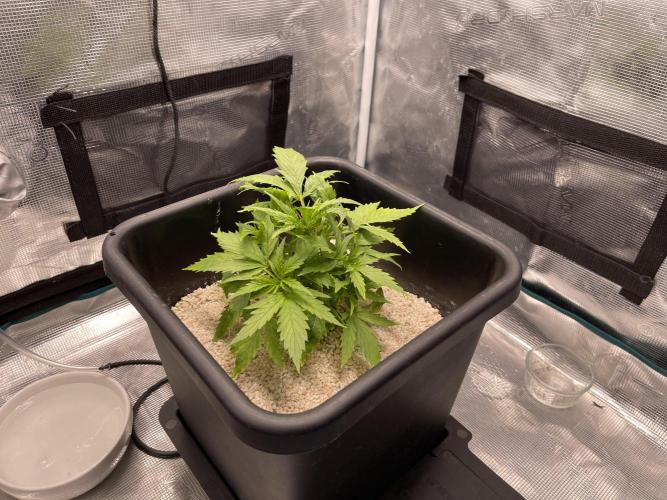
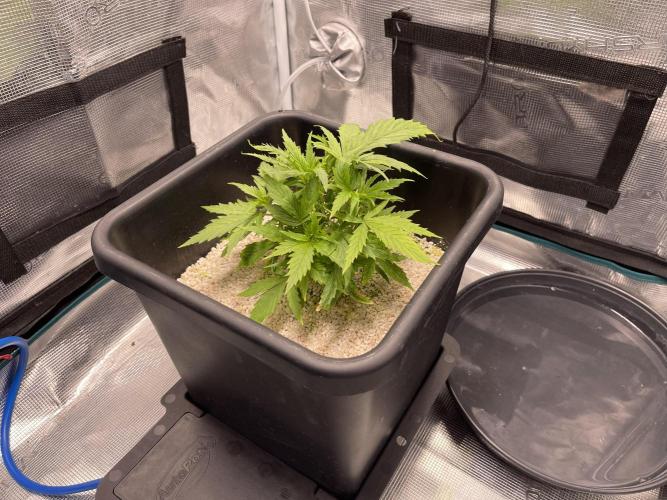
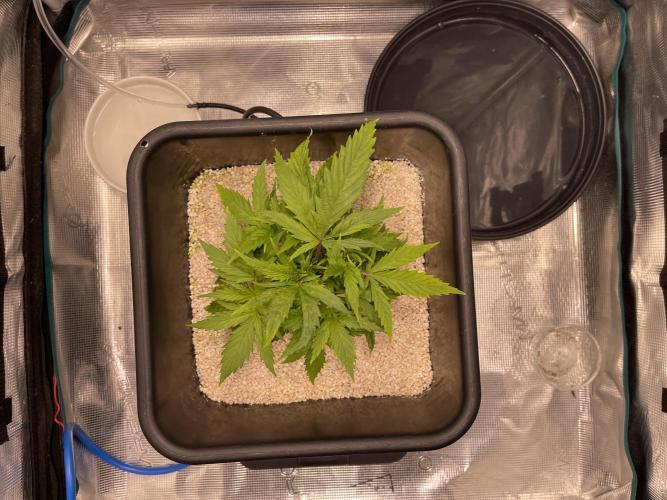
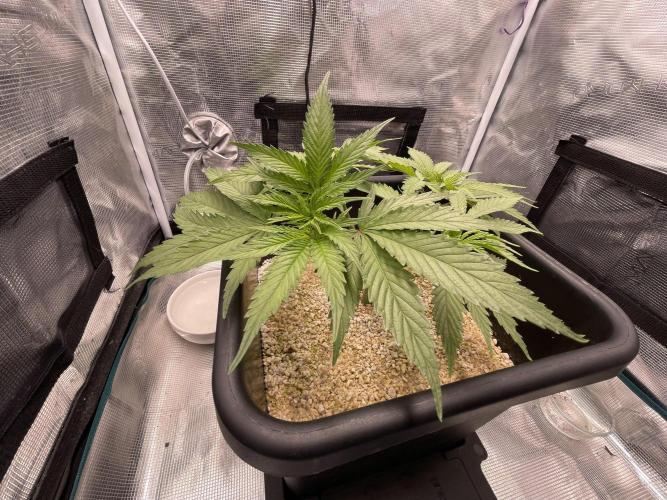
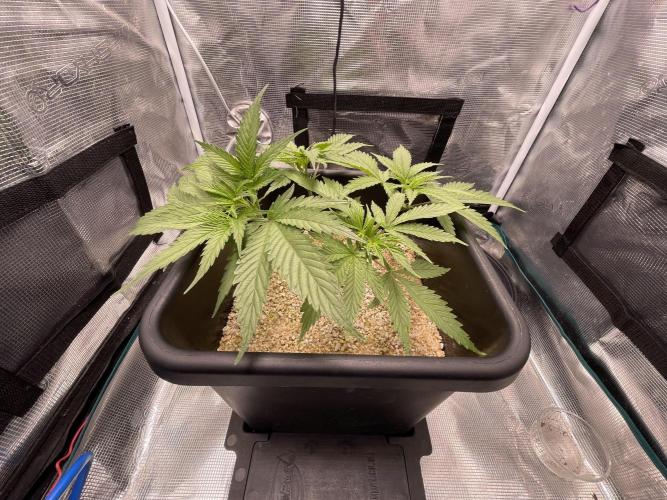
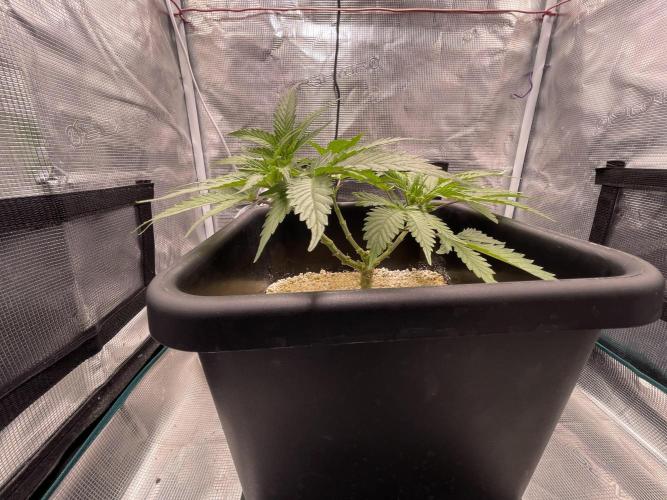
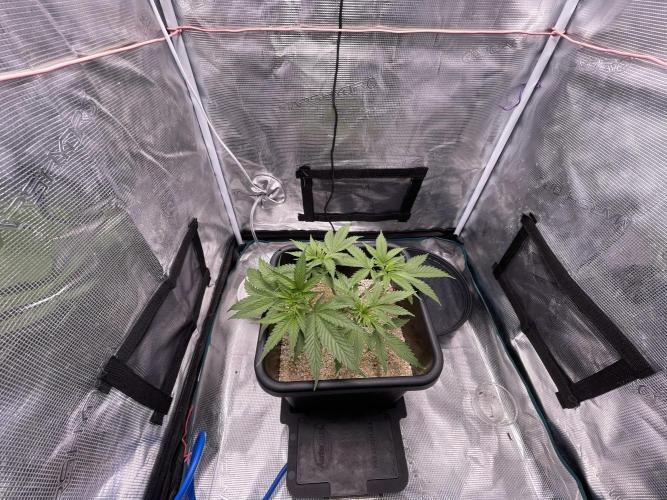
SamDo Hello everyone,
welcome back for a brand new grow journal on the Pineapple from Humboldt.
This time, the idea is simple:
we’re taking everything that went wrong in the previous run,
and we’re fixing it—properly.
The main focus for this cycle is the very start of the plant’s life.
Seedling and early development were clearly the weak point last time,
so this run is all about dialing that in and giving the plant the cleanest possible launch.
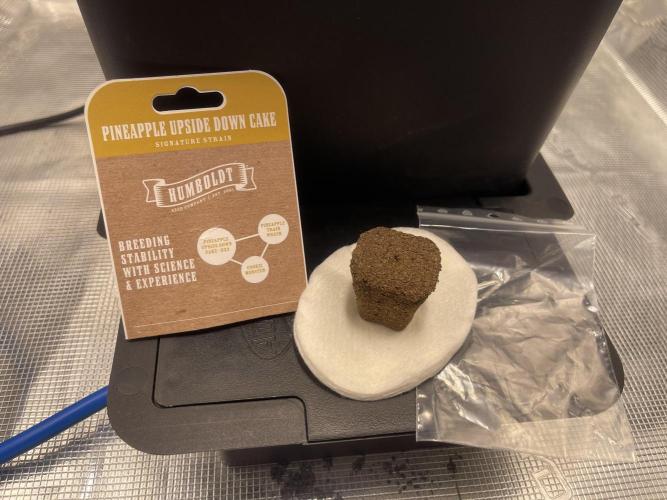
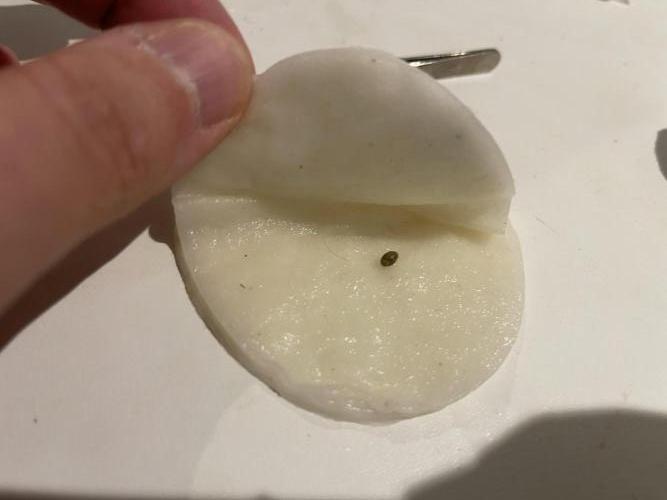
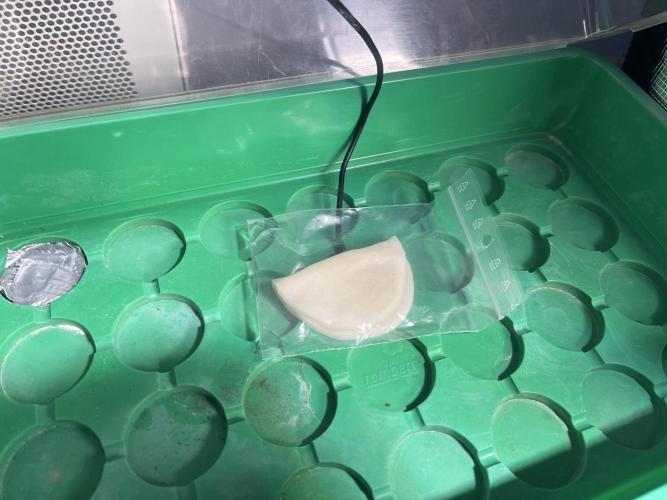
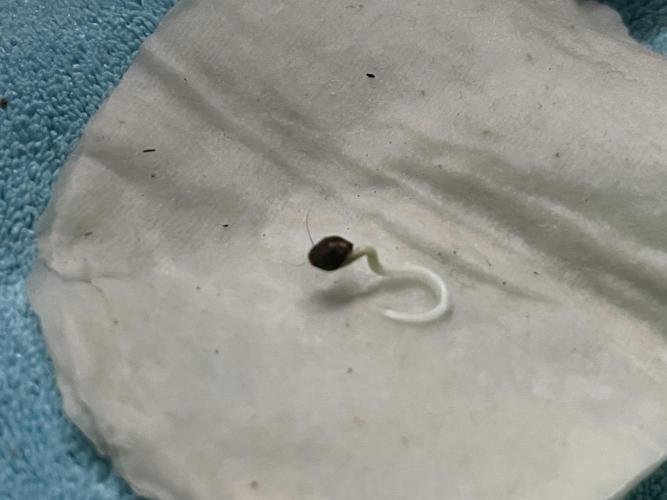
For germination, I decided to go with cotton pads.
Makeup cotton disks, specifically.
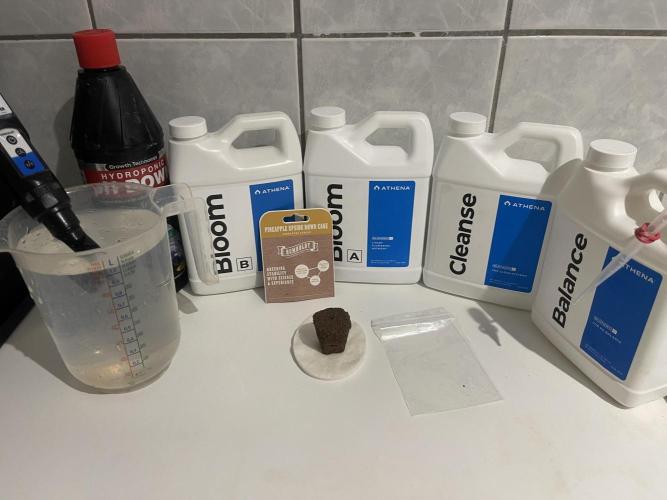
They were soaked in a nutrient solution prepared according to the Athena feeding chart:
Bloom A and Bloom B,
a small amount of Cleanse,
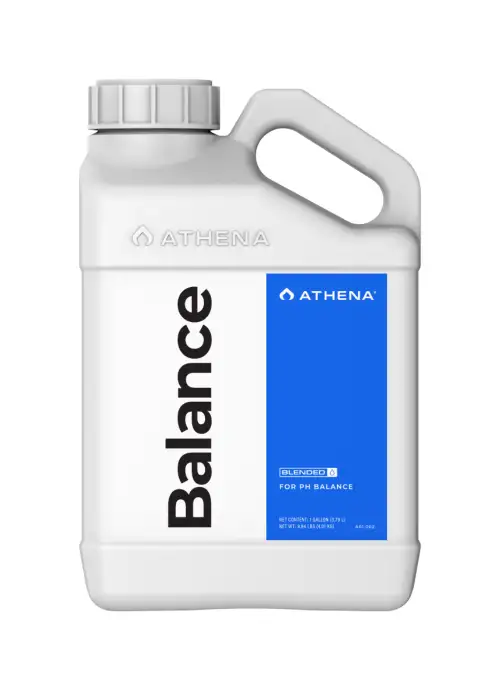
and Balance to properly stabilize the solution.
I set the EC at 0.8
and the pH at 5.6.
That EC is slightly below Athena’s recommendation, which is closer to 1.0,
but I intentionally chose to underfeed at this stage to keep things gentle and controlled.
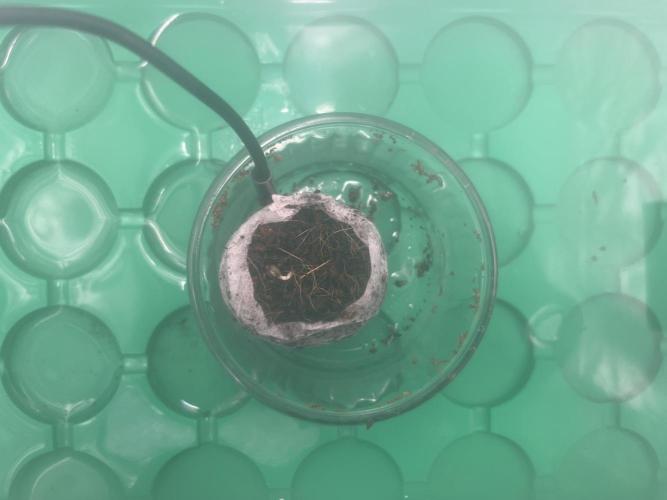
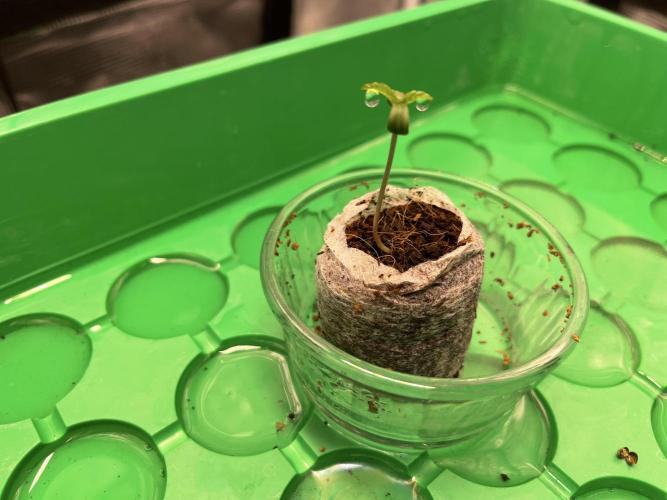
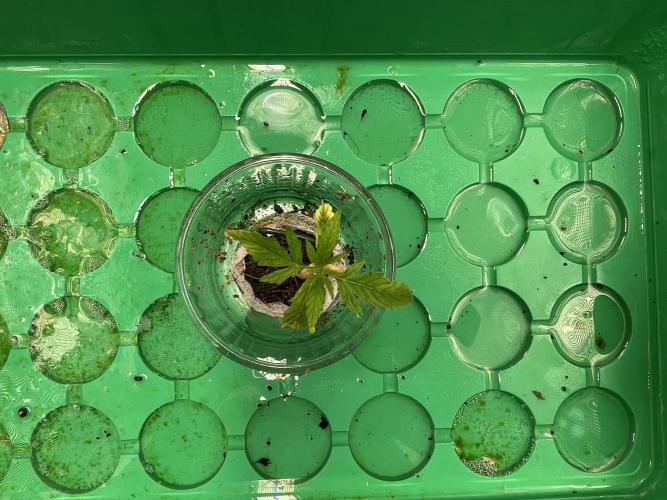
The seed has now been germinating for a little over 24 hours,
and it will reach the 48-hour mark tomorrow.
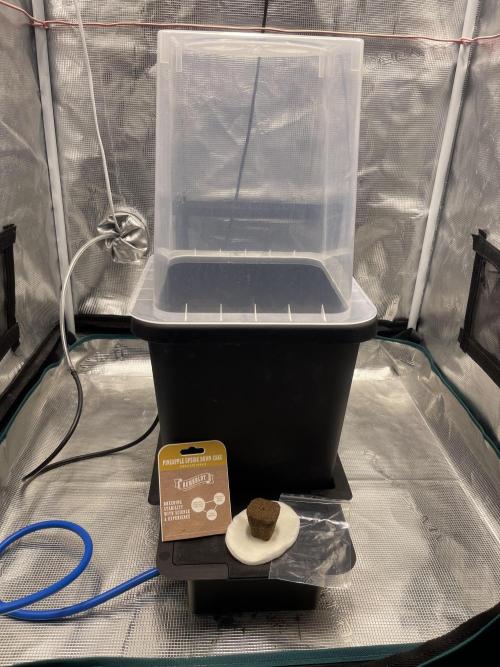
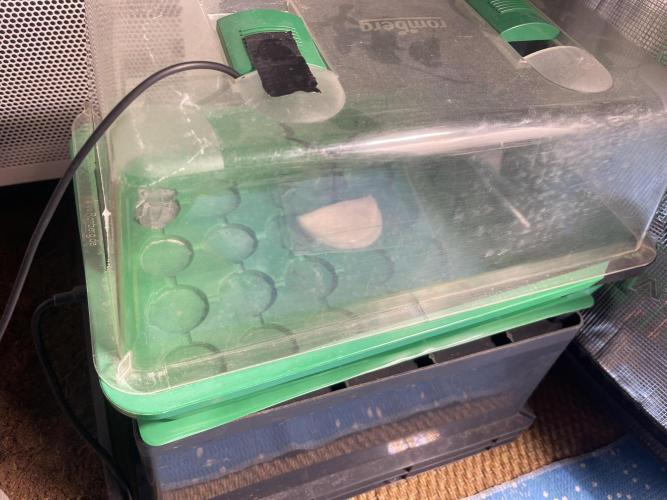
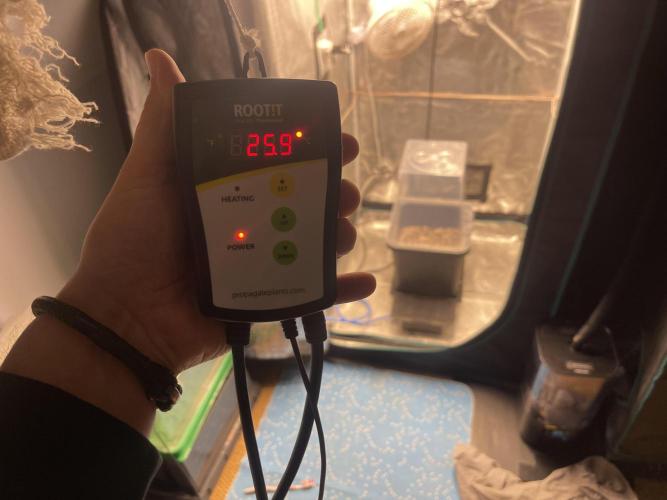
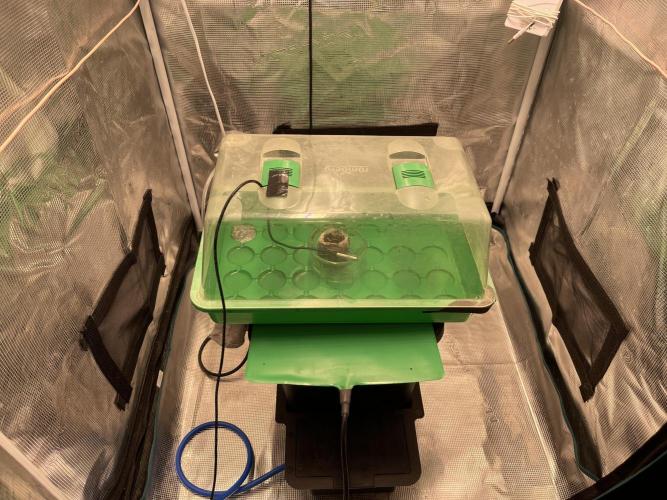
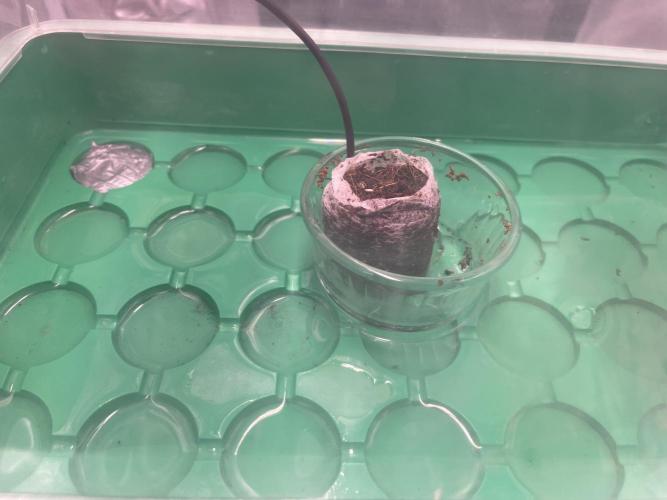
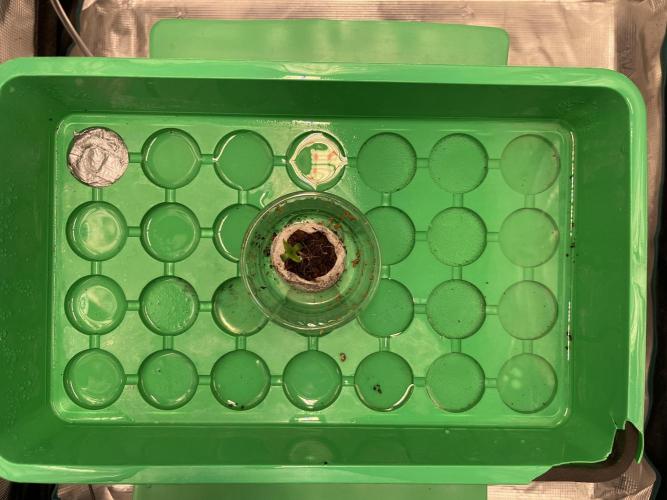
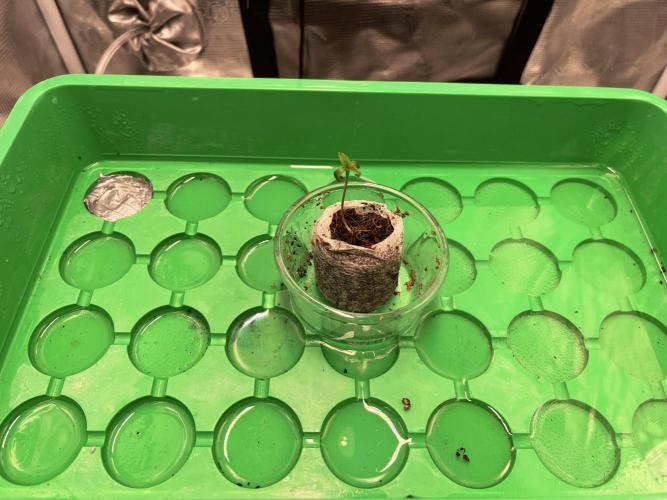
Everything is sitting inside a mini greenhouse with a heating mat.
On the photo you can see 26°C,
but the actual setting is 23°C,
so the temperature is stabilizing as intended.
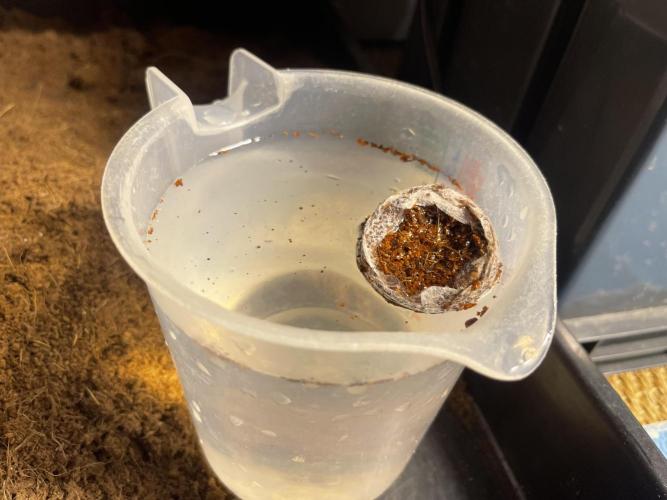
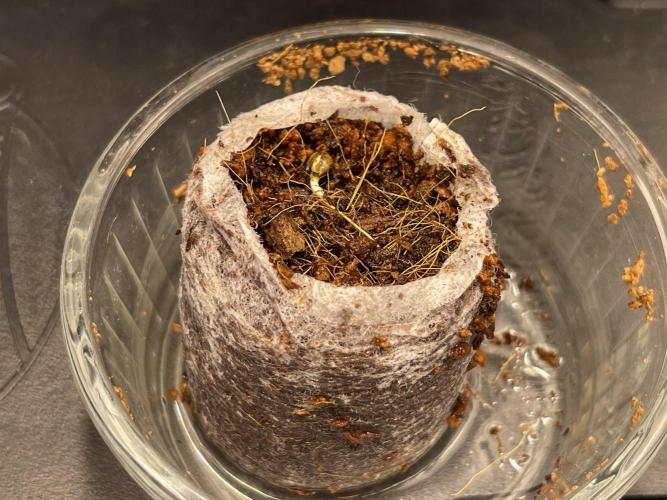
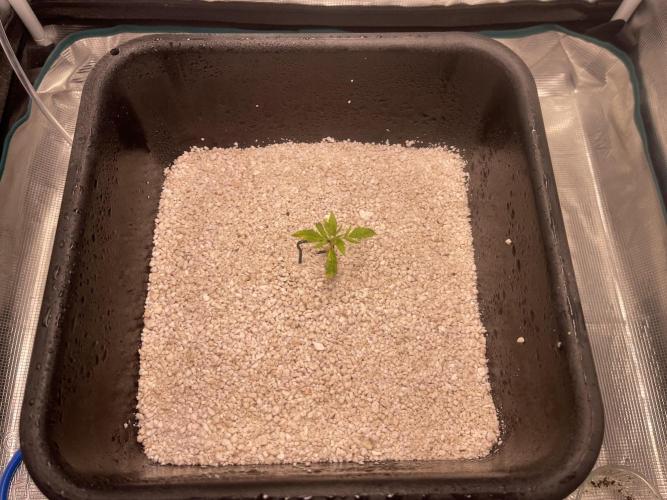
In parallel, I also prepared the coco pellet that will receive the seed once it has sprouted.
That pellet was pre-soaked in the exact same nutrient solution used for the cotton pads,
to ensure a smooth and consistent transition for the seedling.
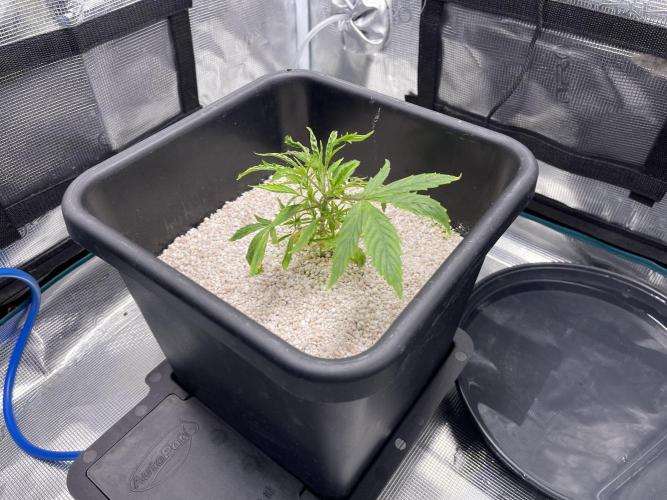
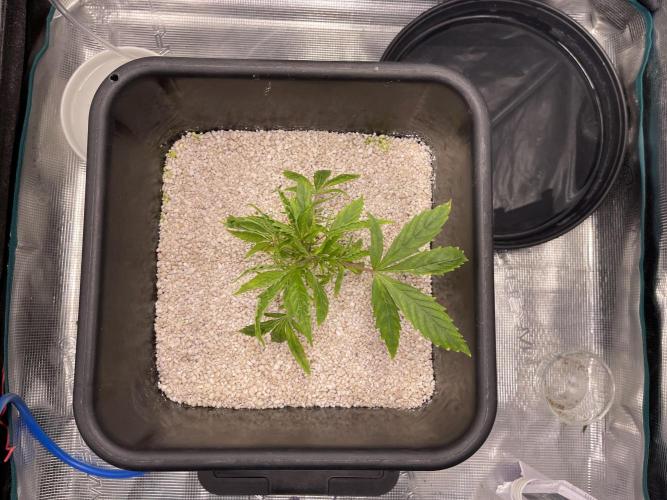
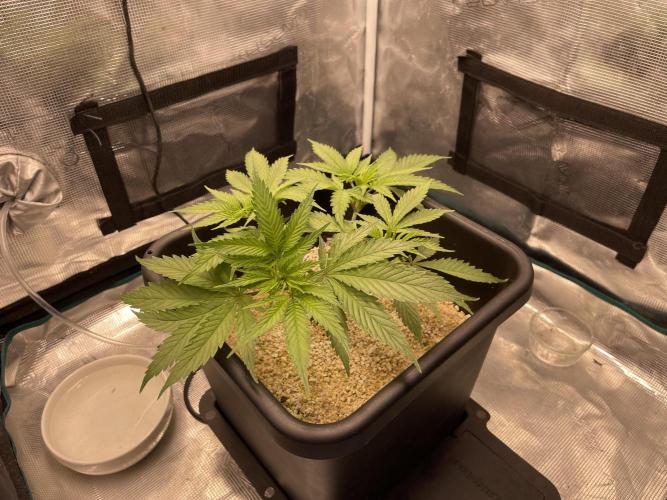
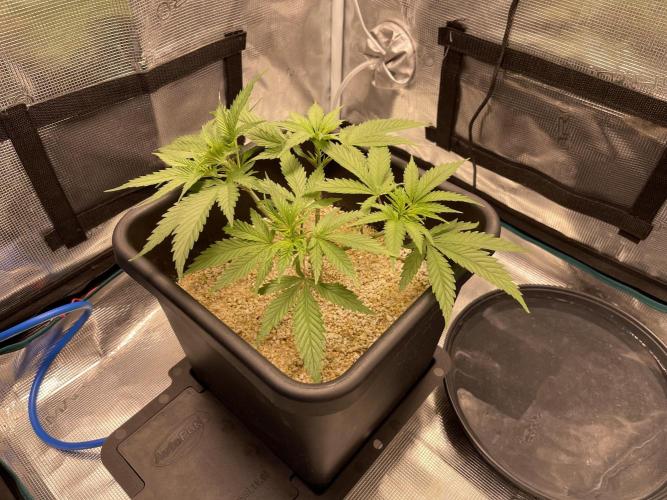
For this run, I’m sticking with the same system as before: Autopots.
The substrate mix will be coco and perlite,
with roughly 55% perlite and 45% coco this time,
to improve aeration compared to the previous cycle.
Another major change is the lighting strategy.
This entire grow will be done under full spectrum 3500K.
Last cycle, I ran 5000K for veg and then switched to 3500K for flower,
and that transition clearly caused metabolic stress.
This time, we’re keeping it consistent from start to finish.
Once the seed is up, light intensity will be set around 100 PPFD,
just to provide a soft, safe environment for early growth.
Nutrients will remain 100% Athena throughout the cycle,
with a controlled, slightly underdosed approach at the beginning.
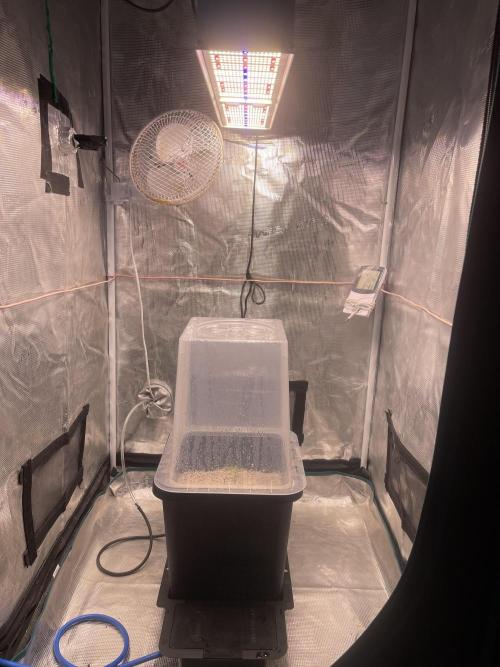
Humidity will be kept as high as possible during early stages,
which is why I installed a dome directly on the Autopot.
That’s it for now.
The plan is set, the mistakes are corrected,
and everything is in place for a cleaner, healthier run.
We’ll be back once the seed has germinated
and has been transplanted into the coco pellet.
See you right after germination.
Peace.
*UPDATE: Day+5
Mid-week update for the Pineapple germination.
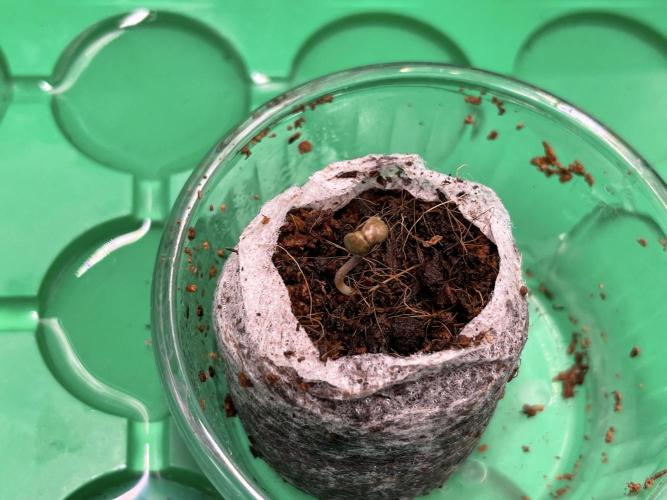
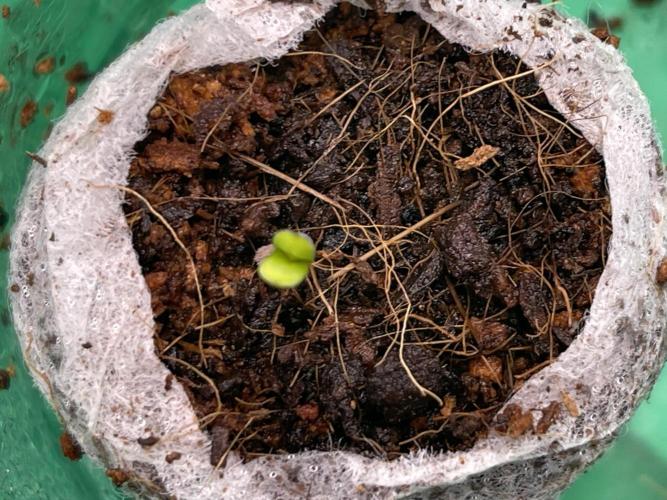
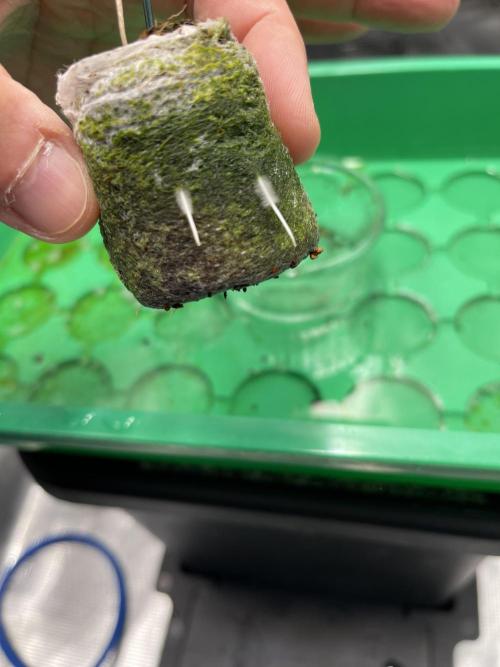
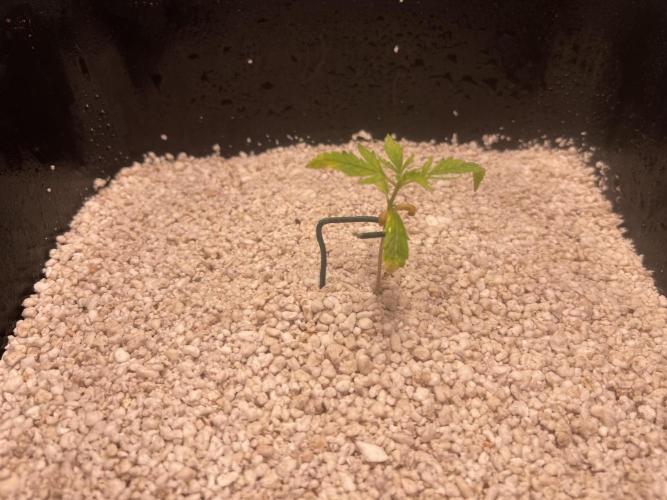
After five days, the seed finally cracked and pushed out a nice taproot.
I placed it into a small coco cube pre-soaked in pH 5.7 water.
I added just a touch of CalMag to keep things balanced.
I decided to skip Athena’s nutrient starter this time; an EC of 1 still felt too aggressive for a fresh sprout.
I’m keeping nutrition extremely light at this stage: CalMag + tap water only.
The seedling is now in the mini-greenhouse with the heat mat on to maintain temps.
The coco cube soaked for around 48 hours in CalMag water beforehand.
Light is set to about 100 PPFD for a gentle welcome.
Temperature is holding around 23–24°C inside the dome.
pH remains stable at 5.7 with lightly supplemented tap water.
Now we just let her emerge and adapt at her own pace.
Fingers crossed for a solid start and a clean run for this Pineapple cycle.
That’s it for this mid-week germination update.
See you early next week for the full weekly recap.
Update – Day 6
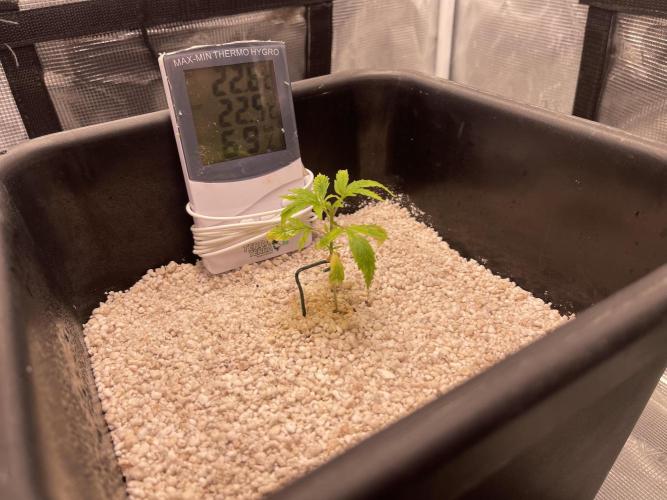
Day 6 update for Pineapple Round 2.
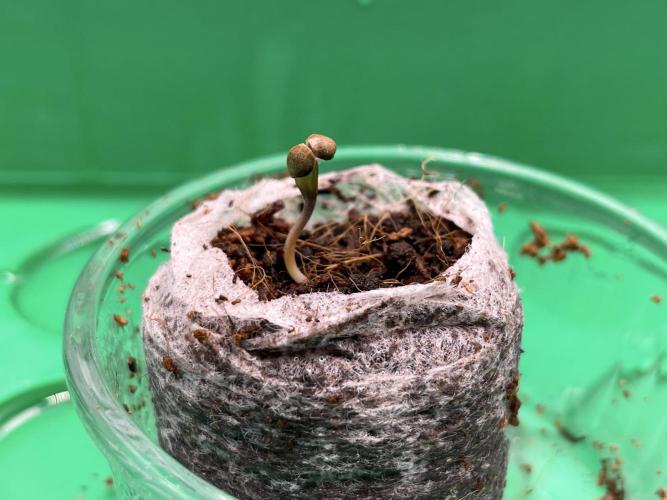
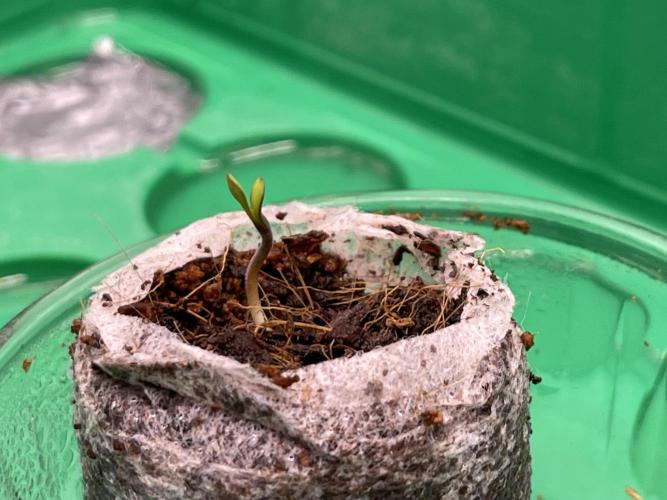
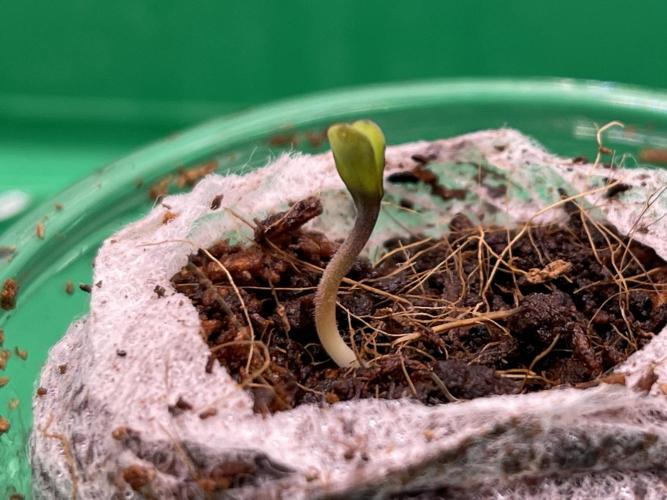
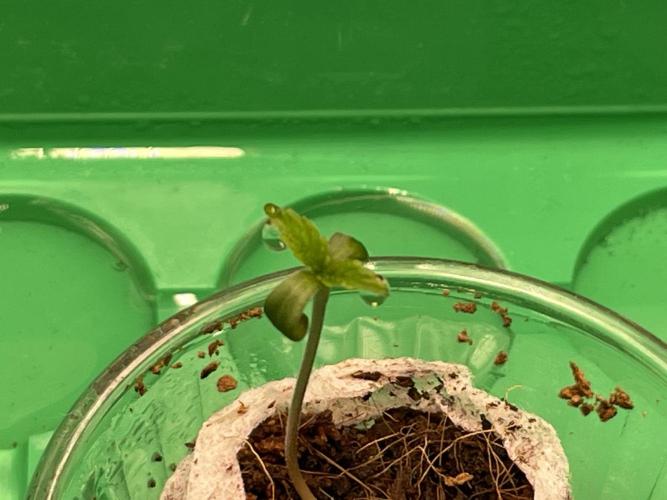
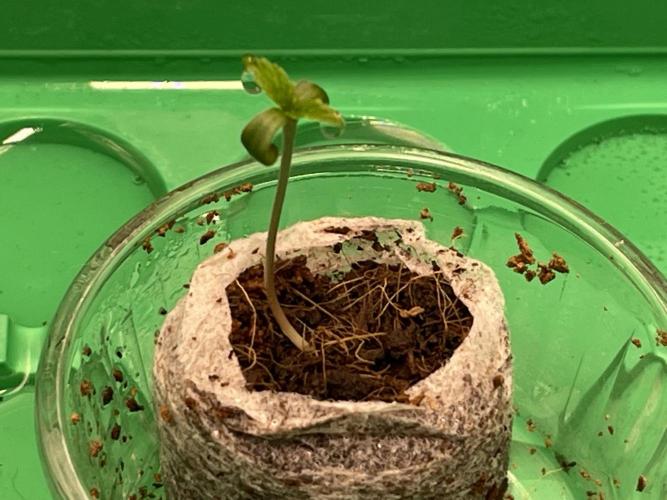
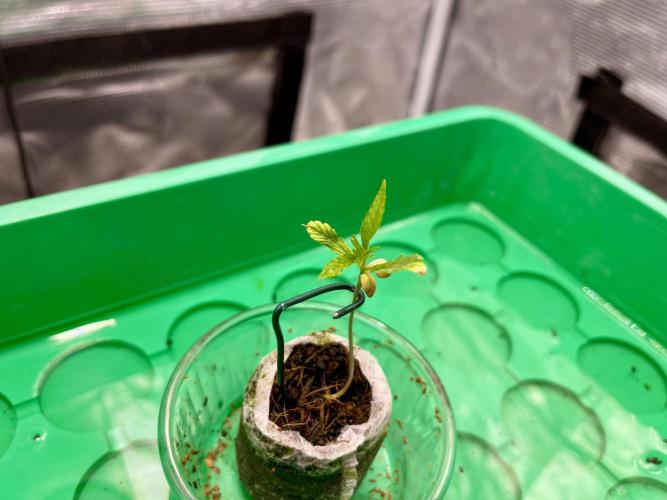
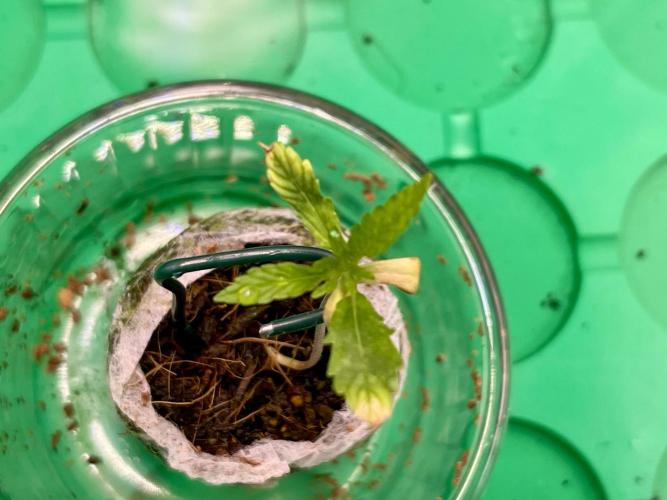
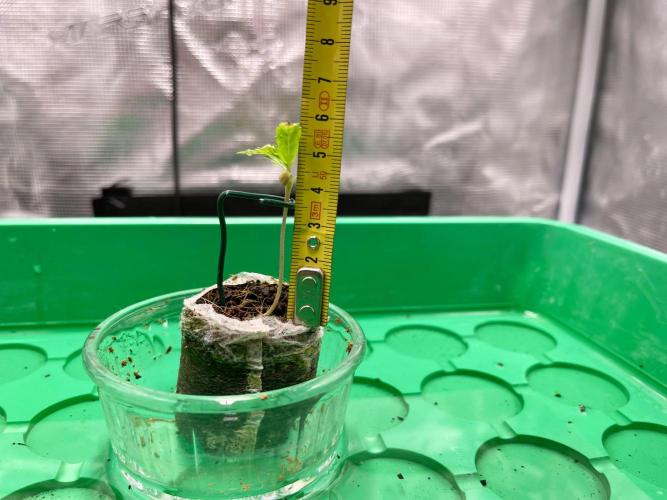
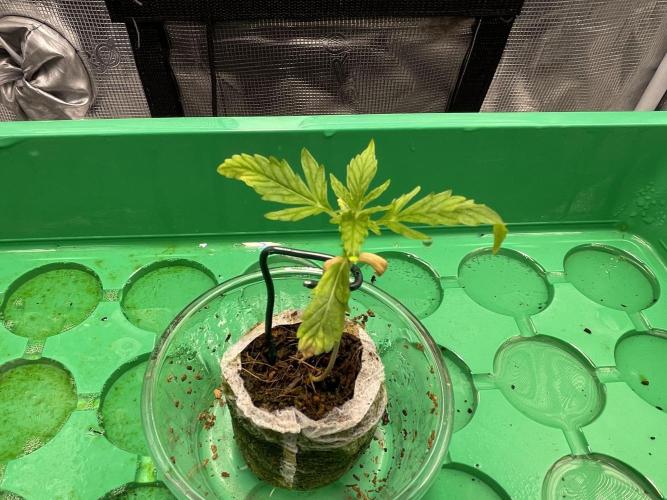
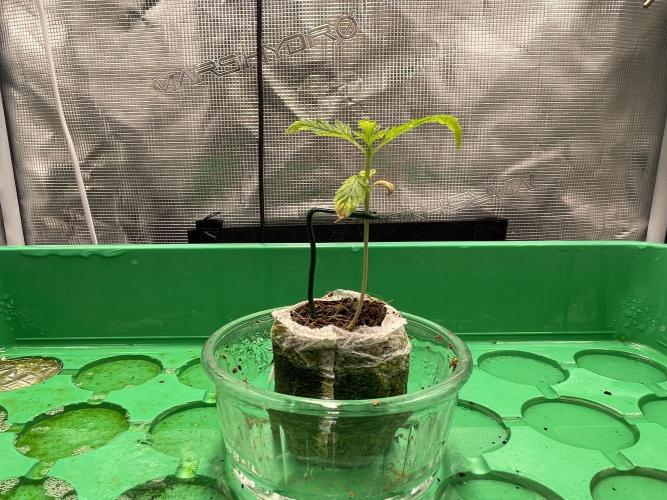
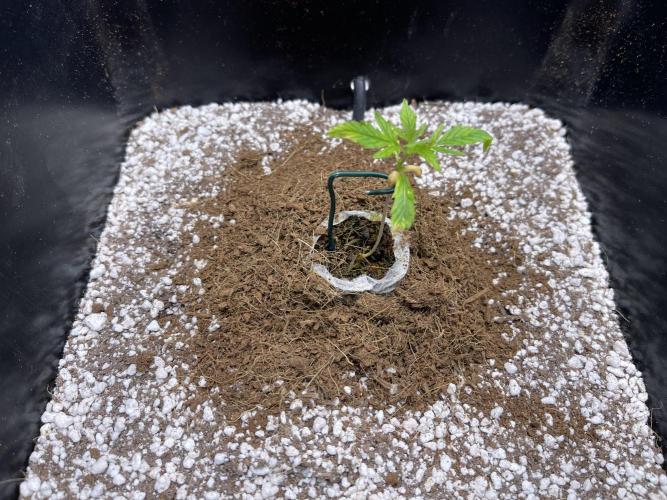
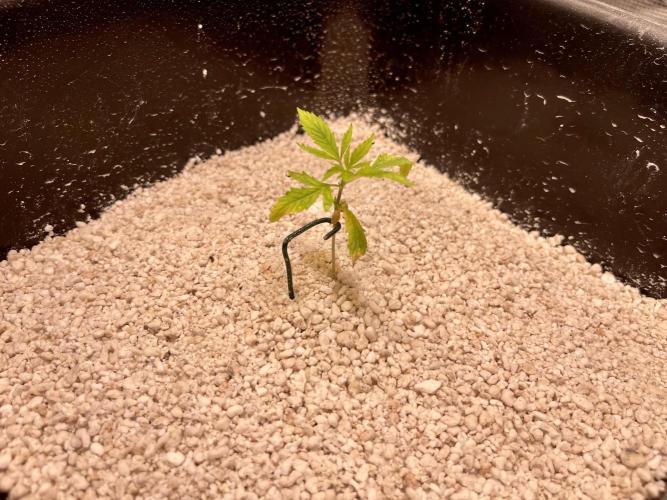
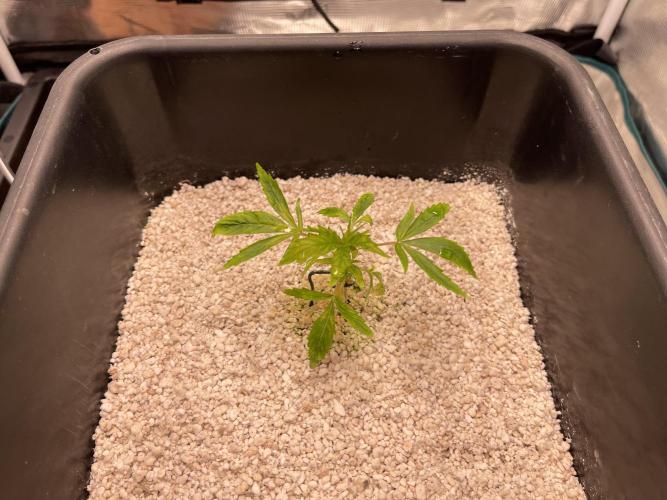
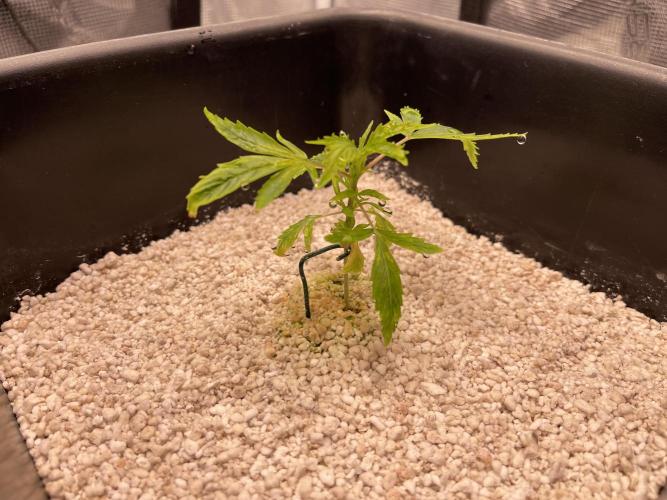
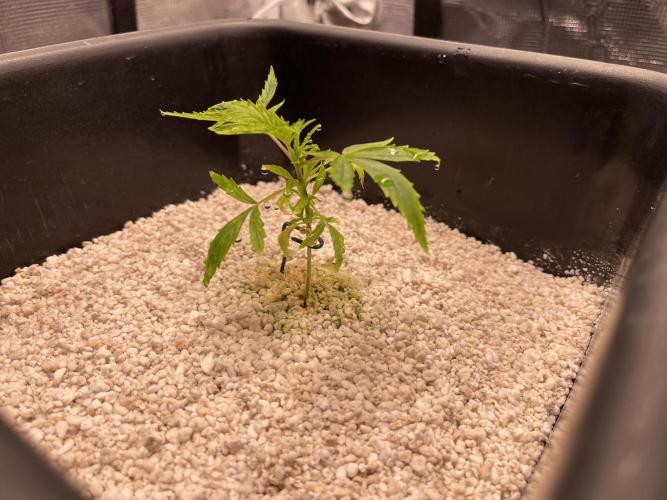
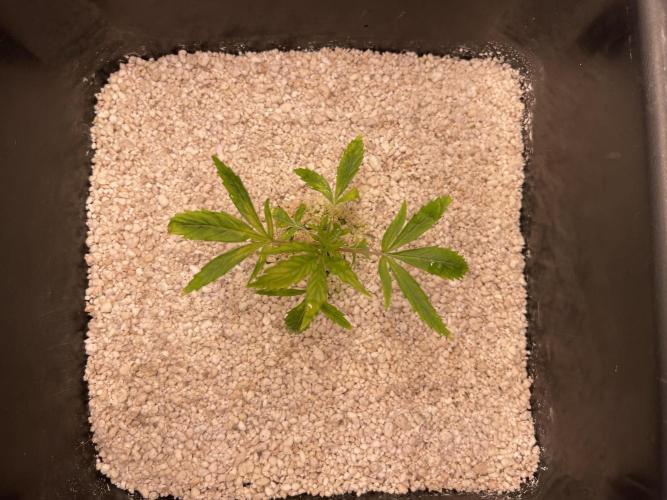
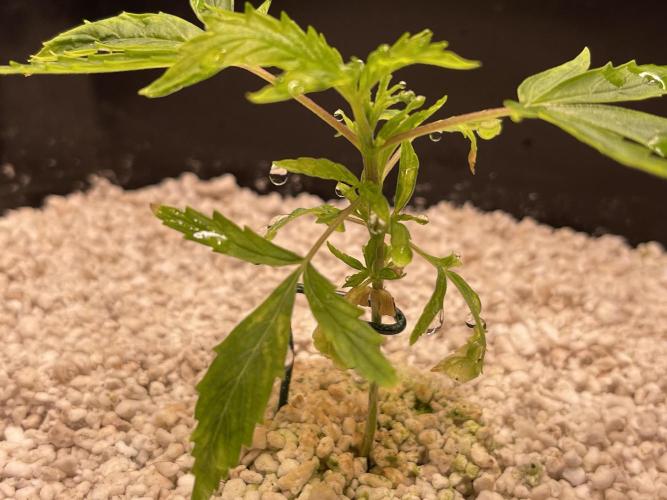
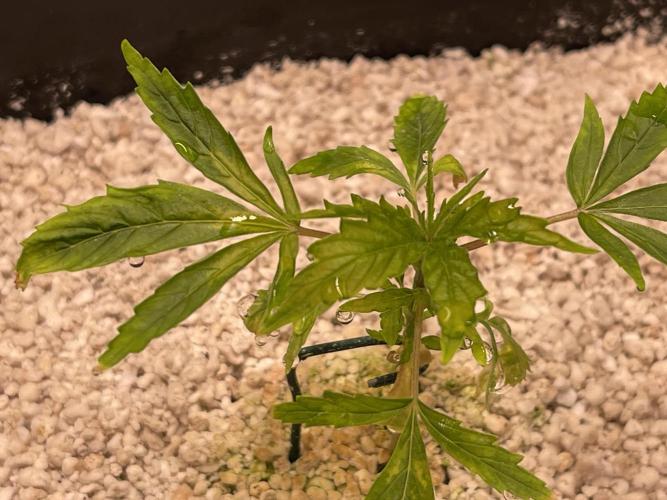
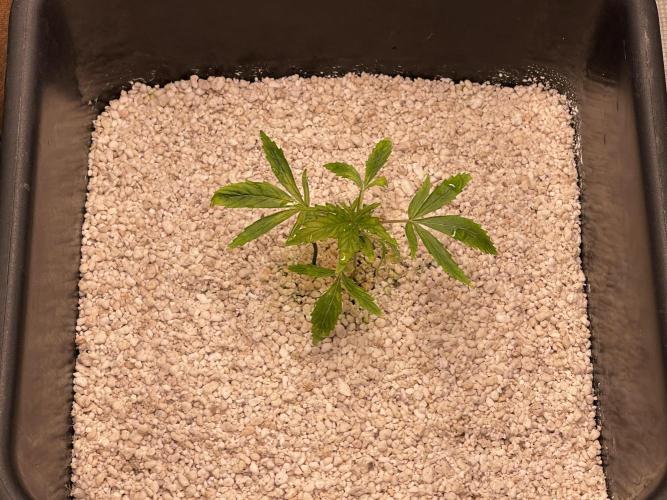
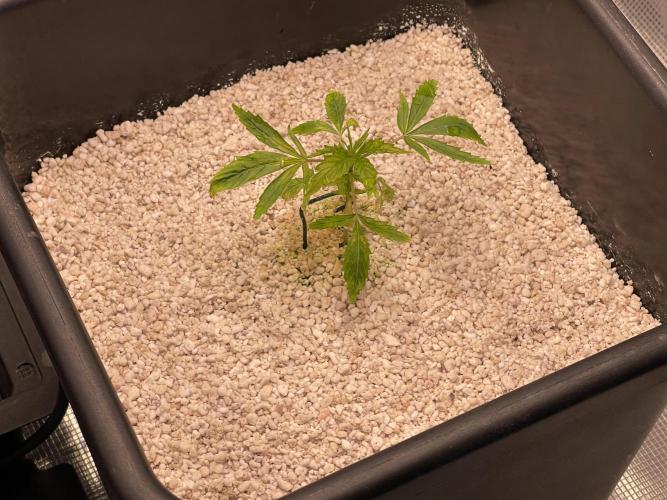
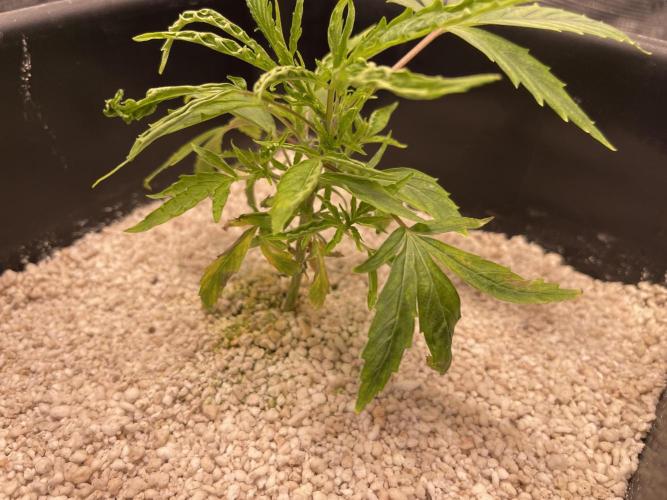
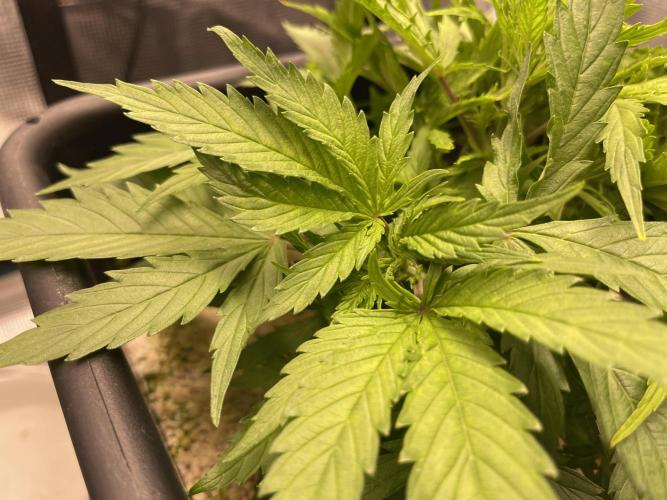
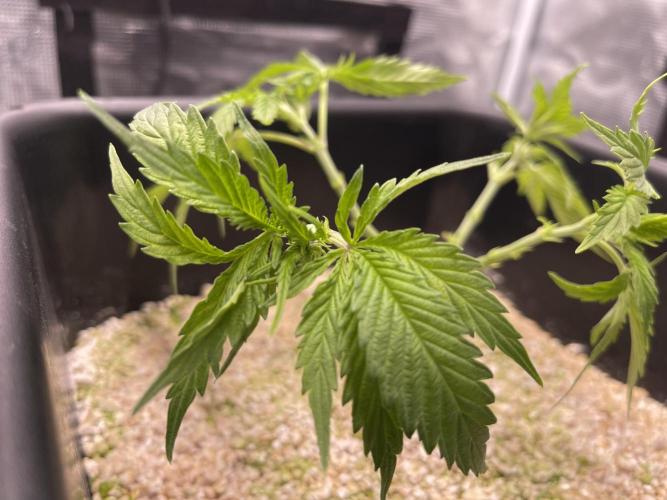
After settling into the coco pellet, the seedling straightened up nicely.
I helped remove the seed shell gently so the cotyledons could open freely.
She’s now in the main box with high humidity to keep conditions stable.
For now everything looks on track, and she’s adjusting after the transplant.
This is the last update for the week, but I wanted to document the early stage closely.
The start is critical, so I’m monitoring day by day.
We’ll reconnect next week for the next update.
See you at the next checkpoint.
Final Update: Day+7
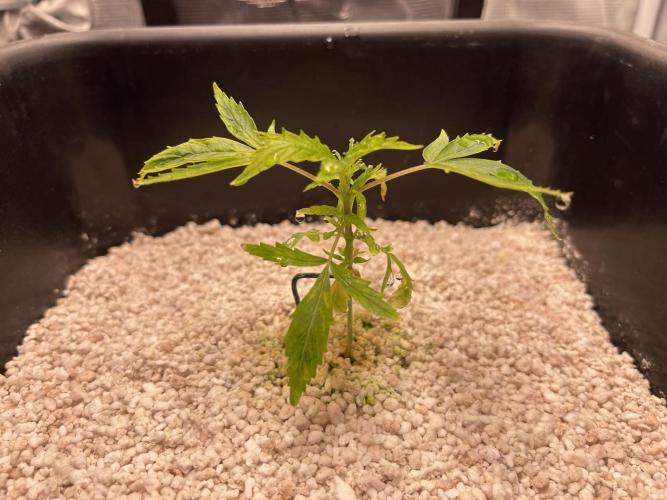
End of week one for the Pineapple seed, and this run is officially underway.
It’s been seven days since I started germination, and the timeline was pretty classic: about three to four days for the seed to crack, push the taproot, and finally break through the surface.
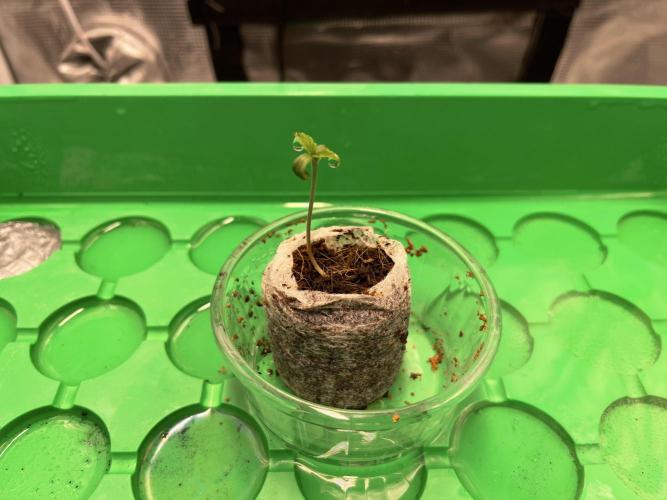
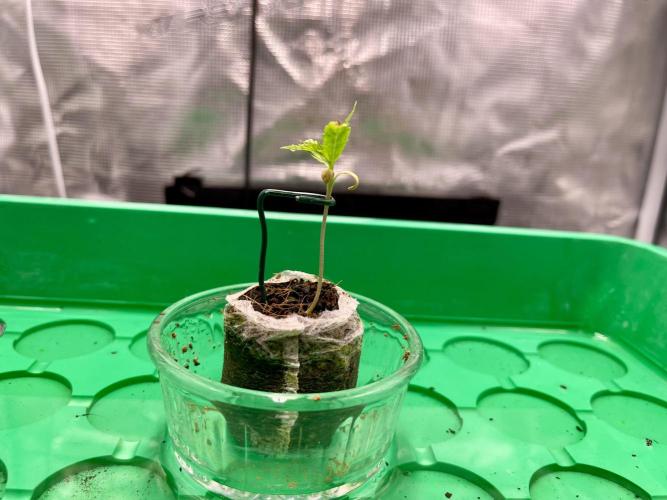
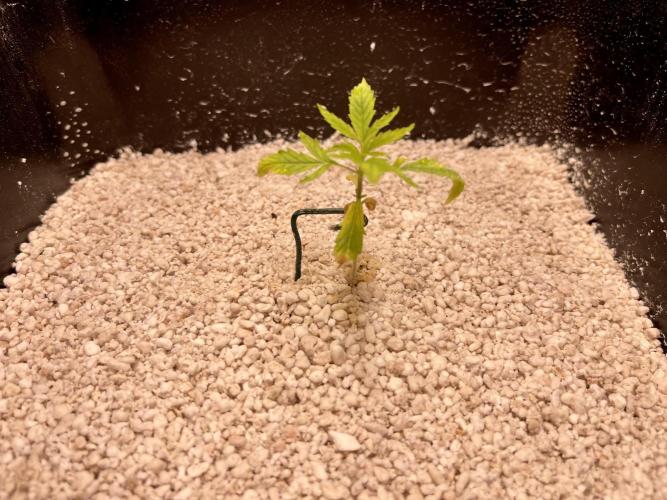
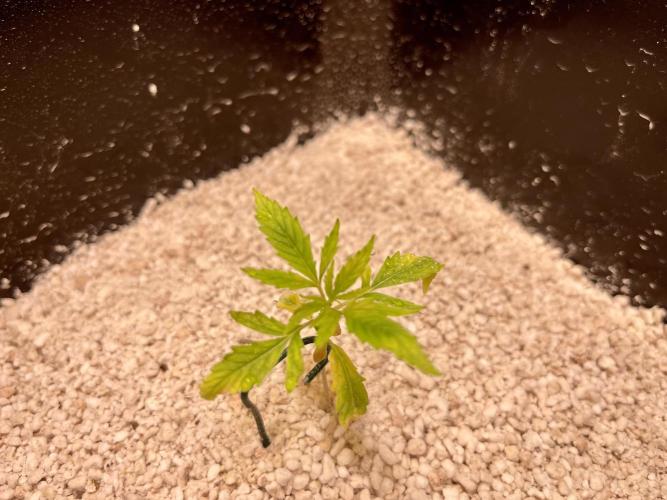
The seedling is now up and standing, looking clearly more developed than in the previous attempts.
She did stretch a bit at the beginning, which makes sense with the lower light intensity I was using at first.
To keep things under control and avoid a leggy plant, I gently bumped the PPFD up to around 200.
The idea is simple: give her enough light so she can build a compact structure without stressing her.
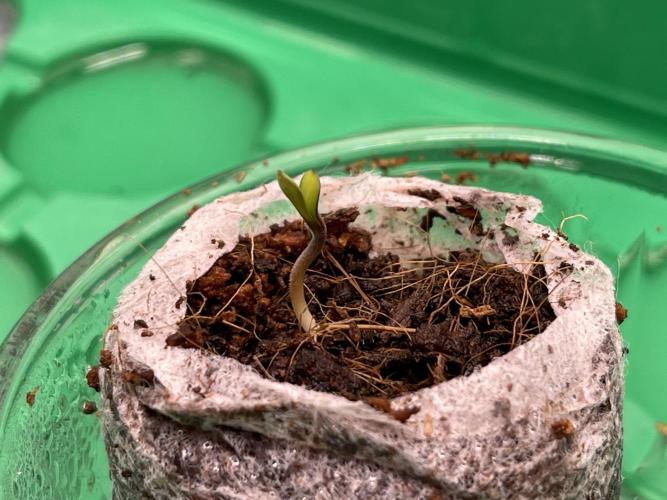
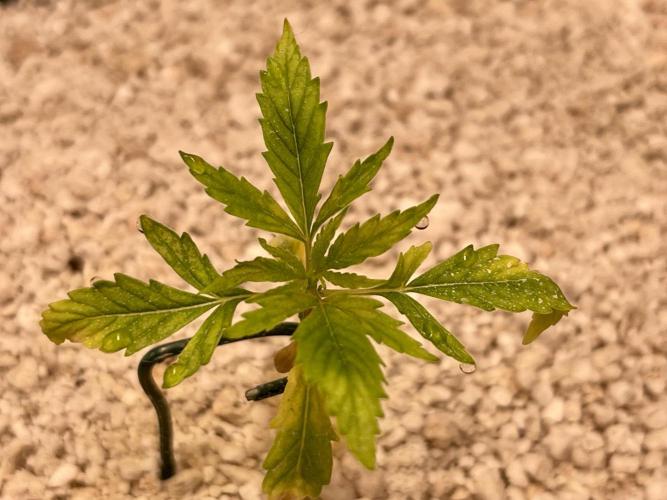
Right now, the first true leaf pair is starting to show after the cotyledons.
The cotyledons are open, doing their job, and the tiny serrated leaves are just emerging.
This is the stage where I’m really hoping everything continues smoothly, without the issues I had in the previous runs at seedling stage.
So for this round, I’m staying disciplined: no unnecessary interventions, no overwatering, no “rescue mode” unless there’s a real problem.
On the environmental side, conditions are stable.
The seedling is in a mini greenhouse with a temperature holding around 24–25°C.
That’s warm enough to keep metabolism active without cooking the plant or drying out the pellet too fast.
Humidity is naturally high in the mini-serre environment, which helps the young plant transition smoothly from germination to early seedling phase.
In terms of watering, I haven’t touched anything yet.
The coco pellet is still nicely moist, so there’s no reason to add water at this stage.
The goal is to let the seedling work for it a bit: let the root search, anchor, and start exploring the medium.
Overwatering here would be the fastest way to repeat old mistakes, so I’m consciously doing nothing – which is often the hardest part.
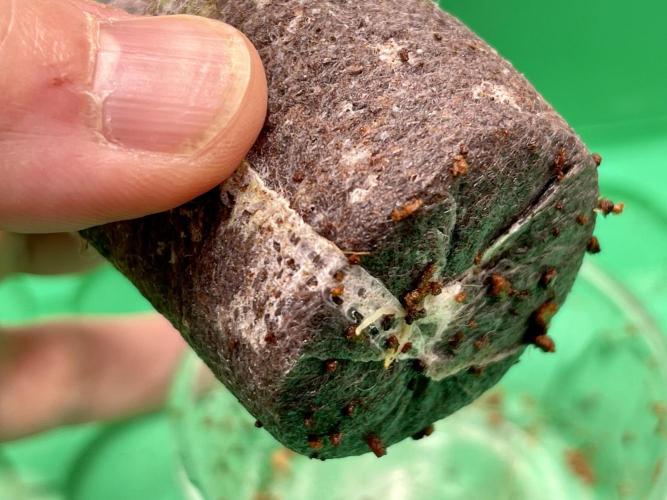
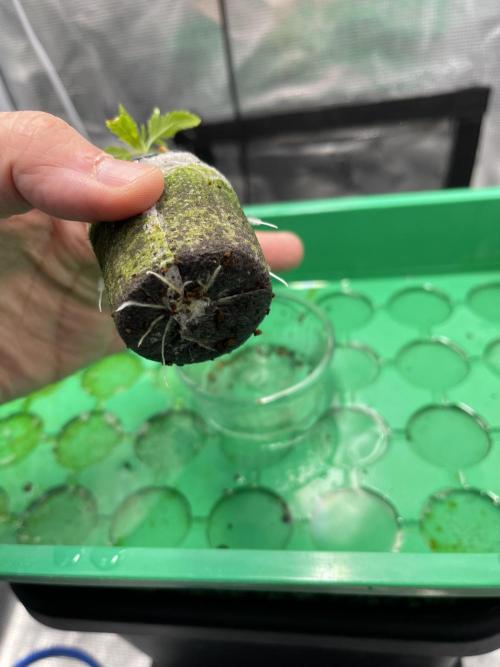
I think I might have spotted a first root tip poking out from the bottom of the pellet, but for now I’ll call that “unconfirmed.”
Either way, it means the root system is starting to push downward, which is exactly what I want before any transplant decision or major change.
So this closes out week one of the germination phase for Pineapple Round 2.
From seed drop to emergence took about a week total, and we’re now entering the transition between germination and early vegetative growth.
For now, the plan is simple:
– keep PPFD around 200,
– maintain temperature at 24–25°C,
– avoid any watering until the pellet starts to dry,
– and just let the plant settle and do its thing.
Next update will be for week one of veg, when the first true leaves have had time to expand and the root system has clearly taken hold.
2 likes
comments
Share
Used method
Paper Towel
Germination Method
1
Week 1. Vegetation
9mo ago
1/15
5 cm
Height
18 hrs
Light Schedule
25 °C
Day Air Temp
5.8
pH
200 PPM
TDS
80 %
Air Humidity
19 °C
Night Air Temp
SamDo Week one of vegetative growth for Pineapple Upside Down – Round 2, from Humboldt Seed Company.
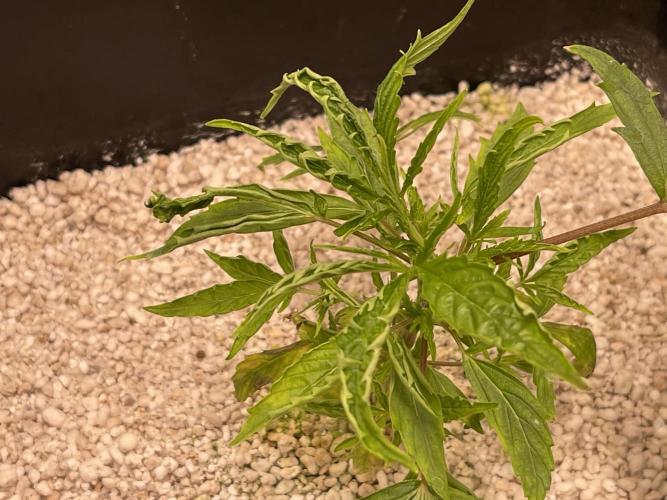
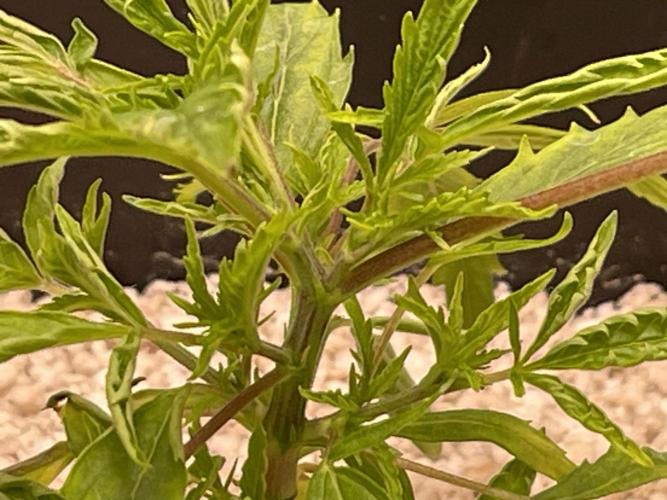
I’ll be straight: the start wasn’t smooth, again.
Even keeping things “simple,” I managed to stress the seedling early on.
The initial mix was tap water with a very light dose of CalMag and a bit of Voodoo Juice, with pH sitting around 5.8–5.9.
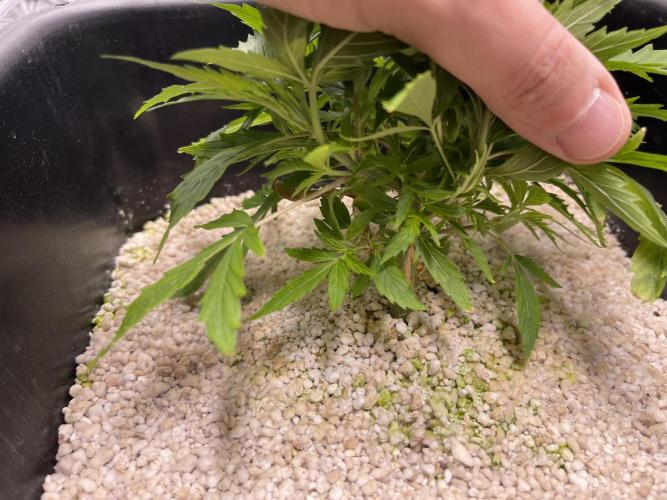
The coco pellet was fully hydrated, but the plant clearly didn’t like something.
It looked like early burn or a harsh reaction, which is frustrating because the input level was low.
At that point, the likely causes were pretty classic:
maybe the feed was still too rich for a newborn,
maybe the dome ran too warm,
or maybe the seedling just hates my “light touch” and wants even less.
So I did the smartest thing: I stopped guessing and reset.
I rehydrated the coco pellet again using only RO water.
I dropped EC down to 0.4 and kept it minimal, using just a small amount of FormuleX.
No CalMag, no extras, just a clean baseline.
Since that change, things look more encouraging.
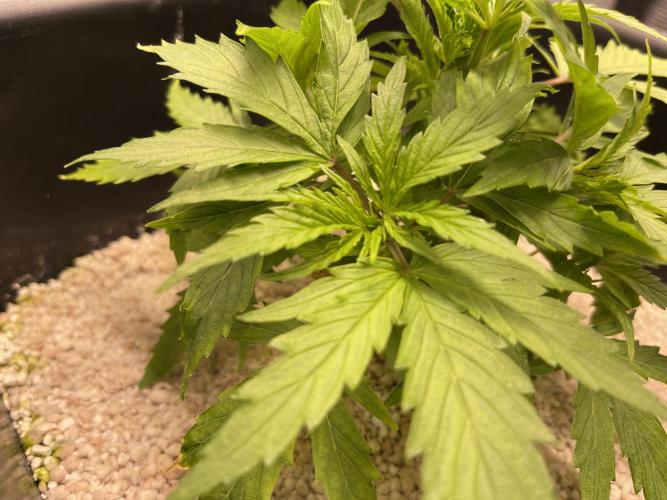
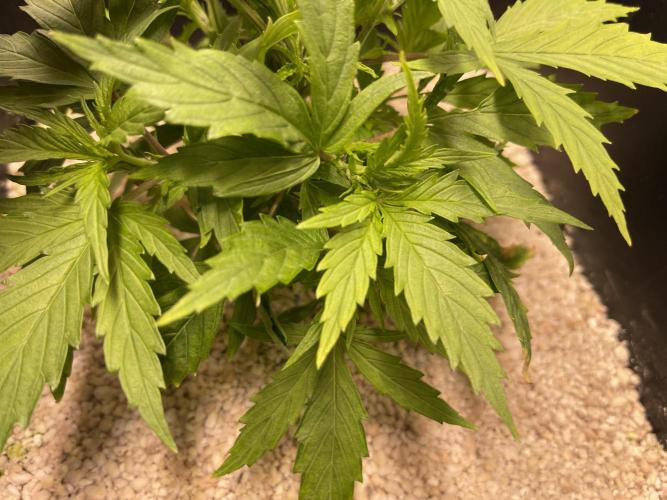
I can see two new pairs of leaves coming in, and that’s the sign I wanted.
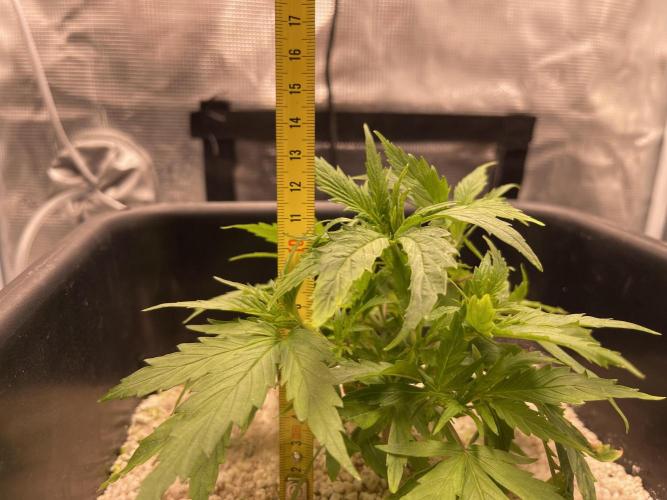
The seedling is around 5 cm tall right now, and I’ve kept humidity high in the mini greenhouse to support rooting and recovery.
The goal for next week is simple: clean new growth.
If the new leaves stay healthy, I’ll know the issue was the early mix and not something deeper.
And yeah—seedling starts are still my weak spot.
I’m clearly making mistakes somewhere in that “first 10 days” window, and I need to tighten the process until it’s repeatable.
For now: stable environment, minimal inputs, and steady observation.
See you next week.
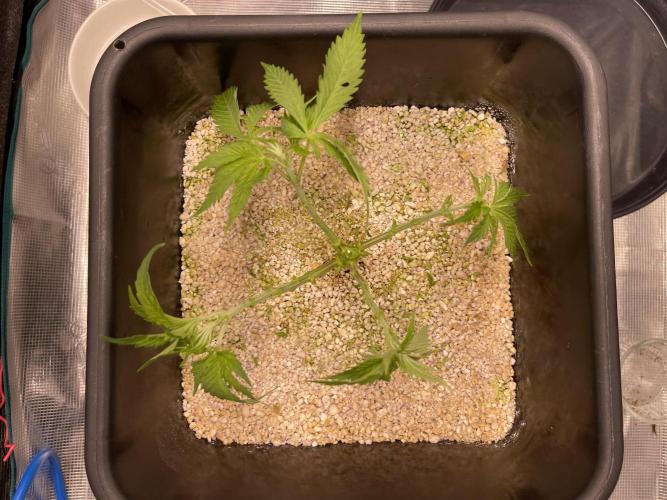
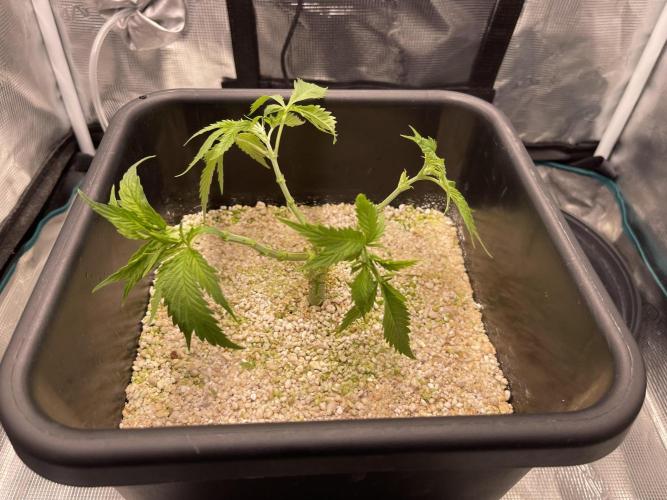
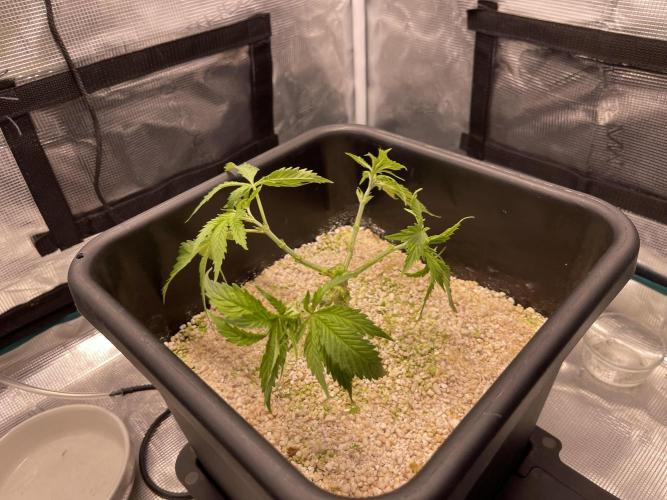
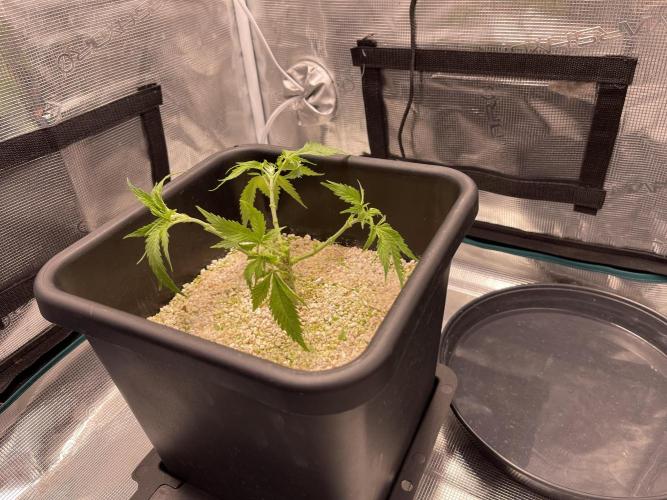
**Quick update on the Pineapple Upside Down Round 2.**
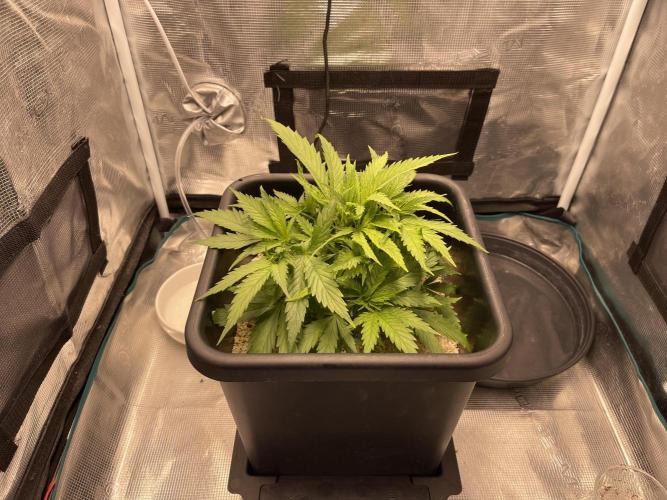
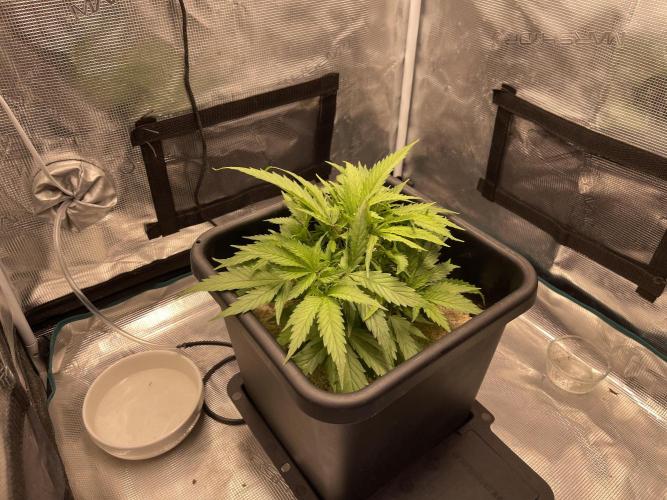
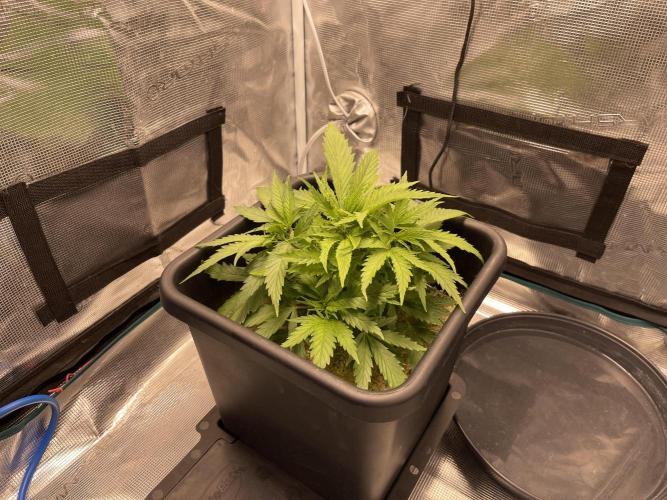
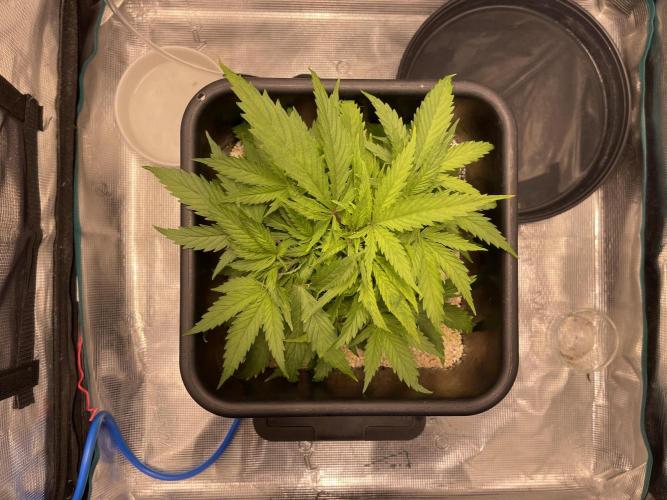
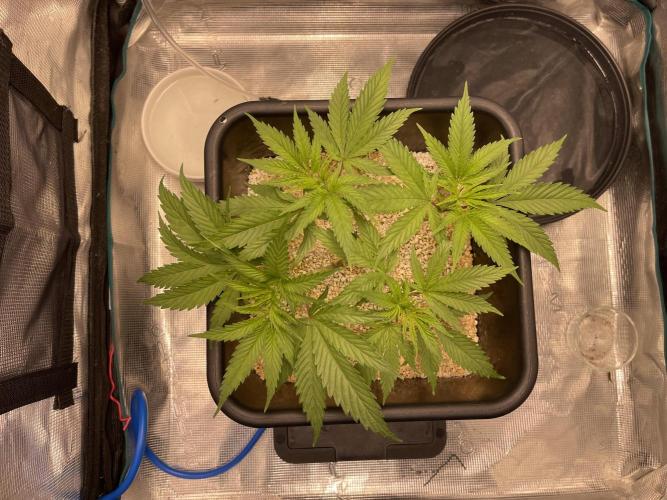
I transplanted the plant into its final pot.
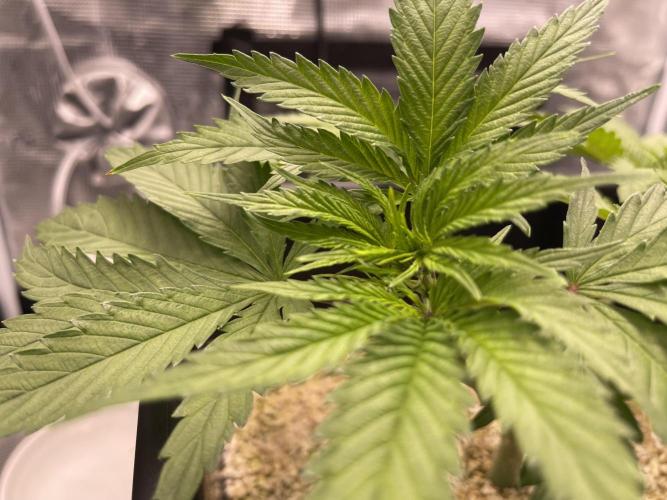
She’s still a small one, but the roots have clearly started to develop, and she now has four full pairs of leaves. That was enough of a signal for me to move her into the final container without waiting any longer.
That said, the start hasn’t been as clean or as smooth as I would have liked.
It’s not a perfect takeoff, but it’s clearly not as catastrophic as the previous cycle either. The plant still looks fairly vigorous, which is reassuring at this stage.
I’m still running the humidity dome to keep a high level of moisture around the plant during this early phase. The goal is to limit stress as much as possible and help the roots settle properly after the transplant.
I mixed a fresh, light nutrient solution.
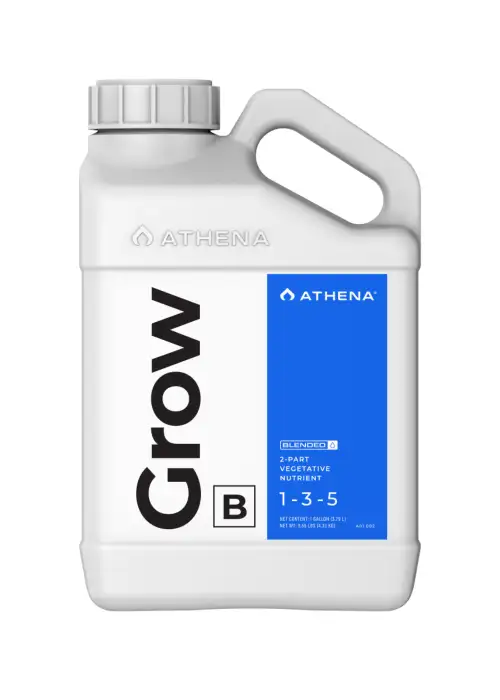
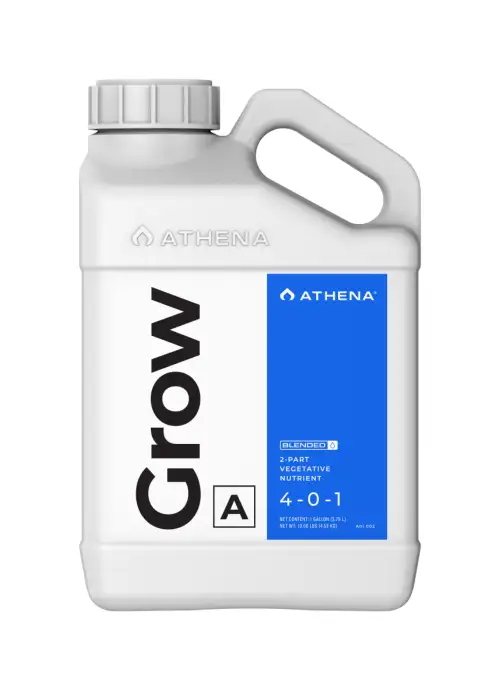
EC is set around 1.0. I’m running Athena Grow A & B, plus a small dose of Cal-Mag.
Roughly 0.9 ml per liter for Grow A and Grow B, adjusted to reach that EC.
Hopefully, the combination of the transplant and the light nutrient solution won’t slow her down or cause any setback. The focus here is stability, not performance.
On the lighting side, I lowered the fixture slightly and reduced the power to stay efficient. PPFD is sitting around 180 at canopy level, which feels appropriate for this early stage.
So overall, not a perfect start, but still a workable one.
We’ll see how she reacts over the next few days, and I’ll do another update at the end of the week.
See you next week.
Stay safe, growers.
4 likes
2 comments
Share
Used techniques
Transplantation
Technique
2
Week 2. Vegetation
9mo ago
1/13
7 cm
Height
18 hrs
Light Schedule
25 °C
Day Air Temp
5.8
pH
400 PPM
TDS
80 %
Air Humidity
19 °C
Night Air Temp
Nutrients 1
Formulex
0.5 mll
SamDo Week 2 of vegetative growth for Pineapple Upside Down – Round 2.
The plant is still struggling at this stage. Development is slower than expected for week two, and overall vigor remains below what would normally be considered healthy growth. Reading the plant has been difficult, as no single factor clearly stands out as the root cause.
Several parameters are being questioned: excess humidity, temperature management, light intensity, or nutrient balance. Overfeeding seems unlikely, as the last watering was done with a very light EC, around 0.3 to 0.4. Light levels are also modest, approximately 180–200 PPFD, which should normally be safe for a young plant. The pH was checked and appears to be within an acceptable range.
Because the substrate is already sufficiently moist from previous watering around the plant, no additional irrigation has been done. At this point, adding more water would likely do more harm than good.
A small adjustment was made by slightly opening the dome to improve airflow and reduce excess humidity. This should help the plant breathe better and potentially stabilize its environment. Temperature may also be adjusted if needed, depending on how the plant responds over the coming days.
This second week highlights ongoing difficulties in managing early growth stages. There is clearly room for improvement in the startup protocol, and this phase is being treated as a learning process for future cycles.
For now, the strategy remains simple: minimize interventions, maintain stable conditions, and allow the plant time to recover its natural rhythm. The next update will focus on whether growth resumes normally or if further adjustments are required.
2 likes
2 comments
Share
3
Week 3. Vegetation
9mo ago
1/12
8 cm
Height
18 hrs
Light Schedule
22 °C
Day Air Temp
5.8
pH
400 PPM
TDS
95 %
Air Humidity
19 °C
Night Air Temp
SamDo Vegetative Week 3
This third week of vegetative growth was expected to be a turning point, but it turned out to be another difficult one.
The plant did gain a bit of height, roughly a couple of centimeters, which shows that growth hasn’t completely stalled.
However, foliage development remains poor, and overall vigor is clearly lacking.
The plant is growing, but it doesn’t look healthy or strong.
No additional watering was done this week, as the medium did not justify it.
Humidity management appears to be a key issue.
Under the dome, humidity was still around 95%, which is excessive.
The dome has now been fully opened to allow better gas exchange.
Removing the small support revealed another concern:
the stem lacks strength, as the plant fell over once unsupported.
This points to weak structural development and possibly limited transpiration and nutrient uptake.
Condensation droplets were observed on the leaves, confirming that the plant is likely oversaturated with moisture.
Excess humidity may be preventing proper respiration, which could explain the lack of nutrient absorption and overall stagnation.
At this stage, no drastic action is taken.
The focus is on observation, environmental adjustments, and understanding the root cause of the stress.
This plant should normally be much larger by week three, so close monitoring will continue into next week.
See you next week!
4 likes
comments
Share
4
Week 4. Vegetation
9mo ago
1/8
10 cm
Height
18 hrs
Light Schedule
22 °C
Day Air Temp
5.8
pH
600 PPM
TDS
19 °C
Night Air Temp
Nutrients 5
Balance
2 mll
Grow B
1 mll
Grow A
1 mll
SamDo Vegetative Week 4 – Pineapple Upside Down (Round 2)
This fourth week of vegetative growth confirms a pattern that has unfortunately been present since the beginning of this run.
The plant is technically growing, but visually she looks unhealthy, weak, and stressed.
Overall structure, leaf quality, and general vigor are clearly not where they should be at this stage.
Nutrient solution has been kept within a reasonable range, with pH maintained between 5.8 and 6.2 and EC around 1.1–1.2.
Despite this, there is no clear positive response from the plant.
At this point, it is difficult to identify a single root cause.
It could be related to nutrition balance, substrate preparation, environmental parameters, lighting, or simply a combination of multiple small issues accumulating since the start.
The humidity dome has now been fully removed.
Given the plant’s current condition, maintaining excessive humidity no longer seems beneficial.
The approach is now to simplify, stabilize, and observe.
This run is clearly delayed, and expectations for a quick recovery are low.
That said, the focus remains on learning from these early-stage difficulties and improving future starts, especially substrate preparation and initial environmental control.
For now, the plant will continue to be fed consistently, without overreacting or introducing drastic changes.
Observation and patience remain the priority.
See you next week, and take care.
5 likes
comments
Share
5
Week 5. Vegetation
9mo ago
1/9
13 cm
Height
18 hrs
Light Schedule
22 °C
Day Air Temp
6.0
pH
600 PPM
TDS
19 °C
Night Air Temp
Nutrients 5
Balance
2 mll
Grow B
1 mll
Grow A
1 mll
SamDo Vegetative Week 5 – Pineapple Upside Down (Round 2)
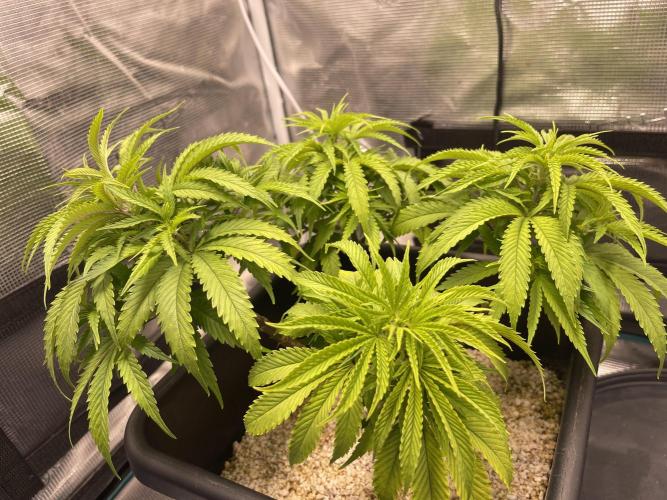
This week brings a clear and positive shift compared to the previous ones.
The plant has visibly regained vigor, with a noticeable difference in overall growth and structure.
New shoots and branches are actively developing, and foliage density is increasing.
Leaf shape and color look much more natural and healthy than before.
Although the plant still shows some irregular structure due to early-stage stress, the general appearance is now clearly positive.
Growth momentum is back, and the plant is rebushing nicely.
The main objective this week is stabilization.
No pruning or training has been performed yet, as the priority is to allow the plant to fully recover, build strength, and establish a solid base.
Structural work and shaping will only begin once growth is fully consistent.
Nutrition remained unchanged from last week.
Maintaining stable inputs seems to be working well, as the plant is responding positively without any additional adjustments.
While some time was lost earlier in the cycle, the delay is significantly less severe than in the previous run.
This recovery phase is encouraging and provides valuable insight for improving future starts.
Overall, this week ends on a positive note.
The focus moving forward will be on consistency, care, and supporting this renewed growth.
See you next week, take care.
5 likes
comments
Share
6
Week 6. Vegetation
8mo ago
1/17
17 cm
Height
18 hrs
Light Schedule
22 °C
Day Air Temp
6.0
pH
700 PPM
TDS
19 °C
Night Air Temp
Nutrients 5
Balance
2 mll
Grow B
1.5 mll
Grow A
1.5 mll
SamDo Vegetative Week 6 – Pineapple Upside Down (Round 2)
This week confirms a full recovery in vegetative growth.
The plant clearly regained vigor and momentum.
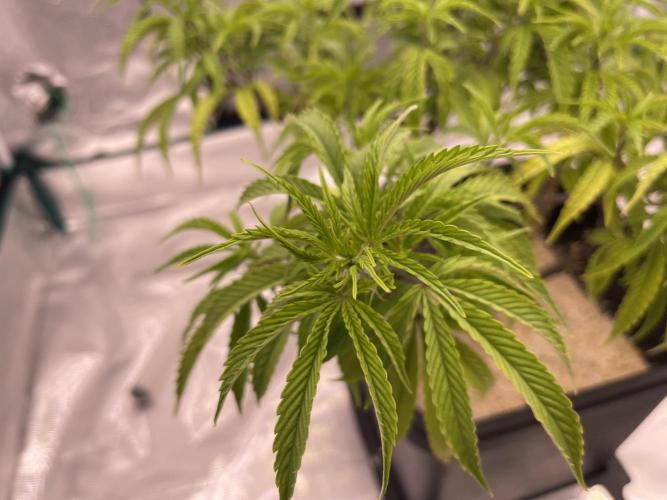
Growth is strong, foliage is dense, and overall structure looks healthy.
Internodal spacing is noticeably tight, resulting in a very compact and bushy plant.
This could be influenced by the full-spectrum lighting, which appears to promote dense vegetative development.
Although topping or defoliation was considered, no structural work was done this week.
The priority is to let the plant continue growing naturally and fully stabilize before any training or shaping.
Nutrition remains unchanged from the previous week.
The nutrient solution is maintained around EC 1.4–1.5, with pH close to 6.0.
The plant is responding well, showing no signs of deficiency or stress.
While some time was lost earlier in the cycle due to initial issues, the delay is clearly less significant than in the previous run.
Progress has improved, and this recovery phase highlights areas to refine in future germination and early-stage management.
This week ends on a positive note.
The plant looks healthy again, and the focus moving forward is simply to let her grow and maintain consistency.
See you next week. Take care.
-Update: 04/02/26-
•Structural work update:
Today, a full structural intervention was carried out on the plant.
Defoliation, topping, and pruning were all done in one session.
The plant had become too bushy and overly dense, with poor airflow and excessive humidity trapped inside the canopy.
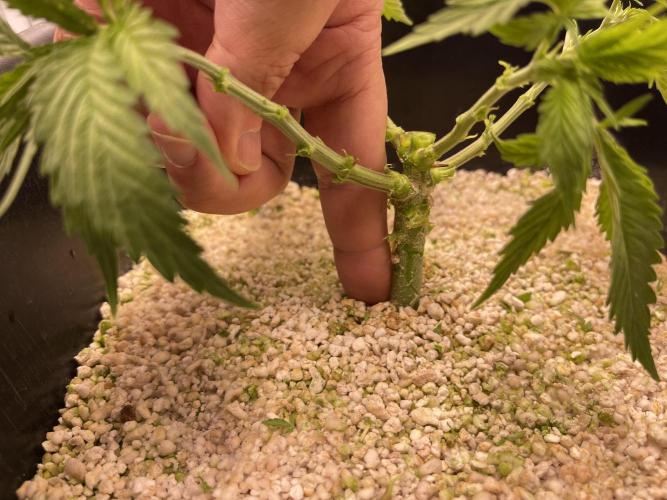
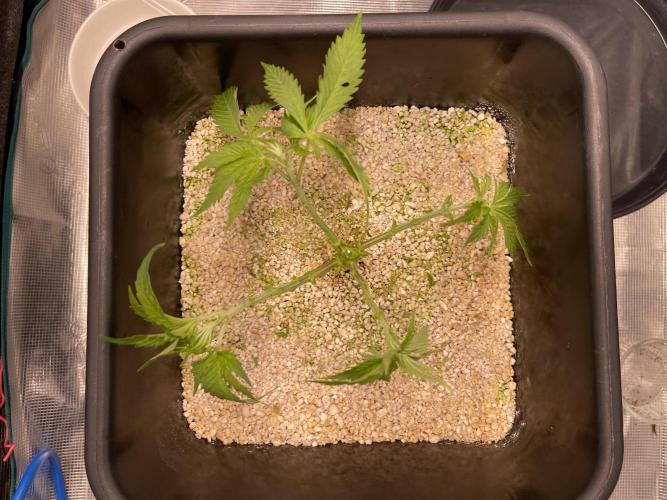
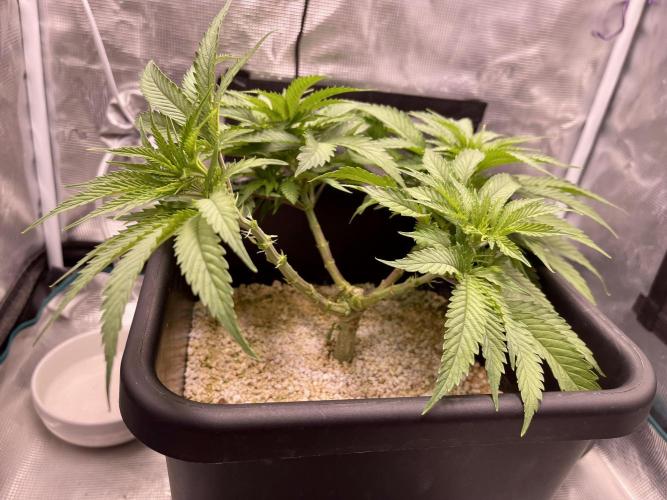
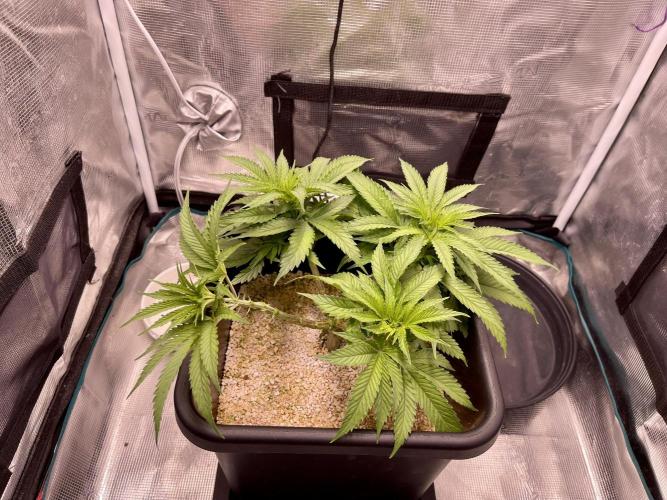
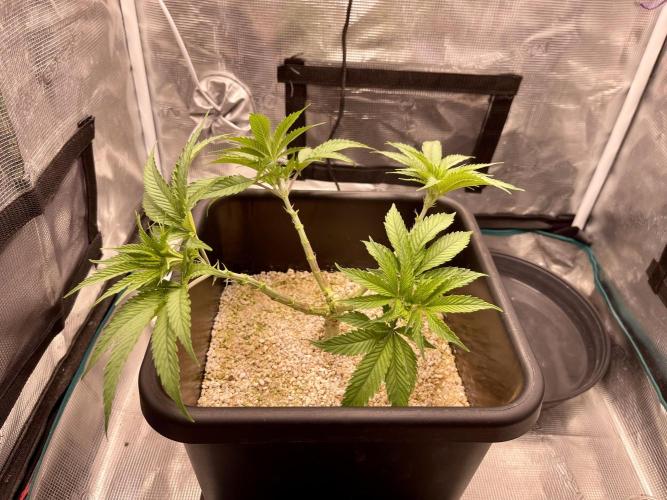
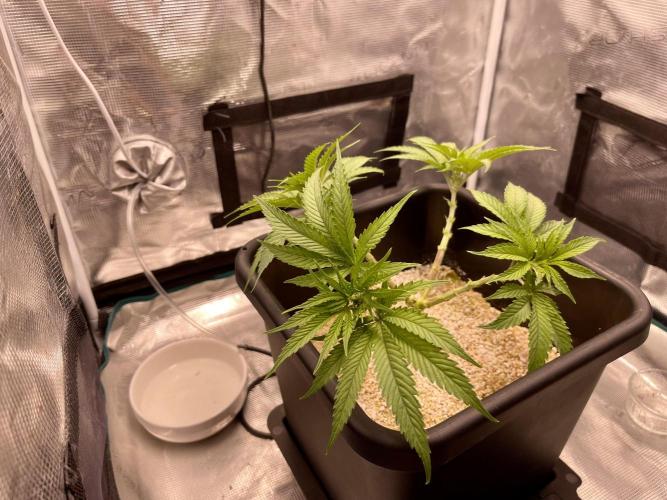
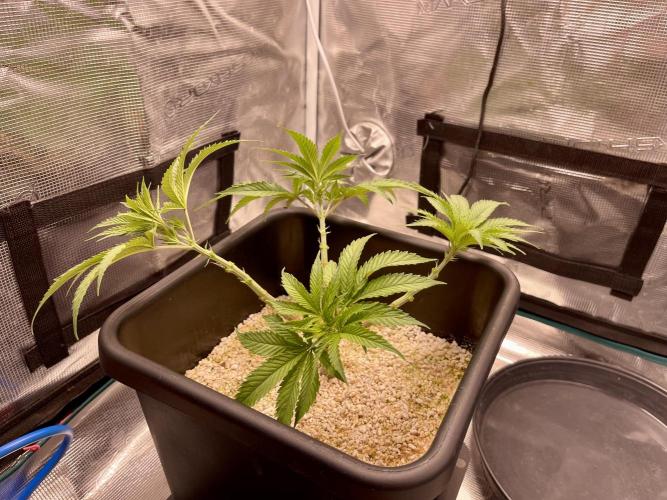
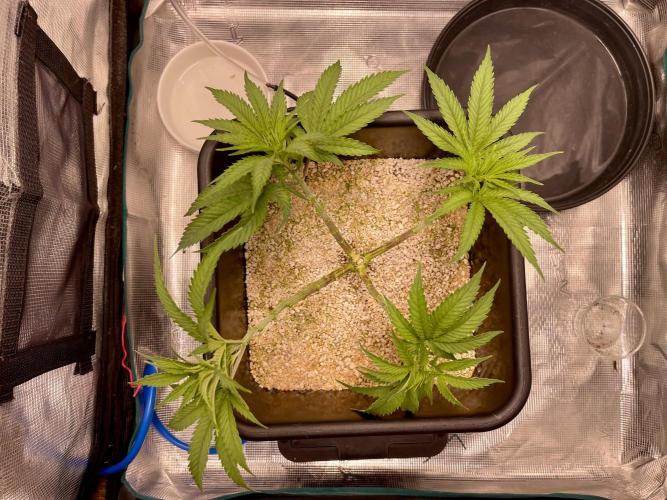
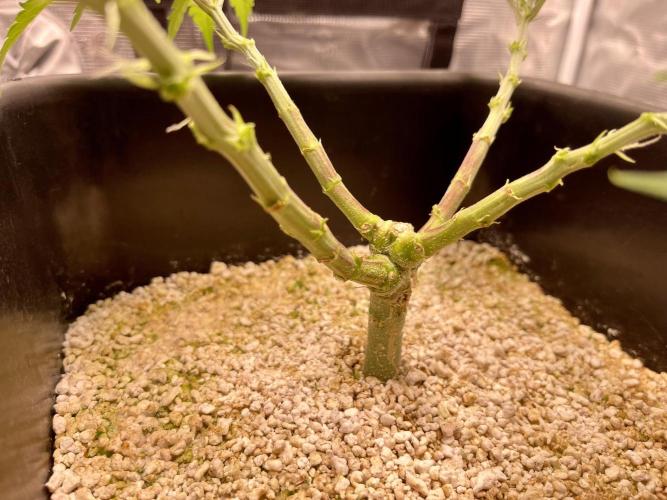
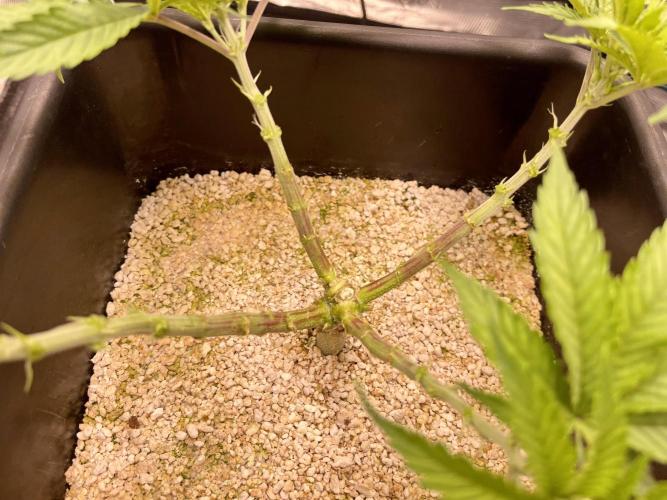
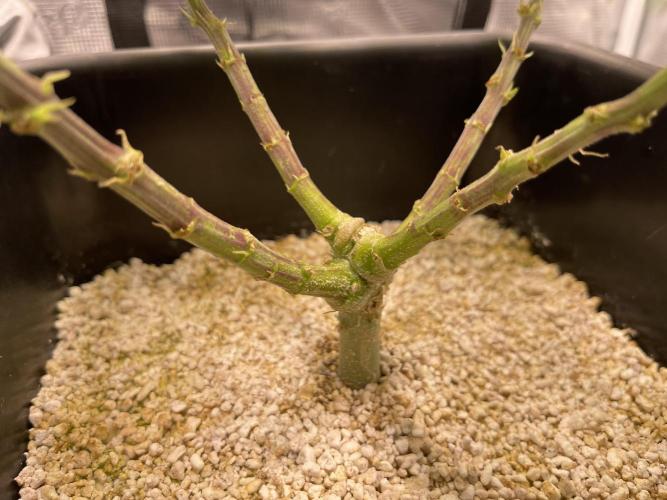
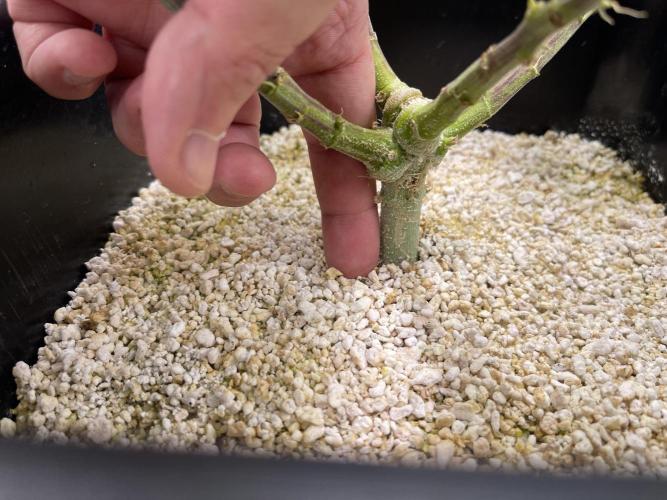
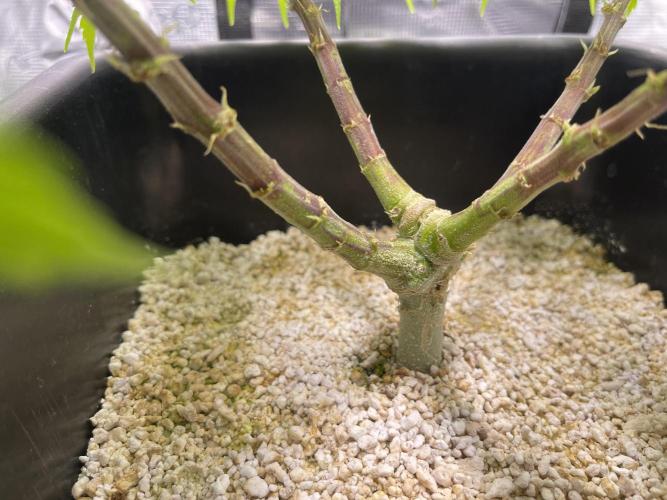
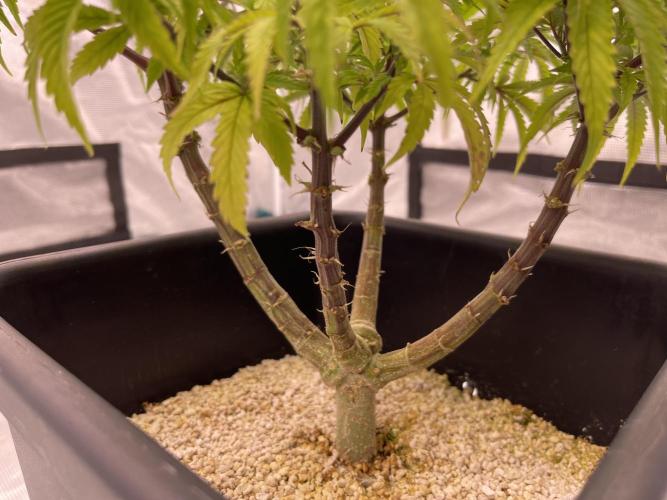
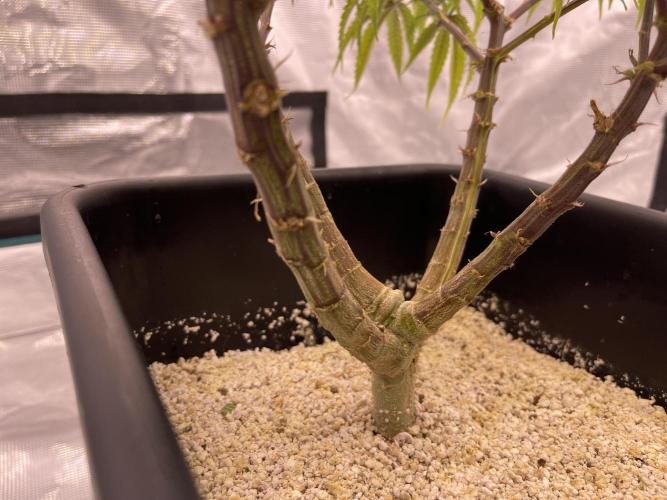
To correct this, the structure was reset: four lateral branches were selected and kept, while the main apexes were topped to start defining the future shape of the plant.
At this stage, the goal was not refinement but foundation.
This intervention marks the beginning of the plant’s final structure, or at least the first clear step toward it.
A significant amount of foliage was removed, leaving the plant with much less leaf mass than before.
The work is now finished, and no further cutting is planned for the moment.
From here, the plant will simply be left to recover from the stress of this heavy intervention.
The focus now shifts to recovery, stability, and healthy regrowth.
4 likes
comments
Share
Used techniques
Topping
Technique
Defoliation
Technique
7
Week 7. Vegetation
8mo ago
1/10
17 cm
Height
18 hrs
Light Schedule
22 °C
Day Air Temp
6.0
pH
700 PPM
TDS
19 °C
Night Air Temp
Nutrients 5
Balance
2 mll
Grow B
1.5 mll
Grow A
1.5 mll
SamDo Vegetative Week 7 – Pineapple Upside Down (Round 2)
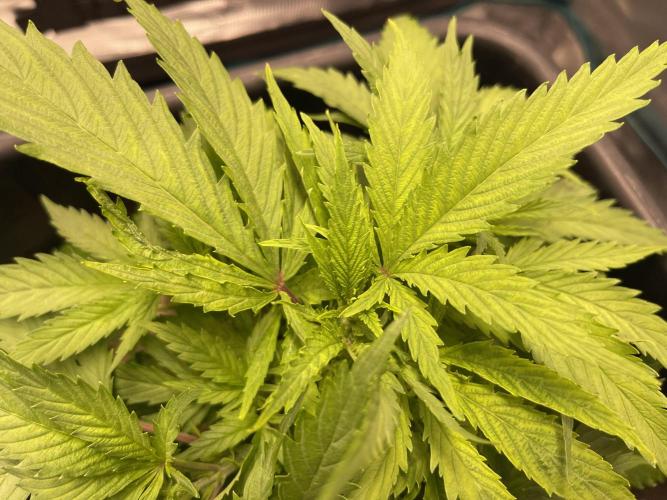
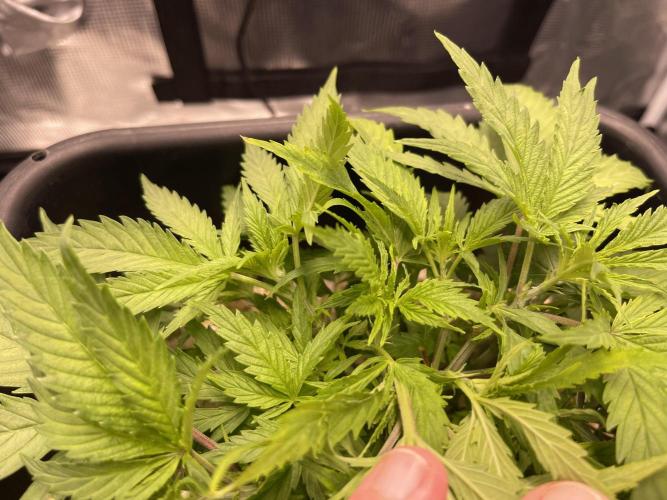
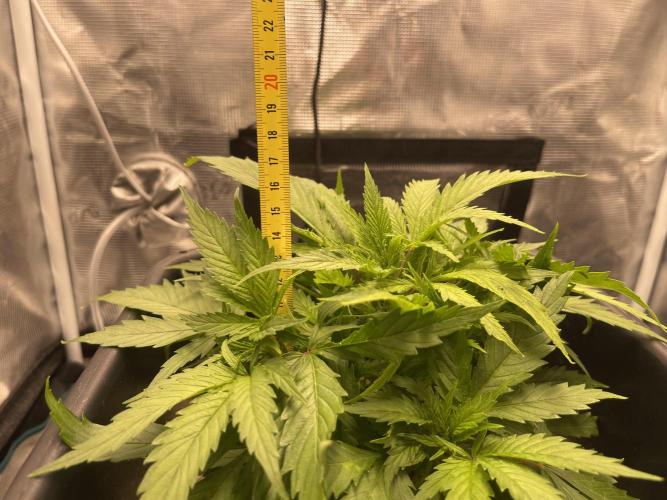
This week confirms a very good recovery following last week’s defoliation and pruning.
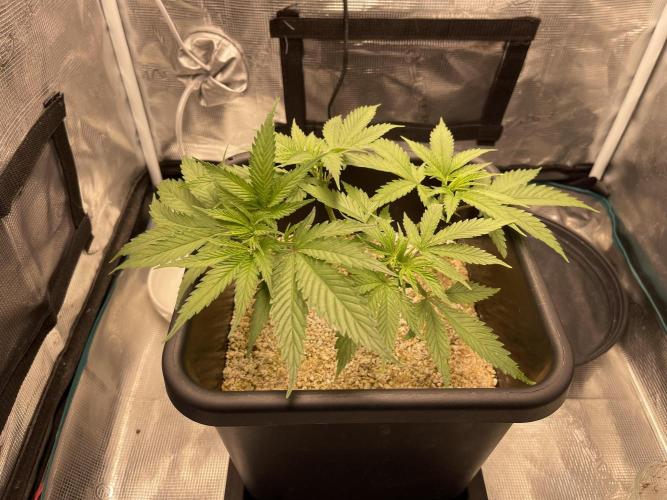
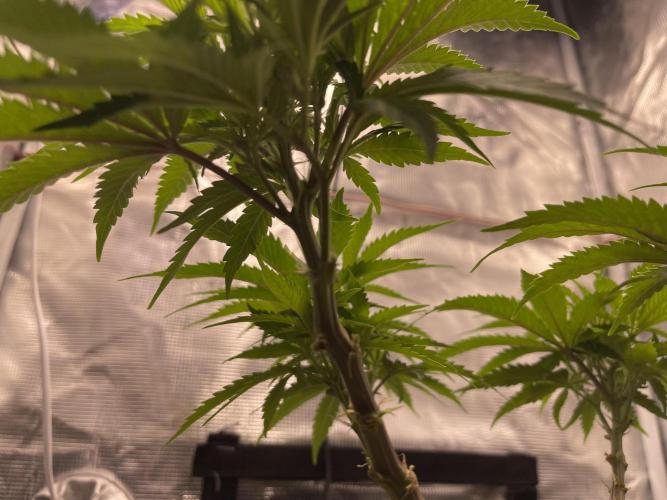
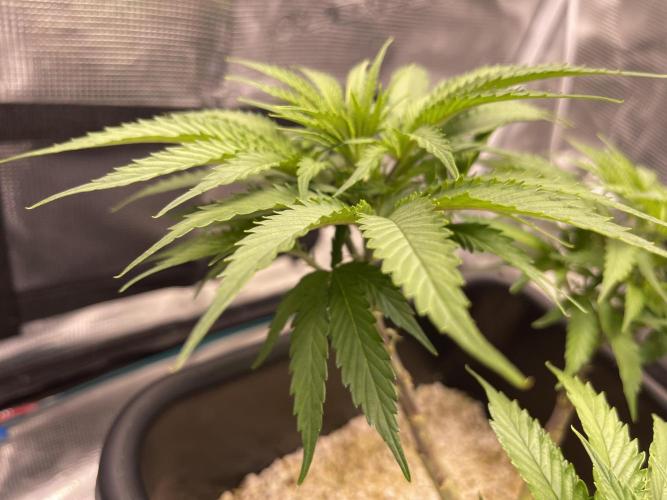
As shown in the photos, the plant bounced back quickly and shows strong vegetative vigor.
Leaf mass has rebuilt nicely, and overall growth looks healthy and well-balanced.
There are no signs of stress or slowdown at this stage.
After the structural work, light intensity was temporarily reduced to avoid additional stress.
Now that the plant is clearly responding well, light power has been increased again to around 50%, corresponding to roughly 150 watts in full-spectrum.
For now, the plan is to let the plant continue growing and building strength.
The four main branches that were previously selected need a bit more growth before starting any low-stress training.
Once they elongate further, light LST will be applied to begin shaping the plant’s final structure.
A move to a larger grow space is planned later, but there is no urgency at this stage.
Overall, everything is stable and progressing well.
See you next week. Take care.
5 likes
comments
Share
8
Week 8. Vegetation
8mo ago
1/12
17 cm
Height
18 hrs
Light Schedule
22 °C
Day Air Temp
6.0
pH
No Smell
Smell
750 PPM
TDS
19 °C
Night Air Temp
Nutrients 5
Balance
2 mll
Grow B
1.5 mll
Grow A
1.5 mll
SamDo Hello growers,
Vegetative Week 8 – Pineapple Upside Down (Round 2)
This week can clearly be described as explosive in terms of vegetative growth.
After allowing the plant to fully recover last week without any additional pruning, the rebound is now very visible.
Growth has accelerated, foliage density has increased significantly, and overall vigor looks strong and healthy.
The plant began rebushing rapidly, with tight internodes and solid structural development.
Because of that renewed strength, a structural pruning session was carried out this week.
The canopy was cleaned up and reset to maintain airflow and prepare the plant for future shaping.
The current objective is to let the selected branches extend further before initiating low-stress training.
LST will begin once there is sufficient length to properly guide the plant into its final structure.
At this stage, everything looks stable.
Recovery has been clean, growth is consistent, and the plant appears strong.
Overall, this week marks a clear turning point in the vegetative phase.
See you next week. Take care.
6 likes
comments
Share
Used techniques
Defoliation
Technique
9
Week 9. Vegetation
8mo ago
1/14
17 cm
Height
18 hrs
Light Schedule
22 °C
Day Air Temp
6.0
pH
No Smell
Smell
750 PPM
TDS
19 °C
Night Air Temp
Nutrients 5
Balance
2 mll
Grow B
1.5 mll
Grow A
1.5 mll
SamDo Hello growers,
Vegetative Week 9 – Pineapple Upside Down (Round 2)
This week was calm and stable.
There has been no major structural work since last week.
Growth remains strong, steady, and consistent.
The plant continues to develop naturally without signs of stress or imbalance.
Only minimal intervention was done — possibly one or two leaves removed — but nothing significant.
Nutrient levels remain unchanged.
EC is maintained around 1.5, with a stable pH between 6.0 and 6.1.
The plant is responding well to this steady feeding approach.
For now, the strategy is simple: allow continued vertical and lateral growth before deciding on further topping or structural adjustments.
Everything looks healthy and controlled at this stage.
See you next week. Take care.
3 likes
comments
Share
10
Week 10. Vegetation
7mo ago
1/10
24 cm
Height
18 hrs
Light Schedule
22 °C
Day Air Temp
6.0
pH
No Smell
Smell
1000 PPM
TDS
19 °C
Night Air Temp
Nutrients 5
Balance
2 mll
Grow B
2 mll
Grow A
2 mll
SamDo Hello growers,
Vegetative Week 10 – Pineapple Upside Down (Round 2)
This week was relatively calm, but a slight issue appeared toward the end.
The plant showed signs of reduced vigor.
Leaves became slightly droopy and overall posture looked softer than usual.
No drastic symptoms, but enough to raise attention.
Nutrition had not been modified initially, but given the plant’s size and development stage, hunger became a possibility.
EC was increased to 2.0, while pH remains stable around 5.9.
At the same time, environmental factors were reconsidered.
The plant has now been moved into a larger grow space to improve airflow and overall environmental control.
Current parameters are set as follows:
• EC: 2.0
• pH: 5.9
• VPD: 0.7
• Temperature: ~23°C
• PPFD: ~600
Everything appears properly calibrated.
The coming week will determine whether the drooping was nutritional demand, airflow-related, or simple temporary stress.
For now, the system is stable.
Monitoring and observation will guide the next adjustments.
See you next week. Take care.
3 likes
comments
Share
11
Week 11. Vegetation
7mo ago
1/11
30 cm
Height
18 hrs
Light Schedule
25 °C
Day Air Temp
5.8
pH
No Smell
Smell
1000 PPM
TDS
19 °C
Night Air Temp
Nutrients 5
Balance
2 mll
Grow B
2 mll
Grow A
2 mll
SamDo Hello growers,
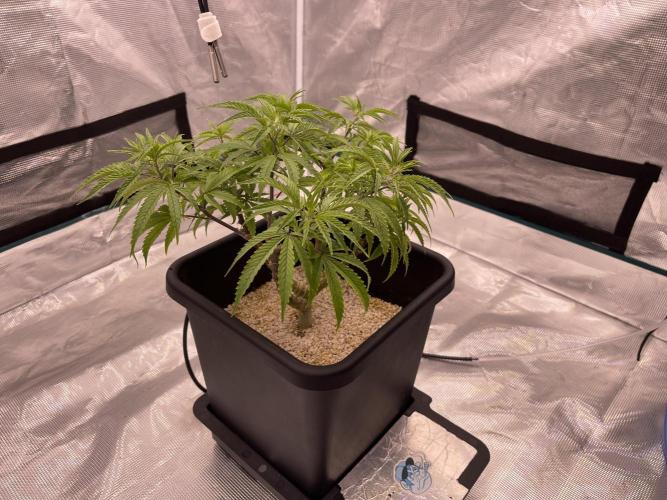
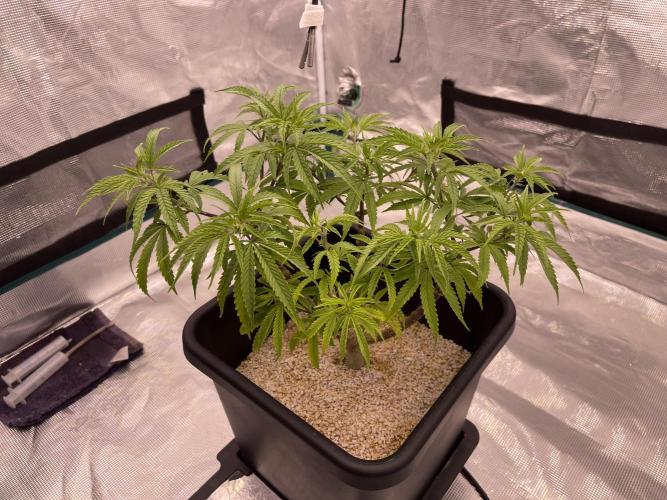
This week marks an important step in the development of the Pineapple Upside Down from Humboldt.
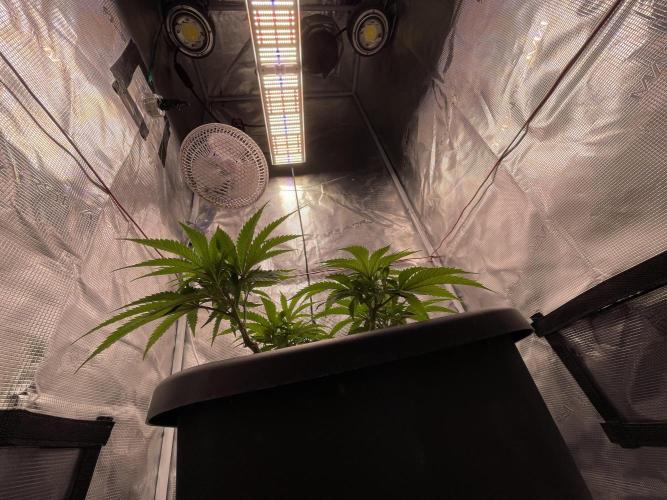
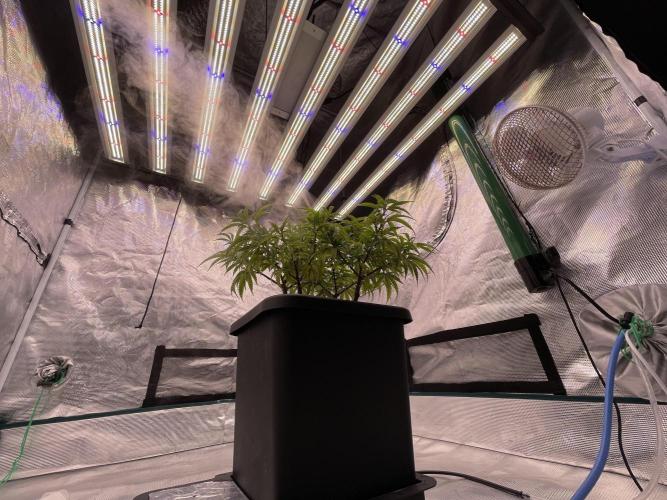
The plant has now been moved into the flowering tent. The main reason for this change is simply to give the plant more space and to benefit from better environmental control. The larger tent allows improved airflow and more stable climate management, which should help the plant maintain a healthier rhythm moving forward.
Even though the light fixture changed, the spectrum remains the same. The plant is still running under a 3500K spectrum, so there should be no real shock from a lighting perspective. Light intensity has been kept around 600 PPFD, which means the plant continues growing under conditions that are very similar to what it was used to previously.
Some environmental adjustments were also made this week. The VPD has been increased slightly to around 0.8–0.9 in order to encourage stronger transpiration and improve nutrient uptake.
Last week the plant showed a small slowdown in growth and overall vigor. The leaves were slightly droopy and the plant looked a bit less energetic than usual. After reviewing the parameters, the most likely explanation was a pH drift upward toward 6.2–6.3.
While this range is not catastrophic, it can reduce the plant’s ability to absorb certain nutrients, especially nitrogen, which could explain the temporary slowdown that was observed.
The pH has now been corrected and brought back down to around 5.8, allowing it to naturally fluctuate between 5.5 and 5.9. Since this adjustment is very recent, the plant will need a few days to fully respond to the correction.
Earlier in the week, the EC had been increased to 2.0 to test the possibility of a nutrient deficiency. Toward the end of the nutrient solution cycle, the mixture was slightly diluted with osmosis water in order to rebalance the EC and avoid pushing the plant too hard.
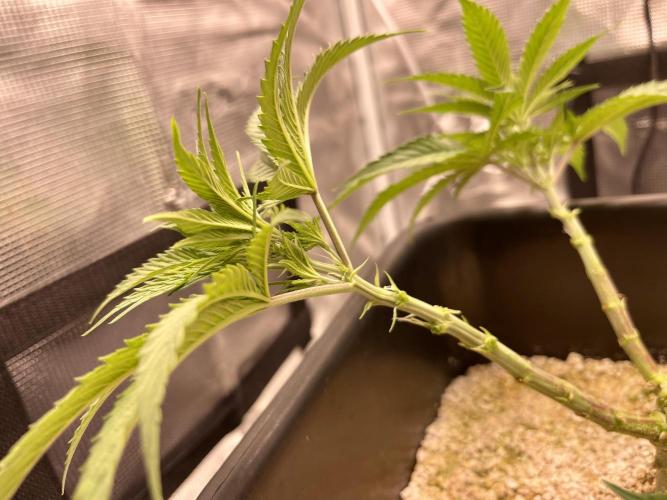
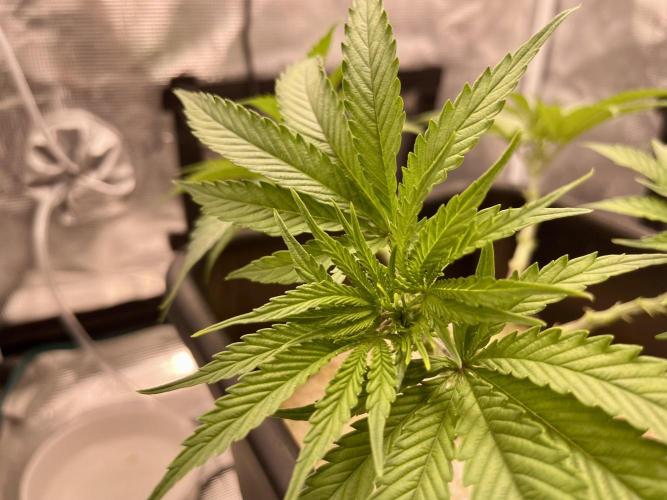
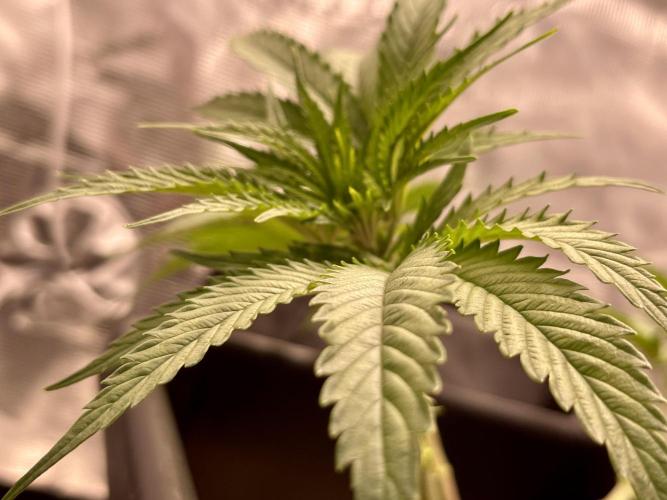
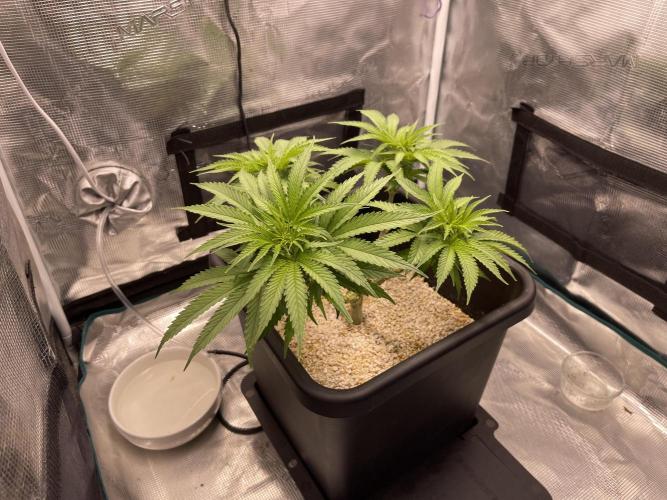
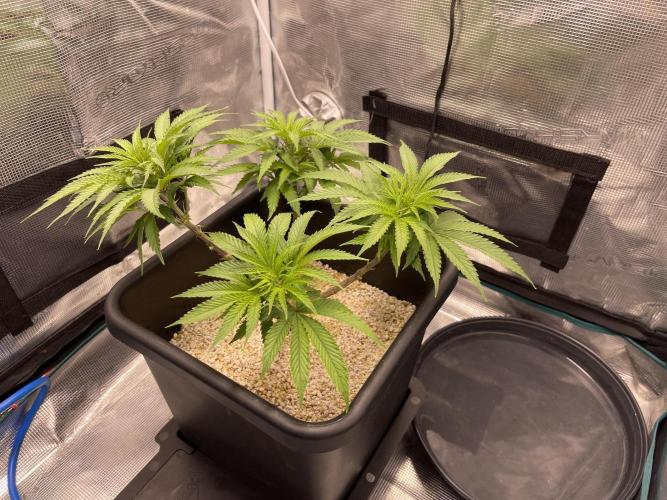
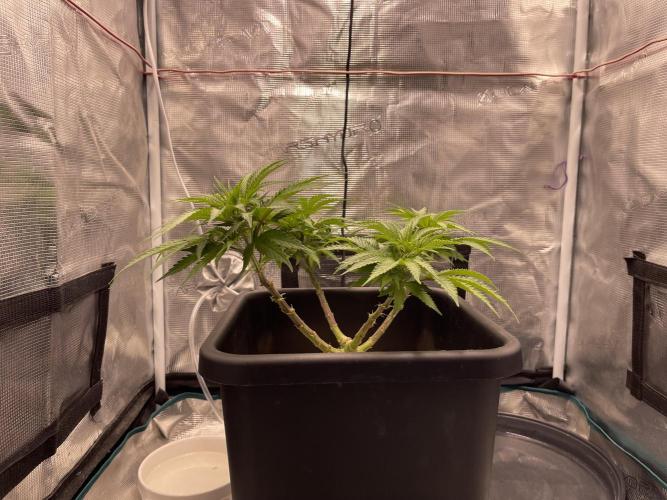
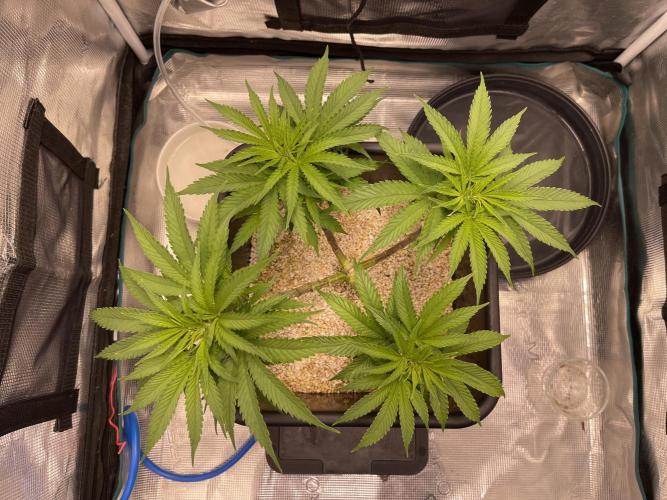
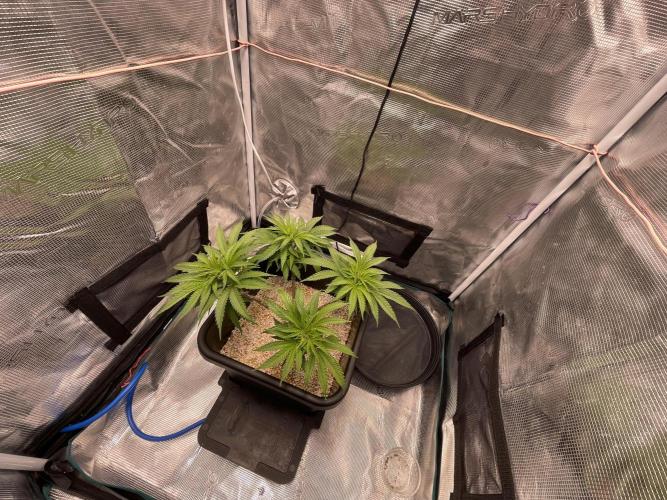
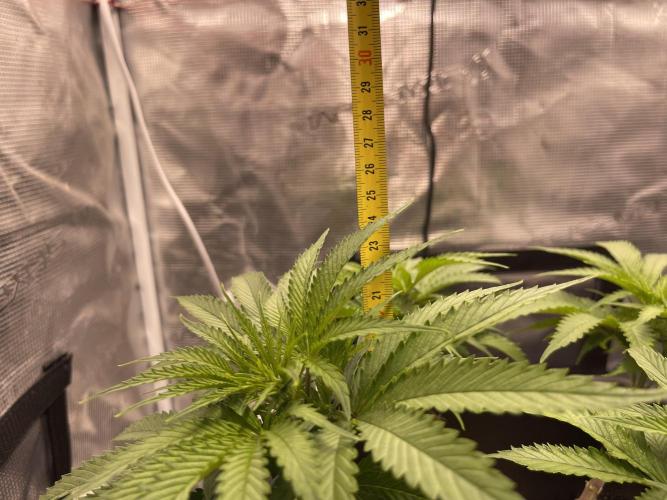
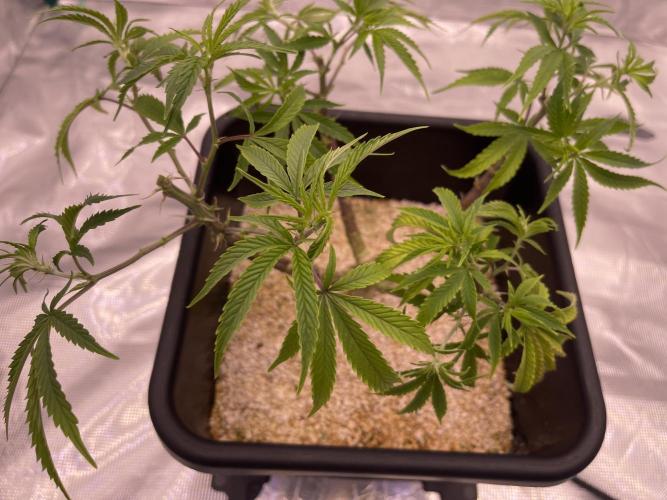
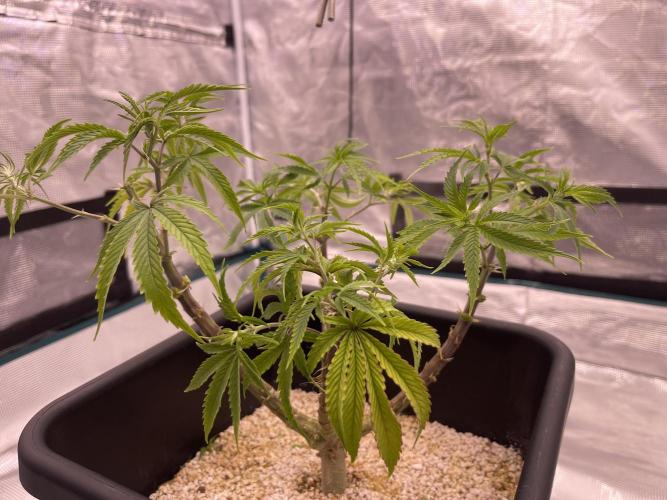
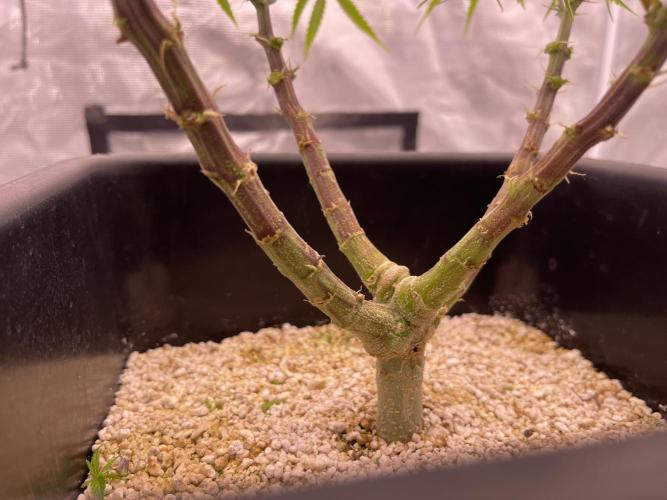
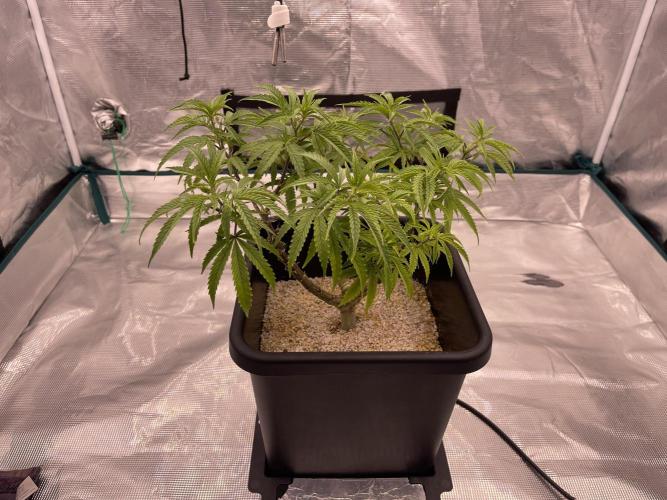
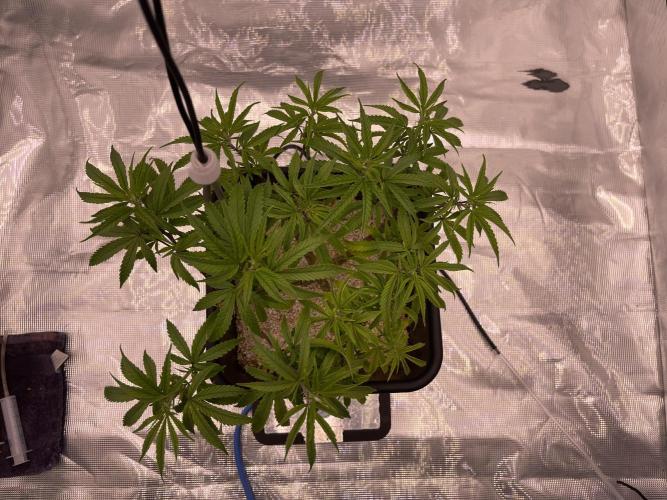
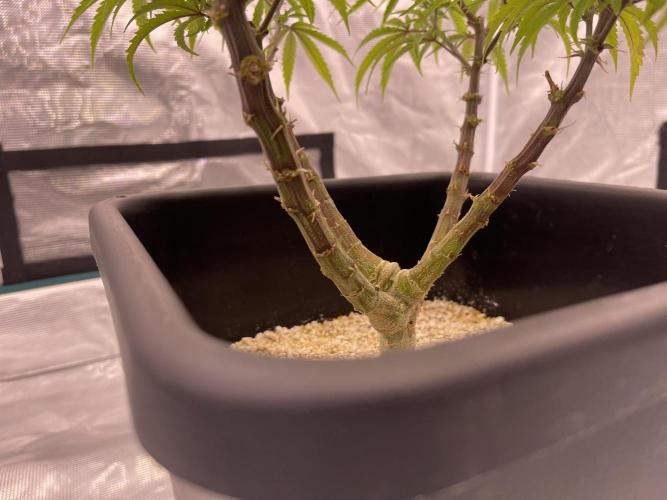
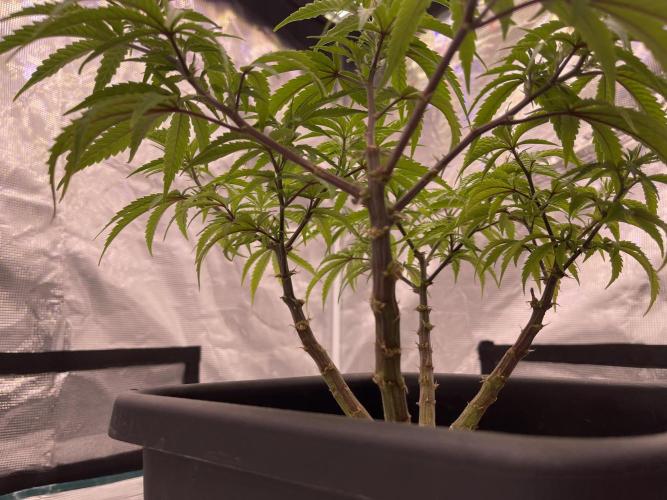
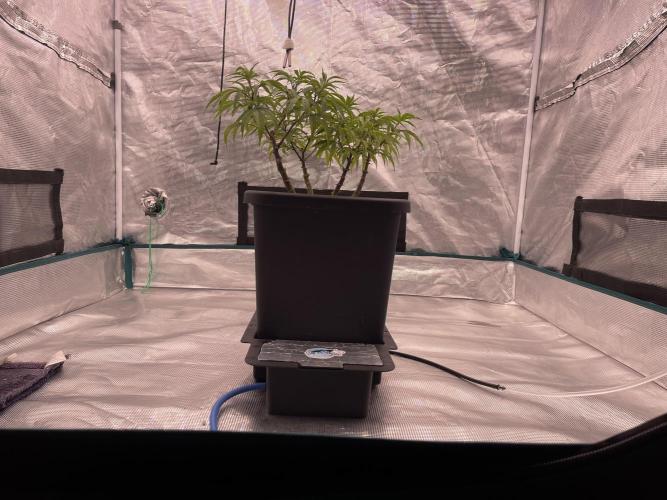
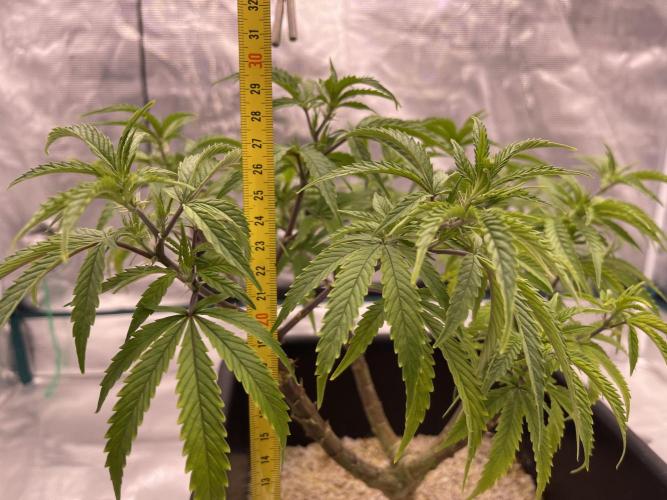
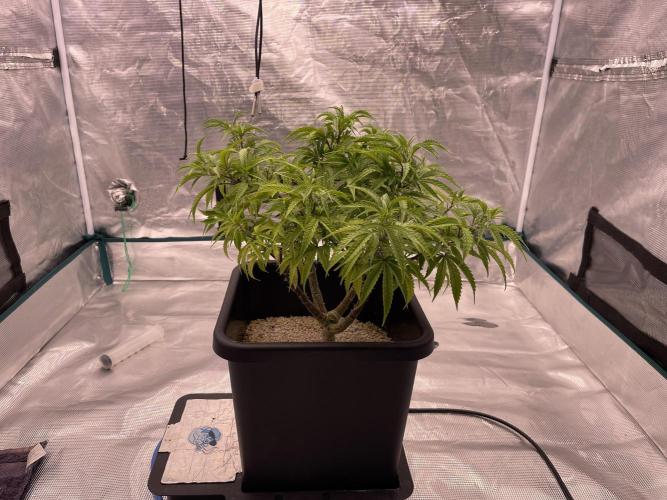
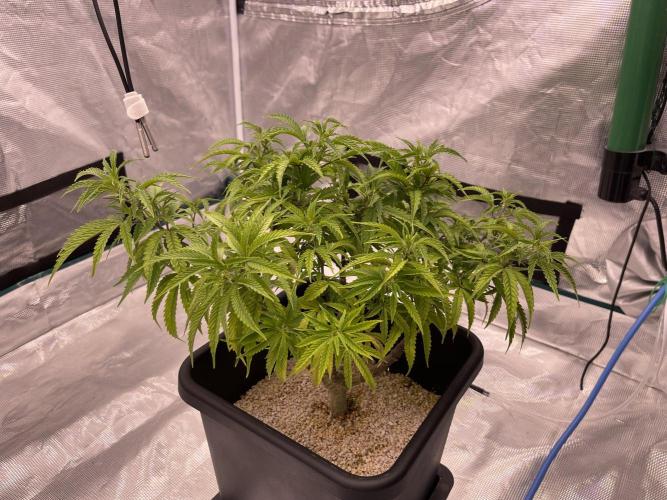
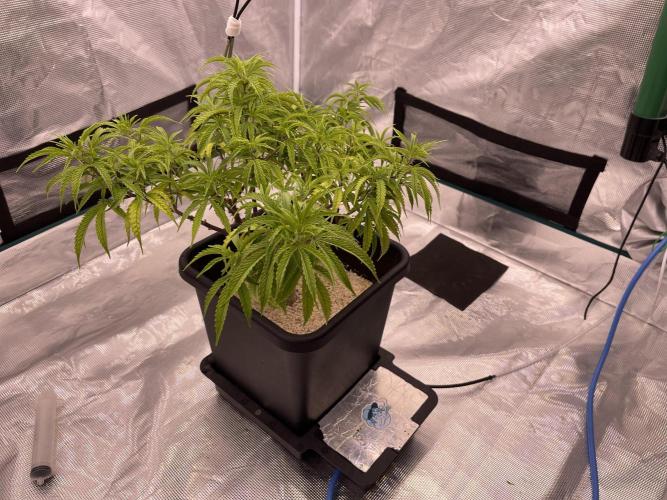
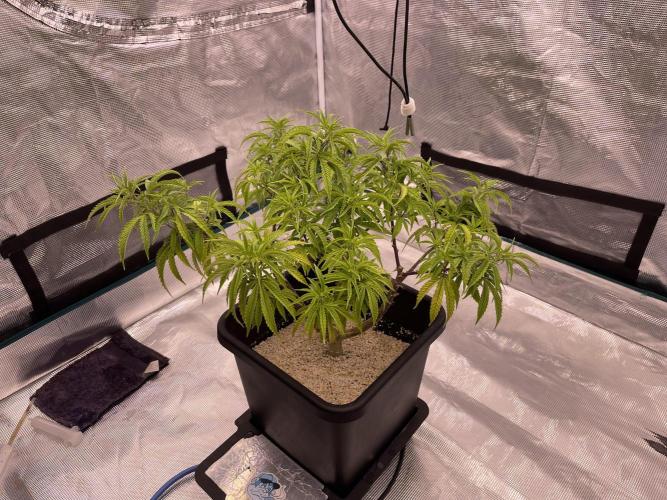
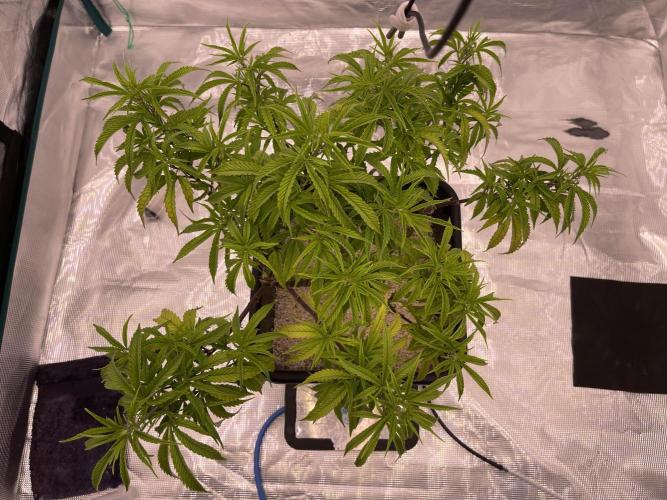
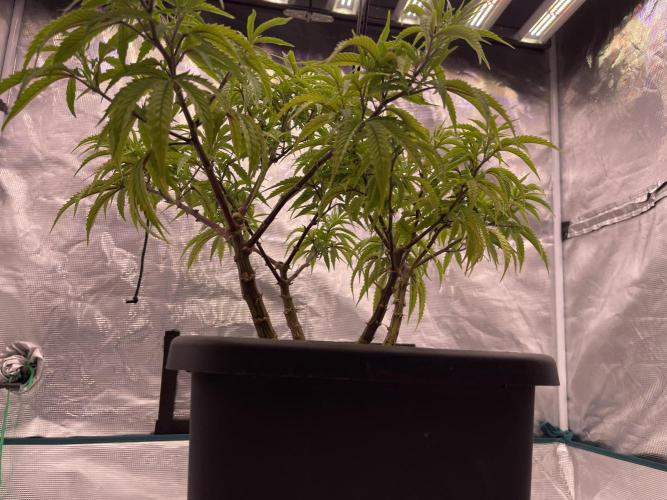
This week was also used to work heavily on the plant’s structure.
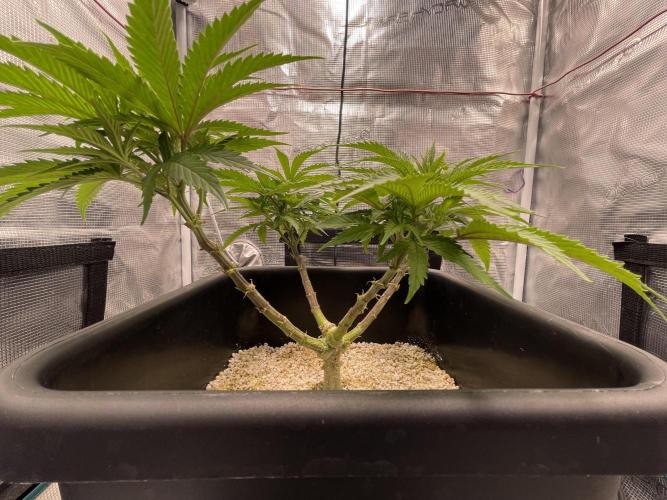
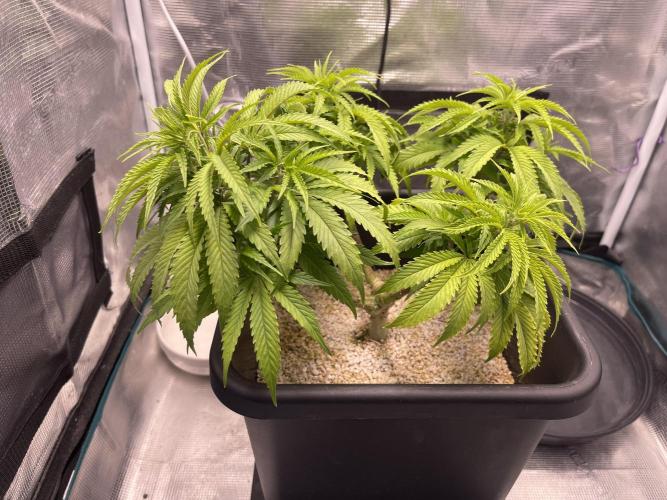
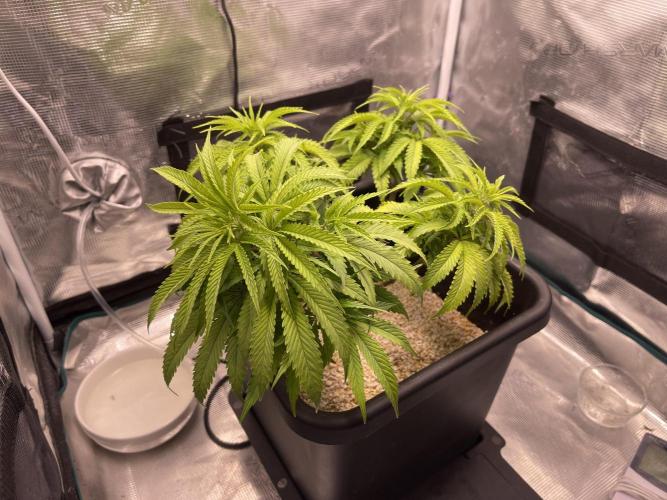
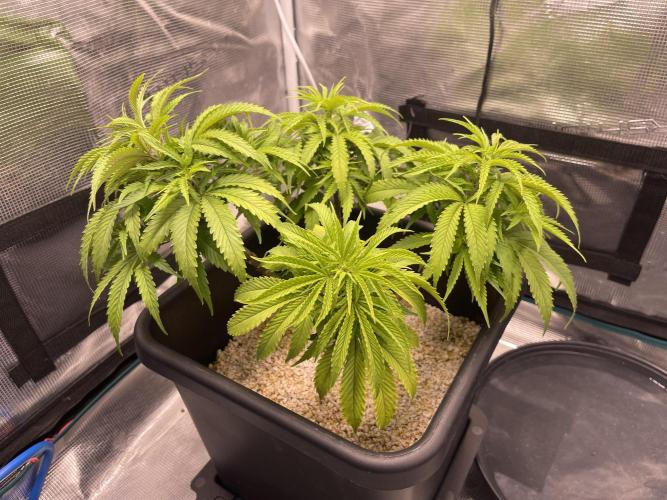
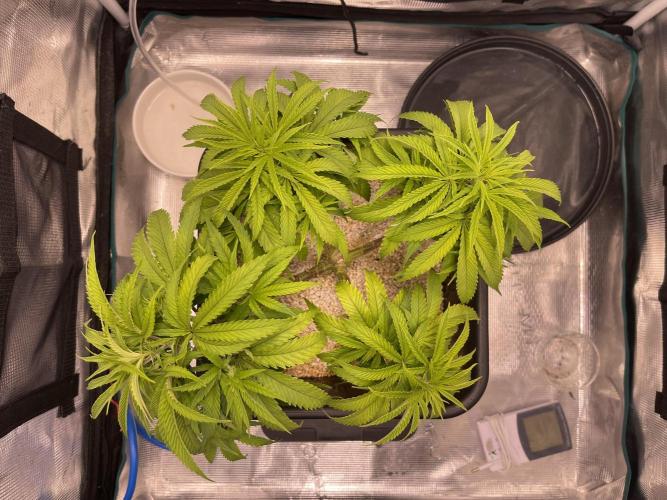
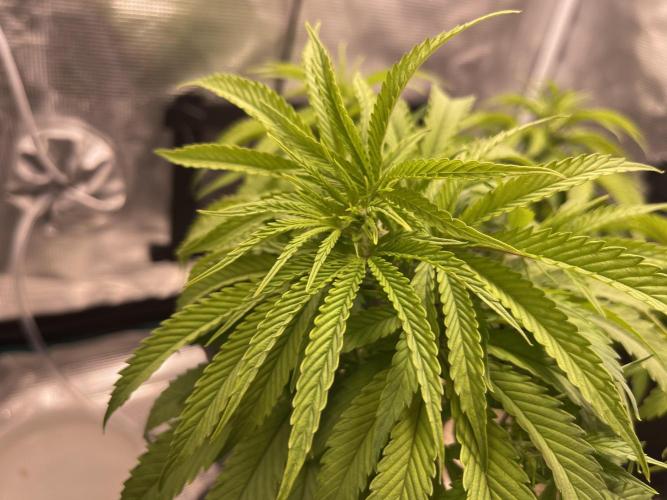
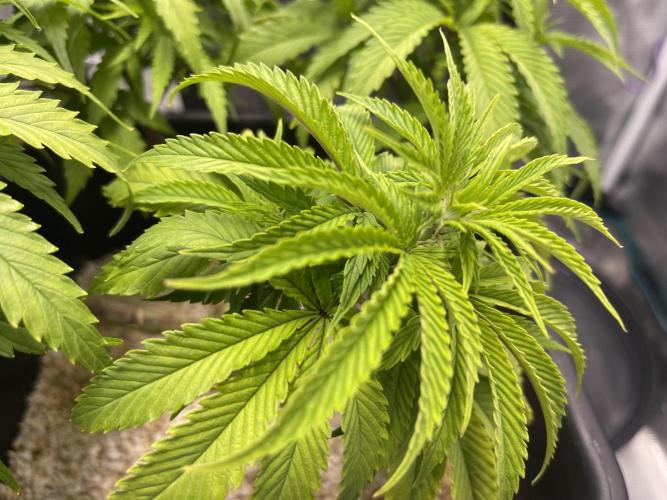
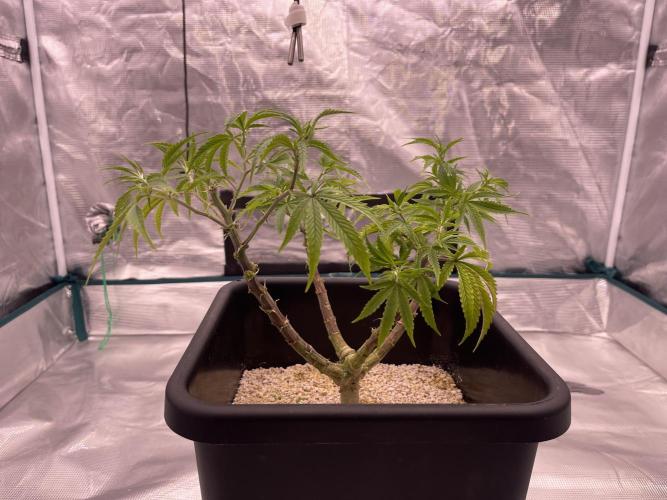
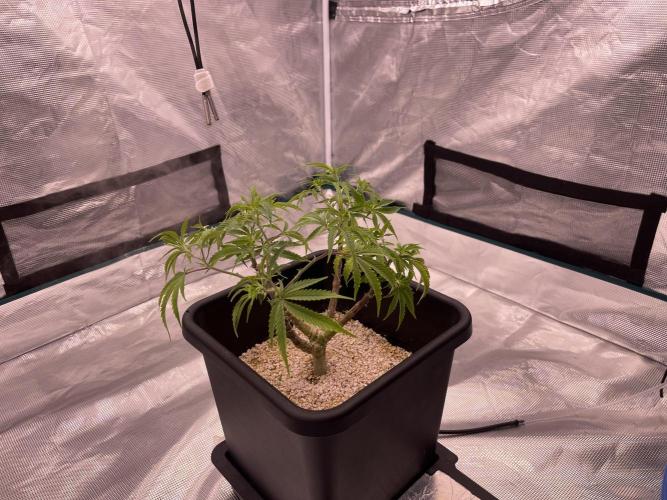
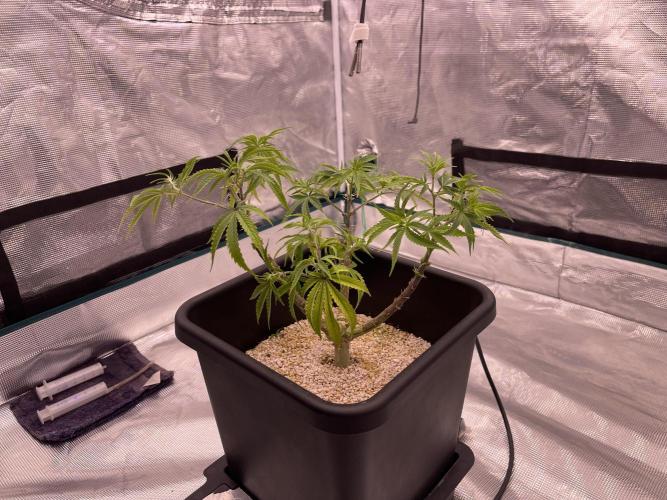
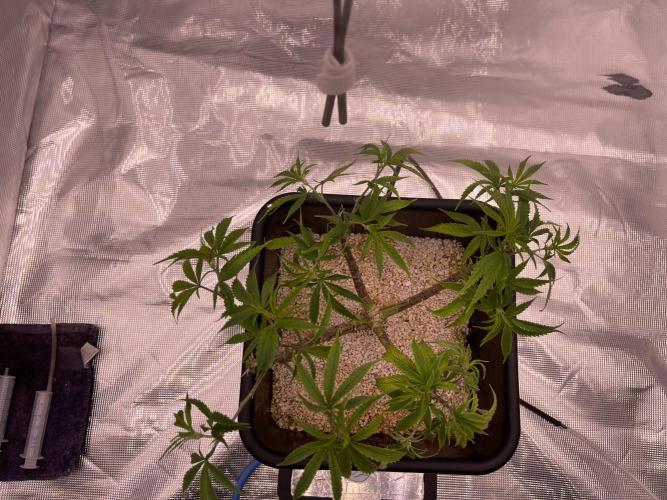
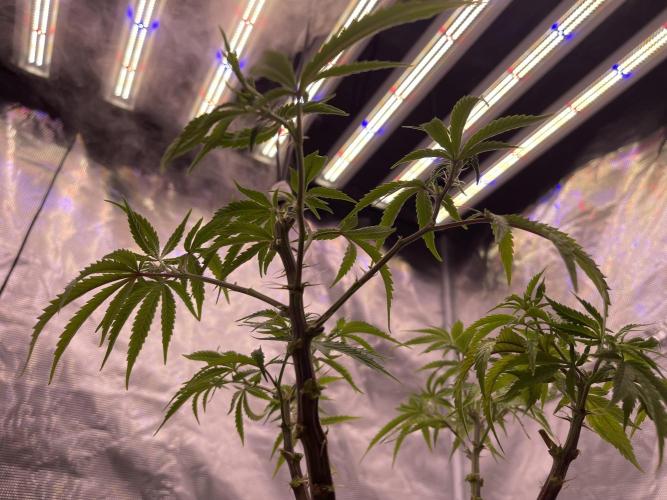
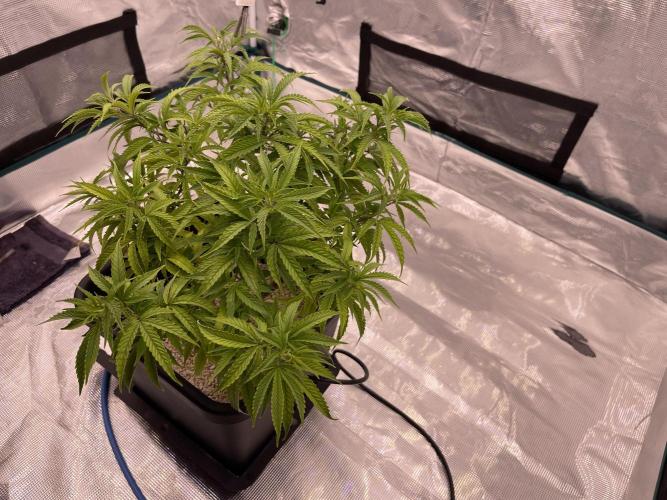
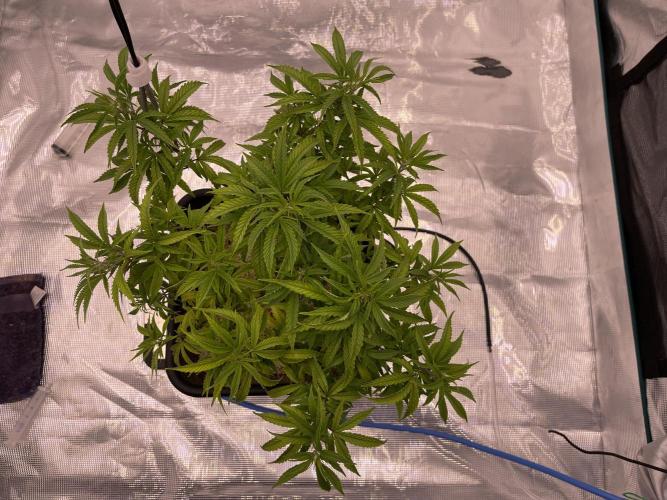
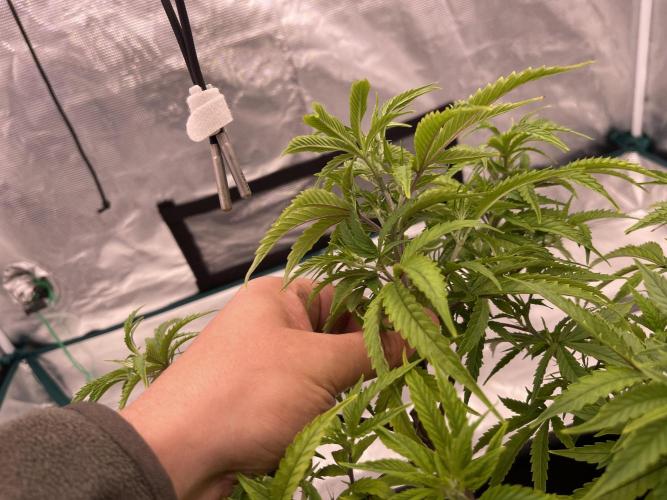
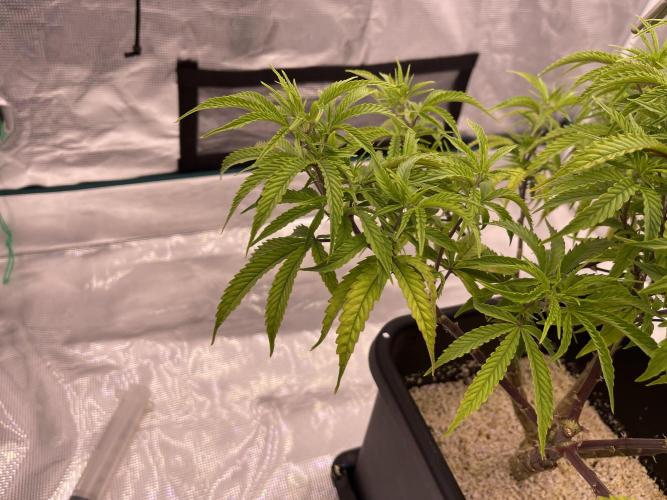
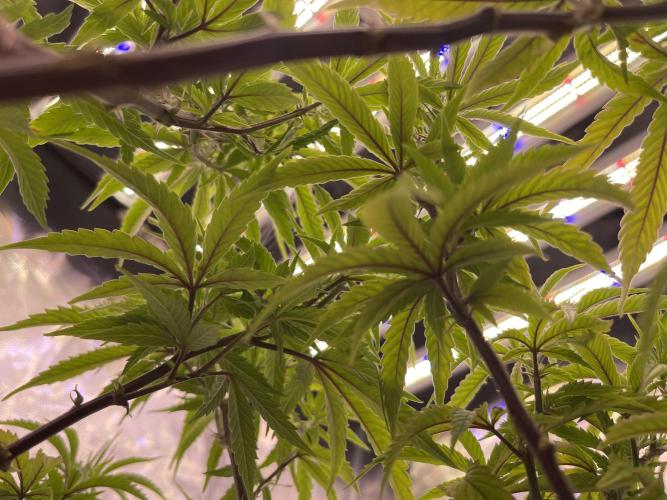
A topping combined with a strong defoliation was performed. The canopy was opened up significantly, removing a large amount of leaf mass to improve airflow, light penetration, and overall structure. It was not a light cleanup — the plant was trimmed quite aggressively in order to reset the canopy properly.
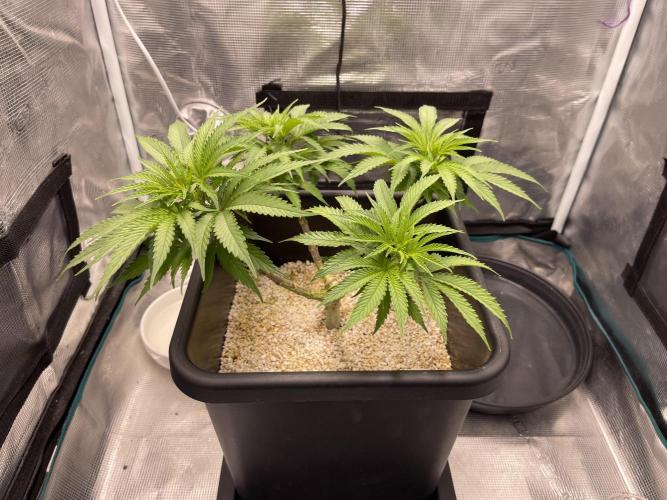
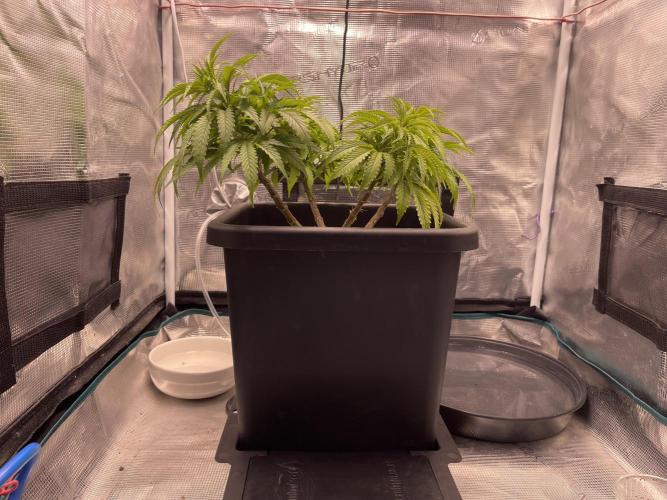
The plant originally had four main apexes, and each of those was topped again. This now creates approximately sixteen main growth points.
With sixteen apexes, the plant structure is now approaching the intended final architecture. From this point forward, the main objective is simply to allow the plant to recover from this fairly heavy pruning session, regain strength, and stabilize before any further training.
Over the coming days and weeks, the focus will be on observing how the plant responds to the pH correction, the environmental adjustments, and the recent structural work.
For now, everything appears to be back under control.
We’ll see how she responds over the next week.
Alright growers, take care and see you next week.
4 likes
comments
Share
Used techniques
Topping
Technique
Defoliation
Technique
12
Week 12. Vegetation
7mo ago
1/12
30 cm
Height
18 hrs
Light Schedule
25 °C
Day Air Temp
5.8
pH
No Smell
Smell
850 PPM
TDS
65 %
Air Humidity
19 °C
Solution Temp
19 °C
Night Air Temp
8 liters
Pot Size
Nutrients 5
Balance
2 mll
Grow B
1.5 mll
Grow A
1.5 mll
SamDo Hello growers,
Welcome back for another update on the Pineapple Upside Down from Humboldt, now entering week 12 of vegetative growth.
This week was mostly about observation and stabilization rather than major interventions.
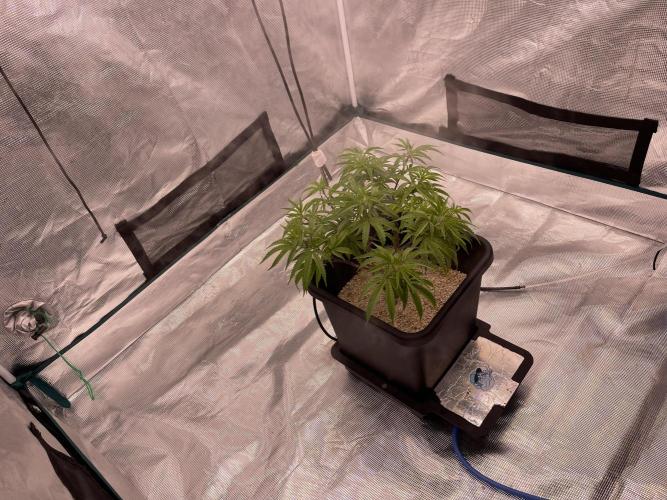
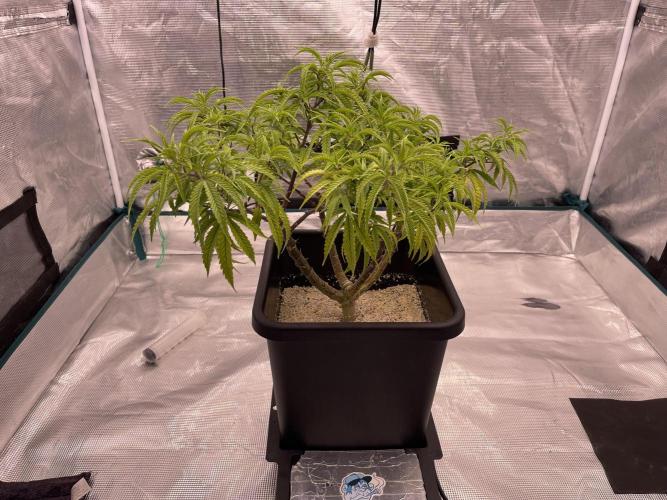
The plant is now fully settled in the second tent. The goal of moving her there was mainly to give her more space and better environmental control. The larger space should provide improved airflow and a more stable climate overall.
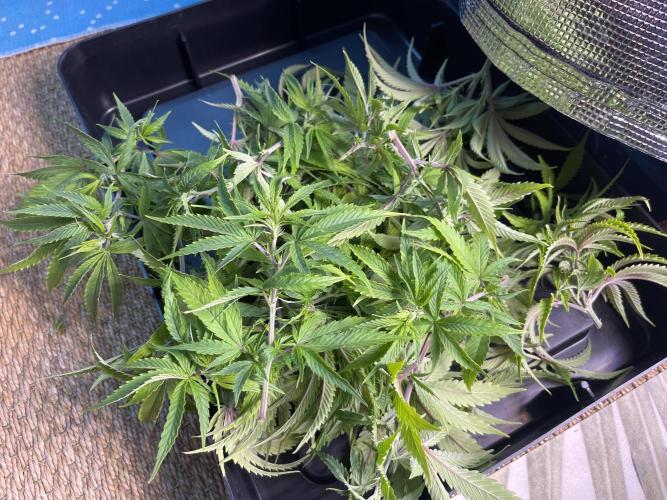
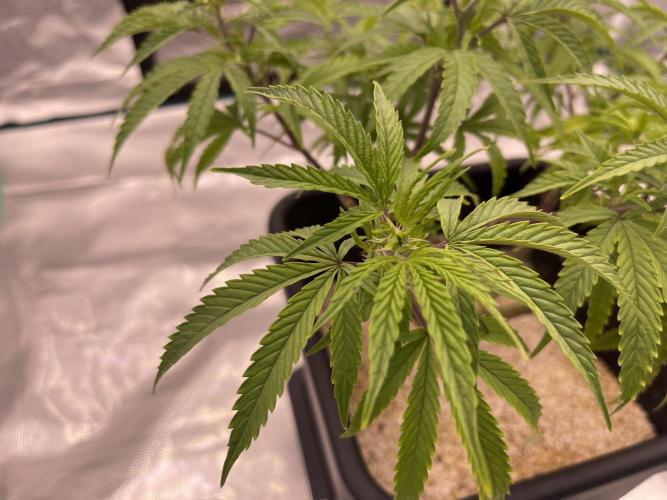
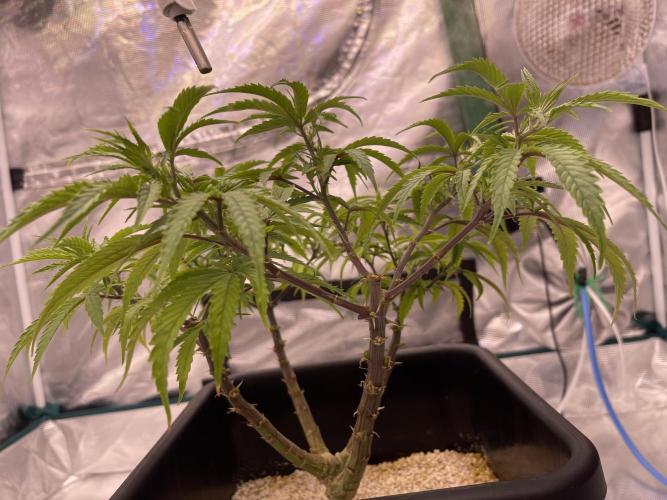
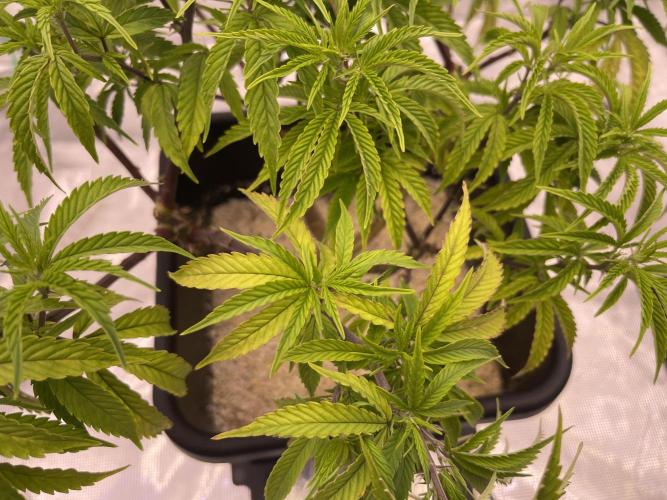
After the fairly heavy pruning and defoliation that was done previously, the plant appears to be recovering slowly. However, I still feel like the vigor is not quite the same as it was earlier in the cycle. The growth has resumed, but the plant doesn’t yet have the same explosive energy it showed before the structural work.
That being said, nothing particularly concerning happened this week. The plant continues to develop and seems to be stabilizing gradually.
One adjustment I made concerns the nutrient solution. The EC previously felt slightly too high considering the plant’s current pace of growth, so I decided to bring it back down to around 1.7 EC.
The pH has been stabilized around 5.8–5.9, which should keep nutrient availability in a comfortable range for the plant.
Environmental parameters look stable at the moment. Temperature sits around 25°C, and the VPD is roughly 0.9, which should encourage healthy transpiration without creating unnecessary stress.
For the coming week, the strategy is simple. I’ll allow the plant to continue rebuilding foliage and recovering from the previous pruning while keeping a close eye on the environmental parameters and nutrient balance.
For now, everything seems to be under control.
We’ll see how she responds over the next week.
Alright growers, take care and see you next week.
3 likes
comments
Share
13
Week 13. Vegetation
7mo ago
1/10
35 cm
Height
18 hrs
Light Schedule
25 °C
Day Air Temp
5.8
pH
No Smell
Smell
900 PPM
TDS
65 %
Air Humidity
19 °C
Solution Temp
19 °C
Night Air Temp
8 liters
Pot Size
Nutrients 5
Balance
2 mll
Grow B
2 mll
Grow A
2 mll
SamDo Hello growers,
Welcome back for vegetative week 13 of the Pineapple Upside Down from Humboldt.
This week was intentionally very calm, with no intervention on the plant. The goal was simply to let it continue its development naturally and observe how it behaves after the previous adjustments.
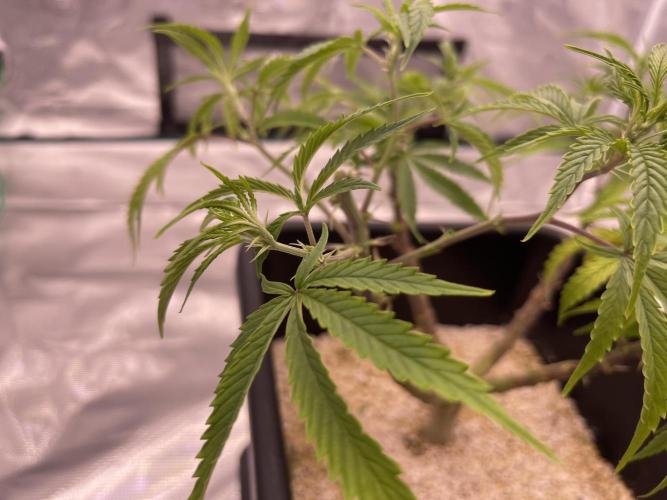
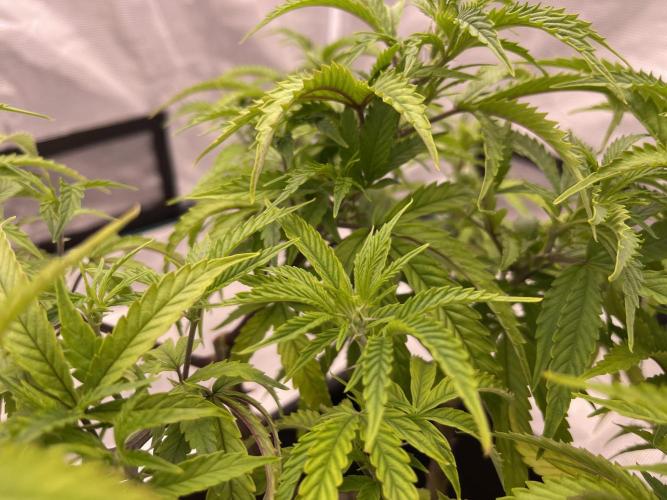
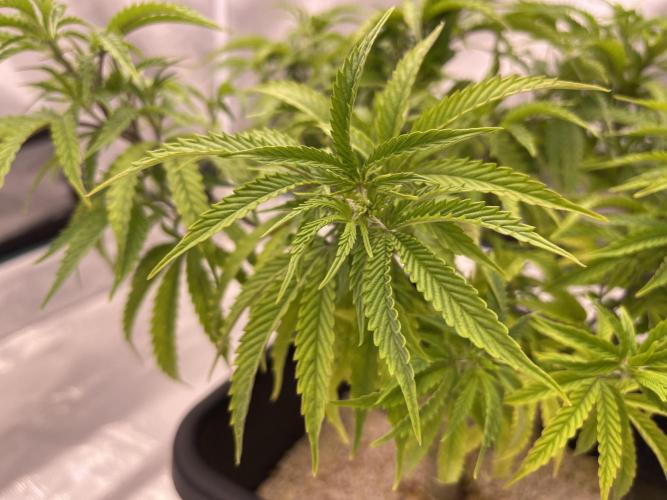
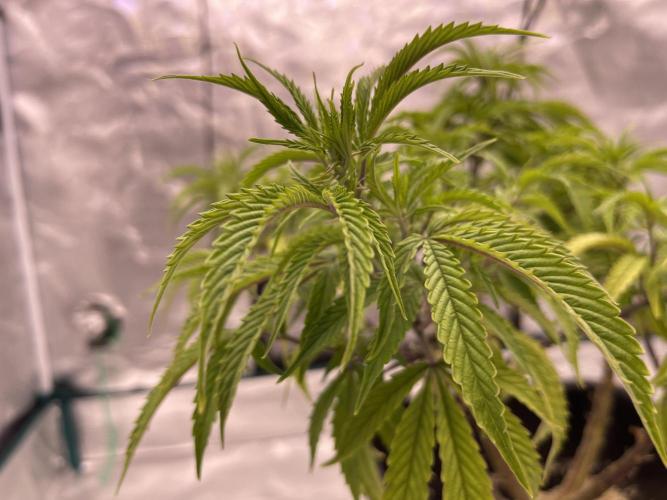
The plant has grown slightly, but overall the growth still feels somewhat slow and lacking vigor. It’s not stalled, but it doesn’t have the level of energy and drive you would normally expect at this stage.
This is especially noticeable in the leaves. They don’t look as healthy or as vibrant as they should, and there’s a general impression of reduced vitality. Despite that, there are no clear symptoms pointing toward a specific deficiency or problem.
All parameters seem to be properly dialed in.
The pH is stable, the EC is under control, and the environmental conditions are consistent and within a good range.
That’s what makes the situation a bit frustrating — everything looks correct on paper, yet the plant still appears slightly underperforming.
For now, the decision is to avoid overreacting. No adjustments, no additional stress. The plant is simply being left alone to grow and hopefully regain some natural vigor over the next few days.
Looking ahead, the transition to flowering is approaching. The plan is to flip the plant within one to two weeks, depending on how it evolves and whether it regains a bit more strength.
At this stage, patience and observation remain key.
Alright growers, take care and see you next week.
3 likes
comments
Share
14
Week 14. Vegetation
6mo ago
1/12
35 cm
Height
18 hrs
Light Schedule
25 °C
Day Air Temp
5.8
pH
No Smell
Smell
900 PPM
TDS
65 %
Air Humidity
19 °C
Solution Temp
19 °C
Night Air Temp
8 liters
Pot Size
Nutrients 5
Balance
2 mll
Grow B
2 mll
Grow A
2 mll
SamDo Hello growers,
Welcome back for vegetative week 14 of the Pineapple Upside Down from Humboldt.
This week was clearly a difficult one. The plant is still growing, but something was off. The overall development slowed down, and the lack of vigor became more noticeable compared to previous weeks.
After checking all the usual parameters, the issue finally became clear.
The reservoir pH was perfectly stable, sitting in the correct range around 5.7–5.9. However, the real problem was happening in the tray. The nutrient solution was sitting there for too long, and the pH was drifting significantly, reaching around 6.8.
This caused the coco substrate to buffer at the wrong pH level, leading to a partial nutrient lockout. Since the plant wasn’t drinking enough, the solution had time to degrade and shift, which is one of the limitations of the Autopot system when the plant is not actively feeding.
To correct the situation, I decided to fully reset the system.
A complete flush was performed using FlashClean from Terra Aquatica, with a very low EC and a pH adjusted to around 5.5. The goal was to clean the substrate and remove any accumulated imbalance.
After the flush, the system was left to drain and stabilize over the weekend.
I then restarted feeding manually with a much more controlled approach. Instead of letting the tray stay filled, I used small amounts of nutrient solution at pH 5.7 and EC 1.7, allowing the coco to absorb it before removing any remaining liquid to avoid stagnation.
The objective is to progressively bring the substrate back into the correct pH range and restore proper nutrient uptake.
This method will be maintained throughout the week to observe how the plant reacts. If the plant shows a strong recovery and regains vigor, the Autopot system will be reactivated. Otherwise, manual control will remain in place.
I also performed a light defoliation and cleanup, removing lower growth and excess foliage to improve airflow and light penetration.
At this stage, the situation is under control, but the outcome will depend on how the plant responds over the next few days.
The next update will be important to confirm whether this recovery strategy was effective.
Alright growers, take care and see you next week.