


Likes
Comments
Share


@TerpTurtle
Follow
14 day dry | Curing in Grove bags, filled 7 QP bags & got 56g of keif out the trim bin from only 2 plants!
STAY FROSTY GROWMIES


Likes
15
Share


@Cr0mEtheus
Follow
She's doing great, I defoliated a bit at the end of this week. Just the big fan leaves not connected to a bud sight. Any big fan leaf attached to a bud sight I bound. I just want to keep a clear line of sight to where I defoliated. These buds are so dense I can't see through to the stem.
Trichs are still glassy. No amber anywhere. Even the trichs on the fan leaves are still glassy. This wild goddess might be sticking around for a bit longer.


Likes
65
Share


@TheBudWhisperer
Follow
Week 5 of flower and seed production for all these plants has started in earnest. We cleaned up the tent somewhat and took down all the males after having done their job. Alls left is to wait for finish now.
The nute deficiency appears to have corrected itself now that we’ve balanced out the ratios a little more. The WPM is no match for the sodium bicarbonate but still gonna have to keep on top of that to the end of the grow. Full fumigation of the grow spaces will be required - multi-day process I am not looking forward to. Time cleaning is time not growing, sadly.
We’re coasting to the finish now but should still have some decent updates on our super secret seed harvesting method once they’ve fully matured😉👍. Hope everyone’s well and grow’n that straight 🔥.
Background
Fingers crossed that these Spicy Bitch regs provide at least one male so that we can back build some stock of it. In the event that does take place we’ve got a single clone of each strain from the previous pollen chuck to sit in the tent with them so they can make babies for the next few months. The whole point of the last year was to start making some foundational genetics for a third generational cross we could call our own. If you’ve been following along than you’ll know that it’s been anything but easy. Our previous pollen picks didn’t pan out at all so we’re back to the drawing board with a new option from ExoticSeeds.
This’ll be a 10 plant run with 5 regs and 6 strains for pollination including the strain itself.
We’re running in a 2x4 MarsHydro grow tent all powered by a Mars Sp6500. That’s a little more than 600w packed into half the recommended footprint😳. Why? you ask - because we like our buds big and overcompensatory😂. Really, I’m just of the mind that we can pack more light into this space than recommended and get much better results. The math doesn’t lie. At least not as long as I wasn’t high when using the calculator again…..
Many thanks to @MarsHydroLED for the opportunity to test run the equipment👊.
In addition, we’ve also moved to a new nutrient system - Druid Nutrients out of the Netherlands. They don’t really have a presence on GD yet but you’ll be hearing about them very soon I’m sure. The beauty of this system is that it’s literally a 1 (one) component system for the entirety of the plants grow cycle. It really has changed the game in terms of ease of feeding and maintenance. It’s also very versatile and seems to provide everything needed across multiple different strains in the same ratios. Keep your eyes peeled for these folks. Pretty much a guarantee that they absolutely blow up once more people know about them👍👌😎.
Strain Background
Spicy Bitch: predominantly sativa, heavy yielder with a daytime kinda trip profile. It’s a cross of Queen Mother and a Pre-2000 AK47. We’ll pull what pollen we can and hope to have a female run out a larger supply of seed for the future.
Many thanks to @Exoticseeds for the chance to give these beans a go👍👊.
Pollination Strains:
Holy Surfer S1 - this is one of the focal points for this cycle. A fellow growmie was kind enough to ship over some S1 genetics I took an interest in. The only ask back was that if I did cross it to send a few his way for testing👍. Shoutout and cheers to @blendmedmedman. Hoping to have something back to ya in short order. For full details on this alluring hybrid option check my buddies link at seedfinder -
https://en.seedfinder.eu/strain-info/Holy_Surfer/Smiling_Tiger/
Northern Lights - this came from a particularly interesting batch of seeds that have shown a very dependable variegation trait. It’s a compact and squat plant requiring very little maintenance. Typical for the strain really. It’s been chosen as an option to potentially mellow out the high , shorten the stature of the resulting hybrid and inject it with some of that mellow indica effect.
Boogie Nights - total shot in the dark. Still haven’t even tried the strain myself yet but it was available at the right time and interesting enough to make a salad with. Big thanks to AMS who’ve been nothing short of an excellent seedbank to collaborate with. Expect similar growth characteristics to that of the Northern Lights. Better resilience however.
Blueberry - this particular clone is from extremely strong stock. Spliff seeds broke the mold with this strain. She’s lower maintenance than the NL, more resilient than anything else we’ve got on the menu and the terp. Profile on this girl is out of this world. If we can bring any of these qualities to the cross, then it could be magic👌.
White Widow - garrghh, I just can’t get away from this particular plant. Again, still haven’t even tested the buds yet and all I can say is that the growth characteristics are extremely vigorous and desirable. This plant is one of 3 unicorns that I have yet to tame due to a combo of extremely bad luck and circumstance.
All told, it’s still the same story: a VERY experimental breeding project designed to shotgun a broad swath of genetics against a reliable and dependable Breeder who’s put out proven fire 🔥🤟😎👍.


Likes
6
Share


@Trichom420CZ
Follow
Nothing to do this week, only flush. Im waiting on the end. Buds are really hard like stone.

Likes
1
Share


@DaveJohnson
Follow
Week 9: Flower - The First Harvest & Final Countdown! ✂️🌿
THE BIG CHOP IS DONE! Gorilla Z #1 has been harvested, and we're officially in the drying phase. Meanwhile, the remaining ladies are marching toward their own finish lines.
Gorilla Z #1 - HARVESTED! 🎉
She's down! After weeks of growth, recovery from overwatering, and pushing through to the end, this girl finally got the chop.
Trichome Check:
Mostly cloudy/milky (peak THC production ✓)
A few amber trichomes starting to show
Minimal clear trichomes
Harvest Timing: Honestly? I was in a rush—ran out of flower to smoke! 😅 But the trichomes were in a good window, so it worked out. Sometimes necessity makes the decision for you. Could've waited for more amber for a heavier effect, but she was ready enough.
What's Next:
Drying phase begins now
Aiming for slow dry (60°F, 60% humidity if possible)
Then comes the cure—patience will be tested again!
The Relief: Finally got some homegrown coming down the pipeline. The timing couldn't be better!


Likes
1
Share

@psychonaut420
Follow
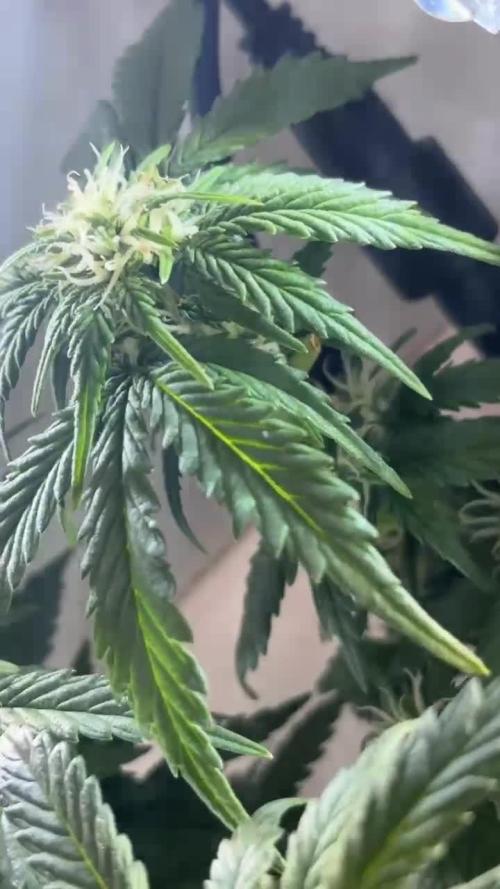
first 2 plants are lemon cherry cookies auto and last one is frozen face auto the white stigmas and streaching side branches are streaching outwards I’ve done more lst and defoleation for light penetration to each bud site

Likes
3
Share


@JuanPablo5280
Follow
Shes Starting to smell reallllly good! I shouldn't have too much larf if i had more room to spread her out in early flower she would be producing alot more.


Likes
26
Share


@1Right_Angle
Follow
Sunday Jan 3; Transitioning from Veg to Flower Nutes is in progress.
Tonight sees 2/3 Bloom / 1/3 Veg and that’s it.
- dropped tent temp down to 26C and humidity seems steady just under 50%
- feeding schedule has been every other day. Stretching that to every 3 days after tonight
** water volume is my conundrum **
Do I add more water for the plant ?
Am I giving enough Nutrients to the plant for it to grow big?
Question Time ! &. Results:
Volume of water was raised again for dinner tonight. 2.5 g between both plants. On the great advice I received today from 2 growers, and my desire to increase the amount of food that the plants see; the volume of water will go up and the time between feedings will resemble more of a 4 & 2 day cycle.
Other Changes—-
*”hand-weighing the pots” to get a Feel for moisture content, will become a regular task.
**Giving the plants an extra day to absorb larger feedings, will become part of a staggered routine to help keep them on the Dry-Side
Mad growth again today (sun p.m.), with the last taste of Medi-One out of the way early in week 3. A 4 day liquid-break and then 100% flower food.
Jan 4 saw the plant looking well hydrated. No obvious run-off from yesterday’s feeding, says a deep watering has not happened yet.
I will give the soil moisture a chance to recover, and increase next weeks Volume of water (aka nutrition) slightly once again.
Breaking new ground ie: past a gallon per plant indoors and watering based on actual Needs. looking for real progress
Jan 6th: next dinner is listed above, either tonight or tomorrow it will be used, based on how Dry the plants feel tonight
Today is day 3 since the last watering. If possible I’ll hold-out till tomorrow. is Desert-like.
Leaves are still pert. And the
~13 gallons or so of soil still feels bloody solid.
So I’ll wait till a 4th day and feed it tomorrow. Fresh pictures uploaded w/ a video
Jan 7: Fed each plant after 4 days without food or water, and they look great. Upped water volume 1/4 gal ea., (1.5 gal total ea.) and this will start the desired 4/2 watering schedule. Amount goes up each of next couple weeks. (Then taper off nutes and h2o in the last weeks is the plan)
-plants looked great after 4 days without water. Here’s one for patience.
-if the plant growth and bud development are any indication... the plant on the left appears to be a week ahead of the plant on the right.
The one on the right just seems to be taking off now.
Jan 8 Uv-B use has been s/d for the time being ~ 3 or 4 weeks. I am going to wait until there are actual buds on the branches, before making good use of the wavelength.
* also behind that decision is the fact that the plant Under the Light, is solidly 4” behind the other since I started adding short periods of uv-b exposure. (The plants were exactly equal up until I started exposing the R plant for 1/2 the CMH exposure. ie: 6 hours)
The plant lagging behind in reach and bud development, is the uv-b plant. And that’s only been using it since Dec 31st !
As it stands articles are saying to use the Uv-B later in flower. OK, I’m in !
Taking action on an observation.
Sat Jan 9:
- opening the tent tonight there was a 3” stretch over the course of the nite/day on the left. And it looks like the plant on the right is kicking-in as well. Slower, but happening.
Like the whole L plant grew 3”

Likes
4
Share

@Smoking_Joe_Frazier
Follow
22.06.2026
Hi Growmies,
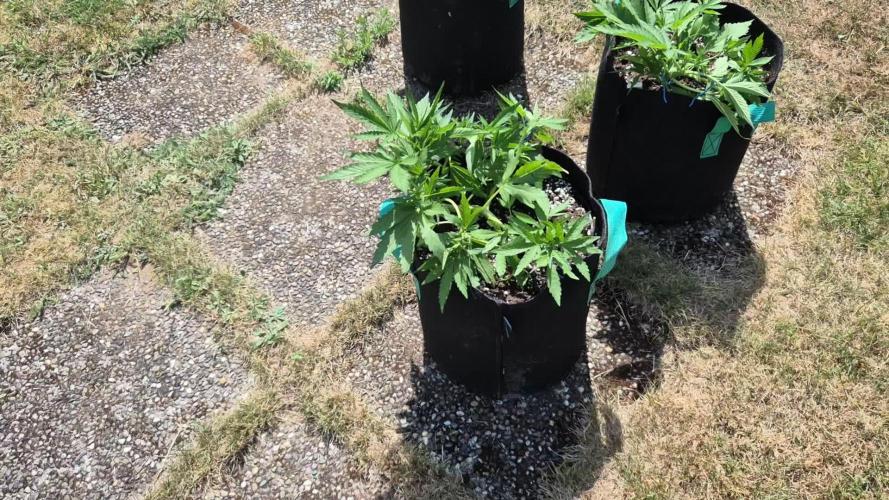
welcome back to week 3 of my Fast Buds Auto Grow!
Weather and Conditions
The weather gods have gone completely insane. Here in good old Germany, it feels like everything is melting down — including me! 😅
We've been hitting around 36°C for the last few days, and even nighttime temperatures have stayed well above 25°C. Perfect conditions for a serious growth spurt.
At this point, I already have to water the girls daily, which is quite unusual this early in the grow.
Growth
The ladies are absolutely thriving right now.
Ever since I started the first round of LST, all shoots seem determined to race upwards. Of course, I'm not allowing that and keep bending them back down whenever necessary.
Growth feels noticeably more explosive than in previous years. My guess is that the Plagron Bat Mix is playing a major role here. Combined with the weekly dose of Bokashi juice, the girls seem to be loving life.
Pests
Thanks to the hot weather, snails are no longer much of a concern.
So far, I haven't spotted any unwanted visitors such as thrips or aphids either. Hopefully it stays that way, although all the ants and aphids in the neighborhood seem to be having one massive party on my two giant sunflowers.
Looks like the distraction strategy is working pretty well. 😄
Continuing LST
The girls have responded very well to the training and are already developing a nice structure.
Unfortunately, I had a little accident while adjusting the LST on my Apricot girl. I managed to snap the main stem, which really pissed me off because she was growing exceptionally well.
I patched her up with a bit of duct tape and now it's a waiting game. I'm curious to see if the top recovers and keeps growing. Cannabis can be surprisingly resilient, so fingers crossed.
Let's see how well I can keep them under control if they continue growing at this pace. It's going to get interesting over the next couple of weeks.
Final Thoughts
That's it for this week.
The girls are healthy, growing fast, and enjoying the summer weather. Apart from my little Apricot mishap, I couldn't ask for much more at this stage.
Catch ya next week, guys!
Smoking_Joe_Frazier
Likes
9
Share


@Bread_n_Buds
Follow
Don't be fooled, this specimen of Pineapple express was born only a week after the other F1 hybrids from Zamnesia but with these latest generation autoflowering plants called f1 noin you're joking, they are really fast, the flower comes together in an instant and poof it's ready .
She has begun to grow a lot, she has made a central main cola take off which promises to be very, very interesting, and she is composing the gems.
The conditions are all there, we await the decisive weeks for the construction of the flower, cup after cup, we will see what this young lady with the famous name will do.
We are sure it will be very interesting.
The fertilizer is always a hair too much but I have very little of the paranoia of Italian grandmothers about leaving my girls hungry.
Buy seeds on Zamnesia at the link https://www.zamnesia.io/it/10681-zamnesia-seeds-pineapple-express-f1-automatic.html
Food by Plagron
https://plagron.com/en
Light www.viparspectra.com/
Tent & Air www.secretjardin.com
Music of the week www.radionula.com
+++ 432 hz frequencies for keep in line my Girls to Gaia.
Site Description
ZAMNESIA SEEDS - PINEAPPLE EXPRESS F1 HYBRID AUTOMATIC: FRUITY FLAVORS AND ENERGETIC EFFECTS
Combining Trainwreck with Hawaiian, Pineapple Express F1 Hybrid Automatic brings a beloved strain to new heights. This autoflowering F1 hybrid cultivar ensures exceptional uniformity, reliability, and stability, making it well-suited to growers of all experience levels. If you've not checked out Pineapple Express F1 hybrid Automatic for yourself just yet, now is the time.
GROWING PINEAPPLE EXPRESS F1 HYBRID AUTOMATIC
All it takes is 8–9 weeks from germination before Pineapple Express F1 hybrid Automatic is ready to harvest. Thankfully, very little effort is required throughout the growing process, aside from a bit of maintenance, to ensure ample, high-quality harvests. Thanks to its F1 genetics, Pineapple Express F1 Automatic offers superb resilience and uniformity, meaning all plants will have a similar height and appearance, and will churn out comparably large yields. Reaching heights of 50–70cm, Pineapple Express F1 Automatic is not an overbearing plant and can effortlessly slot into any setup. Once ready to yield, growers can see a return in the region of 400–550g/m² indoors and up to 200g/plant outdoors.
AROMAS, FLAVORS, AND EFFECTS OF PINEAPPLE EXPRESS F1 HYBRID AUTOMATIC
Just one hit of Pineapple Express F1 hybrid Automatic treats users to a rich assortment of flavors and aromas. This strain offers strong pineapple notes alongside moments of citrus, spice, and pine, making for a mouth-watering blend that's extremely moreish. Bolstered by 21% THC and an array of cannabinoids, Pineapple Express F1 Automatic showcases an energetic and uplifting high that will have you feeling chatty in no time. So if you've been looking for a strain to enjoy with friends, Pineapple Express F1 Automatic could be just the thing.
All F1 Hybrids and more and more and more on
www.zamnesia.io
Likes
20
Share


@BudXs
Follow
Plants are getting big enough to train through the fence. Im thinking a vertical scrog, but its gonna be a bitch to harvest . We will see, still dunno if they are even female

Likes
56
Share


@Ultraviolet
Follow
What's in the soil? What's not in the soil would be an easier question to answer. 16-18 DLI @ the minute. +++ as she grows.
Probably not recommended, but to get to where it needs to be, I need to start now.
Vegetative @1400ppm 0.8–1.2 kPa 80–86°F (26.7–30°C) 65–75%, LST Day 10, Fim'd Day 11
CEC (Cation Exchange Capacity):
This is a measure of a soil's ability to hold and exchange positively charged nutrients, like calcium, magnesium, and potassium. Soils with high CEC (more clay and organic matter) have more negative charges that attract and hold these essential nutrients, preventing them from leaching away.
Biochar is highly efficient at increasing cation exchange capacity (CEC) compared to many other amendments. Biochar's high CEC potential stems from its negatively charged functional groups, and studies show it can increase CEC by over 90%. Amendments like compost also increase CEC but are often more prone to rapid biodegradation, which can make biochar's effect more long-lasting. biochar acts as a long-lasting Cation Exchange Capacity (CEC) enhancer because its porous, carbon-rich structure provides sites for nutrients to bind to, effectively improving nutrient retention in soil without relying on the short-term benefits of fresh organic matter like compost or manure. Biochar's stability means these benefits last much longer than those from traditional organic amendments, making it a sustainable way to improve soil fertility, water retention, and structure over time. Needs to be charged first, similar to Coco, or it will immobilize cations, but at a much higher ratio.
a high cation exchange capacity (CEC) results in a high buffer protection, meaning the soil can better resist changes in pH and nutrient availability. This is because a high CEC soil has more negatively charged sites to hold onto essential positively charged nutrients, like calcium and magnesium, and to buffer against acid ions, such as hydrogen.
EC (Electrical Conductivity):
This measures the amount of soluble salts in the soil. High EC levels indicate a high concentration of dissolved salts and can be a sign of potential salinity issues that can harm plants.
The stored cations associated with a medium's cation exchange capacity (CEC) do not directly contribute to a real-time electrical conductivity (EC) reading. A real-time EC measurement reflects only the concentration of free, dissolved salt ions in the water solution within the medium.
98% of a plants nutrients comes directly from the water solution.
2% come directly from soil particles.
CEC is a mediums storage capacity for cations. These stored cations do not contribute to a mediums EC directly.
Electrical Conductivity (EC) does not measure salt ions adsorbed (stored) onto a Cation Exchange Capacity (CEC) site, as EC measures the conductivity of ions in solution within a soil or water sample, not those held on soil particles.
A medium releases stored cations to water by ion exchange, where a new, more desirable ion from the water solution temporarily displaces the stored cation from the medium's surface, a process also seen in plants absorbing nutrients via mass flow. For example, in water softeners, sodium ions are released from resin beads to bond with the medium's surface, displacing calcium and magnesium ions which then enter the water. This same principle applies when plants take up nutrients from the soil solution: the cations are released from the soil particles into the water in response to a concentration equilibrium, and then moved to the root surface via mass flow.
An example of ion exchange within the context of Cation Exchange Capacity (CEC) is a soil particle with a negative charge attracting and holding positively charged nutrient ions, like potassium (K+) or calcium (Ca2+), and then exchanging them for other positive ions present in the soil solution. For instance, a negatively charged clay particle in soil can hold a K+ ion and later release it to a plant's roots when a different cation, such as calcium (Ca2+), is abundant and replaces the potassium. This process of holding and swapping positively charged ions is fundamental to soil fertility, as it provides plants with essential nutrients.
Negative charges on soil particles: Soil particles, particularly clay and organic matter, have negatively charged surfaces due to their chemical structure.
Attraction of cations: These negative charges attract and hold positively charged ions, or cations, such as:
Potassium (K+)
Calcium (Ca2+)
Magnesium (Mg2+)
Sodium (Na+)
Ammonium (NH4+)
Plant roots excrete hydrogen ions (H+) through the action of proton pumps embedded in the root cell membranes, which use ATP (energy) to actively transport H+ ions from inside the root cell into the surrounding soil. This process lowers the pH of the soil, which helps to make certain mineral nutrients, such as iron, more available for uptake by the plant.
Mechanism of H+ Excretion
Proton Pumps: Root cells contain specialized proteins called proton pumps (H+-ATPases) in their cell membranes.
Active Transport: These proton pumps use energy from ATP to actively move H+ ions from the cytoplasm of the root cell into the soil, against their concentration gradient.
Role in pH Regulation: This active excretion of H+ is a major way plants regulate their internal cytoplasmic pH.
Nutrient Availability: The resulting decrease in soil pH makes certain essential mineral nutrients, like iron, more soluble and available for the root cells to absorb.
Ion Exchange: The H+ ions also displace positively charged mineral cations from the soil particles, making them available for uptake.
Iron Uptake: In response to iron deficiency stress, plants enhance H+ excretion and reductant release to lower the pH and convert Fe3+ to the more available form Fe2+. The altered pH can influence the activity and composition of beneficial microbes in the soil. The H+ gradient created by the proton pumps can also be used for other vital cell functions, such as ATP synthesis and the transport of other solutes. The hydrogen ions (H+) excreted during photosynthesis come from the splitting of water molecules. This splitting, called photolysis, occurs in Photosystem II to replace the electrons used in the light-dependent reactions. The released hydrogen ions are then pumped into the thylakoid lumen, creating a proton gradient that drives ATP synthesis.
Plants release hydrogen ions (H+) from their roots into the soil, a process that occurs in conjunction with nutrient uptake and photosynthesis. These H+ ions compete with mineral cations for the negatively charged sites on soil particles, a phenomenon known as cation exchange. By displacing beneficial mineral cations, the excreted H+ ions make these nutrients available for the plant to absorb, which can also lower the soil pH and indirectly affect its Cation Exchange Capacity (CEC) by altering the pool of exchangeable cations in the soil solution.
Plants use proton (H+) exudation, driven by the H+-ATPase enzyme, to release H+ ions into the soil, creating a more acidic rhizosphere, which enhances nutrient availability and influences nutrient cycling processes. This acidification mobilizes insoluble nutrients like iron (Fe) by breaking them down, while also facilitating the activity of beneficial microbes involved in the nutrient cycle. Therefore, H+ exudation is a critical plant strategy for nutrient acquisition and management, allowing plants to improve their access to essential elements from the soil.
A lack of water splitting during photosynthesis can affect iron uptake because the resulting energy imbalance disrupts the plant's ability to produce ATP and NADPH, which are crucial for overall photosynthetic energy conversion and can trigger a deficiency in iron homeostasis pathways. While photosynthesis uses hydrogen ions produced from water splitting for the Calvin cycle, not to create a hydrogen gas deficiency, the overall process is sensitive to nutrient availability, and iron is essential for chloroplast function.
In photosynthesis, water is split to provide electrons to replace those lost in Photosystem II, which is triggered by light absorption. These electrons then travel along a transport chain to generate ATP (energy currency) and NADPH (reducing power). Carbon Fixation: The generated ATP and NADPH are then used to convert carbon dioxide into carbohydrates in the Calvin cycle. Impaired water splitting (via water in or out) breaks the chain reaction of photosynthesis. This leads to an imbalance in ATP and NADPH levels, which disrupts the Calvin cycle and overall energy production in the plant. Plants require a sufficient supply of essential mineral elements like iron for photosynthesis. Iron is vital for chlorophyll formation and plays a crucial role in electron transport within the chloroplasts. The complex relationship between nutrient status and photosynthesis is evident when iron deficiency can be reverted by depleting other micronutrients like manganese. This highlights how nutrient homeostasis influences photosynthetic function. A lack of adequate energy and reducing power from photosynthesis, which is directly linked to water splitting, can trigger complex adaptive responses in the plant's iron uptake and distribution systems.
Plants possess receptors called transceptors that can directly detect specific nutrient concentrations in the soil or within the plant's tissues. These receptors trigger signaling pathways, sometimes involving calcium influx or changes in protein complex activity, that then influence nutrient uptake by the roots. Plants use this information to make long-term adjustments, such as Increasing root biomass to explore more soil for nutrients. Modifying metabolic pathways to make better use of available resources. Adjusting the rate of nutrient transport into the roots. That's why I keep a high EC. Abundance resonates Abundance.


Likes
14
Share


@ConspiracyFly
Follow
Gorilla Glue Auto day 69 - 4.3.2023
This week it stopped growing and is getting fatter, the smell is more active when I open the tent, it took more water than last week and I added PK 13/14
I also removed some leaves for better light penetration but I didn't undress it because it's cold :)
0,2 Bio-Grow
0,4 Top Max
0,4 Bio-Bloom
0,8 Calmag
2,0 PK 13 /14 Plagron
1.5 gr Pandora Powder MYCOTERRA
Gorilla Glue Photo
I made LST
Regards and see you next week


Likes
12
Share


@H2Smith
Follow
📅 23.04-21 (Flo day 57)
📜 trichome analysis: not ready to flush.
⚗️ 1.85
💦 6.2
🌊 40L
📏 cm
📅 24.04-21 (Flo day 58)
📜 removing 30l from the system, the plants drank 30l. 60l filling. EC dropped to 1.83 at 1:00 AM. Trichome analysis: not ready to flush.
⚗️ 1.88
💦 6.2
🌊 30L
📏 cm
📅 25.04-21 (Flo day 59)
📜 trichome analysis: not ready to wash. Plants have drunk 40l at 8:00 PM 50l at 11:00 PM
⚗️ 1.77
💦 6.2
🌊 50L
📏 cm
📅 26.04-21 (Flo day 60)
📜 Set Ph 6.1 to the Ph Controller.
⚗️ 1.79
💦 6.18
🌊 30L
📏 cm
📅 27.04-21 (Flo day 61)
📜 Trichome analysis: Not ready yet.
⚗️ 1.80
💦 6.10
🌊 45L
📏 cm
📅 28.04-21 (Flo day 62)
📜 drained 50 liter from the RDWC system. Objective EC 1.60. Add 175ml total care
⚗️ 1.78
💦 6.10
🌊 35L
📏 cm
📅 29.04-21 (Flo day 63)
📜 -------------------- Nothing to say
⚗️ 1.67
💦 6.10
🌊 40L
📏 cm
_____________________________________________________
📅 Day - 📜 Note - ⚗️ EC -💦 PH -🌊 Water -📏 Height
Equipment:
Idrolab 12 bucks
Chiller teco Hy500
weather controler with Co2 : PRO-LEAF BECC-B2
Bavagreen 720w
Bavagreen 720w
Bavagreen 240w
Bavagreen 240w
Nutrients and PH controller: PRO-LEAF PHEC-B2
Nutrients: Green House feeding - powder feeding hybrids | Powder feeding boost
Extractor: primaklima PK250-1 PK250-L1 x2
System and roots care: Idrolab Total care

Likes
55
Share


@Reyden
Follow
Devo dire che le due Gorilla RQS sono contente e stanno bene nei loro nuovi vasi da 11 L ed in confronto a settimana scorsa sembrano più sane e in forma, purtroppo sono stato quasi una settimana senza misuratore PH perché mi dava problemi e quindi per una volta non ero effettivamente sicuro quanto era bilanciata la soluzione ma penso di non aver fatto danni…andiamo avanti, ieri ho sciacquato solo con acqua a PH 5.9/6 e ora aspetto che asciuga bene questa volta salgo con EC e arrivo intorno a 1250…vediamo come reagiscono 🧐😶🌫️
Likes
20
Share


@Mr_nugs_lover_David
Follow
She's an octopus full of very stinky sweet nuggets man!. I'm in love with this black cherry punch #1 she's in a 30l pot and her performance has been amazing. Very happy with this lady. The aroma of the flowers is suuper sweet very like cherry and like strawberries. Such a pleasure to grow this Cherry pie 🥧🍒 cross 🔝💎👨🌾
PD: I had to tie some of the colas cause they were just Fallin cause of the weight of the nugs.
A set of 2 branches broke because of the weight of the nuggets so I chopped it down the 2 colas and put them in the drying room.

Likes
2
Share


@Ultraviolet_
Follow
Topped once, turned off IR @ nights, slowed vertical growth back down, and took off both of the very lowest internodes on each plant.
Eisenia fetida
Stratiolaelaps scimitus
Armadillidium vulgare
Red wigglers (Eisenia fetida) are highly beneficial. They are considered an ideal choice for "no-till" or container-based organic growing because they live in the upper layers of soil, feeding on organic mulch rather than the plant's root system. Red wigglers accelerate the breakdown of organic amendments and produce high-quality, nutrient-dense worm castings directly in the root zone. Clover is another exceptional component of an organic rhizosphere, offering a sustainable, self-sustaining alternative to synthetic nitrogen fertilizers produced via the energy-intensive Haber-Bosch process. By forming a symbiotic relationship with Rhizobia bacteria, clover converts atmospheric nitrogen N2 into ammonium NH4, providing a steady, slow-release nutrient source that enhances soil health and reduces environmental impacts. Red clover offers superior nitrogen fixation and biomass production compared to white or yellow clover, making it the premier choice for maximum soil vitality, particularly for improving soil structure and providing a high-volume nitrogen credit for subsequent crops.
If it is fully functional and efficient soil, the rhizophagy cycle is superior long-term than any synthetic delivery when it comes to preventing deficiencies, not because it's "better," per se. The medium will require a very high CEC to make it to harvest without re-fertilization. The rhizosphere acts as a dynamic, interactive exchange where plants and soil microbes trade resources based on immediate needs. When a plant lacks a specific nutrient, it changes its physiology and releases specialized chemical cocktails—root exudates—into the surrounding soil. These exudates, which include sugars, amino acids, and organic acids, serve as a "shopping list" to attract specific microorganisms, which in turn return higher levels of desired nutrients. There is nothing in comparison when using synthetic delivery, which can cause plants to stop producing exudates, effectively "starving" the beneficial soil life, over time turning the soil barren and void of microbial life. Responsible use, applying the right amount at the right time, can minimize these negative effects. Relying solely on synthetic fertilizers without replenishing organic matter is what typically leads to exhausted soil. The use of synthetic fertilizers can utilize the Cation Exchange Capacity (CEC) of the soil, but without a robust rhizosphere and active microorganisms, the efficiency of this process is significantly reduced. This makes synthetic growing more difficult to prevent deficiencies overall compared to an efficient organic living soil with a robust rhizophagy cycle, as there is no "one size, fits all" when it comes to different nutrient profiles of strains/genetics, making it trickier to "guess" and prevent creeping deficiencies.
CEC does not contribute towards EC. Add more CEC using biochar, problem solved. If you keep pH between 6.3 and 6.7, hydrogen is exudated to cycle the medium's CEC for its needs. Keeping the pH between 6.3 and 6.7 creates an environment where plants release H+ to displace positively charged nutrients (like Ca2+, Mg2+, K+ held on soil particles or within artificial media this cycle through nutrients via the medium's Cation Exchange Capacity (CEC)
Microorganisms generate a stable potential of approximately 0.5 V EC. The rhizosphere creates its own food, similarly to chelation, using 1000's of varying combinations to create its own food.
Start to finish, just add water. Eventually, more materials will need to be added at the beginning of each new grow, but very attainable to go from seed to harvest without ever fertilizing.
ATP is important when it comes to biomass accumulation. Cellular root respiration and cellular respiration are essentially the same biological process, the breakdown of glucose to create usable energy (ATP) in the presence of oxygen, just taking place in different parts of the plant. Synthetic (salt-based) grows have significantly lower levels of total rhizosphere respiration, often referred to as root-zone activity, compared to organic living soil grows. While the plant roots themselves may respire in both systems, the surrounding soil ecosystem in a living soil setup is vastly more active, teeming with bacteria, fungi, and beneficial microorganisms.
2 pools of ATP, it won't double in growth buuuut, but improving root respiration by ensuring high oxygen in the soil is crucial. Good aeration ensures roots can fully utilize glucose to generate the ATP necessary for nutrient uptake, leading to healthier and more productive plants, even if growth isn't exactly doubled. The ATP created using root respiration is dedicated to rootzone growth; the ATP created using regular cellular respiration in a synthetic system would have to dedicate a lot of ATP to the roots when there is little or no root respiration. It's true that there is less of an initial ATP cost in breakdown when nutrients are already in their final form (synthetic), but you lose a solid chunk of ATP when the entire plant is reliant on cellular respiration alone; a large portion of ATP is dedicated to root zones for "forced" nutrient uptake rather than traded. Making it overall less efficient, even if the initial cost of breakdown is higher. Not sure if I butchered that but one can hope It makes sense.
Oxygen is of critical importance when growing in living soil compared to synthetic soil because it supports the metabolic needs of the microbial, fungal, and insect ecosystem, rather than just the root respiration required by the plant itself. While synthetic grows can survive in lower-oxygen environments with precise mineral feeding, living soil systems rely on aerobic microbes to decompose organic matter (microbial mineralization) to create plant-available nutrients, which is an oxygen-intensive process. While a specific fair percentage is difficult to guess, my experience points to a massive, compound difference between the two methods and the amount of oxygen required. All the ATP spared is used on more biomass, not only that, but the extra root respiration can achieve a much higher CO2 compensation point naturally than you could with synthetic and atmospheric CO2 alone.
As a plant grows faster and increases in size, its demand for nutrients to support that growth increases, requiring a higher rate of nutrient uptake. As plants enter phases of rapid vegetative/floral growth, their metabolic demand for nutrients increases exponentially. Without a robust buffer zone—whether in the soil (cation exchange capacity) or in a hydroponic reservoir—deficiencies will occur rapidly because the instantaneous demand for specific nutrients can quickly exceed the rate of supply.
A growing body of evidence suggests that organic living soil provides superior long-term soil health and environmental benefits compared to synthetic fertilizers, which are often criticized for promoting a cycle of dependency and degradation. While synthetic fertilizers offer short-term convenience and high yields, they often come at the expense of long-term soil health, sustainability, and increased corporate control over growers/ farmers. Organic living soil, while slower and requiring more care to establish, creates a sustainable, resilient, and, ultimately, more fertile environment.
We don't really grow; we facilitate energy conversions, and energy is just numbers. Because the universe works the same way today as it did yesterday, there is a single, fundamental mathematical quantity that remains constant. We call this quantity energy. You cannot put "energy" under a microscope. You observe matter and forces (like heat, motion, or light), but energy is just a scalar number calculated to help predict how these things will change and interact. When an object falls, or when a battery powers your phone, matter shifts and changes form. Through it all, the universe ensures the "total score" of the numbers remains exactly the same.
Once all water is removed, approximately 95% to 97% of a plant’s dry matter consists of carbon, oxygen, and hydrogen. These three elements form the structural backbone of all plants. NPK & all the rest 3-5%.
Indigenous Amazonians created, or at least significantly enhanced, the fertile, dark soil known as Terra Preta de Índio (Portuguese for "Indian Black Earth") by incorporating biochar and other organic materials into the soil. This anthropogenic (human-made) soil technique, which dates back roughly 2,500 to 8,000 years, allowed ancient civilizations to flourish in regions with naturally poor, acidic, and nutrient-poor tropical soils.


