


Likes
Comments
Share


@MasterKush714
Follow
👹08/20/2024 What's brackin fam let's get it!!!!👽
Sooo the girls are pushing along, doing well the pH swing is kinda high right now but this was kinda expected, but I am adjusting as I can, will lower ppm to 1600 next water change on Wednesday which is tommorow and will be keeping pH at around 6.0 will update as the week goes on!!!
***********************************
08/22/2204
Update my girls are legit fadding I have zero reason why Iight just flip clean sterilize and re run sorry again y'all keep y'all updated 😔
Well it's official the girls had died out to root rot I'm terribly sad for this...smfh

Likes
16
Share


@PoshGrow
Follow
Welcome to Ultimate Auto Grow by PoshGrow!
🍀 Week #5 2020 September 28th. - October 5th.
General Info:
When planted: 2020 September 1st.
Week: 5
Days: 28 - 35
Last Update Day: 2020 September 30th.
Plants:
4 x OG Kush Auto
3 x Amnesia Auto
5 xAlaskan Purple Auto
2 x Blueberry Auto
1 x Northern Lights Auto
Total: 15 girls.
NOTICE: Check week 1 for full equipment list!
UPDATE: I got 8 ltr. Or 2 gallon Spear&Jackson Pressure Sprayer to help me with watering.
Comment:
Welcome boys and girls to Season #2 by PoshGrow! So alongside my 1sq. meter tent I got my new 2nd tent and setup. So at this time i will be running 2 tents.
Well, finally I solved all problems, everything seems to be going well. Girls started flowering, responded well to LST and nutriens. Feeding every other watering. Ill keep close eye on them too and update info at the end of the week.
Peace! ✌️

Likes
226
Share


@Kitties_and_Colas
Follow
~_~_~_~_~_~_~_~_~_~_~_~_~_~_~_~_~_~_~_~_~_~_~_~_~_~_~_~_~_~_~_~_~_~_~_~_~_~_~_~_~_~_~_~_~_~_~_~_~_~_~_~_~_~_~_~_~_~_~_~_~_~_~_~_~_~_~_~_~_~_~_~_~_~_~_~_~_~_~_~_~_~_~_
10/22/21
😻Harvest week!! Trichs are finally there friends!..We'll update with photos,vid and weights after our camping trip..thanks for dropping by and happy harvests everyone!! https://youtu.be/JC6zVPeKFPk
~_~_~_~_~_~_~_~_~_~_~_~_~_~_~_~_~_~_~_~_~_~_~_~_~_~_~_~_~_~_~_~_~_~_~_~_~_~_~_~_~_~_~_~_~_~_~_~_~_~_~_~_~_~_~_~_~_~_~_~_~_~_~_~_~_~_~_~_~_~_~_~_~_~_~_~_~_~_~_~_~_~_~_

Processing
Likes
2
Share


@eldruida_lamota
Follow
Esa familia, nuevo LST con misty gorilla autofloreciente, empezaremos de momento con 2/3 misty gorillas con este método de cultivo. Uno de los ejemplares me parece algo pequeño aun como para andar atando nada.
Añadi BETA SHARK , quite el producto de crecimiento, y aporte el producto de floración de la gama BLACK LINE de AgroBeta.
También quite el enraizante, ya que fácilmente consigo buenos cepellón es y con varias semanas de dosis son suficientes.
Ph controlado en 5.8 humedad entorno al 45%, la temperatura no sube nunca a los 27 grados , se queda siempre en 26 poco.
Se las ve con buen color , un tallo bastante manejable, fueron atados entre 2 y 3 nudos por planta con alambre forrado.
Espero que os gusten las fotos e imágenes ya que gracias a Zambezaseeds, marshydro y AgroBeta es posible este cultivo, un saludo fumetillas 💨💨💨💨.

Processing
Likes
34
Share


@LockDownGrow
Follow
Time too flush this lady for two weeks if she allows
All went fantastic and the green buzz nutrients range has performed ,
This lady will be coming down very soon ,
Really packed on weight and trics are 100% cloudy , just waiting for a few more amber's ,
I suspect she will be finnished within the next 7 days

Likes
10
Share


@Hazehouse
Follow
Some leaves starting yellowing and dying as plant is focusing on bud growth. Decided to run some defoliation techniques to allow nutrients to not be wasted. Didn’t want to stress the plant too much as I did this earlier and don’t want to cause any hermies will monitor and feed regularly


Likes
10
Share


@PolezGardn
Follow
week four flower everything looks fine so far :D
I water them with 1.5l every 48h
the light I use was set to 100% and it hangs 80cm away from the tops

Likes
7
Share

@bkickstand
Follow
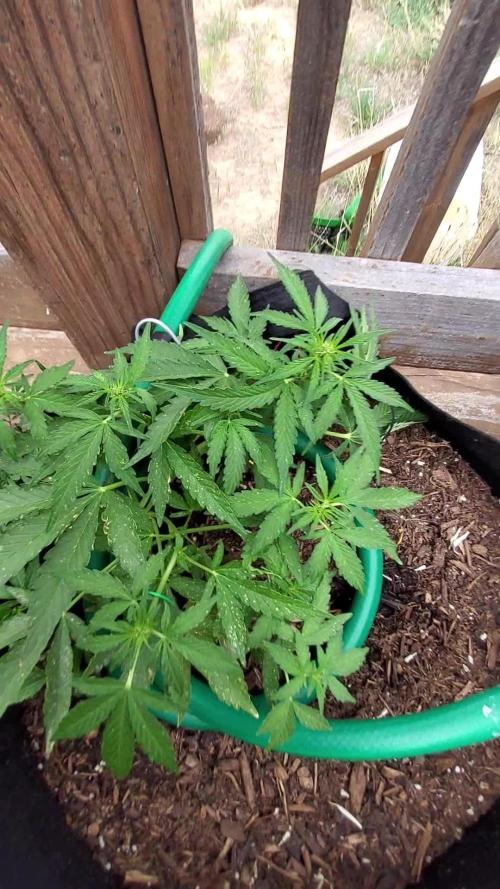
📋 Grow Diaries: Week 2 of Flowering – The Northern Lights Auto Sisters
The Northern Lights Autoflower sisters, Charlotte and Makayla, have confidently stepped into Week 2 of true flowering. The initial transition phase is settling, and both girls are busy stacking up distinct pre-flower clusters on the deck.
Because these are autoflowers tracking on a fixed schedule, this week clearly illustrates how a complete divergence in training strategies can entirely alter the plant's architecture and budding profile.
🎀 A Study in Contrast: Natural vs. Pinned Down
While sharing the exact same indica-dominant genetic backbone, the structural contrast between the two sisters is night and day right now:
Charlotte (The Natural Tree):
Training: Left completely alone to do her own thing, Charlotte has been allowed to grow naturally.
Structure & Flowering:** She is exhibiting a textbook, upright Christmas tree shape with a strong apical dominance. Her primary central cola towers over the rest of the plant, heavily stacking clusters of white pistils along a single vertical pillar. Her side branches gracefully skirt the main trunk, catching excellent sun from her upright stance.
Makayla (The Pinned-Down Canopy):
Training: Placed under intensive low-stress training, Makayla has been meticulously pinned down closer to the soil.
Structure & Flowering: By forcing her main stem down horizontally, her natural apical dominance was broken. As a result, her side branches have been thrown into the spotlight, rising up to create a much flatter, bushed-out tabletop canopy. She sits significantly lower to the pot than her sister but features multiple evenly distributed budding tops across her wider footprint.
The Mid-Bloom Menu: Dialing in FOOP Organic Bloom
To fuel this rapid flower production without stalling their internal clocks, the girls have been transitioned onto a premium organic bloom regimen:
FOOP Bloom 1 & Bloom 2: This core base duo is delivering a highly bioavailable punch of organic phosphorus, potassium, and fish-based micronutrients to accelerate calyx stacking and strengthen stem development.
FOOP Sweetener: Infused into the feed to load up the root zone with complex carbohydrates, driving up microbial activity in the soil and giving the sisters the raw fuel they need to crank up early resin and trichome synthesis.
Irrigation Setup The green automated drip rings (1000003513.jpg) ensure this organic blend is evenly distributed across the entire surface of the fabric pots, feeding the root zones consistently without creating dry pockets.
Pistil Development: White hairs are actively grouping up at every node site, most prominently on Charlotte's dominant main tower
Foliage Check: The fan leaves on both plants remain an incredibly vibrant, healthy green (1000003325.jpg), showing that the FOOP nutrient uptake is smooth and perfectly balanced for this stage of life.
Grower's Note: Watching a single strain express itself in two totally distinct structural shapes because of a simple twist in training is what makes grow diaries so rewarding. Charlotte is maximizing her main vertical column, while Makayla is converting her flat footprint into a broad field of tops. Next week, the bud swelling truly begins!
Likes
18
Share


@BudXs
Follow
This mother is gonna be grown out to see what she can do. Transplanted into 5 gallon container following the clone cuts. Will look for some stretch and try to get her 4+ feet tall.
Happy growing, growmies

Likes
23
Share


@NSCanna
Follow
Buds are fattening up pretty well and I've had to use more rubber garden wire and clips to keep the branches from bending over. Smell is increasing on the Northern Light but still a mild skunk on the Black Devil. Also gave the very last feeding on the plants this week so they will get nothing but water until the chop.
I'm very happy with the microbe populations so I stopped feeding the sugars (molasses/agave) as the plants themselves don't get much out of them; that stuff is just for feeding the soil beasties. I had added some predatory mites several weeks ago to deal with some springtails, and the mites annihilated the population. I did find a developing larva though so there are still some around. Posted lots of microscope videos today.


Processing
Likes
23
Share


@MadeInGermany
Follow
Hi everyone 🤗.
The lady developed very well this week 😃.
Only she is a little more hungry than she got 😄 which is why she gets a little more of the Orcanic Grow Liquid from the next watering 👍😃.
Otherwise everything is going great.
I wish you a lot of fun with the update, stay healthy 🙏🏻 and let it grow 🌱
You can buy this Strain at
https://thecaliconnection.com/seeds/girls-scout-cookies-34.html
You can buy the fertilizer at
https://www.greenbuzzliquids.com/
Type:
Girls Scout Cookies
☝️🏼
Genetics:
GSC Tint Mint
👍
Vega lamp:
2 x Todogrow Led
Quantum Board 100 W
💡
Bloom Lamp :
2 x Todogrow Led
Cxb 3590 COB 3500 K 205W
💡💡☝️🏼
Soil :
Canna Coco Professional +
☝️🏼
Fertilizer:
Green Buzz Liquids :
Organic Grow Liquid
Organic Bloom Liquid
Organic more PK
More Roots
Fast Buds
Humic Acid Plus
Growzyme Big Fruits
Clean Fruits
Cal / Mag
Organic Ph - Pulver
☝️🏼🌱
Water:
Osmosis water mixed with normal water (24 hours stale that the chlorine evaporates) to 0.2 - 0.4 EC. Add Cal / Mag 2 ml per l water every 2 waterings . Ph with Organic Ph - Pulver to 5.8 .

Processing
Likes
21
Share


@Neo09
Follow
Im falling in love, cos thoose our babe's makes US 🤩😋🤩
..., that Last 3 weeks. Jeep on rollin baby
Likes
3
Share

@kdifiori_
Follow
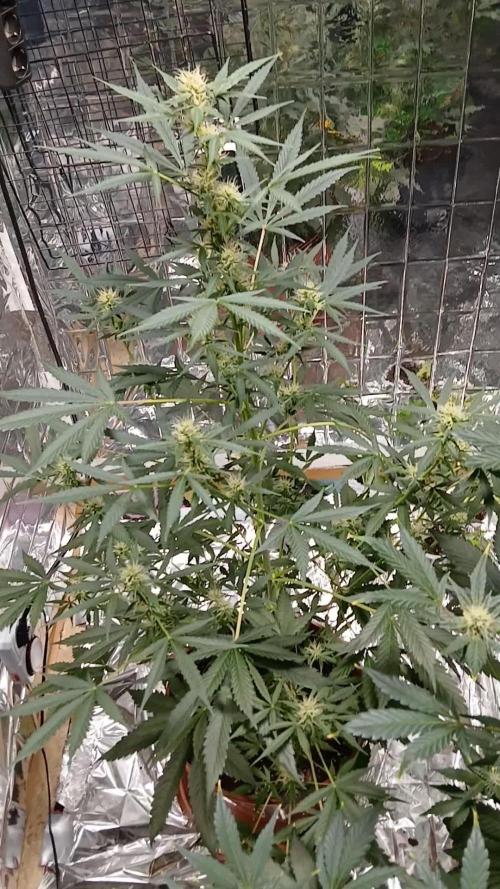
And just like that, month number two is over!
What started out as just a little seedling has quickly grown into a plant nearly a meter tall.
This week, it drank two liters of nutrient enriched water. I stopped using Bloom A and B to make room for Atami’s Blossom Builder.
Are you ready for next week?
Likes
18
Share


@RelaeX
Follow
GrowDiary Finale: The Epic Chapter 8 – The Final Countdown Before Harvest 🚀🌿
Welcome to the final official update of this run before the big C-Day! 🗓️
Here we stand—after weeks of measuring, regulating, training, and hoping—at the absolute peak of this grow featuring High Society and Zupernova (Compound Genetics). While a carpet of aroma lies over the tent that could practically deserve its own zip code, we look back on a journey full of precision, tech upgrades, and plant magic. ✨🌱
1. Setup & Tech: The Unsung Heroes
A great grow is no accident; it is the synergy of sharp observation and well-tuned technology: 🛠️🔬
Strains in the Tent (High Society & Zupernova):
Both Compound Genetics strains are displaying their top-tier lineage in this late-game phase: 🏆
High Society: Impresses with dense, heavily trichome-frosted nugs and a complex gassy/bakery terpene profile. ⛽🍰
Zupernova: Steals the show with striking purple fades and a sharp, sweet-and-sour terpene punch. 💜🍋
Personal Highlight – High Society’s Redemption:
In my previous run, I really struggled with High Society. She couldn't handle the heavy feeding schedule that Zupernova tolerated so easily—two plants didn't survive, and I ended up scrapping the harvest. This time around, I fine-tuned the nutrients, and the transformation is mind-blowing! While Zupernova delivered her signature top-tier performance once again, High Society finally showed her true elite potential with unreal trichome coverage and incredible terps. 🤩🌟
Climate Upgrades & VPD Control (GGS Controller & AC-10):
We refined our environmental setup even further by adding a GGS controller to the loop. Working alongside the Spider Farmer AC-10 controller, we kept absolute command over airflow, circulation, and VPD. During this final stretch (Week 8), RH was strictly pushed below 40–45%. This doesn't just protect against dreaded bud rot (Botrytis); it also signals to the plants: "It's getting dry, pour out more resin for protection!" 🌬️💧
Canopy & Height Differential (115 cm vs. 150 cm ):
The main colas reached up to 150 cm, while the middle canopy settled at 115 cm. Due to light intensity drop-off (Inverse-Square Law), the upper buds ripen about 5 to 7 days faster under direct photon exposure (higher PPFD). While the tops at 150 cm are already showing a beautiful amber touch, the 115 cm layer is right in the sweet spot of roughly 70% milky and 30% clear. 📏💡
1. Soil & Nutrient Strategy (Hesi & Biobizz):
Phasing out the feeding schedule in Week 7 and running pure water (flush) in Week 8 paid off completely. The foliage has faded into a spectacular array of autumn yellow, deep purple, and lime green—the plant is depleting its final reserves, ensuring an extremely smooth and flavor-rich vape/smoke. 🍂🌈
2. Trichome Check: The Microscope View
A look through the macro lens confirms: We are at the sweet spot! 🔬✅
* Gland Structure: The glandular trichomes are fully turgid. The heads are massive, packed with terpenes and cannabinoids. 💧🌿
* Color Spectrum: On the headbuds, we see the magic ratio of roughly 80% milky to 15% amber—exactly the mix that yields a powerful, multi-layered high without instantly locking you to the couch. 🛋️
3. The Roadmap to Harvest Day
The switch will be flipped this coming weekend. Until then, we stick to the protocol: 🗓️🌿
Drying out the substrate: The pots will receive no more water starting mid-week. Slightly dry soil speeds up the drying process after cutting and prevents stagnant humidity in the tent. 💧🚫
* Final Dark Phase ( 24–48h): Lights go completely off before chopping to promote the breakdown of residual starches and protect terpenes from light degradation. 💡🌑
Drying Room Setup: Target climate for the drying area is set to 18 °C and 55–60% RH with constant, indirect airflow. 🌬️🌡️
Conclusion & Outlook
This run has been a masterclass in plant training, environmental control, and patience. A huge thank you to the community for following along, commenting, and riding this wave! 👏🌊
Next stop: Harvest, Dry Trimming, and Curing! ✂️❄️🌿

Likes
4
Share


@Bluedreaming
Follow
high! Thanks for checking out my grow. I might not be the most organized grower here but I try lmao. This is the second round with this strain. As you can see my diary stars with flowering as I had started with clones from my last grow. I hope to keep this updated regularly however life(kids,work,wife) trump everything. Happy growing my friends and hope to see your grow too!!!! ✌️

Processing
Likes
24
Share

@MadeInGermany
Follow
Hi all 🤗.
Runtz did the topping very well :-).
I think I will top her 2 more times before she finally goes to the flower tent
She grows nice and bushy, 😍👍.
This week will be topped again.
I wish you all a nice week, stay healthy 🙏🏻 and let it grow 🌱
Type:
Runtz
☝️🏼
Genetics:
Zkittlez x Gelato
👍
Vega lamp: 2 x Todogrow Led
Quantum Board 100 W
💡
Bloom Lamp : 2 x Todogrow Led
Cxb 3590 COB 3500 K 205 W
💡💡☝️🏼
Soil : Canna Bio
☝️🏼
Nutrients : Canna bio
☝️🏼🌱
Water: Osmosis water mixed with normal water (24 hours stale that the chlorine evaporates) to 0.2 EC. Add Cal / Mag to 0.4 Ec Ph with Organic Ph - to 6.0 - 6.3
💦💧

Likes
29
Share

@BlaKX
Follow
Grüße Growmies wir sind am ende der Reise angekommen!!
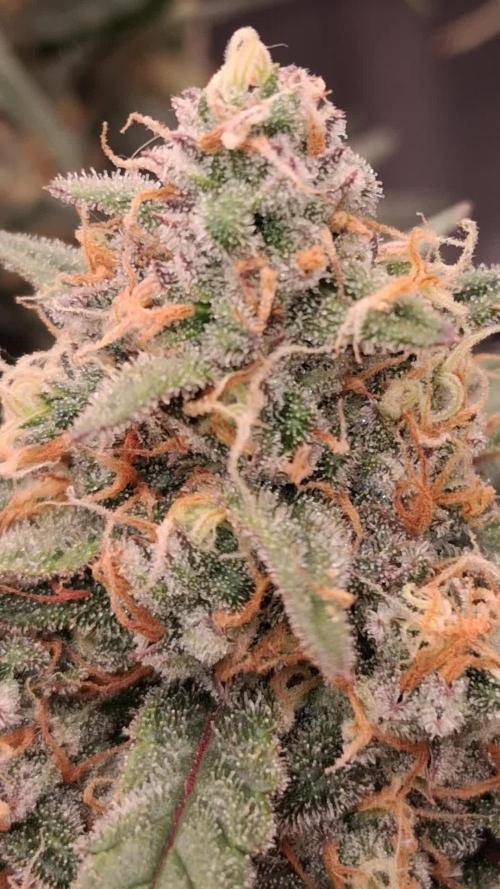
WOW diese Farben und Harz bessatz kombiniert mit den Terpenen Bombe ist dieses Jahr für mich eine schönste Pflanzen. Selbst Thripse am Anfang der Blüte hat sie super verkraftet!
Sie hatte am Freitag das letzte mal Dünger bekommen und am Samstag so wie Sonntag nur Leitungswasser bekommen. Ab Montag habe ich sie nicht mehr gegossen und 3 tage bis zur Ernte austrocknen lassen.
Vom Anfang bis Ende war das ein Unkomplizierter der Grow mit super Ergebnissen und dass von Keimung bis Ernte in 63 Tagen !
Dank EPN(Krumme-Gurken)Mykoriza&Trichoderma Mischung mit Canna Terra Professional Plus Erde hatte ich ein aktives Bodenleben & Rhizosphäre das die Nährstoffe ausreichend verarbeiten konnte trank sie zur Spitzen Zeit in 24std 3l Wasser mit leichter/normaler Dünger dosis bei einem 6,2 PH wert.
Zusammengefasst: Ein pflegeleichter Strain der sehr gut mit LST zu steuern ist und auf Temperatur Schwankungen
von 10C°+/-zwischen Tag und Nacht in meinem Fall: 19std tagphase 27-28C°/40%-50% Luftfeuchtigkeit, 5std Nachtphase 17-18C°45%-55% Luftfeuchtigkeit mit leuchteten Lila Blüten Spitzen und massiver Harz Entwicklung reagiert um dass ganze noch mit neon Orangen Pistillen abgerundet.
Bei ca. 950-1000 ppfd an der Spitze und ca 800- 850 ppfd an den unteren Blüten so wie die letzten 2 Wochen 2x 660nm Deep red Adlite leisten tiefer gehängt auf 15cm Abstand. Was deutlich den Harz bessatz verstärkt hat und die Blüten nochmal haben anschwellen lassen.
Likes
6
Share


@Felixdahousecat
Follow
I really loved the results about topping under 3 knot, we gotta punch muscles in the 2 firts stressing early this little beast.
Replanting new critical x orange punch.
Suck error burning leafs from gg4 x bp , burned by the sun.
Going straight , looking forward to the next.