


Likes
Comments
Share


@Mennowitsch93
Follow
Blüte Woche 8 es wird gespült bei 4 Ladys seit 2 Tagen und und die anderen zwei vom gleichen Schwung sind die Tage dran.

Likes
6
Share


@organicman
Follow
6 plants temporary moving out to the new room until new seeds arrive
4 days later:
9 more (all) plants moving out to the new room
____________________________________________
light- and watering schedule: see photos
now:
15 plants
3 x Auto Orange Bud > Dutch Passion (early80's)
1 x Haze Berry Automatic > Royal Queen Seeds (2018)
2 x Auto Euforia > Dutch Passion (late 90's)
2 x Auto Bubblegum > TH Seeds (late 80's)
2 x Original Auto BubbleGum > Fast Buds Company (late 80's)
1 x Strawberry Pie Auto > Fast Buds Company
1 x Gorilla Cookies Auto Seed Stockers (2015)
2 x Auto White Widow x Big Bud > Female Seeds
setup + strategy:
18 seeds
3 x Auto Orange Bud > Dutch Passion (early80's)
3 x Haze Berry Automatic > Royal Queen Seeds (2018)
3 x Auto Euforia > Dutch Passion (late 90's)
2 x Auto Bubblegum > TH Seeds (late 80's)
2 x Original Auto BubbleGum > Fast Buds Company (late 80's)
2 x Strawberry Pie Auto > Fast Buds Company
1 x Gorilla Cookies Auto Seed Stockers (2015)
2 x Auto White Widow x Big Bud > Female Seeds
setup:
18 x gronest 2 liter
60 cm x 120 cm x 180 cm (2 x 4) growtent
4 l humidifier
25 watt axial fan
15 watt clip fan
ro-filter
bath room with a 50 watts room fan (-> carbon filter not necessary)
...and a lot of odds and ends.
grow strategy:
max yield by stressing with:
1. tiny shoes (2 l fabric pots standing on 3 plastic rings (4 cm) for max oxygen)
2. tiny growspace (18plants on 0.72 sqm)
3. many strains (8 strains)
4. annoying neighbourhood (mixing old - i.e. bubblegum (late 80's) - with young- i.e. hazeberry (2018) - genetics)
5. no stress by light or food or water
6. unintentionally too much food
plus:
- no lst - no hst - just leaf tucking
- positioning bigger strains (euphoria, orange bud, haze berry) or just bigger phenos on less intense light spots (end of tent + edges)
- music-rotation: 24 hrs reggae (for sativas) - 24 hrs classicals (because it's scientifically proofed) - 24 hrs traditionals from the hindukush region (for the indicas)
max efficiency (min electricity - max yield):
- light: 23 h on - 1 h off
- keeping the distance of 18" (45 cm) and dimming to the right par (lux) - value depending on growing stages (see sheet: beginning 185 par ( 10000 lux/100 watt )/end 340 par ( 18000 lux/175 watt )) => ends up in approx. 170 watts in average over max 15 weeks
temperatur management:
- using approx. max. half of what the lamp can do keeps temperature low:
my tsl 2000 is pulling max. 360 watts of the wall - i need only 175 watts, results in less temperature than using a 175 watts lamp
- adjusting the temperature by using a humidifier outside of tent:
blown in humidity is soaking degrees and is transported out by fan, works much better than doing the same with pure air
summer extreme: no humidifier: 36°C / 35 rh - with humidifier: 29°C / 65 rh
works for 1-2 weeks of real hot summer days, no mould, no signs of stress in two summers
germination:
seeding in waterglass
spraying "basic"-water: ro-water (22 ppm) + calmag to 180 ppm every 4 - 8 hours until sprouted
man versus fungus gnat:
5 days before seeding i'm running the tent with "basic"-watered pots as if there were plants inside - led on, fans on, humidifier on. Fungus gnats coming with the soil might take the chance to come out now for breeding. i'm waiting with a 9 mm rifle. in the past i found 6 gnats in 2 of 8 x 50 l biobizz lightmix bags coming out of the soil. i could eliminate every single gnat successfully ;)
rotating harvest:
the little ones will be harvested completely when ready. at this point only the top branches of the big ones will be cut...and the new (basic-watered) pots of the new grow will move into the tent. 2-3 weeks later the secod half of the big ones will be cut and the second half of the new grow will move in...
nutes:
biobizz / soil: biobizz lightmix
bloom,grow,topmax,activera,algamic
+ aminopower instead of bio heaven (too expensive)
individual feeding schedule/once a week:
veg: 200 - 600 ppm
bloom: 600 - 900 ppm
water:
ro-water with:
veg: 100-150 ppm calmag
bloom: 150 ppm calmag


Likes
11
Share


@Karl_Heinz420
Follow
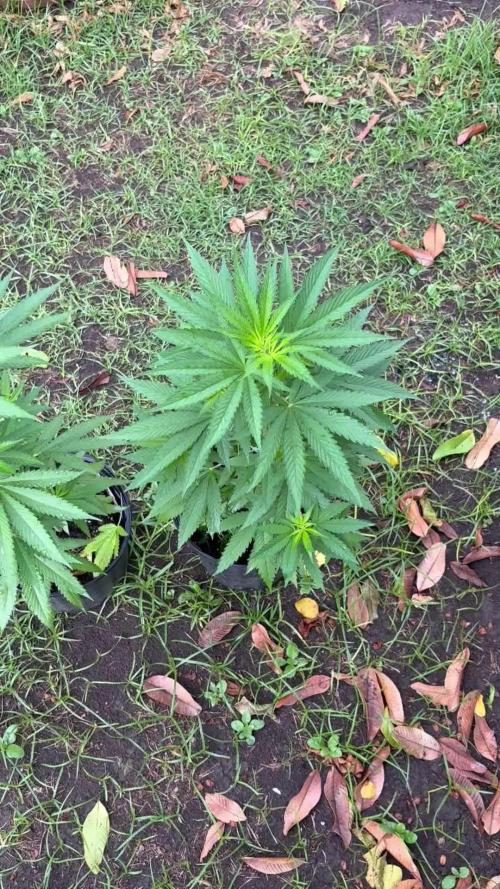
Gießen - 💦 Week 6: P-K 7-5 Boost!
1,0 Liter je Lady / Tag
Düngen 1x pro Woche gem. angegebenen Schema. Die letzte Düngung 🌺🍁 anschließend lediglich Osmosewasser PH 6,5 mit 1,2 ml/l Calmag.
Sanlight Evo 3-60 100% (1000-1200 PPFD)
Temperatur: 23-25 grad Celsius
r.Lf.: 50-55%




Likes
19
Share


@CanablisLecture
Follow
Harvested a little early. But about 70% milky and some clear and dark. I have it drying now. About 50% humidity but it goes up and down. 181 grams from 3 plants in my 4X4 with a TSW2000. I didn't expect to get that much on my first try. This sour joker x sour ghost is the real deal. It's not hell's OG unreal but it's a nice smoke and gets me rocked.

Likes
14
Share

@Naujas
Follow
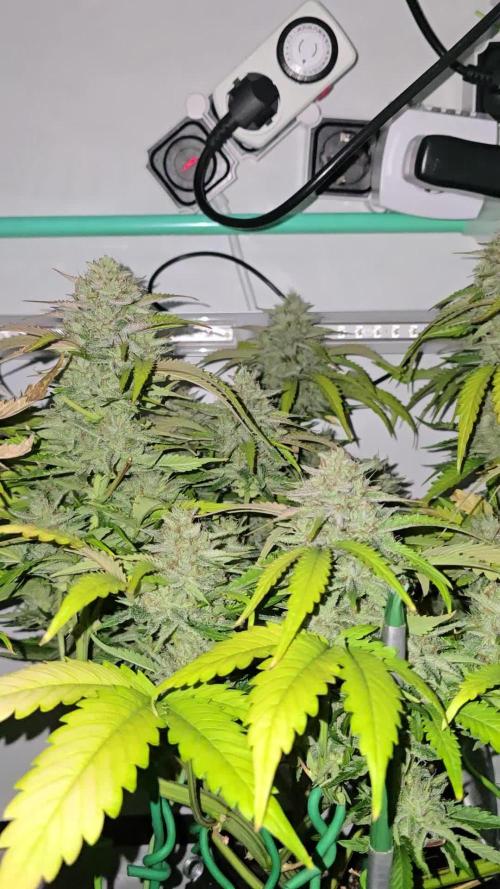
63 days!!!!! Today I gave my girl just clean 6.3ph water without any food, I think she has less than 2 weeks left until the finish, my tent smells amazing :) good luck to everyone :)
Likes
23
Share


@Horseluisweed
Follow
Básicamente lo mismo, aunque está semana pilló bastante más horas de luz(tuve que irme fuera de casa dos findes seguidos, en los cuales la dejé con la luz encendida full 24/7 en la caja)
Como experiencia utilicé café reposado 48h para "alimentarla" e intentar bajar el Ph de la tierra (coco ph6+hummus ph7+vermiculita ph8= ph total 7)
El otro experimento fue cubrir la tierra con coco para que el tallo eche raíces y aprovechar su espigamento!
Las horas de luz solía dejarla 8h en bombilla mientras duermo, y el día la pongo en la ventana a que tome el fresco, pero apenas tiene luz directa, me da la sensación que crece más rapido cuando vuelvo del finde, estoy replanteandome tenerla más tiempo en la caja con luz, porque la veo aún pequeña, y quizá ponerle un ventilador de pc o algo🤔..veremos, aún tengo el papel de aluminio al lado de la caja y ni se lo he puesto, con eso os lo digo todo☝️🎃

Likes
68
Share


@Ferenc
Follow
Day 50, 5th of November 2020:
Fucking hell in the second video i just broke the tray LOL....
Anyways... The lamp has been switchet to 12/12 for 4 days from now she is streching and has a nice smell :)
No training needed just waiting....
Fertilization happens more often like every 2nd day and more of the BioBizz family raised up to be 2ml/L haha ;)
Bye.
Likes
12
Share


@Gulliver
Follow
Итог :
6 автоцветов
Палатка 1.2 х 1.2 м
Свет 600 Ват
775г общий урожай 1.3грамм на ват
Likes
92
Share


@Roberts
Follow
Well finally got a seed germinated. This batch was pulled for quality control. At least I got 1 plant. Hopefully she does well. She has a late start compared to others. I will be using a Spider Farmer SE5000, and a New Level Hydro 5 gallon bucket system links below. Thank you Spider Farmer, New Level Hydro, the Amsterdam Marijuana Seeds. 🤜🤛🌱🌱🌱
SE5000
https://amzn.to/3qFpAML
Spider Farmer Official Website Links:
US&Worldwide: https://www.spider-farmer.com
UK: https://spiderfarmer.co.uk
CA: https://spiderfarmer.ca
EU: https://spiderfarmer.eu
AU: https://spiderfarmer.com.au
Coupon Code: saveurcash
Thank you grow diaries community for the 👇likes👇, follows, comments, and subscriptions on my YouTube channel👇. ❄️🌱🍻 Happy Growing 🌱🌱🌱
https://youtube.com/channel/UCAhN7yRzWLpcaRHhMIQ7X4g
www.newlevelhydro.com
www.hygrozyme.com

Likes
4
Share

@Doncuero
Follow
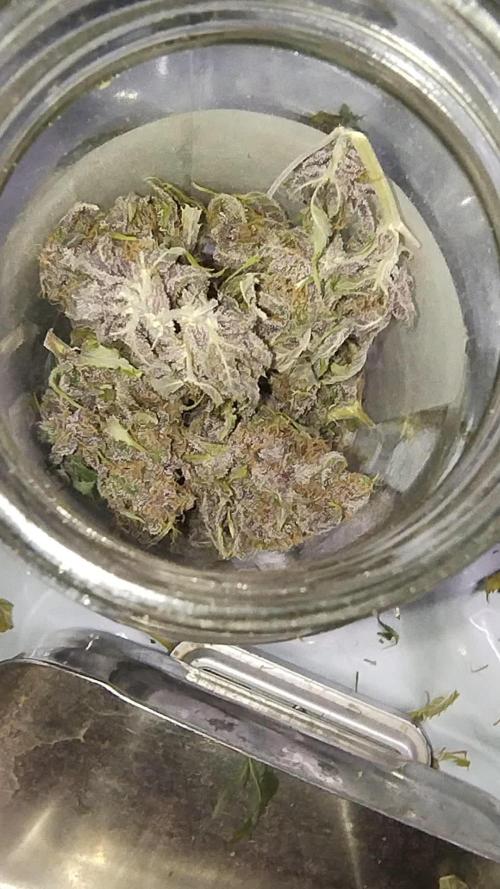
Ak ultra-. A pesar de que en las fotos se ven aireados los cogollos, una vez curado, el secado y guardado en sobres bóvedas de humedad. Asentuando el sabor y los terpenos.
Likes
41
Share

@Hempface86
Follow
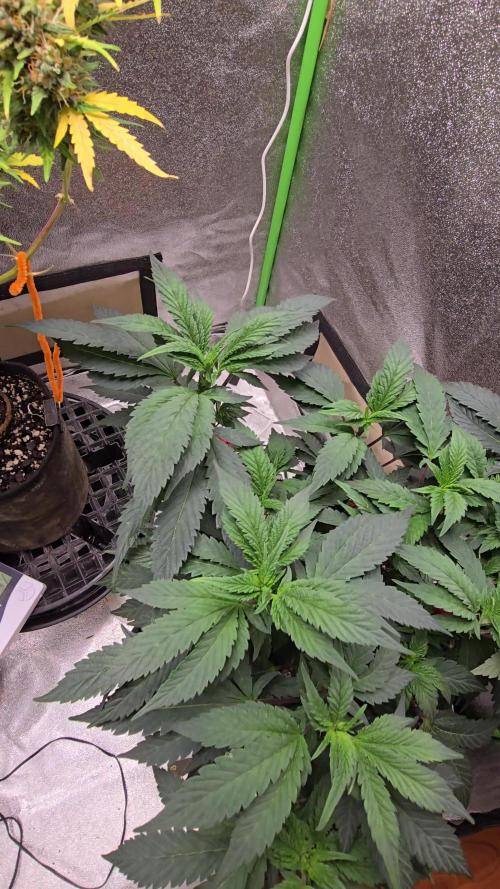
Still in veg, gonna flip this week .. so far so good , im going to give her a good defoliation, then flip ...I feel like she's gonna be a big girl... God bless and happy growing ✌️

Processing
Likes
29
Share


@Grey_Wolf
Follow
Ginger Nut Cookies & Aussie Music Videos
Week 16 Harvest
17 th April 2020
This Entire feminised seed making and growing project was a very good learning experience for me. Right from the very start, when I successfully got a Cutting ,taken from a Barneys Farm Red diesel female plant to produce feminised pollen after treating it with a silver thiosulfate solution.
I then used it to pollinate a Fastbuds Girl scout cookies auto plant and let it grow to maturity.
This only produced 3 viable seeds one of which is the subject of this Diary.
I made up the name "Ginger nut cookies" after a variety of cookies we have here in Australia that are made with ginger. They are the same colour as the distinct red hairs on the red diesel buds.
And would you believe those same vivid red hairs were passed on to this plant
so I wasn't too far off the mark with the strain name.
Her flavour however is nothing like red diesel or girl scout cookies and infact as taken on a smell and aroma all of it's own.
She has a lovely tropical fruit like taste and the smell is a bit like fruit yoghurt. It has an unreal after taste on the exhale and the lingering second hand smoke smells very sweet and enticing.
She has a pretty well balanced high too not as potent as the GSC nor as energenic as the red diesel but just a
pleasant mix of the two.
It was a very easy to grow and undemanding plant that didn't seem to require a lot of extra feeding other
than the 100% organic nutrients that were within the soil and a few things like compost teas etc.
The other element of this diary was of course the weekly Aussie music videos
That I provided the links for and put up a little video clip preview of each Artists song.
Week 1 Dance Monkey
Week 2 Gotye
Week 3 AC/DC
Week 4 INXS
Week 5 Dire straits
Week 6 Yothu yindi and Midnight oil
Week 7 Divinyls
Week 8 Was Request week where I asked growers to pick and because only 3 growers put in a request I decided to choose all three which were
Kylie Minogue , Flume & Airbourne
Week 9 Paul Kelly
Week 10 Daddy Cool
Week 11 Cold chisel
Week 12 Jimmy Barnes
Week 13 The Angels
Week 14 Crowded House
Hoodoo gurus Mental as Anything
Week 15 Empire of the sun
Big Pig , Silverchair , Peking duk
Grinspoon , Hilltop hoods and the White stripes
And Finally for the last lot of music videos I have chosen another multi
list bonanza of Aussie Music with the artist/s name and Youtube link below.
So in no particular order here are my last choices for this Diary its been a fun grow with a steep learning curve.
John Williamson
True Blue
https://youtu.be/ceWKrsJX9N4
Nick Cave and Kylie Minogue
Where the wild roses grow https://youtu.be/lDpnjE1LUvE
John Farnham
Your the Voice
https://www.youtube.com/watch?v=tbkOZTSvrHs
Powderfinger
Pick you up
https://youtu.be/4Ha-dtNXTM8
Slim Dusty
Pub with no beer
https://www.youtube.com/watch?v=8E0aZ387M_I
Men At Work
Down Under
https://www.youtube.com/watch?v=XfR9iY5y94s
Icehouse
Great southern land
https://www.youtube.com/watch?v=3mkidP2OUCk
Before I go I'd like to thank all of you who read & like my diary updateseach week you are all awesome!! This is a great platform full of great growers and great people : 1:
The End.......
Likes
2
Share


@Viccrazyweed
Follow
Shit got out of control, i had to perform an LST to keep the big sister under control and she is the biggest plant I’ve ever grown although
She is developing buds everywhere and im not really sure but for me this is bad as i think sometimes less is more, its clear that the plant just can’t distribute the same nutrients on 10 buds/20buds, so i expect them to be soft and not potent, maybe THAT xxl pheno, im sure someone else could have get even more, shame that I can’t clone her
Little sister is looking so nice tho, Perfect structure, just amazing looking and beautiful to its maximum

Likes
39
Share


@J_diaz420
Follow
Muy ansioso con este proyecto, mi primer cultivo s.o.g gracias a royalqueenseeds.
48 hrs en papel húmedo dentro de un pote hermético y luego 24 hrs en sustrato a luz apagada antes de comenzar con el fotoperiodo de vegetación.
El sustrato es lightmix y solo añadi micorrizas granulares .
Veremos como resulta este proyecto 💪✌️🍀
Likes
3
Share


Processing
Likes
3
Share


@Adam420
Follow
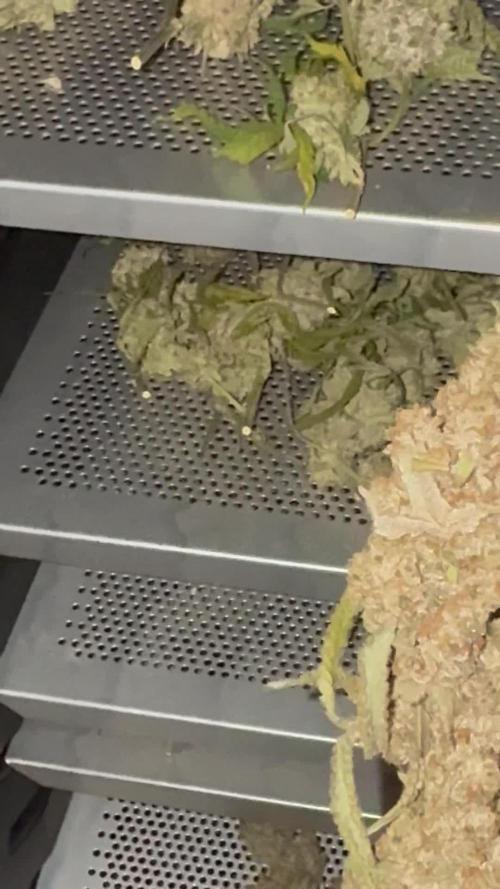
Still going strong.
Staying healthy and attracting ladybugs.
Feeding her molasses. No other change in feeding amount except that



Processing
Likes
26
Share


@eldruida_lamota
Follow
Buenos días familia, de vuelta actualizamos con la última semana en estado vegetativo, ya se cambió el fotoperiodo a 12/12
Y es que esta skunk están increíbles, tengo mucha curiosidad por ver que sale.
Ph controlado en 6.5 , el alimento lo aceptaron muy bien.
Temperatura algo baja por la noche, pero sin problema alguno, mínimas 17.
Se comportan genial en indoor y no espigan nada de nada, bastante recomendable.
