


Likes
Comments
Share


@nonick123
Follow
Día 73 (12/08) Riego 500 ml H2O pH 6,55
Todas las plantas muestras las preflores hembras! (excepto LemonPaya)
Día 74 (13/08) Riego 250 ml H2O pH 6,55 . Están muy bien hidratadas
Pequeños ajustes de LST
Día 75 (14/08) Hoy día de lluvias torrenciales
Riego 250 ml H2O pH 6,55
Día 76 (15/08) Detecto mosca blanca en varias plantas. Aplico Spruzit a 10 ml/l ahora que aún no estamos en floración
Riego 500 ml H2O pH 6,55
Día 77 (16/08) Riego 500 ml H2O pH 6,55
La mosca blanca ha desaparecido completamente
Día 78 (17/08) No riego. Mañana a primera hora aplico Top Dress y riego profundo
Va a empezar la floración!
Día 79 (18/08) Alimentemos el suelo con Top Dress! 💥 Aplicamos 4 g/L sustrato de Tasty Flowers TD by Lurpe Solutions.
Total = 84 gramos / maceta
Riego con 1 Litro H2O pH 6,5 con 25 ml/L de Humus de Lombriz Liquido
Aplicación foliar Kelp hidrolizado de Lurpe Solutions a 0,25 ml/l
💦Nutrients by Lurpe Solutions - www.lurpenaturalsolutions.com
🌱Substrate PRO-MIX HP BACILLUS + MYCORRHIZAE - www.pthorticulture.com/en/products/pro-mix-hp-biostimulant-plus-mycorrhizae

Likes
11
Share


@jonesy_grows
Follow
I did a final round of stripping small branches and big fan leaves the other day, ending week 3 of flower.
I've started ramping up koolbloom powder and Epsom salt.
I've dialed back my fertigation events to 2 per day, I'm still getting runoff, but the plants don't seem to mind this change so far.
These plants seem fast to flip, and I'm hoping to see some bud development kick off this week. The strain seems to be about a week ahead of strains I've grown in the past.
There aren't any super terpy smells yet, but it's starting to smell like something.
I'll be posting a midweek update in 3 days.
6/26
The plants are starting to put out some unique terpenes, Ethos' description is very accurate, fruit stripe gum and gasoline.
It isn't super strong yet, but I can smell it when I manipulate some leafs.
I'm done defoliating, and will let them go until harvest.
Happy growing everyone!

Likes
26
Share


@Jsammy09
Follow
This was a fairly smooth week. Right now there is not a whole lot to do. I mainly just try to ensure that my environment stays in check and kind of just sit back and watch the growth take place. I did have one pretty major issue this week with some of my equipment. I want to share incase anyone else comes across this issue, but if you are running AC infinity setup and using their humidifier, it could mess with your AC infinity controller. I woke up this week to find my temps were high and humidity was way down. I went to check what was going on and my conrtoller 69 was going crazy. I couldn't figure it out. I called and there is a known issue somehow when the humidifier is plugged in with other ports being used it may cause the other ports to not work. After a few hours of trying to get everything working, I finally got it resolved. I had to unplug humidifier, reset the controller to default, delete and redownload the app, and somehow everything started working again thankfully. I have my humidifier on a spare controller for the time being as I cant send for a replacement right now, but that seems to be working fine. Other than that though, everything is going great. Going to continue to monitor and keep an eye on things.
As always tips and recommendations always appreciated. You guys rock and I have learned a ton from everyone, so thanks!

Likes
8
Share


@Papastroumf
Follow
Day 58 : Watered with 3L with CAL MAG only, CO2 stopped for all ladies. Burn is stable now but she doesn't have a lot of energy in her leaves to give to the buds. So i think she will flower but with small buds.
Edit (Day 62) : Again the same watering as the previous, just water with cal/mag.


Likes
7
Share


@mrpineweed
Follow
last feeding,ripping for 1 week then harvest my 1st grow yea😎 they turnedcolor durning harvest moon!!!! added veido today
Likes
Comments
Share


@Elguacho420
Follow
Buenas a tod@s... En esta tercera semana( que yo creo q sería como la primera con estas alturas y x lo q son tan pequeñas, se pasarason a tierra más de lo previsto, espeigaron y doblaron tu tamaño y se pasaron a maceta grande) justamente hoy se le agregaron nutrientes, algunos nuevos y otros q ya había usado antes... Eh mantenido al margen las medidas NPK recomendables y eh agregado algo x ahí q seguro va bien 😉 la humedad es estable generalmente, la temperatura tanbm... De momento no hay ningún problema, están fuertes y van creciendo bien, no le podemos pedir mucho a estas alturas, eso para luego... La semana q viene mejor... Buenos huemos para tod@s... ⚕️😎
🇦🇷🤝🏻🇪🇦

Likes
2
Share


@HighWay36
Follow
some of the frostiest buds i ever seen, for an experiment, well done. all friends said that its looking amazing, on the nose some erthy terps followed by massiv sweet,acidic and tropical notes.the smoke is light and plessant
Likes
Comments
Share


@deadhead1996
Follow
To think I thought she was stunted! Doing really well this week, temps are skyrocketing where I’m at and will remain high this week. We had a lot of rain earlier this week, which seems to have helped her, but also brought some fungus gnats around. I’ve been using yellow traps + am going to let this heat finish drying out the top layer of soil.


Likes
Comments
Share

@Gardens_of_Of
Follow
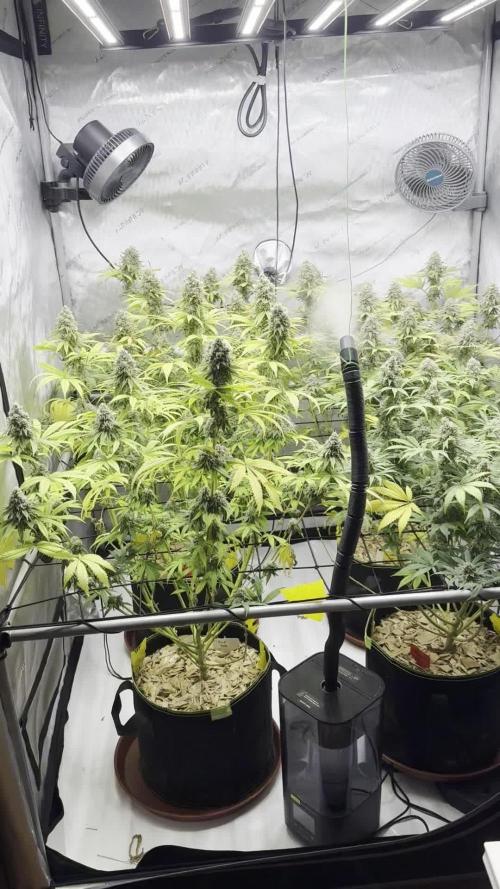
The eighth week of flowering has come to an end, and the finish line is finally within sight. This week, I reduced the light intensity to level 7 to simulate the shorter, less intense days of autumn as the plants enter the final stage of their life cycle. Although the breeders estimate a flowering period of nine weeks, all four cultivars appear to be developing slightly behind schedule. Judging by the current trichome development, it's difficult to imagine they will reach the desired 10–20% amber trichomes by the end of next week.
Fortunately, all of the plants are progressing at roughly the same pace. While they may be taking a little longer than expected, their synchronized development fits perfectly with my plan to harvest the entire tent at once rather than in stages.
Aside from that, the week has been pleasantly uneventful. Environmental conditions remained stable throughout, a welcome change after last week's humidity challenges. Keeping the relative humidity below 60% was no longer a struggle, and on several occasions I was even able to maintain it around 55%, which is about the best my home setup can achieve during the summer months.
Visually, the garden is now embracing its autumn colors. The leaves continue to fade from green to yellow as the plants redirect their remaining nutrients toward the flowers. Each day, I remove two or three yellowing leaves from every plant, gradually cleaning up the canopy while allowing as much light and airflow as possible to reach the ripening buds.
Water consumption has also begun to decline, another clear indication that the plants are nearing the end of their life cycle. They now require less frequent watering, and I have transitioned to reverse osmosis water mixed with approximately 30% tap water. This gentle flushing period will help the plants use up the remaining nutrients as they make their final push toward maturity.

Likes
12
Share


@Growfun
Follow
Everything seems to be going great. The Maverick had some leaf deformations but they went away. After 4 years of growing, this Maverick seems like it beast with all that foliage underneath I've never seen anything like that. I will be topping Maverick today. The blue dream looks awesome it's a slow grower and the leaves are very thin and fragile. Other than that it looks beautiful very nice and even growth. One more thing I wanted to mention is that I have a light with options for blue spectrum, red spectrum and/or both. I see everyone online say to use both blue/red from seed to harvest. Well I'm here to tell you that the blue light for veg works great plus it saves about 25 bucks a month in electric. So if you want to save money just use the blue light for veg I doubt it will make much of a difference putting on both. Plus that's what most manufacturers recommend. Peace!!!


Likes
10
Share

@Mr_Brightside
Follow
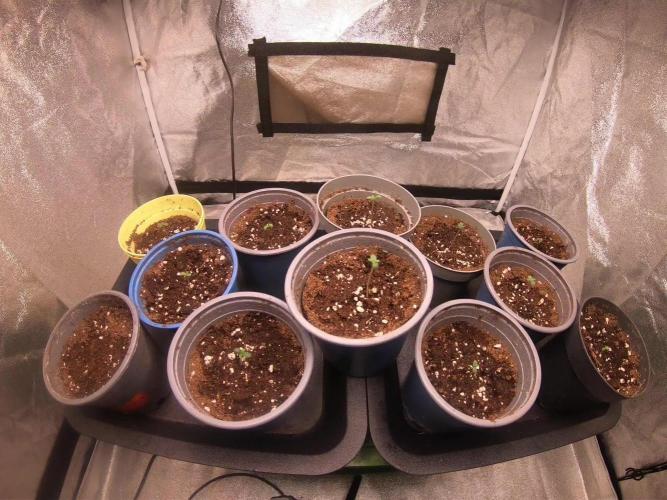
🌱 Day 8 – Reaching Higher
The seedlings stretched a bit today, so I lowered the SF2000 Pro to keep them compact. They’re vigorous and full of energy, even if a little taller than I’d like.
From his sunbathing spot, Mr_Barkside smirked at me (yes, dogs can smirk): “Told you they’d stretch. Should’ve listened to me.”
He’s enjoying this way too much.
🌱 Day 9 – Little Personalities
By now, each plant is clearly doing its own thing. Some race upward, others stay bushy. All healthy, all green.
Mr_Barkside stuck close today, though his “contribution” was questionable. Let’s just say the tent got an unexpected wave of dog farts. His excuse (in my head): “Organic CO₂ boost. You should thank me.”
Not exactly the kind of supplement I had in mind.
🌱 Day 10 – Strong Foundations
Ten days in, the seedlings are rooted and confident. Leaves are broad, stems are strong, and the foundation for the grow feels set. The Purple Haze ladies are definitely on their way.
Mr_Barkside sat beside me, unusually calm, watching the plants like a philosopher in deep thought. Then he gave me this look that clearly said: “Growing strong… but imagine how much stronger they’d be if I had some cool merch to wear while supervising.”
He’s not wrong – everything feels better with style. For now, his imaginary Zamnesia hoodie remains a dream, but it doesn’t stop him from being the most loyal (and best-dressed in his mind) grow partner around.
🌱 Day 11 – Roots on the Move
The first roots started peeking out from the bottom of the pots. That’s always a good sign – proof the plants are spreading their foundation below the surface. For now, they’ll stay in their pots a little longer until everything is nicely colonized.
Mr_Barkside tilted his head while I checked the roots, as if to say: “They’re growing paws, just like me. Give them a few more days.”
🌱 Day 12 – Building Momentum
Each plant showed progress – leaves spreading wider, stems getting firmer. The color deepened into a rich green, a clear sign they’re comfortable.
Mr_Barkside sat in front of the tent like a wise coach, calm and observant: “Patience, human. They’re doing fine.”
🌱 Day 13 – Filling Out
The difference from a few days ago was noticeable. Some plants stretched a little taller, others stayed compact, but the overall group looked strong. The tent feels fuller, more alive.
Mr_Barkside took his “inspection round” very seriously today, sniffing every corner of the tent before giving me the approving nod.
🌱 Day 14 – Young Plants, Not Seedlings
By now, they no longer look like fragile seedlings. Broader fan leaves, thicker stems, and the first signs of branching make them look like proper young Purple Haze plants. The GoPro timelapse is capturing every little movement.
Mr_Barkside sat like a foreman in front of the tent, giving me the vibe: “Symmetry’s good. Keep it up.”


Likes
16
Share


@Tezza2
Follow
This week i split the stem on my purple lemonade auto to see if it gets bigger yield and bigger buds i will soon see the purple only has about three weeks to go the gorilla glue auto has along way to go but its flowering hard and fast

Likes
7
Share


@Chubbs
Follow
Weekly update for these girls. They got a defoliated and lollipopped this week. Also went full on into preflower showing pistols and flower sites everywhere. Over all they're growing like champs. Happy Growing.
Likes
9
Share


@420Guru
Follow
I was lazy with changing water for the first two weeks but I change water weekly and it looks like she’s enjoying what I’m feeding her. Although one plant is growing after than the other.

Processing
Likes
33
Share


@Weird_Jimmy
Follow
✋Wk10: Playing the guessing game and learning is doing.
👉I started the week knowing I needed to do more of a full low EC rinse. I have been noticing purple stems around both plants spreading. As the week started the stems also started spreading on to some of the veins. The upper leaves started looking lighter green colored and by mid-week some yellowing spots and some very small brown spots on some of the upper leaves of the 3 gallon. The one gallon was getting more burned leaf tips. Until the yellowing splotches and small brown specks I was suspecting low Magnesium. I was compensating by adding a little extra cali-magic to the low ec solution I use to adjust the ec of the solution I fertigate with. But as the yellowing spread I knew I was wrong about something, so a little more searching and I may have nitrogen toxicity AND Phosphorus deficiency. The upper leaves on the 3 gallon plant were also showing a bit of ‘clawing’ which was pointing at the Phosphorus shortfall. So I may be wrong, but Ill only know by doing. So I did a large low EC rinse that was pH’d with the regular dosage of liquid Koolbloom, on both plants at the end of the week. I’ll continue to fertigate with a lower EC solution that will have the Koolbloom mixed at full strength. I may discard the current solution batches and remix fresh with less of the Flora Micro, more of the Flora Bloom and Liquid Koolbloom. It may all stem from not doing low EC fertigations as a matter of routine. Perhaps the Nitrogen was building up because there wasn’t a regular higher volume rinse. The Low EC rinse dropped the EC of the run-off right away. I know the common practice is to have routine low EC rinses, but I wasn’t having high EC run-off and it was stable, so I was trying to keep the nutrient level in the media at optimum levels. Doing one plant at a time is a very slow way to learn. I do read lots of science related gardening articles as well as scientifically inclined cannabis articles. I don’t look at too many forums because most of these people must be high ;)
👉I finally got around to clearing out some of the lower leaves from the 3 gallon plant and removing some of the leaves and shaded buds sites under the dome. Its still a thick tangled jungle. But more manageable. Doing tucking to give cola sights light. The buds are bulking up. The first signs of frost have appeared as well. Hopefully I can level out the nutritional needs and the buds will be fine. The trunk of the 3 gallon has gotten very thick. Its a work of natural engineering to support the plant. The branches are also very stout and strong.
👉The 1 gallon is making some potentially nice colas. Each branch is a long cola covered with buds. Ive added a little support to some of the branches, even though the branches dont need the support yet. The aroma is creamy caramel. Its almost bizarre to me. The plant has the light skunkyness that is typical of cannabis in flower, but that aroma is the undertone of the dominant smell, which is creamy caramel. Such a strange and wonderful combination of smells is almost as intoxication as the gorilla glue I grew last spring. The trichomes are mostly clear with cloudy ones making a showing.

Likes
148
Share


@BioBuds
Follow
Gorilla, gorilla, my problem child. The only one popping out of 5 but she is weaker than her roommates. She stays behind compared to them. But what can I do other than TLC, she has the best conditions, which are optimal in this grow room, also judging by the other two plants. Until I have a bigger operation, which in the current political climate, is not soon, where I can make mothers and clone them, breed my own strains, and root out runts like this, we do it like life. We play the hand as it is dealt to us and we love all our children the same... although this one is special.
So not a genderfluid Silverback yet, but it ain't over till the voluptuous lady sings. We shall nurse this little runt until adulthood, who knows she might surprise us, she should have the mighty Gorilla Glue Number Fouh genes in there somewhere. Now come on out here and show daddy what you're made of...
This week we spread out the leaves and branches, some leaf tucking and gentle LST, to prepare for some higher stress and super cropping today. Two days back we made the switch and set the lights to 12/12. Now the flowering stretch will begin, thus we bend the branches further outward in preparation for the canopy. When I do this I notice the branches are thick and sturdy, with no breakage at all unlike my previous grow, the gelato 33. I snapped some branches applying the super cropping and just normal bending with those. It seems like the fan (I didn't have a good option previous grow, hence the flimsier branches there) but also this lighting and soil regime are topnotch, asides from outdoor I haven't seen such lush bushiness yet, even on a more runt-like plant.
This MarsHydro SP3000 is still performing great, such controlled temperatures, such an ocean of light. I only wish I started growing with this earlier. Thanks again @MarsHydroLED for trusting us to test your mighty flagship light. It is so well made, it oozes quality, I just want to touch it every time (also to check if it stays cool) and it is just sexy, slender, and compared to my other 300 watt light, a completely different spectrum and clarity. If you are looking for new lights, look no further. At www.mars-hydro.com they have excellent and unbeatable deals on tent and light combinations where you practically get a tent for free, it is ridiculous.
I was afraid the light wouldn't cover the sides of my tent with my 4.5-foot space. Penny at MarsHydro had to laugh at this a bit, said not to worry. What an understatement. This light could signal to other galaxies. I sincerely recommend good sunglasses with this light.
Only thing I'm adding is an infrared light Sunshine found. With this I'm going to simulate sunrise and sunset and try to prevent stress by easing the light in and out, like in nature.
We are in flowering now, very excited to see what she will do here. What can she perform? Will she cover the net? Will she deliver gorgeous buds, like she is known to do? On these cliffhangers I hope you will tune in next week for more gorilla-related plantporn... go on... you know you want it.
Hug Bud!!


