


@Smokyhorizon
Follow
Unfortunately 2 Caligen ladies died.
The weather is pretty good.
Watering once 2-3 days.

shorts_status_processing


@DudeGrowsWeed
Follow
Seedsman White Widow is starting to get huge! I overdosed her with Recharge this week, (1 tbs instead of .5 tsp). She liked it! I'll be OD'ing the Recharge more in the future. 👍




@psychonaut420
Follow
Plant has been recovering from HST and LST still haven’t seen signs of flower apart from the stretching of branches and side branches hopefully as the week goes on I’ll start to see pistols start to form and a switch in development will keep the diary updated more secondary side branches stretching off the first set of side branches hopefully next week I’ll start to see flowering signs


@CanadianFillmore
Follow
Start of week 8 of flowering, day 78 for the plant. She's healthy but the buds are slow to fill out in size, this could be the result of the heat stress she suffered. Other than that, I'm still happy with this plant.


@PapaBlob
Follow
29/12 encore 4 à 5 jour.🤤
01/01 Elle évolue trop bien pour que je la sorte maintenant.🤩 Donc les filles vont ce serrer pour quelques jours. 😀
04/01 Dernier jour. Et mon microscope est en rade..😂 Tout est normal quoi..😋



@Crwfz1
Follow
I love this strain i got it from them a long while back and some reason. It made seeds every time but gives me a female every time also so cant complain and i love the smoke really great taste grows easy all around good buds!




@TruTraTri
Follow
By coincidence the video is perfectly timed. I didn’t plan for that, but I’m proud of the timing now😂
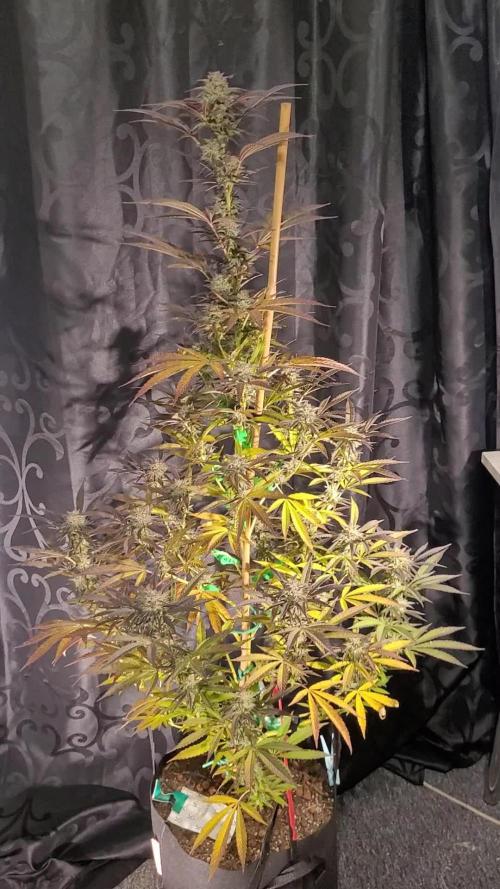
For my climate density and size were fine. Planted her a bit late. Withstood all weather conditions without shelter or special care, some mild pest infections. As it was a cutting I can't tell about original structure, but even the cutting looked like "from seed" with a nice christmas tree optic (with a little lst).
Big buds stay as they are, smaller are going to be pressed or bubbled.
~7-10d drying
~1 month curing
- update.
Update for end of contest, some dry picture + 7 of x days curing.
Already very sweet and fruity. (Nicer) Smellier than my other outdoors.
30g very fine buds and don't know how much trim + popcorn. Anyway .. harsh conditions + survivor + no mold. Most important properties for my outdoor location. 👌💪
Let it grow!😁





@CuriosityWebster
Follow
Man it’s so hot these girls are drinking up so much water!!! Watering everyday. Might be Sweet skunks last nutrient dose, gonna start flush for harvest after today.
Plants are starting to fatten up nicely, hopefully we keep this same progress!


@dekss
Follow
*LOS FERTILIZANTES SON HACIA LAS OTRAS PLANTAS NO TERMINADAS NO LA QUE SE CORTO ESA SOLO AGUA*
*reemplazo bio bloom por monster bloom como los dos son PK la planta se sobrefertiliza*
semana 10 y se va de corte la primera
contento de terminar mi primer diario entero en esta plataforma
cogollos llenos de resina muy contento con la producción en 68 días desde germinación
*la planta en total creo un poco menos que el doble de lo que se corto pero fui sacándoselo de a poco antes*
ahora solo queda esperar secar
y las otras que vienen en camino
70.85 gramos en humedo contando tallos y una hoja de viento por rama
espero marcar unos 15 en solo cogollos y ya secos
LST en las dos ramas principales de una de las que viene siguiente muy compacta
en lo personal me gustan los cogollos con casi nada de hoja (de esto dependerá cuanto raspe en la garganta)
por lo que el humo entra sin dejar ninguna molestia muy suave y sativo



@Ultraviolet
Follow
What's in the soil? What's not in the soil would be an easier question to answer. 16-18 DLI @ the minute. +++ as she grows.
Probably not recommended, but to get to where it needs to be, I need to start now.
Vegetative @1400ppm 0.8–1.2 kPa 80–86°F (26.7–30°C) 65–75%, LST Day 10, Fim'd Day 11
CEC (Cation Exchange Capacity):
This is a measure of a soil's ability to hold and exchange positively charged nutrients, like calcium, magnesium, and potassium. Soils with high CEC (more clay and organic matter) have more negative charges that attract and hold these essential nutrients, preventing them from leaching away.
Biochar is highly efficient at increasing cation exchange capacity (CEC) compared to many other amendments. Biochar's high CEC potential stems from its negatively charged functional groups, and studies show it can increase CEC by over 90%. Amendments like compost also increase CEC but are often more prone to rapid biodegradation, which can make biochar's effect more long-lasting. biochar acts as a long-lasting Cation Exchange Capacity (CEC) enhancer because its porous, carbon-rich structure provides sites for nutrients to bind to, effectively improving nutrient retention in soil without relying on the short-term benefits of fresh organic matter like compost or manure. Biochar's stability means these benefits last much longer than those from traditional organic amendments, making it a sustainable way to improve soil fertility, water retention, and structure over time. Needs to be charged first, similar to Coco, or it will immobilize cations, but at a much higher ratio.
a high cation exchange capacity (CEC) results in a high buffer protection, meaning the soil can better resist changes in pH and nutrient availability. This is because a high CEC soil has more negatively charged sites to hold onto essential positively charged nutrients, like calcium and magnesium, and to buffer against acid ions, such as hydrogen.
EC (Electrical Conductivity):
This measures the amount of soluble salts in the soil. High EC levels indicate a high concentration of dissolved salts and can be a sign of potential salinity issues that can harm plants.
The stored cations associated with a medium's cation exchange capacity (CEC) do not directly contribute to a real-time electrical conductivity (EC) reading. A real-time EC measurement reflects only the concentration of free, dissolved salt ions in the water solution within the medium.
98% of a plants nutrients comes directly from the water solution.
2% come directly from soil particles.
CEC is a mediums storage capacity for cations. These stored cations do not contribute to a mediums EC directly.
Electrical Conductivity (EC) does not measure salt ions adsorbed (stored) onto a Cation Exchange Capacity (CEC) site, as EC measures the conductivity of ions in solution within a soil or water sample, not those held on soil particles.
A medium releases stored cations to water by ion exchange, where a new, more desirable ion from the water solution temporarily displaces the stored cation from the medium's surface, a process also seen in plants absorbing nutrients via mass flow. For example, in water softeners, sodium ions are released from resin beads to bond with the medium's surface, displacing calcium and magnesium ions which then enter the water. This same principle applies when plants take up nutrients from the soil solution: the cations are released from the soil particles into the water in response to a concentration equilibrium, and then moved to the root surface via mass flow.
An example of ion exchange within the context of Cation Exchange Capacity (CEC) is a soil particle with a negative charge attracting and holding positively charged nutrient ions, like potassium (K+) or calcium (Ca2+), and then exchanging them for other positive ions present in the soil solution. For instance, a negatively charged clay particle in soil can hold a K+ ion and later release it to a plant's roots when a different cation, such as calcium (Ca2+), is abundant and replaces the potassium. This process of holding and swapping positively charged ions is fundamental to soil fertility, as it provides plants with essential nutrients.
Negative charges on soil particles: Soil particles, particularly clay and organic matter, have negatively charged surfaces due to their chemical structure.
Attraction of cations: These negative charges attract and hold positively charged ions, or cations, such as:
Potassium (K+)
Calcium (Ca2+)
Magnesium (Mg2+)
Sodium (Na+)
Ammonium (NH4+)
Plant roots excrete hydrogen ions (H+) through the action of proton pumps embedded in the root cell membranes, which use ATP (energy) to actively transport H+ ions from inside the root cell into the surrounding soil. This process lowers the pH of the soil, which helps to make certain mineral nutrients, such as iron, more available for uptake by the plant.
Mechanism of H+ Excretion
Proton Pumps: Root cells contain specialized proteins called proton pumps (H+-ATPases) in their cell membranes.
Active Transport: These proton pumps use energy from ATP to actively move H+ ions from the cytoplasm of the root cell into the soil, against their concentration gradient.
Role in pH Regulation: This active excretion of H+ is a major way plants regulate their internal cytoplasmic pH.
Nutrient Availability: The resulting decrease in soil pH makes certain essential mineral nutrients, like iron, more soluble and available for the root cells to absorb.
Ion Exchange: The H+ ions also displace positively charged mineral cations from the soil particles, making them available for uptake.
Iron Uptake: In response to iron deficiency stress, plants enhance H+ excretion and reductant release to lower the pH and convert Fe3+ to the more available form Fe2+. The altered pH can influence the activity and composition of beneficial microbes in the soil. The H+ gradient created by the proton pumps can also be used for other vital cell functions, such as ATP synthesis and the transport of other solutes. The hydrogen ions (H+) excreted during photosynthesis come from the splitting of water molecules. This splitting, called photolysis, occurs in Photosystem II to replace the electrons used in the light-dependent reactions. The released hydrogen ions are then pumped into the thylakoid lumen, creating a proton gradient that drives ATP synthesis.
Plants release hydrogen ions (H+) from their roots into the soil, a process that occurs in conjunction with nutrient uptake and photosynthesis. These H+ ions compete with mineral cations for the negatively charged sites on soil particles, a phenomenon known as cation exchange. By displacing beneficial mineral cations, the excreted H+ ions make these nutrients available for the plant to absorb, which can also lower the soil pH and indirectly affect its Cation Exchange Capacity (CEC) by altering the pool of exchangeable cations in the soil solution.
Plants use proton (H+) exudation, driven by the H+-ATPase enzyme, to release H+ ions into the soil, creating a more acidic rhizosphere, which enhances nutrient availability and influences nutrient cycling processes. This acidification mobilizes insoluble nutrients like iron (Fe) by breaking them down, while also facilitating the activity of beneficial microbes involved in the nutrient cycle. Therefore, H+ exudation is a critical plant strategy for nutrient acquisition and management, allowing plants to improve their access to essential elements from the soil.
A lack of water splitting during photosynthesis can affect iron uptake because the resulting energy imbalance disrupts the plant's ability to produce ATP and NADPH, which are crucial for overall photosynthetic energy conversion and can trigger a deficiency in iron homeostasis pathways. While photosynthesis uses hydrogen ions produced from water splitting for the Calvin cycle, not to create a hydrogen gas deficiency, the overall process is sensitive to nutrient availability, and iron is essential for chloroplast function.
In photosynthesis, water is split to provide electrons to replace those lost in Photosystem II, which is triggered by light absorption. These electrons then travel along a transport chain to generate ATP (energy currency) and NADPH (reducing power). Carbon Fixation: The generated ATP and NADPH are then used to convert carbon dioxide into carbohydrates in the Calvin cycle. Impaired water splitting (via water in or out) breaks the chain reaction of photosynthesis. This leads to an imbalance in ATP and NADPH levels, which disrupts the Calvin cycle and overall energy production in the plant. Plants require a sufficient supply of essential mineral elements like iron for photosynthesis. Iron is vital for chlorophyll formation and plays a crucial role in electron transport within the chloroplasts. The complex relationship between nutrient status and photosynthesis is evident when iron deficiency can be reverted by depleting other micronutrients like manganese. This highlights how nutrient homeostasis influences photosynthetic function. A lack of adequate energy and reducing power from photosynthesis, which is directly linked to water splitting, can trigger complex adaptive responses in the plant's iron uptake and distribution systems.
Plants possess receptors called transceptors that can directly detect specific nutrient concentrations in the soil or within the plant's tissues. These receptors trigger signaling pathways, sometimes involving calcium influx or changes in protein complex activity, that then influence nutrient uptake by the roots. Plants use this information to make long-term adjustments, such as Increasing root biomass to explore more soil for nutrients. Modifying metabolic pathways to make better use of available resources. Adjusting the rate of nutrient transport into the roots. That's why I keep a high EC. Abundance resonates Abundance.


@morganfreeman420
Follow
Creo que tengo el filtro caducado o roto dado que el aire que expulsa tiene el mismo olor que hay dentro de la tienda





@Kushycat
Follow
So now we’re in the first week of flowering, and I’m really happy with how things are going. The plants are constantly putting on more leaf mass, so I have to prune them every few days to remove the light-stealers and the small shoots that keep popping up. They take it all in stride and reward me by stretching nicely. 😄
The lights are now running at 60% power. My goal is to reach 80–90% during flowering weeks 5–6, and then gradually dial them back again for a nice fade.
A very kind person sent me a few very special treats, so I already have some of the ingredients for the next run ready to go. But more on that once this one starts winding down. 😉


@Herbman420
Follow
This week was ok nice short internode space and quite a little bushy plant .it's a shame about the little holes by the bugs I'm gonna try covering the soil with tin foil to stop them from coming out this is why I normally growing coco. I'm just feeding it some silica and root expander at the moment because the PPM in the soil is quite high but instead of flushing it which could over water the plants immediately I'm just going to let the plant eat it. it has showed no sign of burning or toxicity I've been mixing up soil for free years mainly for the outdoor flowers I thought I would give it a try in the soil but the PPM is hi not massively amount it's just about a thousand ppm but other than that all things are well . Thank you for looking at my diary and will be updating every week


@TheCannaProphet
Follow
~ FastBuds PAPAYA SHERBET Photoperiod~
Well here we go on another journey together through 'Canna-land' and this one's kinda special... forget that, it's VERY special because this is FastBuds newest surprise for the community, a FEMINIZED PHOTOPERIOD STRAIN!🤯
I was fortunate enough to score these seeds, of which only 1000 were available and can't wait to see what this strain can do! This Papaya Sherbet, according to FastBuds, is a hybrid with a 9-10 weeks flowering period. For a more detailed and accurate description of this strain the following from FastBuds says it best:
"Combining the massive stature of Papaya (Oni Selection) with the strength and resilience of one of our best keeper cuts (Sunset Sherbet), this strain develops into a big, expansive bush adorned with numerous bud sites that later transform into a generous harvest of medium-sized buds. Papaya Sherbet flowers deliver a signature flavor of premium cannabis with subtle citrus undertones that emerge upon inhaling. During growth, her aroma makes for a sweet yet pleasantly bitter fragrance, giving you an idea of what the smoke will taste like. Notably stress-resistant, Papaya Sherbet is a great choice for growers working in challenging environments. She is very forgiving and rebounds quickly from any adversity, allowing growers the freedom to experiment with confidence that she will take everything like a champion she is. This strain embodies resilience, flavor, and abundant yields in every grow cycle."
Sounds like an epic strain and I personally cannot wait for this lady to strut her stuff!😍
________________________________________________________________________________________________________________________________________________________________________________________________________________________________________________________________________________________________________________________
The Setup:
This is going to be an outdoor grow, but I have started the Papaya Sherbet photoperiod indoors as our weather is still a bit too chilly to put a newly sprouted seedling outside (nighttime temp's dipping regularly into the 40's℉).
The plan is simple... let her grow inside under a 19/5 light schedule until the nighttime temperatures are in the mid 50's℉, which shouldn't be long. After which, she'll be moved outside and transplanted into the soil which I have already setup and inoculated with beneficial microbes from BioTabs and slow release dry amendments from Gaia Green. Once she's established herself outside she'll be given periodic top dressings of Gaia Green 4-4-4 and 2-8-4 along with worm castings and Compost Tea's. Her grow area is approx. 5'x5' and I have posts and a trellis net set up already for when she gets bigger to aid in training her. Let the fun begin!🤪💚
________________________________________________________________________________________________________________________________________________________________________________________________________________________________________________________________________________________________________________________
Weekly Updates:
5/23- Week three from seed and the second week of veg for the FastBuds Papaya Sherbet photoperiod and she's doing surprisingly well considering the crappy weather, and being eaten like a salad by slugs and a rabbit!
5/25- The diatomaceous earth that I spread around her seems to have lessened the attacks on her leaves. I've also been spraying her down every other day with Neem Oil, and every three days with an organic insecticidal soap that I'm sure has helped as well.
I watered the Papaya Sherbet today via garden hose and began to train her branches a bit as well.
5/27- The FastBuds Papaya Sherbet continues to do exceptionally well with great color and vigor, putting out new growth it seems daily.
5/29- There's three weeks on the books for this little lady and I'm looking forward to see what she'll look like in the coming weeks! I will have to top dress her soon, probably in the next few days. I haven't added any dry amendments to her since I initially amended her soil and she's a hungry girl... Hope to see you next week, stay Blessed!
Thank you for checking out my diary, your positive comments and support make it all worthwhile! 💚Growers Love!💚😎🙏


@HazeLiebhaber
Follow
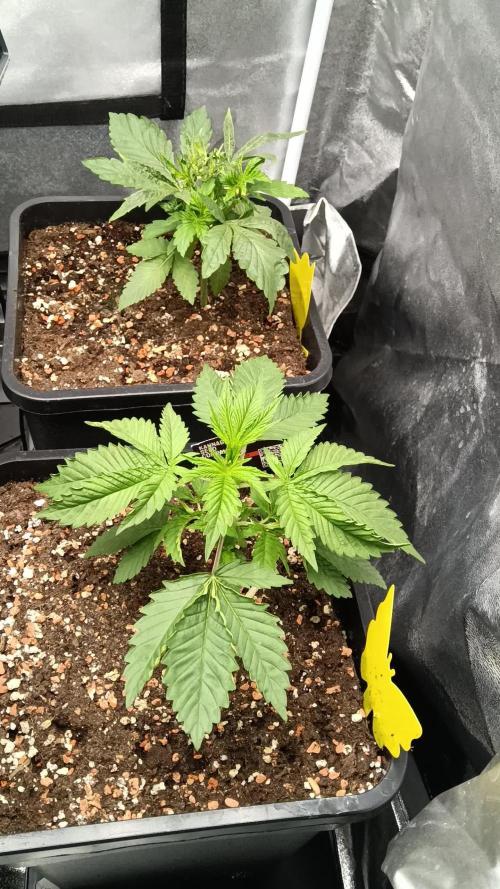
Licht habe ich gestern auf 70% hochgedimmt.
Habe begonnen alle, außer der Amnesia, mit Hesi TNT zu füttern. Taste mich dabei langsam am die an die optimale Menge ran. Aktuell bekommt Lemon Orange die halbe empfohlene Dosis. KISS und Grapefuel Gelato bekommen etwas 20%. Bei der KISS werde ich die Dosis beim nächsten Mal noch mal erhöhen.
Lemon Orange wird außerdem heute ihr erstes LST bekommen.
Bei der Grapefuel Gelato gehe ich aktuell von einem Schaden durch die Hitze aus. Diese werde ich heute Abend wahrscheinlich Toppen. Die Hauptnodie wächst langsamer als manche Internodien. Die neuesten Blätter an der Hauptnodie sehen auch verkrüppelt aus und auch die der obersten Internodien. Die Blätter der unteren Internodien sehen soweit gesund aus, deshalb hoffe ich das Topping die Probleme löst.




@Tower84
Follow
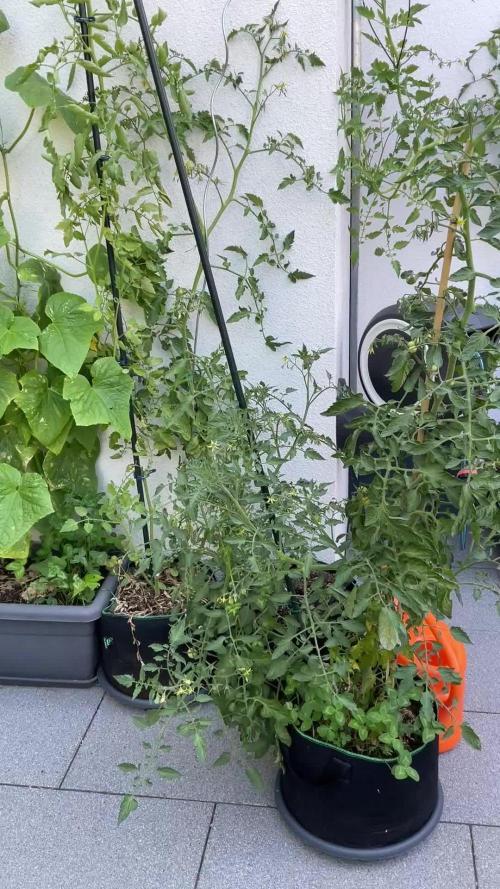
I’ve been harvesting the small, bright red (primabella) and yellow (sunviva) fruits here and there as they ripen. They have an excellent flavor—sweet, aromatic, and perfectly balanced. Although the harvest isn’t huge, the quality of the tomatoes has been outstanding, making every single one worth the wait. 🍅



@Eauderay
Follow
Little NILLA is finishing her maturation slowly but surely, I am sure the bad bending and absorbing of the cord did slow her down, I cannot afford to do this mistake again, no more noob mistakes shall we? Hehehe
Still she is very pretty and I can see tonnes of potential, chunky sticky buds with a strong narcotic smell and good appearance, I took some cuttings and I will take good care of her next time and get to know her better without torturing her!

shorts_status_processing


@themartian911
Follow
hi guys I take the photos with a new camera i take it in 4k mod 😀👍 but idk if it's 4k on the website because he resizing the picture. 😒
some news we can see the roots go through the pot. She can take more oxygen 😂
I do sometimes some small defoliation.
I reduced hours on week 6 to switch to flowering period, the way than i take :
day1 18/6
day2 17/7
day3 16/8
day4 15/9
day5 14/10
day6 13/11
day7 12/12
