


Likes
Comments
Share


@Northern_Ent
Follow
Aug 31: Overdose is doing fine and is now five weeks into flowering (or a week behind my two big photoperiods). I broke one of the main stems about a week after topping so it has a weird shape but there are lots of good bud sites so she’ll be fine.
Shorter veg time than my two big photoperiod plants and only topped once because I was expecting an auto not a photoperiod plant. If it’s Overdose Fast I’m cool with that as I’ve decided that I prefer fast photos to autos which are more sensitive to setbacks and generally trickier to deal with at large scale.
Sep 2: strong plant with lots of buds.
Sep 4: adding some potassium silicate every couple days lately while watering.

Likes
4
Share


@MasterKush714
Follow
06/18/2024 WEEK 4 FROM CLONES!!! LETS GET IN ITT!!!!
Added a Humidifier for the tent, 2 gallon version, workin great so far,
only using very minimal nutrients and runclean will keep updating as
the weeks go on thanks!

Likes
27
Share


@CampaCavallo
Follow
Seconda settimana della piccola 👍🏻
Sta crescendo molto velocemente come previsto! Direi che è ora di trapiantarla nel vaso da 6.5 litri per farla esplodere di gioia💚💪🏻
30.10.23 trapianto => 6,5 litri ✅
... Sul fondo del vaso, questa volta, ho provato a mettere lapillo vulcanico al posto della classica argilla espansa👍🏻
2.11.23 Fertilizzanti ⚗️

Likes
6
Share

@NoProbation4Weed
Follow
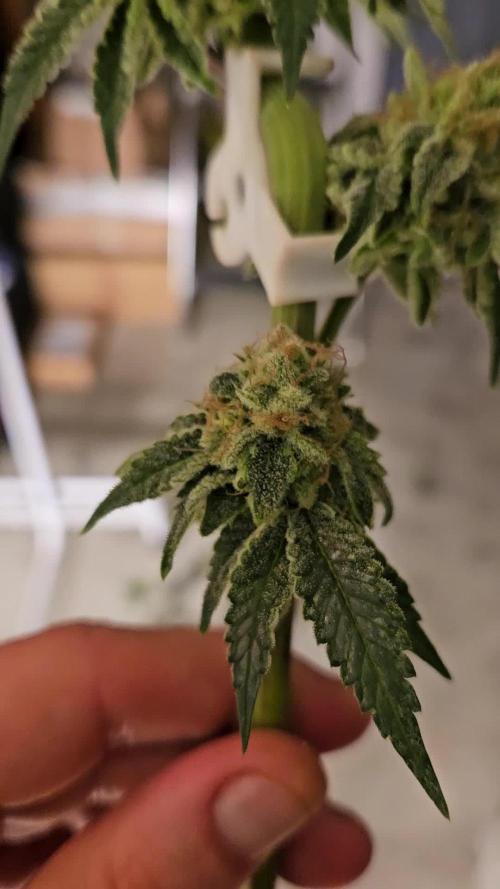
In the final week of flowering, I reduced the light cycle to 11 hours and dimmed the lamp to 80% to keep temperatures lower. The light hits the plant with approximately 900 PPFD.
The plants are being dried on the stem at around 21°C (70°F) and 60% relative humidity.
Likes
20
Share


@Boomdrawfyah
Follow
Dia 76 desde la germinación y 48 dias después del trasplante se empieza a notar la robustez de las plantas ya miden bastante alto casi 2 M , y estan bastante ensanchadas, lo único que se puede notar la 1051 , sus ramas crecen muy rectas hacia arriba ,la white noise crece con las hojas un poco onduladas aunque no afecta a la planta. Pronto las amarraremos y ataremos con una estructura para que esten más cogidas y distribuidas las ramas y mas seguras contra viento y lluvias que empiezarán en septiembre

Likes
2
Share


@koci263
Follow
not so pretty buds, but through their fragrance they are unforgettable flowers for me. It smells beautiful of grapefruit


Likes
2
Share


@Bluemels
Follow
Tag 34: Schon wieder kriegen meine Pflanzen helle Blätter! Ich halte mich an das Düngeshema von Biobizz und stelle den ph Wert ein.

Likes
27
Share


@Reaper
Follow
week 7 flowering (Day 49)
some leaves are just falling of on the critical because of the calmag issue still the buds get fatter, also the coockies start getting brown pistils but are far from ready
the only thing i give is the plagron PK booster (green sensation) with tap water

Likes
67
Share


@GanjaReaper
Follow
Day 21:
From day 10 to 21 I couldn't take care of the plants because of private reasons,
I asked my friend to take care of the plants and he didn't do a good job!
He should had asked me or alerted me when he saw mayor problems, not just saying a little bit of light green or yellow.
As you can see, we have alot of yellowing beneeth the plants, different sizes and even got some burnt leafs indicate that he didn't water on time.
Did some run-off checks and saw many various values😓
Ph between 6.8-7.5 and EC between 1 to 2.
The PH should had been 5.8-6 and EC at this stage 1.8+ since they need alot of nutrients because cocos soil doesn't have any.
Because of this shit, they have been underfed, burnt, stress and more. Not ideal for autoflowers.
Even the reservoir from humidifier was empty, indicating that it hasn't been filled for days!!
Also it didn't got sorted out, there are always spots that get dryer faster or stay more wet. Get more light or less.
Therefore it is wise to change spots of your plants all the time, I call it dancing.
Your plants will grow more equally.
If you look at the bigger plants, this should had been the size of all the plants sadly.
They now look like they are in end of week 2 instead of week 3 and the bad plants end of week 1 😕
I did some defolation on some plants on the lower area.
Roots start to show underneeth the pots, which is really good.
I putted the bad plants in left under corner, Lets hope I can still nurse them.
I still have 1-2 weeks to fix this before it goes into flowering, lets hope they will still grow double in size, otherwise this will be a lower rewarding grow.


Likes
49
Share


@Roberts
Follow
RSV11 grew really well. She has some big musky smelling colas on her. Lots of sagging in the branches from the weight. She has a musky earthy smell. Nice layer of frost as well. I will try to get more information on her by the final weight video. Thank you Spider Farmer, and Terpyz mutant Genetics. 🤜🏻🤛🏻🌱❄️
Thank you grow diaries community for the 👇likes👇, follows, comments, and subscriptions on my YouTube channel👇.
Thank you Happy Growing 🌱🌱🌱
https://youtube.com/channel/UCAhN7yRzWLpcaRHhMIQ7X4g

Likes
1
Share

@JaJunk
Follow
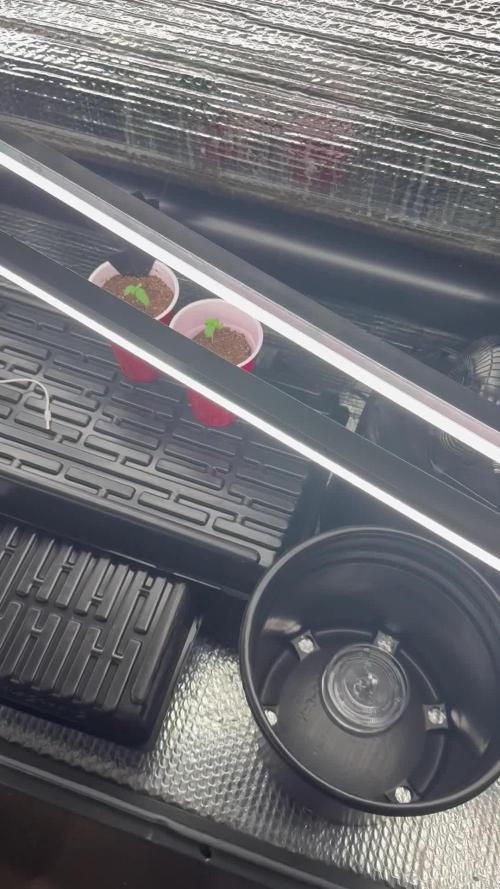
Seems very slow growth, I blame totally on the heat wave and lack of temperature control. hopefully just building roots and not much energy up top, notice a little something on one leaftip.


Likes
5
Share


@CityFarmer
Follow
Hello everyone,
Even tho I've been busy around the house this week, I took a few minutes and transplanted these into 5 gallon fabric pots, get them going early in some super soil. Lets see how they turn out. Ill have better picture's for you guys next week...
See you guys next week...

Likes
57
Share


@Ultraviolet
Follow
Views expressed are my own. All opinions are my own. The opinions expressed here belong solely to me and do not reflect the views of Growdiaries or Grandcru Genetics.
The cannabis strain Grape Guava can be a purple strain, depending on its specific phenotype and genetic makeup. While not all phenotypes of Grape Guava are purple, some variations, such as the Zatix Grape Guava, are noted for their striking purple appearance due to the genetic expression of anthocyanin pigments.
Grand Cru Genetics is a cannabis seed bank that emerged in 2018 from a group of breeders in Madrid to provide a satisfactory experience to all cannabis users.
"If we do things, we do them well. Due to our experience in the sector and our taste for excellence, we know high quality and we seek it in everything we propose and do."
"We have a “cultivate without giving up” philosophy that we apply to everything we do. We do not give up, we are friends of change, and we adapt as necessary in a still restricted sector."
"We speak relaxed because we know how to relax. We are not intense or preachy; we accept everyone as they are, and we understand that farming is not for everyone. But for those who do, we are here to accompany you. We like to do it and tell it. We are experts in the field because we are the first to do it. We speak from experience and connect with others because we share the passion for cultivation."
"Cannabis has the ability to show us a world of possibilities. When you cultivate and live its growth process, you enjoy a path full of emotions and not just the final destination. At Grand Cru we find beauty in small things. We are attentive, observant, detail-oriented and aware of everyday things, and we savor them without rushing."
In a garden of green, Grape Guava gleams,
With its fruity aroma, enchanting dreams.
Clusters of grapes, guava's sweetness ignite,
A strain so divine, in purple and white.
Euphoria whispers, a lush fruity haze,
Grape Guava's embrace, a tranquil daze.
Off and away.@1400ppm. The increased CO2 allows plants to thrive at higher temperatures, which in turn necessitates higher humidity to maintain the ideal VPD for healthy growth and transpiration. 80F -5F = 75F LST with 70% RH = 0.72 kPa. Higher temperatures and humidity promote rapid growth, nutrient uptake, and photosynthesis while maintaining a lower stress level. Temperature influences the rate of enzymatic reactions involved in aerobic respiration. Enzymes, such as those involved in glycolysis, the Krebs cycle, and the electron transport chain, work most efficiently at an optimal temperature range. In low temperatures, enzymatic activity will slow down, thus reducing the rate of aerobic respiration. In high temperatures, enzymes can become denatured, thus impairing their function and stopping the process of aerobic respiration. Glucose is the primary fuel for aerobic respiration. The rate of aerobic respiration increases with the availability of glucose, as it is the starting point for glycolysis. If glucose levels are low, cells may rely on alternative energy sources such as fatty acids or amino acids , but these processes may yield less ATP or be less efficient. To determine this effect, carbon dioxide volume was measured (as carbon dioxide is an output of aerobic respiration)
18/6 with the 6 being IR. The near infrared (IR-a) borders around 700nm up to 1400nm @ photon par flux density of 1.8 instead of darkness, keeping temps overnight a neat 77F-80F.
I think of my tent as a lung. What goes in must come out. When the rate of air going out exceeds the amount of air coming in, it creates a negative pressure. Tent concaves (bends in). If set up correctly, the RH will begin to drop slowly to the desired level I set, and the extraction turns off when it reaches the desired RH. The plant, as it performs cellular respiration, will always release more water into the air; therefore, the RH% of the tent overnight will increase, as long as oxidative phosphorylation is occurring. As soon as the RH% creeps back up to 55%, the extraction turns back on, over and over. This creates a strong pressure differential, which will work wonders with mass flow. Replicating high and low-pressure fronts in nature. Critical for oxygen diffusion at the critical time of peak cellular respiratory function..
Moisture will not transfer from a saturated atmosphere to another if that air is already at or above its saturation point, meaning the air can't hold any more water vapor. Once I understood that water is produced as a by product during cellular respiration, specifically at the very end of the electron transport chain (ETC) where electrons are finally transferred to molecular oxygen, the higher the RH of the air, the more resistance there is for more moisture to be added to that environment, and effects the ease with which it does so. But none of that water comes from the pot; it's pulled from the air. If you run high daytime RH, your medium/pot is 100% reliant on transpirational root pull to move water. ZERO evaporation happens across the atmosphere if the tent air has high RH%, the medium cannot release its water through evaporation. Once a canopy develops, light no longer slowly wicks and evaporates from the topsoil. The Soil-Plant-Atmosphere Continuum (SPAC) describes the continuous pathway and process of water movement, driven by a gradient in water potential, from the soil, through the plant's roots, stem, and leaves, and finally evaporating into the atmosphere through transpiration. There is evaporation, there is transpiration, and then there is evapotranspiration; Evapotranspiration (ET) is the combined total of two processes: evaporation (water lost directly from soil and surface water into the atmosphere) and transpiration (water released from plants to the atmosphere through their leaves). Evapotranspiration represents the total amount of water that moves from the medium into the air. There is no such thing as a medium with too much water, only a medium that retains too much for too long.
The water must always flow efficiently from one atmosphere(Medium) to another(Air) in a timely manner. Moisture is a critical factor for bacterial growth and decay. Dictating how long it's allowed to sit in any one location for any given period is a key preferred control. To ensure a net reduction in a bacterial population, the rate of removal (ET) must exceed the rate of bacterial growth (decay rate), which is often modeled as a growth rate for the specific bacterium under the given conditions. By optimizing daytime VPD, we also optimize conditions for bacterial growth to explode exponentially above 77°F.. If water is allowed to sit in a medium without an escape within a timeframe, nothing good will happen. IF High RH is maintained overnight as well as during the day, placing 100% of water movement at the behest of daytime transpiration, roots can only pull where they can reach, and if soil is compressed above a certain point, moisture will become trapped in a medium with no way of moving day or night. This will begin the countdown for decay to take hold. When water stagnates in a medium, it loses oxygen, creating anaerobic conditions that foster the growth of harmful microorganisms like bacteria and fungi, which can produce toxins and disease vectors.
Thigmomorphogenesis, the process by which plants respond to mechanical stimuli like touch by altering their growth and development, results in significant morphological changes to improve survival against mechanical perturbations. This complex response involves sensing touch and initiating physiological and genetic responses, leading to changes in form and structure over days or weeks. The process is triggered by physical forces such as wind, rain, or touch. Plants adapt to these stimuli by changing their shape and structure, which may include slower growth, thickened stems, or altered leaf development. Plants possess sophisticated mechanisms to detect even subtle mechanical stimuli and initiate responses. A variety of molecules, including calcium ions, jasmonates, ethylene, and nitric oxide, are involved in signaling these mechanical inputs. Touch can induce the expression of genes that encode proteins for calcium sensing, cell wall modification, and defense mechanisms. A plant exposed to constant wind may become shorter and sturdier. A plant that is touched frequently might grow more slowly to conserve energy and develop thicker cell walls. These changes increase a plant's resilience and ability to survive in harsh environments.
Let's get Thiggy with it.
Likes
2
Share

@GoodTimesOrganics
Follow
Welcome Back💚
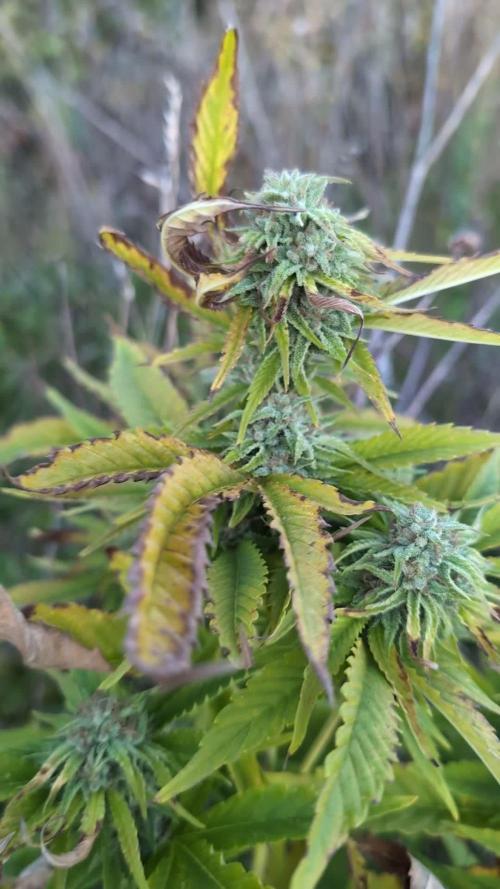
Heute war es an der Zeit, den letzten Besuch bei den Outdoor Ladies durchzuführen.
An sich hätten die Pflanzen nochmal etwas länger stehen können.
Im Outdoor Grow unseres Breitengrades muss man jedoch Kompromisse eingehen, bevor die Pflanze nämlich abstirbt und den Frost nicht überlebt, ist es an der Zeit zu ernten.
Grüne Grüße 🌱

Likes
18
Share


@TheBulldozerSicily
Follow
Settimana 8
Lunedì 7/11/2022
Inizio controllo ec 2680 ph 4.8
Per livello acqua basso Aggiungiamo:
36 lt demineralizzata 4 lt rubinetto (40lt)
32 ml Grow 64 ml Micro 96 ml Bloom 40 ml enzimi 40 gr mega bud 16 gr silicate
Miscelando tutto otteniamo Ec 2464 ph 5.8
Abbiamo eliminato 2 piante sottosviluppate per lasciare più spazio a quelle che ne avranno piu di bisogno.
Venerdi 11/11/2022
Inizio controllo ec 2727 ph 5.3
Per livello acqua bass Aggiungiamo:
36 lt demineralizzata 4 lt rubinetto (40lt)
32 ml Grow 64 ml Micro 96 ml Bloom 40 ml enzimi 40 gr mega bud 16 gr silicate
Miscelando tutto otteniamo ec 2373 ph 5.8

Likes
9
Share

@TheBulldozerSicily
Follow
Giovedì 21 novembre 2024
Inizio controllo ec 1332 ph
Cambiamo acqua e partiamo da 75 lt acqua osmosi inversa ec 173 ph 6.7
Aggiungo tutti I nutrienti e ottengo ec 791 ph 6.1

Likes
11
Share


@McShorty
Follow
Another week gone by and the plants are growing nicely. I had some yellow coloring of the lower leaves at the beginning of the week and so i increased the fertilizer a little bit and the plants are responding well so far. Since they are in the bigger pots i also dont need to water them every day anymore, this week i only watered them twice.
I also picked some of the lower leaves which dont receive so much light anymore, topped the remaining strains and tried to bend down some of the branches with some garden wire but didnt work as good as i hoped it would. i still have a scrog-net which im going to use later, but i think the plants are still too small. in the future im going to try different techniques and materials, for now i'm not going to overthink it and just let them grow now,.

Likes
42
Share


@Only4passion
Follow
Beginning of week 10 !!
it’s almost done I’m really happy she’s great looking plant and again smells amazing 🤩 next step I’m going to place this lady in the dark for 2 days before harvest 👌
