


@pifflestikkz
Follow
Day 58
30/08/24 Friday
Feed today using de-chlorinated tap water pH 6 with Plagron products.
Day 60
01/09/24 Sunday
De-chlorinated tap water pH 6 with calmag today.
Picture update ✌️💚
Day 62
03/09/24 Tuesday


@Ferenc
Follow
Day 59, 17th of November 2021:
Well, not much to mention but the most important: Pistils are coming so the flowers are on the way!!!!!
Set up is the same nothing has changed:
ViparSpectra XS2000 is on full power which is 240W so 100% capacity.
Ventilation: 12 hours period when the lamp is on it switches 1 hour on and after one hour off mostly to keep the temperature and of course because of fresh air flow. When the lamp is off it switches on in every 2 hours for 15 min at the same time with the extraction fan.
The extraction fan is on 12 hours when the lamp is, and then it switches on in every 2 hours for 30 min.
That's all a bit more water for them from today also. Humidity quite the same approx 50%, temperature as well approx 26-27 Celsius.
Fertilization remains the same since last week, the BioBizz family raised up to be 2ml/L each so it is like 2ml/L of BioGrow, 2ml/L of BioBloom, 2ml/L of TopMax... see the ratio above.
The schedule of the fertilization has not changed happnes 2x a week except epsom salt just 1x a week.


@LaGrassaFarm
Follow
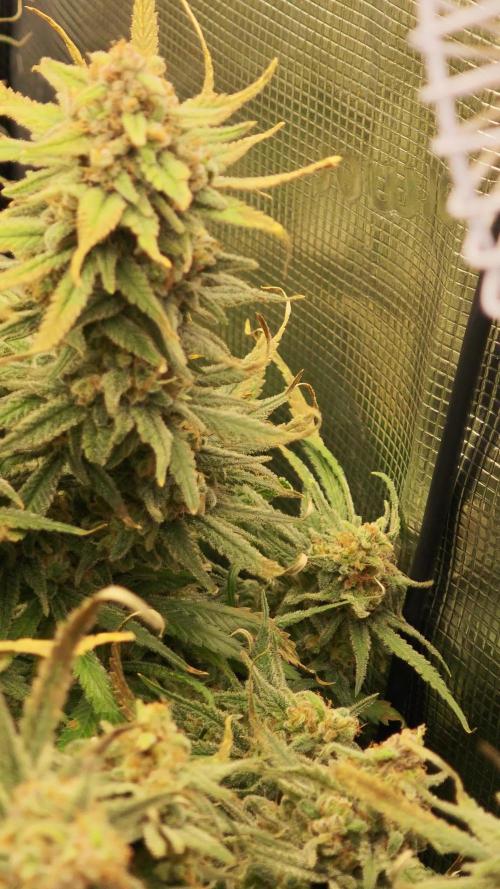
Esta es la última semana que le damos riego con nutrientes, a las plantas con flora avanzada, (recordad que tenemos tres más retrasadas, que entraron a florar más tarde)
Además hemos igualado la altura de toda la canopia.



@DivineBuds420
Follow
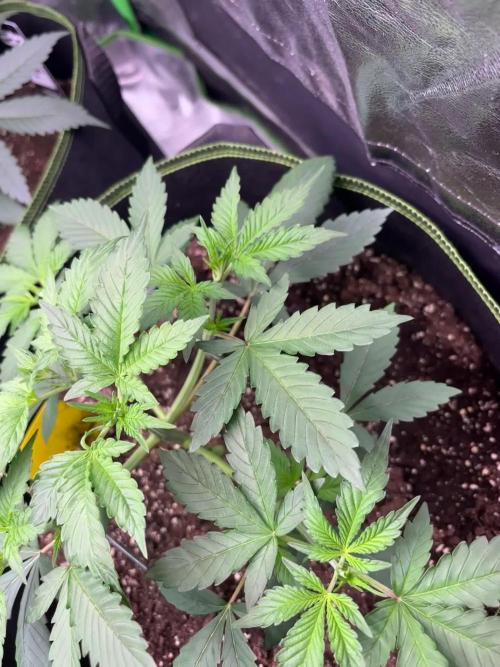
After thinking about it for quite a while, I decided to take the risk and give her one more week to show her full potential.
The trichomes continue to mature and the aroma keeps getting richer, making the wait even more exciting.
The buds are getting so heavy now that some branches are starting to lean into the net. Without it, I'm pretty sure a few of them would either bend over or even snap under their own weight.
Now it's all about keeping a close eye on everything and hoping the extra patience pays off.





@Weedbuddy420
Follow
Ich habe an der Pflanze Low Stress Training und getoppt, damit ich maximal Ertrag erreichen kann und wie bisher immer keine Probleme


@wheedtobeus420
Follow
Day 84. She’s been in the dark flashing and getting the ice treatment for a while. Her for leaves are starting to fade to a nice yellow. She smells to high heaven’s. I’m really excited to see how she will finish. She will be getting cut down in the next couple days. The next journal entry will be her harvest summary. I’m really happy with the way she has turned out her body structures are starting to lean down and she would be needing some help to be picked up. Mephisto never lets us down.


@CanadianFillmore
Follow
Howdy growfessors! Welcome to week 7F in the 4x8 theatre. The ladies are hungry, I've been increasing their feeding and they still want more!
Defoliation performed, removed a lot of small dead or dying leaves from the lower branches.
Not much else to say, thanks for stopping by growfessors 👽🌳💚


@StickyFingah420
Follow
Planta hermosa, por problemas de respaldo no tengo sus fotos finales y es una pena :( pero puedo decirles que es una planta que rinde bien, entrega frutos de calidad y no es para nada exigente.




@Ultraviolet
Follow
What's in the soil? What's not in the soil would be an easier question to answer. 16-18 DLI @ the minute. +++ as she grows.
Probably not recommended, but to get to where it needs to be, I need to start now.
Vegetative @1400ppm 0.8–1.2 kPa 80–86°F (26.7–30°C) 65–75%, LST Day 10, Fim'd Day 11
CEC (Cation Exchange Capacity):
This is a measure of a soil's ability to hold and exchange positively charged nutrients, like calcium, magnesium, and potassium. Soils with high CEC (more clay and organic matter) have more negative charges that attract and hold these essential nutrients, preventing them from leaching away.
Biochar is highly efficient at increasing cation exchange capacity (CEC) compared to many other amendments. Biochar's high CEC potential stems from its negatively charged functional groups, and studies show it can increase CEC by over 90%. Amendments like compost also increase CEC but are often more prone to rapid biodegradation, which can make biochar's effect more long-lasting. biochar acts as a long-lasting Cation Exchange Capacity (CEC) enhancer because its porous, carbon-rich structure provides sites for nutrients to bind to, effectively improving nutrient retention in soil without relying on the short-term benefits of fresh organic matter like compost or manure. Biochar's stability means these benefits last much longer than those from traditional organic amendments, making it a sustainable way to improve soil fertility, water retention, and structure over time. Needs to be charged first, similar to Coco, or it will immobilize cations, but at a much higher ratio.
a high cation exchange capacity (CEC) results in a high buffer protection, meaning the soil can better resist changes in pH and nutrient availability. This is because a high CEC soil has more negatively charged sites to hold onto essential positively charged nutrients, like calcium and magnesium, and to buffer against acid ions, such as hydrogen.
EC (Electrical Conductivity):
This measures the amount of soluble salts in the soil. High EC levels indicate a high concentration of dissolved salts and can be a sign of potential salinity issues that can harm plants.
The stored cations associated with a medium's cation exchange capacity (CEC) do not directly contribute to a real-time electrical conductivity (EC) reading. A real-time EC measurement reflects only the concentration of free, dissolved salt ions in the water solution within the medium.
98% of a plants nutrients comes directly from the water solution.
2% come directly from soil particles.
CEC is a mediums storage capacity for cations. These stored cations do not contribute to a mediums EC directly.
Electrical Conductivity (EC) does not measure salt ions adsorbed (stored) onto a Cation Exchange Capacity (CEC) site, as EC measures the conductivity of ions in solution within a soil or water sample, not those held on soil particles.
A medium releases stored cations to water by ion exchange, where a new, more desirable ion from the water solution temporarily displaces the stored cation from the medium's surface, a process also seen in plants absorbing nutrients via mass flow. For example, in water softeners, sodium ions are released from resin beads to bond with the medium's surface, displacing calcium and magnesium ions which then enter the water. This same principle applies when plants take up nutrients from the soil solution: the cations are released from the soil particles into the water in response to a concentration equilibrium, and then moved to the root surface via mass flow.
An example of ion exchange within the context of Cation Exchange Capacity (CEC) is a soil particle with a negative charge attracting and holding positively charged nutrient ions, like potassium (K+) or calcium (Ca2+), and then exchanging them for other positive ions present in the soil solution. For instance, a negatively charged clay particle in soil can hold a K+ ion and later release it to a plant's roots when a different cation, such as calcium (Ca2+), is abundant and replaces the potassium. This process of holding and swapping positively charged ions is fundamental to soil fertility, as it provides plants with essential nutrients.
Negative charges on soil particles: Soil particles, particularly clay and organic matter, have negatively charged surfaces due to their chemical structure.
Attraction of cations: These negative charges attract and hold positively charged ions, or cations, such as:
Potassium (K+)
Calcium (Ca2+)
Magnesium (Mg2+)
Sodium (Na+)
Ammonium (NH4+)
Plant roots excrete hydrogen ions (H+) through the action of proton pumps embedded in the root cell membranes, which use ATP (energy) to actively transport H+ ions from inside the root cell into the surrounding soil. This process lowers the pH of the soil, which helps to make certain mineral nutrients, such as iron, more available for uptake by the plant.
Mechanism of H+ Excretion
Proton Pumps: Root cells contain specialized proteins called proton pumps (H+-ATPases) in their cell membranes.
Active Transport: These proton pumps use energy from ATP to actively move H+ ions from the cytoplasm of the root cell into the soil, against their concentration gradient.
Role in pH Regulation: This active excretion of H+ is a major way plants regulate their internal cytoplasmic pH.
Nutrient Availability: The resulting decrease in soil pH makes certain essential mineral nutrients, like iron, more soluble and available for the root cells to absorb.
Ion Exchange: The H+ ions also displace positively charged mineral cations from the soil particles, making them available for uptake.
Iron Uptake: In response to iron deficiency stress, plants enhance H+ excretion and reductant release to lower the pH and convert Fe3+ to the more available form Fe2+. The altered pH can influence the activity and composition of beneficial microbes in the soil. The H+ gradient created by the proton pumps can also be used for other vital cell functions, such as ATP synthesis and the transport of other solutes. The hydrogen ions (H+) excreted during photosynthesis come from the splitting of water molecules. This splitting, called photolysis, occurs in Photosystem II to replace the electrons used in the light-dependent reactions. The released hydrogen ions are then pumped into the thylakoid lumen, creating a proton gradient that drives ATP synthesis.
Plants release hydrogen ions (H+) from their roots into the soil, a process that occurs in conjunction with nutrient uptake and photosynthesis. These H+ ions compete with mineral cations for the negatively charged sites on soil particles, a phenomenon known as cation exchange. By displacing beneficial mineral cations, the excreted H+ ions make these nutrients available for the plant to absorb, which can also lower the soil pH and indirectly affect its Cation Exchange Capacity (CEC) by altering the pool of exchangeable cations in the soil solution.
Plants use proton (H+) exudation, driven by the H+-ATPase enzyme, to release H+ ions into the soil, creating a more acidic rhizosphere, which enhances nutrient availability and influences nutrient cycling processes. This acidification mobilizes insoluble nutrients like iron (Fe) by breaking them down, while also facilitating the activity of beneficial microbes involved in the nutrient cycle. Therefore, H+ exudation is a critical plant strategy for nutrient acquisition and management, allowing plants to improve their access to essential elements from the soil.
A lack of water splitting during photosynthesis can affect iron uptake because the resulting energy imbalance disrupts the plant's ability to produce ATP and NADPH, which are crucial for overall photosynthetic energy conversion and can trigger a deficiency in iron homeostasis pathways. While photosynthesis uses hydrogen ions produced from water splitting for the Calvin cycle, not to create a hydrogen gas deficiency, the overall process is sensitive to nutrient availability, and iron is essential for chloroplast function.
In photosynthesis, water is split to provide electrons to replace those lost in Photosystem II, which is triggered by light absorption. These electrons then travel along a transport chain to generate ATP (energy currency) and NADPH (reducing power). Carbon Fixation: The generated ATP and NADPH are then used to convert carbon dioxide into carbohydrates in the Calvin cycle. Impaired water splitting (via water in or out) breaks the chain reaction of photosynthesis. This leads to an imbalance in ATP and NADPH levels, which disrupts the Calvin cycle and overall energy production in the plant. Plants require a sufficient supply of essential mineral elements like iron for photosynthesis. Iron is vital for chlorophyll formation and plays a crucial role in electron transport within the chloroplasts. The complex relationship between nutrient status and photosynthesis is evident when iron deficiency can be reverted by depleting other micronutrients like manganese. This highlights how nutrient homeostasis influences photosynthetic function. A lack of adequate energy and reducing power from photosynthesis, which is directly linked to water splitting, can trigger complex adaptive responses in the plant's iron uptake and distribution systems.
Plants possess receptors called transceptors that can directly detect specific nutrient concentrations in the soil or within the plant's tissues. These receptors trigger signaling pathways, sometimes involving calcium influx or changes in protein complex activity, that then influence nutrient uptake by the roots. Plants use this information to make long-term adjustments, such as Increasing root biomass to explore more soil for nutrients. Modifying metabolic pathways to make better use of available resources. Adjusting the rate of nutrient transport into the roots. That's why I keep a high EC. Abundance resonates Abundance.


@Kitties_and_Colas
Follow
~_~_~_~_~_~_~_~_~_~_~_~_~_~_~_~_~_~_~_~_~_~_~_~_~_~_~_~_~_~_~_~_~_~_~_~_~_~_~_~_~_~_~_~_~_~_~_~_~_~_~_~_~_~_~_~_~_~_~_~_~_~_~_~_~_~_~_~_~_~_~_~_~_~_~_~_~_~_~_~_~_~_~_
10/09/21
😿 well they held out as long as they could but 2:3 plants folded like a cheap suit.. a combination of stretch and crazy weight.. these buds are as dense as cucumber lol, even harder that the impossibly dense Critical P's we grew.. I had to invite a friend to give them a squeeze, to ensure there's more than 1 party to this fish tale lmao 😹..long story short the tent is a mess, we staked a few the best we could and made a few mains comfortable to finish on their side..we don't plan to move them until they're finished.. the next run in this tent will have to be aesthetically pleasing to make up for this hideous finish..*balance*..all plants are fading fast after cutting their feed, we're doing water only and they should be fully washed out come harvest ❤️..thanks for reading if you made it this far and happy harvests everyone!!💡🌱 😽💨
Youtube: https://www.youtube.com/watch?v=tZjRQlDaBvM
~_~_~_~_~_~_~_~_~_~_~_~_~_~_~_~_~_~_~_~_~_~_~_~_~_~_~_~_~_~_~_~_~_~_~_~_~_~_~_~_~_~_~_~_~_~_~_~_~_~_~_~_~_~_~_~_~_~_~_~_~_~_~_~_~_~_~_~_~_~_~_~_~_~_~_~_~_~_~_~_~_~_~_
10/12/21
Buds are swelling and the crystals are really piling on, however the tent is a mess lol...I'm really looking forward to harvesting these plant... trichs are still mostly clear, we definitely have some time left


@mrbigbong
Follow
the flush started, 2-3 weeks of flush .... a plant is almost mature, but having had two phenotypes that are somewhat different at the genetic level, one or the other will mature slightly more (in view of sativa prevalence) it will be harvested when fully ripe. very sweet and fruity smells, really good and strong ...


@MWHomegrow
Follow
Sry, Osterzeit Geburtstag und Co haben zeitlich ihren Tribut gekostet aber jetzt schon mal der deutsche Part für den Rest der Vegetation unserer schönen Ladys 😊
Tag 43: nichts besonderes heute zu tun für die Ladys einfach mal chillen unter ihrer Sonne 🌞
Tag 44: heute gab es den Blütedünger von Green House Feeding(GHF Bloom Bio line) und zwar 76g/Topf als Topdressing. Zum Angießen gab je 2l Wasser mit ph 6.3 und 1g/l Enhancer und ein paar größere Blätter noch rausgenommen, aber nicht viele. Nur genug um den kleineren Nachzüglern der Triebe noch eine Chance gibt hoch zu wachsen.
Tag 45:weil es gestern spät wurde heute nochmal 1l ph 6.2 Wasser mit 1ml Calmag gegossen und die Ladys saufen wie blöde 😊
Tag 46: die basen funzen nicht weil der Boden der Töpfe komplett trocken war, dummer Anfängerfehler, ist aber auch das erste Mal dass ich sie nutze, also Töpfe in 2l von unten in ne Wanne angewässert und dann wieder auf die basen zurück 😊
Tag 47: 1l Ph 6.2 Wasser mit 1ml/l Calmag von oben um den Dünger weiter ins Substrat zu spülen.
Tag 48: sämtliche Erdhaken entfernt, you are free now Girls
Tag 49: Lichtstärke nochmal um gut 100 ppfd erhöht
Ende Vegetationswoche 5


@BruWeed
Follow
☘️03/12 - Empieza su cuarta semana en Etapa de Floración.
☘️Esta semana también le estuve agregando solamente agua ya que se encontraban bastantes amarillas las hojas.
☘️De apoco van volviendo un poco más a la normalidad, cuando se encuentre en condiciones óptimas le seguiré agregando los fertilizantes, por el momento la dejaré descansar.
☘️Aproximadamente cada 2 o 3 días le agrego 350ml de agua con un ph de 6,3.
☘️En estos días seguiré subiendo más imágenes de como viene.


@Mr_nugs_lover_David
Follow
Very terpy smell, strong and very citric like a pure lemon, very lemony smell basically, nothing crazy but it's very nice, she's producing a lot of resin, you can see she's a good autoflower, not the bets I've grown but it's nice to have something to Harvey's fast. 100% organic grown


@yd_grows
Follow
Plantas voltaram a crescer após transplante e topping.
Apenas regando com água a pH 6.8.


@Caertner
Follow
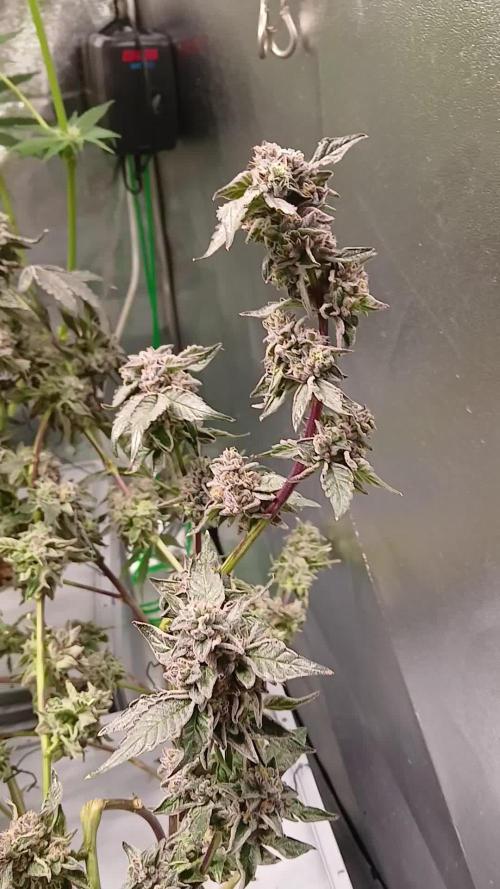
Wird langsam Zeit für die Ernte. Diesmal muss ich sie aber aus Platzgründen noch etwas stehen lassen. Aktuell müsste ich zu viel wegschmeißen.


@Easygrower
Follow
Hello growers day 22 with the hulkberry auto what can I say but wow this girl is really taking off the stem and branching so thick and strong very impressive in 22 days I see her first pistols yesterday so iv added biobizz top max / bio heaven 2ml of each to the mix the 4 other girls I have in 6.5l it’s are doing well 2 of them are just like the 1 in the 11l pot doing very well but 2 are abit slower all in all a very good week iv also been trimming the lower big fan leafs through out the week just to help them breathe thay are growing some big ones so snip them off that’s all for this week be safe and happy growing


@Endriu
Follow
Ciao Bros e Sis! CIAO! : D
Ok, let's see how these girls are...
Royal AK - she seems like to be the queen of this grow. Strong, fast, and resistant. I will transplant her in a 11lt Airpot with coco, new thing for me!
Candy Kush - she's fine, for real. Topped
Special Kush #1 - Good, but she's a little "tiny", don't you think?
Speedy Chile - well, she's growing fine, but had some kind of genetics problem, maybe... She's topped herself 😅
Ocean Gangster Kush - Nice, even if the colors are strange, and some leaf have wrinkles, let's see how she will grow. Coco also for her, in the future.
Pink Doctor CBD - the oldest on is growing, but I don't get where she want to go, really! The other bean has popped, so let's hope in no problem for her
UK Cheese auto - guys, she's really strong and fast! Developing preflowers at day 22 from pop! I want to leave all the questions aside and try some HST on this auto, I've never trained an auto before!
That's all, for now. Come back for the next update, meanwhile stop and have a chat with me, mates! Ciao!


