The Grow Awards 2026 🏆
Likes
Comments
Share
@Blaar
Follow
- initiated flush (stopping nutrients) - watering when needed. sometimes overwatering; creating more moist in the air. (need more outlet fans for heat___mmm..)
Likes
30
Share
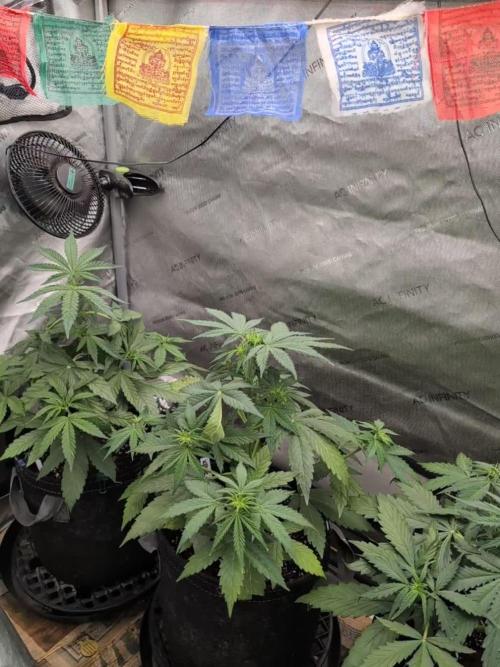
This week has been one of great gains in both size and vegetation we have seen a vertical leap in two plants that is astronomical almost 4 inches in a week! Had to do some pruning to expose new bud and a little bit of low stress training on to plants to see if we can expose light to the underside and perhaps get a little more love out of our lower buds The stalk size on almost all of these plants is almost as big as your thumb but on one it is actually relatively skinny that is the one we’re doing the low stress training on we just started the low stress training and it is taking very well to it One of these plants is extremely dark in color on the vegetation and has typically about 11 fingers per leaf! Not sure what that means yet
Processing
Likes
6
Share
I could smell her at this stage and she smelt of a citrus berry smell. It’s just tantalising need now.. I had a solid ten days of sun and she loved it. She is growing quickly too I assume that is the nutrients taking full effect and the perfect weather.
Likes
51
Share
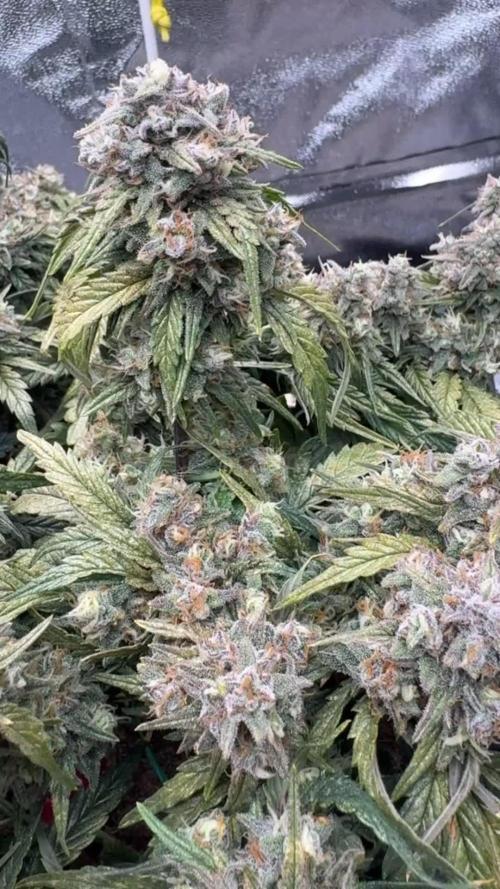
1/28/24 - Day 83 - Here we are on day 83 and the trichomes are looking good. I bet one week, if not two weeks before I start to flush with water. There are some photos of the Trichomes a couple of weeks ago and then again today. 1/31/24 - Day 86 - The buds are starting to get FAT and grow outward. Tons of new buds coming from the buds. Sounds werid but the buds are growing buds now. The smell is out of this planet strong. Im looking forward to the next couple of weeks!
Likes
45
Share
@PotCasso
Follow
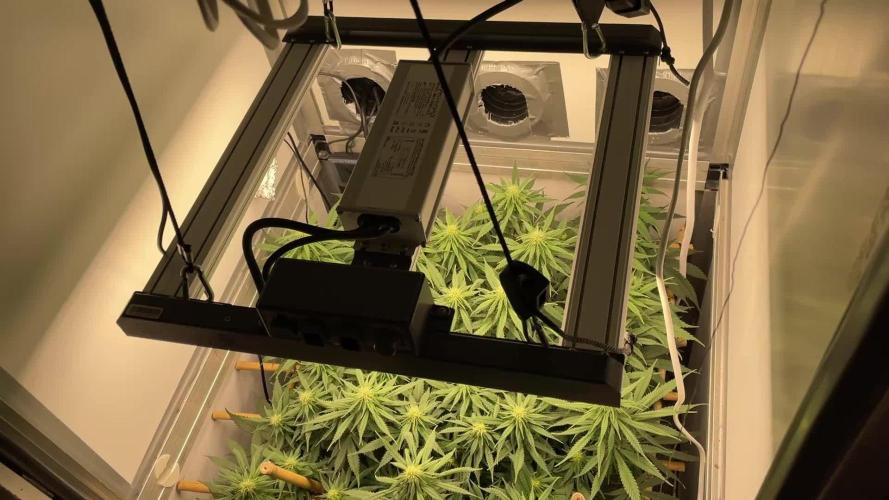
Week 2 of Flower: HLG Diablo at 70% 20in from canopy. Watered in at 800ml top dressed 2tbs bloom, 1tbs bloom2, 3 tbs barley a recharge day and a silica day. I also watered in a kelp tea. Really loving the HLG 350 Diablo, morphology and growth are just fantastic.
Likes
14
Share
@indacouch
Follow
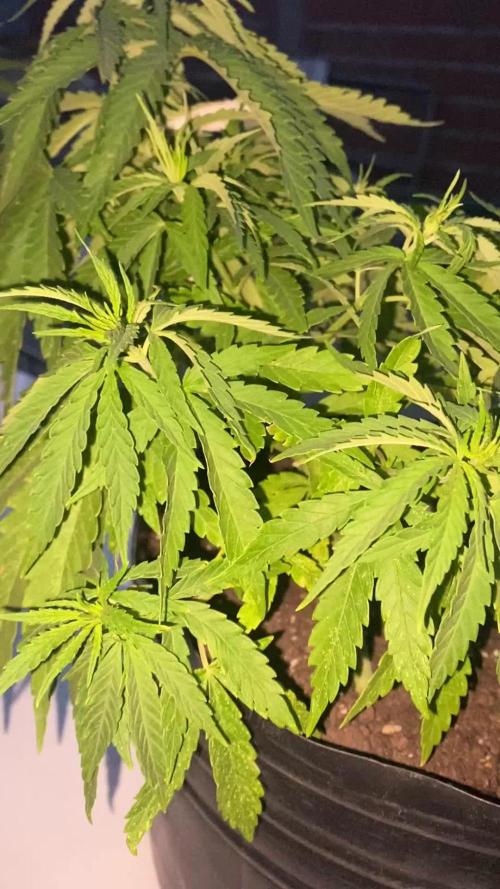
Day 8 Shes a little deformed, but im sure she will grow out of that. Going to water tomorrow so ill give an update on that. do people give daily updates? is it better like that or do i give one weekly update? Day 9 My stubbornness has led me to water her today. but lets see how she takes it. Hope you guys have a wonderful day !!!🙌 Day 12 watered her with my secret sauce lol. well shes getting better! dont know what else to report. have a good one :D
Likes
6
Share
It's always sad to be at the end of a grow. The last week was, as expected, very easy and relaxed. I flushed with Flawless Finish and watched the buds fatten up.
Likes
31
Share
2024-06-01 And here we go. The tangie developed really strong branches, and shows great structure. Today sh went outdoors, where she will stay- and she will get a huge Growingpot too but thats stories fro next Week. Shes an easy child, and very Proising to me BREEDER INFO Tangerine Snow F1 Fast Feminised is a 75% sativa, four-way cross of (Boost x Tangelo) with (Lavender x Power Plant). This Fast F1 hybrid is bred from Cali genetics and boasts great citrus terps, high resin production for extracts, high levels of THC, very good yields and excellent mould resistance. Tangerine Snow F1 Fast can be grown indoors as well as outdoors. Indoor flowering times are between 8 - 10 weeks while harvest time in northern latitudes is during September while in the southern hemisphere growers will be harvesting during March. Recommended climate regions are hot, dry, humid and warm. These are tall, semi-branched plants that grow in excess of 200cm and display a high degree of vigour with very good uniformity. In common with many other heavily sativa-dominant strains, Tangerine Snow F1 Fast offers excellent resistance to mould as well as to plant pests and diseases. The combination of citrus terps and plenty of resin makes thi a very good extract strain with the 'washing' method delivering very good yields of hash. The citrus terpene profile is reminiscent of mandarins and tangerines and also has sweet candy notes. THC production has been lab-verified at a strong 24% while CBD is low. The effect is uplifting and energising, perfect for use during the day and early evening.
Likes
7
Share
@Epwood
Follow
This week's been business as usual. During my reservoir refill, I did notice my pH pen reporting some odd readings. This may have been due to a low battery but needless to say, I changed the batteries and recalibrated. Should be about... two more weeks? ha
Likes
42
Share
### Day 44 ### She is doing really well, she grew a decent amount, but I'm still hoping on 2 weeks of stretch before she stops. She is unfortunately still struggling with a deficiency. I'm guessing nitrogen, magnesium and calcium. So I'm waiting for the soil to dry out to give an extra boost on those and hopefully the lower leafs will stop wilting like they are now. ### Day 45 ### Apperantely I have a nutrition lock. The PH of the runoff water was only 5.6! So I flushed her with 25l of plain water Ph'ed to 6.5. Now the lock is hopefully gone! I have to say I have never seen her this sad before. With her leafs all droopy and stuff. On a more positive note, my tent arrived! 😁 This is so awesome! ### Day 46 ### OK the noise of the exhaust fan in my tent is just too much! I switched it with a less noisy one, but now I have no intake fan, should be fine. The loudest part now is the fan inside the tent. ### Day 47 ### She looks a little better today and the soil is starting to dry. I'm going to wait till Monday before I water and feed her again. Depends on how dry the soil is then.
Likes
40
Share
@BudXs
Follow
Beautiful full bodied plants that tower over the rest of the garden. Feed remains on point, humidity and heat issues in mid July weather have caused a bit of fox tails in one or two colas, but I could care less. This will be a bountiful harvest of a great strain.
Likes
10
Share
Hello, today I defoliated a good bit on both MXOP opened all those bud sights to get ‘em to be nice nugs in a few weeks here This cultivar is amazingly hardy and can take quite a bit of punishment. The clippers were caked in some trim hash crazy considering I don’t think I took that much off Until next time growmies good health too all you ✌️ 07/31/23
Likes
37
Share
@rhodes68
Follow
12/13 Week 12 Blondie has about 2-3 weeks left Changing up her nutes a bit Adding some cal-mag reducing her PK try to help her out a bit here. 12/16 Shifted her to Soul Peak yesterday and man what a bud explosion. Remember this is not a big producer normally but she is really building now. 12/19 She is done just let her finish in flush
Likes
8
Share
@LoudLemon
Follow
No problems with growth, buds rapidly putting on weight and smell is getting stronger each day! Had to cut down on nutrients slightly as I think was feeding a little more than she could consume. Looks like she will be fully ripened around or on the 8th week. I liked the fact she started with the Durban poison, sweet smell and then as she progressed into flower, the loud, dank Kush slowly creeps up before finally taking over the the sweet smell of the Durban poison. Right now as I wright this, the Kush smell has started to mellow down and mix into a nice sweet nutty scent.
Processing
Likes
21
Share
Fed once this week with a weak feed including top max. I use kombucha vinegar as pH down. Water from my tap is ph6.8-7.0 and 38-42ppm so I might start using calmag supliment as the ppm at my old house used to come out of the tap at ph7. 2 and 200-220ppm. I had 2 plants that didn't like the light at 30000 lux and started bleaching so I took them out. I've defoliated today day 35 as humidity was getting over 80% and also to let light to the lower bud sights. Pre flower pistils showed on some plants around day 33 (some still have none) so I'll consider this the end of veg start of flower. The kalimist indica pheno is still not showing pre flower pistils but is always hard to force flowering when it's not mature for some reason. It's always 7-14 days behind everything else 🤔
Likes
12
Share
Checkout my Instagram @smallbudz to see the Small budget grow setup for indoor use, low watt, low heat, low noise, step by step. 30/11/2019 - Struggling with high humidity, change led strip color from red,green,blue to red and green. 1/12/2019 - Checked and adjusted the light distance. 2/12/2019 - Pot feels light and dry, gave her 1,5l PH 6.3 with a 1/4 of recommended Biobizz nuts, notice almost no run off. 3/12/2019 - Finally her first pistil appeared on the main stem I was starting to get worried.
Likes
30
Share
I made a lot of mistakes till now, but at least i tried her to recover and she goes for it. I hope she will give some nice fruits when shes ready. Have a nice week ✌️✌️
Likes
56
Share
Bonjour à tous les padawans et les maîtres jedis Pour cette semaine 3 au jour 19 ma plante fais 21 centimètres et son septième noeud apparaît je décide donc de pratiquer un LST sur ma plante. Pour ce j'utilise du fil de fer galvanisé que je plante directement dans le substrat en faisant attention de ne pas endommagé les racines car n'oublions pas que ce qui pousse dessus pousse aussi dessous. Jour 17 je pulvérise du une solution composé d'une cuillère à café de savon noir mou (marque briochin) dilué dans un demi litre d'eau en prévention d'éventuels nuisibles. Pourquoi le savon noir mou ? Savon noir : quelle utilisation pour le jardin ? Le savon noir est un produit naturel dont les propriétés nettoyantes sont connues depuis l'Antiquité. Utilisé pour l'entretien de la maison et pour les soins corporels, ses vertus antibactériennes et insecticides en font un allié précieux pour le jardinier bio. Le savon noir est fabriqué à partir de potasse et d'un corps gras de type huils végétale comme l'huile d'olive, de lin ou de maïs. Produit naturel et biodégradable (s'il ne contient pas d'additifs, comme cela peut-être parfois le cas), c'est un très bon produit nettoyant, pour les sols, la cuisine, la vaisselle, le linge, etc... Très polyvalent, il est également économique, comparé aux multiples détergents classiques du commerce. Le savon noir se trouve sous forme de pâte molle et brune ou sous forme liquide, dilué avec de l'eau. C'est du savon noir liquide dont on se sert généralement au jardin, car son utilisation est plus simple. Il s'achète dans les magasins bio ainsi qu'en grandes surfaces ou jardineries. Attention : la recette du savon noir de ménage et celle du savon noir utilisé en cosmétique ne sont pas forcément les mêmes ; les savons noir de ménage (multi-usages) peuvent contenir davantage de potasse afin d'améliorer le pouvoir dégraissant (irritant ou desséchant pour la peau), voire même certains additifs chimiques. Au jardin, ce sont en priorité les propriétés antiseptiques et insecticides du savon noir qui sont utilisées. Le savon noir liquide est utilisé pour lutter contre les pucerons, les cochenilles, les araignées rouges, les aleurodes, les psylles et autres thrips. C'est un insecticide de contact ; il tue les larves et nettoie le miellat qui englue les feuilles. La recette de l'insecticide à base de savon noir (mou pour ma par marque briochin) est simple à réaliser : une ou deux cuillères à café de savon noir mou (briochin) diluées dans 1 demi litre d'eau tiède (dilution à 5 %) ; une fois la préparation refroidie, pulvérisez-la sur les plantes atteintes, en prenant soin de ne pas oublier l'envers des feuilles. À renouveler 1 à 2 fois si nécessaire, pour être totalement débarrassé des indésirables. Comme il est de mise pour la plupart des traitements, ne pulvérisez pas la solution à base de savon noir en pleine journée, sous le soleil (ni sous la pluie !) ; procédez le matin de bonne heure ou patientez jusqu'à la fin de journée, lorsque les températures sont en dessous de 20°C. Jour 18 Je corrige mon LST suivant la pousse de ma plante ... Pour ma par c'est la manière dont je procède mais petit rappel de la technique du LST Quand commencer à appliquer la technique LST ? De nombreux cultivateurs commencent la manipulation dés que les plantes possèdent entre 3 et 6 nœuds ou une paire de feuilles. Durant cette première étape de la croissance, le tronc encore flexible est pliable sans risque qu’il ne se casse, même si au fur et à mesure du développement de la plante il sera de plus en plus difficile de le plier. Nous pouvons continuer à guider la croissance des branches durant toute la culture, même durant la floraison, ce qui pour cette étape représente un grand avantage face à la taille, qui n’est pas du tout recommandé une fois que la formation des têtes commence, cela stressera en effet la plante, ce qui aura pour effet de retarder la récolte. Comment appliquer la technique de guidage LST Si nous sommes prudents, la flexibilité naturelle des fibres du cannabis permet de plier leur tronc et branches avec une relative facilitée, même durant la floraison des plantes. En utilisant une corde fine, nous pouvons accrocher la pointe de la plante à la base du pot par exemple ou à un tuteur que nous aurons planté dans le substrat. Nous plierons le tronc avec précaution et nous le fixerons avec la corde, à partir de là, nous pouvons augmenter progressivement la tension de la corde, chaque jour un peu plus, jusqu’à obtenir la position souhaitée. Soyez attentif à la réaction de la plante, essayez de ne pas appliquer trop de pression sur la corde et rappelez-vous que la flexibilité des branches peut varier d’une plante à l’autre. Pour obtenir de meilleurs résultats, il suffit de suivre quelques règles simples. Pour commencer, nous devons choisir une corde fine mais pas trop pour ne pas blesser les troncs au fur et à mesure qu’ils grandissent et qu’ils deviennent plus gros. Nous pouvons utiliser des crochets en plastique souple ou de n’importe quelle autre matière flexible pour éviter d’endommager les plantes. Spécialement en intérieur, utiliser des cordons en plastique de couleur (voir les diaries de @Silky) est très pratique pour voir facilement les accroches et faciliter le travail au milieu du réseau formés par les cordes, les tuteurs, les mailles ou les supports que nous aurons dans la culture. Bien entendu, en culture extérieure et surtout en guerilla nous ferons juste le contraire et nous utiliserons des matériaux de couleur qui n’attirent pas l’attention pour que notre jardin reste discret. Pour stresser les plantes au minimum, la mieux est de réaliser ces manipulations le soir ou juste après que les lampes en intérieur s’éteignent, ce qui leur permettra de se remettre durant la nuit. Normalement, le jour suivant nous pourrons observer comme les pointes des branches que nous avons pliées se dressent de nouveau vers le haut à la recherche d’une source de lumière. Que la force soit avec vous💪