


Likes
Comments
Share


@Unkraut
Follow
great strain! you can smell & taste the chocolope + you get the awesome yield from kosher kush incl. the great herbal scents of the kosher
be aware of the big stretch!

Likes
26
Share


@Cultivomedellin
Follow
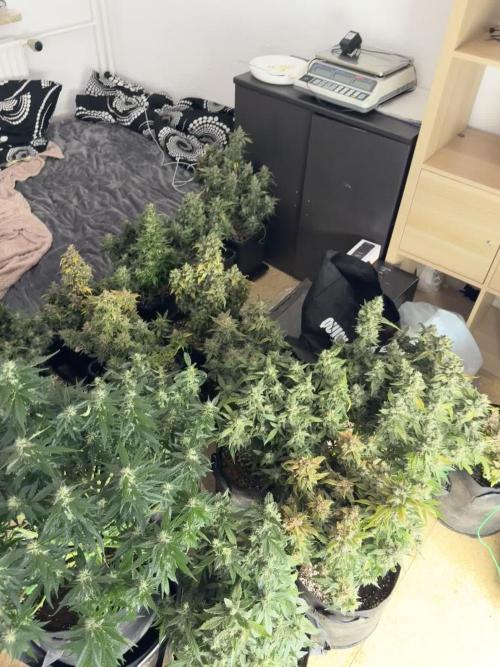
Hoy reizamos lavado de raíces , y ya esperando la cosecha , el olor brutal 🍇🍇🍅

Likes
1
Share


Likes
51
Share


@kansasscott725
Follow
Trichomes are looking milky and full. Going to give one more light feeding, and then flush em towards the end of the week.
G13 has some calyxes that are growing in top of existing bud... possible this one keeps growing for another week, but seems like Banana is ready to go.
Is there any downside to getting one gallon sized Mason jars for curing?
I've yet to have a successful dry/cure, so really hoping to dial it in this time with the proper climates.


Likes
6
Share


@lOlympusl
Follow
I added a second light yesterday. I’m not sure if it’s overkill and if it’ll work well with the other one. They are both VIVOSUN 300w LEDs, the one I already had has a veg and bloom switch, but the new one doesn’t. But hey it was cheap on Black Friday for $63. But having the new one in there quickly increased the heat in there from 75 to 85. I’m waiting for an oscillating fan to throw in there also which will help. Any advice on the light situation? More light spectrum the better?
Update: did my first LsT on all three girls on 12/1. Within 3 hours all the leaves were facing the lights again I was impressed

Likes
13
Share


@Buurman
Follow
IM BACK!
Damn this was an amazing surprise! Didn’t see my baby’s for 5 weeks and holy fuck they’ve grow..
These plants are gorgeous, all over fat buds with thick stems to support the enormous weight of them, white dust covering the entire plant. Never seen anything like this it’s gorgeous.
Did a heave defoliation seasion and will let them now just finish up thickening those buds.
It’s cool to see the little difference in forming of the flowers between these two plants, one has round buds that seem like they will foxtail.
Will be back with more updates later

Likes
7
Share


@Ninjabuds
Follow
My Gas Tax plant is looking insane. It's seriously the biggest plant I've ever grown, with these massive buds that are almost completely covered in this crazy purple and black coloring. I'm not gonna have to do much trimming at all, which is awesome. I've never seen anything like it.
The past week has been awesome for drying my plants. The weather's been perfect – nice and dry, with just enough breeze to keep things moving. I finally got around to chopping down those two big plants I've been meaning to trim. They're almost ready, just need a little more time to dry out completely. I can't wait to see how they turned out.
Likes
49
Share


@masterofsmeagol
Follow
9/5 Beautiful weather. The smell is amazing. Much stronger than previous years. I watered everything 2 gallons yesterday with the exception of the 10 and the tub. Found a few moth larvae but I found many more lady bug larvae. Flowers are EXPLODING! I've got one pheno that I think will be done in two weeks. I'm close to the flowering time on that strain anyway amd I labeled flower late. I need to bring my loup and check trichs. Such an exciting time of year! Leaf blower started and I was able to blow off the entire garden.
UPDATE: WENT OVER WITH THE TRICH SCOPE AND LOOKED AT THE 10TH PLANETS. VERY FROSTY! THEY HAVE SOME PLUMPING UP TO DO AND THE PISTLES NEED TO RETRACT A BIT MORE ON SOME OF THE FLOWERS. WE'RE GETTING CLOSE THOUGH. PISTLES ARE CHANGING IRANGE AND RED AND STRARTING TO RETRACT. BUDS ARE SWELLING (ON EVERYTHING). I DID NOTICE THAT THE PLANT WITH THOSE MARKINGS HAD SOME APHIDS ON IT. I HAVE A SHIT TON OF LADY BUGS/BEETLES AND THERE LARVAE. THEYVE BEEN DOING A GOOD JOB KEEPING THINGS IN CHECK. THAT AND MY CAGE IS BETWEEN TWO BIRD FEEDERS SO BIRDS ARE ALWAYS DARTING IN AND OUT SO I ASSUME THEYRE EATING SOMETHING. THIS IS BY FAR MY BEST YEAR SO FAR. PURPLE PUNCH HAS DENSE COLAS BIT LOTS OF PISTOLS STILL YELLOW REACHING UO TO FORM WHAT WILL BE MASSIVE COLAS. I THINK IM GOING TO HAVE TWO LITER COLA BOTTLE SIZED COLAS ON ONE PLANT. ILL BE SURPRISED IF I DIDNT. THERE ARE TWO PHENOMES OF THE BLUEBERRY CHEESE IT SEEMS. THREE ARE MUCH FURTHER ALONG THEN THE OTHER TWO. THOSE TOTHER TWO LOOK FAR MORE SATIVAISH. I'M SUPER EXCITED FOR THE NEXT COUPLE WEEKS!
9/6 Brought the trich scope over last night. Things are getting frosty and coming along quite nicely. The smell when I walk in the cage now is overwhelming. It's like getting hit in the face with a wet bud. I've been noticing more and more lady bug larvae. I noticed a bud worm and tried to find it again after I entered the cage and one if the large lady bug larvae was eating it! Debating whether or not to apply BT. Still have what looks like a calcium deficiency on that one plant but I lose less and less leaves each day. It soesnt have MANY more big fan leaves to keep dropping. Oh well. I'm keeping an eye on it and as long as it's not pests or fungal than whatever. That plant is flowering rapidly to catch up with her sisters. Since my return at growing cannabis I would say rhis has been my best yet. I am super proud with how things are going. If I can keep poo this up for another month I'll be golden. I plan to harvest the 10th planet's in stages (when ready). At least with the two up front and MAYBE the other. That way it would give a chance for the bottom that disnt get as much sun as the top to "catch up". I've do s rhis before with monster crops and it worked good. I plan on watering tonight. Leaves are turning yell8w and dieing on tje big cheese and the two purple punches in the back. I think that I've used most nutrients from my soil and what I'm putting back in isn't enough to cover their needs. When I fed the p.p. in the tub I could notice that it's leaves started greening right up. I'll check last feed and if I need to ill up the dosage. 10th planet doesn't really like a lot of nutes so I have to be careful. This is something lots have discovered. Exciting time! Had a stranger last night but nobody can get past the dog or the motion sensors or the cacophony of measures I've taken to secure my medicine. Not even sure it was a person but still. The fence is electrified at night so they can have fun trying.
UPDATE: Sunny and like 85 all day. Went over around two and noticed a 10th planet slightly drooping. Everything was super light. I gave all the 20's 2 gallons the 30 on the grow bag got 2.5 the 30 in the tub got 1, the 10 got 1 and the 50 got 2. I then fed. Since the 10th planet's are a little further ahead I fed them a little different. I just removed the grow big since they are really green anyway and I also upped the liquid kool bloom to 1 tsp per gallon and fed a quart to everything. A little more for the 10th planet 30gal in the bag and the blueberry cheese in the fifty. The rest of the feed was the same as listed above. Seeing TONS of lady big larvae. Have to he careful when defoliating as I want them to stick around.
9/7 FED and watered yesterday. We've had some super hot weather lately. Hottest all summer. In the 80s-90s. Got a ladder and inspected buds. Found some bud rot on the purple punch. Sucks having to cut off the top of a cola but if I don't it will just spread. This purple punch still has long stigmas reaching up to form a solid cola on the branch. I know it's got a little ways to go. One of the 10th planet phenos on the other hand is looking close to done. Trichs are frosty and milky not much amber. Stigmas turned red and have retracted into the bud. I'm going to wait for this tester to dry and take it from there. We are supposed to get a few days of rain coming up. I don't want to risk all those beautiful ALMOST finished buds to bud rot. I may move it into the garage if we get a lot if rain. Let it have a few days of darkness. Or I could just open the door and it would still get sun and remain dry. This strain smells and looks SOOO good. I can't wait to try it. I'm going backbover to check all the tops. The blue cheese plants are HUGE! With HUGE buds. The trichs just aren't developed enough. It is super frosty but the flowers haven't taken on that swell. It's happening ob one plant and its looking like the colas will he like two liter soda bottles. The thing is that's an awful lot of room for mold. Oh well. That's how I grew them. One thing is for certain. After seeing what the pillars can do I can't rely on the lady bugs to get rid of them all. I'll be spraying BT tonight on everything but that early 10th planet phenome.
UPDATE: INSTALLED MORE CAMS. I HAVE ONE 10TH PLANET THAT IS LOOKING PRETTY GOOD. REAL CLOSE. IM GOING TO SMOKE THE TESTER BUD FIRST BUT I THINK IM GOING TO HARVEST THE EARLY PHENOME IN PARTS. LOOKING AT THE WEATHER IT APPEARS WE ARE GOING TO HAVE SEVERAL DAYS OF RAIN. IF SO ILL TAKE THE TOP AND LET THE UNDER CANOPY DEVELOP MORE. ILL LEAVE THE OTHER TWO 10TH PLANETS THAT WERE MONSTER CROPPED AS THEY STILL HAVE SOME SWELLING TO DO. I LOOKED AT TRICHS WITH A JEWLERS LOUPE. I REALL MISS MY USB SCOPE. PURPLE PUNCH HAS THE BIGGEST FLOWERS BUT THE ARENY AS DEVELOPED. I NEED TO GET ANOTHER. ITS WORTJ EVERY PENNY. I GOT ON A LADDER AND CHECKED THE TOP COLAS FOR DAMAGE OR ROT. NOTHING SO FAR KNOCK ON WOOD. EACH PLANT HAS A UNIQUE SMELL BUT WHEN YOU ENTER THE GARDEN THE BLEND TOGETHER AND ITS LIKE GETTING HIT WITH A WET BUD IN TGE FACE. I SHOULD GO SPRAY EVERYTHING ELSE WITH BT TONIGHT. LADY BUGS CAN ONLY DO SO MUCH.
9/8 Cut some bud rot off a 10th planet and a purple punch. Definitely from pillars. Doesn't hurt that it's been 90 with 90rh. Thunderstorms are coming and it's gonna rain a few days. Plants will need water I'm sure. I tried some of the purple punch bud I cut off (after I dug all the rot out) and it was good! That plant still has white stigmas as and can go a lot longer. Trich scope says the 10th planet's are done. I'm taking the tops off two before the rain starts. I'll leave the one that's a LITTLE further behind and see what comes of it. Even the more sativa dominant blue cheese plants are frosting up quit nicely. I haven't been able to put up videos as my phone has been full and it wouldn't let me even TAKE a video. I need to spray bt tonight. I went through the garden this morning and despite all the lady bugs I found two more bud worms. I think taking the stuff that's done off those two plants is the smart thing to do. I should take all three and just leave the bottoms but I'll just go with the two. I'll update later after I figure out what I'm going to do.
UPDATE: TOOK MOST OF THE 10TH PLANET AS IT WAS DONE. I WOULD'VE TAKEN ONE OF THE OTHER 10TH PLANETS BUT IT TOOK WAAAY TO LONG. WATERED EVERYTHING 2 GALLONS EXCEPT 1 FOR THE 10 AND TuB AND 2.5 FOR MY 10TH P IN THE 30. ILL HAVE TO FINISH AND UPLOAD THIS SHIT LATER. I DID A VIDEO.
9/9 Most of one 10th planet is hanging. Big yield. Looking at the trichs I think Im going to take the other one that looks done. If i did id do the same thing. I did with the other. Take the tops and allow the bottom to develop a little more. Smoked the tester bud and was pleasantl u surprised. Im not using that for acsmoke report. Purple punch and blue cheese both need more time bit are swelling like crazy. Colas should be two liter bottles. Worried about bud rot with buds that big. Thos morning four birds were perched on my cage. I see them dart in and out grabbing a snack. I have let my 'leafing' and general upkeep slip. My wife has been sick and I've been in the hospital with her. So I need to defoliate some things and I'd like to chop that other 10th planet and leave the biggest one a little longer. This one i think has reached diminishing returns or damb close. I don't know if the video uploaded. Havent been doing many because my phone was full and it wouldn't even open the camera. I never said I wad tech savvy. I'll keep this updated. Fucking video keeps resizing but won't fully upload and I've got 5g right now so it must be the site. Been at the hospital all day with 5g and can't upload videos. It's the site.
9/10 Wife was rushed to emergency surgery. Was in hospital all day yesterday. Was able to take the top half of the krber 10th planet that was done. I need to water but it's 100% chance of rain. If i don't make it out dadxwill have to do it. Boy this strain is pungent. BUDS are getting way bigger and trichs are piling on. It's been a great finishing season so far. This will be one of my best years. I'll take more pictures qnd videos as soon as I'm not in an emergency situation. I tried uploading the video again but it loads and then won't resize. It's super annoying and I'm now unable to upload videos. Great.
UPDATE: GOT HOME AT LIKE 8. NOW I REALLY NEED AN ATTORNEY. NINE HOURS AT THE ER. FOUR OUT OF 7 DAYS. I DEFOLIATED DEAD LEAVES BUT IM WAY BEHIND. IVE GOT SOME TRIMMIMG TO DO. IM GLAD I PULLED THAT 10TH PLANET TOPS OFF THOSE 2 PLANTS BEFORE THIS RAIN. THE TRICHSCARE AMBER. ITS SO STICKY BUGS WILL LAND AND CANT TAKE OFF LOL. ILL GET SOME PICTURES OF SOME STUFF DRIED TOMORROW. PICS UPLOAD VIDEOS WONT. THEY WONT RESIZE.
9/11 Finally got some rain yesterday. Still need to apply BT. I've found some rot and just removed the whole bud. Also seeing some septoria on one plant. It's everywhere though and I don't change my clothes like I should. Having been in the ER for 9hrs 4 out of 7 days my plants were neglected. I defoliated dead and dieing leaves. Still don't know what that deficiency on the one plant is but it's still there. Doesn't effect the flowers though. I watered everything a gallon today since it's "supposed to rain." I fed everything lightly with a powerase bottle.
TRIED UPLOADING A BUNCH OF PICTURES BUT WHEN IT GETS TO RESIZE IT DISAPPEARS.
I smoked my tester 10th planet bud and WOW. Everything I could ask for in a cannabis strain. I'll wait to do a smoke report after I smoke the fully finished product and the other plants come down but I am super impressed! Looking at it through a scope is amazing as well. After i smoked that joint i had my dab ready but i didnt want to change how i was feeling so I held off. Granted tolerance is down due to all the hosputal visits but normally very high. Once this site is fixed I'll upload some points of things dry. I have more work to do
9/12 I've tried adding pictures and videos probably 50 times and as soon as they get uploaded they won't resize so I can't start a new week. I'll try uploading them here. Nope. I'll use another platform if you guys can't fix this. This is my best year and I can't upload shit! Raining like hell. Watered and fec yesterday. Everything got a piwerade bottle. Got a new electric Milwaukee leaf blower. Defoliated what needed it and came over to soaked buds. Purple punchvis the only one experiencing botrytis and i just cur the whole thing off. The other purple punches dont have any rot. Boy this is the strongest smelling cannabis ive grown and i cant even put up a picture. Washed 36 quart jars amd a few bigger one. Im looking into getting the bucket conversion fir storage. As soon as tge site is fixed ill put up my pictures and videos. Rain is expected for a few days. My other tenth planet looks ficking done too. Its not getting bud rot so im going to leave it. Its fucking huge. I had to tie up even the secondary or tertiary branches on some plants. Still no breaks though. Vertical trellis literally saved the day.
9/13 This site must be down. I can't upload any pictures or videos. I can't even start a new week. They upload but then they 'fail to load' or some message. This is the most important part. Anyway I shook everything then used the new electric leaf blower. I'm getting some bud rot on the purple punch in the 20. The biggest one. With this rain and the pillars I'm having to cut off more everyday. Rain today but after this rain lmore stuff will be coming down. That 10th planet is done done. I need to wait for the rain to stop and I'll chop the tops off that monster cropped plant. The blueberry cheese will be the last one done but the flowers are huge and covered in crystals. The BIG cheese is going to be a huge yield. I wish I coukd show you guys. Once they get this fixed ill update. Everything is going good though despite this rain. We have a hurricane coming but I could literally take everything NOW amd still have a BANGING harvest. All I've taken is the top of two 10th planet's and it's already the best I've ever done. Some of that plant is left to see if it improves but thats doubtful. I need to keep am eye on that one plant and I'm gonna ride this shit out. The electric leafblower works great. Of and I found some manners in a bud I removed from a purple punch due to bud rot. These plants are close though. Very close. STILL UNABLE TO POST PICTURES OR VIDEOS AS OF 2:30
9/14 Apparently this problem uploading pictures and videos is not just me. Its universal. I defol8at3d what needed it and checked in between the buds of cola for rot. I FOUND A bumblebee STUCK inside a big putmrple punch cola. He had broken a leg it looked like though amd he ended up falling. Those huge purple punch buds are rotting more everyday with this rain. It's only effecting one plant though. We are suppised to be getting a hurricane coming through. My tenth planet is DONE DONE but that purple punch plant needs to come down. No problems with the other purple punches or 10th planet which has nugs just as tight. Blue cheese has even BIGGER buds (had to stake THEM ALL) but since they aren't as dense I'm not getting any bud rot. Colas are tye size of a baseball batvor bigger and there is a lot of them. Best year ive ever had. I hope this site fixes soon. This is tge strongest smelling cannabis I have ever grown. Realistically i should take the other 10th planet's before the hurricane. As soon as shit dries out I'll be taking some more stiff before the hurricane. Those blue cheese have been through hell and are very resilient. I'm gonna let them ride the hurricane out I think. So sad I can't share my pictures or videos. Orrrrr my harvest report. COME ON GROW DIARIES


Likes
7
Share

@420DeepGrow
Follow
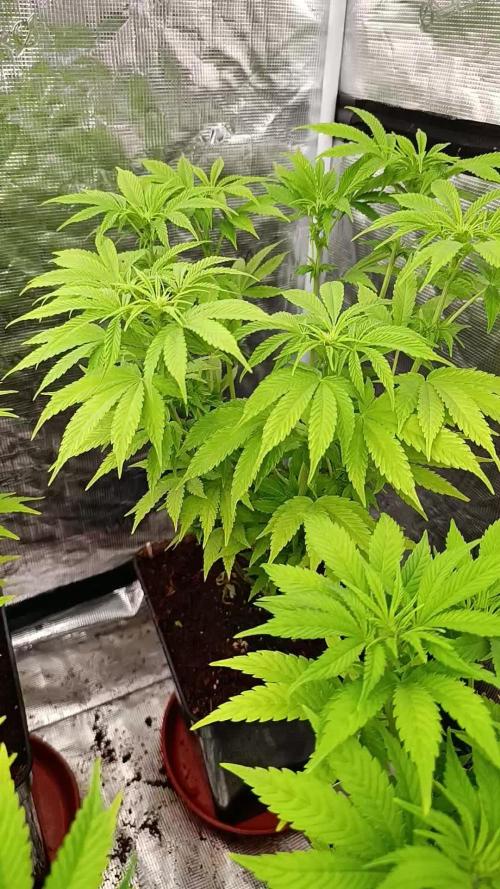
📆 Semana 3
Tras el exceso previo de EC, la planta se centra en recuperar el equilibrio del medio. La respuesta es progresiva: mejora la turgencia y se estabiliza la absorción mientras el pH vuelve a rango funcional.
La defoliación permite mejor luz y aireación, y la estructura se mantiene ordenada, aún en transición. El verde sigue en tono lima con leve desgaste en hojas grandes, coherente con la recuperación.
Aún no hay “erizos”; el estiramiento acompaña suave mientras el sistema radicular se reajusta.
Primero equilibrar, luego formar.
Seguimos creciendo fuerte 💪!

Likes
24
Share


@MadeInGermany
Follow
Hey everyone 😊.
Welcome to the last week 😃.
She looks beautiful :-)
Her buds, the smell, everything is just right 😍.
I can't wait to try it for the first time in a few weeks 😄.
It will be harvested in the next 2-3 days.
There will also be another update during the drying process before the final harvest update comes 😃.
I wish you lots of fun with the update, stay healthy and let it grow 😎
You can buy this Strain at :
www.Zamnesia.com
Type:
Runtz
☝️🏼
Genetics:
Zkittlez x Gelato
👍
Vega lamp: 2 x Todogrow Led
Quantum Board 100 W
💡
Bloom Lamp : 2 x Todogrow Led
Cxb 3590 COB 3500 K 205 W
💡💡☝️🏼
Soil : Canna Bio
☝️🏼
Nutrients : Canna Bio
☝️🏼🌱
Water: Osmosis water mixed with normal water (24 hours stale that the chlorine evaporates) to 0.2 EC. Add Cal / Mag to 0.4 Ec Ph with Organic Ph - to 6.0 - 6.3

Likes
15
Share
@masterofsmeagol
Follow
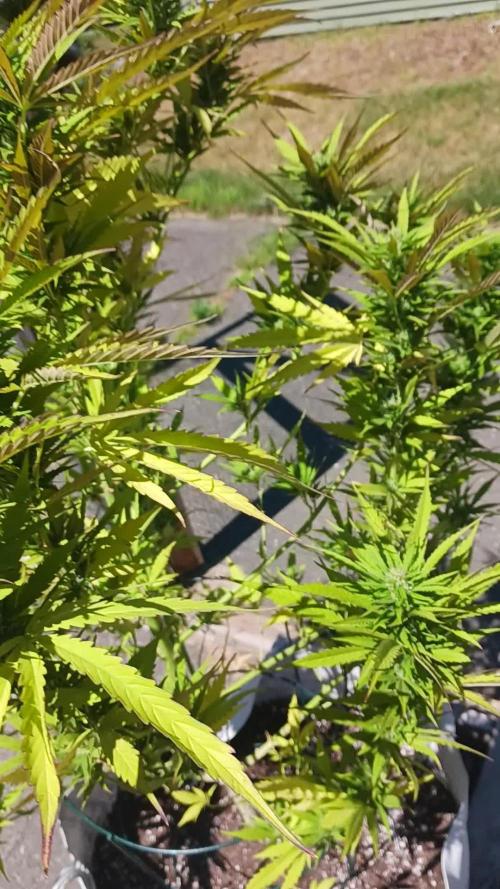
8/17 Watered everything but the 50. Found two leaves with sep markings on the pink kish in the 50. Definitely not using old soil again. I'm pretty sure THIS plant contracted it from the soil and not the way the others did with the lawn mower and birdseed hijinx. It's supposed to rain for the first time basically all summer. It's am 80% chance so I HELD OFF ON PLANT DOCTOR AND DID NOT APPLY as I'm supposed to have a clear day after. I'll apply the plant doctor in the morning. I'm hoping this rain will knock down a bunch of those thrips. They seem to be on a small branch on a plant or two. One or two leaves show damage and I'll pick them off. I figure I'll get them after I apply plant doctor. I'll use either citric acid or just my regular bt-k pillar treatment with Castille or liquid soap. That will kill them as well. I'm on really worried about it. I also might just buy a bunch of lady bugs and unleash them once things get further along.
EDIT: TOOK A QUICK VIDEO AND A COUPLE PICS. HOPEFULLY WE GET THIS RAIN. IF NOT IM GOING TO TREAT THE THRIPS THAT ARE ON TWO PLANTS NOW. I THINK IM GOING TO GO WITH BT-K FOR NY PILLARS AND HOPE THAT THE DISH SOAP IN THE MIX KILLS THE THRIPS. I HAVE LOTS OF DIFFERENT OPTIONS SO ILL FIGURE SOMETHING OUT. BUDS SEEM TO BE EXPLODING IN GROWTH. OH AND THANKS TO THE OUTDOOR GROWER THAT MESSAGED OFFERING TO HELP. I APPRECIATE THAT. THANKS.
8/18 We got the rain we were expecting. It was sheet rain for a few hourscand rained during the night. Everything was drenched and it was cold (50°F). I shook off the special kush that's way further in flower. I decided to use the leafblowrr despite the risk of spreading anything. I did it so that it wasn't ever blowing TOWARDS another plant but still. I was hoping it might blast off some thrips that might have survived that torrential rain. We've never had a dry summer like this. I'll moniter things. My water day is tomorrow so I assume that's when the girls will get their plant doctor dose. It's a great time of year for cannabis growers. We get to watch all the hard work we've put in literally pay off. It's very peaceful in the garden.
EDIT: Went over at about one to check things out and do some minor defoliation. I checked on the thrip situation and I dont know if I blasted them off with the leafblower or if the rain washed them away bit I doubt it. Ivecmade the decision to treat these little bastards. It's on one plant but it's started to spread to another branch on another plant. I probably just overlooked it but still. Seeing that it rained like he'll and I'm seeing like zero signs of septoria I'm going to treat everything. At least I think I am. I haven't decided what to use. I think I could just use bt and soap and I'd probably be alright. I'd feel better doing that as it's something I'm familiar with. Outdoor growing. It's always something.
8/19 In the 40's last night. Hopefully that will help with the thrips. I was hurried and since today tops at 72° I only watered the 10th planet big mk ultra and the chem dog with preventative plant doctor. I'm not seeing hardly any septoria and if I do itsca random leaf. I mixed up 3tsp of citric acid and some Dawn in a 2 quart hand sprayer and treated the 10th planet that I thought had heat stress and the Pink kush in the ten gal that has the damage. I also treated a branch on my good tenth planet. It was the only branch with markings so I think I've got it early enough. I'm just wondering the best way to tackle this. The pink kush I'm sure, could handle spinosad. That strain is much later flowering. I'll see how the citriccacid works and go from there. If the other girls need water they'll get it when I get home alongcwith plant doctor. I've got some work to do. I'll keep this updated. Opinions are always welcome.
UPDATE: THE PLANT IN THE TEN I SPRAYED LOOKS BETTER THAN WHEN I SPRAYED IT! I ALSO DIDNT WATER AS ITS UNDER 70° AND EVERYTHING I WATERED LOOKS WORSE THAN WHAT I DIDNT. WATERING NEEDS CHANGE QUICK WITH A 40° TEMP SWING. THESE THRIPS ARE GONNA HAVE A FEW MORE NOGHTS IN THE 40'S. THE CITRIC ACID SEENED TO KILL ON CONTACT. MY PROFESSIONAL BUDDY ADVISED TO ORDER GREEN LACEWINGS AS OPPOSED TO USING SPRAYS. HE SUGGESTED SPOT TREATMENT BUT AFTER MY RESEARCH ON THRIPS THAT WONT HE AS EFFECTIVE. I HAVENT DECIDED WHAT TO DO. I MAY ORDER THE LACEWINGS AND I MAY CONTINUE AND ROTATE TREATMENT. I DONT WANT TO OVERREACT (WHICHVI TEND TO DO) BUT I ALSO DONT WANT ALL MY LEAVES TO DIE. ILL KEEP THIS UPDATED. IM PLANNING TO GO OVER TONIGHT AND CHECK THINGS OUT. I MAY SPRAY A FEW MORE PLANTS AND WATER WHILE IM THERE. ITS TIME FOR THERE PLANT DOCTOR PREVENTATIVE.
8/20 I watered the two kush in the back WITH THE PREVENTATIVE DOSE OF PLANT DOCTOR as they were dry I assume due to the wind they get. The one in the 50 I found one sep leaf. Looking carefully arpund the garden I can tell that I have a thrip infestation. First time I've fought this and it seems most people don't really know what to do besides predators at the beginning of the season. I'm too far along for spinosad. At least thats what I've been told. My pro buddy said to try to spot treat it. It's not bad bit I'm afraid it might be worse than I think. The plants I treated with citric acid look MUCH better. I think I'll dial the dosage of citric acid down and start with that tonight and switch up treatments. I can get rid of them it's just going to take a ton of work. I think I've had them before and I attributed to something else. I so think that the very early pink kush plants could handle spinosad. I hope so. The plants I watered the other day look overwatered. The plants I didn't water look GREAT. The special kush in late flower looks happier than I've ever seen her. The difference being we went from 104° one day to 72 the next with 46° night Temps. This week is highs of 70's lows of high 40°'s. I've got a lot of work cut out for me. Didn't do a video as I didn't have time but I'll do one.
EDIT: Nothing needed to be watered at noontime and I'm trying to not overwater so I left them. The two I watered this morning are fine. I'm glad I caught this thrip bullshit when I did bit it sounds like it's going to be a HUUUGE pain in the ass to beat. One thing right after another. I've found those suction marks and the silvery shit they leave behind on pretty much every plant now. I'm thinking me using the leafblower (away from the other plants I THOUGHT) must have blown a bunch of them around. I'm not seeing a lot of bugs. Mainly feces. I did find a couple adults. Honestly, I've probably had these before and not known it or attributed it to something else. Literature I'd all about spinosad which of course I have on hand. AI told me I could use spinosad in early flower so MAYBE I could treat the pink kush plants with it but ill have to figure something else out for the other girls. I'm planning to treat tonight depending on where the research takes me. Not sure exactly what I'll be using but I'll keep this updated.
8/21 IT got cold last night. It was low 40's when I went to the garden. I watered the special kush in late flower and the mk ultra I kept natural. Did some defoliation. Found little feather on a large branch. Birds have been helping with pillars. I left out the plant doctor on those watering as septoria has pretty much been eradicated. Plants are drinking significantly less water. It went from 104° day time to 72°. Same with the nighttime Temps. Luckily with Temps like this the thrips don't seem to have spread. I found a couple lacewi g eggs while looking for pillars. Hopfully they will help. Maybe spot treatment and decoliation will he enough. I'll update as I go.
EDIT: Went back over around noon and put up blue sticky traps and did some defoliation. I may go back tonight and treat some stuff. Not sure yet.


Likes
53
Share


@BudBoutique
Follow
Welcome to Bud Boutique Grow Diary - really appreciate all your love and support :)
Dont forget to check out my other current grows!
🗓️ This Week:
- Day 52: the end is near
- Day 53: Trichomes check from #1 and #2 - looking super good almost all cloudy, a few amber and clear. perfect point to chop
- Day 54: this one is finished, let's chop them both #1 & #2 !! ✂️✂️✂️
- both phenos got still super purple beautiful leaves
- now its time to dry inside the tent at about 60%rh and less than 20°C/68°F trying to get it even lower for the next 10-14 days
___________________________________________
--- 🌱 Strain (Sponsor) ---
🏷️ P.C.R. by Art Genetix
https://www.artgenetix.world/product-page/p-c-r
--- 🥗 Nutrients and Feeding (sponsored by APTUS: APTUS Ambassador) ---
🍸 APTUS: full nutrient schedule extreme
-- Regulator, N-Boost, P-Boost, CaMg-Boost, K-Boost, Allin1 Liquid, Startbooster, Topbooster, Enzym+ every feeding
-- Fulvic-Blast, NutriSpray as Foliar each once a week
🔗 https://aptus-holland.com/
--- ♻️ Grow Control (Sponsor) ---
TROLMASTER: TENT-X + LM14 Light Adapter to dim/sunrise/sunset lights + Temp & rH Sensor all remote on App
🔗 https://www.trolmaster.eu/
--- 🚿 PetraGrow (Sponsor) ---
CannaFogger Foliar Spray
🔗 https://www.petratools.com/product/petragrow-cannafogger-atomizer-new-mini-fogger
--- 🏭 Grow Setup ---
💡LUMATEK Zeus Pro 600
* 🏠🌿 Indoor: Homebox 120x120x200cm (4x4)
* 📐🌀 PrimaKlima exhausting Fan 1180m3/h (running on 60-80%)
* 🌀 Can Light Filter 800m3/h & 1x Fanbox 1x Dyson fan for Air circulation
🔗 https://lumatek-lighting.com/zeus-600w-pro-29/
🔗 https://primaklima.com/de/shop/ventilatoren-de/ec-ventilatoren/pk160ec-tc/
🔗 https://canfilters.com/products/filters/
All Likes and comments are highly appreciated!!!
👨🌾 don't forget to check out my Instagram for daily educational content: budboutiquee
- Bud Boutique

Likes
36
Share


@JeyGanesha
Follow
Ultime settimane.siamo arrivati al finale anche con queste quasi...bella e sicuramente anche buona😜🤤😂 profilo terpenico forte intenso .un profumo delizioso...quando proverò questa strawberry 🍓 banana 🍌 vi racconterò com'è di sapore e potenza...le cime sono dure dure come una pietra
Likes
8
Share


@4leksz
Follow
Diese Woche habe ich mir etwas einfallen lassen damit ich nicht nur Photos hinterlasse sondern auch etwas über mein System erklären kann.
Letzte Woche Sonntag habe ich einige Plants getoppt und sie schauen soweit ganz gut aus. Ich hatte leider letzte Woche he ein Problem mit dem Root Juice von Advanced Nutrients die Nährlösung in den Tanks ist gekippt. Ich habe es erst am zweiten Tag gesehen und habe sofort alles geputzt und Wasser gewächselt. Danach wieder alles eingestellt und läuft.
Ph: 5.7
Ec : 0.9
Ich habe auch jeweils 20g Mineral Magic in die Nährlösung hinzugefügt und 1 Teelöffel davon um den Stil der Plants gemacht.
In meinen 2 Videos findet ihr mehr dazu.
Happy Growing :)


Likes
42
Share


@Reyden
Follow
Ci siamo! Siamo arrivati quasi al traguardo...questi giorni le ragazze sono al loro massimo splendore e l'odore nella stanza e fortissimo! Anche questo aggiornamento è stato fatto grazie all'aiuto di mia madre che gentilmente mi ha tenuto e curato le bambine, sono contento perché sembra che è riuscita a seguire tutte le mie istruzioni e questa volta non ci sono stati problemi...è la prima volta che mi capita di competere in un contest e farmi mandare foto per mail..chiedo scusa se la messa a fuoco non è sempre delle migliori e personalmente non posso chiedere di meglio, è un lavoro che mi serviva e sono dovuto partire lasciando tutto indietro...tornando ai nostri fiori, il green sensation di Plagron devo dire che ha fatto la differenza, contando che il cibo questa volta è stato preparato interamente da me, ha fatto un ottimo lavoro e i fiori sembrano dirlo forte! Cercherò di aggiornare l'ultimo step prima della fine...tra due giorni farò tagliare le ragazze! A presto!!!
Likes
13
Share


@HIAZ_urbanbudfarmer
Follow
Hi Gromie's all going good, continue H.S.T training, nice flat canopy. Also started some new clones, experimenting took 2 & 3 branch cuttings instead of single stem, so first topping will give 4 & 6 branches. Veg tent set up. Daisy chained recirculating hydro (4) at back & up to 6 DWC pots in front. Lined pots with insulated mylar, has reduced temps around 5°c. Making D.I.Y. DWC system for .


Likes
4
Share


@pzwags420
Follow
On day 1 the reservoirs PH is 6.2. I defoliated leaves blocking the inside/lower canopy to give more light to lower growth points keeping the top 2 leaves on cola tops. The girls are deff still stretching :) So far so good. I'm glad I flipped to flower early this run and could see even dropping the veg time by another week. Its tough working in a small grow space but I'm determined to master it lol. I lowered the lights intensity from 85% to 75% to give my tops 600-800 PPFD. Usually I just blast the plants with 100% until the stretch is over but I'm realizing that I'm way over doing it based on my quantum sensors data.
On day 2 the reservoirs PH is 6.1. The girls are still stretching and putting out new preflowers. My tallest cola is 9" from the light(the other lower colas are between 10"-12" away from grow light).
On day 3 I adjusted the reservoirs PH up from 6.0 to 6.3. My tallest cola is 8.5" from the grow light. Lower colas are mostly 10" away from light.
On day 4 the reservoirs PH is 6.3. My tallest cola is 7.5" from my grow light and the average/lower cola distance from grow light is 10-11". I defoliated large leafs that are blocking lower bud sites and or touching each other causing wet spots on the leaves. I want as much airflow as possible as I can not control my night time humidity which can be as high as 80%-90%. My last run I noticed some sugar leaves touching my grow box walls and this caused them to start rotting. I want to avoid that this time around so I'm being careful not to have any wet spots from leaves laying on each other as well as keeping all colas far enough from my walls. In the future I would like to have the ability for de humidification but being in a small grow box in a garage makes it difficult to control my lung room.
On day 5 I adjusted the reservoirs PH up from 6.1 to 6.3. My tallest cola is 7" from the grow light. Lower colas are mostly 9"-10" away from light. I defoliated and removed lower bud sites not receiving enough light.
On day 6 the reservoirs PH is 6.1. My tallest cola is 6.5" from the grow light. Lower colas are mostly 9"-10". My tallest cola is getting 1000 PPFD while my lowers are 600-800 PPFD.
On day 7 I changed out the reservoir and adjusted the PH to 6.1. The tallest cola is 6" from the light. Lower colas are mostly 9"-10"


