


Processing
Likes
Comments
Share


@Buurman
Follow
The summer really affected my outcome, three weeks of near 40 degrees made most of my buds fluffy and deformed, then the dry room was left open so the humidity was at 30 percent.. 3 days and all my buds were completely dried out. After 4 weeks of curing the taste came back a little but still not the best
Up to the next one ❤️


Likes
53
Share


@Roberts
Follow
Merlin Mintz is up, and going. Great germination, and everything is looking good. My only concern is if the nutrition is too strong. Thank you Aeque Genetics, Spider Farmer, and Athena. 🤜🏻🤛🏻🌱🌱🌱
Thank you grow diaries community for the likes, follows, comments, and subscriptions on my YouTube channel. I greatly appreciate all the support. 🌱🌱
🌱https://youtube.com/channel/UCAhN7yRzWLpcaRHhMIQ7X4g
Likes
37
Share


@GrownwithLED
Follow
After germinating the seeds are transplanted into small pots with soil (see tutorial in VIDEO above). The soil is prepared with water mixed with a little bit of BIO NOVA Roots (0,5 ml/l), which aids the development of the seedling. Transplanting is very easy now, because they have grown a STRAIGHT tap-root while hanging during the SERIOUS' WAY of germination. This straight root allows for easy potting of the seeds. Simply make a little hole in the center of the soil with your pinky finger and carefully place the germinated seed with the white root pointing DOWNWARDS into the hole. Best is to lay it onto one side-wall of the hole with the seed shell right at the surface. Then I push the other side inwards and enclose the whole root with soil. At the end only the top of the seed-shell peeks out of the soil. IT IS VERY IMPORTANT to plant the seeds NOT TO DEEP into the soil. The seedling only needs extra strength to work itself upwards thru the soil and you run the risk of the soil drying out and the seed dying off. When you PLANT THE SEED VERY SHALLOW into the soil (=with the top of the seed-shell still peeking out) your seedling can grow out right away and you have a small plant already 24 hours after putting the seed into the soil.
The small seedling sometimes still has the seed-shell on its 'head', it normally falls off by itself, but sometimes you have to carefully help and take it off with your finger nails. Be careful to NOT clip of the seedling accidentally when you do this!
The seed-shall has an inner lining, which feeds the small seedling when it germinates. This inner lining sometimes gets tangled around the stem of the small seedling after the shell has fallen off. This little skin MUST be taken off the stem right away! Once it dries up, it gets hard and can strangulate the seedling around the stem. In order to avoid this, the skin must be taken off as soon as possible! I show it in the pics above and also made a video about taking off the inner lining of the seed.


Likes
36
Share


@nonick123
Follow
Día 59 (29/07) Este cultivo no es muy entretenido con solo agua, asi que...
Le hago supercropping a todas! 😁 A ver como reaccionan!
Riego 500 ml H2O pH 6,5 SÓLO a OnionOG #1
Día 60 (30/07) Las plantas se están recuperando muy bien del supercropping! 😁
Todos las puntas hacia arriba! 💥
Come onnnnnnn! A por esa floración en 2-3 semanas!
Riego 500 ml H2O pH 6,75
Día 61 (31/07) Las plantas se han recuperado genial del supercropping y están lanzando TODAS las ramas hacia arriba 😍
Un espectaculo la fuerza de estas plantas! 💥
Redistribuyo las plantas, para ver si OnionOG está más protegida del sol, ya que consume muchisima agua y voy a estar en unos días fuera...
También reubico ligeramente la malla de sombreado, debido a que en mi latitud el sol empieza a incidir lateralmente por las tardes...
Riego 500 ml H2O pH 6,55
OnionOG: Riego 1 Litro H2O pH 6,5
Día 62 (01/08) OnionOG me impresiona con su vigor. Sus ramas se están estirando de forma impresionante!
OnionOG le hago una poda de partes bajas de las ramas para mejorar el flujo de aire y que concentre su fuerza en las ramas superiores
Vuelvo a redistribuir las plantas en el invernadero dejando a OnionOG todavía más protegida del sol directo, para tratar de disminuir su consumo de agua estos días que no voy a estar...
Pongo una protección "visual" en el invernadero en el lado que da a los vecinos (cara norte), porque he "cazado" miradas indiscretas...
Riego 500 ml H2O pH 6,55
OnionOG: Riego 1 Litro H2O pH 6,5
Día 63 (02/08) Debido a que me voy de vacaciones unos días, adelanto el riego semanal con Té y la aplicación foliar de Kelp
Riego con 1 Litro de Té Vegetativo de Lurpe Solutions. Preparación: 24 horas con bomba de aire (oxigenación) con ingredientes:
Green Sunrise 8 ml/L + Insect Frass 16 ml/L + Hummus Lombriz 8 ml/L + Melaza 1 ml/L + Kelp Hidrolizado 0,25 g/L
Aplicación foliar Kelp hidrolizado de Lurpe Solutions a 0,25 ml/l
Día 64 (03/08) Cerrado por vacaciones
Día 65 (04/08) Mi amigo viene a casa a hacer un riego con 1 Litro de H2O pH 6,5
💦Nutrients by Lurpe Solutions - www.lurpenaturalsolutions.com
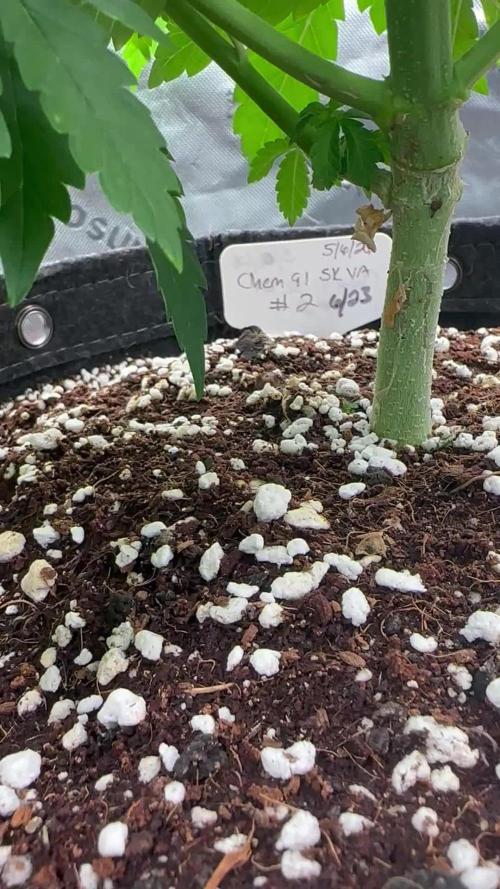
🌱Substrate PRO-MIX HP BACILLUS + MYCORRHIZAE - www.pthorticulture.com/en/products/pro-mix-hp-biostimulant-plus-mycorrhizae




Likes
25
Share


@Tidy_THC
Follow
Pollen will be arriving soon, it is pumping lots of sacks out this week, buds are fattening and smell is increasing with sugar on the buds.. not really any issues.

Likes
43
Share


@Ju_Bps
Follow
Hello my friend,
Plant is ending, I've checked a bit in late the trychromes, as we can see on the movie plant is almost ready to harvest,
But I'm just flushing few days, I'm in late, so I'll check trychromes all the days, and I'll try to wait one week to harvest,
I like harvest when 75/25 milky/amber.
Next week, will be the harvest 😃😃.
See you next week for the result,
Have a good week
Likes
36
Share


@MadeInGermany
Follow
Info:
Unfortunately, I had to find out that my account is used for fake pages in social media.
I am only active here on growdiaries.
I am not on facebook instagram twitter etc All accounts except this one are fake.
Flowering day 36
since time change
to 12/12 h.
Hey everyone :-)
Furthermore everything is developing great :-).
The scent of the buds is becoming more and more delicious 😃.
This week 1 g of enhancer per liter of coco was added.
It was poured 3 times this week with 1.2 l each time.
Have fun with the update.
Stay healthy 🙏🏻
You can buy this Strain at
https://www.barneysfarm.com/blue-cheese-34
Type:
Blue Cheese
☝️🏼
Genetics:
Blueberry
X
Original Cheese
👍
Vega lamp:
2 x Todogrow Led
Quantum Board 100 W
💡
Bloom Lamp :
2 x Todogrow Led
Cxb 3590 COB 3500 K 205W
💡💡☝️🏼
Soil :
Bio Bizz Coco
☝️🏼
Fertilizer:
Green House Powder Feeding
☝️🏼🌱
Water:
Osmosis water mixed with normal water (24 hours stale that the chlorine evaporates) to 0.2 EC. Add Cal / Mag to 0.4 Ec Ph with Organic Ph - to 5.5 - 5.8

Likes
33
Share


@420DeepGrow
Follow
🍁💐 Runtz:
La Runtz de Zamnesia 🌱🔥 es una variedad de cannabis de alta calidad, resultado del cruce entre las legendarias Zkittlez 🍬 y Gelato 🍦. Este híbrido perfectamente equilibrado, con un 50% índica 🛋️ y un 50% sativa 🌞, combina lo mejor de ambas genéticas para ofrecer una experiencia intensa 💥, sabrosa 😋 y completa. Su nivel de THC puede alcanzar el 27%.
El TS1000 de Mars Hydro es una lámpara LED increíble para el cultivo interior 🌱💡. Ofrece una excelente combinación de potencia y eficiencia, perfecta para espacios pequeños y medianos. Su espectro completo simula la luz solar 🌞, ideal para todas las etapas del cultivo, desde la germinación hasta la floración. Además, el consumo energético es súper bajo ⚡, pero la producción es impresionante 🌿🔥. La distribución uniforme de la luz asegura plantas sanas y cosechas abundantes. Definitivamente es una gran inversión.
Para este Concurso usaré la gama de fertilizantes de Plagron tal como mandan las reglas.
📆 Semana 7:
La planta continúa evolucionando de manera positiva. Los cogollos siguen ganando volumen y densidad poco a poco, y aunque todavía no son tan grandes como los de las próximas semanas, se nota un buen desarrollo. La acción del Green Sensation de Plagron sigue siendo clave, ayudando a impulsar la floración sin mostrar signos de sobrealimentación.
El aroma dulce y afrutado de la Runtz se va intensificando, y aunque no es tan fuerte como en su fase final, ya empieza a llenar el espacio de cultivo con su fragancia característica. Las hojas mantienen su verde vibrante, lo que indica que la nutrición está siendo bien equilibrada.
Afortunadamente, no he encontrado plagas ni deficiencias, lo que me permite seguir concentrado en mantener el entorno óptimo para su desarrollo. Los tricomas aún están en proceso, pero los vigilo de cerca para ajustar el momento de la cosecha según corresponda.
¡A seguir con paciencia! ¡Pronto llegaré a la fase final !

Likes
91
Share


@Drgreen13
Follow
Hi guys, these girls are growing fast, and require watering every day, (already) the tube is starting to break down and is getting week, wish me luck. Thanks for stopping by, please check out my other diaries and feel free to leave a like, maybe even a follow and I'll be sure to check out your diaries to.
The light being used Is the Mars hydro SP150, its a great quality light and is very bright, ideal for a rectangular space.
Drgreen13#6724 (discord)
Stay high, stay fly, #420everyday.

Processing
Likes
75
Share


@Dedon
Follow
Hi everyone ! 😀
Everything is ok, no disease, no carrency. but 2 ladies don't want to stretch a lot :/ ( the 2 on the corner, bottom left and Top right ) i don't know why. maybe it's the variety. i have 4 Skunk XL and 2 Critical. Maybe these 2 are the critical ( yes i lost them when i plant the seed 😩 ... )
No more pH fluctuation ( i love that )
EC is around 1.9/2.0 and increase to 2.1/2.2 when they drink a lot so i add water with 1.7 ec to decrease it to 1.9/2.0 again
I added 30L of water since i changed the water ( 2 tanks * 20L / i change it the 11/05/18 ) so i'm gonna change the whole solution during the week.
See you next week !
Likes
44
Share


@Buffynuffy
Follow
It’s amazing watching these plants grow, it’s been an experience already and so much to go with this grow and with all the learning to come I hope it looks okay to you guys anyone who would like to comment please do I’d love to hear other’s thoughts!
Likes
11
Share


@TheMadHasher
Follow
Whats up everybody cheers to another week of growth for everyone!
This week the ladies buds started showing signs of progress. You can see them produce more and more resin every day thanks to the cold weather its really easy to keep a pretty dry environment. Can’t wait to do my final defo next week! Until then stay green!


Likes
Comments
Share

@GoldenWeedGrower
Follow
Week 26-02 September-October
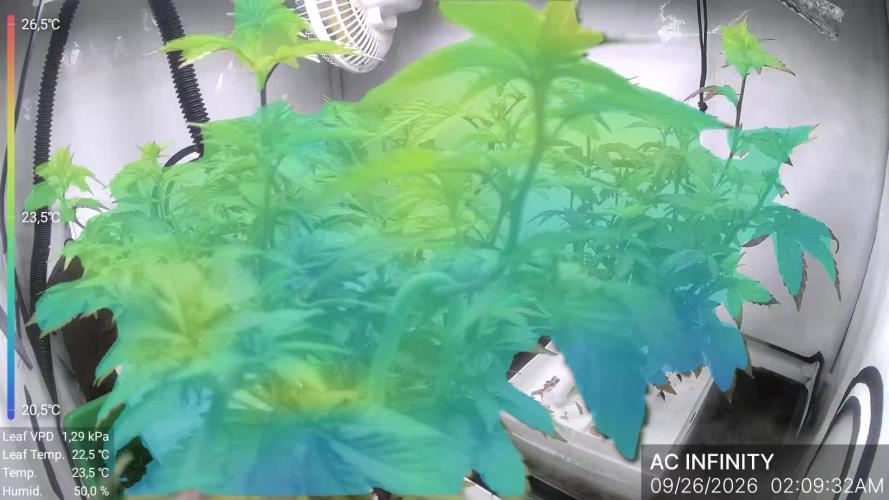
D26 26/09 : a new timelapse and some other pics and video from Spectron
D27 27/09 : Added a pic from Specton 7 side camera. I'm start to learn how to use its potential. This girls will be transplaned as soon as the main growbox is available (couple of weeks more or less)
D28 28/09 : LST

Likes
19
Share

@GoldenWeedGrower
Follow
Legend
Timestamp: 📅
EC - pH: ⚗️
Temp - Hum: 🌡️
Water: 🌊
Food: 🍗
pH Correction: 💧
Actions: 💼
Thoughts: 🧠
Events: 🚀
Media: 🎬
D: DAY, G: GERMINATION, V: VEGETATIVE, B: BLOOMING, R: RIPENING, D: DRYING, C: CURING
________________________________
📅 D105/R01 - 28/02/24
⚗️ EC: 0.9 pH: 5.2
🌡️ T: 21-25 °C H: 50-65 %
🌊
🍗
💧
💼
🧠 Ripening starts
🚀
🎬 Added timelapse and screenshots and monthly rate of T-H and VPD 📈📈📈 from TrolMaster App
Translate
________________________________
📅 D106/R02 - 29/02/24
⚗️ EC: 1.2 pH: 6.7
🌡️ T:21-24 °C H: 50-65 %
🌊
🍗
💧 Added pH+
💼
🧠 If someone who followed the diary from the beginning is asking himself what about mother plant "Mamma Aglio", here I posted some picture of her which demonstrate the difference between a bad and a good grow
🚀
🎬 Added pics of Nicole and pics of "Mamma Aglio" to show the difference between a bad and a good grow with sounds and TrolMaster logo. Added usual timelapse and screenshots.
________________________________
📅 D107/R03 - 01/03/24
⚗️ EC: 0.8 pH: 6.4
🌡️ T: 20-24 °C H: 45-65 %
🌊 2L
🍗
💧
💼
🧠
🚀
🎬 Added Timelapse and screenshots. 4 pics added
________________________________
📅 D108/R04 - 02/03/24
⚗️ EC: 0.8 pH: 6.7
🌡️ T: 20-25 °C H: 45-70 %
🌊 1L
🍗
💧
💼
🧠
🚀
🎬 Added Timelapse
________________________________
📅 D109/R05 - 03/03/24
⚗️ EC: 0.8 pH: 6.7
🌡️ T: 21-25 °C H: 45-65%
🌊 RES Changed 💦💦💦
🍗
💧
💼
🧠 I'm starting the flush, as trichomes look milky and quite ready. In this last week the ripening will be complete and th girl would be ready for harvesting.
🚀 Flush started
🎬Added 8 pics of trichomes, Timelapse and sceenshots. Two pics and two videos of my "garden's pre-harvest magic" 😋😋😋
________________________________
📅 D110/R06 - 04/03/24
⚗️ EC: 0.2 pH: 7.5
🌡️ T: 19-25 °C H: 55-65%
🌊
🍗 Flawless finish
💧
💼
🧠 1 day with pure water and now I added Flawless finish
🚀 Flushing
🎬Added Timelapse and sceenshots
________________________________
📅 D111/R07 - 05/03/24
⚗️ EC: 0.2 pH: 7.5
🌡️ T: 20-25 °C H: 55-65%
🌊
🍗
💧
💼
🧠
🚀 Flushing
🎬Added 8 pics. Added timelapse and screenshots. I also prepared a timelapse of the entire week with some music 🎵🎵🎵 and weekly rate of T-H and VPD 📈📈📈

Likes
4
Share


@CalGonJim
Follow
6/ 1AM MONDAY Slowing down now, they look good. 6am light watt down to about 90W. Should be good for the last week of just water 5.7. Calibrated 3 pH meters 2 yellow pretty good. More expensive Orange VIVOSUN was garbage. Only buy cheap ones
6/3 238pm I might take them all down and re-use the dirt into a 3 gallon fabric pot because I have a Fsst Buds Gorilla Cookies that looks like she could be HUGE if I move her. These seemed to have maxed out. 7z is the most beautiful, she is like a fountain of champagne!!!!!! Frost Banger is leafy, not big buds, not much smell and Purple Haze has a really heavy smell I dont want to lose. I will get a little less than an ounce from each, pretty small harvest but this is still experimenting with smaller than usual pots, MABYE 2 GALLONS IS THE SWEET SPOT, I will try on the next grow.
6/4 230AM they are slowing down now. I could go for 1 month or 2 longer but I will lose flavor if I do. so JUST WATER from now on. Then chop and use the dirt from these 3 to plant one 3 gallon Gorilla Cookies from a parallel grow in Tent 1.
4am They seem to be at peak flavor......MUST NOT KEEP GOING..... I will chop this week. I want them to dry out, then a flush of just water to rinse the soil for the next grow. Now I prep the soil for the next grow. All into a 3 gallon fabric pot with G.C. From FAST BUDS, that has the most potential harvest with 100% re-used soil. Senysem and Tasty Terps will be the final since as they replace all enzymes and growth engines for the next plant.
Im doing Elon fast turnaround rocket grows!! with robot grow tents!!
6/5 5am SENSIZYM 2mL L & TASTY TERPS 0.5mL L, 6.1PH. 🚨 Tent REDESIGN..... the surge protector is a source of heat, so are the USB adapters for the fans and cameras... MAYBE ....cut opening, move ALL electrical outside and feed usb cables through the arms then seal off... Cut through the tent or sting cables up the arms and cut the ducting, probably easier to cut a port in the ducting.
10am SENSIZYM TASTY TERPS One turns debris into simple sugars and TT eats the sugars and give a big boost of resin/flavor.
2L of water 4ML S. 1ml TT......PERFECT RATIO.... Using this mix was perfect timing. S will liquify debris TT will provide the amino acid/enzymes eating part. Beautiful response..
THEN I put the new light in and at the same watt too bright for the plants in there, I experienced at 93 watts and they are stressed....better luck next time.... goddmanit
6/6/2025 1222am New light to 90 plants on Custom built risers, 48oz cottage cheese containers from Ralphs work great, and double as a cleaning bucket....geenis the smart me are
6/7 520am they have peaked in flavor and I think they’re ready to be taken down. because of the soil bugs I don’t think it’s a good idea to reuse the soil. It seems pretty contaminated which is a real bummer and I don’t have the resources to rinse the soil in hydrogen peroxide and go through all the sterilization and I could just end up getting bugs all over the place or the egg something like that it will contaminate the room. It’s the reason I do not grow food or other plants in the medical marijuana room I also use that room as a filter for the house. The 6 dust & 3 carbon filters are on all the time so I always have one room that has some very clean air. I can’t spend a lot cause it’s not good for your human body to be an sterile environment like that for too long & body heat warms the room 2 degrees
240pm Marshal, Will and Holly never came back, so im going to go ahead and eat their food. Plants are doing great. Sleestacks started showing up asking for weed for some reason.
6/8/25 9:02am BIG FINIsH!!!!!❤️❤️💥💥🚨🚨🚨🚨🚨⏰⏰⏰⏰⏰🔔🔔🔔🔔🎉🎊🎊🚨💥🚨💥👍👍. ALL DONE I DID IT!!!! START TO FINISH, I ACTUALLY DID IT!!!! SMALL PLANTS ROCK WHEN IT COMES TO TRIMMING AND FINISHING RINSES AND STORAGE.....I FLUSHED ALL PLANTS WITH A GALLON OF PH5.9....THEN TRIMMED AND REMOVED FAN LEAVS ALL PRETTY, NOW JUST TO DRY THE PLANT ON THE VINE IN THE TENT, THEN CHOP, INTO DRYING TENT FOR A FEW DAYS, THEN INTO TERPLOC BAGS!!!!!
1130am. FROST BANGER AUTO. -- 8-10 OVERALL, 10-10 ON SEED TO SMOKE TIME!! VERY SHORT!!! NICE IN SMALL SPACES She is very leafy, likes bigger container than I use, she doesnt need much nutrient work bare minimum she holds lots of nutrients in her system.
PURPLE HAZE AUTO 8-10 OVERALL, 10-10 ON SEED TO SMOKE TIME! Medium hight VERY heavy smell the heaviest smell out of this and 7Z and FROST BANGER AUTO. Chuncky build not too leafy. 7Z AUTO 9-10 OVERALL, 10-10 ON SEED TO SMOKE TIME! She was the MOST beautiful This is the one for show.....She looks like a CHAMPAGNE FOUNTAIN!!!!! I have not seen this before, massive pistil formation for the bubbles look.... I REALLY like this one, In a bigger pot topped would look just amazing!!!!!
HOLY SMOLYl....I typed the review for tommorow!!!!!!! I HAVE to be awake at midnight for MONDAY HARVEST!!!!!!! I have lost about 2/3 of my body mass, not much of me left. I wont be around much longer kids.
6/10 1050pm 7Z.....just took a little from the bottom branch. PERFECT, she turned out perfect. 1130pm I can not figure out taste but it feels fresh, smooth, clean, refreshing.. Smoke is clean, ash is clean, water in the bong is not as yellow not as many left over nutrients....love it, will get more. 10 + 1 7Z just for beauty and smooth not disgusting overpowering high, just right!!!!
6/11 1230am getting more grovebags TerpLoc bags.....FROM THEIR WEBSITE...EVERYTHING ELSE IS FAKE.
143AM
GC 🚨🚨 TOP REDSIGN. NODE 5 & 6 HAVE 2 EXTRA BUD SITES.... I USUALLY TOP AT 3 OR 4 AND THEN TRIM OFF NODE 1 DEPENDING ON MAIN STALK HEIGHT, EASIER TO WATER AND MAINTIAN. BUT I CUT OFF NODE 1 THRU 4 AND LEFT MAIN COLA. INVERTED TOP??? SHE IS GIVING ME IDAS.... I WILL TOP GOAT AND GROW AT NODE 5 & 6 GOAT 2 WILL BE TOPPED AT NODE 4 & 4.....🚨🚨
Likes
12
Share


@BeHappyNtoke
Follow
This week is going okay i am sad that I lost the other plants due to a light dropping snapped her right in half but the beach ball is doing great responded well to topping hopefully growth will continue
Likes
20
Share


@Miss_Greenthumbs_Garden
Follow
Really enjoyed growing this strain , she has very nice taste like fruits🍍and candy 🍬 and a hint of gas ⛽️ hard hitting too

Likes
90
Share


@AsNoriu
Follow
Day 127. Chop day !!!!
Zkittalicious #6 is my first plant without any airy or small bud !!!! Plus he will be like others in 100g range ...
#2 should beat all single plant records ;)))
Happy Growing !!!

Likes
11
Share


@Skunkiest_bender39
Follow
10tage re-veg hat super funktioniert. Sogar einigeSonnensegel sind besetzt. Die bananas riechen super Süß und fruchtig.
Die Zake haben einen absolut heftigen Basilikum Minze Diesel duft! Alle samt super weiter gewachsen. Habe mich ins Zelt gesetzt und komplett abgedunkelt, stelle in 2 Tagen auf 12/12 um

Likes
Comments
Share


