


Likes
Comments
Share


@ChillOSki
Follow
The sisters have fully recovered from the beating from the tropical storm. Nearly 90 percent of pistils are red and the harvest window is approaching. Slight bit of nute burn on Patti but the others are loving it. Water only for the rest of the run. This week the ladies will have some cold stress training.

Likes
15
Share


@JeyGanesha
Follow
3 settimana 🔥💪👍 e crescono bene.......
La prossima settimana inizierà la pre fioritura...vamos vamos belle mie... Crescere forti e grandi.....,
Ma soprattutto venite buone🤣😂🤤
27/10/2024 ha iniziato la pre fioritura 💪💚💛❤️

Likes
Comments
Share


@TaeTooTimes
Follow
First Day June 16 :
• 1 3/4 Inch Tall
• 30ml Of Water
Day 5 June 21 :
•Nearly 3 Inch Tall
•50ml of Nutrients Water
So far I have been feeding daily when the soil runs dry
Day 7 June 23 :
•3inch 1/4
•80ml of Nutrients Water

Likes
3
Share

@Growhome_90
Follow
07.07:
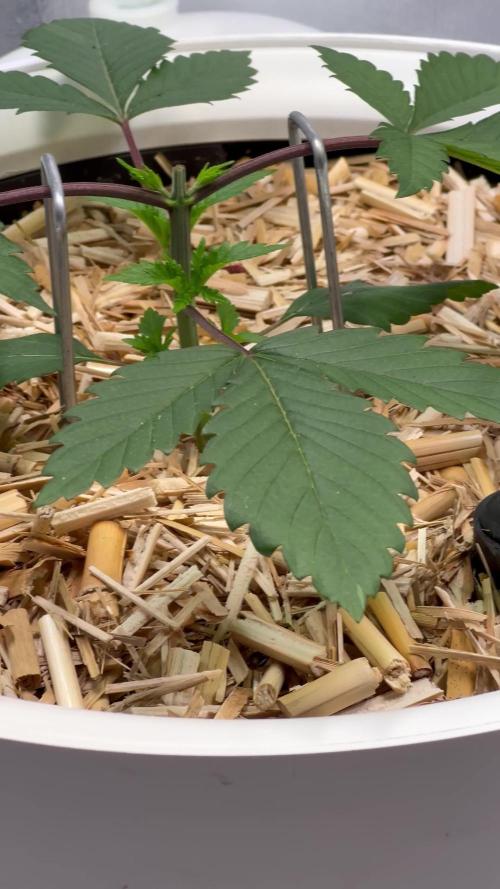
Nach dem Stress die letzten Tage (Umtopfen, Toppen), darf sie sich in den nächsten Tagen ein wenig regenerieren und neue Blattmasse ausbilden.
Der Plan für die Zukunft:
*4-Way-Main-Lining*
Im laufe der Zeit nehme ich die Triebe unteren Nodie ab und habe somit 2 Nodien (2./3.) mit der ich weiter trainieren werde.
Likes
10
Share


@BelgianBudtender
Follow
Heya Growmies
Week 6 flower is over, the smells are really starting to come through now, she's still killing off lower growth displaying symproms of a P deficiency, I even added some more PK 13/14, but her top buds are super healthy and getting thicker daily.
who knows, hopefully giving her some more PK will help.

Likes
5
Share


@magonheiro
Follow
I had alot of issues with my environment, tools, auto-watering, So I did alot of mistakes, but I could take some clones that I'll use in a next run but I wont create a new diary for it.
👋👋👋
Likes
9
Share


@Budhunter
Follow
Stardawg is beatiful.. I’ve grown it in the past and the plant was way smaller.. I think it will be the most yielding plant of this run and looks like may be the best taste too..
I finally managed to move however humidity is pretty high in my new place.. I am trying to put it down, hopefully it will work..
Likes
54
Share


@MadeInGermany
Follow
Hey guys :-)
Today a new diary starts with a strain from Amsterdam Genetics that I'm really looking forward to ☺️.
I put 2 seeds to germinate.
The more beautiful phenotype is kept in this diary, the other one is of course also preserved and is grown to the end 👍 .
Of course everyone will be on instagram. (Maybe I will spontaneously start an extra diary with each phenotype, depending on whether time permits.
Since I still have 3 seeds left, they will also come in the course of time 😃.
The seeds were placed between damp paper towels to germinate.
As soon as the first life appears they come to root in rockwool cubes and a greenhouse hood where there is a very high humidity.
In addition, the greenhouse is heated so that the roots can develop nicely 👍.
This passage is fertilized with the Greenhouse Feeding Bio line 💚.
I'm really looking forward to growing with Amsterdam genetics because everything I've had from them so far has been very good 👍.
Have fun with the update and stay healthy 🙏🏻
👇🏼👇🏼👇🏼👇🏼👇🏼👇🏼👇🏼👇🏼👇🏼👇🏼👇🏼👇🏼
You can buy this Nutrients at :
https://shop.greenhousefeeding.com/us/
👇🏼👇🏼👇🏼👇🏼👇🏼👇🏼👇🏼👇🏼👇🏼👇🏼👇🏼👇🏼
You can buy this strain at :
https://www.amsterdamgenetics.com/product/choco-cheesecake/
Water 💧 💧💧
Osmosis water mixed with normal water (24 hours stale that the chlorine evaporates) to 0.2 EC. Add Cal / Mag to 0.4 Ec Ph with Organic Ph - to 5.8 - 6.4
MadeInGermany

Likes
Comments
Share


Likes
2
Share


@Viccrazyweed
Follow
Shit got serious, my biggest fear has come true, the XXL pheno is here
She has grew even more than the roof so i had to perform the LST in order to provide her some regular light instead of the madness she was being
This is going crazy as hell wtf this auto is growing even more than the photoperiodic ones

Likes
19
Share


@CannabisAprendiz
Follow
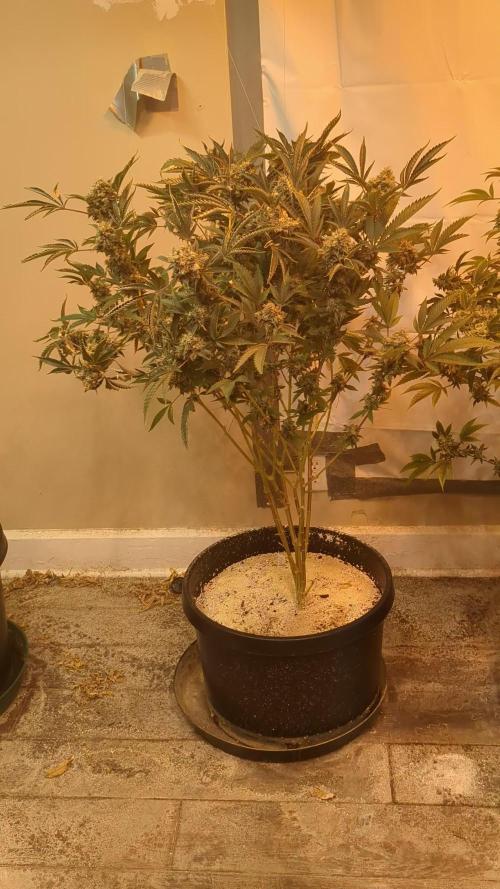
Bueno , este es el segundo cultivo que realizó del la cepa "Waka" , el anterior lo tengo igualmente documentado en otro diario .
en esta ocasión cultivamos los clones que habíamos recolectado del cultivo pasado , guardando los fenotipos que nos gustaron más y los clones restantes los pasamos a floración que fueron los que se le hizo seguimiento en este diario.
El crecimiento fue bastante explosivo y reaccionaron muy bien a cada trasplante realizado .
pude observar que los clones de cada fenotipo seleccionado se desarrolló con mucha similitud al de sus madres .
El olor en vegetación es bastante discreto y en floración se pone un más intenso
El desarrollo en floración fue explosivo generando bastante resina y se vieron muy hambientras .
Al fumar se puede sentir un rico toque cítrico en las N° 4 se siente un fuerte sabor a limón en algunas flores mucho mas marcado que en otras,
N° 3 y 13 un agradable toque a naranjas muy rico de sentir en el paladar , La N° 8 con pizcas dulces bastante interesantes.
El humo al fumar es muy suave lo que permite sentir mejor el sabor de cada fenotipo.-
saludos y buenos humos😉
Al momento de cosechar se cortaron los clone y se dejo secando en oscuridad a temperatura ambiente por cerca de 16 días posterior a eso se pasó a curar en frascos

Likes
6
Share


Likes
4
Share


@18six12twelve
Follow
I've topped this girl a week before I switched to flower, they're all in a 120 x 120 x 200 frow tent under a sf2000 from spiderfarmer I'll add a HLG qb135 in about a week.

Likes
2
Share


@Cosmodude
Follow
10/29/20-Day 23 #1) 4.5” tall, nice looking 4th set of leaves. #2) 5.75” tall. All new growth, including lower axillary buds, is yellowing. Green tint toward tips, brown/copper spots on 3rd set of leaves. #2 is taller because is lacks chlorophyll and is stretching to get more light.
10/31/20-Day 25 - watered 300ml each
11/2/20-Day 27 started LST on #1.

Likes
30
Share


@Green_Dream
Follow
It's been a pretty good week. I did quite a big defoliation, as things were getting crowded.
I switched to a more flowering dominant feeding, I decreased the Nitrogen and pumped up the phosphorus and potassium.
I will soon do a flush, as it looks like the nuts are starting to accumulate at the roots.

Processing
Likes
2
Share


@Luv2Grow
Follow
Day 50 - Started week 8 today with a healthy drink of water and nutes. Things are looking real good with this girl and she’s finally starting to get a bit of frost going on her tops now too. Didn’t do any defoliating today, just gave her a drink and tucked the leaves as best I could.
Day 51 - Nothing much new today, just got her out and got some updated pictures. Also did a little defoliating then tucked her back into the tent and tucked the leaves again. She’s budding up nicely and starting to put off a tiny bit of a sweet/creamy smell.
Day 52 - She’s budding and frosting up more each day. I did go through today and removed quite a few of the top fan leaves over the middle of the plant to keep everything opened up, they were getting pretty big and overshadowing everything. I tucked everything else in the middle and she should be needing some water tomorrow.
Day 54 - Gave her a gallon of water and nutes today, she was pretty dry. I was also told before to add some molasses to the water so added a bit of that as well and see what it does for her. Went ahead and removed a couple dead lower leaves as well. Looks like she’s about done with her stretching and is just packing on the flowers now.
Day 55 - Nothing much new going on today, just removed another couple dead and big fan leaves. The buds are fattening up nicely and starting to smell a bit stronger now.
Day 56 - The end of week 8 and she is fattening up nicely and really starting to put out a sweet smell. The pictures don’t do it any justice but some awesome colors coming out as well. She’s drinking a lot of water so I’ll be giving her some more water and nutes tomorrow.
Likes
16
Share


@Raizativa
Follow
Semana 4:
Riego 400ml
1ml calmag
1ml Bio Grow
1ml Bio Heaven
0.5 Micorrizas colectivo
Ya todas mostraron pistilos.
Se realizó LST

Likes
Comments
Share


@BruWeed
Follow
10/03 - La semilla de estuvo hidratando por 24hs en agua.
11/03 - La semilla se encuentra germinando en papel húmedo.
14/03 - Germino y aprox la raíz media 3cm. Fue directo a un vaso de plástico chico con sustrato.
18/03 - Brotó.
Desde su germinación hasta ahora pasaron 17 días en total.
Por el momento viene bien, ya en su segunda semana de vida comencé a regar poco con los fertilizantes. Solo agregue 0.5ml por 1L de agua. No agregue toda la mezcla a la planta.

Likes
30
Share

@Doofy
Follow
Goin to let her grow, for another couple of weeks. Will keep an eye on the trichomes and cut 1 plant if she is ready. Will let the thin one grow larger... less CBD %, but more harvest!
The one is gettin fat 🤩❤️😛
Likes
12
Share


@Ctbest2023
Follow
Week was good still no signs of pistils though but I’m all for getting them bigger and maximizing yield I have a few other plants in this tent atm pay them no mind I been really pushing the ppms I want to say it’s at 1950 rn using an ph perfect no worries about nothing sometimes they get a little nute burn but the plants quickly adapt and thrive fastbuds genetics are definitely on top of my recommended seed banks every seed sprouted and they can take alot of stress even bein autos where ppl say don’t do this or that I always test the genetics to see what they can and can’t take @ Molly from fastbuds sorry for the wait but I have nothing but praises for your team and your genetics happy growing all!!!