



@MindFlowers68
Follow
Stopped feeding this week other than one watering with molasses. Needing to be watered every 3 days. Other waterings using ph'ed filtered water to 6.5 set on my air bubbler for a few hours before watering.
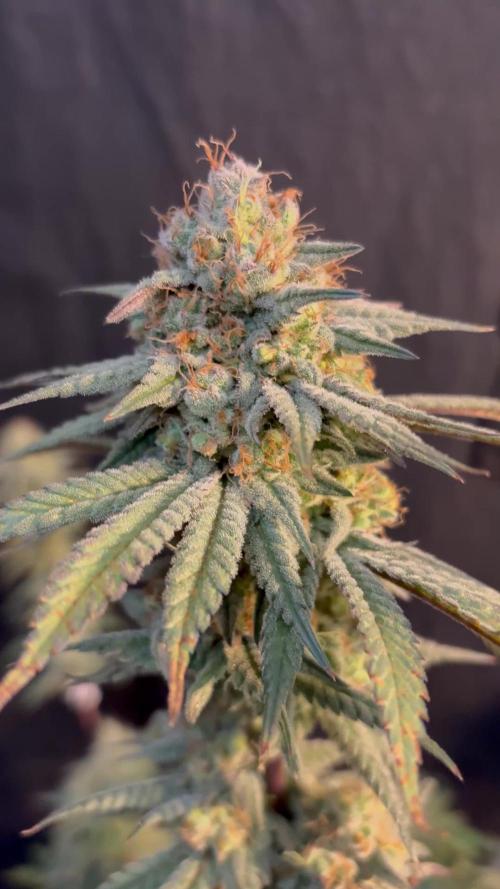
She's very close to being ready. Another week and i think she will be perfect. Notice leaves fading end of last week and they have been getting more color throughout the week. Bud growth only happening closes to the light and much of orange hairs are white. Not a ton of amber trichomes yet which is good. Really liking how this plant is turning out. Nice loud terpene profile and fat dense frosty buds. Trimming should be pretty easy on this one which is a relief knowing how much work I have ahead of me. I think this very could be the fast version.




@Ninjabuds
Follow
A-1 of a plant just like the gorilla cookies auto. Massive buds with a huge plant structure. This plant will fill up any space you give it. Giant round rungs all over. Super dank when I was wet trimming the plant about every 2 min I had to clean off the gunk on the scissors this plant definitely has some huge tricombs. It doesn’t look like it but when you cut into it you can really see. There buds are gonna be awae to smoke just like the gorilla cookies auto. This strain has potential to breed with some fire




@Ultraviolet_
Follow
Turned off IR @ nights
Red wigglers (Eisenia fetida) are highly beneficial. They are considered an ideal choice for "no-till" or container-based organic growing because they live in the upper layers of soil, feeding on organic mulch rather than the plant's root system. Red wigglers accelerate the breakdown of organic amendments and produce high-quality, nutrient-dense worm castings directly in the root zone. Clover is another exceptional component of an organic rhizosphere, offering a sustainable, self-sustaining alternative to synthetic nitrogen fertilizers produced via the energy-intensive Haber-Bosch process. By forming a symbiotic relationship with Rhizobia bacteria, clover converts atmospheric nitrogen N2 into ammonium NH4, providing a steady, slow-release nutrient source that enhances soil health and reduces environmental impacts. Red clover offers superior nitrogen fixation and biomass production compared to white or yellow clover, making it the premier choice for maximum soil vitality, particularly for improving soil structure and providing a high-volume nitrogen credit for subsequent crops.
If it is fully functional and efficient soil, the rhizophagy cycle is far superior long-term than any synthetic delivery when it comes to preventing deficiencies, not because it's "better," per se. The medium will require a very high CEC to make it to harvest without re-fertilization. The rhizosphere acts as a dynamic, interactive exchange where plants and soil microbes trade resources based on immediate needs. When a plant lacks a specific nutrient, it changes its physiology and releases specialized chemical cocktails—root exudates—into the surrounding soil. These exudates, which include sugars, amino acids, and organic acids, serve as a "shopping list" to attract specific microorganisms, which in turn return higher levels of desired nutrients. There is nothing in comparison to synthetic delivery, which causes plants to stop producing exudates, effectively "starving" the beneficial soil life, over time turning the soil barren and void of microbial life. Responsible use, applying the right amount at the right time, can minimize these negative effects. Relying solely on synthetic fertilizers without replenishing organic matter is what typically leads to exhausted soil. The use of synthetic fertilizers can utilize the Cation Exchange Capacity (CEC) of the soil, but without a robust rhizosphere and active microorganisms, the efficiency of this process is significantly reduced. This makes synthetic growing more difficult to prevent deficiencies overall compared to an efficient organic living soil with a robust rhizophagy cycle, as there is no "one size, fits all" when it comes to different nutrient profiles of strains/genetics, making it trickier to "guess" and prevent creeping deficiencies.
CEC does not contribute towards EC. Add more CEC using biochar, problem solved. If you keep pH between 6.3 and 6.7, hydrogen is exudated to cycle the medium's CEC for its needs. Keeping the pH between 6.3 and 6.7 creates an environment where plants release H+ to displace positively charged nutrients (like Ca2+, Mg2+, K+ held on soil particles or within artificial media this cycle through nutrients via the medium's Cation Exchange Capacity (CEC)
Microorganisms generate a stable potential of approximately 0.5 V EC. The rhizosphere creates its own food, similarly to chelation, using 1000's of varying combinations to create its own food.
Start to finish, just add water. Eventually, more materials will need to be added at the beginning of each new grow, but very attainable to go from seed to harvest without ever fertilizing, regenerative cultivation.
ATP is king above all else when it comes to biomass accumulation. Cellular root respiration and cellular respiration are essentially the same biological process, the breakdown of glucose to create usable energy (ATP) in the presence of oxygen, just taking place in different parts of the plant. Synthetic (salt-based) grows have significantly lower levels of total rhizosphere respiration, often referred to as root-zone activity, compared to organic living soil grows. While the plant roots themselves may respire in both systems, the surrounding soil ecosystem in a living soil setup is vastly more active, teeming with bacteria, fungi, and beneficial microorganisms.
2 pools of ATP, it won't double in growth buuuut, but improving root respiration by ensuring high oxygen in the soil is crucial. Good aeration ensures roots can fully utilize glucose to generate the ATP necessary for nutrient uptake, leading to healthier and more productive plants, even if growth isn't exactly doubled. The ATP created using root respiration is dedicated to rootzone growth; the ATP created using regular cellular respiration in a synthetic system would have to dedicate a lot of ATP to the roots when there is little or no root respiration. It's true that there is less of an initial ATP cost in breakdown when nutrients are already in their final form (synthetic), but you lose a solid chunk of ATP when the entire plant is reliant on cellular respiration alone; a large portion of ATP is dedicated to root zones for "forced" (active) nutrient uptake. Making it overall less efficient, even if the initial cost of breakdown is higher. If that makes sense. Oxygen is of critical importance when growing in living soil compared to synthetic methods because it supports the metabolic needs of the microbial, fungal, and insect ecosystem, rather than just the root respiration required by the plant itself. While synthetic grows can survive in lower-oxygen environments with precise mineral feeding, living soil systems rely on aerobic microbes to decompose organic matter (microbial mineralization) to create plant-available nutrients, which is an oxygen-intensive process. While a specific fair percentage is difficult to guess, my experience points to a massive, compound difference between the two methods and the amount of oxygen required. All the ATP spared is used on more biomass, not only that, but the extra root respiration can achieve a much higher CO2 compensation point naturally than you could with synthetic and atmospheric CO2 alone.
As a plant grows faster and increases in size, its demand for nutrients to support that growth increases, requiring a higher rate of nutrient uptake. As plants enter phases of rapid vegetative/floral growth, their metabolic demand for nutrients increases exponentially. Without a robust buffer zone—whether in the soil (cation exchange capacity) or in a hydroponic reservoir—deficiencies will occur rapidly because the instantaneous demand for specific nutrients can quickly exceed the rate of supply.
A growing body of evidence suggests that organic living soil provides superior long-term soil health and environmental benefits compared to synthetic fertilizers, which are often criticized for promoting a cycle of dependency and degradation. While synthetic fertilizers offer short-term convenience and high yields, they often come at the expense of long-term soil health, sustainability, and increased corporate control over growers/ farmers. Organic living soil, while slower and requiring more care to establish, creates a sustainable, resilient, and, ultimately, more fertile environment.
We don't grow; we facilitate energy conversions.
Once all water is removed, approximately 95% to 97% of a plant’s dry matter consists of carbon, oxygen, and hydrogen. These three elements form the structural backbone of all plants. Corporate interest sells you the other 3-5% NPK & all the rest in RATIOS! Why not throw the 3-5% in a pot, and focus your energy on the other 95-97%?
Indigenous Amazonians created, or at least significantly enhanced, the fertile, dark soil known as Terra Preta de Índio (Portuguese for "Indian Black Earth") by incorporating biochar and other organic materials into the soil. This anthropogenic (human-made) soil technique, which dates back roughly 2,500 to 8,000 years, allowed ancient civilizations to flourish in regions with naturally poor, acidic, and nutrient-poor tropical soils.


@Naujas
Follow
My house is full of sweet chocolate and fruit aroma:) her flowers are full of shiny trichomes :) the girl only bloomed for 57 days, but she is already ready, maybe her flowering sped up in my grow box, high temperature 33°, because of that under my arm my light was set to 85%. From the first days, the girl showed fast and healthy growth:) I made a timelapse video, but unfortunately due to problems with the SD memory card, it takes 3-4 days at the end of the video, besides, my tent is too small for that :D I also made bubble hash from sugar leaves myself :) I tried Zamnesia seeds for the first time - I hope that someday this seed bank will offer me its products to try again :) thank you all. you were together :) good luck with the growing.


@SUMAN
Follow
This week everything was going great, until boom I broke the stem of the runtz muffins trying to dry off some excess water. Also I've started to see some yellowing leaves in the Yuhbary and blackberry moonrocks.Let's see what happens

shorts_status_processing


@maddog767
Follow
hello guys..its bin a long week but my girls are here at week 5,,week 5 will be the last final week of veg an hopefully the results will be good as they look healthy right know...its my first time doing everything what am doing here and i have learn allot,,,GG4 is a stable strain just don't top lower then 5 sprouts you will get a slow growth...with the HESI NUTRIENTS,,, I AM FEEDING EVERY 2 OR 3 DAY,,,and i am still going with NO BURN...the only stress they pass was HEAT in the first 3 weeks of veg,TOPPING and LST....lets see what week 5 brings guys..as i always say feel free to ask anything about my grow anytime..😏🙏🙏🙏💪💪💪😎😎😎



@ArtisticGrown
Follow
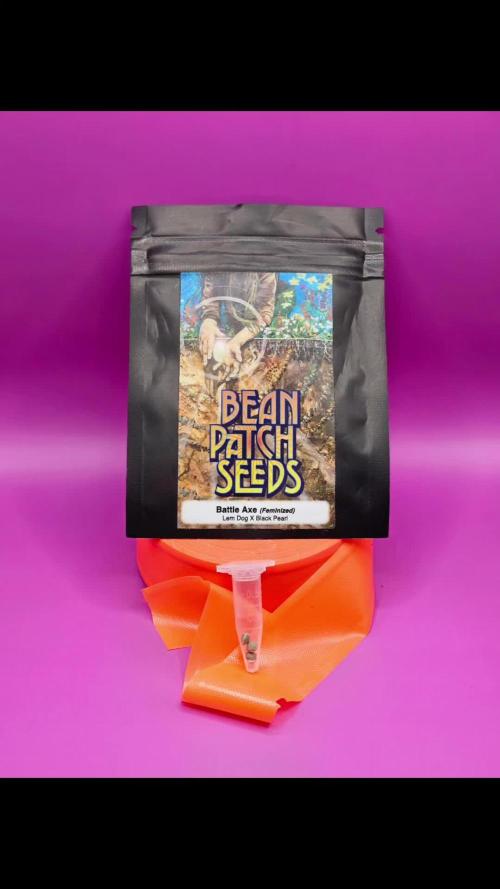
Yessssss HAPPY 420 I'm so greatful to be able to finish this harvest out and this diary. All the Love the BATTLE AXE has taken my heart. Lem dog x BalckPearl ♥️ oufff such a great cross. These flavors are on point. She was soaking in resin by day 49 in bloom. She loved the nutrients, absolutely enjoyed the micro brews I was giving em.
Such an easy trim tooo like it's wild when there's nothing but dank fat dense coals your trimming is easy. It's like deff not trim jail like resort chilling listening to the ocean waves haha 😅
Lets gooooo. I suppose I'll be quite now haha. The battle axe is a banger and should be in your collection. Get you some @ beanpatchseeds.com


@Moss420
Follow
Got a new light this week, it's basically a HLG 260 R-Spec except locally manufactured using the same Samsung LEDs. Big Mumma got her 60x60cm tent today and will go in there under one Viparspectra 300W blurple (130w from the wall). I trimmed her, super cropped her main stem and added a scrog net in preparation of flowering her in the next couple of days.
Because my other plants were getting up past 75cm after 7 days of flower (100cm is my absolute max) , I decided to supercrop the canopy back down to about 60-65cm - it was pretty scary and I definitely broke the outer stem on some of them. Also gave them a good trim. Fortunately most bounced back strong the next day which are the most up-to-date photos you see (17/4/20).


@Knowitall
Follow
This was just a temporary stage where I put the plants on a wilma to keep em watered n growing nicely while I built my table for them, not much went wrong this week.. the other little ens are in the little veg tent as well waiting to be potted up into there final home


@IronGrower
Follow
Since my last grow i have a problem with powdery mildew... So on veg. i just spray Sulfur and worked fine... (the smell is terrible....)
now i am in flower and found the mildew again... i try a new mixture:
dry common horsetail
1 onion
1 garlic
cook that for around 1 hour.
Then i flux it 1:5 with water.
The smell is not so bad and just for 2 days. The leaf and flower not change color or smell.
Hopefully it works! i will spray that now every week.
Update:
Flower Day 20
I start with the Top dressing on all Plants. They start to frost.
The powdery mildew spreads :'( i dont know what else i can do?! i spray again!


@Bread_n_Buds
Follow
The Sweet Cherry Pie is not very fast but how beautiful and how it is resining. It is very beautiful because having a short distance the stronzetta is filling well, go Baby!
LIGHT >> MARSHYDRO SP3000 AT 100% OF POWER, WE ALREADY LIKE IT SO MUCH BECAUSE IT COVERS THE INTACT LENGH OF THE TENT.
TENT >> MARSHYDRO 120x60x180
CHECK IG >> https://www.instagram.com/marshydro_aliexpress2/
Buy >> marshydroled.aliexpress.com
GD >> https://growdiaries.com/grow-lights/mars-hydro


@Jacks_Pot
Follow
Not so much to say about this week. The condition of the plants stayed the same.
Buds are starting to fatten up and smell is very noticable.
This I gave them this week:
Day 1 → Dry
Day 2 → Each 1250 ml (0.33 gallon) ph adjusted tapwater (ec 0.48– ph 6.5)
Day 3 → Dry
Day 4 → Each 1250 ml (0.33 gallon) tapwater with Plagron nutrients (see above for which and how much)
Day 5 → Dry
Day 6 → Each 1250 ml (0.33 gallon) ph adjusted tapwater (ec 0.45– ph 6.5)
Day 7 → Dry
The cobs are now at 45 cm (17.7 inch) with 296 watt → DLI 41/PPFD 949
Temperatures stayed between 21.9 – 29.1 °C ( 71.4 – 84.3 °F) and humidity levels between 46 – 68 %
Till next week!
Do you want to grow this strain?
👉 https://www.barneysfarm.us/pineapple-chunk-weed-strain-15 👈


@TiRobotProds
Follow
Bonjours à tous, nous entamons les deux dernières semaines de rinçage pour ces dames. La gorilla sherbet 1 a été récolter.


@Sobreruedas
Follow
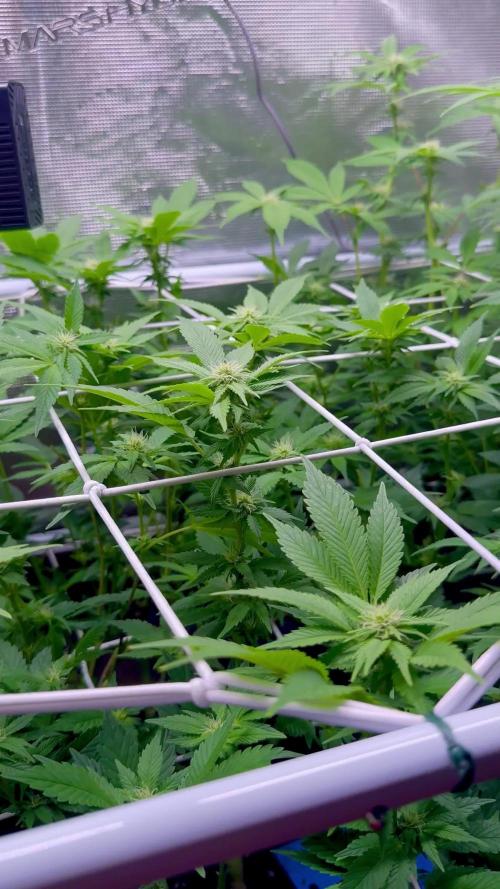
This week I performed a good defoliation to clean up the canopy and improve light penetration and airflow.
I also added a second scrog net to help support and organize the branches as the plant continues developing in flower.
On the positive side, I haven’t seen any more signs of the thrips since the treatment, so hopefully the issue is under control now 🌱💪


