





@Barzenegger
Follow
I was getting a bit frustrated again, since I could not seem to fix the issue properly. I put in a net and super cropped the GMO twice, while bending the rest of the GMO and Glookies under the net. I chose the height to be slightly above where the Acapulco Gold was so I could push it into and did not have too much trouble to also fit the other 2, much taller plants underneath. I had to move the tallest GMO branch across the center of the tent, invading the space of Sour Strawberry and Acapulco Gold.


@mheat
Follow
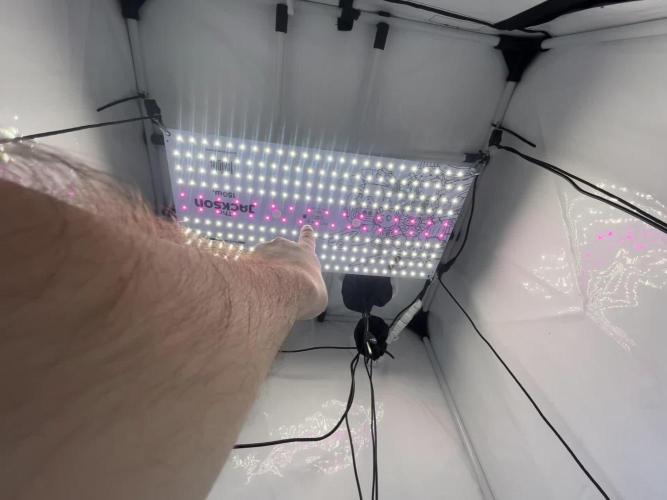
Trying out LST, I broke off 2 of her stems..🙁. I seem to have her contorted too, smells great tho'! I added some Bud Explosion now that she is in flower. Also added another autocob.
Happy Growing!



@Wondrej
Follow
One love Growmies 💚🇯🇲
Week 3 hitting around.
26.11.2025-Day 16(Week 3)
November 25th, officially kicked off Week 3 of Vegetation.
That means our girls are today
16 days into the active veg. cycle (measured from the first cotyledons on 10.11) so we are going to make some photos of these beautiful ladies.
The Morning Droop Mystery Solved: 💧
You'll notice the leaves in the photos are a bit droopy/downcast. Don't worry, this isn't stress or a deficiency—it's just a routine event:
1. Night-Time 🌕 Application: I hit them for the first time with their foliar spray (PPM) right before lights out yesterday.
Foliar feeds must be applied in the dark to prevent light burn.
2. Lights-On shock⚡️ : The pictures were snapped right after the tent lights came on.
After a long night, and with the spray still on the leaves, it takes them a little while to "wake up" and lift their “solar panels” back up. They'll be fully standing and stretching within the hour!
A Quick Note on Size vs. Time:
Some people might look at Week 3 and expect bigger plants, but here’s a tip for anyone running an organic system: Don't panic about size in the early stages!
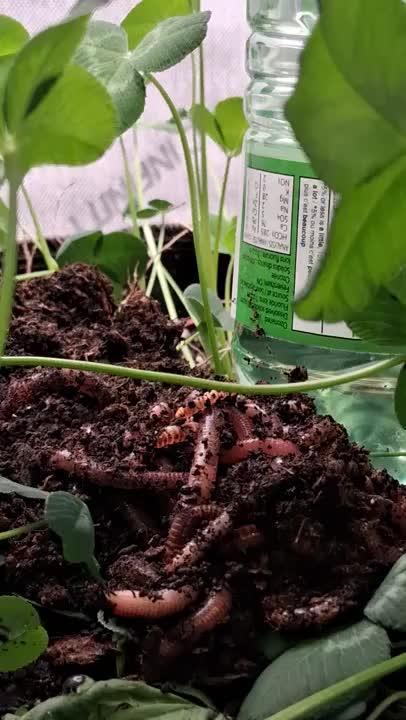
In Living Soil, the plant spends these first few weeks building a massive, resilient root system and linking up with the soil’s microbial life.** 🐛
QUICK UPDATE WITH PHOTOS FROM MID OF WEEK 3-
27.11.2025: Tonight the plants look very strong, so the first training session took place.
The girls were topped and bent for the first time.
I hope both of my toppings were successful and I don’t stressed my ladies too much to stop them. Fingers crossed for week 4.
🤲🏻🤲🏻🐛


@J_diaz420
Follow
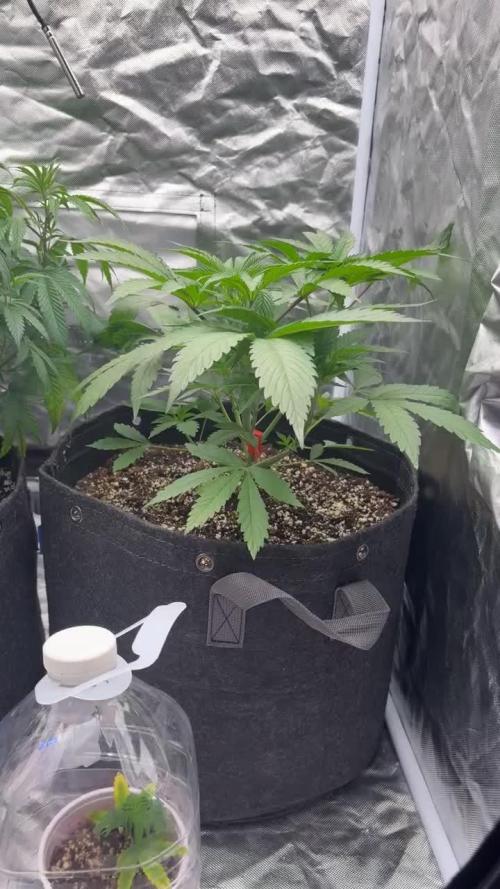
Transplantes a macetas finales de 7lts realizados tempranamente para que se acomoden bien para pronto pasar a floración, no más de los 30 días de vegetación 🍀👨🌾🏻



@Altitonans_Fulmen
Follow
The thoughts shared in this journal are my own—a snapshot of personal understanding at the exact moment of writing. It is not intended as a reference of absolute fact, but rather as an exercise in ἐπίνοια (epinoia): an exploration of thought, intuition, and creative insight.
Epinoia(ἐπίνοια) is a Greek term meaning thought, intention, purpose, or conception, stemming from "mind" (nous) and "upon" (epi), representing the mind's reflective or creative process, used in philosophy (Aristotle, Gnosticism) and theology to discuss understanding and divine names, appearing once in the New Testament for the "intent of your heart" (Acts 8:22). It signifies the mind's operation to form ideas or designs, contrasting with raw data or innate perception, and in Gnosticism, it's an emanation of divine wisdom (Sophia).
"Φsis" is a stylized spelling of the Ancient Greek word φύσις (physis), which translates directly to "nature" or the intrinsic essence of a living thing.
Exploring the deep intersection of science, intuition, and creative insight often leads to breakthroughs that challenge our understanding of what is possible. When we approach high-performance cultivation not just as a hobby, but as an exercise in pushing a biological system to its absolute genetic ceiling, the results can transform from simple data points into profound proof of concept. Achieving a highly optimized environment requires a shift in mindset away from empty promises and directly toward verifiable proof, building true confidence through a detailed archive of past lessons and strategic adjustments.
This philosophy turns a standard space into a precise mass and energy balance equation, where every variable is managed to eliminate biological bottlenecks entirely. In a recent project four individual plants produced 344 grams, 280 grams, 445 grams, and 255 grams respectively, resulting in a total harvest of 1,324 grams, or 47.2 ounces, of dry product. Operating with a 600-watt light source inside a four-by-four footprint, this brings the final efficiency to an exceptional 2.21 grams per watt.
To put this in perspective, the standard traditional indoor benchmark has long been established at 1.0 grams per watt, while expert commercial operations target 1.5 grams per watt, and elite commercial systems push the envelope between 1.8 and 2.0 grams per watt. Reaching 2.21 grams per watt places the outcome squarely within the top 0.1 percent of global benchmarks, acting as a true statistical outlier that demonstrates what happens when flawless environmental parameters meet a cultivar pushed to its maximum potential. Reaching this level of mastery demands that we move past the common trap of the mirror fallacy, where the ego mistakes its own limited perspective for universal truth and views different ideas as personal threats. True progress requires curiosity and dismantling the illusion that our immediate viewpoint is the objective standard, shifting the focus instead toward how a system actually operates under the absolute laws of physics. In a high-performance setup, maximizing output is never about adding random additives or forcing growth, but rather about systematically removing the limitations that hold the organism back. By maintaining a perfect vapor pressure deficit, ideal root-zone oxygenation, and precise structural canopy training every single minute of the cycle, the plant is freed to express 100 percent of its DNA potential without any lingering genetic latency.
Managing a dense canopy inside a tight footprint presents the ultimate challenge of mitigating stagnant air and preventing moisture issues. Overcoming this bottleneck relies on a sophisticated synganic approach, which seamlessly marries the precise control of synthetic mineral inputs with the natural resilience of active organic living soil. This method transforms the room into a closed-loop system where the internal microclimate is entirely isolated from external weather fluctuations and pests. Rather than openly exhausting the atmosphere, the air is continuously recirculated, enriched, and scrubbed using 264-nanometer ultraviolet light.
The foundation of this thriving ecosystem is a comprehensive substrate composition designed to provide perfect aeration, structural integrity, and biological buffering. The primary media base integrates expanded clay aggregates, coir chunks, premium coco coir, sphagnum peat moss, horticultural perlite, vermiculite, pumice, and volcanic basalt rock. To continuously condition the soil and fine-tune mineral availability, the mixture is amended with agricultural gypsum, wollastonite, dolomitic limestone, basalt rock dust, micronutrient-rich volcanic ash, greensand, crushed seashells, biochar, and shungite. This mineral architecture creates an incredibly stable environment where active soil biology naturally prevents salt toxicity and ensures steady, reliable nutrition throughout the entire life cycle.
Living organisms within the substrate play a vital role in maintaining this delicate biological balance and breaking down organic material. Red wigglers continuously process organic matter into easily accessible plant nutrients while aerating the media; specialized predatory mites offer excellent biological control against common soil pests, and pillbugs excel at breaking down tough, woody elements. These biological components are further supported by a rich layer of organic amendments including high-phosphorus steamed bone meal, high-nitrogen dehydrated blood meal, fish bone meal, cold-processed kelp meal, dehydrated moringa powder, spirulina powder, and marine crustacean biomass rich in chitin. Combined with biological inoculants like mycorrhizal fungi, premium worm castings, and concentrated humic and fulvic acids, the entire system operates as a flawless biological transducer of light and energy.
Ultimately, shifting our perspective to view a grow space as a complete mass and energy balance equation changes the entire nature of agriculture. Success ceases to be a matter of luck or anecdotal habits and instead becomes the predictable result of meticulous design, patience, and the strategic elimination of failure. When science, biology, and engineering converge so harmoniously, we gain a deeper appreciation for the intricate natural systems that sustain life and growth. By sharing these detailed insights and refining our techniques, we can continue to unlock the absolute maximum potential hidden within the living world around us.
Comprehensive Substrate Composition:
1. Substrate Base & Aeration Media
Expanded Clay Aggregates (Hydroton Pebbles)
Coir Chunks & Horticultural Coco Coir
Sphagnum Peat Moss
Horticultural Perlite
Horticultural Vermiculite
Horticultural Pumice
Volcanic Basalt Rock
2. Mineral Amendments & Soil Conditioners
Agricultural Gypsum (Calcium Sulfate)
Wollastonite (Calcium Silicate)
Dolomitic Limestone (Calcium Magnesium Carbonate)
Basalt Rock Dust (Trace Mineralizer)
Azomite (Micronutrient-Rich Volcanic Ash)
Glauconite (Greensand)
Crushed Seashells (Calcium Carbonate Source)
Pyrolyzed Carbon Feedstocks (Biochar & Horticultural Charcoal)
Elite Shungite (Carbonaceous Mineraloid)
3. Organic Nutrient Amendments
Steamed Bone Meal (High Phosphorus)
Dehydrated Blood Meal (High Nitrogen)
Fish Bone Meal (Phosphorus & Trace Calcium)
Cold-Processed Kelp Meal (Ascophyllum nodosum)
Dehydrated Moringa Oleifera Powder (Botanical Nutrient)
Spirulina Powder (Arthrospira platensis / Cyanobacteria Nutrient)
Marine Crustacean Biomass (Shrimp & Crab Chitin)
4. Biological Inoculants & Organic Acids
Mycorrhizal Fungi Inoculant (Endomycorrhizae / Ectomycorrhizae)
Vermicompost (Premium Worm Castings)
Humic & Fulvic Acids (Concentrated Humates)
Human Body
65% Oxygen (in all liquids and tissues, bones, and proteins)
18% Carbon (everywhere)
10% Hydrogen (in all liquids and tissues, bones, proteins
3% Nitrogen (in all liquids and tissues, proteins
1,5% Calcium (lungs, kidney, liver, thyroid, brain, muscles, heart, bones)
1% Phosphorus (urine, bones, DNA)
0,35% Potassium (enzymes)
0,25% Sulphur (proteins)
0,15% Sodium (in all liquids and tissues) (in terms of salt)
0,05% Magnesium (lungs, kidney, liver, thyroid, brain, muscles, heart)
Plant
Mother-nutrients: Carbon 47%, Oxygen 43%, Hydrogen 4%.
Macro-nutrients: Nitrogen 3%, Phosphorus1%, Potassium1%, Calcium1%, Magnesium0.5%, Sulfur0.5%.
Micro-nutrients: All the rest combined 1%
More energy, more blueprint.
Although CO2 is a naturally occurring gas that both humans and plants use, it is invisible and odorless and can be fatal at high-levels. If you’re supplementing carbon dioxide in your grow room, ensure there are no leaks in any CO2 devices and always use a CO2 monitor and alarm.
0.02% Life unsustainable
0.03% Life OK
0.04% Current ambient atmospheric co2
0.04%-0.1% =400-1000ppm standard indoor co2.
0.1%-0.2% = 1000- 2000 ppm (prolonged exposure: drowsiness).
0.2%-0.4% = 2000-4000ppm (Headaches, fatigue, stagnation, stuffiness, poor concentration, loss of focus, increased heart rate, nausea).
1% is toxic
5% is quick death.
"Dabo vobis quod oculus non vidit, nec auris audivit, nec manus tetigit, quod in cor hominis non ascendit."


@CannaIGrow
Follow
Trop Cherry #8 x BeeJayz hasn’t been topped, I transplanted the girls this week from a 1 gallon pot to a 3 gallon pot. Trop Cherry was in a plastic pot but now in a fabric pot. Plants seem to be growing well.


@Greenmartini
Follow
All good this week too. The strawberry lemonade turning purple!:)) gg#4 it’s a hermy… the other plants are good! White widow xxl it’s the first to harvest…In 3 weeks…. Fxxk


@VB_Grows
Follow
Maybe one of the biggest autoflowers in soil? Thanks to Fast Buds for this experience.
I think all the love I gave to her really paid out :D
Thanks for following the diary,
happy growing ✊


@Dormando
Follow
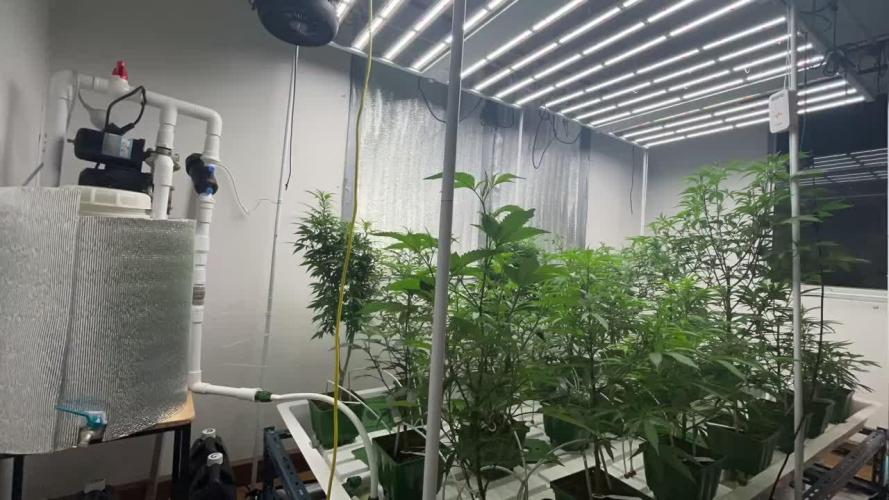
Diagnosed during mid to late flowering that the Soil and feeding pH throughout the grow was what out of range. I was feeding 4.5 pH acid fert solution and 7.3pH tap water. Although the soil had the nutrients, plant couldn't use it because the pH was way out of range.
Yield was PRETTY GOOD though ! 80G's for first time rookie grower, despite of deficiencies in late flowering, its good. I wonder how thick and resinous the buds will grow if grown properly !
Definitely indica dominant straint. NOT for DayTime ! Amazing for night time dabs !







@SolitudeCorners
Follow
Week 3 Flower (Bloom Week 3) – Daily Tasks
Evening (Lights On)
Check environment (temp 24–27°C, RH 55–60%).
Inspect leaves and buds for pests, mold, or deficiencies.
Water/feed (depending on medium): balanced bloom nutrients with slightly higher P and K.
Ensure good airflow (oscillating fans).
Adjust plant training (light defoliation if leaves block bud sites).
Check for early signs of stretch finishing.
Evening (Before Lights Off)
Ensure irrigation is not too late in the cycle to avoid wet medium during dark period.
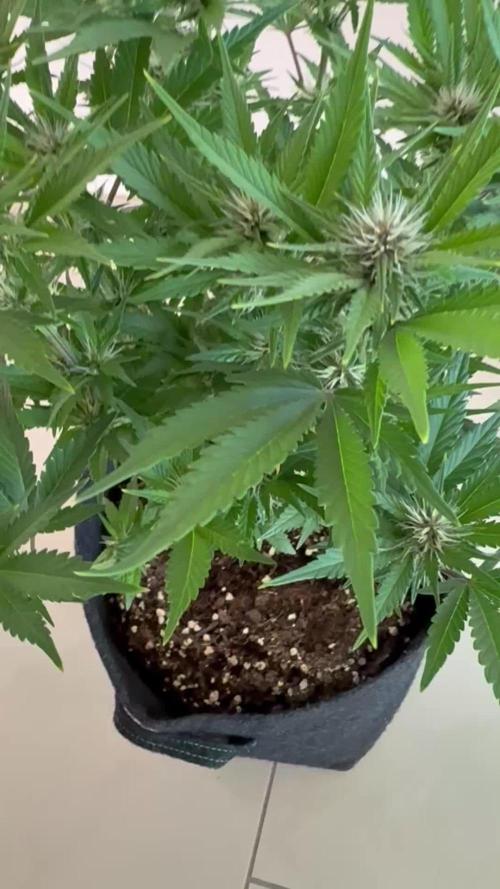
👉 In Week 3 bloom, the plants are finishing their stretch and starting to put more energy into forming bud sites.
Main job is: Setting Scrog net 2layers ,Control environment (VPD, airflow) ,Support the plant with bloom nutrients.


@Luke_Lee
Follow
-06.04.2025
Today is the day.
After a thorough examination of the trichomes, I decided to harvest the two Blueberry Automatics.
After a total of eleven weeks.
The wet weight of the flowers of Blueberry#1 = 77 grams,
Blueberry#2 = 74 grams.
The flowers are now hung out to dry and will be weighed again in 7days.
-11.04.2025
After 6 days the Blueberry Automatics are dry. The branches broke directly when bent with a nice cracking sound.
The dry weight of both plants together is 34g.
The flowers were stored in jars for curing with a humidity packet from IntegraTM and a hydrometer.
Total Time: 1879,36h
Total Energy: 326,30kWh
1kWh: 0,30€
Energy Cost total: 97,89€
💚


@NSABND
Follow
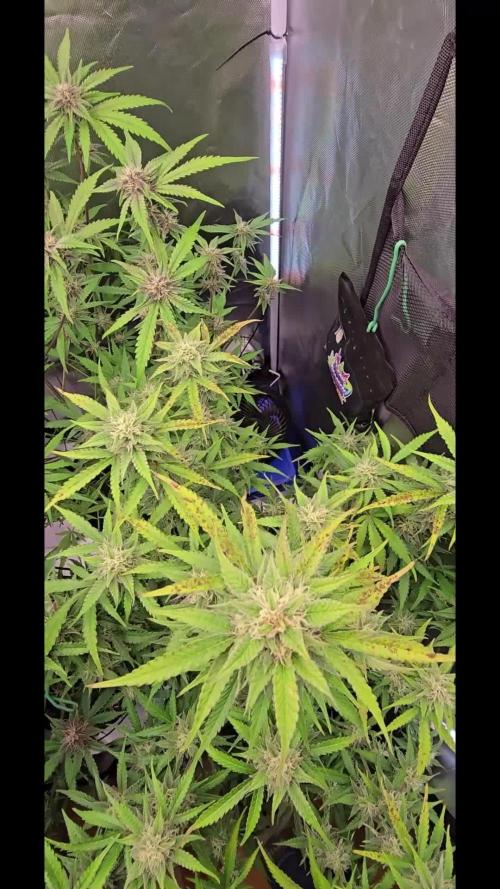
Day 57 😁👌all the queens are ok 🙏
Day 58 the queens got some fertilizer 💪😃👍
Day 59 what should i say... everything seems to fine 😃🙏👍


@Totogrowuk
Follow
Dry weight of quality buds was 34g. I don’t wet weigh as it’s completely pointless.
Quite a lot of trim for the hash bag.
Tastes great


@HoneyBlunt42
Follow
Day 94 - today the temperature inside the tent dropped to 10-12 degrees Celsius. So it's harvest time.
I trimmed almost all the leaves and hung the plant in a dark place to dry at a temperature of 12 degrees. This is not enough, but unfortunately there are no other conditions. Drying may take longer than the usual 10-12 days.
The plant itself has stretched almost a meter in height, the roots are also impressive.


@Ju_Bps
Follow
Hello growmies 👩🌾👨🌾🌲🌲,
👋 Nothing Special to say,
Buds keep coming along and more and more frosty, some leaves turn to purple, others to yellow, Need to follow that the, next days.
💧 Give water each 2/3 days.
1,5l Water + Easy Plus
1,5l Water + RQS Bio Flo Pack + Sugar Royal
PH @6
- Easy plus tabs
1 tabs/6l water
- Bio Flowering Booster Pack
Thicker Flowers 1 ml/l
Bigger Flowers 1 ml/l
Sweeter Flower 0.7 ml/l
💡Mars Hydro - SP 3000
100% 46 cm.
🔥 Thanks community for follow, likes, comments, always a pleasure 👩🌾👨🌾💚🌲.
Mars Hydro - SP 3000 💡💡
https://www.mars-hydro.com/sp-3000-samsung-lm301b-greenhouse-led-grow-light
Zamnesia - Gelato Auto🌲🌲
Discount code -20% with GROWITGD code 🔥🔥
https://www.zamnesia.com/7688-zamnesia-seeds-gelato-automatic.html