


Likes
Comments
Share


@420
Follow
An Tag 41 wurde nochmal getrimmt und kleinere untere Blütenansätze entfernt.
Heute ist Tag 45, würdet ihr mehr entlauben ? Tagsüber habe ich leider eine Luftfeuchtigkeit von 52 % mehr holt mein luftentfeuchter durch die vielen kleinen Blätter nicht raus. Nachts denke ich etwas mehr.
Tag 46: Luftfeuchtigkeit wieder dauerhaft unter 50%

Likes
12
Share


@2Stones1Bird
Follow
Checkout my Instagram @smallbudz to see the Small budget grow setup for indoor use, low watt, low heat, low noise, step by step.
04/01/2020 - Did the last defoliation, removed about 1/4 of plant material.
06/01/2020 - Fed her 1.5l of 6.5PH water with 0,3ml Cal Mag (Atami) 0,25ml of Grow, 0,6ml of Bloom and 0,5ml Max, and 1ml of each: Heaven, Alga-mic and Vera, noticed some run off, I use about 1/3 of the nutrient dosage on the chart, to achieve about 200/300PPM (500 scale).

Likes
15
Share


@Marshydrots1000
Follow
Used dragon force now for 2 feedings then start flushing ! There almost there

Likes
4
Share


@Jakep721
Follow
-humidifier ordered, exhaust will finally be here tomorrow, beginning week 2 and could use any input .
-Watering till runoff then visually waiting until feels light or looking dry
-Added 2 clones midweek teaching myself as I go
-how do they look ? Input greatly appreciated


Likes
88
Share

@GreenHobbit
Follow
(Musik an)
Week 15 – The Calm Before the Storm 😏
Nach neun Tagen Urlaub war ich ehrlich gesagt ziemlich gespannt. Ausgerechnet drei Tage vor meiner Rückkehr verabschiedete sich auch noch die Hobbit Cam. 😅 Keine Bilder mehr, keine Kontrolle – nur die Klimadaten und das Vertrauen in meinen Sohnemann. Als ich schließlich die Tür geöffnet habe, war mein erster Gedanke nur:
“WTF… 😳😏”
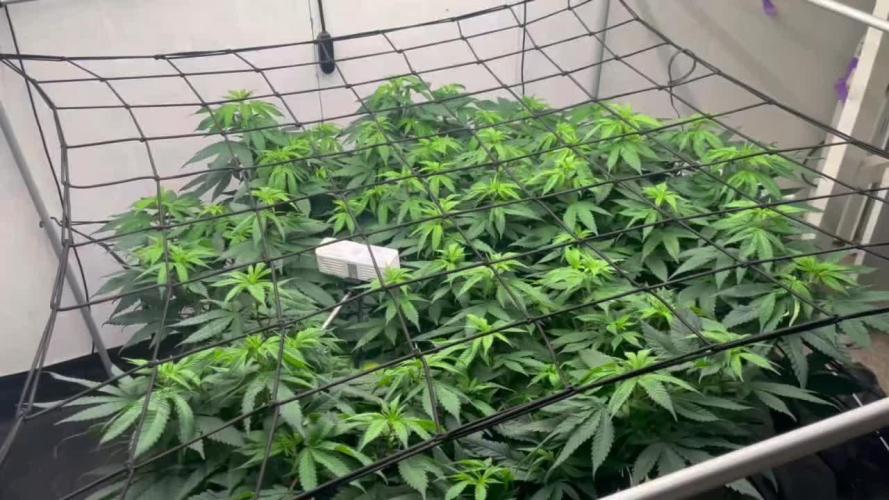
Die Laughing Buddha hat die Zeit genutzt. Nicht, um völlig außer Kontrolle zu wachsen, sondern um sich in aller Ruhe zu einem dichten, kräftigen SCROG zu entwickeln. Die Bewässerung hat hervorragend funktioniert, das Klima war stabil und die Pflanze sah nach dem Urlaub gesünder aus, als ich es mir erhofft hatte.
Heute wurde der Grow auf die nächste Phase vorbereitet. Zuerst wurden die 81 Triebspitzen gleichmäßig über das Netz verteilt. Ja, ich habe tatsächlich nachgezählt… exakt 81 Spitzen. 🤣 Mein kleines Ziel „72 Tops für 720 Watt“ scheint tatsächlich Realität zu werden.
Anschließend folgte der bisher größte Eingriff des gesamten Grows. Unterhalb des ersten Netzes wurde komplett gelollipoppt und die Pflanze zusätzlich stark ausgelichtet, damit Licht und vor allem Luft ungehindert durch das Blätterdach zirkulieren können. Von unten betrachtet sieht die Buddha inzwischen eher wie ein kleiner Baum aus – kräftige Hauptäste, saubere Verzweigungen und ein stabiles Gerüst, das später hoffentlich dutzende schwere Colas tragen wird.
Nachdem alles ausgelichtet und neu verteilt war, habe ich die obere Erdschicht vorsichtig aufgelockert und nach Herstellerangabe Green House Feeding BioBloom eingearbeitet. Anschließend wurde mit BioEnhancer angegossen, damit die Bodenbiologie aktiviert wird und die organischen Nährstoffe in den nächsten Tagen in Ruhe arbeiten können.
Jetzt bekommt die Buddha erst einmal ein kleines Wellnessprogramm. 🌿 Keine weiteren großen Eingriffe, nur Wasser, stabile Klimabedingungen und Zeit, sich vollständig von der Entlaubung zu erholen.
Wenn alles weiterhin so läuft wie geplant, wird nächsten Donnerstag auf 12/12 umgestellt. Dann beginnt endlich die Blütephase.
Ich bin unglaublich gespannt, wie sich die Laughing Buddha im Stretch verhält. Die Internodien sind bisher angenehm kurz geblieben, wodurch die Chancen auf lange, aber trotzdem schön kompakte Colas ziemlich gut aussehen. Sollte sie jetzt noch das zweite Netz sauber ausfüllen, könnte das genau die Blütenwand werden, die ich mir von Anfang an vorgestellt habe.
Der Veg-Teil ist damit fast abgeschlossen… jetzt beginnt bald der wirklich spannende Teil. 😎🌿🚀


Likes
6
Share


@Saltoa
Follow
My light fell on my plants yesterday. , the pot of my plant in the first corner was broken, I bought it in a different pot. In my other plant, 2 branches were broken, I taped one of its branches, it became crippled.
Processing
Likes
Comments
Share


@SGCFarms
Follow
Day 17, and she’s starting to show sugars from the top down. I can’t wait for a smell to develop, but when I did smell something during the first opening of the tent it smells something fruity. She’s drinking at least 4 gallons a day at this point.

Likes
30
Share


@Xpie77
Follow
💚Please Like This Diary and Leave a Comment!💚
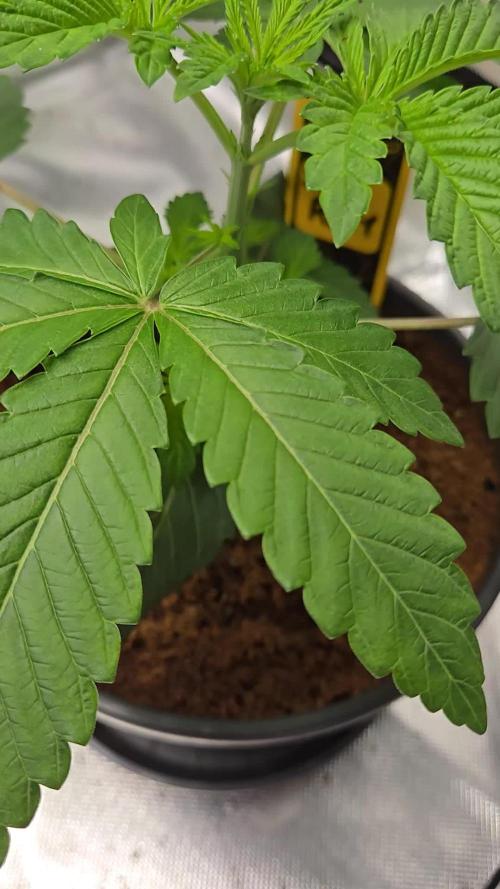
Mac is growing nicely and good smell to. Just a little bit of juice, not to much.
Seeds Genetics information:
MAC is a highly sought after Cali cannabis strain. This strain was created by crossing Alien Cookies with Colombian X Starfighter. The plants develop beautiful colored buds that are covered in abundance with resin trichomes.
The flowers have an average THC content of 20-24% THC. This makes this strain a real Cali winner! The yield is also top with an average of 450-550 gr/m² within a flowering period of 8 to 9 weeks. It is a true balanced indica/sativa hybrid strain. Smoking this weed gives you a euphoric high with a delicious spicy diesel aroma with a hint of citrus. Its uplifting and joyful effects even helped MAC win a High Times Cup, cementing its top status as a Cali strain.
Flowering time: 8 – 9 weeks
Genetics: Alien Cookies x Colombian x Starfighter 50% sativa, 50% indica
Plant height outside: 100 – 180 cm
Outdoor harvest month: from June to October
Yield indoors: 450 – 550 gr/m²
Yield outdoors: 200 – 800 gr / plant
THC: 24%
💸💸💸Wanna buy MAC Seeds? 💸💸💸
https://seedsgenetics.nl/product/mac-gefeminiseerd/




Likes
2
Share

@TheBulldozerSicily
Follow
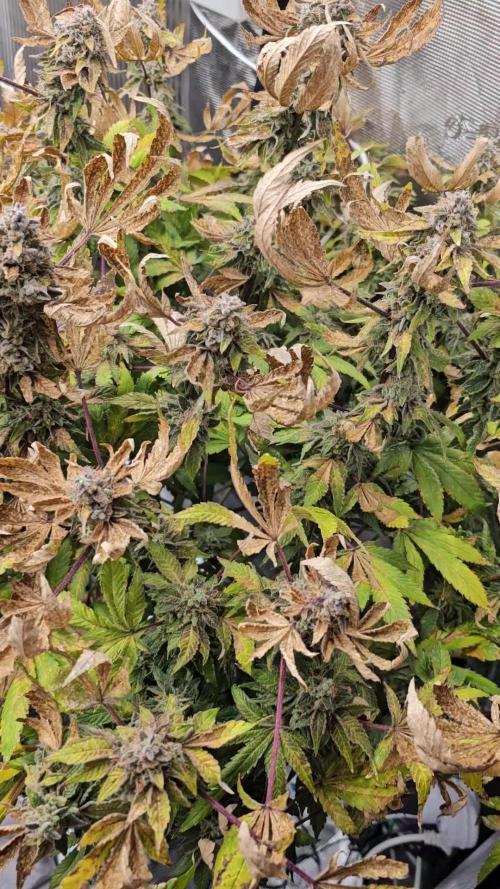
Le piante continuano a bere solamente, acqua demineralizzata +10% rubinetto e 1% enzimi... continuano a maturare lentamente, non appena vedro un po di tricomi ambrati raccoglierò,..la fretta mi ha sempre giocato brutti scherzi raccogliendo sempre un po in anticipo, questa volta otterò un risultato piu strong!!
Happy growing everyone!!!
Likes
32
Share


@Belverde
Follow
Hello everyone 🙂
Here we are finally with the Harwest report of this fantastic variety🍪
COOKIES KUSH from Barney's Farm..
GIRL SCOUT COOKIES ×ROLLEX OG KUSH..
I love this hybrid , from seed to flower, so I will try to be as partial and honest as possible, although I have very little negative to say, maybe nothing..
But let's we started..
Initially I germinated three seeds, all three born after two days at a constant temperature around 24 °, placed inside two pieces of wet paper, in turn closed between two coffee saucers..
I was unable to post the first two weeks because I was on vacation by the sea, finding the best canarian cannabis social club, while they were growing up😎: 1:
Towards the end of the third week the show started🎬..
A massive attack of thrips led me to have to use neem oil to try to counter these little ones. bastards🙄.
The oil was sprayed on the leaves using a pump sprayer..
First though mixed it with about 1/5 of potassium soap, as I have always found written to do..
As you can see in the first photos📷 the plant (and also her two sister in diari "COOKIES×KUSH") has undergone enormous stress making the leaves as if they had been bitten by some animal..
But the fault was all of neem oil or the wrong mix🤷♂️
Trying to inform me here and there, I did not find much specific information, but I really believe that the plant has undergone a phytotoxic effect as a reaction following the use of the neem oil..
The despair was great, but I tried to remain calm and understand what had happened in the hope that the effect would not extend going to compromise the health of the plant💆♂️🧘♂️..
After a couple of weeks in the Flowering cycle, this great Cookies pheno recovered great and as if nothing had tripled in size, maintaining a beautiful main top with vigor branches full of dense buds all around..
In the first week of flowering I cut the first two branches, focusing the energies on the upper ones.. After a few days I made a super Cropping on the central top, always trying to increase the vigor of the branches below💪🌲..
And the plant has always reacted very well, as if nothing had happened..
I also thought of defoliating, but then I left the idea to not stress it further..
In carrying out the final transplant I placed mycorrize in the ground, directly in contact with the roots..
In the first week of flowering I gave again once a bit of fish mix to facilitate the stretch phase..
Later during the flowering I used the slow release organic powder of the Greenhouse, plus twice the Biobloom fertilizer from Biobizz..I increased everything with biomass biomass , once / twice, more enchancers once through irrigation (always greenhouse), more than molasses..
I also gave some banana macerate made by me, but honestly I don't know if it influenced or not exactly, but I don't think bad did it..
Flowering was very quiet and without too many complications, if not some insect that I tried to fight using yellow and blue traps..
After 55 days from the transition to 12/12 I could have safely cut, but I decided to wait a ten more days, up to 65 °..
Towards the end of flowering, this beautiful girl had fantastic colors..
The yellow of most of the leaves, due to the discharge of nutrients, contrasted very well with the purple color that had taken on the other leaves and in small part also the flowers..
Unfortunately in the photo does not give a good idea of how beautiful it was..
The plant, as I usually do, was cut entirely and placed upside down in a wooden wardrobe controlled temperature and humidity, without becoming too crazy, always trying to maintain a balance..
More or less I always dried around 21/24 ° with a ur around 55/60%..
After about 7 days, when the outer leaves were dry enough to the touch, but not to crumble, I cut the branches to one by one keeping the flowers attached..
I then performed a manicure in a best art-way possible..
Nice, slow hands trimming..buds to buds..
Afterwards I put the branches with the flowers on a net for about a day and a half..
When I heard that the Popcorn Buds came off without leaving "the thread", I cut all the flowers from the branches and I have them stored inside a brown paper bag..
I left them inside for about two days until the flowers were almost completely dry as I wanted, always being careful not to let them dry out too much..
This phase is very delicate so you need to check the condition of the flowers several times a day.. Once ready I put them inside an airtight jar..
For 24 hours I didn't open, letting the humidity present in the flowers come out making them still slightly wet..
After a day, I found that the flowers had moistened to the touch, but not in an excessive way, just as I wanted..
From this moment on, I ap straight up the pot about three / four times a day at a distance of about 6h (always without getting too mad)..
For the first week I did so, then going to decrease the openings in the following two weeks..
After three weeks the perfume is came to be created in a clear, sweet and pungent way..
The first few weeks of opening the jar, for those who may not know it, it is normal to feel a fragrance of almost wet hay, which leads you to believe that you have made mistakes going to eliminate those incredible aromatic notes present during flowering..but not it is so..
The cure process, if well carried out, leads to reducing from time to time that unpleasant smell of hay until it transforms into that complex bouquet of terpenes that are cannabis can give..
It is fantastic to observe the transformation in the terpene profile during this phase♥️🤩..
I think it is a highlight, where patience and attention play a fundamental role in being able to obtain a high quality product, from connoisseur..
Just my opinion🤗
Cannabis, if well tanned, maintains and intensifies its aroma and potency in the coming months📆..
The flowers burn slowly and steadily inside lla map releasing intense aromas💐..
The smoke inhaling it remains soft and velvety without creating throat disorders..
I believe this phase is fundamental to be able to enjoy a unique product with organoleptic characteristics which it is difficult not to fall in love with👌..
In the case of this variety, specifically of this pheno, the aroma is undoubtedly mint, mint mint with some sweet earthy notes..
Very complex..
The taste in smoke is more tending to earth, but very sweet and delicate with other notes that I can't to recognize, complex to describe, but mint is not very present as in the perfume (after 40 days of care)..
Basically you are faced with a kush 2.0 , very very good and powerful..
A must have for kush lover's👌🏆..
As you can see in the video, the grass burns very well going to fill the map with oil..
The joint in question is obviously a pure without tobacco, rolled with organic papers and organic filter. If well cared for it gives off scents that potentially can hear hundreds of meters, so be careful you have neighbors (Ps, mine are the ones that nobody would like)..
I do a smoke test only to evaluate if the treatment process has been successful, otherwise in my days I usually use vaporizers ( mighty / ghostmv1 / dynavap m / vulcano sometimes )..
Thanks very much to those who created them🙏🙏🙏🔝🔝..
Anyway
In the test carried out with mighty (from 177 ° to 195 °) the aroma is pungent, much more than in smoke..
Excellent Kush flavor, sweet enough but with earthy and spicy notes..
Complex to describe and I would not add anything else to try to be as honest as possible..
Regarding the effect, I won't go too far..
In general it is a herb that acts on the body, leaving the mind calm and able to do anything (at least for me)..
As a good Kush that respects itself..
It is not not at all mentally invasive..
Wanting to be honest though, most of my friends (all daily smokers, around 30) are overwhelmed by this variety because it relaxes them too much..
I personally find myself to be god and I could use it in every moment of the day, also before intense physical activity..
something that does not always happen with sativa..
Just for this subject🤯.
In this way I cut the plant when the trichomes were roughly 10% amber and the remaining milk color..
It was a great experience to see this girl grow up..
Her strength and endurance were impressive and maybe I was lucky to have the problem of neem oil with her, because she endured great, allowing me to learn without compromising too much the final result..another plant would probably die..
I thank everyone who read the diary over the various weeks..
And thanks Grow Diaries for creating this community and connecting with it🙏🙏👌👌..
For more and more precise info I refer you to watch every single week where I tried to post everything as precisely as possible..
I hope you had Fun..
Remember to make some ClouDs☁️
And to the next story diary 😉🌱..
Thanks for the support🙏💚
Bye ✌️
Ps.
The final weight of the flowers is calculated with only the main buds, dried, cleaned from each leaflet and finally cured for more than a month.
The 205w light must be divided by three (she is the one who has used the least amount seen the position in the grow)
Hope you enjoy
Happy growing
As always, hope English will good

Processing
Likes
41
Share


@Wicked_Stix
Follow
This auto ghost of is at day 21 and she has been growing like crazy since she broke the surface. She has the potential to be a real work of art if I can keep her happy. I upped the maxigro to .5 tsp per gallon and started them on a little armor si so they can build some strong branches. Still running them on 24 hour light and 24 hour irrigation. They are going to stay under the blurple lights for a few more weeks until I can get them in the big room under the quantum boards. I'm hoping they will flower around 4 weeks but my autos seem to enjoy staying in veg so we will see what happens.

Likes
10
Share


@Garamantes
Follow
Germination - I planted the seeds at home in a light mix substrate. After 5 days, I transplanted into the previously prepared substrate
Ingredients of my Substrate : 10l soil, 1l perlite, 0.8l vermikulit, 0.8 worm humus, 30g Guanokalong powder, 30g Guanokalong seaweed powder, 30g Guanokalong veg pearls.
Unfortunately, the weather forecast called for a night temperature of 7 degrees, so I made a greenhouse out of pet bottles
Blue granules are protection against slugs, I have had very bad experiences with them
Watered with water from the stream directly from the spring


Likes
9
Share


@AtticGrowing
Follow
Quick and easy plant to grow, but I made a few noob mistakes. If I grow it again, I won't be feeding with a lot of nutrients.
This is my first auto and second plant ever (first one from seed), so I'm happy with the outcome. Being that small, it's the perfect strain to grow anywhere.


Likes
7
Share


Likes
5
Share


@Bread_n_Buds
Follow
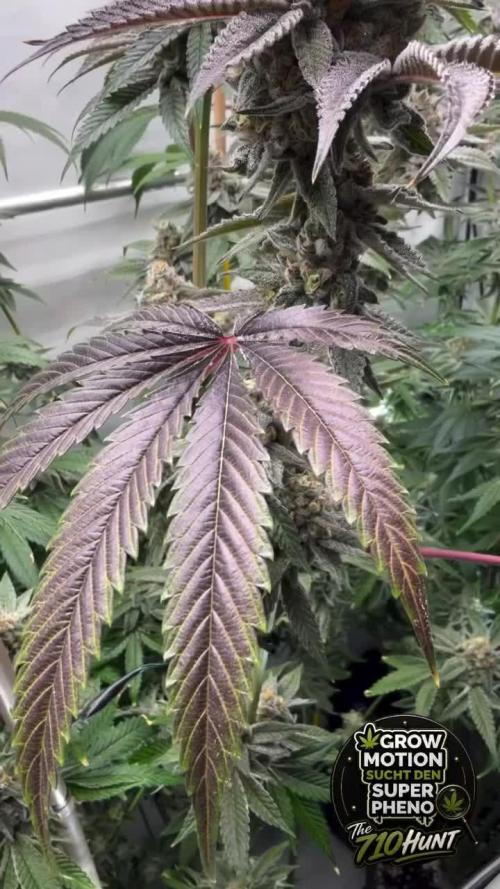
Our Gush Mintz have undergone a small revolution and are still super beautiful, even more than before.
One of the plants was damaged during the main lining I broke a brunch and it was transformed into a LST plant, the other one that was proceeding straight without techine was worked with topping at the 5th internode and LST on the other branches left below.
Comparison is the salt of experience so the plant in the other diary will be worked very differently.
We have started the Plagron fertilization program, we are in 100% organic configuration, the soil is recycled Promix + 1/3 fresh soil + 10% Perlite + RQS Mycorrhiza Mix (4 g in the mix, 1 g under the small fiber pot).
We are administering // 1 ml/l Power Roots - 1 ml/l Pure Zym - 1 ml/l Sugar Royal - 3 ml/l Alga Grow
We sprayed Vita Race Foliare 3 ml/l.
https://plagron.com/en
The doubts about the compatibility between Pure Zym and mycorrhizae have been dispelled, they can get along according to Plagron experts. If someone tells you that enzymes eat mycorrhizae, which in principle may seem possible, explain to them that it is not true.
https://www.royalqueenseeds.it/growing/452-easy-roots-mix-di-micorrhize.html
Try this strain, it's a top strain of the last few years very high thc level
------------------------------------------------------------------- https://www.zamnesia.io/it/11234-zamnesia-seeds-gush-mintz-automatic.html
Brief description of Zamnesia // Gush Mintz Auto is a relaxing hybrid strain that derives from the original Gush Mintz and a high-performance ruderalis specimen. This cross produced a plant with 70% indica and 30% sativa genetics. Her parents have given her a range of interesting traits, including mint and candy flavors and a high THC content of 20%. Smoking these buds provides creative vibes, a sense of euphoria and a pleasant sensation from head to toe. In addition to its enticing flavors and powerful effects, Gush Mintz Auto produces large yields of compact buds in just 9–10 weeks from germination.
Gush Mintz Auto is extremely easy to grow, with plants reaching an average height of 70cm indoors and 120cm outdoors, making her ideal for discreet grows or limited spaces both indoors and outdoors. This strain is well suited to LST (Low Stress Training) and performs best in a ScrOG setup (a technique that optimizes light exposure to maximize yields).
Punching aromas and deeply relaxing effects
As she grows, Gush Mintz Auto's aroma intensifies, releasing sweet and minty notes. This refreshing flavor profile really comes into its own when smoked, offering an inviting combination of minty freshness and sweetness. The effects are deeply relaxing, enveloping the body in a pleasant well-being without being too sedative. Gush Mintz Auto is perfect for those seeking creative inspiration, making writing, painting or music-making sessions smoother and more inspiring.
At Zamnesia you can find the whole world of growing and much more. Take a tour around the site and you will find "all the best that nature has to offer" in various shapes and colors.
The new strains are amazing and the old ones are no exception... p.s. for now zero Hermaphrodites, growers, can you say the same?
--- // www.zamnesia.com