Likes
Comments
Share
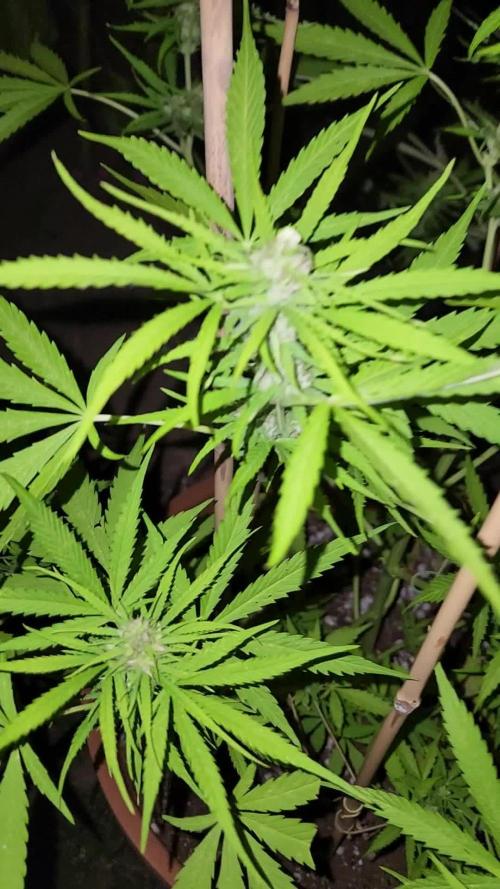
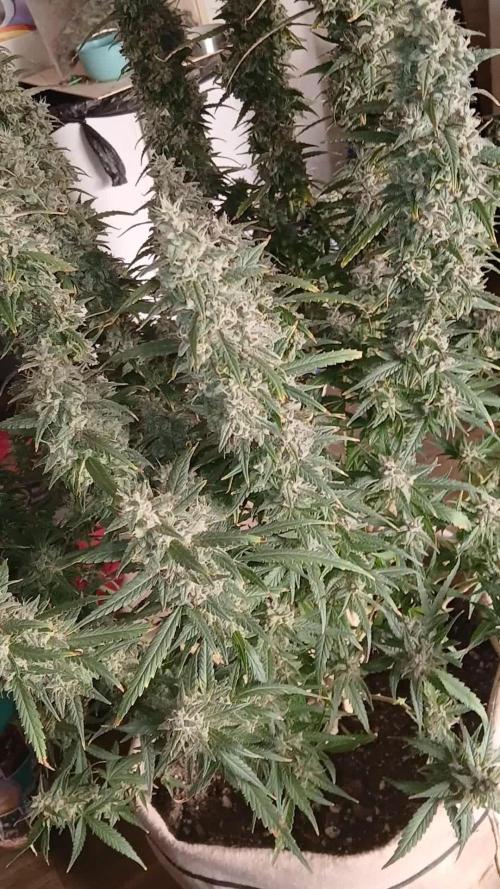
The girls are moving along nicely just watering with water ph to 6.4 this week as I top dressed with Gaia green 4-4-4.Spider farmer Se7000 dialed in at 30 percent and to the ceiling.Noticed some minor deficiencies Day 12 and check soil slurry 50/50 soil/water and the ppm was at 780 lil high at this early stage and the culprit.Going to work on lowering that a bit this week.I did add a top layer of fox farm ocean forest as well which runs a little hot with nutrients rather than the pro mix.I have to remember with these beautiful auto flowers less is better :)
Likes
4
Share
Just gave about 5 litres of pure water. Had some fun watching the different species of my beneficial insects. Other than that, just had to do some lawn mowing because the cover crop frenzied :)
Likes
57
Share
Views expressed are my own. All opinions are my own. The opinions expressed here belong solely to me and do not reflect the views of Growdiaries or Grandcru Genetics. The cannabis strain Grape Guava can be a purple strain, depending on its specific phenotype and genetic makeup. While not all phenotypes of Grape Guava are purple, some variations, such as the Zatix Grape Guava, are noted for their striking purple appearance due to the genetic expression of anthocyanin pigments. Grand Cru Genetics is a cannabis seed bank that emerged in 2018 from a group of breeders in Madrid to provide a satisfactory experience to all cannabis users. "If we do things, we do them well. Due to our experience in the sector and our taste for excellence, we know high quality and we seek it in everything we propose and do." "We have a “cultivate without giving up” philosophy that we apply to everything we do. We do not give up, we are friends of change, and we adapt as necessary in a still restricted sector." "We speak relaxed because we know how to relax. We are not intense or preachy; we accept everyone as they are, and we understand that farming is not for everyone. But for those who do, we are here to accompany you. We like to do it and tell it. We are experts in the field because we are the first to do it. We speak from experience and connect with others because we share the passion for cultivation." "Cannabis has the ability to show us a world of possibilities. When you cultivate and live its growth process, you enjoy a path full of emotions and not just the final destination. At Grand Cru we find beauty in small things. We are attentive, observant, detail-oriented and aware of everyday things, and we savor them without rushing." In a garden of green, Grape Guava gleams, With its fruity aroma, enchanting dreams. Clusters of grapes, guava's sweetness ignite, A strain so divine, in purple and white. Euphoria whispers, a lush fruity haze, Grape Guava's embrace, a tranquil daze. Off and away.@1400ppm. The increased CO2 allows plants to thrive at higher temperatures, which in turn necessitates higher humidity to maintain the ideal VPD for healthy growth and transpiration. 80F -5F = 75F LST with 70% RH = 0.72 kPa. Higher temperatures and humidity promote rapid growth, nutrient uptake, and photosynthesis while maintaining a lower stress level. Temperature influences the rate of enzymatic reactions involved in aerobic respiration. Enzymes, such as those involved in glycolysis, the Krebs cycle, and the electron transport chain, work most efficiently at an optimal temperature range. In low temperatures, enzymatic activity will slow down, thus reducing the rate of aerobic respiration. In high temperatures, enzymes can become denatured, thus impairing their function and stopping the process of aerobic respiration. Glucose is the primary fuel for aerobic respiration. The rate of aerobic respiration increases with the availability of glucose, as it is the starting point for glycolysis. If glucose levels are low, cells may rely on alternative energy sources such as fatty acids or amino acids , but these processes may yield less ATP or be less efficient. To determine this effect, carbon dioxide volume was measured (as carbon dioxide is an output of aerobic respiration) 18/6 with the 6 being IR. The near infrared (IR-a) borders around 700nm up to 1400nm @ photon par flux density of 1.8 instead of darkness, keeping temps overnight a neat 77F-80F. I think of my tent as a lung. What goes in must come out. When the rate of air going out exceeds the amount of air coming in, it creates a negative pressure. Tent concaves (bends in). If set up correctly, the RH will begin to drop slowly to the desired level I set, and the extraction turns off when it reaches the desired RH. The plant, as it performs cellular respiration, will always release more water into the air; therefore, the RH% of the tent overnight will increase, as long as oxidative phosphorylation is occurring. As soon as the RH% creeps back up to 55%, the extraction turns back on, over and over. This creates a strong pressure differential, which will work wonders with mass flow. Replicating high and low-pressure fronts in nature. Critical for oxygen diffusion at the critical time of peak cellular respiratory function.. Moisture will not transfer from a saturated atmosphere to another if that air is already at or above its saturation point, meaning the air can't hold any more water vapor. Once I understood that water is produced as a by product during cellular respiration, specifically at the very end of the electron transport chain (ETC) where electrons are finally transferred to molecular oxygen, the higher the RH of the air, the more resistance there is for more moisture to be added to that environment, and effects the ease with which it does so. But none of that water comes from the pot; it's pulled from the air. If you run high daytime RH, your medium/pot is 100% reliant on transpirational root pull to move water. ZERO evaporation happens across the atmosphere if the tent air has high RH%, the medium cannot release its water through evaporation. Once a canopy develops, light no longer slowly wicks and evaporates from the topsoil. The Soil-Plant-Atmosphere Continuum (SPAC) describes the continuous pathway and process of water movement, driven by a gradient in water potential, from the soil, through the plant's roots, stem, and leaves, and finally evaporating into the atmosphere through transpiration. There is evaporation, there is transpiration, and then there is evapotranspiration; Evapotranspiration (ET) is the combined total of two processes: evaporation (water lost directly from soil and surface water into the atmosphere) and transpiration (water released from plants to the atmosphere through their leaves). Evapotranspiration represents the total amount of water that moves from the medium into the air. There is no such thing as a medium with too much water, only a medium that retains too much for too long. The water must always flow efficiently from one atmosphere(Medium) to another(Air) in a timely manner. Moisture is a critical factor for bacterial growth and decay. Dictating how long it's allowed to sit in any one location for any given period is a key preferred control. To ensure a net reduction in a bacterial population, the rate of removal (ET) must exceed the rate of bacterial growth (decay rate), which is often modeled as a growth rate for the specific bacterium under the given conditions. By optimizing daytime VPD, we also optimize conditions for bacterial growth to explode exponentially above 77°F.. If water is allowed to sit in a medium without an escape within a timeframe, nothing good will happen. IF High RH is maintained overnight as well as during the day, placing 100% of water movement at the behest of daytime transpiration, roots can only pull where they can reach, and if soil is compressed above a certain point, moisture will become trapped in a medium with no way of moving day or night. This will begin the countdown for decay to take hold. When water stagnates in a medium, it loses oxygen, creating anaerobic conditions that foster the growth of harmful microorganisms like bacteria and fungi, which can produce toxins and disease vectors. Thigmomorphogenesis, the process by which plants respond to mechanical stimuli like touch by altering their growth and development, results in significant morphological changes to improve survival against mechanical perturbations. This complex response involves sensing touch and initiating physiological and genetic responses, leading to changes in form and structure over days or weeks. The process is triggered by physical forces such as wind, rain, or touch. Plants adapt to these stimuli by changing their shape and structure, which may include slower growth, thickened stems, or altered leaf development. Plants possess sophisticated mechanisms to detect even subtle mechanical stimuli and initiate responses. A variety of molecules, including calcium ions, jasmonates, ethylene, and nitric oxide, are involved in signaling these mechanical inputs. Touch can induce the expression of genes that encode proteins for calcium sensing, cell wall modification, and defense mechanisms. A plant exposed to constant wind may become shorter and sturdier. A plant that is touched frequently might grow more slowly to conserve energy and develop thicker cell walls. These changes increase a plant's resilience and ability to survive in harsh environments. Let's get Thiggy with it.
Likes
16
Share
@NMGDOC
Follow
Semana del 3 al 9 de Mayo. Como puse en la pregunta de la semana anterior, ya vieron que tengo una chica hermafrodita. No tengo otro indoor para ponerla, así que la saqué a otra habitación y le puse la TGL60 a ver que pasa. Las otras tres plantas siguen en el indoor con la TGL 220. Como estaban con la malla, me costó mucho sacarla del indoor. Tuve que atarla porque las ramas no se sostenían muy bien por si mismas, así que ahora tengo este ramo que cocecharé más o menos el 16 de mayo. No parecen engordar mucho los cogollos, creo que los insectos afectaron más de lo que pensaba, sobretodo porque estos atacan las raíces. Las luces estaban a 15cm porque es lo que sugiere el fabricante para este periodo. Consideren que no es el clásico led y ya está. Ahora están a 20cm por miedo a que vayan a sufrir algún estrés lumínico.
Likes
3
Share
@Ogfredd
Follow
Creo que falta poco. Cometí un error en unos riegos los cuales no verifique pH y bueno demostró carencia de calcio y magnesio por lo que creo
Likes
7
Share
Harvest day 66 since time switch to 12 / 12 h Hey guys :-) Finally it's time 💚 The lady is done the large leaves have been removed and hung upside down to dry in the dark drying room. You can now stay there for 13-15 days at a temperature of 18-20 degrees and 55-62% humidity. After 13-15 days it is neatly trimmed by hand and placed in jars with boveda packs 62. After 4 weeks Boveda 58% come in and are ready for testing ;-). After everything has been cut cleanly, the last update comes with the smoke report and the finished pictures. Let's get to the plant 💚. The growth was great from start to finish. She had no problems at all and also had no problems with animals 👍. I'm amazed at the great smell the beautiful buds give off😀. Of course I cut cuttings and if the taste is as good as the smell it will be grown again ☺️. A final report comes with the Smoke Report. Until then, I would like to say thank you to the whole Green House team and wish you all the best fun with the diary 💚🙏🏻 Have fun and stay healthy 💚🙏🏻 👇🏼👇🏼👇🏼👇🏼👇🏼👇🏼👇🏼👇🏼👇🏼👇🏼👇🏼👇🏼 ‘Powered by GreenHouse Feeding’ Copy the link for 10% off all Nutrients 👇🏼 http://shop.greenhousefeeding.com/ affiliate/madelngermany_passiongrower/ 👇🏼👇🏼👇🏼👇🏼👇🏼👇🏼👇🏼👇🏼👇🏼👇🏼👇🏼👇🏼 Water 💧 💧💧 Osmosis water mixed with Cal/Mag (24 hours stale that the chlorine evaporates) to 210 ppm and Ph with Ph- to 5.8 - 6.4 MadeInGermany
Processing
Likes
32
Share
Day 57:. I am in love with these ladies !!. Their growth had been excellent this week. I went in hard with a defol and clearing out of smaller growth to get the girls spread for flipping soon. They recovered overnight and all sat praying to the Mars gods the next morning. I gave all the pots a top dress of ecothrive charge to work it's way in. The colour and vitality on all of these plants is spot on. They are putting a good size on every couple of days so I dont think I will get much longer before I have to flip them. I am excited to see how they perform in flower now my room is on point now too. Be safe and well folks.
Likes
Comments
Share
@shwable
Follow
Welcome to week 11! Plants looking healthy and ready to put on some weight!
Likes
52
Share
Sixth week of flowering, the buds have increased in weight and have hardened (I'll have to start tying them). With this the smell has also increased a lot stinking all the room every time you open the tent. The plant continues to look vigorous and healthy. Less to go until the harvest 🤞🤩🤩🤞
Likes
10
Share
Likes
Comments
Share
We are up to speed now things should be on track now..gave dem girls some more room and set dem in their final resting
Likes
15
Share
@For2itous
Follow
She's got good smell so far. Just did some defoliating almost some lollipoping. Give some nutes but it's been raining so haven't needed to feed as often lol Happy growing 🌴
Likes
30
Share
The girls are looking like some SERIOUS bud is taking place
Likes
10
Share
Que pasa familia, estoy de vuelto ya tenemos la 3 semana y ya se acerca el trasplante a macetas definitivas. He quitado una planta que era la más pechera total… no pensaba sacarla adelante y seguramente quite alguna más. Hasta ahora no alimente nada con nutrientes solo agua, pronto con el trasplante empezaré abonar algo con Advanced nutrients , puede que algunas las plante en 7 litros y otras en 11 , y pondré al final 2 armarios de esta variedad. Nada nuevo todo va bien sin contar la pocha que quite que es porque no alcanzaba las demás y de genética pues no me gustaba mucho fue propia elección no porque estuviese mal. Os dejo unas imágenes y nos vemos otra vez la semana que viene, buenos humooos 💨💨💨
Likes
36
Share
@Dwillsun1
Follow
Going really well moved lights up so still sitting 18" above highest point and keep LSTing, tucking and defoliating regularly she looks good... I Think.
Likes
16
Share
@1juan420
Follow
All pictures were taken on day 37 I tied her main branch down with a metal hook early this week She is starting to show first signs of flowering I will start feeding nutrients soon
Likes
37
Share
After germinating the seeds are transplanted into small pots with soil (see tutorial in VIDEO above). The soil is prepared with water mixed with a little bit of BIO NOVA Roots (0,5 ml/l), which aids the development of the seedling. Transplanting is very easy now, because they have grown a STRAIGHT tap-root while hanging during the SERIOUS' WAY of germination. This straight root allows for easy potting of the seeds. Simply make a little hole in the center of the soil with your pinky finger and carefully place the germinated seed with the white root pointing DOWNWARDS into the hole. Best is to lay it onto one side-wall of the hole with the seed shell right at the surface. Then I push the other side inwards and enclose the whole root with soil. At the end only the top of the seed-shell peeks out of the soil. IT IS VERY IMPORTANT to plant the seeds NOT TO DEEP into the soil. The seedling only needs extra strength to work itself upwards thru the soil and you run the risk of the soil drying out and the seed dying off. When you PLANT THE SEED VERY SHALLOW into the soil (=with the top of the seed-shell still peeking out) your seedling can grow out right away and you have a small plant already 24 hours after putting the seed into the soil. The small seedling sometimes still has the seed-shell on its 'head', it normally falls off by itself, but sometimes you have to carefully help and take it off with your finger nails. Be careful to NOT clip of the seedling accidentally when you do this! The seed-shall has an inner lining, which feeds the small seedling when it germinates. This inner lining sometimes gets tangled around the stem of the small seedling after the shell has fallen off. This little skin MUST be taken off the stem right away! Once it dries up, it gets hard and can strangulate the seedling around the stem. In order to avoid this, the skin must be taken off as soon as possible! I show it in the pics above and also made a video about taking off the inner lining of the seed.
Likes
8
Share
Mulberry F3 Day 56 Things are going well today with Miss Mulberry. Up her nutrition level and she has a better green look about her now then same time last week. No more vertical growth and all energy going to flower production.
Likes
11
Share
Hello Diary, Apollo F1 could best be described as "little fat". The smallest on the Farm, only 40 cm, with a pile of leaves from which the formed flowers peek out. The leaves are a beautiful dark green color, densely overgrown with the entire plant. Since it did not grow too high, the plant took the shape of a ball. As for the flowers, they are filling in nicely and the trichomes are starting to appear. The scent has become more intense, just as befits this stage of flowering. Watering has become more frequent, every three days each plant on the Farm receives about 2.5 liters of water. I continue adding Bio Flowering Booster and Easy Bloom tablets. Conditions on the farm are good. The temperature is around 28 degrees, while the humidity is around 45%. Here's what it looked like last week. 06/06/2023 - Day 38. Watering. I added all three components from the Bio Flowering Booster. pH I lowered it to 6.0. Each plant received about 2.5 liters of water. 09/06/2023 - Day 41. Watering. This time I put one Easy Bloom tablet in 7 liters of water and watered all three plants on the Farm with that amount. 10/06/2023 - Day 42. End of the sixth week. I photographed the plants and removed three or four yellow leaves. Apollo F1 - 41 cm That's all for this week, thank you all for your support and see you soon.
Likes
27
Share
Today first day of 3rd week i tryed second FIM on this plant after the early one. I am only trying to learn so not sure for now that i am doing good but hope for better. Thanks 🇲🇹❤️ Finally had buy the Marshydro Drip Irrigation kit and will use for this 2 plants. So far tryed it with a digital timer it looks working very good