


Likes
Comments
Share


@Inceptionist
Follow
On the 15/10 it was my fifth day in a row without any more signs of pollensacks or nanas! It really is worth the try is you think, you got something special on your hands. If you can, better isolate it anyways, I just didn't have the room for this.
Everything else also going great and the Double Dunked is starting to show why this run is called "Purple Beauties". From now on every week was going to blow my mind on just how beautiful this grow could turn out.
Also did some defoliation again




Likes
14
Share


Likes
3
Share


@Ieiogrow94
Follow
Eccoci qui...
Tutto va per il meglio, questa settimana non ho applicato stress alla piccola, ma ho guardato l'evoluzione che ha avuto dando i nutrienti.
Ora ha un odore davvero intenso ed uno strato di resina pauroso, vediamo come si riprende dalla defogliazione che ho fatto settimana scorsa.
Manca poco, settimana prossima controlliamo i trincomi.
Seguiranno aggiornamenti, grazie a tutti per il supporto🔥🌲❤️

Likes
45
Share

@Krisis
Follow
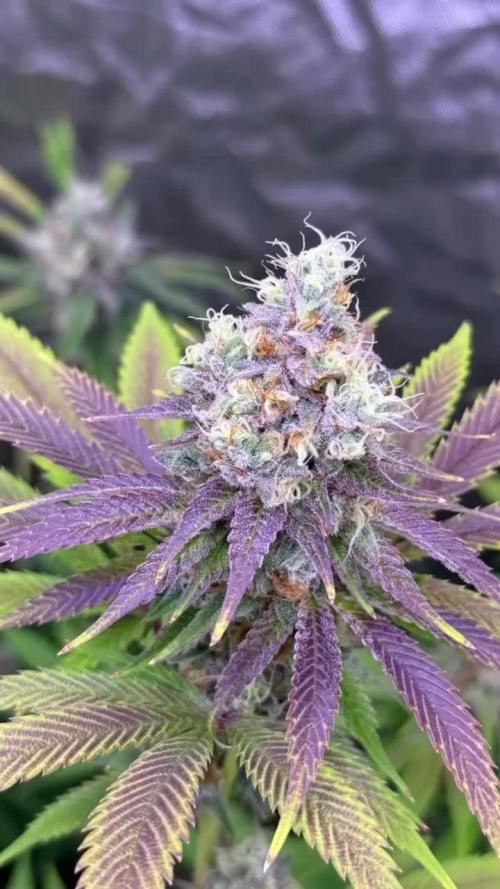
04/22/25. Start of week 8 flower.
Uh.. apparently I took way too many pictures lol. Oops. Couldn’t help it.. she’s photogenic I guess.
Anyway, getting some new pretty colors now and her pistils are darkening up a lot more now. Also getting some foxtailing on the two tallest buds. Probably getting light blasted a bit much, but they’re quite a bit taller than the rest.. and I don’t want them lacking, so it is what it is.
I gave her food a couple days ago, but I’ll be looking at her trichs to see where she’s at. I’m guessing she still has a bit to go, but guessing isn’t gonna do it- pistils have lied to me before. I’ve seen a bit of white in them before and had amber trichs.
My guess is that the next update will not be a harvest. Guess we will see. ✌️

Likes
49
Share


@masterofsmeagol
Follow
6/9 I can't believe it but I had faith. The transplant yesterday LOOKED like it was fucked. I cleaned it up though and left it outside. This morning it was standing straight up. Both transplants were! I put tarps up to block the wind tunnel between buildings. It's still overcast and rainy. Sun isn't supposed to come out for a couple poke days. Chance of thubder storms tomorrow but I'm going to try to get everyone in their forever homes today. Or at least most of them. I plan to light dep a few right in the 3 gallon. I'm sure I'll be updating this after I get some work done.
UPDATE: I WENT OVER AND GOT THREE MORE TRANSPLANTED. THAT MEANS FIVE ARE OUTSIDE IN THE CAGE. TWO 10TH PLANET, 2 BLUEBERRY CHEESE AND A LITTLE PURPLE PUNCH. THE 3 GALLON POTS WERE RELATIVELY HEAVY SO I PICKED THE LIGHTER ONES TO TRANSPLANT. I LEFT THE ORHER TWO 10TH'S IN THE GARAGE WITH THE DOOR OPEN WITH THE REMAINING PLANTS. I ALSO ADDED WIND BREAKS AND SUPPORTS TO EVERYTHING. I WANTED TO GET EVERUTHING DONE TODAY BUT THERE MAY BE A THUNDER STORM SO IF I DONT GET IT DONE ITS NOT A BIG DEAL AND ILL FINISH TOMORROW. TRANSPLANTS WENT SMOOTH. I THINK THEY'LL GO EVEN SMOOTHER IF THEY DRY OUT A BIT. STILL HAVE THE 50 AND 40'S TO FILL. Took a bunch of videos but the don't want to load. I'll have to try tomorrow or later tonight.
UPDATE: I TOOK TONS OF PICTURES AND VIDEOS BUT THEY DONT WANT TO SEEM TO UPLOAD. IVE GOT SIX IN THERE FINAL HOMES OUTDOORS 20s and 30 gallon smart pots. Still have massive plants but I'm going to out those in the 50 and the 40. I'll finish this shit up tomorrow and get all the girls in their forever homes and if I don't have room for some I was planning on doing a light dep anyway so that will work out good. I learned a lot and transplanting went a lot smoother todsy than before. I feel really proud of myself. The last Transplant I did break a few leaves off that I didn't notice but whatever. I used tomato cages for suppirt on two and bamboo poles and string on the others. I'll add the vertical trellis as they grow. I'm proud of myself.
6/10 I got a lot done yesterday. Six are outside already. Two are in 20s in the garage. I'm planning on transplanting the rest today or tomorrow. I'll update later. Accidently uploaded lots of stuff on the wrong week. UPDATE: I TRANSPLANTED THAT SUPER TALL PURPLE PUNCH THAT I DIDNT TOP OR HST AT ALL INTO A 40 GALLON TUB. ROOTS WERE DRY AND THIS TIME IT ACTUALLY LOOKED LIKE THEY FELL AWAY. THE PLANT HOWEVER STAYED STANDINGVUP FINE. I THINK THIS PHENO IS GOING TO BE A TOUGH ONE. LOOKS GOOD LIKE AN HOUR LATER. I HAD THE 50 READY TO TRANSPLANT THIS MONSTER BLUEBERRY CHEESE I FIMed BUT THE POTS WERE SUPER HEAVY AND I FIGURED I NEEDED TO SLOW DOWN AND THINK. WE HAVE THUNDER STORMS COMING TONIGHT. TOMORROW IS GOOD. I MAY TRY TO FINISH UP TONIGHT BUT WE SHALL SEE. THE GOOD THING WITH DOING IT A FEW AT A TIME IS THAT IF SOMETHING HAPPENS OUTSIDE IVE STILL GOT A CROP INSIDE LOL. WHAT IM PLANNING TO DO IS EITHER LIGHT DEP THAT BIG BLUEBERRY CHEESE OR PUT IT IN THE FIFTY BUT IM PLANNING TO LIGHT 3 RIGHT IN THEIR 3 GALLON CONTAINERS. HAVENT DECUDED FOR SURE BUT IM THINKING THATS WHATS GOING TO HAPPEN.......of course videos won't upload and the ones that do are old videos. Damn. I need to sharpen my computer skills....and my growing skills. Especially transplanting. I suck at transplanting. I decided not to out all my eggs in one basket and left the 10th planet amd Blue berry cheese in the 20s in the garage. I pulled them out for light further but I'm ousting them back a little tonight. That way I'll have a back up if something catastrophic happens. I doubt it but better safe than sorry. I'm proud of what I've accomplished thus far. I've successfully uploaded my 1 minute plus video several times but it won't appear. Oh well. I'll try to load the videos tomorrow I guess. Just started raining. Just a light rain. Probably what fresh transplants like.
6/11 BEAUTIFUL outside. Today is the day. Most is done and I'll add the supports as trellis as they grow. This new grow space gets about twice as much sun as my old spot. The tar stops the burrowing insects. I'm getting everything out today. I just need to decide if I'm going to light dep that MASSIVE blueberry cheese or bite the bullet and put it in the fifty. Maybe I'll try to get some help from my cousin. Plants withstood the thunderstorm like Champs. I'll update as the day goes on. I planned better this year so I SHOULDN'T have an unmanageable jungle. UPDATE: WATERED THE 3 PLANTS LEFT IN THE 3 GALLONS (1 10th PLANET WITH GREAT BRANCH STRUCTURE AND TWO PURPLE PUNCH THAT WERE THE SMALLER ONES. IM GOING TO LIGHT DEP THEM. EVERYTHING IS OUTSIDE NOW IN A MIX OF 1/3 FOX FARM OCEAN FOREST, HAPPY FROG AND ROOTS ORGANIC 707 IN EQUAL PARTS. TRANSPLANTED WITH MYKOS. EVERYTHING IS OUTSIDE NOW. FINALLY DECIDED TO GET The MONSTER BLUE CHEESE I FIMed INTO ITS FOREVER HOME A 50 FALLON POT. IT WAS TGE EASIEST BEST TRANSPLANT OF THEM ALL. JUST LIKE AETTING A POT IN THE WHOLE. I DONT EVEN THINK THE PLANT NOTICED. ONE OF THE PURPLE PUNCHES HAD ROOTS OB ONE OF ITS LEAVES WHEN I LOOKED BUTVIT WAS STILL STANDING UO STEAIGHT. I KNOW SOME OF THE PLANTS LOOK DROOPY BUT WEVE HAD SEVERAL DAYS OF RAIN AND A MASDIVE THUNDER STORM. I BROUGHT OUT THE EARLIER TRANSPLANTS AS WELL. THEY ARE OUT OF THE SHOCK. WIND IS PRETTY HIGH BUT I DONT WANT TO ADD MORE TARPS. I THINK THINGS ARE SECURED GOOD ENOUGH FOR NOW. IM SUPER STOKED THAT TRANSPLANT WENT SO GOOD! Went back at 7:30pm. Some plants have a little bit of transplant shock and a little bit of burn but it's negligible considering they've been through a thunderstorm with pouring rain and extremely high winds. That blueberry cheese in the 50 transplanted so easy and still looks like it didn't even know the difference. I'll start light dep once I get a plan. Plants are recovering nicely but should something happen to one I could replace it. I'm interested in the light dep though and I've got a pretty good idea how to start.
6/12 The plants that had a little transplant shock are coming out of it. We had a thunderstorm and pouring rain the day of some of the transplants. Wasn't forecasted. High winds moved the plants around a bunch bit they are tough as hell. Everything is out now. Suppisedcto have showers the next few days. I'm putting together a feeding schedule abd setting up a spit to start light dep on the three plants I decided to flower early. The cage now gets twice as much sun as before. This is going to be a good year.
Went back over and plants are perking up and doing even better everytime I see them. I took a video but it might not upload until tomorrow. I may start a new diary for the light dep. I have a few places I'm thinking to use for light dep. I need to make a solid plan before I start so maybe a day or two. Trying to upload again but I doubt it.
6/13 Had a rushed morning but I watered the plants in the 3 gallons as they were dry. I had added more soil to a couple of the bags. The top soil is startingvtj dry out but the plants look good and we are supposed to get rain so I don't really want to water if it's going to be raining. I think I've found my light dep spot and schedule. I'll update after I do something.
WENT BACK OVER AND SPRAYED A LITTLE BIT OF WATER ON THE EXTREMELY DRY TOPSOIL THAT I HAD TOPPED SOME OF THE PLANTS OFF WITH. SHITTY THING IS THAT WAS ADDED AFTER THE THUNDER STORM SO IT MAKES IT HARDER TO JUSTE THE PLANTS WATERING NEEDS. I CAN TELL THAT ONE OFCTHE FIRST TEANSPLANTS IS STILL HOLDING WATER. I MEAN WE GOT A DOWNPOUR AND I DONT WABT TO WATER IF WE'RE GOING TO BE GETTING RAIN ANYWAY. IM GOING TO LOOK BACK OVER THE DIARY. THATS ONE GREAT THING ABOUT THESE. YOU CAN GO BACK AND CHECK YOUR WORK.
6/14 Glad I held off watering. It's raining today. Just showers. We haven't gotten any of that extreme wind we usually do. I have the plants supported but I still worry. Definitely more than I should. Plants are still doing good and acclimating to there homes. I have not started the light dep with the 3 gallons but I think I've found my spot. Once I start it will just be staying consistent putt8ng them in and out. I need to train them anyway. I have some research to do and a joint to smoke so I'll update later.


Likes
Comments
Share


@MumboJump
Follow
The autumn ist getting visible. The Glookies is changing colors. The Lemon Og Candy getting yellow a bit. But seems good so far. Watered around 10l for the Lemon and around 4l for the Glookies this week.

Likes
31
Share


@Grey_Wolf
Follow
Barneys Farm Cookies Kush
7 Weeks of Flowering Completed
29th march 2020
Here we are at the beginning of the eighth week of Flowering for my Barneys Farm Cookies kush Girls. 😀
They are both looking good Phenotype 1 which is the Indica dominant plant has a higher leaf to calyx ratio than her sister the Sativa dominant phenotype number 2
they both have distinct characteristics to each other such as pheno1 has a sweet smell and more stickiness whilst pheno2 has more of an Earthy smell and is clearly the better looking of the two.
Both plants have not had anything for the past 3 days due to the fact that it's been very wet here & the relative humidity is almost at 90% at some times during each day.
They don't seem to mind not having been fed or watered which is a bonus as adding more moisture to the environment is not Ideal.
So far Zero signs of budrot unlike the other strains I have close to maturity which have all shown a little botrytis forming on some buds.
This has given me some hope of being able to let both girls grow right thru until optimum maturity, whereas the Jack herer , Red diesel and girl scout cookies will all end up being harvested
earlier than i would have preferred.
That is all for this week , Stay safe and away from the crowds everyone and I'll be back next week with another update 👍

Likes
38
Share


@MrLahey
Follow
Originally the right plant was stunted and I was concerned that topping it would stress it too much. As such, the left plant was topped during early veg but the right plant was never topped and it shows. The main cola on the right plant gets more ppfd (around 1000) than the left plant so I’ve been bending it down once or twice a day so that maybe the left canopy can catch up.
Are there any other techniques I can do to my plant (2nd week of flower) to allow the canopies for each plant to be equal?
Last week I did a very light dose of bloom and they responded very well. I will continue to supplement lightly until the sohum soil prepackaged nutrients run out. I would imagine it will be any week now that it’s depleted?
I am very happy with the grow so far since it’s my first ever real attempt. Other than the right plant getting shocked from the living soul or overwatering the grow has been going great! I can see baby buds and pistils forming! 😀
So excited for the day I can open the tent and get bombarded by the smell of the buds.

Likes
6
Share

@Pechu420
Follow
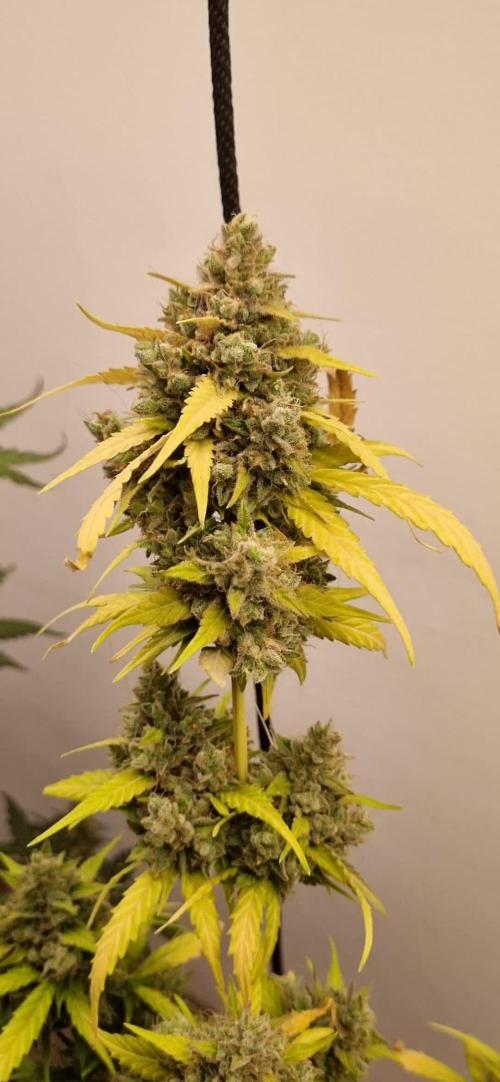
Ak 01 mutant plant ready to harvest. 10-20% trichomes amber, most white
12/12 from seed
Watering with filtered tap water every 2/3 days, when the pot is lighter, 500-1000ml
Soil:
peat, coconut powder, perlite, carbonized rice husk, sheep manure and worm humus. essential mineral mix, vegetable flours, vegetable cakes, biochar, bokashi EM1 and other organic inputs, Algae ascophyllum nodosum
small pots 3,7liters // 1gallon
light: lm301h-evo
120watts with other plants

Likes
62
Share

@masterofsmeagol
Follow
Hey guys Ive had technical difficulties but I've kept pretty good paper notes and pictures. I will try to transfer things here later. These clones were started March 20th
I'll start a new week tomorrow and post weekly conditions and methods. These plants have been through 30mph wind gusts, freezing temps and other extreme environmental problems as well as pests. I'm very happy with the progress they've made this far.


Likes
10
Share


@Fonzo412
Follow
This week has been awesome as far a new growth . The girls are coming along fine .
I’m seeing some yellowing on the leaf tips so for the next few watering I’m going to use straight water and no nutrients. Overall both plant are healthy.
I have some defoliating to do on both plants .
I started low stress training but I stopped because with my work schedule ,it turned out to be a lot of work . So I plan on ordering a Scrog net to keep the girls evened out.
Also every week or so I rotate the plants about a 1/4 turn to distribute sunlight and I’ve been tucking some of the bigger fan leaves 🍁 to get more light at the bottom.



Likes
5
Share


@Major
Follow
BSB genetic is 1 week shorter than my Tropicana Banana from Barney’s Farm but it is in full bloom and has beautiful, dense leaves. beautiful quality of seeds also congratulations to all 🙏🙏🙏👏👏👏😁😁

Processing
Likes
21
Share


@LittleBigTrees
Follow
Put a selection of my own seeds s1's apart from red/purps red Russina Cross straight into soil and mist sprayed them with ph 6.5 water it took them 3-4 days to pop up but all popped up with 12 hrs of each other 🍾.


Likes
77
Share


@Ukfarmer420
Follow
So I thought the plants was going to be a flop but they turned it around, really long time tho for a auto flower, I could of ran photos with a better yield, but never the less these look like 10/10 nugs and smell amazing i can't wait to see how these look dried off.

Likes
8
Share


@skaterblasted
Follow
Days 92 - 98 (from sprout)
8/23/24 - 8/29/24
Loompa's Headband x TK fading hard this week - checking trichome color through a 15x loupe, needs more time
The Good Shit drinking a gallon of water a day but slowly backed off near end of week - my guess would be a 14-week flowering period for this genotype before harvest quality
I'm pretty much watering daily a 1/4 gallon to Blue Nose Pit or less to keep mulch layer from drying out
Sweet 16 S1 takes the win for most trichome coverage out of the garden, has the most up-front aroma out of the geno hunt
PAR is all over the place on this one and totally messed up, after this week I'll raise the light and focus on the appropriate PAR for canopy of The Good Shit
Pest Management slipping too, fungus gnats are repopulating and it seems the ecosystem has encountered a serious imbalance of beneficials and predators that normally kept soil/mulch in-check
Plan on short-term remedying this with a top-dress of remaining compost + em bokashi and a moderate drench of EM5 following with repeated treatments of enzymes (tweetmint)
Long term solution may need a predator/beneficials kit and/or higher quality vermicompost after knocking them back with enzymes


Likes
7
Share

@DeepRootsGrowTrees
Follow
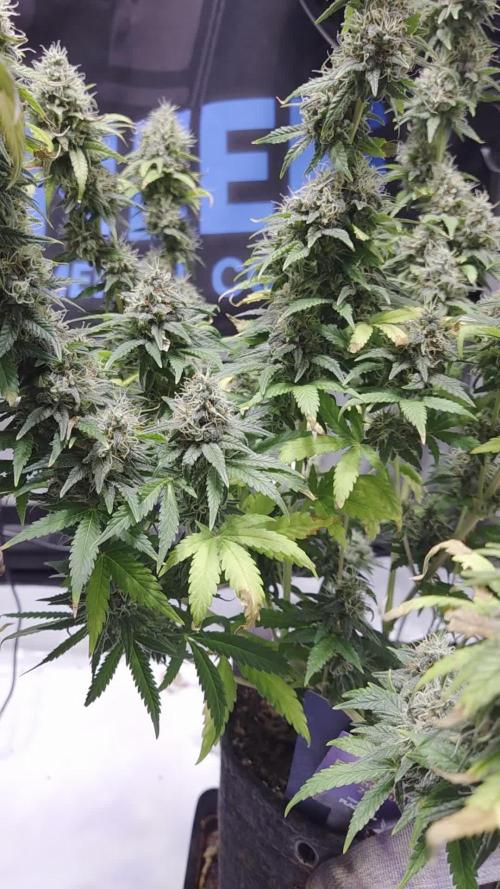
STICKY BROCCOLI 🥦 / ZAMNESIA & PLAGRON WEEK #14 OVERALL
WEEK #8 FLOWER
As she's getting closer to the end she's filling in all the space in between her buds it's always an amazing sight. She's sticky buds are frosty and you can definitely smell her. STAY GROWING MY FRIENDS 🧡!!
THANK 😊 YOU FOR STOPPING BY AND TAKING A LOOK IT'S MUCH APPRECIATED!!
THANK YOU 😊 ZAMNESIA and PLAGRON!!
STICKY BROCCOLI 🥦 / ZAMNESIA SEEDS