


Likes
Comments
Share


@Inceptionist
Follow
Mystery Made 2 got harvested 16/11 and I'm planning to let her dry for 14-21 days before trimming and put them in glass+boveda (58%) and grove bags for final cure.
Drying conditions are as follows:
16-18°C
55-60% RH



Likes
4
Share


@Mrgreenthump68
Follow
40l bowls with new living soil mix 10%
4 plants in a tent with mars hydro FC-6500
4 plants in a tent with 2 SANlight 5 150
Ab heute laufen die Tests der Lampen die für zukünftige Grows benutz werden könnten


Likes
42
Share


@DrLaggis
Follow
🌱 Day 36 - Start of Second Week Flowering 🌱
Hello growing friends! 🌿 Today marks the beginning of the second week of the flowering phase, and I’m very happy with how the buds are developing so far. 🌸✨
Since this is my first grow, I’m truly amazed by how fascinating these plants are. It’s an exciting journey! 🌱🤩😎
Last week, I struggled with yellow leaves and a calcium & magnesium deficiency. Fortunately, with the help of BioBizz Calmag, things are slowly improving. 🍃💪
Currently, I’ve set the humidity to 45%—according to my research, this is ideal for minimizing the risk of mold. 💧🚫🌿
🌱 Day 42 - Last Day of the Second Flowering Week 🌱
Hello everyone! 🌿 Today marks the last day of the second week of flowering, and I’ve made some updates to my routine. I’ve increased the nutrients to BioBizz Grow (3ml), BioBizz Bloom (2ml), and BioBizz TopMax (1.5ml). The plants are growing well and have recovered from the calcium deficiency. 🍃💪 I’m continuing to add a bit of BioBizz CalMag to prevent any future deficiencies. 🌱✨
This week, I also added some soil to the pots, as the soil level had flattened out quite a bit. I topped up each pot with about 1.5 liters of soil.
Likes
2
Share


@LoganatorDude
Follow
I absolutely love to watch them grow! Especially that moment they hit their first growth spurt.
I started with RO water that is remineralized for drinking purposes. The ppm is only 18! My tap is 156! So considering they don’t need much water, I’ve been stealing some of our drinking water. The RO water starts at pH of 7. After I add the nutrients, ppm of 249 @ pH of 5.8 while soil is still sweet @ pH of 7
I think my days are off as a new week begins on the last day of the previous week. I am going to leave that for consistency.
04/21 - Noticing some possible nutrient issues with the Fruity Pebbles for several days now. Going to see what she needs. Up front I’m thinking maybe just a super small amount of Amino Acids with a little Epsom Salt. Maybe she is struggling to access the nitrates from the neem cake. IF it’s a issues with nitrogen. We will see. Maybe she would benefit from some extra calcium?… Any ideas are greatly appreciated.
Day 22 and I am noticing how these girls have been burning up a lot of potassium lately, dealing with the wind and sun 💨 ☀️, getting pushed around all day.
I plant to top dress with some Kelp Meal pretty soon.
Day 24 -> 4/22/22- a quote from the weather on today’s red flag warning and dust storm warning.
“ HAZARD...Less than a quarter mile visibility with damaging wind in excess of 60 mph. SOURCE...Satellite imagery. IMPACT...Dangerous life-threatening travel.”
I’m keeping the girls inside today.
Day 26, I was planning to check the runoff on some of these girls, especially the fruity pebbles, however I messed that up as I also top dressed WAY too much of the seaweed bliss. So I flushed with plain RO water at pH of 7 until there was only slight coloration in the runoff. I didn’t check the runoff as a lot has changed with all that flushing. So next watering/feeding I will make sure I check the runoff on multiple plants.
So the seaweed bliss with its 17 on potassium, seems to be the most likely culprit for why there is a bronze-ish color on the inside of the new growth. Hopefully a foliar feed of Epsom salts can correct the problem. Inside tent, lights on LOW. Noticing similar pattern in all of them to a degree, most noticeable in the fruity pebbles.


Likes
26
Share


@Manis
Follow
Hell guys 👋 ☘️❤️🔥😊
- 1st day of flowering for Lava Cake (26/8)
- Expect Critical all the other flowers show their genders with the first white hairs.
- New pot 10lt for Ak
- Day 24 and LLST (Lazy Low Stress Training)
- No nutrients Biobizz at all so far.
- 1st day of flowering for Frosted Guava (31/8)
Cheers everyone ☘️❤️🔥😊


Likes
12
Share


@SparkSupertramp
Follow
So far so good, I guess.
I think magnesium deficiency in some plants but I’m not quite sure yet.
I have plan to feed some nutrients in next few days.
And I’m really looking for some suggestion and that would be my pleasure.
Likes
22
Share


@Theknifeman
Follow
Man, it is getting close, on a couple! Just a few cloudy trichomes showing. Going to hit them with Bud Candy this week then start flushing.
2 are at least 2 weeks behind but starting to fill out more.
The midget...lol...she's still at least 4 wks and a mystery.
If you're looking for a strain that doesn't overpower with smell, this is it. Hardly noticeable at all.

Likes
2
Share


@draco
Follow
awesome strain😍🙌 especialy who loves indica))
For the first time I grew such a beautiful bush. Blueberries were really felt in the aroma, but after drying and treatment, the cones acquired the smell of beta-caryophyllene - a very strong smell)) The effect is very relaxing and kills (!), it seems to me that I have delayed the harvest a little, so these bumps are equal to a tranquilizer, in addition, there is also gluttony, as well as a slight euphoria. For 12 weeks from the seeds, with the mode 18 6, LED 200W , 12 liters and with my new favorite fertilizers Advanced Nutrients, it turned out to collect 200 g. = 1gw
I dried it for a day in growbox with ventilation, at a humidity of 60-70%, further along the banks and boxes, dried for about a week, the humidity when weighing 192g,
plucked three times, gram 10-15. When weighing the humidity of the buds ~ 65%
I really liked the gluttonous Straine, the food was 1-2-3 ml per liter, during the vegetation phase, at the flowering stage I poured 4-5 ml of the base. After 20 days, after the start of flowering, there was a defoliation. Harvest - washing with water, and a flavless finish, a day in the dark, also threw ice into the pot.

Likes
3
Share


@Barcelona_Farmers710
Follow
Mientras yo me divertía en la spannabis las niñas se ponian cada vez mas resinosas farmers!! Solo basta ver la shining haze para darse cuenta que el mammoth p es brutal!!👌🏻
Likes
13
Share

@AestheticGenetix
Follow
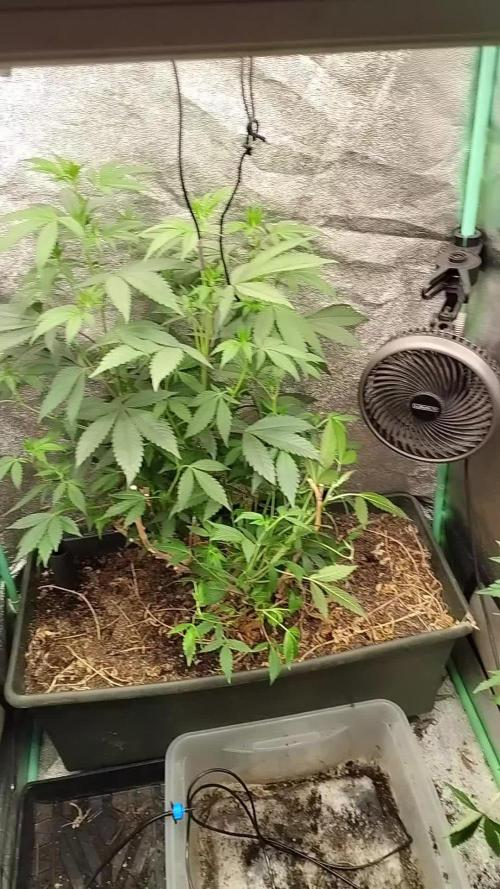
The gelato is looking great. Trying to figure out which male I want. I'm realizing I want to make s1 seeds so I need to get some clones from her to pollinate her
Likes
43
Share


@MadeInGermany
Follow
Hey everyone 😊.
Today is the last week before the harvest 😍.
I don't even know where to start 😅.
I love this phenotype .
It smells extremely tasty 😃, and this time I'm very curious to see if the pheno tastes better in the aero than the last time it was grown on earth.
I would never have thought that it could taste better on aero than on earth, I always thought it was a Mhytos, but the last run with the Blue Gelato # 41 on aeroponic tasted even more intense than the same pheno on earth 😃.
I'm really looking forward to the harvest, and of course I will bring a harvest update before the last update 😇.
At the end there is also a detailed report 👍.
I wish you all a lot of fun with the update, stay healthy 🙏🏻 and let it grow ☘️🍀
You can buy This Strain at :
www.Zamnesia.com
☝️🏼☝️🏼☝️🏼☝️🏼☝️🏼☝️🏼
Strain
Gelato clone from mother (Zamnesia )
☝️
Genetics: Wedding Cake x Gelato x Gelato 33
👍
Vega lamp: 2 x Todogrow LED CXB3590 COB 55 W
1 x Sanlight S2W 62 W
💡
Flower lamp : 2 x Todogrow LED CXB3590 COB 55 W
1 x Sanlight S2W 62 W
💡 ☝️
Grow Aero System : Growtool 0.8
☝️
Fertilizer:
Canna Aqua Vega A + B , Canna Aqua Flores A + B , Rizotonic, Cannazym, CANNA Boost, Pk 13/14, Canna Cal / Mag, Canna Ph - Grow, Canna Ph-Bloom
☝️🌱
Water:
Osmosis water mixed with normal water (24 hours stale that the chlorine evaporates) to 0.2 EG. Add Cal / Mag to 0.4 Ec Ph with ph- to 5.5 - 5.8
💦 💧
Likes
26
Share


@Haoss
Follow
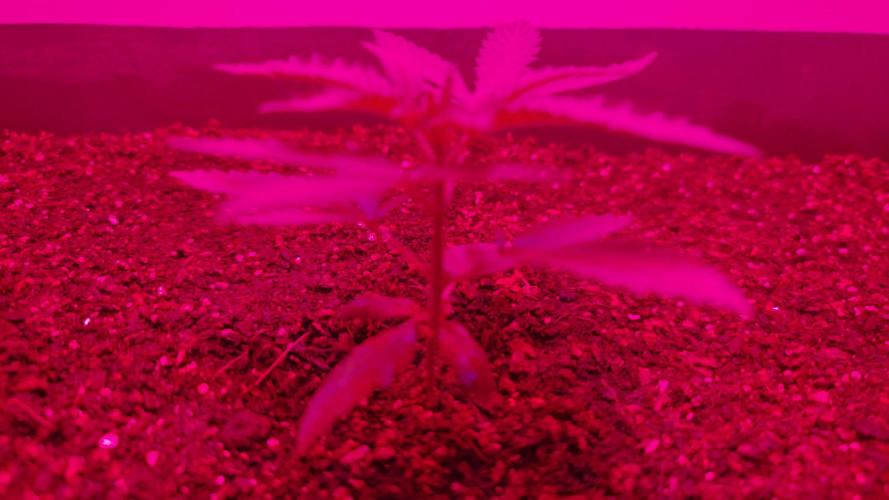
A new plant was born, thanks to the seeds of Zamnesia, I hope the best girl will grow up



Likes
8
Share


@Easygrower
Follow
Hello growers day 56 in the garden with the blue monster auto she’s a beast I love it the weather has been banging she’s loving life I just keep feeding her every 2 days at the moment I’ll give her another week of feed then start flushing her from there that’s it until next week be safe and happy growing 👍


Likes
10
Share


@nonick123
Follow
🚀 4 clones de Blueberry Pie F1 Fast seleccionados por @stacksfarmsltd - https://www.instagram.com/stacksfarmsltd
🚀 Breeding by @seedsmangenetics - https://www.seedsman.com/eu-en/blueberry-pie-f1-fast-feminised-seeds-sman-blpi-fast-fem
💦 BioTabs 15% DISCOUNT code "GDBT420" biotabs.nl/en/shop/ @biotabs_official
🌱Substrate PRO-MIX HP BACILLUS + MYCORRHIZAE @promixmitch @promixgrowers_unfiltered
💡2 x Mars Hydro FC1500 EVO Led Grow Light (2024 NEW FC 1500-EVO Samsung LM301H 150W LED) - https://marshydro.eu/products/fc1500-evo-led-grow-lights/ - https://www.amazon.de/dp/B0CSSGN5D8?ref=myi_title_dp

Likes
Comments
Share


@Ecu_D_Monkey
Follow
Culture facile sans aucun soucis
belle plante tres esthétique
une merveille pour les amateurs de gout fruité
Likes
16
Share


@Sur_cannabico
Follow
Con la aparición de los primeros pistilos y la correspondiente formación de ápices, damos por iniciada la etapa de floración de estas green gelatos de RQS
Quemanta nutrientes aportando todo lo necesario siempe 🔥
