


Likes
Comments
Share


@eldruida_lamota
Follow
Vamos familia novena semana floración de estás Pink Runtz de RoyalQueenSeeds.
La cantidad de agua cada 48h entre riegos.
Esta semana ya añadimos nutrientes de también acabaré cortando esta semana las plantas, aunque una no esté acabada se cortará igualmente temprana.
Las flores son bien densas y repletas de teicomas, ya veis que tonalidades más rojizas que esta sacando.
Estás semanas veremos como acaban.
Agrobeta:
https://www.agrobeta.com/agrobetatiendaonline/36-abonos-canamo
Hasta aquí todo, Buenos humos 💨💨💨

Likes
15
Share

@GUGU_choices
Follow
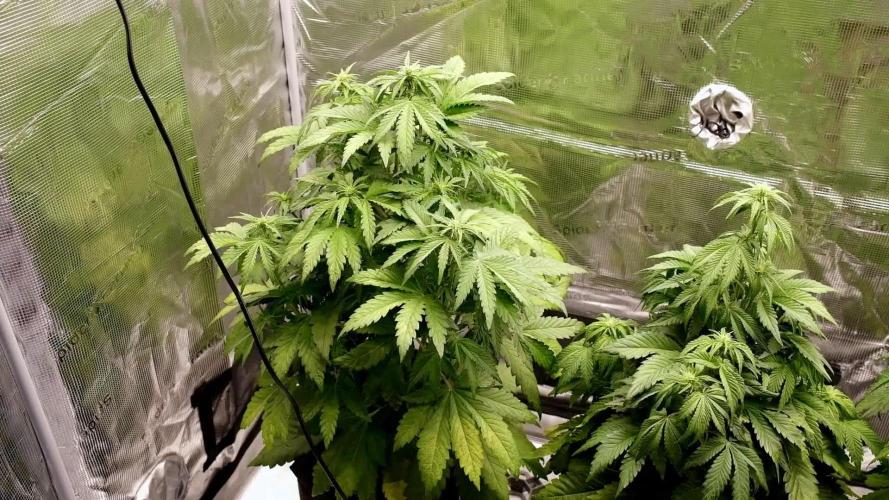
Hi all growers. I'm reporting the end of the fifth week. At the beginning of the week, the girls received a flower fertilizer - 50g BIO Bloom from GHS each in a grow box. As is usually the case with autoflowers, after starting stretching, the girls started showing the first ailments on their bodies and they're really annoying me :) I don't know if they don't like the flower fertilizer, or the higher pH that has risen in the drain, or they're just taking a while to realize what they're supposed to be doing. In the last few days, they seem to have understood what's expected of them, their condition has improved and they're starting to smell nice. Good luck to you all!
-
Čau všem growerům. Hlásím konec pátého týdne. Děvčata dostaly na začátku týdne sypání na květ - 50g BIO Bloom od GHS každá v grow boxu. Jak už to u autoflowerů bývá, po nástupu do stretchingu děvčata začaly ukazovat první neduhy na těle a už mi s tím pěkně serou :) Nevím jestli jim nechutná květové hnojivo, nebo vyšší pH které se zvedlo na odtoku, nebo jim jen trvá si uvědomit, co že to vlastně mají dělat.. Poslední dny zdá se už pochopily, co se od nich očekává, jejich stav se zlepšil a začínají i hezky vonět. Ať se vám všem daří!


Likes
4
Share


@ukautogrower
Follow
She's starting her streach. I've started to add a mill of bloom with the grow and she's branching out nicely

Likes
32
Share


@GODSGIFT_2005_JM
Follow
🍼Greenhouse Feeding BioGrow & BioBloom
⛺️MARSHYDRO
The ⛺️ has a small door 🚪 on the sides which is useful for mid section groom room work. 🤩
☀️ by VIPARSPECTRA (models: P2000 & XS 2000)
🌱 DUTCH HEADSHOP SEEDS:
www.dutch-headshop.eu
www.dutch-headshop.nl
ONE STOP SHOP
. 100% germination success on first try! with HUGE seed selection!
. Very friendly customer service
. Best bio-seed packaging
. Sells other products @ best prices:
. Nutrients
. Vaporizers
. Smoking accessories (grinders, cones)
. CBD Tinctures
. Resin Extracts
. Boveda humidity packs
. Ziplock bags
. Other health supplements such as:
. Lion’s Mane Organic Capsules
. Hemp Seed coffee

Likes
4
Share


@GothBotanical
Follow
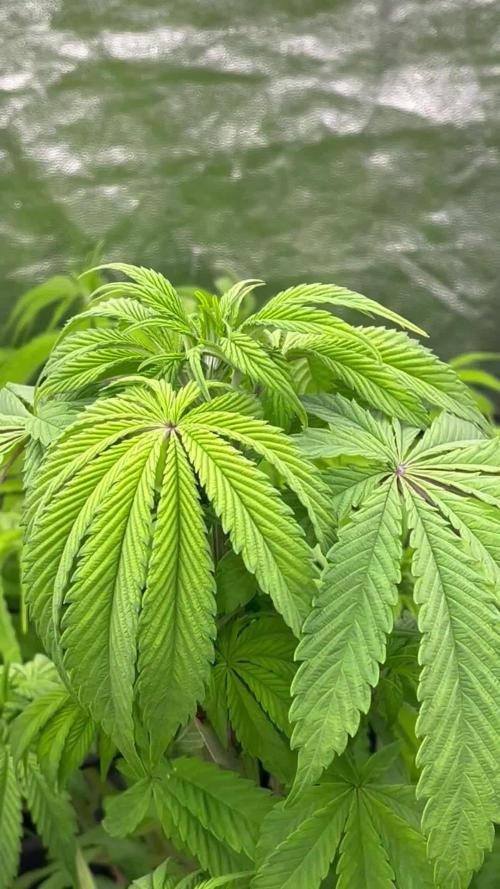
Week 8 marked the final stretch of mid flower, and she’s really starting to show off. Buds continued stacking steadily across the canopy with thick white pistils and frost ramping up hard. Trichomes are now fully visible on the sugar leaves and showing the first signs of cloudiness. On Day 50, I watered with Cal-Mag (1 ml/gal) before heading out of town for a few days. She held up great while I was away — no droop or stress. On Day 56, I brewed and applied Compost Tea (Tea Party #4) as a full-strength drench and refilled the auto-watering base with the rest. I also refreshed the topsoil to maintain moisture contact. Some purple has started showing up on the buds, and the fade has officially begun on the lower fan leaves. No new training this week, just some tucking to keep bud sites exposed. The aroma is ramping up and she’s entering the home stretch with a strong structure and healthy energy heading into Week 9.



Likes
9
Share
@chrizzle
Follow
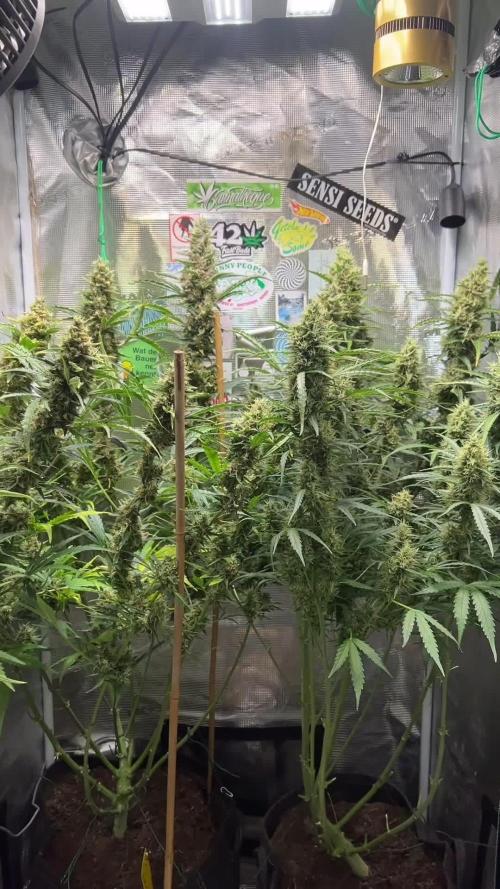
Went back up to 25ml/10L ‚Autoflower-Supermix‘ as one of my ladies started showing first signs of a Nitrogen defifiency.
Processing
Likes
7
Share


@Stonesgrowing
Follow
So im a bit too late with this week. Had a busy weekend. My Plant, called Marie, is in flower day 3 now and my god I never had a plant stretching so intense. In her 3 days of 12/12 she stretched about 10 cm. She's kinda tall and i f*cking love her structure. She had trouble with too much nutrients (my fault)but she recover nicely after pure water feeding for about a week. Lets start to see her fatten' up🍁🙏
Likes
2
Share


@902EastCoast
Follow
Easy to grow, beautiful structure and plant. Big frosted, dense buds with very good odour 🤤. Would 100% recommend.



Likes
47
Share


@Ultraviolet
Follow
Gave her a cocktail to help with stress. Added 1st net for lateral support, not so much now, but for later. Blue light is absorbed by photoreceptor proteins called phototropins, which trigger a hormonal response that causes cells on the shaded side to elongate, making the plant bend toward the light. Try and fill this side a little. She is quite big already, just needs to find her stride again after the undue torture.
The mind is constantly working and producing, just like a factory. It's not just a passive recipient of information but an active producer of ideas, attitudes, and beliefs. The "ingredients" in this factory are the information you consume, such as books, conversations, and the media you engage with. The "products" are your thoughts, beliefs, and actions. The quality of the ingredients directly influences the quality of the output.
5 apex stems with 20-30 mini cola, let them develop a little, with the apical dominance shattered, all those 20-30 will all compete with each other as soon as that stretch is initiated. Key to a good stretch is making sure the plant is cycling efficiently, with large ATP conversions occurring lights out.
For now, keeping light intensity high. A plant will slow its vertical growth in very high light intensities, leading to a more compact form with thicker stems and leaves. This response is a protective mechanism against light stress, which can damage the photosynthetic apparatus and lead to symptoms like leaf scorching, yellowing, and brittleness. Instead of growing taller, the plant invests its energy into creating a more robust, stress-tolerant structure.
Providing plants with necessary antioxidants helps protect the photosynthetic apparatus by scavenging reactive oxygen species (ROS) that cause damage from excess light.
UV light exposure can impact the xanthophyll cycle by either enhancing its photoprotective role or causing damage, depending on the intensity and type of UV radiation. UV exposure can trigger the synthesis of more xanthophyll cycle pigments to increase the plant's capacity to dissipate excess energy, but it can also cause direct damage, particularly to Photosystem II, and may lead to a decrease in the de-epoxidation state (DEPS ratio) which indicates a reduced capacity to dissipate excess energy.
Plants can respond to UV stress by increasing the synthesis of xanthophyll cycle pigments, such as violaxanthin and zeaxanthin, to improve their photoprotective capacity. UV-induced changes in xanthophyll cycle pigments can be linked to a plant's overall tolerance to high radiation stress. The xanthophyll cycle helps protect against photoinhibition, which is especially important when the plant is exposed to high levels of both UV and visible light. High doses of UV radiation can directly damage photosynthetic components, including the proteins, lipids, and pigments in the thylakoid membranes. Exposure to UV radiation can have a mixed effect on the de-epoxidation state (DEPS ratio) of the xanthophyll cycle pigments. In some cases, UV can inhibit the conversion of violaxanthin to zeaxanthin, resulting in a lower DEPS ratio and a reduced capacity for energy dissipation. However, the total pool of xanthophyll cycle pigments may increase, and this enhanced pool size could provide a greater potential for photoprotection despite a lower DEPS ratio.
The xanthophyll cycle works alongside other mechanisms, such as the accumulation of flavonoids (UV screens), to protect the plant from UV-induced damage.
Blue light repairs 100% UV-induced damage in plants through a process called photoreactivation, which uses a light-dependent enzyme called photolyase. This enzyme uses energy from blue and UV-A light to directly reverse the damaging pyrimidine dimers in the DNA caused by UV-B radiation, a key mechanism for maintaining the plant's genetic integrity.
After carbon, light, water, temperature, and nutrients, the limiting factor of a plant's growth is often its own internal factors or the amount of a key ingredient. Chlorophyll concentration is one such factor, as the amount of this pigment limits how much light can be captured for photosynthesis. Other factors include chloroplast number, respiration rate, and the concentration of carbon dioxide in the atmosphere, as plants are often in a CO2-deficient condition.
60x60x18=64800seconds x 700 = 45,360,000moles. 45DLI
Exposure to 165 µW/cm² of ultraviolet-B (UV-B) light for 3600 seconds = 1 hour, a extremely high, acute dose triggering stress responses and protective mechanisms.
.
The plant's photoreceptor protein, UVR8, senses the UV-B radiation. This triggers a signaling cascade that activates specific genes to protect the plant from damage. In response to the UV-B signal, the plant ramps up the biosynthesis of protective compounds like flavonoids, phenolic acids, and anthocyanins. These compounds absorb UV radiation and accumulate in the epidermal layers of leaves to shield inner photosynthetic tissues. The plant may increase leaf thickness or deposit more cuticular wax, creating a physical barrier to the radiation. The plant will produce more enzymatic and non-enzymatic antioxidants to neutralize the reactive oxygen species (ROS) produced by the UV-B radiation. The plant activates enzymes, including photolyases, to repair DNA damage caused by the UV-B. These repair mechanisms are critical for preventing permanent genetic mutations.
While protective measures are activated, a high dose delivered over a short period can cause stress that overwhelms the plant's defenses.
Photosynthesis is highly sensitive to UV-B. A high dose can inactivate Photosystem II (PSII), damage thylakoid membranes within the chloroplasts, and reduce chlorophyll content, which lowers the plant's overall photosynthetic capacity. Despite repair mechanisms, high UV-B doses can inflict persistent damage on the plant's DNA. The overproduction of reactive oxygen species can cause oxidative stress, leading to the oxidation of lipids and proteins and disrupting cellular function.
I am playing in the enchanted forest. A shift in perspective is what changes perception over time. By deliberately considering a situation from another point of view (perspective), you can challenge your initial, knee-jerk interpretation (perception). This is a valuable skill in both personal and professional life for fostering empathy, improving problem-solving, and making more informed decisions.
Move the mind off perception into perspective.
Thank you.
Likes
30
Share


@Sticky_fingaz
Follow
BIG BIG apologies to Heather from fast buds & to Growdiaries & anyone who follows.
The past few months have been a massive struggle, not just with temperatures & growing weed but on a personal level.
My wife has been very poorly & with covid and everything going on, it's put a massive strain on us all!!
I've tries to maintain an active presence on Instagram but that's about all I've physically had time for.
I've put this update together today, so far into the grow now it almost seems pointless.
I lost my original Mimosa due to high temps & high RH. Moving into the attic at that time of year was a mistake. It has cost me a small fortune to keep things alive. I've had to purchase an air con unit, more fans & just more of everything to be honest.
My purple punch is almost ready to harvest, any time within the next couple of days, followed shortly by Bruce Banner & Kosher cake.
I wont be winning any awards for this Diary & I feel bad as I was supposed to be show casing what 420 Fast buds has to offer & I've failed...miserably.
I hope you can make sense of all the pictures I've included....just a mass photo frenzy over the past few weeks.
Thanks to everyone & all your comments.
Wishing you all the best.
One Love ❤️


Likes
16
Share


@JJs_Js
Follow
Plants have officially started their flower cycle this week. Gradually increased light wattage from 75% to 100%, originally had the light at 15” but raised to 17” after seeing small signs of light burn. My cheap Amazon PH meter broke after 2 months so I’m currently using the GH PH tester solution - hoping to pick up a Bluelab pen by the end of the week.
The green crack has been the fastest growing seed by far! It’s been a bit nerve-wracking defoliating her, I keep having to pull leaves to uncover her flower sites (I know I’ll have to do it again too).
One of the LSDs I’m experimenting with- I put about 2 inches of super soil (Subcool’s recipe) on the bottom of the pot and am continuing to feed her on the same regiment as the others. She’s happy with no signs of nute burn! The West Coast OG on the other hand seems to be a light feeder and had a bit of nute burn, so I’ve been going extra light on feeding.
As we get deeper into flower, I will be posting more individual photos of each plant so you can see the bud development.
Likes
4
Share


@HighOhioAn
Follow
Rainbow melon what can I say? This plant is absolutely one of my favorite so far out of the fast buds genetics. I’ve grown a couple other genetics before and I have to say fast buds definitely checks all the boxes almost makes it too easy. The plant literally grows itself like it has a mind of its own handling low stress training absolutely amazing. Seems like it wants to have a perfect canopy. Very little TLC and the plant absolutely is thriving. 🌿🔥