


Likes
Comments
Share


@MonsieurDeLaRuche
Follow
day 22: the plants are beautiful, they are all starting to produce trichromes.. no sign of deficiencies!
I did one of the last defoliations.
the smells are starting to appear for some, the ones that struck me are:
- code red #1 and #2: strawberry and cream terps.. a bit like strawberry milk! it's crazy
- B45: citrus and bug terps.. on a background of exotic fruit and gas! it's incredible
- LA vanilla cake: vanilla ice cream terps
- Cherry gar see ya #4 clone: a puree of exotic fruits, especially mango and pineapple.. I'm a fan
my two papayas have herm, I found some bananas.. I really don't understand, they are in the perfect ecosystem!! I removed the bananas and left the plants for the moment, to be continued
in my flowering TCO, I put:
- kelp hydrolysate
- epsom salt
- bat guano
- mealworm guana
- castor bean shell ash
- palm ash
- vermicompost
- blackstrap molasses
- elycitor
-Yeasts Saccharomyces Cerevisiae
Bottom right: Papaya Bang Bang #1
Bottom middle: LA Vanilla cake #2
Bottom left: Papaya bang bang #2
middle right: Code red #
middle: cherry gar see ya #4 clone
middle left: White runtz x Hollywood
Top right: Code red #
Top middle: B-45
Top left: LA Vanilla Cake #1


Likes
24
Share


@KCChiefers
Follow
Day 66
-Watered each plant with 8 cups of pH balanced water. Plant #1 will be harvested after the next watering. Picked off dead leaves on both plants.
Day 69
-Watered each plant with 8 cups of pH water. Plant #1 will he harvested in 2 days. Picked off dead leaves on both plants. Plant #1 is super dense and chunky. Should be an easy trim.

Likes
1
Share

@Walachiangrowdiary
Follow
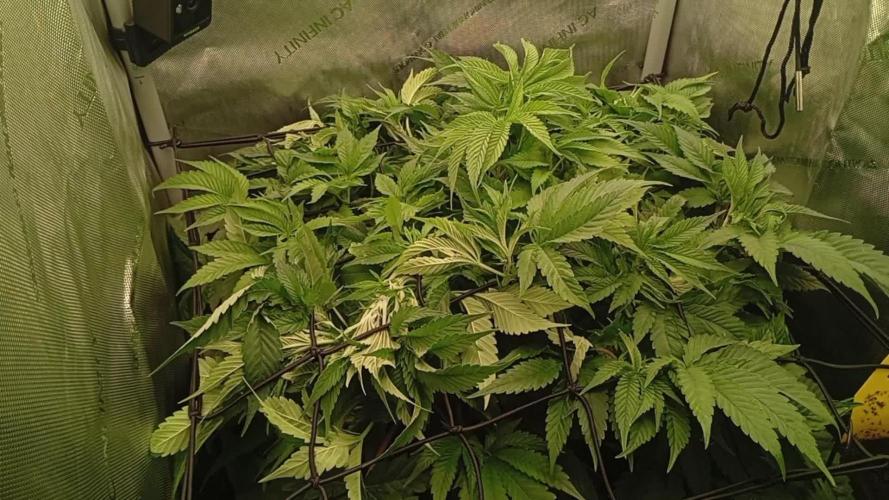
This pheno Is literaly what i looked for this tent because od bushiness and low height


Likes
13
Share


@Skinnytalls420
Follow
Day 44-21/05/22 everything is looking good I might take them out tomorrow do some light defoliation and move them about abit not sure yet!!!!
.
Day 47-24/05/22 they look real good today!!!!
Likes
22
Share


@Slobasian
Follow
You walk into the back yard and it’s a straight face punch of smells. Looking like some indoor rn moved all plants to safer place in case storm hits so now I atleast have a wind break


Likes
1
Share

@DrGL_Thumb
Follow
Dropped the 3 seeds in water bath with a little HESI rooting mix, little mycorrhizae.
On a heat mat, covered for complete darkness. 24 Hr soak -
then seeds moved into own Seed Germinator - Karl’s Bubatz Popper 😂
24 hrs after 22 degrees and 90-95% humidity seeds developed long enough roots to hit the soil. To avoid any chance of damage the cotton pads hit the soil too.
Likes
18
Share

@GREENPHOENIX6262
Follow
*Disclaimer - Please disregard the counting weeks - The mother is ready to be harvested so the updates moving forward are only for the clones*
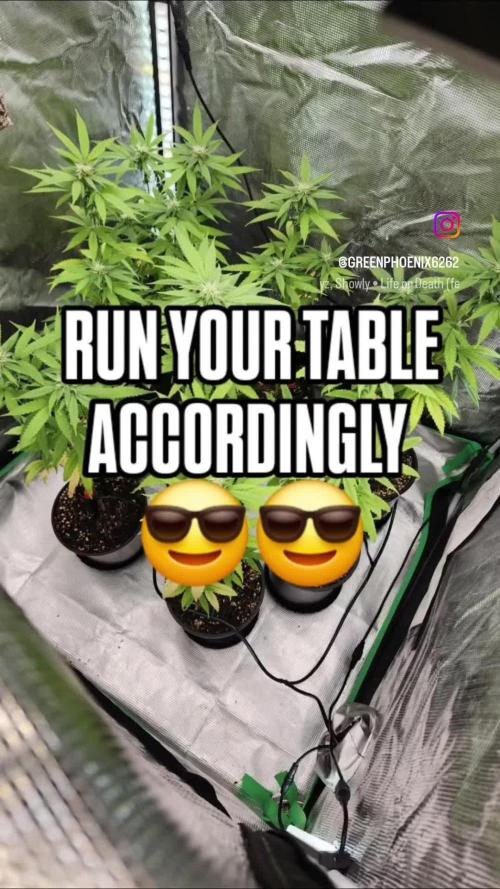
05/17 - (C) - The babies are flowering accordingly - Long strans on the flower sites and healthy plant structure on all of them - I will increase their molasse intake to provide more carbohydrates on the feeds - I replaces the C02 bag with a fresh one to give the ladies fresh CO2 through out harvest. I will begin to decrease the light intensity on in the tent to ensure a clean productive harvest.

Likes
15
Share


@Deli_Weed
Follow
Esta es mi primer planta que cosechó con éxito, y estoy muy feliz con mi resultado final 😄 obtuve una muy buena cantidad de flores premium con alrededor de 15% de thc (desde mi punto de vista claro 😅)
Tuve algunos problemas durante el cultivo, principalmente que deje que se estirara mucho, debi hacerle LST a la punta principal para que no siguiera aumentando la altura y tener más flores del mismo tamaño, las flores más bajas quedaron chicas y les faltó madurar un poco, también tuve problemas de sobrefertilizacion aun a pesar de que seguí las instituciones de los fertilizantes y de sus indicaciones que me dieron los de servicio al cliente, incluso ya teniendo en cuenta eso siempre use la menos de la dosis de la base ya hasta que crecieron más le fui aumentando, igual creo que es muy cierto lo que dicen de que “menos es más” a la próxima empezaré usando muy pocos nutrientes, aparte creo que si hubiera usado unos leds más potentes, las plantas hubieran aprovechado más los nutrientes, pero igual me sirvió de experiencia, pienso cultivar de nuevo esta genética y sacarle más provecho. Muy recomendada 👌🏻😁

Likes
3
Share


@CommanderCannabis
Follow
Had a good week. Started flowering. Julie and Jen had some lime green new growth but i upped the nutes and today they look much better. First pistils showed up on Julie and her canopy is coming along.

Likes
2
Share

@Jardin33ro
Follow
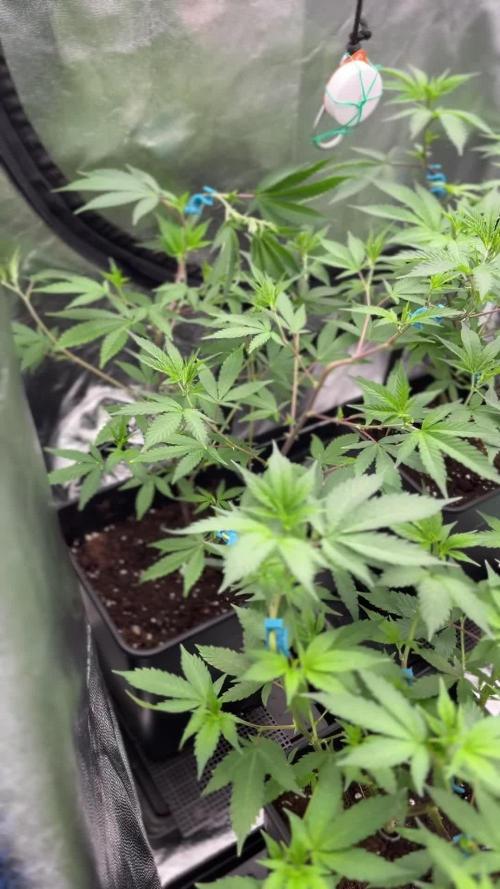
Buenas! En esta semana toco trasplante y primeros preventivos foliares, IPW de athena para preventivo 1 vez a la semana. El trasplante lo hicimos a maceta de 7L, quiero ver si puedo tener mas control de los riegos. Seguimos mateniendo humedad y de a poco suben las temperaturas, ya que no tengo aire acondicionado para un mayor control. Pero se hace lo que se puede y vienen hermosas. Ya largan ese olor característico de la cepa, un buen citrico mandarino

Processing
Likes
49
Share


@AsNoriu
Follow
Day 29. Heavy work in progress, update will follow...
Day 30. Job done, most lost almost all big fan leaves, all 3 Kushes where toped.
In plans one more heavy training session in a week time, few days to recover and hopefully flower !!!
Skunks overgrew Cheeses and start to smell, really to STINK ;)) And i love it !!!
Next watering - full feed.
Day 31. All Kushes have mini mag deficiency, but i get it with my lights often and know how to fight in early stages.
All girls will get 3 feeds in a row.
1. CalMag only
2. Silica acid only
3. Full range of Biobizz feed.
After installing new air fans, have to water girls almost every day. Try to feed them only once a week, but pot space taken in full by most of the girls and its time for first mini boost.
Day 34. Girls got really heavy defoliation, HST , toping and LST session.
First time in my life i trim toped plants so much, but they where reaching sky and stems too fragile for supercroping yet, i do it on branches, but not on mains. So i guess they will slow down a bit ;)))
All girls got silica acid after.
Happy Growing !

Likes
42
Share


@Red_Rockst4r
Follow
Deliciously grow, without problems - super fine and satisfactory result.
Unfortunately I forgot to weigh it wet, but I will update with the dry weight as soon as it is dry - but a good bet is that it has been about 200+ grams wet and there will probably be about 50 grams dry.
I have added some videos from before and after, the top cola was cut - and some close up photos 😘
Update: 42 grams in total 😍
She taste so damn nice, super great !!

Likes
32
Share


@Zurban_Poison
Follow
Hello friends, everyone!
I would like to inform you that this report is being held within the framework of the local growing championship in which the winners will appear in 4 categories ..
Our girl will compete for the title in the Best CBD category! wish us good luck!
Likes
10
Share


@brunoazazel
Follow
Dia 49 desde cotiledon, realizamos primera poda apical.
aplicamos tambien una vez por semana NPK, un riego con fertilizantes y otro sin.
la semana que viene ya aplicaremos melaza tambien en el riego. y por otra mezcla los preventivos de insecticida y fungicida.
También aplicamos tierra de diatomeas tanto arriba del sustrato como en las hojas! espolvoreamos y despues rociamos con agua, quedarán las hojas blancas 😝

Likes
20
Share


@eldruida_lamota
Follow
Que pasa familia, andamos por aquí, puesto que está farm cheese a cogido muy buen ritmo, esta será la última semana que la daremos de crecimiento, y en nada pasamos a 12/12.(floración).
El ph está controlado en 6.5 , la humedad está por debajo de 55% y la temperatura no sube los 26 grados.
Vemos un ejemplar que está ramificando bien, el led me está gustando mucho la flor crece más compacta.

Likes
133
Share


@Kitties_and_Colas
Follow
She started very healthy and grew very quickly, we topped her once at the 3nd node (after 5 nodes), tied the main branches to the side allowing the bottom growth to catch up... we then toped each new top 1 time (after 2 nodes on the new growth), our goal is to creates 12 main top branches...we stripped the bottom 1/2 of the plant bare for now :)
Likes
41
Share


@TerpTurtle
Follow
15 Day dry then trimmed using the Trim Bin.
Curing with Grove bags, first harvest filled 3, 1/4lb grove bags.
*Updating with clone pictures of this pheno in late flower labeled in diary as you look through, If I pop a new seed of this strain Ill start another diary

Likes
26
Share


@Canadian_Steelheader
Follow
Grow is coming along nicely. Only providing Calmag and KoolBloom. Colas are getting bigger, but crowding is becoming an issue. pH in root zone has been slowly decreasing. Adjusted nutrient pH a little higher to compensate. Only a few more weeks to go. 😎

Processing
Likes
15
Share


@MG2009
Follow
01/28/2020
Switching to flower schedule today 12-12, doing a little defoiliating, and stem cracking then get ready to watch the show. I was looking for a female Unicorn, it looks like it's a male Unicorn
He has all the attributes of his sisters that I like defoiliating doesn't bother him, quickly recovers from LST Stinks way more than any of the females that I have grown, out my hands get sticky just picking the fan leaves, I've got 2 clones starting for future use. Question is do I finish my diary on a male( Unicorn ) plant hmmm🤔 will anyone appreciate it? Will he carry on these attributes in his offspring?
I guess I'll flower him out and see if he lives up to my hopes.
I Will harvest his pollen and test his offspring to see how he contributes to the next generation.
If all goes well I got a good breeder.
Likes
4
Share

@Arturok_320
Follow
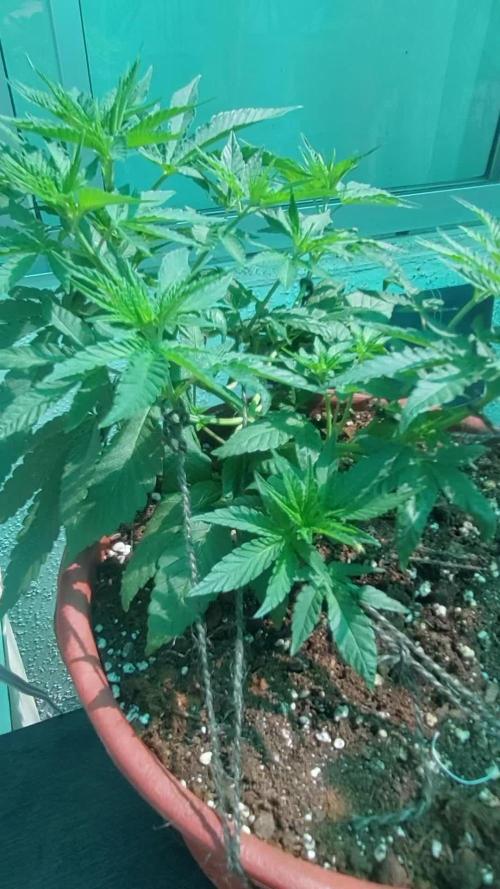
-Added this one day before the week-I should start by saying I'm super happy—I'm starting to think the plant might be entering the flowering stage, even though there's no clear sign yet except for some new leaves with that really light neon green. If it's not flowering yet, honestly, that's fine by me—more time to grow. But what's really got me excited is the potential number of branches I'm seeing. She's growing fast, so I'm guessing this might be what they call the "stretching" phase. I'm hoping the branches thicken up a bit; maybe I'll increase the barrier light intensity a little to give 'em a boost. I also ordered some triacontanol to help with flowering, but not sure if it'll arrive in time—still, it's a super precise product. I've cut back on the Bio Grow since some leaves showed signs of over-fertilizing, and I've upped the fish protein, CalMag, and Sugar Fulvic. I've been doing foliar sprays with water and aloe vera (about 100ml water to 20ml aloe), plus some Ecklonia maxima on the new growth, and plain water too. Always pH at 6.0, temp around 22°C. Trying to help her cope with 0% humidity and ambient temps hitting 34°C. Stoped LST coz' I want to make bigger the around 6-8 branches.