


Likes
28
Share


@Roberts
Follow
I am still battling a little magnesium deficiency. Starting to add cal mag in her moisture water between feeds. Likely due to the small Potter she is in. Hopefully will have the rest of that issue resolved now. Also raising the ph a little should help as well. She is growing under the new Spider Farmer G3000 light. I likely will have to transplant to a little bigger small Potter soon. Been using the run off to rinse the substrate I will use. So she won't know anything happened when I do it. Just more room. Basically avoiding a ph difference between coco substrate is plan. Thank you Spider Farmer, and Amsterdam Marijuana Seeds. 🤜🤛🌱🌱🌱
Www.amsterdammarijuanaseeds.com
Thank you grow diaries community for the 👇likes👇, follows, comments, and subscriptions on my YouTube channel👇. ❄️🌱🍻
Happy Growing 🌱🌱🌱
https://youtube.com/channel/UCAhN7yRzWLpcaRHhMIQ7X4g
Spider Farmer G300w: https://amzn.to/3S2zvsd
Spider Farmer 10X20 Heat Mat Kit - https://amz.fun/lsa0J
Spider Farmer Amazon Store: https://www.amazon.com/spiderfarmer
Spider Farmer Official Site: https://spider-farmer.com
Discount code: saveurcash

Likes
25
Share

@DomForester
Follow
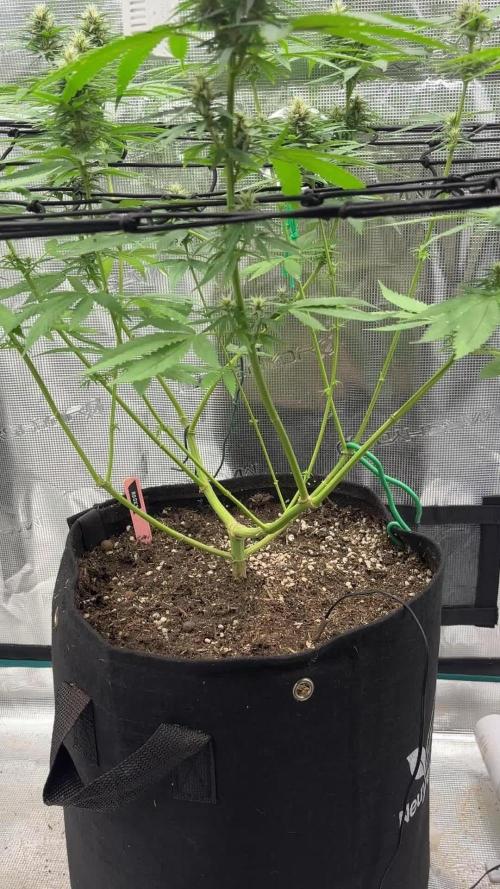
Was out for the weekend and came back to this. Predatory mites seem to have done their thing - no sign of spider mites from last week after leaving the tent alone for a couple days.
Buds are swelling, canopy is getting a little denser again. Bit of vertical increase too (eyeballing it) but thats prbly just the buds stacking upwards a little.
Excited to see her get fatter the next couple days and weeks!

Likes
5
Share


@Insaniac_0
Follow
Thank you.
Growing cannabis is an art that seems to evolve as you learn it. While it may only take a little knowledge to get started, It seems that this may take a life-time to perfect (doubt I'll ever make that category, but I will certainly try).
So thank-you to the community that Shares, Comments, Follows, and Likes. Your efforts in any of these actions make these journals a worth-while and perfect way for us all to learn and track our efforts. I personally appreciate it.
Also a huge Thanks has to go out to Grow Diaries for making this community even possible. Your efforts to supply the data storage alone is more than enough, but you the fact that you dont stop there and constantly try to improve the experience even more makes this my favorite community to to share on.
And then lastly, but certainly not least, a heartfelt Thank-you to Royal Queen Seeds for your branding/research while making these seeds available to people like me. It gives me confidence in knowing that I am working with great genetics before I even start my grow.
----------------------------
Germination Start and incubation period 3/12/24 to 3/26/24
Transfer Day to Veg Day 6
3/27 to 4/2
Germination:
First note was about the appearance of the seeds. They were smaller than I am used to seeing, but no damage or deformities and look to be in good shape. Germination took 14 days from dropping in water to transplanting into 1 gallon pots. 23hours in a glass of 6.3ph room temp RO water. 2 cracked open a little and I placed them both in paper towels wet with the glass water and pasted to the sides of the glass for 2 days then checked, no progress. So I freshened the water then waited another 2 days and checked, little to no progress. Then checked again 1 day later and finally was able to move them. One looked fully ready and the other seemed less ready. I placed in rapid rooter pods and closed with toothpick tips. 1 popped out of the pods in 1 day but the other did not. So I gave it 1 more day and started my spare seed. After 4 days of water and towels I replaced the dead pod with a growing sprout. Transplant occurred on 3/27
Veg Day 0 to 6
1gal hard tall pots. Transplant went well. The sprouts are smaller than I would like and seem to be stubborn in growth to start but hoping htat changes with soil. One pod was overgrown in the pods and Im hoping it doesn't reflect in the overall plant production.
Video:
Transplant ease.
Transplant to 1 gal pots:
I am using a 50/50, 50%perlite/50%soil with a .5lb of dolomite lime and a .5ml of flora micro added to .5 gallon of RO water (Im mixing 2 gallons of soil total so the water to soil ratio is 1/4 of the total medium volume) to achieve a soil tested ph of 6.4. I am using a 50/50 soil/perlite mix because I plan to use these in auto pots. I also used about 1 cup of the same soil mix water to pour around the plant after transplant; you can see how the perlite rises to the top where I did this. I sprayed two domes and covered - I plan to leave covered for the first week.
Feed:
I kept them under the domes and sprayed every day that I didnt feed them, to keep humidity up while I let them find water in the soil. By the end of the week I took the domes off and took pictures.
Feed this week was another 1 cup of 6.3ph water 5 days after transplant.
Feed plan next week will increase the amount to 2 cups of plain-no-nute water with about 4 days between feeds. I want to see the water run through so if I need to use more than 2 cups I will. The idea is to water deep and through, but then make them search for more before the next feed, hopefully spreading the roots out while doing it.
Veg Plan:
I plan on 8 colas for each plant. So that will be 3 topping days and a total of 7 cuts.
I will want to cut the first time on day 21 if I have 5+ nodes. I will transfer to 5 gallon auto pots with-in 1 week of the first topping. Once I have 3 nodes of new growth past the first topping, I will top those two branches to the first node again. (that's 3 cuts total by this point) Then, after 3 new nodes of growth after that, I will do a last topping on the 4 branches. (4 new cuts added to make a total of 7 cuts and 8 colas)
I will train the branches using LST/HST with tie downs as soon as I can after the first topping day to help maintain the branches growing where I want them to. I will also introduce an adjustable tomato ring after they have settled into the 5 gallon forever pots to provide support and mobility
Hopefully all goes well, and I will have 1 to 2 weeks of growth before flip after week 8.
I think it sounds more ambitious than it really is, but if you follow this journal, we will see together.

Likes
1
Share


@Green_Peace
Follow
Buds are fattening nicely and the 2 plants are receiving nutrients well. Will stop the PK in the next few days before scaling back on the A/B next week before fluching for the last fortnight. looking forward to harvesting this clone as I've just ran out of the bounty from her mother. These plants are at the front and to the right in the timelapse videos.
Likes
22
Share

@Chubbs
Follow
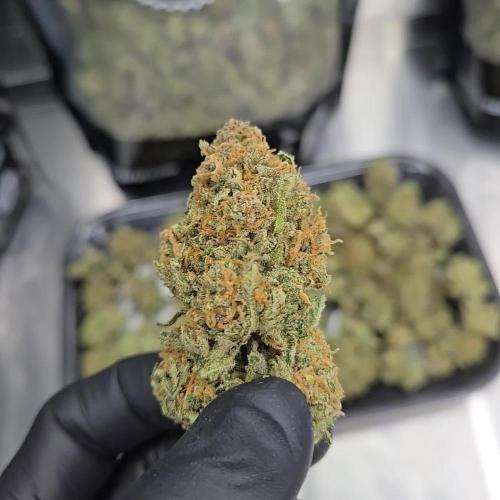
First time growing the new RF3 version and the stability and uniformity is on point. They smell so sweet and delicious. I decided to hang dry then since the weather was perfect for the conditions and also hung some in the dryroom. One I'll be Growing again as the flowers are covered in trichs and perfectly dense. I did a test wash with 10g to see if it'd make a good washing strain but the results weren't the best so I'll be drysifting this one. Happy Growing

Likes
36
Share


@Coopmc
Follow
A few more weeks for the strawberry banana I’ll start pulling the Tropicana cookies and the wedding glue down this week
Likes
5
Share


@GreenForMiles
Follow
She remained small and responded well to being lollipopped (trimmed the bottom off that wasnt getting light). She flowered quickly and trichomes aged in a week rather than the normal 3. Out of 4 plants, all stayed consistent in size shape and age. I would definitely recommend this strain if you are doing a micro grow or speed grow.
Processing
Likes
12
Share


@Silverback_Guerilla
Follow
Rough week for everybody...a solar bugstorm ensued and all the girls were ravaged to some degree. My mister fan hose busted and the temperatures were over 100f all week long.
Still fighting grasshoppers..

Likes
14
Share


@Paultemp
Follow
Amazing genetic Full Thc !! smell very good and Crazzy colours next time i will give him more love and a better light.. 🤗
I shop 2 week before because i have mildew on the buds and dont want that everywhere on the other plant


Likes
12
Share


@thonhash
Follow
Sorprendido gratamente del resultado final tanto de producción como de sabor/efecto.


Likes
20
Share


@DeepRootsGrowTrees
Follow
KRITIC AUTO by KANNABIA
Week #9
Week #6 Flower
No issues this week she's doing 👍 she's really focusing her energy into her buds as the have stared becoming dense they look amazing and smell great!! Stay Growing!!!
Kannabia.com KRITIC AUTO
Likes
14
Share


@BruWeed
Follow
☘️22/08 - Empezó su tercera semana en etapa de crecimiento.
☘️De una semana a otra crecio 26cm de largo.
☘️Hoy cumple 34 días de vida en total desde su germinacion.
☘️En su tercera semana de crecimiento ya le agregue la red de scrog.
☘️Esta es su última semana en esta etapa, ya la próxima entran en Floración🍀.
☘️Se encuentra perfecta, sin ningún problema hasta el momento, sus chalas son muy tupidas y grandes. Ya se siente bastante su aroma a weed.
☘️En estos dias seguire subiendo mas imegenes de como viene.
🇦🇷😶🌫️🍀Podes seguirme en Instagram como @bruweed_arg🇦🇷😶🌫️🍀

Likes
11
Share


@Tuki3
Follow
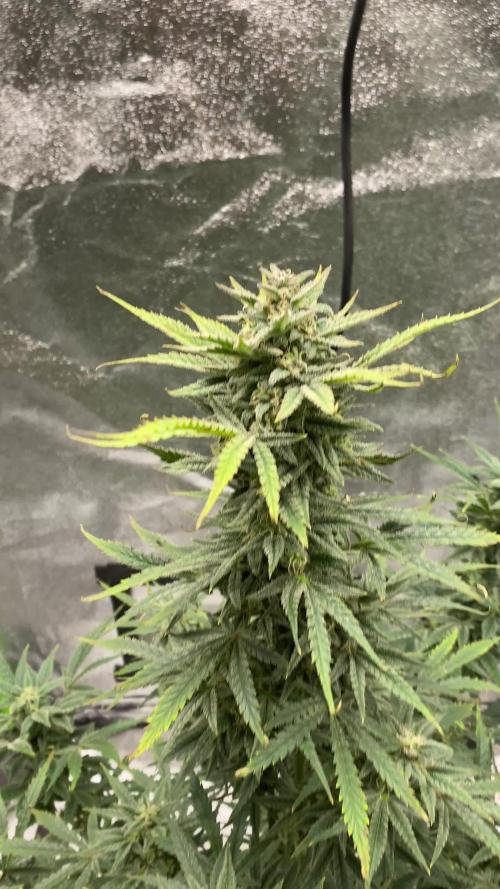
Comenzando primer semana de pre flora, también un poco de limpieza (no quise hacer limpieza fuerte para no estresarla tanto), ya hace una semanita la pasé a pre flora y a penas estoy viendo unos pistilos en las pequeñas. Así que vengo chocho.
Ya no le puedo aplicar lst porque están bastante duras las ramas así que ahora que siga su trayecto!

Likes
15
Share

@Rangaku
Follow
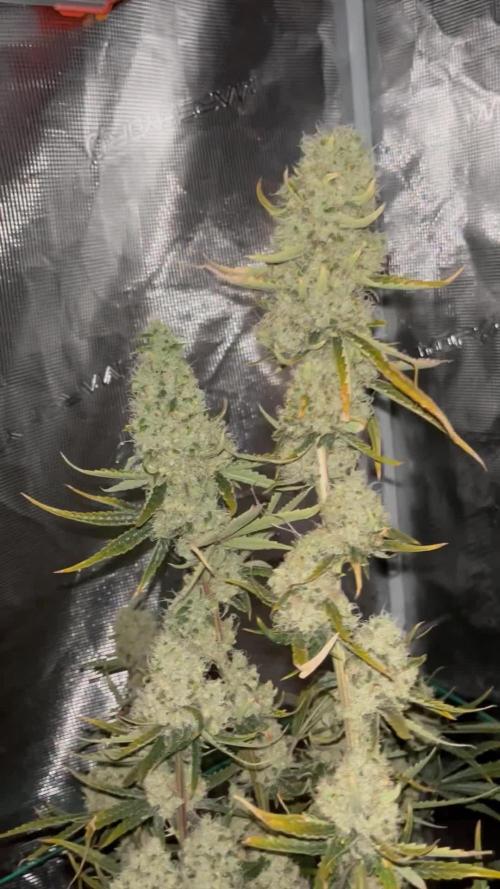
She’s taking her time finishing up and really stacking on weight , beautiful plant that promises high THC and after the lil nug I smoked yesterday I can confirm it sits you right down . The future is nearly here , not even Biff Tannen can stop me now 😂

Likes
22
Share


@OutdoorRookie
Follow
I deliberately sent my 2 ladies into flower 2 months earlier. roughly the 12/12h rule. Sometimes it was 10 hours in the sun, but sometimes 12 hours.
In my region it will soon be rainy and cold. I'm toying with the idea of harvesting them before I catch mold or something else.
The trichomes are all milky. About 15-20% amber colored.


Likes
19
Share


@ELBICNIVNI
Follow
She is growing nice, the buds are getting fat, apparently i was expecting gorilla cookies to be the winner at the size of the buds until now, apparently i was wrong, amnezia has bigger buds than gorilla at this stage :) we will see who is going to be the winner... who you think is going to win?