





Likes
8
Share


@EhCndGrower
Follow
Day 140 decided to water everyone one more time with nutrients. Added some Overdrive to the mix for all my outdoor gals. Some probably need it more than others as I think come next week I might be able to harvest a few of my plants. Plus it is like super hot the past few days and have a little breeze pushing a lovely weed scented breeze out front of the house. Hopefully I don’t attract the wrong type of people to visiting my backyard 😱
Day 141 wow on the overdrive kicking in on everyone outside. Noticeable plumping of my buds when I went to take today’s pictures. Also added a few more doweling into the ground to help support her as she gets plumber, and because it was a little breezy last night
Day 144 they just got huge and fat overnight. Plus a first for me, a little walk around my beauty
Likes
12
Share


Likes
9
Share


@northsweed
Follow
happy new year, everyone!
plants are thriving, stretch is happening and the experimental is showing buds already (it's been switched one week earlier) 😊
---
another major defoliation done – Barney claimed that lateral branching is heavy and it's indeed 😂

Likes
17
Share


@Gardengobblin
Follow
Un de mes 3 girl scout cookies est prèt pour le séchage les autre continue le développement leur structure des tête.
Un des 2 strawberry pie a de la peine a se remplir les tête elle sera plus flufy un peut mais tout de même très belle .

Likes
47
Share


@GWSD82
Follow
Well, here we are ladies and gents. I'm saying this a good few weeks earlier than I was expecting to, but she's ready. Buds have swollen up like balloons, and are dense and frosty. I dug out the microscope for a look in the week to see how far gone we were, and the pictures tell the story. As much as 50% amber on some of the tips closest to the light. Even deep in the calyx, amber is 30-40%, and lowers are 95% cloudy / 5% amber. The sugar leaves pretty much look like a burnt landscape under the microscope at this point.
Almost disappointed it's coming to an end, this has been a really chill grow. No issues at all, she's been a pleasure from start to finish. But they all gotta come to an end sometime. Way she grows, boys. Way she grows....
Enough sadness. 'Tis a time to be joyful. She looks great, smells great and she's screaming she's ready, so I will be chopping any day now.
This is the last weekly update - I'll be back in a couple of weeks once this is all dried, trimmed and weighed with the harvest details :)

Likes
11
Share


@TheThiccBud
Follow
sooooo... I have now harvested the plants and they looks so pretty 😍😌 I'm really proud of myself to have produced such THICC BUDS!!! 😅😍 and the smell is so awsome 😵 this strain is a 11 from 10 👌 a realy big Thanks to Royal Queen Seeds for this 2 awsome strains 💪 A detailed rating comes after drying with a detailed score board 😄

Likes
58
Share


@Professor_Chaos
Follow
Beginning of week..
I lost count of the days.. Stupid rookie move.. I know lol.. She is doing great tho.. Roots have made it to the bottom of the cup.. I love these plants.. Cant wait to see what Ethos is all about! Even tho I'm not expecting an amaxing yield since I'm doing 12/12 from seed.
Mid week..
She is beginning to sprout branches.. They are still pretty tiny but should be spittin out any day now.. Its crazy how every strain can have different leaves.. Differences in the serrated part.. Skinny.. Fat.. Long.. Short.. This girl here is pretty different than others I have grown.. I feel like Ethos is NOT going to let me down!..
End of week..
I see the branches have came out a little more.. Still kinda small still.. Looking a little asymmetrical as well.. Ugh.. But I think I read somewhere that sometimes great genetics do stupid shit like that lol.. Oh well.. The end product is what matters.. Just trying to keep her happy and healthy for now and so far so good.. Some weird discoloration on one of the leaves but thats looking more like a mutation more than anything wrong with her growing.. Can't wait to see what beauty she blossoms into!

Likes
5
Share


@cwgrows
Follow
For the next 8 weeks every single day, I will be covering these gals at 4:30pm!

Likes
17
Share


@UncleRemus
Follow
Flicked them over to 12 a few days ago they are getting really big and starting to stretch. I have used bendz to train the canopy. No Scrog or netting hoping the buds will support themselves. Any small deficiencies have disappeared although the “dwarf claw“ plant has been stunted Since day one so she’s back in the greenhouse where she seems to prefer it.


Likes
17
Share

@CCSAUTOVGROW
Follow
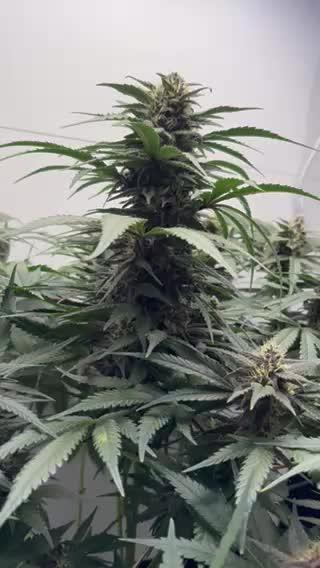
End of week 3 Flower. She is spectacular!!! Buds are starting to ripen and the sweet grape aroma is heavenly. Added a few pictures. The ones under the lights weren’t doing her justice.

Likes
2
Share

@Daidai
Follow
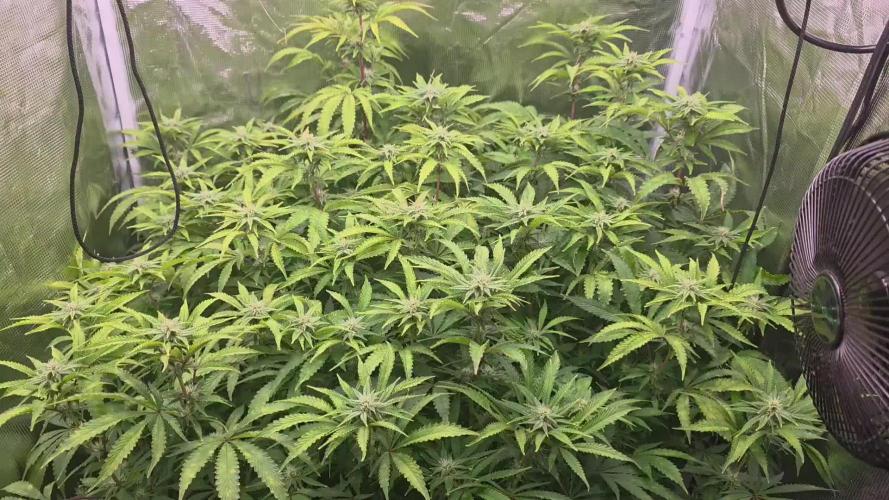
Plant grew a lil to close to the light. Caused a lil purpleing and burning. Plant also ran almost ran out of water so plant got hungry started getting yellow spots. Moved light to the top of the tent hopefully the stretch is done. Plant is still trying to bud so im hoping everything is still fine.
Likes
35
Share


@Chedderbob112
Follow
It was a roller coaster ride guys but I started with four harvested I earlier got two ounce quick dry wasent flushed properly but these ones hav been there a some nice buds here n a hopefully will get a decent seed harvest stoned @chedderbob112 s2340420 don’t hav dry weight bud av went for fullness plant
Likes
5
Share


I wish I could figure out why I don't have more trichomes this is supposed to be Gorilla Glue supposed to be covered by now as far as I know anybody got any thoughts on this
Processing
Likes
Comments
Share


@Cannibalgardens
Follow
Well it's all about the bulking now she hasn't been having any more upward stretch at all .. This lady smells cirtus and skunk a very good smell .. it's also travelling across the yard now a good smell and sizeable buds developing I can't wait for the end on this one ...great genetics over at @originalsensibleseeds

Likes
58
Share


@GermanGrow182
Follow
Schönes Wetter, warme Temperaturen und noch nicht so kalte Nächte... kein schimmel ,Blüten wachsen und haben gut trichome gebildet. Habe bei der critical supercropping betrieben, um zu vergleichen, sie hat sich erholt und die buds haben sich an den geknickten Zweigen ausgerichtet. Es läuft nach wie vor ziemlich gut. Bis nächste Woche ✌️
Likes
9
Share

@CheeRz
Follow
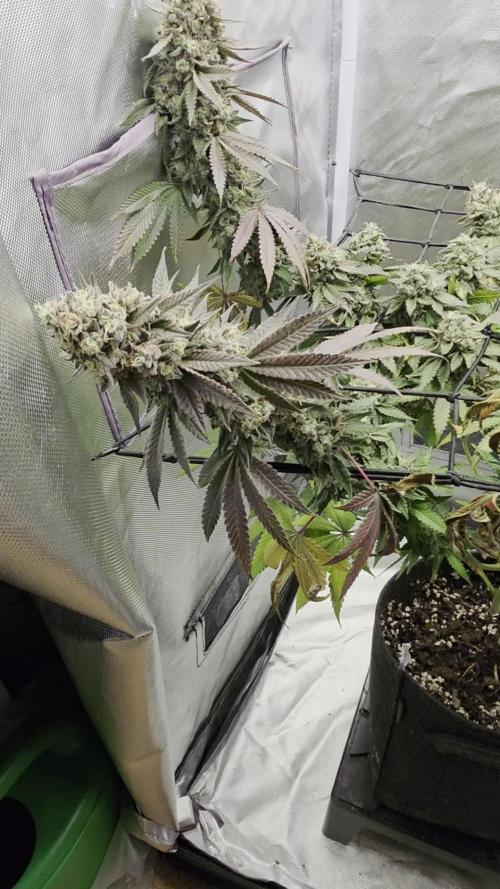
The buds are rock-hard and sticky. The overwhelming smell has a sweet and fruity aroma. About 25% of the trichomes are amber-colored, so I'll harvest her in a few days. 🍋🍒🍦

Likes
78
Share


@Wastent91
Follow
Ehi ragazzi tutto bene! È arrivato finalmente il momento di dare il terzo tea di compost ricevuto da questa bellissima creatura! Ha davvero un bel aspetto , le foglie sono arriciate e prominenti verso la luce in un modo impressionante!, Sembra quasi che la pianta si stia nutrendo sotto i miei occhi di luce della lampada della Mars! Sta iniziando a puzzare davvero intensamente e le cime super appiccicose si stanno evolvendo nella direzione giusta! Mi aspetto la migliore ganja che abbia mai coltivate! Salute a tutti e buon 420!!
Processing
Likes
25
Share


@Kikiwindsurf
Follow
AQUI EMPIEZA EL CULTIVO DE 3 GORILLA GLUE DE FAST BUDS EN MACETAS ESPECIALES PARA AUTOMATICAS DE 25 LITROS CON SUSTRATO BIOBIZZ ALL MIX // HERE BEGINS THE BRIGHT OF 3 GORILLA GLUE FROM FAST BUDS 420 , USING 25 L POTS 100% SPANISHMADE SPECIAL DESING FOR AUTOMATIC STRAINS. BIO BIX ALL MIX.
dia 5 // day 5 : Se abre la primera GG // First GG opens.
dia 6 // day 6 : todas las semillas germinadas correctamente // all seeds germinated properly.
HEARING TO THE COMMUNITY , I SET UP A PROVISIONAL NIGHT ROOM TO BRING EXTRA LIGHT TO OUR BABYS. 8 HOURS DIRECT SUNLIGHT + IDK HOW MANNY HOURS OF CFL LIGHT... STAY TUNED !
ESCUCHANDO A LA COMUNIDAD , HE MONTADO UNA SALA PROVISIONAL PARA DAR MAS LUZ A NUESTRAS NENAS DURANTE LA NOCHE. 8 HORAS LUZ SOLAR + NIPUTAIDEA DE CFL... MANTENTE ATENTO PARA SABER MAS DETALLES EN LOS PROXIMOS DIAS
Likes
11
Share


@DoctorCannas
Follow
Questi semi sono frutto di rimborsi continui, della RQS.
Il servizio clienti della RQS è di un livello superiore, impeccabile.
Quando ho avuto problemi con i semi, mi sono stati inviati nuovamente e velocemente.
Quando un seme della RQS germoglia è si avvia alla crescita si può stare sicuri che sarà una pianta bella e tosta.
La Royal è crescita regolarmente, sana e forte.
Si è prestata ottimamente a tutti gli stress dovuti ai diversi metodi.
La Royal cresce bene ed è una bomba.
Ho tagliato 6 cime principali e aspetto alcuni giorni massimo una settimana per il resto
Le 6 cime sono risultate 50 gr.
Con il taglio del resto della pianta spero di poter raccogliere almeno altri 80-100gr.
Vedremo tra oggi e domani.

