


Likes
Comments
Share


@Shmoopy_me
Follow
Getting close to the finish and it’s very pungent smelling it’s hard to pin a nose on her! Still filling out and getting dense towards the end!

Likes
13
Share


@MrPott
Follow
She's looking really good so far and the smell she leaves on your hands after handling her, incredible! Her old fan leaves are dropping off and today is the last day I feed her nutes. It'll just be flushing from now on and checking in on the trichomes every once in a while.

Processing
Likes
11
Share


@stickygrowz
Follow
Everything going well I think. looking like it. just have one issue not sure what to do to control them now as they look like there getting a little bit big n possibly needs topping. Any ideas please


Likes
13
Share


@BrigadeDesTerps
Follow
Recette du tco pour 20 litres. (Grammes : gr)
50gr biochar
250gr zéolite
3gr granulé Micro-Organisme IT45
10gr pollen d’abeilles
10gr levure de bière
3gr endomychorize
10gr consoude
20gr vers de farine
10gr cendre coque de ricin
12gr ortie microniser
15gr Kelp
10gr spiruline
10gr de cbd living soil
20ml de miel liquide
30ml de mélasse
20ml d’acide humiques et fluvic
Mettre tous les ingrédients (sauf la mélasse ,l’acide h/f et le miel) dans un filtre 400micron, le placer dans un seau avec de l’eau (10litres). Rajoutez le miel et 10ml de mélasse
Y mettre un micro bulleur alimenter sur une pompe à air et faire oxygéné le mélange pendant 24h. Rajout de 10ml de mélasse après 12h le début de la mise en route de la pompe.
A la fin des 24h rajoutez le restant de mélasse et d’acide h/f, mettez y en plus 10litres d’eau au mélange.
Reste plus qu’à arroser!
j’y ai incorporé 7litre de mélange
La veille j’ai préparé le pot à l’arrosage avec 500ml d’eau et 2gr de Bacillus IT35 Amyloliquefaciens X5
Bacillus Amyloliquefaciens : rhyzosphère, probiotiques. Aspersion et arrosage. Utilisable pour toutes cultures.
La bactérie Bacillus Amyloliquefaciens se fixe dans la rhizosphère en se nourrissant des exsudats racinaires. En contrepartie, elle stimule la croissance racinaire en sécrétant des métabolites de croissance et solubilise le phosphore en sécrétant des phytases (enzymes).
Effet probiotique consistant en l’utilisation de micro-organismes bénéfiques pour la nutrition et la santé des plantes.
La spiruline, le plus riche et le plus complet des amendements organiques
La Spiruline est une algue aquatique connue comme complément alimentaire, la Spiruline est aussi un amendement organique et écologique très complet.
D'une grande qualité nutritive, elle apporte à vos plantes une quantité de nutriments, dont l'azote, phosphore, potassium, minéraux, acides aminés, vitamines, chlorophylle et protéine.
Le charbon végétal actif est capable d’absorber jusqu’à cinq fois son poids propre en eau ainsi que les éléments nutritifs qui s’y trouvent. Il joue ainsi le rôle de catalyseur et d'amplificateur pour les fertilisants traditionnels, qu'ils soient d'origine organique ou minérale. Ce pourquoi il est idéal pour activer un sol et pour les thés de compost oxygénés.
Le charbon végétal améliore la diffusion et la disponibilité des éléments nutritifs dans le sol et offre des conditions propices au développement des micro-organismes.
Le Biochar peut être introduit dans une grande variété de sols. Il est particulièrement efficace dans les sols pauvres, difficiles et acides.
Pour faire agir rapidement et efficacement sa capacité d’amendement, le charbon végétal est enrichi et biologiquement activé avec des micro-organismes. Le Biochar se comporte ainsi comme un structurateur et un activateur dans le but de valoriser les sols.
Composition :
• Charbon végétal actif 31%
• Matière organique 33%
• Matière sèche 75%
• C/N : 17
• PH : 7,2
• Azote (N) : 2,1 % dont 1,2 % azote organique
• Phosphore (P205) : 0,74%
• Potassium (K20) : 1,18%
• Calcium (Ca) : 6,8%
• Magnésium (MgO) : 0,65%
Le pollen est l'ingrédient de base de la fabrication du miel par les abeilles. Riche en vitamines et minéraux, il est qualifié « d'aliment parfait », y compris pour les plantes !
Les zéolithes sont des roches cristallines, présentant des capacités d'adsorption particulièrement importantes vis à vis des polluants que l'on rencontre dans l'eau et dans certains liquides, ainsi que dans l'air et les gaz. Elles sont extrêmement poreuses comme les charbons activés et elles peuvent être chargées électriquement pour opérer comme des échangeurs d'ions.
La zéolithe est un produit naturel qui respecte notre environnement. Utilisé dans le milieu industriel depuis de longues années déjà, ce minerai aux propriétés filtrantes particulières commence à se vulgariser dans le domaine de la piscine privée, de l'aquariophilie, des bassins d'agrément, de la récupération des eaux de pluie, ou encore de la culture des bonsaïs et autres plantations diverses par exemple...
4 points techniques majeurs :
- Grâce à leur propriété hydrophile, les zéolithes peuvent adsorber l'eau jusqu'à 30% de leur poids total et sans aucune variation de volume : pas de gonflement en présence d'eau ni de craquement en cas de déshydratation comme certaines argiles. Les zéolithes sont d'ailleurs de puissants agents anti-mottant (anti-agglomérant). Cette propriété est très appréciée dans le cas des terrains de golf et autres aires de jeux.
- Les zéolithes ne captent pas l'eau de façon irréversible, elles se comportent comme une réserve au voisinage des racines. Celles-ci peuvent capter l'eau en fonction de leur besoin. Les zéolithes permettent ainsi de réduire les besoins d'arrosage jusqu'à 35 %.
- Une zéolithe se comporte comme une "Zone de Stockage" qui retient l'azote et les éléments minéraux nutritifs au voisinage des racines et les relâche lentement en fonction des besoins de la plante. Cela se traduit par une croissance harmonieuse mais rapide du végétal.
- La capacité d'adsorption et l'énorme rapport surface/volume des zéolithes, vont permettre à la fois la rétention de la solution du sol et une bonne oxygénation au voisinage du système racinaire. Les zéolithes favorisent donc l'organisation biologique des sols en contribuant au développement de la micropopulation. L'apport en nutriments (N, P, K) est réduit de 20 à 25 %. Ces derniers, adsorbés par la zéolithe, sont beaucoup moins sensibles au lessivage et à l'évaporation.
Composition minéralogique :
* Chabasite 70 %
* Phillipsite 2 %
* Feldspath 5 %
* Augite 3 %
* Illite - Mica 2%
Analyse atomique:
* Sio2 52 %
* AL2o3 17 %
* CaO 5,7 %
* K2O 6,1 %
* MgO 2 %,
* Na2O 0,6 %
* Fe2O3 3,6 %
Amendement calcaire, dolomie et gypse avec préparation microbienne à base de Bacillus Amyloliquefaciens IT45 et Saccharomyces cerevisiae LYCC6420
Formulation : micro granulés (1 – 1,6 mm) à base de rhizobactéries favorisant la croissance des plantes qui se multiplient et colonisent rapidement la zone des racines, et de levures Saccharomyces cerevisiae souche LYCC ayant un effet probiotique.
Les PGPR produisent des enzymes qui solubilisent le phosphore à partir de complexes inorganiques et organiques dans le sol et stimulent la croissance des racines efficaces augmentant ainsi la zone d'interception des éléments nutritifs. Les levures LYCC permettent une occupation de la rhizosphère par une flore bénéfique.
Composition :
• Matière sèche : 96,8%
• Matière organique : 91,5%
• N total : 6,6% dont N soluble dans l'eau 0,17%
• P total : 2%
• K total : 1,7%
Micro-granulés :
• Oxyde de calcium (CaO) total : 30%
• Oxyde de magnesium (MgO) total : 7%
• Anhydride sulfurique (SO3) : 13%
La levure de bière est une matière vivante qui permet un meilleur fermentation pour les thés de compost oxygénés notamment conseillé pour accompagner les croissances ou apporter un gros coup de pousse pendant la floraisons.
La levure stimule la vie des sols également à l'arrosage direct en apportant tout aussi bien que dans le TCO sa population l'espèce micro-bactérienne positive pour votre sols ainsi que des oligo-éléments et diverse vitamines.
Composition :
• 2,8% (N) total dont 1% (Norg),
• 2,3% (P205)
• 1,6% (K20)
• 35% de MO
• C/N : 8. PH : 8,4.
Sous forme de poudre mouillable. Il contient des spores du champignon mycorhizien Rhizophagus Irregularis MUCL57891 avec des levures inactivées spécifiques. 2000 spores/gramme d’endomycorhize Rhizophagus Irregularis MUCL57891 et Saccharomyces Cerevisiae LYC6420 inactivée. Se connecte efficacement au système racinaire et forme un vaste réseau souterrain de filaments, qui agissent comme des extensions pour atteindre les nutriments et l’eau au-delà de la rhizosphère
Composition :
• Poudre contenant 2000 spores/g. d’endomycorhizes Rhizophagus irregularis
La Consoude (Symphytum Officinale) est une plante présentant de nombreuses propriétés.
Particulièrement riche en Potassium (K) organique, la consoude est une alliée idéale pour les périodes de floraison. La consoude a tout pour plaire : riche en vitamine B12, elle agira également comme stimulateur racinaire, mais aussi comme biostimulant cellulaire, grâce aux alcaloïdes, aux allantoïnes et jusqu'à 30% de protéine !
100% déjection de vers de ténébrions.
Très riche en microorganismes, le guano de vers de farine est une matière directement composté par les vers. En effet, c'est bien la digestion de matières végétales par des larves, insectes ou autres arthropodes qui valident le processus de compostage, que ce soit en zone de production de cultures d'insectes, pour le compost maison ou la dégradation de litière forestière.
Les bactéries et autres champignons obtenus grâce au système digestif de nos vers, permettent la dégradation accélérée des éléments nutritifs dans vos supersoils, et les symbioses permettant l'assimilation des éléments nutritifs.
Cette bio-activation intense mettra dans vos sols, à la disposition de vos plantes, un panel tellement varié de nutriments frais qu'il nous est aujourd'hui technologiquement impossible de pouvoir tous les nommer et de les compter.
Le guano de vers de farine fournit une grande polyvalence. Très équilibré, il s'utilise en entretien ou en apport ciblé seul ou en complément de d'autres amendements ou fertilisants organiques.
Il agit comme un puissant activateur de sol et/ou de substrat.
Cendre coque de ricin NPK 0,1-18,6-16,5. 0,1% (N-Azote), 18,6% (P205-Phosphore), 16,5% (K2O-Potasse), 11,7%(Ca0), 9,1 (Mg0) - Origine : Inde
ACTION SOL • rend rapidement accessible au sol Phosphore, Potasse, Magnésium et Calcium.
ACTION PLANTE • Apport aux stades agronomiques propices. • Produit riche en éléments fertilisants : combinaison NPK 35%. • Régularité de l’apport, milieu et fin de floraison. . Favorise la sénescence.
Analyse chimique :
• NPK 0,1-18,6-16,5
• N-Azote 0.1%
• P205-Phosphore 18,6%
• K2O-Potasse 16,5%
• CaO-Calcium 11,7%
• MgO-Magnésium 9,1%
Ortie bio micronisée Stimule la vie du sol et la végétation.
Composition :
• 2,8% (N) total dont 1% (Norg),
• 2,3% (P205)
• 1,6% (K20)
• 35% de MO
• C/N : 8. PH : 8,4
KELP poudre
ascophyllum nodosum
- amendement sol
Croissance et floraison - Meilleure germination - Meilleur développement racinaire Meilleure assimilation - Résistance aux stress osmotiques - Augmente la production de chlorophylle = plantes plus vertes = lumière mieux captée - Lutte contre le stress osmotique - Développement des Micro-Organismes dans le sol – Riche en vitamines, fer, iode, oligo-éléments, hormones de croissance auxines et cytokinines - Idéal en épandage et pour les thés de compost oxygénés.
Important : notre Kelp est un goémon noir mais il n'est pas le varech bien moins fertile de la même famille qui est l'algue qui pullule et pollue la Bretagne, notre algue pousse uniquement à plus de 50 mètres de fond dans les grands courants froids au large de la Norvège.

Likes
2
Share


@TheBudWhisperer
Follow
12 days to full transplantable roots. Right on schedule as expected. Moved 6 of the 12 clones (1 per plant) into a new 45L Rez that I cobbled together in an evening. Just small enough to fit into the cabinet. Hopefully the roots don’t choke each other out for territory while we work to reveg, re-flower and ultimately seed em all for the new F3 line. We’ll pick the best buds from the lot for the next testing run once we see what the pheno variation looks like from the main run in the tent. It’s a process and annoyance not to be yielding bud off a grow cycle but it is what it is if you want your own signature stuff. Alls good for now. Let’s just hope that the 6 coats of paint I threw on the lid is enough to keep out the grow light penetration🤞. Shoulda used black, whatever.
Likes
16
Share


@DonKrika
Follow
Change in colour on the plant to the right is getting worse, I only have one week left until the end of the grow, hopefully the plant will survive until the end.
From now until the end of the grow I will remove one hour of light every day, until the last 3 days of full darkness.
DAY 128
PH - 6.05
Solution Temp - 17
PPM-1900
Watering Volume per plant - 4L
DAY 131 - Molasses
PH - 5.95
Solution Temp - 16.1
PPM-475
Watering Volume per plant - 4L


Likes
17
Share

@RakonGrow
Follow
Harter ritt diese Dame , alles viel zu schwer das es gleich umknickte beim defolieren .
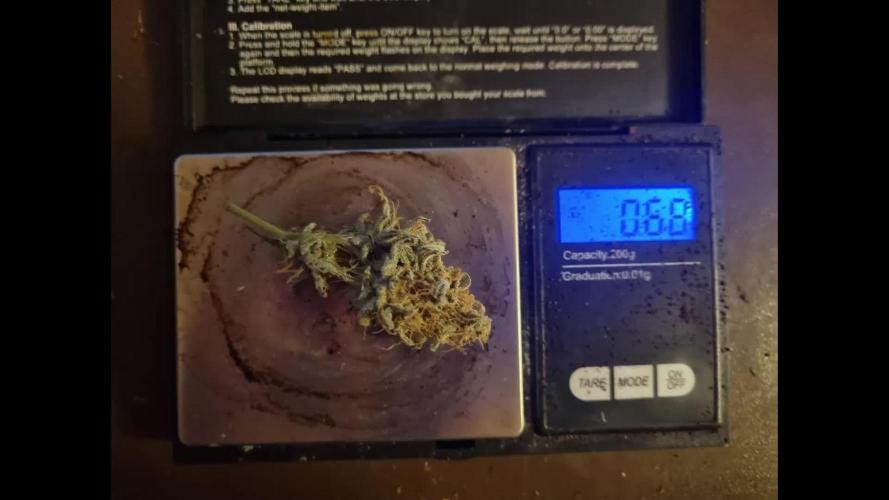
Hab mal ein getrockneten Bud aus der mitte genommen und Trichom analyse (Videos und Bilder) gemacht . ja viel klar wenig milchig und einige rot . Ergo , zuviel Licht an der Spitze (abstand zum licht viel zu gering) und im Boden zu kalt ist keine gute Kombination .


Likes
120
Share


@DogDoctorOfficial
Follow
It's time for the thrilling second-week report on my Lego Ninja Tropical Tangie Run. This week has been smooth and steady, with our little ninja making progress at a pace that's just right. We're focusing on building strong roots, and that's a ninja skill we truly appreciate!
Picture this: our cute green sprout, guarded by two fearless Lego ninjas, is growing steadily. These guardians are not just for show, they protect and guide our plant with ninja precision, ensuring she becomes a force to be reckoned with.
Now, let's dive into the secret of her growth: the magical touch of Aptus Holland nutrients. I've been giving her the VIP treatment with Regulator, All-in-One Liquid, Camg, and Start Booster. These nutrients are like her secret training arsenal, providing the perfect nourishment for her to reach her full potential. She's becoming a ninja superhero, fueled by the nutrients of the gardening gods themselves!
But let's not forget about the dance of light that shapes her journey. With a PPFD of 350 (photosynthetic photon flux density), our Tangie is soaking up just the right amount of light energy. It's like a ninja training camp for photosynthesis, where each photon cheers her on, saying, "You've got this, grow strong and vibrant!"
Speaking of the environment, our ninja is enjoying a cozy temperature of 27/28 degrees Celsius. It's like a warm embrace that keeps her comfortable and content. With a relative humidity of 60/70%, she's surrounded by the perfect balance of moisture and freshness, creating an ideal tropical haven for her to thrive.
Now, let's take a moment to appreciate the joyous scenario we have here. A Lego Ninja Tropical Tangie Run, powered by Aptus nutrients, dancing under the perfect PPFD, and embracing the cozy environment. It's a celebration of the wonders of cannabis cultivation and a reminder of the magic that lies within our gardens.
Before we wrap up, let's give a shoutout to the master breeders at Dutch Passion. They've bestowed upon us the tropical delight that is the Tangie strain, igniting our taste buds and adventurous spirits. We salute their expertise and dedication in crafting such amazing genetics.
In conclusion, our Lego Ninja Tropical Tangie Run is off to an amazing start. With each passing day, she grows stronger, guided by her ninja guardians and fueled by Aptus nutrients. Let's continue this journey with love, embracing the joy of cultivating life.
Happy gardening, ninja-style! And a special shoutout to @DutchPassion_Official for their remarkable contributions to the cannabis world. Your seeds, genetics, and overall greatness are truly appreciated.
Remember, folks, stay stealthy, grow strong, and keep spreading the joy of cannabis cultivation. Until next time, may the ninja spirit guide your green adventures!
As always thank you all for stopping by, for the love and for it all , this journey of mine wold just not be the same without you guys, the love and support is very much appreciated and i fell honored and blessed with you all in my life<3 <3 <3
#aptus #aptusplanttech #aptusgang #aptusfamily #aptustrueplantscience #inbalancewithnature #trueplantscience #dutchpassion #dogdoctorofficial #legoninjago #growerslove
With true love comes happiness <3 <3 <3 Always believe in your self and always do things expecting nothing and with an open heart , be a giver and the universe will give back to you in ways you could not even imagine so <3 <3 <3
Friendly reminder all you see here is pure research and for educational purposes only
<3 <3 <3 Growers Love To you All <3 <3 <3

Likes
70
Share


@Insaniac_0
Follow
All feeds with nutes use either a whole ratio, or combination, of "Veg Mix" and "Bloom Mix"concentrates. These are/will be DILUTED in water until a total ppm of add-in is reached using a (Total Dissolved Solids) TDS Meter measured in PPM (parts per million). The "Veg Mix" concentrate will eventually be added-in larger, then smaller, ratios while the "Bloom Mix" concentrate will eventually replace the "Veg Mix" concentrate entirely. The ppm and ratios will be listed when I feed. Veg mix recipe is on week 3. Bloom Mix recipe is on week 5.
Day 91/21
Replaced the small modified tomato ring with a full size 3 ring tomato support ring so I could support every branch. I made this decision on seeing a lot of my 90 degree breaks from yesterday as still mostly 90 degrees.
I also removed the tape from around the split and placed a wire tie under that trunk to ensure it was secure. After that I also placed a tie on each cola split just past my breaks and another higher up as an upper support.
VPD was great aagain today. 74F/55%RH/ Auto ILV but raised the fan setting from 4 to 5 so it didnt have run as long to get it back into range.
PPFD was a bit off yesterday and today from all of the sudden changes, But I raised my lights today and returned the settings to 750 max and 550 lowest.
This meant that I needed to move my fans as well. They are now on medium setting and all were checked for movement to as many branches as they can hit.
Day 92/22
Watered for salt flush today. Used 3 gallons of purified water at 7.1ph water no additives. PPM was about 70 after ph'd. Ended up with ~ 1.25 gallons of runoff that showed 5.95 and 5.98ph on two meters. Top soil tested at 6.44, 6.63, 6.36, and 6.47ph for an avg of 6.475. Runoff also showed 1540 ppm
VPD was controlled with having the door open for a few hours. Temps and humidity are 72F and about 50%RH with the door open, and about 75F and 55%RH with it closed. ILV still on auto fan setting 5.
PPFD was adjusted to 820 max and 600 lowest - I used 1 hour total of IR at mainlight on/off with 15 minutes before and after switch. She got another 45 minutes of UV today as well. I plan to increase to 1 hour tomorrow.
Day 93/23
Week 3 of flower and most all is well. I did however find some light burn. I say light burn because the only conditions that changed was 15 minutes more UVA today and the spots are on the leaves closest to the light. Feed yesterday was plain ph water and it improved both the topsoil and bottom runoff ph so I dont think it's a nute issue. My solution is to take control pics and reduce UVA back to 45 for another day or two to see if the condition persists or advances. Otherwise PPFD was about 820 down to 600. I used 1 hour of UV and 1 hour of IR at lights on/off
Other than that it was a lazy football day while I just leave her alone. VPD was normal with humidity easy to control at 55%RH or less and temps ranging from 74-76F during the day and down to 66-68F at night.
Day 94/24
Checked in on "light burn" control leaves and took pictures. My analysis is to reduce lights a little more so now max is 795ish. Went ahead with 45 minutes of UV light at mid day and 1 hr IR on the same standard I have been using.
Fans still on medium and since I dont believe the spots are related, I plan to leave them on that setting. Overall I dont see much need to change anything at the moment with the spots not getting much worse or at least not that noticeable other than what has happened already and I already reduced the lights a little. If I can identify any more new spots today or tomorrow I will reduce by another 25ppfd. And if not, then the next day I will try 1 hour of UVA again.
Temps and Humidity are controlled at the same 74-76F and 55%RH or lower. My plan is to keep RH that level throughout and possibly try to reduce again to as close to 45% as I can get. (edited)
Day 95/25
Reviewed suspected light burn and didnt see any progression either yesterday or today against my control pics from the day before. So I went with running UVA for 1 hr at mid day again today. Still using 1 hr IR on the same standard I have been using.
VPD was good today with same settings of 73-76F and 55% or lower RH.
Day 96/26
No issues to report today. She still has what looks like light burn on the older upper leaves, but doesnt really look to be getting worse and the lights are not getting brighter by growth anymore so I plan to leave them where they are and back them down if I see it get more progressive.
Conditions in the tent are the same as yesterday... like little to no vertical growth in two 2 days and no need to change anything. I 'do' adjust the ties daily to ensure they are not creating a pressure point. Most aren't even supporting anything and some are just pushing the cola back or out from others.
PPFD is 800 max and lowest is about 580. I ran 1 hr UVA midday with the same 1 hr IR at 30/30 with main light schedule that I have been running.
Temps steady. 73-76F in the day and 66-68F after lights out. RH% is 55 or less with the fan on auto.
97/27
Watering day. Started by testing /calibrating meters. Used 2.5 gallons of de-chlorinated tap water with starting ppm of 227, added ~700ppm of 100% Bloom Mix concentrate (actually 686ppm added) and ph balanced feed to ~7.0 tested on two meters. Fed until bottom drip began and got ~7cups in runoff after about 10 minutes of drain. Runoff produced 2 meter tests of 5.8ph with 1520ppm. Top soil was tested 4 times for an avg of 6.3752. Next feed will be sooner, thinking like in 4 days instead of 5 and I can adjust if she seems to dry out again. I'll be looking for ~1/2 gallon of runoff to estimate next feed from.
Light burn doesnt seem to be getting any worse. UV lights are doing 1 hr a day, midday, for the rest of the week and then I will increase a little per day each week until harvest. IR is still doing the same settings until harvest as well. 1 hour with 15/15 before and after main light schedule and 1 hr total.
VPD is controlled with no issues of temps or RH exceeding set limits. 73-76F and 65-68F overnight with no more than 55%RH while the ILV is set to auto.


Likes
13
Share


@DrDuhboto
Follow
Trying to learn what plants I like to grow the most. This run is a test of each strain I ordered from seedsman.
Blueberry is a clone from a seed, As I only had one of these seeds I didnt want to risk flowering it and losing a good pheno, So instead I grew that seed and cloned off of it.
Maui Waui is from seed, and looks pretty wonky here, it got a bit out of hand during veg as I didn't have a screen in there. The seed has been vigourous though and I have high hopes for it being the only pure sativa in the bunch,
Cheese is a clone taken from my last grow. I cloned it off the seeded plant before they went into flower. My last run with cheese went well with dense buds and good potency.
Buttercream gelato is from a seed and has pretty interesting growth. It has been hard to keep nitrogen up in it and pales to lime much quicker than the other plants around it.
Buttercream and Maui waui have been vegging for 2 months.
Blueberry and chees have been vegging for 6 weeks


Likes
28
Share


@Theia
Follow
Week 5 starts with a growth burst. I chopped some leaf back that I could not tuck away and she's recovers really well. I noticed I had snapped her stem a bit as I was carrying out LST last week. This has healed over nicely and in fact looks like it's done some good. Is that HST??
Anyway she's doing great. Shape is good for me, now I hope she will bulk up..
Day 34 took some of the bigger light blocking leaf, pulled a bit more here and there as she goes into flower. Im very happy with her
Stay safe everyone during this crazy 2020.
Happy growing.


Likes
8
Share


@MadeInGermany
Follow
Hey guys :-)
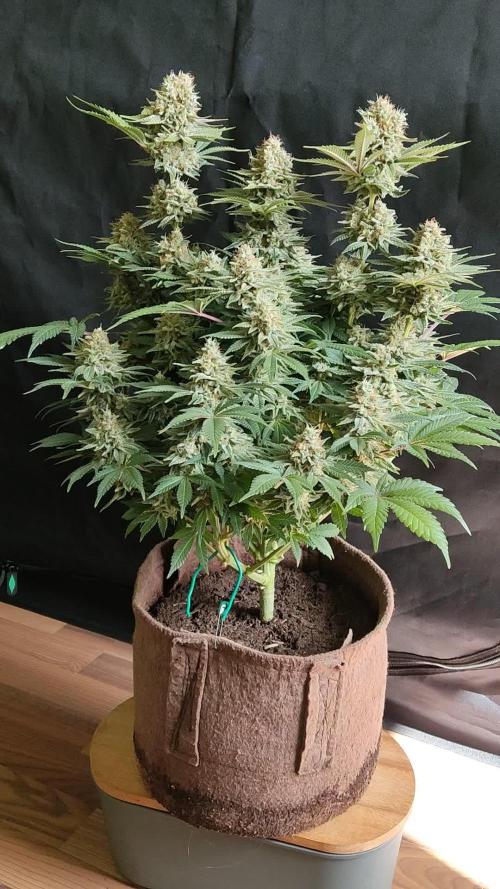
The lady has developed very nicely this week 👍.
Since there will be space in the flowering tent for the next 10 days and it will then be switched over, I will no longer use any training.
I'm looking forward to when the bloom starts :-)
Otherwise everything was cleaned and checked.
Have fun and stay healthy 💚🙏🏻
👇🏼👇🏼👇🏼👇🏼👇🏼👇🏼👇🏼👇🏼👇🏼👇🏼👇🏼👇🏼
You can buy this Nutrients at :
https://greenbuzzliquids.com/en/shop/
With the discount code: Made_in_Germany you get a discount of 15% on all products from an order value of 100 euros.
👇🏼👇🏼👇🏼👇🏼👇🏼👇🏼👇🏼👇🏼👇🏼👇🏼👇🏼👇🏼
You can buy this strain at :
Greenhouse seeds Company
Water 💧 💧💧
Osmosis water mixed with normal water (24 hours stale that the chlorine evaporates) to 0.2 EC. Add Cal / Mag to 0.4 Ec Ph with Organic Ph - to 5.8 - 6.4
MadeInGermany


Likes
17
Share


@Mr_nugs_lover_David
Follow
My beautiful prince's is looking even better now that she's not having to deal with those freaking fungus gnats that were eating all the roots of my plant, I've got rid of them just by watering with a nematode called steinernema feltiae if you're having or have had the same infestation just apply predator nematodes like steinernema feltiae guys!

Likes
44
Share


@Roberts
Follow
I have not done too much training on her after the rough start. I been letting her grow now after the kst from before. She will need the height to get to the light better. I am not expecting a big plant, but instead to get as much as I can out of her with what time she has left. She is stretching and starting to form her flowers. I did a solution change on her yesterday to blooming nutes. Hopefully she still does something neat. Thank you Medic Grow, Athena, and Fast Buds. 🤜🏻🤛🏻🌱🌱🌱
Thank you grow diaries community for the 👇likes👇, follows, comments, and subscriptions on my YouTube channel👇. ❄️🌱🍻
Happy Growing 🌱🌱🌱
https://youtube.com/channel/UCAhN7yRzWLpcaRHhMIQ7X4g
If anyone needs to purchase fastbuds here is a link for my affiliate program
https://myfastbuds.com/?a_aid=60910eaff2419

Likes
22
Share


@EhJay
Follow
D29 Did top dressing with bone and kelp meal as well as worm castings.
D31 Performed a little more LST, a few more days and I will let her do her thing.
D32 More LST exposed lower nodes and evened out the canopy.
D33 Removed all bonsai wire and rolled down the rim of the pot to even it out with to soil, more airflow.
D35 Not much growth but overall looking pretty good. Heatwave last couple days keep temperatures higher than desired.

Likes
12
Share


@ItsCannaDog
Follow
Still fighting a little bit of nutrient burn, went out an bought a blugardian all In one meter and going to go by E.C. instead of ppm. Took away a few of the big fan leaves blocking the lower sight. More tricombs forming all over the place. Let me know what you think, what I can change for next time or any other coments
