


@ROY4L_GU4RD
Follow
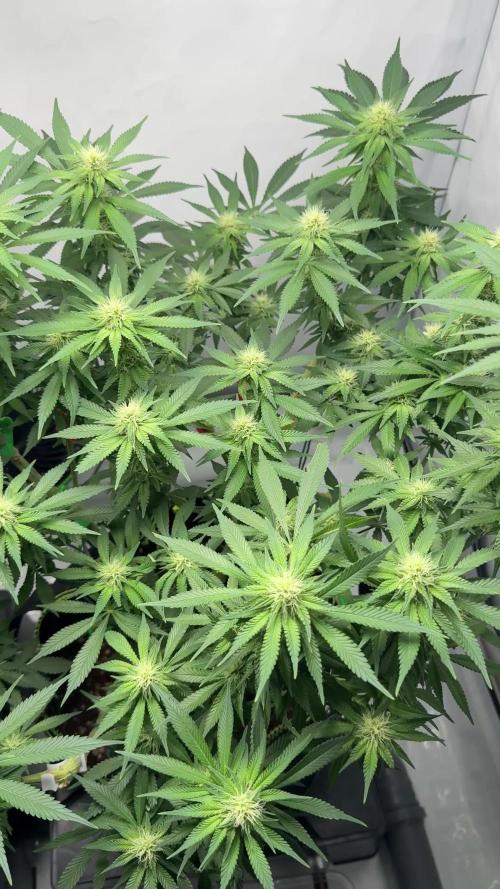
Week 8 here and the colors are popping. Added Ripen and will use for 2 weeks. Almost at the finish line 🙌




@HOME_GROWBOOK
Follow
Wir starten in die BW 5 Pflanzen sehen sehr gesund aus. LST ein wenig nachjustiert.
Richtiger gesamt Bericht Ende der Woche


@Witty420
Follow
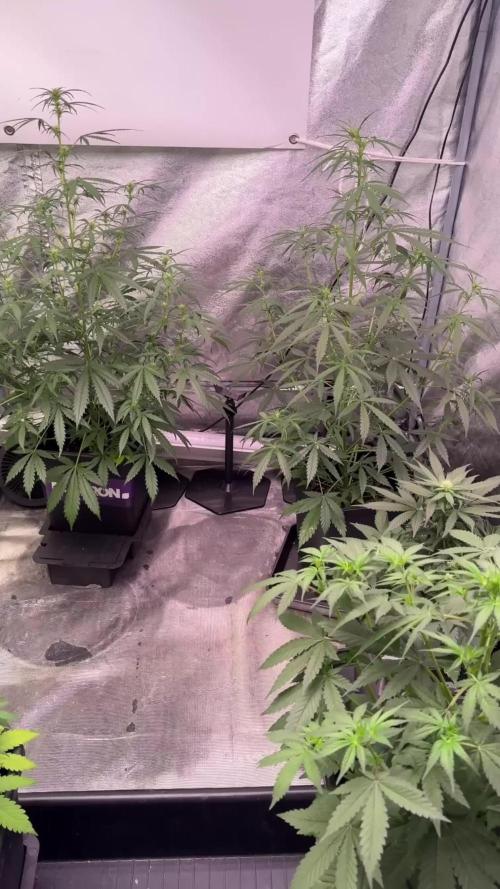
Very very smelly as unorm. Sticky finers after gardening. Red and purples got a new phone guess the camera sucks



@DogDoctorOfficial
Follow
💚 Amnesia Haze Auto by Zamnesia – Pheno A
Week 5 | The Elegant Stretch Before the Storm
Welcome back to another chapter of the 8×8 Adventure!
Every week these ladies remind me why phenotype hunting is such an exciting journey.
Today’s spotlight belongs to Amnesia Haze Auto – Pheno A, a plant that’s beginning to reveal the classic characteristics many growers hope to see from an Amnesia Haze.
Tall…
Graceful…
Open…
And now officially beginning her flowering journey.
While many of her neighbours are building dense canopies, this lady has chosen elegance, creating a beautifully structured framework that should allow every future flower to enjoy plenty of light and airflow.
⸻
🌱 The 12/12 From Seed Adventure
For anyone discovering this diary for the first time, welcome!
This entire project is being grown using my favourite experiment: 12/12 From Seed.
From the day these seeds germinated, they have lived under a 12 hours on / 12 hours off lighting schedule.
The goal isn’t simply producing smaller plants.
It’s about discovering how different genetics and different phenotypes naturally express themselves under identical conditions.
Every plant shares:
• The same grow room
• The same environmental conditions
• The same lighting
• The same nutrition
• The same training philosophy
• The same care
Only the genetics decide how each individual develops.
Amnesia Haze Auto Pheno A is already showing a wonderfully classic sativa-style expression.
⸻
🌿 Stretching With Purpose
At approximately 75 cm, she’s among the taller ladies in the room and continues displaying excellent vertical growth.
Rather than producing a dense bush, she’s built long internodal spacing with beautifully stacked branches reaching confidently toward the light.
Those longer distances between nodes might look sparse now, but for flowering they’re actually a huge advantage.
Each future bud site has room to breathe.
Each branch receives excellent light penetration.
Each cola has space to develop without excessive crowding.
Sometimes less density early on creates better flowers later.
⸻
🌸 Flowering Has Officially Begun
This week marks an exciting transition.
Fresh white pistils are now appearing across every growing tip, confirming that flowering has officially begun.
Although she’s entering bloom, she’s still carrying plenty of vegetative momentum.
This is completely normal.
During this transition period the plant continues stretching while simultaneously beginning flower production.
Because of that, her feeding program still reflects both stages of growth.
She’s no longer purely vegetative.
But she’s not yet fully flowering either.
She’s standing right in the middle of one of the most important phases of her life cycle.
⸻
🍃 Gentle Leaf Tucking Instead of Heavy Defoliation
Training this week remained very gentle.
Rather than removing healthy leaves, large fan leaves were carefully tucked beneath developing branches to expose additional flowering sites.
Leaf tucking is one of my favourite techniques during this stage because it increases light penetration while allowing the plant to keep all of her valuable solar panels.
Healthy leaves continue producing energy.
Hidden branches receive more light.
The canopy stays open.
It’s a simple technique, but one that often delivers excellent results.
⸻
💧 Feeding Through the Transition
Since the room currently contains plants at slightly different stages of development, the feeding program reflects that transition.
Instead of switching immediately to a full flowering recipe, the plants are currently receiving a carefully balanced combination of vegetative and flowering nutrients.
Current nutrition includes:
• Plagron Terra Grow
• Plagron Terra Bloom
• Power Buds
• Sugar Royal
• Power Roots
• Pure Zym
• pH adjustment using pH Plus and Lemon Kick
This balanced approach allows the plants to continue supporting vigorous green growth while simultaneously providing the phosphorus, potassium, enzymes and biological support needed as flowers begin to develop.
It’s all about easing them smoothly into bloom rather than making an abrupt change.
⸻
🌡️ A Stable Environment
One advantage of documenting every phenotype separately is that each plant shares the exact same controlled environment.
Current room conditions include:
• Day temperature: 31.1°C
• Night temperature: 25°C
• Relative humidity: 72%
• Solution temperature: 21.6°C
• Root zone temperature: 21°C
• CO₂ concentration: 636 ppm
Keeping these parameters consistent allows each phenotype to express its true genetic potential without environmental fluctuations becoming part of the equation.
⸻
📸 This Week’s Gallery
The photographs this week beautifully capture the beginning of her transformation.
The full-plant portraits highlight her elegant sativa structure, with long branches and an impressive central leader dominating the canopy.
The close-up images reveal clusters of fresh white pistils emerging from nearly every node, confirming that flowering has truly begun.
One of my favourite details is the clean spacing between branches.
Rather than competing for light, every future cola has its own place to develop.
The healthy green foliage, strong stems and open architecture suggest this lady is preparing for an exciting flowering stretch over the coming weeks.
⸻
🔮 Looking Ahead
Over the next two weeks I expect this Amnesia Haze to continue stretching before gradually shifting her energy toward building flowers.
If she follows the classic Amnesia Haze profile, those long internodes should soon begin filling with elegant, elongated buds covered in bright white pistils.
The framework is already there.
Now it’s time for the flowers to write the next chapter.
I can’t wait to watch her evolve.
⸻
💚 Thank You
Thank you so much for following another chapter of this 8×8 Adventure.
Watching every phenotype develop its own personality while sharing the exact same environment continues to be one of the most rewarding parts of this project.
A huge thank you to:
💚 GrowDiaries for providing an incredible platform where growers from around the world can learn, inspire one another, and document every stage of their journeys.
Zamnesia for providing the genetics that make this phenotype hunt possible.
🌱 Plagron for supplying the nutrition supporting these plants from seed to harvest.
💡 Future of Grow LED for delivering the consistent light powering every day of this grow.
🌿 TrolMaster for helping maintain a stable environment where each phenotype can express its full genetic potential.
And finally, Growers Love and thank you to everyone following these diaries, leaving comments, sharing knowledge and joining me on this adventure.
Every plant has its own story, and Amnesia Haze Auto Pheno A is only just beginning to tell hers. The stretch is underway, the first flowers are forming, and the best is still to come. 💚🌿


@GreeneScene
Follow
Let’s see , humidity is an issue . It’s higher than I’d like it to be . I added drip pans & two different miniature forms of dehumidifiers one electronic and the other passive .
I need recommendations on affordable dehumidifiers before I run into mold issues .
After breaking the apical dominance there was one or two issues but it gave me all the more admiration for the genetics to take a beating and still remain unbothered & WHOLE .
A main top was bound too tightly & broke in half trying to pull itself back up . It remained broken and unnoticed for atleast 3 days before I saw the damage and taped it .
She is now almost fully scarred over & healed .
Vertical growth was decent this week I wouldn’t describe it as fast or explosive.
Still watering to activate the dry amendments I can tell they haven’t began taking it up quite yet.
Holy shit do they stink when not premixed into the soil before planting !
Just monitoring & trying to get as much dense continuous resin packed bud stacked up in there .


@CanarianGrow92
Follow
16th july: we germinated this wonderful cherry cola
17th: we transferred small seed with first tiny little root to a peat pellet
18th: nothing happened
19th: nothing happened
20 July: the small little plant appeared! Great news 😁
21July, the plant is totally up, looking for sunlight and have its first true pair of little leaves starting to grow, we transplanted the plant to a 15 liter pot and placed her next to the purple banana 😁 day 1 of the first week started officially


@Kirsten
Follow
16.2.25:
I decided to check out the lower canopies of all plants to see if I need to get rid of any foliage.
I did get rid of a few small branches and leaves.
However, whilst I was doing this, I saw more garden pegs from my LST remaining.
There were about 6 or more in Pink Mist alone. Additionally, on Watermelon, there were some left in, too.
I'm so annoyed to see that because the plants are really stretching, and I could've potentially disrupted this by leaving the pegs in for all this time without realising it.
🤞 that I haven't compromised things too much. We'll see.
I watered today with 2ltrs of dechlorinated water PH'd to 6.3 containing the following nutrients;
♡ .8g Green Leaf Nutrients PK booster
♡ .5g Ecothrive Biosys
I ordered quite a few things for the garden. I got Greenleaf Nutrients Sea K(elp) and Mega Crop Parts A+B. To go with their PK Booster I got last month. I'm excited to try it all together. Next run, maybe just using these. We'll see how it goes.
18.2.25:
The plants are going crazy for water! Everything is getting used right up so fast!
Today, I decided to add some more Black Strap Molasses to add some carbs and other micronutrients. I'll add the jar with the label in the photos section above.
I watered a very small amount to each plant.
What I put in:
♡ Black strap molasses 150g
♡ 2g Sea K(elp) Greenleaf nutrients.
I dissolved everything in 4ltrs of dechlorinated water PH'd to 6.4.
19.2.25:
I received the majority of the garden purchases that I made. I'm still waiting for the Ecothrive Life Cycle. I wanted to top dress, but it's been delayed unfortunately.
I am using my Greenleaf nutrients products which I bought on Amazon. I got the Mega Crop 2 part system Part A and Part B. I have the Sea K(elp), and the bud explosion PK booster.
I really wanted to get some of their sweet candy asking read many positive reviews. Unfortunately, for me, this is unavailable to buy currently. So that's a little disappointing.
I needed to do a good watering so when my nutes were delivered today, I got excited 🤗
I watered 2ltrs of dechlorinated water per plant, PH'd to 6.4, containing the following nutrients:
♡ 1g Mega Crop Part A
♡ 1g Mega Crop Part B
♡ .5g Sea K(elp).
The plants drank this up within a few hours.
I'm going to try and hold off on watering in hopes that my Ecothrive Life Cycle will arrive so I can top dress and water it in then.
20.2.25:
My Ecothrive Life Cycle arrived yesterday, and the plants are ready for their top dress and a good watering in.
I have some Biobizz Light Mix, Canna Coco,and perlite. I'm going to use this as a base to mix my amendments in.
I'm going to fill my 5 gallon bucket with about 4.5 gallons of my top dress mix. I will distribute this across 6, 4-5 gallon pots. Then I will water in well with Greenleaf nutrients Mega Crop Parts A+B and Sea K(elp).
I've made a crude attempt to video mixing my top dress. Don't listen to the audio. lol, my YouTube didn't stop playing whilst I recorded this 😂
So anyway, I added the following amendments to the above base mix of 4.5 gallons;
♡ 3 TBSP Ecothrive Life Cycle
♡ 3 TBSP Vitalink Bat Guano
♡ 3 TBSP Ecothrive Charge
♡ 1 TBSP RHS Mycorrhizal Fungi granules
♡ 6 TBSP Ground Cinnamon.


@Ultraviolet
Follow
Its time to prepare for war. *Blows bagpipe*
FISH SH!T THE ORGANIC SOIL CONDITIONER (used twice before and always noticed instantly)
Fish Shit is a living product! It provides a complex Microbial profile that includes thousands of different species of bacteria, fungi, and protozoa. This profile is closer to a natural ecosystem than anything you will find on the market. Fish Shit helps release essential oils and terpenes which contribute to the building of a myriad of flavonoids. Flavanoids play a key role in the development of the most potent aromas and tasteful flavors of a plant and its fruit. Fish Shit contains beneficial microorganisms that help plants maximize nutrient uptake. It does this by transforming nutrients into more usable forms and keeping these nutrients in the soil longer. During photosynthesis plants naturally produce exudates (chemicals that are secreted through their roots). Through these exudates, plants can attract the types of good bacteria that are beneficial to them at different points in their growing cycle. These good bacteria cover the roots and act as a barrier to the invasion of disease-causing organisms that may harm the plant.
What Are Enzymes?
Before we dive headfirst into how, exactly, enzymes can benefit cannabis plants, it helps to understand a little about what these microscopic proteins do. Essentially, enzymes facilitate chemical reactions. They do so by binding with a substrate and forming or breaking molecular bonds. In this context, the substrate is the molecule upon which an enzyme acts to boost the efficiency of a reaction.
•substrate /sŭb′strāt″/
•noun
•The material or substance on which an enzyme acts. A surface on which an organism grows or is attached. An underlying layer; a substratum.
Enzymes are proteins with complex 3D shapes that feature regions called active sites. When the substrate binds to these active sites, it forms an enzyme-substrate complex that causes a chemical reaction to take place, temporarily changing the structure of the enzyme and ultimately causing molecules to either come together or break apart. As a result, molecular products are released, and the enzyme returns to its original shape.
Specific enzymes are capable of binding with certain substrates, as the substrate fits into the active site more or less via a lock-and-key principle. Although, new research suggests a more accurate theory of "induced fit", in which enzymes and substrates undergo structural changes to facilitate the reaction.
If you take the human body as an example, we have an abundance of enzymes in our saliva and digestive system. These molecules bind with substrates in these regions (food particles), working to break down the food we eat into usable parts before converting them to energy.
Enzymes in cannabis work in a similar way to the example highlighted above. Typically, enzymes occur in soil naturally, but if your soil mix is lacking organic material, or you're growing hydroponically, then adding enzymes directly to the substrate is crucial.
By using them in cannabis growing, enzymes not only help break down essential nutrients into smaller, more readily available pieces, but they also support the digestion of dead root cells, clearing a direct path for nutrients.
Overall, enzymes make it easier for your cannabis plants to absorb all the elements they need to reach their full potential. For growers, a plant that reaches its full potential means a bucketload of juicy buds come harvest. This is essential if you want to reuse a pot with old systems left over like mine.
Common plant enzymes include:
•Cellulase
•Xylanase
•Beta-glucosidase
•Hemicellulase
•Amidase
Amino acids are a crucial, yet basic unit of protein, and they contain an amino group and a carboxylic group. They play an extensive role in the gene expression process, which includes an adjustment of protein functions that facilitate messenger RNA
Nitrogen, phosphorus, and potassium are the three main pillars of nutrient solutions and fertilizers, but there are countless other nutrients that your cannabis plants need to produce the best possible harvest. Amino acids are one of them.
You may have noticed that amino acids get a lot of attention from bodybuilders and other athletes. That’s because they play a key role in the synthesis of protein, which, as you probably know, is super important for sports recovery and muscle growth. Amino acids are the building blocks of protein and the foundation of both plant and animal life.
But what do amino acids do for cannabis?
WHY IS PROTEIN IMPORTANT FOR CANNABIS?
Just like proteins are important for the human body, they are equally important for the growth and development of plants.
For example, proteins help plants:
•Facilitate the growth of intracellular plant structures
•Promote energy generation
•Stimulate metabolic processes
•Facilitate the absorption and transportation of nutrients
So, where do plants get these vital proteins from? Well, unlike humans, plants can’t source proteins or amino acids from other organisms. Instead, they need to create their own amino acids, and then use these to build protein. That's why gardeners, much like athletes, go wild for amino acid supplements.
Amino acids help plants by…
• Increasing their production of chlorophyll, which ultimately improves their ability to photosynthesize
• Serving as an easily absorbable form of nitrogen
• Stimulating the synthesis of key vitamins
• Improving their resistance to pests and diseases
• Boosting the strength of their cells
Amino acids also serve as the precursors to auxins, a group of plant hormones produced in the meristems—the apex of the stems where new leaves and stems are born.
Auxins play a key role in the plant, activating genes for plant growth and development by triggering a multitude of vital plant functions. In other words, they determine what its size and architecture will look like. Auxins influence the development of branches, flowers, and roots, and even help to regulate the photoperiod response of the plant.
Some amino acids, like cysteine, also work together with antioxidants like glutathione to help cannabis plants deal with oxidative stress, which can be caused by high-intensity lighting, some nutrient solutions, and high levels of CO₂.
Unlike humans, plants can synthesize all the amino acids they need to survive and develop properly. Unfortunately, however, amino acid synthesis is a really high-energy process, and plants may struggle to produce enough amino acids when exposed to stress.
WHAT FACTORS AFFECT A PLANT’S ABILITY TO SYNTHESISE AMINO ACIDS?
Any kind of stress can affect a plant’s ability to produce enough amino acids.
This includes:
• Drought
• Temperature extremes
• Poor soil health
• Pests
• Diseases
• Poor lighting
• Lack of space
• Poor root health
WHAT DOES ALL OF THIS MEAN FOR WEED PLANTS?
If you want to push your plants to their extreme in terms of floral growth and resin production, you should look into amino acid fertilizers. By making amino acids readily available to your plants, they’ll be able to use crucial energy to grow and bloom, rather than focusing on synthesizing amino acids themselves. Game of Inches, this is another Plants can absorb amino acids via their roots and leaves. They can also benefit from amino acids during both their vegetative and flowering phases. The fastest way for plants to absorb amino acids is via their leaves. The foliar application of amino acids is believed to improve the transportation of nutrients, increase transpiration, and boost photosynthesis. Hence, I recommend feeding your plants with foliar amino acid fertilizers. When doing so, however, carefully measure the amount of fertilizer you use, as—like with any nutrient—overfeeding can damage your plants.
FOLIAR FEED AND SOIL SOAK
• 1 crushed queen anne carrot
• Add 2 tbsp of NPK Raw powdered water-soluble cane molasses
• 20ml h2o2
• 1 crushed radish
• 0.25 tsp NPK Enzymes
• 0.25 tsp NPK Amino Acids
• 50ml coconut water ( nature's own amniotic fluid packed with amino, enzymes )
+ The sound of songbirds.
Onto the predators
1250 -Green Lacewings
Lacewings are extremely voracious predatory insects that feed on several pests. In adulthood, it feeds on pollen and nectar. In the larval stage, it feeds on aphids, thrips, and mealybugs at all stages of growth. It can also attack spider mites in moderate quantities. It is initially an aphid predator, but very effectively controls thrips and mealybugs infestations. It is so voracious that in the absence of prey, it will feed on its congeners. Lacewings are cannibalistic if there is no food available for them. It is therefore important to introduce them into an infestation situation, and not just preventively.
•congener /kŏn′jə-nər/
•noun
•A member of the same kind, class, or group.
•An organism belonging to the same taxonomic genus as another organism.
•A thing of the same kind as. or nearly allied to, another; specifically, in botany and zoology, a plant or an animal belonging to the same genus as another or to one nearly allied.
Ideal temperature 20°C – 26°C
Ideal humidity 60% – 70%
Predatory stage life cycle 21 days
Introduction rate 4 weeks
Storage Refrigerator
Use Immediately
Are there any specific instructions on how to use this predator?
Lacewings are available on small paper cards that you can hang to plant stems. On the cards are dozens of eggs ready to hatch. There are also sterile eggs they can feed on once they have hatched before they are ready to disperse in the foliage. It is important to use them quickly upon receipt to avoid cannibalism. If you don't use them right away, you can store the cards in the refrigerator for 24 to 48 hours to prevent the eggs from hatching too quickly. Avoid storing them for longer than this or you risk losing eggs. 1250 eggs are divided into 7.5 cards, 2500 eggs on 15 cards, and 5000 on 30 cards. The application rate is one card per square meter of growing surface.
Is this predator best used for preventive or curative treatments?
Lacewings are used as a curative solution.
Anything else I should know?
Lacewing eggs hatch approximately 24-72 hours after the cards are exposed to room temperature. When they emerge, the lacewings are just 1.5-2 mm long. They are very small so they are difficult to see. Once hatched, they will stay on the cards for a few hours and then disperse in the foliage. You quickly lose sight of them if you have not witnessed the hatching.
They then live in the foliage for about 3 weeks. Often, you will see them towards the end of their larval cycle. After feeding for 3 weeks, they will triple and even quadruple in size. At that point, they are easier to see. But they remain very discreet insects, it is not abnormal not to see them.
Egg carcasses left behind on the cards do not disappear after the hatching has happened. It's normal to see eggs still on the cards. Visually it is very similar before and after hatching.
Also, on the boxes, there are sterile ephestia eggs which are used to feed the lacewings once hatched. Not all lacewing eggs are viable either. Only a certain percentage of lacewing eggs will hatch. Once hatched, the eggs are white. You can observe this using a magnifying glass.
With,
5000 Stratiolaelaps Scimitus
It is used to prevent or control thrips pupae, fungus gnats larvae, and root mealybugs in the soil. It can also be used for red mites in bird farms or hen houses. The adult is about 1 mm long and is medium brown with a beige triangle on its back. Another fun fact about them is they can survive without prey. They can eat algae and plant debris. This is why they can reproduce and stay in plants for long periods.
Ideal temperature 15°C – 23°C
Predatory stage life cycle 18 days
Introduction rate 2 weeks
Storage Room temperature
Use Within one week
Are there any specific instructions on how to use this predator?
Sprinkle directly on the growing media. They can live in all types of substrates like potting soil, coconut fiber, rock wool, cedar mulch, etc. Stratiolaelaps establish easily so they are permanently fighting pests. One introduction is generally enough unless you have an infestation. In this case, introduce them at least twice at a 2-week interval for best results. If you grow your plants in a 100% mineral substrate, it will have to be released more often since there is less organic matter than in traditional soil.
Do I need to take any specific precautions?
Stratiolaelaps breed in the top layer of the soil. So it is important not to disturb them in the first days following their introduction. They don't like temperatures below 8 ° C. So be sure not to introduce them in a water-saturated or cold environment. Release them 24-48 hours after your last watering. They are very sensitive to chemical acaricides and diatomaceous earth. These methods are incompatible with their use.




shorts_status_processing


@DogDoctorOfficial
Follow
Welcome back, my fellow plant enthusiasts, to the final chapter of our enchanting journey with our beloved Lavender Auto from Seeds Mafia. We have reached Week 10, a milestone where the culmination of patience and dedication unfolds in all its splendor. So, let's savor this moment and celebrate the breathtaking beauty that our Lavender has become.
As I gaze upon our Lavender Auto, my heart fills with sheer admiration. She has blossomed into a magnificent sight, exuding an aura of pure elegance. Her once vibrant green foliage has transformed into shades of autumn, with gentle hints of yellow and amber, mirroring the changing seasons. It's a visual masterpiece that truly captivates the soul.
And let me tell you, my friends, the aroma that now fills the air is nothing short of a divine symphony. The unexpected twist our Lavender Auto brought us earlier has taken a delightful turn. The skunk-like fragrance has gracefully evolved into a heavenly fusion of lavender and sweet floral notes. It's as if she heard our desires and decided to gift us with her own interpretation of perfection. Mother Nature, indeed, works in mysterious and awe-inspiring ways.
With a heavy heart, yet brimming with excitement, I must share that the time has come to bid farewell to our Lavender Auto. She has reached the pinnacle of her growth, displaying trichome-laden buds that glisten like tiny crystals, beckoning us to partake in their euphoria. The moment of harvest has arrived, and I assure you, my friends, it was a sight to behold.
I would like to take a moment to express my utmost gratitude to the creators of this Lavender strain, thank you Seeds Mafia for this . Your dedication to developing such a remarkable plant is truly commendable. The Seeds Mafia team, you have crafted a masterpiece that has enchanted our senses and nurtured our passion for cultivation. Thank you for sharing your expertise and allowing us to embark on this extraordinary journey.
I also want to extend a heartfelt shout-out to the wonderful platform at Grow Diaries, where we documented our Lavender's progress week after week. The community of growers who have supported and shared their wisdom throughout this journey, you have made this experience even more fulfilling. Let us continue to inspire and learn from one another as we nurture our green companions.
As we close this chapter of our gardening tale, let us remember the invaluable lessons we have learned. Our Lavender Auto has taught us to embrace the surprises that nature offers, to find beauty in the unexpected, and to celebrate the uniqueness of each plant's journey. She has reminded us that true greatness lies not only in meeting expectations but also in surpassing them with her own remarkable twists.
So, my fellow cultivators, let us bid adieu to our Lavender Auto with hearts filled with gratitude and admiration. May her legacy live on in our gardens and inspire future endeavors. And as we move forward on our botanical adventures, may we continue to nurture our plants with boundless affection, never-ending enthusiasm, and an unwavering belief in the wonders that nature bestows upon us.
As always thank you all for stopping by and for supporting me on this journey, i am super passion about growing and fell blessed to have you all with me on this new journey <3 <3 <3
Genetics -Seeds Mafia Lavender Automatic
Light - LUMATEK ZEUS 465 COMPACT PRO
Food - APTUS HOLLAND
All info and full product details can be find in can find @
https://seedsmafia.com
https://aptus-holland.com/
https://autopot.co.uk/
https://lumatek-lighting.com/
<3 <3 <3 Growers love to you all <3 <3 <3
Auto Lavender Feminized is a very popular type of cannabis, whose strong therapeutic effects are highly appreciated. It has a flowering period of approximately 9-10 weeks and can be grown both indoors and outdoors. It is a resistant variety which can be cared for easily.
This variety is mostly appreciated because it produces strong, durable and resistant plants. Its branches and stem usually grow vertically rather than horizontally. It reaches heights of 120 cm and the harvests amount to 90 grams/plant. In addition, it contains high levels of THC- up to 20%.
As their name suggests, the plants that grow from Auto Lavender Feminized seeds have a smell and taste similar to those of lavender, also comprising mint and rosemary tones. This is a variety of cannabis that is usually appreciated for its pleasant fragrance and high productivity, seeing as its buds and stem produce an impressive quantity of resin. If you’re looking for another kind of feminized, autoflowering variety, Auto Lavender Feminized will not disappoint you for sure!
auto Lavender Feminized is a feminized, autoflowering variety, obtained by crossing the Lavender and Lowryder 2 species. The plants that grow from this variety have a very specific structure: they are tall, vigorous, and have large branches. At the end of the flowering period, the plants acquire an orange-gold shade


@Ju_Bps
Follow
Hello my friends 👨🌾🌲,
All was fine this week, Harvest look more and more close, I think between 1 or 2 weeks.
I started to stop a fertilizer, I've given a last time water + rqs tabs + sugar royal this start week. After that only Water.
2.5l/plant each 2/3 days PH@6
And will start my flush this new week.
Sorry not many pics this week, I was a bit busy, so just pics from today (the principal 😁)
Have a good week my friends,
Thanks for supporting, like, com, follow, it's really much appreciated 😊👍💪😘
See you next week.





@fabialien
Follow
Semana sel 2 de septiembre al 8 de septiembre 8 de septiembre, fotos del dia Jueves 5 de septiembre 2024.
Se regaron con Floralicius plus adicionado con Hidrol-pez + vitaminas.


@Hashy
Follow
Grow diary 11 Stage 2
Days 11-20
The light schedule was altered to 19/5 on day 11 and the 6 inch distance was maintained until she went into the main tent. Lights on 7pm off 2pm
Day 12 was the 1st time she was watered/fed since day 6 when it was soaked for transplant. After day 12 she was fed 300ml every day and the run off checked to make sure everything was in range.
Day 18 she was topped after the 2nd set of nodes. She wasn't quite ready yesterday when i did the other 3 strains, and i forgot to take picture's. I'm thinking of removing the lowest set of nodes in a few days and doing a small mainlining project, She was moved into my new main tent (gorilla shorty gt225). The light is my mars hydro TS1000 set at 50% power 20 inch above the canopy. The wilma system is just hydroton/clay balls, and the feeds are on at 8pm for 15mins and on at 12.30pm for 15mins.
Day 20 she seems to be adjusting to the topping and the transplant.
I'm happy with how the last 9/10 days have gone, its still been mega hot and i have managed to battle the heat quite well so the plants haven't suffered.
At the moment all 4 strains are at about the same point in growth.
Temp
Max 27.8c
Avg 23.8c
Min 19.4c
Humid
Max 69.5%
Avg 55.7%
Min 45.4%
VPD
Max 1.98
Avg 1.32
Min 0.71
Hope to be back in 10 days without hitting any problems.


@Aleks555
Follow
Hello, everyone. This week went great. We pruned our girl and took clones from her. Once the clones take root, we'll transition our girl to the flowering stage. Thanks to everyone who follows my diary, and thanks to those who don't forget to leave likes and comments.
shorts_status_processing


@Herbangardener671
Follow
Did some heavy feeding the past few days now getting reading to flush soon, end of week 6 last feeding now flushing for the final weeks.


@SenhorCamarao
Follow
First day of our days...
For this im using a super solo that i mixed by myself
I used a mix of perlite, rice husk, peat moss and agricultural calcium carbonat with 20% earthworm castings
Average RH - 55%
Average Temperature: 25º
500ml pot for rooting fase and than i'll transplant direct to the fina


@knnabisgrower
Follow
En la segunda semana de vegetación fertilizamos con un estimulante de crecimiento, aplicando 1.5ml / litro con p.h regulado en 5.8.