


Likes
Comments
Share


Likes
13
Share


@tiasmaaa
Follow
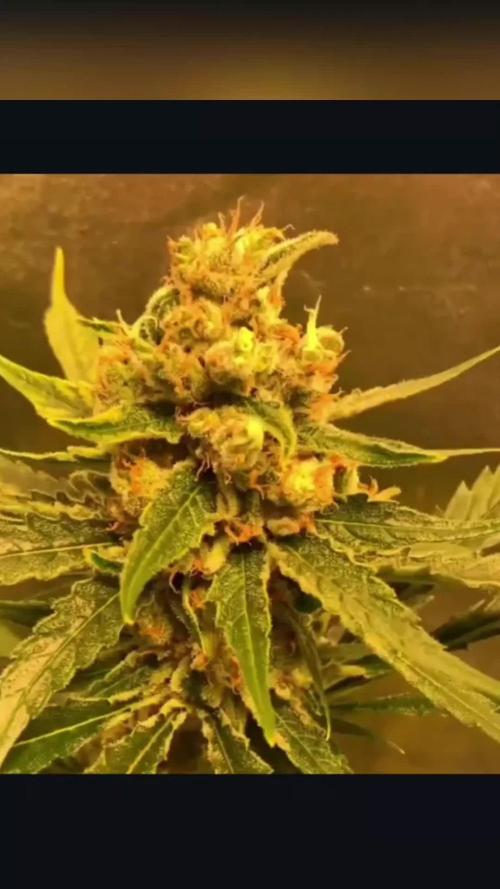
I really enjoyed this strain to grow, did a little mistake and flipped them to 12/12 too early (I anticipated too much the stretch and with the mainlining technique, stretch was not that bigger). Amazing smell, full of trichomes. And probably next time I won't use the tabs from biotabs because you can't really control how much nutriments your plant will have, but the others products from biotabs worked really well!



Likes
17
Share


@4chuk
Follow
When I began the contest I had only grown Magic Melon once before (last winter), it grew in an 18 litre pot, became around 4 feet tall, and completely filled a 3'x3' tent. A friend of mine successfully grew a seed I gave them this summer in a container about 4 litres and the plant was considerably smaller. The fact that it can be successfully grown in less than 250mL is astonishing, I have buds from the one grown last winter that are bigger than the can I grew this one in.
Harvested 91 days from sprout.

Likes
23
Share


@Wazowskid
Follow
Took them outside because it was a sunny week, looking good so far. I take them outside as much as I can because I'm still worried that the 10€ light bulb won't be enough powerful.
Likes
150
Share


@FrenchxFarmer63
Follow
Bonjour à tous ,
Ont peux dire que maintenant la floraison à commencé pour ces demoiselles , certaines sont encore en retard , en près floraisons je dirais mais ça avance ! Les journee diminue et donc la nuit arrive plus tôt dans la journée Cependant je ne sais pas pourquoi celles ci ne sont pas toutes au même niveau... La semaine dernière je voulais arrêter l'apport en azote mais je vois qu'il y a de grosse carrence donc je repars sur une production de purin d'ortie que je continuerais à apporter en plus petite quantité au long des semaines avenir afin qu'il n'y est plus de carrence.... L'odeur est forte à présent , réellement forte.. 🙌😁
Je continue le palissage / LST tous les 2 à 3 jours et cela deviens de plus en plus compliqué mais j'aime ça 😂🍀
J'ai ajouté de la cendre de bois au pieds de ces demoiselles et continue à leurs fournir des peau de bananes à foison !!!!
Je pense fournir plus de photo durant cette semaine en espérant que l'azote apporté aura un réel impact pour épargné ces carrence
Petit retour également de la Black Domina 0 qui se porte à merveille dehors avec un très beau début de floraison !! Yoouupiii
Voila voilà 🙌🙌🙌🙌🙌🙌🙌🙌

Likes
11
Share


@TheMadHasher
Follow
Whats up everybody cheers to another week of growth for everyone!
This week the ladies buds started showing signs of progress. You can see them produce more and more resin every day thanks to the cold weather its really easy to keep a pretty dry environment. Can’t wait to do my final defo next week! Until then stay green!


Likes
Comments
Share

@Grower_Resina
Follow
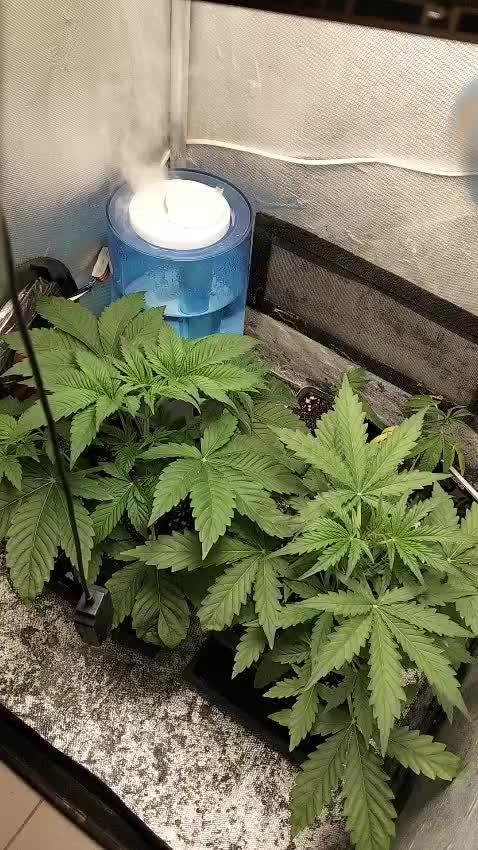
19 Dias de vegetativo, após 7 Dias de germinação e aparecimento do segundo par de folhas.
As medias são por gramatura e baseada na mistura de 1 Litro.
1g Plant Prod 7-11-27
0.8g Haifa Nitrato de Calcio
pH 5.8/6.0
2 regas ao dia, com volume de 500ml com ppm em 450.
Vasos de 2.5L
obs: As medidas em ppm já são calculadas sem os sais da própia agua de torneira.
Likes
8
Share


@Papastroumf
Follow
Day 51 : Watered with 2.5L each lady. I added as always 1 co2 tab per 4.5L . Also i added nutrients. The next one will be pure water. Her burns stopped and doesn't continue to burn new leaves. She lost a lot of power because of lack of energy. She is trying to produce some stuff , i am curious to see how this fight will proceed.
Edit (Day 56) : Watered 1.5L pure tap water of 7.5ph and 360ppm. No co2 today. Just pure water with 0.5/L Cal-Mag. Buds are fattening nothing else.

Likes
2
Share


@Fireproof
Follow
Ich habe die Erde von meinem Outdoor Grow wieder verwendet: Das war in einem 12l Stofftopf als Basiserde BioBizz Light-Mix mit Bio Tabs 50g Startrex und 5g Mycotrex wie in der Anleitung angegeben. Dann habe ich zwei neue Langzeitdünger Tabletten ca. 10cm tief in die Erde eingebracht. Anschließend mit 1g/l Bactrex und 10ml/l Orgatrex in 1l Wasser aufgelöst und gegossen.
Lampe zunächst auf 30cm Abstand zur Erde. Nachdem der Sämling etwas gespargelt hat, habe ich die Lampe auf 15cm gehängt.
Die beiden Umluftventilatoren laufen meistens 10h pro Tag, da sie mir aktuell im Home-Office noch zu laut sind.
Die Lampe ist auf 40% gedimmt. Die Abluft ist noch aus.
Temperatur liegt bei 24 Cº, bei 60-80% Luftfeuchtigkeit.
Details:
15.10.24: Samen in Wasserglas
21.10.24: Samen ist gekeimt, direkt in großen 12 l Topf mit BioTabs Erde vom Outdoor Grow, 12l Stofftopf auf Fensterbank
22.10.24: Topf ins Zelt gestellt
23.10.24: 2xBioTabs Langzeitdünner in Erde gedrückt. Mit 1l Wasser gemischt mit 1g Bactrex + 10ml Orgatrex gegossen
24.10.24: Geschlüpft
25.10.24: 09:30: Scheint etwas zu spargeln, Lampe von 30 auf 15 cm geändert. / 17:00 Höhe Stamm: 30 mm
27.10.24: 09:30: Höhe Stamm: 35 mm / Abstand Lampen zu Blattspitze: 10 cm
Habe mich gefragt, ob der Abstand der Lampe nicht zu gering ist. In https://www.weed.de/wissen/anbau/hanf-wachstumsphasen steht folgendes zur Sämlingsphase.
✅ Lichtquelle positionieren: Positioniere die Lichtquelle etwa 5-10 cm über den Pflanzen, um das Wachstum zu fördern und ein Ausdünnen (Stretching) der Sämlinge zu vermeiden.
✅ Luftzirkulation: Eine leichte Brise, erzeugt durch einen Ventilator, stärkt die Stängel und verhindert Schimmelbildung. Stelle sicher, dass die Luftzirkulation sanft ist, um die zarten Sämlinge nicht zu beschädigen.
✅ Eintopfen: Wenn die Wurzeln der Sämlinge das Anzuchtmedium durchdringen, ist es Zeit, sie in größere Töpfe umzupflanzen. Verwende ein gut durchlüftetes, nährstoffreiches Medium und sei vorsichtig, um die empfindlichen Wurzeln nicht zu beschädigen.
Likes
17
Share


@Hashy
Follow
Growdiaries Grow 20
Welcome to my 20th grow on growdiaries, I'm doing 4 plants in this grow.
This grow will consist of.
#1 FFNA2410 Fastbuds test (?days flower)
#2 FFNA2411 Fastbuds test (?days flower)
#3 FFNA2412 Fastbuds test (?days flower)
#4 Acapulco Gold MSNL (56-70days flower)
This diary is focusing on:
#1 FFNA2410 Fastbuds tester. I have little to no information about this strain until its been released for sale. The only information I do have is it is a fastflowering photoperiod. I have grown fastbuds fastflowering photos before and they were 🔥 so 🤞these will also be great.
Equipment on Smart plugs.
1. Light= Viparspectra Xs2000
2. Extractor= Ac infinity 4 inch
3. Oscillating fans/cameras= on 4 ext.
4. Humidifier= ram 5L/Dehumidifier= 2L
5. Feed= water pump.
6. Radiator= KW
Germination.
Tent settings.
Extractor controller settings
High temp= 23c
Low temp= c
Temp step=0c
High Rh= 70%
Low Rh= %
Rh step=0%
Speed max=5
Speed min=1
Smart controller settings (during lights on).
Lights on=24/0
Radiator on=<c
Radiator off=>c
Humidifier on=<60%
Humidifier off=>65%
Dehumidifier on=>%
Dehumidifier off=<%
VPD aim=0.4-0.8
DLI aim=14-16
EC aim=0.4
PH aim=6.0
🗓️ Sun 17/12/23
#1
📋 Chose the seed and placed it in a shot glass of water at 10.30pm.
🗓️ Mon 18/12/23
#1
📋 At 7.00am tapped seed and it sunk so put it in wet paper towel.
10.00pm filled 0.6L pots with biobizz light mix and wet with 100ml water (5ml/L roots).
🗓️ Tue 19/12/23
#1
📋 7.00am tap root breaking through shell so put in soil.
5.30pm started running tent.
Light 24/0
Light distance 87cm
Light power=73w=30%
Dli=14.5
🗓️ Wed 20/12/23
#1
📋 5.00pm looks like soil movement, sprayed soil.
🗓️ Thur 21/12/23
#1 (Day 0)
📋 7.00am has broken ground, leaves not open yet.
So that's the end of germination for this one. From getting the seed wet to breaking ground took 5 days.
She will stay in the small pot now until the root system has developed enough to transplant.
Back soon.
Take it easy.


Likes
32
Share


@Vega0284
Follow
Hey Guys!
Super excited this week! I've really been wanting to try growing outdoors, so I built a cheap hoop house! Got most of this stuff for the frame from Lowes under 300$. All the soil products I got from GrowGreenMI. Some really cool people out there.
One thing I'm super worried about is drainage. Right now those holes are about 4 feet deep and they've got about 4 inches of water in them already. What's been cautioned is that, eventually, about 2 months in these plants roots will grow and reach the bottom and cause root rot to form. One of the biggest things I was trying to be wary of was causing root rot. This was also the biggest precautionary measure I took when mixing the soil. Adding the extra perlite, coco, and clay pebbles. Best advice right now is to build the soil up on the holes another 16 to 18 inches and possible stick a PVC pipe down to the lowest drainage point of the hole to allow some of that natural occurring water to evaporate.
Any advice anyone has on it is welcomed!
Making a compost tea for the soil outdoors, will probably put 2 cups in each RDWC bucket as well and let that do it's magic for a day or so before nutrient change. Raised the bed about 14 inches as well!
All the seeds sank! Off to a good start! Lol


Likes
10
Share


@Cheeba_Inu
Follow
As of day 21, the Blackberry Kush is growing sizable despite the very deformed growth. After really double checking every parameter last week, I feel comfortable saying it is a genetic issue. Thank you to those who commented and responded to the grow question over the past weeks, it really helps! I want to see how this plant grows and what it yields despite the issue, it should be interesting to see what kind of buds it can end up making. I will perform some LST soon as the plant is growing taller even after topping. I with the twisted leaves and wonky growth, it's actually letting plenty of light penetrate to the lower/center portions of the plant which may have it's own positive outcomes (what can I say, I'm an optimist!)
Happy growing everyone, and stay safe! 👍🌱
Day 22: started LST to promote lateral growth.
Day 24: even though the twisted leaf growth is keeping the foliage from getting very dense, I am happy that this plant is still a good size and is definitely not stunted! If anything it is acting like a defoliated plant, letting plenty of light penetrate to the lower growth tips and center of the plant.
Day 25: earliest signs of flowering.
Day 26: 5x per day watering, 15 second duration.

Likes
19
Share


@GoldenWeedGrower
Follow
Legend
Timestamp: 📅
EC - pH: ⚗️
Temp - Hum: 🌡️
Water: 🌊
Food: 🍗
pH Correction: 💧
Actions: 💼
Thoughts: 🧠
Events: 🚀
Media: 🎬
D: DAY, G: GERMINATION, V: VEGETATIVE, B: BLOOMING, R: RIPENING, D: DRYING, C: CURING
________________________________
📅 D84/B22 - 07/02/24
⚗️ EC: 1 pH: 5.0
🌡️ T: 19-26 °C H: 55-65 %
🌊 8L
🍗 CalMag - Bloom A-B - B52 - Bud Candy - Big Bud
💧
💼
🧠 The VPD rate was stable on the right value for all the day ! Great, and many thanks to TrolMaster Tent-X !
🚀
🎬 Added Timelapse video and screenshots
________________________________
📅 D85/B23 - 08/02/24
⚗️ EC: 0.8 pH: 5.2
🌡️ T: 19- 24 °C H: 45-80 %
🌊 2L
🍗
💧
💼
🧠 I'm lowering down the EC as I see signs of burns on tips
🚀 Humidity went out of control for about 2h
🎬 I made a photoset with "Garlic Puppy" enjoy the pictures 😋. Added Timelapse video and screenshots
________________________________
📅 D86/B24 - 09/02/24
⚗️ EC: 0.8 pH: 5.2
🌡️ T: 20-26 °C H: 50-70 %
🌊
🍗
💧
💼 Little defolation
🧠
🚀
🎬 Added Timelapse video and screenshots
________________________________
📅 D87/B25 - 10/02/24
⚗️ EC: 0.8 pH: 5.2
🌡️ T: 22-24 °C H: 55-65 %
🌊
🍗
💧
💼 Little Defolation
🧠 The buds are forming
🚀 Today VPD was very stable
🎬 Added Timelapse video
________________________________
📅 D88/B26 - 11/02/24
⚗️ EC: 0.7 pH: 5.2
🌡️ T: 20-25 °C H: 50-77 %
🌊
🍗
💧
💼 Little Defolation
🧠
🚀 Humidity went out of control for about 2h
🎬 Added 8 pics of Nicole, the timelapse video and the screenshots
________________________________
📅 D89/B27 - 12/02/24
⚗️ EC: 0.7 pH: 5.5
🌡️ T: 19-25 °C H: 50-70 %
🌊 4L
🍗 CalMag - Bloom A-B - B52 - Bud Candy - Big Bud
💧
💼
🧠
🚀
🎬 Added timelapse video and screenshots
________________________________
📅 D90/B28 - 13/02/24
⚗️ EC: 0.9 pH: 5.8
🌡️ T: 19-25 °C H: 50-70 %
🌊 4L
🍗 CalMag - Bloom A-B - B52 - Bud Candy - Big Bud
💧
💼
🧠
🚀
🎬 Added timelapse video and screenshots


Likes
56
Share


@Prilyfe13
Follow
May 10, 2024 Day 85
A new week and I'm not sure these 2 are ready for flushing. They have way too many white pistils. Plenty of orange, though. Banana Purple Punch A has more orange pistils.
Both got a gallon of nutrient water today. So they are definitely still drinking somewhat heavily. And they haven't slowed down yet. I'll keep an eye on them though. Flushing will have to happen sometime. I'd say in the next 3 waterings. That's just a guess based on their current progress. It just seems that they aren't done swelling and there's absolutely no purple coming through yet.
Banana Purple Punch A still looks great. Her buds are starting to weight down the taller tops and they are slightly leaning toward the outside of the plant. It's actually quite good. It's opening up even more space for the lowers to get as much light as possible.
Air flow is great as well. This is especially important because she is in the back directly under a clip fan. So it's more prone to mold. At least that's what happened in my last grow. This time I have another clip fan across from this one, so the air circulates throughout the whole tent, top to bottom.
Banana Purple Punch B looks great! She's not bending any tops, but I don't expect her to with how strong her branches are. Practically immovable. However, she's definitely getting more jiggly. And she has huge buds top to bottom. I wonder if that's the reason she doesn't budge. No room. Lol. Honestly, she may be really compact, but I have her branches spread out enough for good airflow. There's just a couple of clusters that are a bit too dense with foliage, but it doesn't seem to be a problem. Lots of airflow and light.
She's a bit behind her sister plant. Way more white pistils and orange on this one. No signs of purple whatsoever. Just a healthy growing plant.
I'll be checking trichomes later today if I'm up to it. I hurt my back earlier. Regardless of that, I'll be getting trichome pics today or tomorrow. Probably tomorrow with videos at the end of the week. It's been quite some time since I last took trichome pics. Bad planning on my part. However, I'm excited to see how much further along they are from last time.
I won't be changing the light for another few days I think. Then I'll drop the power down. As I said before, I don't think they are ready for flushing, so not ready for light changes.
The environment is still a bit off. Today the temp is 76° but the humidity is still high at 56%. This is sure to ruin something. I'm still trying to get the humidity down. I have a feeling I just don't have enough air exchange in my bed room. I'm going to continue messing with it until it's right though.
Grow System Environment:
Temp: 74.1°
RH: 54.2%
VPD: 1.29 kPa
May 11, 2024
Not a lot going on today. Just some pictures.
Banana Purple Punch A is looking really good. She looks to have another week or so. I'm really confused as to why my plants take so long to grow and finish up.
Banana Purple Punch B has completely caught up with her sister plant. She has the same amount of orange pistils. That tells me there isn't much left to go. If she caught up, that means Banana Purple Punch A is even closer to being done than I think. Maybe.
I'll check the trichomes again tomorrow. No pics unless they are done. I doubt they will be. Especially Banana Purple Punch B. On the other hand Banana Purple Punch A could have only a couple days left and just isn't going to turn purple or fade at all.
I'm going to start flushing in a couple days I think. They both look about ready for it. Plus, they are about as big as they are going to get. I think the flush will bring out the colors. So next watering will be the beginning of the flush cycle. It should be in a couple days.
Also, both ladies have slowed down on their water intake. So the reservoirs should be empty in 2 to 3 days. Probably 2 days. Then I can clean them out and get to it.
The lights are going to be turned down when flushing begins. I'm going to aim for a DLI of 36 mol/m²/d for the rest of the grow. It shouldn't be anymore than a week of flushing before they are done.
The environment is still messed up. It got down to 49% yesterday for a couple hours, but then this morning it was right back up to 54%. The temp is fine at 76° Still not cold enough at night, but I have time. A few days to work it out. I'd like to be down to 65° by then for the last week of their lives.
Grow System Environment:
Temp: 73.1°
RH: 53.7%
VPD: 1.27 kPa
Update: I decided to check the trichomes anyway.
Banana Purple Punch A has quite a few cloudy trichomes. Very few amber and a bit too many clear. I'd say she has about 5 days left.
Banana Purple Punch B also has quite a few cloudy trichomes. However, she has about 15% to 20% clear trichomes. Amber trichomes are basically nonexistent. There's a few here and there, but mostly on the sugar leaves and not on the buds themselves. I'd say she has another 7 days left.
Honestly I don't want to harvest them separately. I'd rather harvest them at the same time, so I might harvest them in 6 days. Right in between. Maybe 7 days if Banana Purple Punch A isn't quite there yet.
To be honest, I have no real idea with this strain. They seem to be getting there, but there's no purple, still a lot of clear trichomes and it's been 12 weeks. So it could be another 2 weeks for all I know. I'd like to push them as far as they need, but I have 4 other plants that need to come in the tent ASAP. So I may have to chop a bit earlier than I really want to.
I'll post some trichome pics tomorrow and see what you all think. Comments are welcome. Lol
May 12, 2024
Some pics today. I'll try to keep this one short.
Banana Purple Punch A looks good. I checked the trichomes. Not done yet. I'm sticking by my 5 days estimate. So 4 days left.
She doesn't seem to be drinking at all. She is, but it's a trickle. Definitely not like it was. I'll have to empty the reservoir out tomorrow and start the flushing cycle.
Banana Purple Punch B also looks great. I also checked her trichomes. She is about the same as her sister plant. Not enough cloudy trichomes, but the amber ones are starting to show up. A good sign. She might be ready in 4 days. I'm still guessing 5 to 6 days.
She also isn't drinking nearly as much as she was before. A great sign that she should be starting the flush.
For trichome pics, I'll be posting some tomorrow. Nothing to post today.
I'll be dropping the light power when I start flushing. Which should be tomorrow or the next day. As I've said before, the DLI will be around 36 mol/m²/d.
The environment is a lost cause. I cannot for the life of me get the damned humidity to a reasonable level, so I'll continue to open the tent every couple of hours throughout the rest of the grow. Happily, it's only a few days to a week. The temp is a bit high today as well. 77°. I'm already working to drop it a bit without going over 60% humidity. I should be able to get it down to 74° without a problem. It's just the humidity that's killing me.
Grow System Environment:
Temp: 73.9°
RH: 55.6%
VPD: 1.25 kPa
May 13, 2024
Flushing day! I decided to rinse out the basins and begin the flush. I was going to wait another day, but I think it's time. They have about a week left I think. Honestly it should be done by now, but they aren't. Lol. No matter. They should be done in about a week. Maybe slightly less. So they have been given 4 ml of Flawless Finish. It should be the only dose I have to give. Maybe one more, but I doubt it. I still need to dry the containers out. That will take a day or two. So maybe a half gallon in a few days, just to get that last push in.
Banana Purple Punch A looks great! Some more lean happening with the tops. Nothing bad or anything, just a slight lean. Perfect for heavy buds. I didn't bother checking her trichomes today. No point. You can tell she's not ready just by looking at her.
Banana Purple Punch B may need even more time. I'm going to have to decided what to do. Wait for this one to be done then harvest both? Or harvest one at a time as they finish up? Decisions decisions. I'll figure it out in a week.
Her branches are really jiggly now. No lean exactly, more like a sway. When she gets moved her top heavy branches sway a bit. Great sign for a heavy yield from a 17" plant. Or is it 19"? Either way, it's going to have a fantastic yield compared to her size.
One advantage I am seeing with the longer finish is it will give me time to dry some Tropicana Cookies I am harvesting in a couple of days. I'll be wet trimming this time around and the dry time should only take about 5 to 7 days. Maybe 10, but I'd rather not try to stuff 4 plants in a 2x2 to dry. It's a recipe for disaster. 2 at a time stacked on top of each other.
I'll be dropping the light intensity tomorrow or later this afternoon. Maybe even tonight during lights out so in the morning it will be ready for the new day of less light. As I've said before... Over and over... I'll be dropping the light power to 70% which should drop the DLI down to 36 mol/m²/d. Oh, btw, I use the Photone for my light measurements. It has a PAR meter, Lux, DLI and I Believe color spectrum? Kelvin? No clue what that does. I focus on DLI. It's a better reading than just PPFD.
The environment is still messy... as always... I'm keeping the temp down to 74°. The humidity at 58%. So it's still too high, but I've done all I can to drop it down and it won't even go below 50% with the tent door wide open. It just won't. So unless I can get the humidity in my room down to like 30%, the humidity in the tent remains over 50%. Hopefully pulling the plants out daily is enough to prevent mold and other issues. There's also the two circular fans. They aren't at full power, but they don't need to be as there's two. Plenty of airflow. I'll really need to keep an eye on these plants. Maybe I'll take them out multiple times a day. Like 2 or 3.
Grow System Environment:
Temp: 74.5°
RH: 56.2%
VPD: 1.25 kPa
Update: I ordered a new dehumidifier for grow tents today. It should be here tomorrow. I'm guessing a lot of my problem with the humidity is my current dehumidifier. It barely pushes air. Cheap and well used. The new one is from Vivosun. A much more reputable company.
May 14, 2024
Trichome day! Alright, so I took some video today. Not the best quality, but I hurt my back so I'm all shaky. The pics were a lost cause. Lol
Banana Purple Punch A looks great! More leaning branches. This late in the grow, I don't care. They aren't leaning that bad and it's only showing how heavy these buds are.
Trichomes are mostly cloudy with a bit left of clear and nowhere near enough amber. 5 to 6 more days I think.
Banana Purple Punch B is so pretty. She has the faintest purple coming from the flowers, but not much. It is a sign that we may end up with a purple plant during flush.
Trichomes are partly cloudy with 30% clear and next to no amber. She still has time to go. I'd say another 7 to 10 days. Now I'm overshooting it just incase.
I don't think the plants noticed a difference in the light drop, or they did and it's not doing anything. However, I'm not sure what it should be doing. I'm guessing preserving trichomes? Makes sense. Anyway, it's staying at 36 mol/m²/d DLI.
The environment is still an absolute mess. The humidity is at like 59% and as always, I can control the temp, but nothing changes the humidity. And it's like 55% humidity out today. Fail. Lol.
Grow System Environment:
Temp: 74.3°
RH: 59.0%
VPD: 1.16 kPa
May 15, 2024
Nothing to do today. They are still watered and whatnot. No changes in color yet either. I'm starting to think these both will be green phenomes. Or maybe they really aren't ready yet. It's just weird. What am I doing wrong to get all my plants to grow for so long? Oh well.
This round is just different because of the other 4 plants that need this space. I really need them to finish up ASAP. No trichome check today. I can still t ell they aren't ready. The bottoms still have a majority of white pistils and the tops are just not there yet. I think they can get denser. They aren't quite rock hard yet, so I know they still have time.
Banana Purple Punch A looks amazing. More leaning branches that are swaying in the breeze. No fade yet, but the leaves are starting to look ready for the fade. Maybe.
Banana Purple Punch B is strong as ever. Definitely still packing on weight. Definitely not ready for harvest. Still another week I think. I'll check trichomes tomorrow on this one. I think I'll wait for her to be done then I can harvest both plants at once.
The light seems to be just being a light now. I can't really see what it's doing, but I know the frost is there. Lol. So it must be doing something.
The environment is killing me. Still over 60% and my room has climbed up to 60% as well. I have a heater running and the dehumidifier that I think is done working. My new one should be here today. And not a moment too soon. I should have replaced this one months ago. Unfortunately, I don't have much control over the heat anymore. The humidity is just over powering it and I can't get anything to change. I'm going to crank the heat and see if that helps. Like set it to 80° and see what happens. It's currently set to 74°. And 8 don't think that temp is high enough to combat the humidity. Crank it up!
Grow System Environment:
Temp: 72.9°
RH: 63.0%
VPD: .00 kPa
May 16, 2024
Today is looking pretty good. I checked the trichomes on Banana Purple Punch B as she has the longest to go. I figure when she is done, Banana Purple Punch A will be as well.
I've also watered them with plain water. PHed to 6.2. just a half gallon in the reservoirs. I'm not ready to let them dry out yet.
Banana Purple Punch A looks great! Her branches are starting to lean a bit harder and her buds look amazing. No purple yet. Or at all. I'm not sure. But I'm certainly sure that the fade hasn't begun yet.
I'm not bothering with trichomes for now. I'll just wait to see what her sister does. I'll check trichomes in a couple of days.
Banana Purple Punch B looks amazing. Her buds are fat and dense. She smells great and stays strong. A bit more swaying. But it's the whole plant now. Wonderful!
I checked the trichomes on this one. She is developing quite nicely. I'd say another 5 to 7 days? Maybe a little less if we're lucky. There's more cloudy trichomes than before and finally some amber. Much less clear as well.
She definitely is nowhere near fading, so that's a concern for time.
The light stays the same.
It seems to be perfect for these two. So no changes.
The environment is still a nightmare, but it's 86% humid outside and 63% in my room. Happily, not really, the humidity is down to 60%. Not good at all, but better than 63% or even 65%. I'm really hoping these ladies are super resilient. They should be. It's FastBuds and they have great genetics. The temp is fine. I haven't a bit higher to help some with the DLI. So it's hanging out around 76° to 77° for now.
The new dehumidifier works way better than the other one. But a cool thing is that they are both small, so I fit them both in and it seems to be kinda working. It's keeping the humidity below what it is in my room, but not low enough. I know it will drop when I figure out how to drop it in my room. I really need a big dehumidifier for my room. That would solve quite a bit.
Grow System Environment:
Temp: 75.8°
RH: 62.8%
VPD: 1.07 kPa
Likes
4
Share


@Barcelona_Farmers710
Follow
Booommm! Llegó la hora tan esperada Farmers nuestras flores llenas de resina acabandose de formar, la verdad que estas genéticas ayudan mucho al desarollo del cultivo espero que os guste!! Salut y força al canut!!!
Likes
40
Share


@BudXs
Follow
Things are taking shape. VPD in check, girls are just praying and loving their home. A constant 78 with lights on and a small drop at night. Top feeding twice daily for 90 seconds per feed. This is enough time for the hempy hole to overflow.
These girls were topped a few days ago and recovering nicely. A few weeks of veg and this room is going in to flower! And thats when the fun begins
Follow my son Budxless on his first grow
Likes
22
Share


@MonsieurDeLaRuche
Follow
D83 F36: Hello everyone! I apologize for the quality of the photos, I really have a shitty phone! Apart from that everything is going well! The plants are growing very well, still no signs of deficiency.
I started cooling the box at night 2 days ago and the colors are already appearing!
I upgraded my LED panel to 600w F33, I was sure I was correct with 400 but I noticed that the flowers were not developing correctly
The smells are really incredible, more and more marked! I have a little crush on the code red #1, a smell of strawberry candy, cream and syrup.
the white runtz x Hollywood is very very special too! a very runtz smell, with a very marked smell of marinated ginger and lemongrass! very special, it's also the one that makes the biggest heads, incredible
I did a big defoliation (schwazzing) a few days ago and they recovered very well.
I moved the plants again, I'll put the locations below.
I will apply tco F40
in my flowering TCO, I put:
- kelp hydrolysate
- epsom salt
- bat guano
- mealworm guana
- castor bean shell ash
- palm ash
- vermicompost
- blackstrap molasses
- elycitor
-Yeasts Saccharomyces Cerevisiae
Bottom right: Papaya Bang Bang #1
Bottom middle: LA Vanilla cake #2
Bottom left: Papaya bang bang #2
middle right: cherry gar see ya #4 clone
middle: white runtz x Hollywood
middle left: code red #2
Top right: Code red #1
Top middle: B-45
Top left: LA Vanilla Cake #1


