


Likes
Comments
Share


@GorkedOut
Follow
Chopped on day 84, dried for 8 days.
Dry weight: 5.46 OZ (152.8 grams)
Smells great, now it's time to cure. The trim job was easy as well with the structure of the plant/buds.

Likes
18
Share


@ganjameister
Follow
Harvest was done on a lovely summer day.
Since summer was approaching, half of the harvest was hung upside down with the classic 60/60 and rest is stored in a wine cooler for drying. There’s also an oscillating fan below for airflow!

Likes
7
Share


@StonedandSteady
Follow
1st Day of Flower: 2nd Feed Humboldt
Let's Grow and Stretch Out to Fill your Mighty Branches with Giant Gorgeous Budz Ladies! Happy Birthday HoneyBuns!!! I Love you so Much and Thankful to be your Man and Husband! It's been a few days since I gave the Ladies thier 2nd Feed of #HumboldtCountysOwn Nutrients and they look Super Awesome!!! We'll definitely Grow back to everything here soon! I'm Glad it's May 1st and Flipped to Flower and also to Celebrate my Wonderful and Beautiful Wife's Birthday!
11th w/ Veg and Flowers Update #Pre-Sexed🚺 #SuperCropped #Defoliated #Lollipoped
Good Day and Happy Growing Everyone! These Ladies were Growing into thier 11th Week of Veg and Looking Totally Tight and Phenomenally *Femed* from the Right!
#Pre-Sexed 4/9/21 #Opium/#PabloEscobar *Fems* breed by Team #DivineSeeds #DivineSeedsSquad #DivineSeedsBreedingCompany and #SuperCropping continued! I'm Very Excited and Extremely Gracious!!!
Heck Yeah Growmies and Growmets!!! Check Out these Confirmed Females with thier Wild Pistol Hairs popping and I'm still Training and Widening them Out with #SuperCropping Everything looks Expanded and Growing Great!
After #SuperCropping the plant will Grow Bushier, Produce More Buds, and possibly even Produce More THC! This is how the plant naturally responses to danger and protects itself! Growers take advantage of this technique to get Bigger Yields and More Potent Buds than would be produced otherwise!
Getting Trained out into thier 11th Week of Veg and Looking Mighty Fine!!! Thier getting Humongous and Hearty in thier 10 gallon Grow Bag from Broski #www.as420.ca These Cannabis plants are Camping out in the Closet for a week or so! Lol
This is my 2nd run using the Osree.Light QB1000w and Everything is Mesmerizing!!!
My #Opium and #PabloEscobar *Fems* from #DivineSeeds Regs: SalamiLegF3's×2 and FireAlienRomulan look$ Outstandingly Awesome and Growing Up Phenomenally Fine into thier 11th week of Veg in our 2- 10 gallon The Grow Bags from Broski #www.as420.ca and also 2- 5 gallons as Well! Our others are Super and Breed by #thehumancannabiniod #AlienBloodGenetix #TNBNaturals #Foop
Yo!!! Thanks Again for All the Love and Support my fellow Growmies and Growmets!!! These Magnificent and Magical Ladies were Growing in our 48×24×60 ViparSpectra Official Club 🌿 ®️ Grow Tent and under our #Osree QB1000w and #GrowStarStore Kokokala QB1000w and our Purple Rose Cutting×2, Aloe Vera Cutting, Maters×3, Morel Mushroom, Lavender×3, Sunflowers×5 and The 6 Brand New and Fresh Starts are Wonderful with a Huge Hint of Fantastical Fire is my #SalamiLegF3×2 by Broski #thehumancannabiniod #DankFlowGenetics #EastCoastSeedBank #FireAlienRomulan by Broski #AlienBloodGenetix my #PabloEscobar and #Opium by Team #DivineSeeds #DivineSeedsBreedingCompany We Grow with #Growatt 600w with #FoopOrangicBioSciences and #TNBNaturals The Enhancer Co2 Despersal canister and ph'd them w/ Declorinated watering w/ TNB ph Up and Down! Totally Top Quality Topz all Around! Thanks Again #GallowGlas420 #HarleyGrower #thehumancannabiniod #AlienBloodGenetix #TNBNATURALS #FoopOrangicBioSciences #www.as420.ca #divineseeds #divineseedssquad #divineseedsbreedingcompany #BioFlux Family's and Teams!!! Your Genetics are Merry Magnificent, Mega Marvelous and Mighty Medical! Love um!!! I really Can't stress enough how Thankful and Grateful I am of All of you and what you've Shared with Us! Means the World!!! It's definitely a Pleasure being able to Grow with these Phenomenal Grow Lights! Please Enjoy! BudBrothers4-Life! Cheers Famz!!! Much Props and Much Topz!💯🔥 #Osree #GrowStarStore #Growatt #TNBNaturals #TNBTeam #FoopOrangics #GrowYourOwn #Bliss
HumboldtCounty'sOwn:
Email: [email protected]
Phone: (707) 725-4119
Toll free: (866) 872-9434
Humboldt Bottling
Po Box 429 · Fortuna, CA 95540
HumboldtCounty'sOwn Website Link: https://humboldtcountysown.com/
HumboldtCounty'sOwn Instagram Link: https://instagram.com/humboldtcountysown?igshid=1qj809qkkwych
https://instagram.com/divine.seeds?igshid=1r90iwe9xiwz8
https://instagram.com/thehumancannabinoid?igshid=17k159pumklkq
https://www.instagram.com/alienblood_genetix_official/
https://instagram.com/as420.ca?igshid=1f116alw054wp
The Grow Bags: https://www.as420

Likes
24
Share

@Organic473
Follow
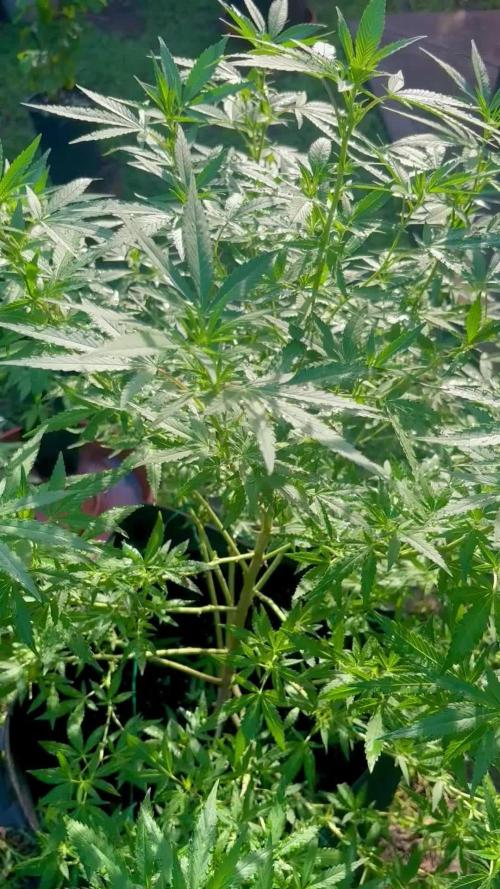
I added a friend and low stress her to control the humidity so far so good.

Likes
32
Share


@Compassionate_Gardener
Follow
The pistils on all plants are getting more and more brown, its time to check the trichomes now. I check with a handheld microscope and they are getting milky, but not yet amber, which means they are ALMOST READY TO HARVEST, but not yet. The amount of crystals produced under the Q6W-Gen.2 LED-lamps from SANlight is astounding, the plants are coated in trichomes! This week I stopped giving any nutrients in order to FLUSH the plants, this is VERY IMPORTANT in order to get a smooth smoke of the dried end-product. The aroma of the plants is VERY STRONG NOW, they smell mouth-watering. The Shiva Skunk has a sweet, musky smell with a fresh citrus note to it, its a delight to smell those plants. The Serious Kush smells EXTREMELY fuely and gassy, like the OG-Kush, but with an amount of buds like the White Russian, its FLABBERGASTING. I cant wait to try those two strains...😎


Likes
12
Share


@eldruida_lamota
Follow
Que pasa familia, volvemos el viernes con las power plant xL del banco Zambezaseeds, la verdad que estoy sorprendido con el Aroma que desprenden estos ejemplares, es muy dulce y fuerte.
Han crecido bastante a diferencia del resto, sacaron brazos largos y llenos de flores.
Conseguimos bajar la humedad y eso se agradece por la etapa que afrontamos de floración. Estás tú ultimas semana sin añadiremos PK en polvo.
Hemos tutorado las power plant xL debido a la altura y el peso de la flor en si, ahorramos problemas futuros estás semanas y las centramos al engorde.


Likes
3
Share


@Jp_tetreault
Follow
Everything was fine this week, the plant looks very happy and healthy.

Processing
Likes
Comments
Share


@MG2009
Follow
06/15/2020
Harvesting a good amount of pollen, not sure if you can see but it is cloudy in here. Female will be fed
Happy Frog fruit and flower 9-4-3. And that will be all she gets till harvest time (seeds popping out.)
Next week male should be spent, putting out clouds of pollen every day very copious amounts!
And diary will continue till I harvest her seed. Just topping off reservoir with plain water for the male
I have got 1.3 grams of beautiful pollen to selectively pollinate only the finest of female specimens for at least 6 months.
Cookie Cake will get dusted with this bad boy.
As well as Red Sky #1
Likes
253
Share


@Hologram
Follow
Sticky is becoming a real beast!👊
She did not get any sun this week and it has been real chilly (max.17C) and have been in her safe house most of the time..
But man, she is strong and resilliant! (already knew that, but she keeps surpising me😳
She is smelling so good, she is really smelling like very sweet bubble gum! Can really tell who her parents are: Bubble Gum x OG Kush x Critical Automatic!
She is even cancelling out the stank of the Big cheese twins!👊 (yeah she is further along too, so.. 😎)
she is not growing much in height anymore .. shes just getting fat! 😍👌
i removed 2 leaves, they were fighting with each other.. have to keep the peace ;)
iTs still chilly but the sun is going to shine a lot more today/this week👏 (they promised 😳)
and that is really what she needs right now😎
And dont forget:
FOR ALL MY GROWBRETHREN/SISTREN IS A DISCOUNT CODE: ZAMMIGD2023
happy growing for all ✊
Likes
3
Share


@Happydays58
Follow
09/06 - DAY 43
- Slight yellowing and spotting on a few of Mo’s older fan leaves, thinking Mag deficiency. Everyday more and more trichomes coming in.
- Forcing Jane to open up by pulling her out.
09/08 - DAY 45
- Top dressed Mo w/ Worm Castings & Kashi Blend. Can see feeder roots everywhere under the cover, worms are active, and she’s sucking dry her reservoir every 1.5 days.
- Lowered light to 500-560PPFD at canopy. Humidity ~58%.
- Jane is starting to share her strawberry aromas. Mo smells like a sweet sugary treat
09/11 - DAY 48
- Switched over to only blooming/fruiting inoculants & top watered w/ compost tea.
Hopefully get ahead of any deficiencies.
- Mo is starting to drink 2 Gal in less than a day, along with the weekly top waterings. Thirsty girl 😃


Likes
20
Share


@DeepRootsGrowTrees
Follow
NORTHERN THUNDERFUCK AUTO / RQS
WEEK #12 OVERALL
WEEK # 7 FLOWER
This week she's looking good her buds are frosty and they continue to get dense her colors look vibrant she's had no issues so far!! Stay Growing!!
Thank you for stopping by and taking a look it's much appreciated!!
Thank you ROYAL QUEEN SEEDS!!
NORTHERN THUNDERFUCK AUTO/ RQS
Likes
44
Share


@ILoVeThiSpLaNt
Follow
Giorno 81 (21 fioritura)
Come sempre le Rainbow Belts provocano dipendenza se toccate 😀 il solito mix di gas, lime e caramelle zkittlez che ti viene voglia di toccare sempre di più.
Sto aspettando qualche odorino delle altre piante perché sono proprio curioso di tutti gli incroci che ho nel box.
A settimana prossima 💪 🤞


Likes
76
Share


@DogDoctorOfficial
Follow
🌸 Week 8 Flower – The Trichome Symphony Begins 🌸
Eternity Grow Cup
This week… it’s all about the frost. ❄️
We are diving deep into the universe of trichomes, those magical crystal-like structures that define potency, aroma, and visual beauty. Each pheno this week is presented with its own dedicated video — so everyone can witness the uniqueness and evolution of these genetics firsthand. The photos? Focused close and true on the trichomes and their stalks, the very essence of the plant’s protective and expressive language.
💎 What Are Trichomes?
Trichomes are tiny resin glands that cover the surface of cannabis flowers and sugar leaves. They’re responsible for producing and storing cannabinoids (like THC and CBD), terpenes, and flavonoids — the compounds that create the plant’s effects, scents, and flavors.
They act as the plant’s natural defense — from UV rays, pests, and environmental stress — and in return, they gift us with beauty, medicine, and art.
Why So Many Trichomes Here?
This room has turned into a crystal forest thanks to a harmonious mix of tech, care, and nature:
🔹 Spectrum Tunings:
Using the TrolMaster system, we’ve dialed in a spectrum rich in reds, far-reds, and UV at precise times to stimulate trichome production. The plants are responding in full.
🔹 Lighting:
The under-canopy power of the ICL 300s, combined with the canopy-level intensity of the Model 1s, is creating full-spectrum saturation from top to bottom. Buds are stacked, frosty, and glowing from every angle.
🔹 Nutrition Synergy:
The tag-team of Aptus Holland and Plagron has been flawless. The clean base, balanced micro and macro elements, and biostimulants have driven these girls into full expression mode. You can see the nutrition working in every crystal.
🌿 Where Are We Now?
We’re likely one week to ten days from harvest, but of course we’ll follow the plants’ signals. They’re still swelling and building — it’s the final stretch, and they’re sprinting.
Nerdy Note:
Trichomes can be bulbous, capitate-sessile, or capitate-stalked — and in this run, the capitate-stalked ones are standing tall and loaded. Expect a full cannabinoid and terpene profile when it’s time for analysis.( bro talk not lab hihihihi)
🌟 Let’s take a moment to recognize that we’re witnessing the peak of this cycle. This is living art, frozen in time by a camera lens but alive in scent and energy.
This Week’s Feeding Program
To support this explosive trichome production in Week 8 Flower, we’re feeding with precision and purpose. Every drop counts now, and here’s the clean, efficient mix we’re running:
• Aptus Holland – Regulator: 0.15 ml/L
• Aptus Holland – System Clean: 0.25 ml/L
• Aptus Holland – RO Water Condition: 0.8 ml/L
• Aptus Holland – All-In-One Liquid: 1.25 ml/L
• Plagron – Green Sensation: 1 ml/L
• pH set at 6.2
💧 We’re keeping it clean, clear, and consistent. No extra PK boosters or unnecessary additives. Just smart nutrition, tuned spectrum, and stable conditions to let the plants express themselves naturally. The synergy between Aptus Holland’s Clean Program and Plagron’s Green Sensation is clearly showing in every frosty bud.
This week, we’ve fine-tuned the spectrum to push the plants into full resin-production mode. I’ve reduced the white light intensity to 40% while keeping the reds and UVs running at 100%. This shift focuses energy on the wavelengths that directly stimulate secondary metabolite production—especially trichomes. Red light enhances flower development and density, while UV exposure encourages plants to produce protective compounds, like cannabinoids and terpenes, as a natural defense. This balance between lower photosynthetic pressure and high-spectrum stimulation is helping the girls finish strong, frosty, and full of character.
🙏 Massive thanks to all sponsors, followers, friends, and growers in the community. To the ones competing, to the ones just watching — THANK YOU. This is almost the end of the road, and every diary, every plant, every effort deserves respect.
💬 Don’t forget to follow the full 4K experience on YouTube, and for behind-the-scenes action and updates, join us on Instagram.
With Grower’s Love,
DD 🌱
Genetics - Runtz https://www.zamnesia.com/6000-zamnesia-seeds-runtz-feminized.html
Nutrients - Plagron https://plagron.com/en/hobby
- Aptus Holland https://aptus-holland.com/
Controls - Trol Master https://www.trolmaster.eu/
LED - https://www.futureofgrow.com/en
LED - https://www.thinkgrowled.com
Soil - https://www.promixgardening.com/en
Germination - Cannakan https://cannakan.com/?srsltid=AfmBOopXr-inLXajXu3QFgKXCXXos4F1oEvScjMKIB5MR5dk8-GJ-F49
DOGDOCTOR 15% off
Smoking Papers - https://ziggioriginal.com/
Terpene saver - https://grovebags.com/
As always thank you all for stopping by, for the love and for it all , this journey of mine wold just not be the same without you guys, the love and support is very much appreciloved and i fell honored with you all in my life
With true love comes happiness Always believe in your self and always do things expecting nothing and with an open heart , be a giver and the universe will give back to you in ways you could not even imagine so
As always, this is shared for educational purposes, aiming to spread understanding and appreciation for this plant. The journey with nature is one of discovery, creativity, and respect. Let’s celebrate it responsibly and continue to learn and grow together!
Growers Love To you All 💚
#EternityGrowCup #RuntzHunt #GrowersLove #CannabisCommunity #AptusHolland #ProMixSoil #TrolMaster #Zamnesia #Plagron #ZiggiPapers #Grovebags
Likes
46
Share


@ernest_twwg
Follow
The veg cycle was shorter than i usually like to have a plant go through, due to time restrictions for the Bubba Cheesecake Diary grow-off, but it still did fantastic in my mind!
Three months in veg under high-octane light and 11 1/2 weeks in flower have let this plant turn into a dreadlocked group of nugs. Three main colas, but lots of burnable flower to enjoy once the dry is finished.
I did a light LST with a decent amount of defoliation throughout the plant's life. I like to open up the middle area of the plant and let as much light as possible hit as many branch and potential flower nodes as possible. This way, i don't need to lollipop as many branches and as much foliage as i would if i didn't do this. Plus, the candelabra look is b-e-a-Utiful, in my opinion.
Light intensity through veg ranged from 40% as a fresh seedling to around 55% the week before i put it into the bloom room. Once it was in the bloom room, the intensity was set at 50% for the first couple weeks to allow for a decent stretch. After that, i think i recorded the light intensity in my diary notes for each week. But, just in case i didn't, I bumped up the intensity by a few percent every 3 days until i hit 100%. Once i got to MAXIMUM POWER, i left it there until harvest.
Water was natural well water that tests out at 7 pH. I always added BuildABloom to the water, never the soil, when i used it. Same with Dr. Earth's 1-2-1 tea concentrate. Other than those instances, it was just straight water that i was giving to the plant.
Grow rooms are both about 4'x8'.
Lights are still budget lights:
-IMVSincere BC100(x3) for veg (Link: https://www.amazon.com/IMVSINCERE-Spectrum-High-Performance-Greenhouse-Hydroponic/dp/B095C2DLH5/ref=asc_df_B095C2DLH5/?tag=hyprod-20&linkCode=df0&hvadid=563646983247&hvpos=&hvnetw=g&hvrand=540375076791862758&hvpone=&hvptwo=&hvqmt=&hvdev=c&hvdvcmdl=&hvlocint=&hvlocphy=9005737&hvtargid=pla-1602626531718&psc=1&gclid=CjwKCAjw__ihBhADEiwAXEazJgD4ugog9JhrBxNShAvyxL7mk9FZTcqD8voe6_dtA20JctuC5Q9qvBoCD7oQAvD_BwE )
Abriselux A1500(x2) for flower (Link: https://www.amazon.com/Abriselux-Dimmable-Coverage-Upgraded-Hydroponic/dp/B08V1FM9V2/ref=asc_df_B08V1FM9V2/?tag=hyprod-20&linkCode=df0&hvadid=507792239689&hvpos=&hvnetw=g&hvrand=17954986133471144655&hvpone=&hvptwo=&hvqmt=&hvdev=c&hvdvcmdl=&hvlocint=&hvlocphy=9005737&hvtargid=pla-1213853152075&psc=1 )
All in all, this was one of the most enjoyable cultivars I've grown inside since i started indoor grows in September 2022. I'm definitely going to try and get more seeds off of my brother, as well as buy some more seeds to pheno-hunt through!
Thank you, @Seedsman , for running this contest. I would have never tried this cultivar out if it wasn't for you giving me a little incentive!

Likes
7
Share


@Cogollo_eu
Follow
**Encontrarás la traducción a español al final de la descripción**
From/Desde: 15/03/19 || To/Hasta: 21/03/19
From day/Desde día: 22 || To day/Hasta día: 28
You can find the Gorillas Diary here:
** Podéis encontrar el diario de las Gorilla aquí:**
https://growdiaries.com/diaries/25675-makingmoney-with-gorilla-mm-vs-gorilla
-----IMAGES & VIDEOS-----
Video 1:
Exactly the same video as 2 but accelerated +300% to fix it to 1 minute for instagram.
Video 2:
4 days (25~28) TimeLapse, 1 image each 60 secs @ 30 fps
Video 13:
General video of the 4 plants and it's trainings, i'm sorry for being so repetitive with the music.
Video 16:
Video of the main Money
Video 19:
Video of the secondary Money
Photo 22:
Last main branches toppings
-----WEEK SUMMARY-----
This week i will just say, an image worths more than a million words... so now let's talk about a video 👊
-----WATERING CALENDAR-----
18/03/19 - 400 ml with all "LAST" week nutrients @ 0.95 E.C. PH5.9 (i had some rests from the last watering)
- Also i applied a foliar irrigation with the same mix as the last week
20/03/19 - 1.000 ml with all week nutrients @ 0.9 E.C. PH5.9
*****ESPAÑOL*****
-----IMÁGENES & VÍDEOS-----
Vídeo 1:
TimeLapse, exactamente el mismo vídeo que el 2 pero acelerado a un poco más del 300% para ajustarlo a 1 minuto para Instagram.
Vídeo 2:
4 días (25~28) TimeLapse, 1 imagen cada 60 segundos @ 30 fps, vídeo increíble en el que se ve com responde la Gorila al Man Lining, en aproximadamente el minuto 2 podo y entreno un poco a la otra Gorila y la principal de las Money Makers, al final del vídeo podaré la última Money Maker.
Vídeo 13:
Vídeo general de las 4 plantas y sus entrenamientos, siento la repetitividad de la música entre los vídeos.
Vídeo 16:
Video enfocado a la Money principal
Photo 10:
Los cortes nombrados (Top&Bottom) de la foto 11
Photo 22:
Los toppings de las ramas principales.
-----SUMARIO SEMANAL-----
Como una imagen vale más que mil palabras, ahí os dejo varios vídeos 👊
-----CALENDARIO DE RIEGO----
18/03/19 - 400 ml contodos los nutrientes de la "ÚLTIMA" semana @ 0.95 E.C. PH5.9 (me quedaba un resto del útlimo riego)
- También he hecho un riego foliar con un resto del ultimo riego foliar
20/03/19 - 1.000 ml con todos los nutrientes de la semana @ 0.9 E.C. PH5.9

Likes
23
Share


@adam_pawloski87
Follow
This week went real great , one has been getting flushed and the rest we will start flush Tomorrow! These ladies are doin so amazing! Hope you all enjoy !! Stay tuned for next week! Cheers an happy holidays!

Likes
7
Share


@EduardoLV885
Follow
Feliz con los resultados de la hidroponia cultivar plantas autoflorecientes en hidro da resultados increibles en comparacion a cultivar en sustraro


