The Grow Awards 2026 🏆
Likes
Comments
Share
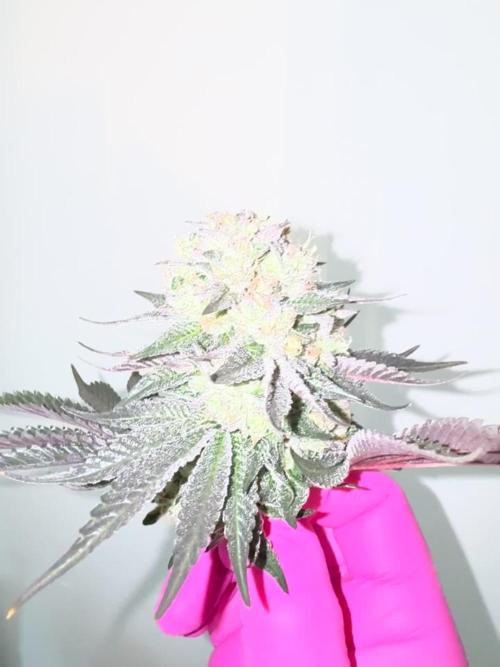
Queste piante sono state fatte al massimo dello stress, al minimo dei consumi. Con 300 watt totali, niente riscaldamento, solo ricircolo d aria e luce, anche nell'acqua pochi nutrienti, si vede il risultato finale abbastanza scarso, non ho avuto tempo d stargli dietro, ma con tutto ciò qualcosa ho raccolto.
Likes
5
Share
@Stork
Follow
Day 84 Mon PH 5.7 EC 0.6 DLI 12h PPFD Water 23 Day 86 Wed PH 5.8 EC 0.6 DLI 12h PPFD Water 18c Day 87 Fri PH 6.1 EC 0.6 DLI 12h PPFD Water 19c Day 88 Sat Add Water and ph down PH 6.2 - 5.7 EC 0.7 - 0.4 DLI 12h PPFD Water 20c
Likes
32
Share
@Proto420
Follow
So 3 weeks in, 4 were males, unfortunately all 4 were descendants of mephisto’s gen’s. Bit disappointed about that but what can ya do. After growing 10 of the bitches at once I am NEVER doing that again. People always talk about how many they want to grow before they do… to those that haven’t started in this pursuit yet, heed my warning lol. They just hit their pre flower growth spurt, I did have 30 days marked on their lives on a reminder on my phone to defoliate because last grow I had so much larf. The fog dog grows nice and stout, the glue sniffers tall and lanky. Both phenos differ very little. I cut off like 3/4 of the bottom nodes off each. Fingers crossed they take it well.
Likes
28
Share
Rough week. Had a friend water for me while we were away. Didn't take my syringe watering seriously, fully saturated my little piggy and the roots are currently recovering from drowning... Is what it is, she'll recover. Already looking better than yesterday. Bud sites are still looking great, happy overall with the canopy still. Now to get her back to full health. Hope everyone had a smoother week than me, and all competition ladies are happy and healthy. Back to the farm for me. ✌️🌱
Processing
Likes
103
Share
@MG2009
Follow
08/21/2018 Day 1 week 3 Starting the week with second set of leaves,1st real leaves single leaves, second set is 3. It looks like one of the seedling leave is fading?.. Watching, maybe add nutes ? this week 08/22/2018 First root touching water! Here come the roots!🙏 for good week. Not sure when I add nutes. Maybe mid week. The codytledons (seedling leaves) are still healthy suggesting to me they still have nutes for seedling growth. 08/25/2018 More leaves,more roots,still no nutes,codytledons still looking good no fade. 08/26/2018 Uploaded root shots, codytledons may be withering away look closer tomorrow mornin 08/27/2018 Got up to 90° in tent, I turned on the red spectrum last night at 25%, Blue spectrum is at 100% Also some signs that codytledons turning pale, nutes coming soon 1/2 strength 💪 of course see how she responds increase as needed.
Likes
11
Share
Likes
2
Share
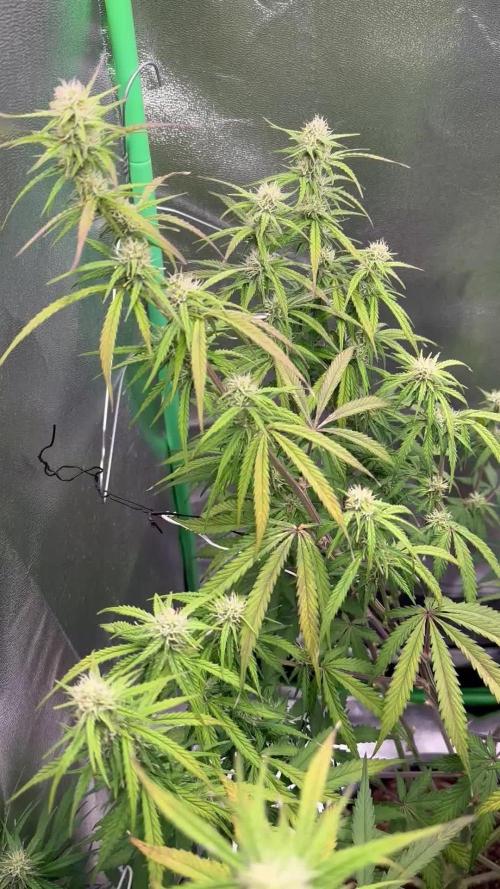
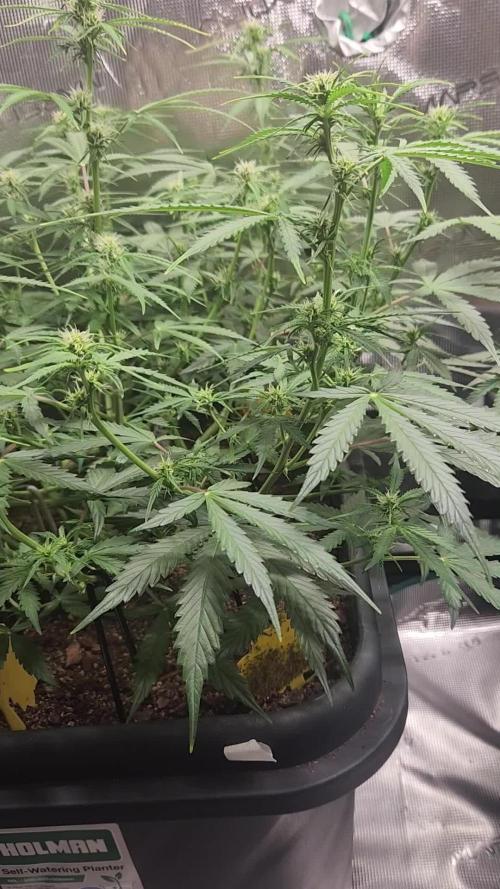
Así finalizamos nuestra segunda semana de floración, están preciosas 😍 🍀💫 🏆
Likes
23
Share
@Chi_K24
Follow
Hey folks, Late update this week due to a big rain store we had last Friday. It called for 5mm of rain which equated to about 3.6L of water for each plant! A bit much for young plants with a small root system, but the good news is that the smart fabric pots did thier job to help dry out the soil. Since our last update, I have topped and defoilaited the damaged leafs from my f$%# up last week. Girls are healthy and show no signs of slowing down. I also started some basic LST with 3D printed plastic clips! They work great and I will be modifying them a bit to provide me more angle selection. If you guys wanna know more about these clips please let me know. Other than rotating the pots and doing some regular maintenance, everything looks good, gnat traps are up and so far there are no signs of them which I credit keeping the topsoil dry. I have not water the plants and it is calling for rain tonight into Thursday, so it seems like mother nature is doing God's works of water my plants for me :). I hope you guys enjoy the update, see you on the next one!
Likes
Comments
Share
@Robom069
Follow
very big buds not so dense but still very good i guess left side acid dough right side black domina
Likes
27
Share
3/25/2023 Week 6- Day 1 of Veg (Day 52 overall) Added my first between changes SILICA Top offs. Was worried that when you add it to pre mixed Nutes that it can make the whole thing turn into a gummy looking substance. I was ready to drain the system and start it over for the week if needed, but no issues adding it to the tank. the Silica going into the Res didn't gummy the system up, it did drop my PH by quit a bit causing me to have to bring it back in balance. 36 Gallons in the Tank Silica Add .5mil/Gal = 18Mil I topped some that needed to be topped, I defoliated some that needs to be defoliated. Since I have moved into Week 6 I have increased the light intensity up to just over 500 maxing it out for Veg Cycle. Next increase will be Week 1 of Flower. 3/26/2023 Week 6- Day 2 of Veg (Day 53 overall) All conditions looked great. Other than me not putting one of the humidifiers back right which means it didn't work last night so Humidity was lower than I like. But got the Humidifier back on it's stand correctly and it is now pumping away. With that I decided to give the plants a day off from any stresses, no topping, no FIMing, no Defoliation for today. Just some good old soaking up the light rays and the ability to get all the Nutes they would like.. 3/27/2023 Week 6- Day 3 of Veg (Day 54 overall) Looking kind of Bushy today, so I defoliated some, and topped some. 3/28/2023 Week 6- Day 4 of Veg (Day 55 overall) PH was a little lower than I like 5.74 so I added a few Mil of PH UP and brought it back up to 5.94. Not much else at this stage, just I topped a little and I defoliated a little. 3/29/2023 Week 6- Day 5 of Veg (Day 56 overall) Topped a little, Defoliated a little Watched them grow!! 3/30/2023 Week 6- Day 6 of Veg (Day 57 Overall) Main action today was breaking down my old tent and setting up a new tent and getting my second RDWC system setup and ready for clones. I Topped a little, I Defoliated some and started taking a good look at what I would like to take for clones in the coming days. I have a few bottom branches that look every promising for my clone material on each. 3/31/2023 Week 6- Day 7 of Veg (Day 58 overall) #3 is at 16" Tall #2 is at 13" Tall
Likes
19
Share
Yellow butterfly came to see me the other day; that was nice. Starting to show signs of stress on the odd leaf, localized isolated blips, blemishes, who said growing up was going to be easy! Smaller leaves have less surface area for stomata to occupy, so the stomata are packed more densely to maintain adequate gas exchange. Smaller leaves might have higher stomatal density to compensate for their smaller size, potentially maximizing carbon uptake and minimizing water loss. Environmental conditions like light intensity and water availability can influence stomatal density, and these factors can affect leaf size as well. Leaf development involves cell division and expansion, and stomatal differentiation is sensitive to these processes. In essence, the smaller leaf size can lead to a higher stomatal density due to the constraints of available space and the need to optimize gas exchange for photosynthesis and transpiration. In the long term, UV-B radiation can lead to more complex changes in stomatal morphology, including effects on both stomatal density and size, potentially impacting carbon sequestration and water use. In essence, UV-B can be a double-edged sword for stomata: It can induce stomatal closure and potentially reduce stomatal size, but it may also trigger an increase in stomatal density as a compensatory mechanism. It is generally more efficient for gas exchange to have smaller leaves with a higher stomatal density, rather than large leaves with lower stomatal density. This is because smaller stomata can facilitate faster gas exchange due to shorter diffusion pathways, even though they may have the same total pore area as fewer, larger stomata. Leaf size tends to decrease in colder climates to reduce heat loss, while larger leaves are more common in warmer, humid environments. Plants in arid regions often develop smaller leaves with a thicker cuticle and/or hairs to minimize water loss through transpiration. Conversely, plants in wet environments may have larger leaves and drip tips to facilitate water runoff. Leaf size and shape can vary based on light availability. For example, leaves in shaded areas may be larger and thinner to maximize light absorption. Leaf mass per area (LMA) can be higher in stressful environments with limited nutrients, indicating a greater investment in structural components for protection and critical resource conservation. Wind speed, humidity, and soil conditions can also influence leaf morphology, leading to variations in leaf shape, size, and surface characteristics. Small leaves: Reduce water loss in arid or cold climates. Environmental conditions significantly affect gene expression in plants. Plants are sessile organisms, meaning they cannot move to escape unfavorable conditions, so they rely on gene expression to adapt to their surroundings. Environmental factors like light, temperature, water, and nutrient availability can trigger changes in gene expression, allowing plants to respond to and survive in diverse environments. Depending on the environment a young seedling encounters, the developmental program following seed germination could be skotomorphogenesis in the dark or photomorphogenesis in the light. Light signals are interpreted by a repertoire of photoreceptors followed by sophisticated gene expression networks, eventually resulting in developmental changes. The expression and functions of photoreceptors and key signaling molecules are highly coordinated and regulated at multiple levels of the central dogma in molecular biology. Light activates gene expression through the actions of positive transcriptional regulators and the relaxation of chromatin by histone acetylation. Small regulatory RNAs help attenuate the expression of light-responsive genes. Alternative splicing, protein phosphorylation/dephosphorylation, the formation of diverse transcriptional complexes, and selective protein degradation all contribute to proteome diversity and change the functions of individual proteins. Photomorphogenesis, the light-driven developmental changes in plants, significantly impacts gene expression. It involves a cascade of events where light signals, perceived by photoreceptors, trigger changes in gene expression patterns, ultimately leading to the development of a plant in response to its light environment. Genes are expressed, not dictated! While having the potential to encode proteins, genes are not automatically and constantly active. Instead, their expression (the process of turning them into proteins) is carefully regulated by the cell, responding to internal and external signals. This means that genes can be "turned on" or "turned off," and the level of expression can be adjusted, depending on the cell's needs and the surrounding environment. In plants, genes are not simply "on" or "off" but rather their expression is carefully regulated based on various factors, including the cell type, developmental stage, and environmental conditions. This means that while all cells in a plant contain the same genetic information (the same genes), different cells will express different subsets of those genes at different times. This regulation is crucial for the proper functioning and development of the plant. When a green plant is exposed to red light, much of the red light is absorbed, but some is also reflected back. The reflected red light, along with any blue light reflected from other parts of the plant, can be perceived by our eyes as purple. Carotenoids absorb light in blue-green region of the visible spectrum, complementing chlorophyll's absorption in the red region. They safeguard the photosynthetic machinery from excessive light by activating singlet oxygen, an oxidant formed during photosynthesis. Carotenoids also quench triplet chlorophyll, which can negatively affect photosynthesis, and scavenge reactive oxygen species (ROS) that can damage cellular proteins. Additionally, carotenoid derivatives signal plant development and responses to environmental cues. They serve as precursors for the biosynthesis of phytohormones such as abscisic acid () and strigolactones (SLs). These pigments are responsible for the orange, red, and yellow hues of fruits and vegetables, while acting as free scavengers to protect plants during photosynthesis. Singlet oxygen (¹O₂) is an electronically excited state of molecular oxygen (O₂). Singlet oxygen is produced as a byproduct during photosynthesis, primarily within the photosystem II (PSII) reaction center and light-harvesting antenna complex. This occurs when excess energy from excited chlorophyll molecules is transferred to molecular oxygen. While singlet oxygen can cause oxidative damage, plants have mechanisms to manage its production and mitigate its harmful effects. Singlet oxygen (¹O₂) is considered a reactive oxygen species (ROS). It's a form of oxygen with higher energy and reactivity compared to the more common triplet oxygen found in its ground state. Singlet oxygen is generated both in biological systems, such as during photosynthesis in plants, and in cellular processes, and through chemical and photochemical reactions. While singlet oxygen is a ROS, it's important to note that it differs from other ROS like superoxide (O₂⁻), hydrogen peroxide (H₂O₂), and hydroxyl radicals (OH) in its formation, reactivity, and specific biological roles. Non-photochemical quenching (NPQ) protects plants from damage caused by reactive oxygen species (ROS) by dissipating excess light energy as heat. This process reduces the overexcitation of photosynthetic pigments, which can lead to the production of ROS, thus mitigating the potential for photodamage. Zeaxanthin, a carotenoid pigment, plays a crucial role in photoprotection in plants by both enhancing non-photochemical quenching (NPQ) and scavenging reactive oxygen species (ROS). In high-light conditions, zeaxanthin is synthesized from violaxanthin through the xanthophyll cycle, and this zeaxanthin then facilitates heat dissipation of excess light energy (NPQ) and quenches harmful ROS. The Issue of Singlet Oxygen!! ROS Formation: Blue light, with its higher energy photons, can promote the formation of reactive oxygen species (ROS), including singlet oxygen, within the plant. Potential Damage: High levels of ROS can damage cellular components, including proteins, lipids, and DNA, potentially impacting plant health and productivity. Balancing Act: A balanced spectrum of light, including both blue and red light, is crucial for mitigating the harmful effects of excessive blue light and promoting optimal plant growth and stress tolerance. The Importance of Red Light: Red light (especially far-red) can help to mitigate the negative effects of excessive blue light by: Balancing the Photoreceptor Response: Red light can influence the activity of photoreceptors like phytochrome, which are involved in regulating plant responses to different light wavelengths. Enhancing Antioxidant Production: Red and blue light can stimulate the production of antioxidants, which help to neutralize ROS and protect the plant from oxidative damage. Optimizing Photosynthesis: Red light is efficiently used in photosynthesis, and its combination with blue light can lead to increased photosynthetic efficiency and biomass production. In controlled environments like greenhouses and vertical farms, optimizing the ratio of blue and red light is a key strategy for promoting healthy plant growth and yield. Understanding the interplay between blue light signaling, ROS production, and antioxidant defense mechanisms can inform breeding programs and biotechnological interventions aimed at improving plant stress resistance. In summary, while blue light is essential for plant development and photosynthesis, it's crucial to balance it with other light wavelengths, particularly red light, to prevent excessive ROS formation and promote overall plant health. Oxidative damage in plants occurs when there's an imbalance between the production of reactive oxygen species (ROS) and the plant's ability to neutralize them, leading to cellular damage. This imbalance, known as oxidative stress, can result from various environmental stressors, affecting plant growth, development, and overall productivity. Causes of Oxidative Damage: Abiotic stresses: These include extreme temperatures (heat and cold), drought, salinity, heavy metal toxicity, and excessive light. Biotic stresses: Pathogen attacks and insect infestations can also trigger oxidative stress. Metabolic processes: Normal cellular activities, particularly in chloroplasts, mitochondria, and peroxisomes, can generate ROS as byproducts. Certain chlorophyll biosynthesis intermediates can produce singlet oxygen (1O2), a potent ROS, leading to oxidative damage. ROS can damage lipids (lipid peroxidation), proteins, carbohydrates, and nucleic acids (DNA). Oxidative stress can compromise the integrity of cell membranes, affecting their function and permeability. Oxidative damage can interfere with essential cellular functions, including photosynthesis, respiration, and signal transduction. In severe cases, oxidative stress can trigger programmed cell death (apoptosis). Oxidative damage can lead to stunted growth, reduced biomass, and lower crop yields. Plants have evolved intricate antioxidant defense systems to counteract oxidative stress. These include: Enzymes like superoxide dismutase (SOD), catalase (CAT), and various peroxidases scavenge ROS and neutralize their damaging effects. Antioxidant molecules like glutathione, ascorbic acid (vitamin C), C60 fullerene, and carotenoids directly neutralize ROS. Developing plant varieties with gene expression focused on enhanced antioxidant capacity and stress tolerance is crucial. Optimizing irrigation, fertilization, and other management practices can help minimize stress and oxidative damage. Applying antioxidant compounds or elicitors can help plants cope with oxidative stress. Introducing genes for enhanced antioxidant enzymes or stress-related proteins over generations. Phytohormones, also known as plant hormones, are a group of naturally occurring organic compounds that regulate plant growth, development, and various physiological processes. The five major classes of phytohormones are: auxins, gibberellins, cytokinins, ethylene, and abscisic acid. In addition to these, other phytohormones like brassinosteroids, jasmonates, and salicylates also play significant roles. Here's a breakdown of the key phytohormones: Auxins: Primarily involved in cell elongation, root initiation, and apical dominance. Gibberellins: Promote stem elongation, seed germination, and flowering. Cytokinins: Stimulate cell division and differentiation, and delay leaf senescence. Ethylene: Regulates fruit ripening, leaf abscission, and senescence. Abscisic acid (ABA): Plays a role in seed dormancy, stomatal closure, and stress responses. Brassinosteroids: Involved in cell elongation, division, and stress responses. Jasmonates: Regulate plant defense against pathogens and herbivores, as well as other processes. Salicylic acid: Plays a role in plant defense against pathogens. 1. Red and Far-Red Light (Phytochromes): Red light: Primarily activates the phytochrome system, converting it to its active form (Pfr), which promotes processes like stem elongation and flowering. Far-red light: Inhibits the phytochrome system by converting the active Pfr form back to the inactive Pr form. This can trigger shade avoidance responses and inhibit germination. Phytohormones: Red and far-red light regulate phytohormones like auxin and gibberellins, which are involved in stem elongation and other growth processes. 2. Blue Light (Cryptochromes and Phototropins): Blue light: Activates cryptochromes and phototropins, which are involved in various processes like stomatal opening, seedling de-etiolation, and phototropism (growth towards light). Phytohormones: Blue light affects auxin levels, influencing stem growth, and also impacts other phytohormones involved in these processes. Example: Blue light can promote vegetative growth and can interact with red light to promote flowering. 3. UV-B Light (UV-B Receptors): UV-B light: Perceived by UVR8 receptors, it can affect plant growth and development and has roles in stress responses, like UV protection. Phytohormones: UV-B light can influence phytohormones involved in stress responses, potentially affecting growth and development. 4. Other Colors: Green light: Plants are generally less sensitive to green light, as chlorophyll reflects it. Other wavelengths: While less studied, other wavelengths can also influence plant growth and development through interactions with different photoreceptors and phytohormones. Key Points: Cross-Signaling: Plants often experience a mix of light wavelengths, leading to complex interactions between different photoreceptors and phytohormones. Species Variability: The precise effects of light color on phytohormones can vary between different plant species. Hormonal Interactions: Phytohormones don't act in isolation; their interactions and interplay with other phytohormones and environmental signals are critical for plant responses. The spectral ratio of light (the composition of different colors of light) significantly influences a plant's hormonal balance. Different wavelengths of light are perceived by specific photoreceptors in plants, which in turn regulate the production and activity of various plant hormones (phytohormones). These hormones then control a wide range of developmental processes.
Likes
1
Share
@dzoseph
Follow
the seedling seems rather weak at this point, and i had a little oopsie where the fan fell on it. thankfully it was alright afterwards. i watered the plant once per every two or three days.
Likes
2
Share
Looking good...
Likes
249
Share
A big hello to all the cannabis growing gardeners...and all the other visitors that came across my grow journal. I apologise for the late updates, what you see on the photograph is what i found growing after my 5 day Christmas absence. i actually took the photographs on the day of my 41 birthday. During this time the four plants drank a lot of water that nobody was refilling, normally it was ok, this time though when i came beck the ph was at 5.6 after i replenished the missing water it jumpted to only 5.8. It happened first time to me so i thought "give it a couple of days girls will drink and the replenished fresh water with PH of 7.4 will up my reservoir", Unfortunately it was a bad choice, plants started to drink less and less every passing day, so at this week end started adding PH+ (first time since a long time, my PH+ bottle was bought in 2015 ;) During the week only added PH+ and PK 13-14. ---------------------------------------------------------------------------------- The SE 7000 is hanged at 40 cm. over the canopy and runs at 550W. This whole grow's main sponsor is Spider Farmer. You can easily obtain all the great grow equipment we use at: spider-farmer.com A big thank you to Jessie and the whole Spider Farmer crew for supporting me with the newest technological advancements in horticulture. Thanks to them what i do here is possible. Thank you Zamnesia for giving me the opportunity to try out your stock. zamnesia.com/uk/7686-zamnesia-seeds-do-si-dos.html 20% discount code: ZAMMIGD2023 Plagron did send us their Contest package for the Power Buds competition . Thank you for your visit, please leave a like and hope to see you beck here in about a week.
Likes
4
Share
**Encontrarás la traducción a español al final de la descripción** From/Desde: 09/02/19 || To/Hasta: 15/02/19 From day/Desde día: 71 || To day/Hasta día: 77 ----WEEK SUMMARY---- 10/02/19: Photos 1 to 5 - I must apologize for the colours of this photos, lightroom dng format and custom white balance seems to made me a bad play this time. 11/02/19: Photos 6 to 21 12/02/19: Photo 22 13/02/19: Photos 23 to 25 15/02/19: Video 26 & Photos 27 to 36 This is the last WEEK!!!!, i will only make one more irrigation with nutrients, and past 3 days 7 consecutive days of just water with Flawless Finish. You can see the amount of crystals of this babys, and i can't tell you how good it smells, touching any bud make the fingers get too sticky. Previous week and this week i was removing a huge amount of big leaves, to enable the light penetration to the lower parts where buds are not totally finished. I'm terribly impatient for Harvest time 😭 ---IRRIGATION CALENDAR--- 10/02/19 (Night) I prepared a solution with 3l water and (Big Bud, Bud Candy, Nirvana, Sensizym, Rhino Skin, Bud Factor X & Bloombastic) @ 1.6 E.C. PH6.4 ~750ml for each BlueBerry Mazar 13/02/19 (Day) 600ml of water & Flawless Finish @ EC 0.4~0.5 PH6.5 14/02/19 (Day) 400ml of water & Flawless Finish @ EC 0.4~0.5 PH6.5 15/02/19 (Day) 750ml of water & Flawless Finish @ EC 0.4~0.5 PH6.5 20/02/19: HARVEST TIME COMING!!!!!!! *****ESPAÑOL***** ----SUMARIO SEMANAL---- 10/02/19: Fotos 1 a 5 - Debo pedir disculpas por el color de las fotos de este día, el ajuste de blancos manual de los archivos dng de la app lightroom mobile me ha jugado una mala pasada. 11/02/19: Fotos 6 a 21 12/02/19: Foto 22 13/02/19: Fotos 23 a 25 15/02/19: Vídeo 26 y Fotos 27 a 36 ¡¡Esta es la última SEMANA!!, sólo haré un riego más con nutrientes y 3 días después empezaré el ciclo de 7 de agua y flawless. Podéis ver en las fotos la cantidad de cristales de estas pequeñas, y no podría explicar lo bien huele (es maravilloso). Tocar cualquiera de los cogollos te deja los dedos muy pegajosos. La semana pasada y esta he estado quitando muchas de las hojas grandes para dejar pasar la luz a los cogollos inferiores que no están tan hechos como la parte superior. ¡¡¡¡¡¡Estoy impaciente por hacer la cosecha!!!!! ---CALENDARIO DE RIEGO--- 10/02/19 (Noche) Preparo un solución con 3l de agua y (Big Bud, Bud Candy, Nirvana, Sensizym, Rhino Skin, Bud Factor X y Bloombastic) @ 1.6 E.C. PH6.4 ~750ml para cada BlueBerry Mazar 13/02/19 (Día) 600ml de agua y Flawless Finish @ EC 0.4~0.5 PH6.5 cada BlueBerry 14/02/19 (Día) 400ml de agua y Flawless Finish @ EC 0.4~0.5 PH6.5 cada BlueBerry 15/02/19 (Día) 750ml de agua y Flawless Finish @ EC 0.4~0.5 PH6.5 cada BlueBerry 20/02/19: ¡¡SE ACERCA LA COSECHA!!
Processing
Likes
26
Share
I add twoo spoon of molasses to 10l of water. Buds are sticky and frosty and smell great..
Likes
4
Share
Likes
28
Share
Here we are, ready, after a week of truly profitable germination we have 20 beautiful plants all marked with the Z of Zamnesia. She is the Karen Kush, a brand new strain with almost no previous cultivation, Zamnesia guarantees us that it will be a bomb and the parents confirm it when we read the sheet we are certain that the conditions to do well are all there, now let's get to work with the best known skills and the best suppliers of growth material. The two plants are in excellent condition to be on day 9 and we are ready to see them break through now that they are taking the feeding program. ---- New Home - The ladies have almost all been transplanted into 11-liter pots which is my favorite size to get the best ratio of presence of plants in the grow box / yield. Especially if you don't have to do exaggerated topping or you have to grow the plants straight with main cola as I do for catalog needs as I do, 11 liters guarantees you to make excellent plants. Topping with 11 pots is recommended up to a maximum of 16 tops (4 main crops) - The pots are square plastic and canvas pots branded Zamnesia - The soil used is Plagron Promix with peat and worm castings but not fertilized - --- Start feeding program - A very serious feeding program branded Plagron has begun. We made our own personalized table based on the chosen soil (Plagron Promix 100% organic) that you can all do at the link https://plagron.com/en/tools/grow-schedule-calculator and I started giving: - Power Roots - 1ml/l - Alga Grow - 2 ml/l - Pure Zym - 1 ml/l - Sugar Royal - 1ml/l - Vita Race - 1 ml/l - The 100% Organic pack by Plagron can be found on Zamnesia at the link: https://www.zamnesia.io/it/11457-plagron-easy-pack-natural.html We are giving a lot of humidity with a humidifier and we oscillate between 65% and 70%. // Site Strain Description // Formidable genetics: These seeds contain the genes of Monster Bud Kush and White Widow. High THC content: With 24%, the effects are pronounced and intense. Fast flowering: This indica-dominant hybrid needs just 8–9 weeks to reach harvest. Excellent yield potential: This plant is very generous, if grown in the right way! - Get a seed of this fantastic strain --- https://www.zamnesia.io/it/10780-zamnesia-seeds-karen-kush.html - Soil and Fertilizers entirely organic --- https://plagron.com/en buy on www.zamnesia.io - Growbox and air sistem --- https://www.secretjardin.com/ - Music and sound --- I made my girls listen to 432hz frequencies and music from www.radionula.com - Light - Sp3000 - https://marshydro.eu/ - Z --- You can find these seeds, much more from the world of cannabis, mushrooms and an incredible series of accessories and gadgets on the reference site not only mine but of many growers ---- https://www.zamnesia.io
Likes
44
Share
just chugging right into the 2nd week of flower. This variety is 8 week flower on the nose, so Ive got 6 weeks left on this one. Will prob be the first plant I harvest this year. Pray for consistent rain for the next 6 weeks