


Likes
Comments
Share


@Weedwithwes
Follow
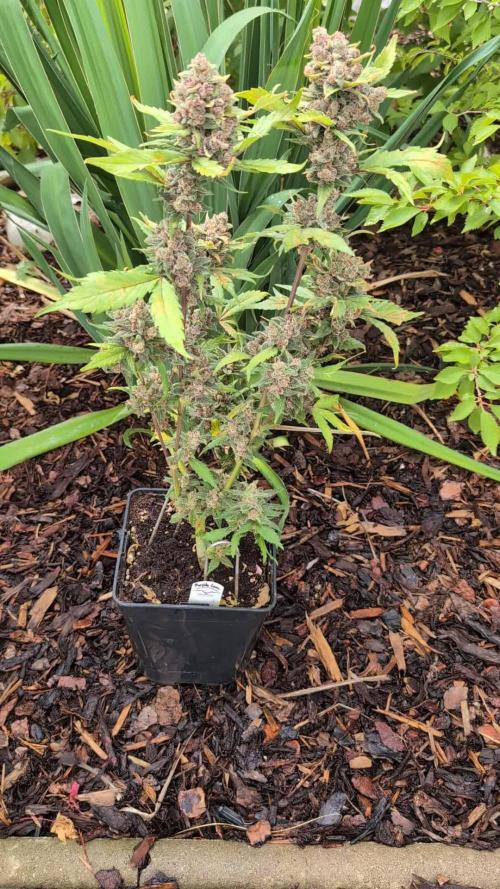
“Tropicana cookies purple “Day 105 from seed.
Partial harvest at first, then 3 days later completed harvest and starting dry

Likes
20
Share

@Suemchen
Follow
she's outside all the time 🌞
Day 92: watered with rain water and 1 ml/l Cal Mag 👌🏻
Day 94: it's been raining all day so I took Pictures of her inside the tent. watered her with rain water and 1 ml/l Cal Mag 👌🏻
Day 96: Looks good 👍🏻 watered her with rain water 👌🏻 Just a couple of days now👌🏻

Likes
24
Share


Processing
Likes
16
Share


@Dunk_Junk
Follow
Wow she grew loads this week!!!!!!! She actually over tripled her height! From 21cm to 69! Incredible.
Look at all her lower branches too! The massive internode length means they're almost as tall as the main cola!!!!!!!!
Likes
8
Share


@taylordarling
Follow
I don't have much to show or say for this week..
It was incredible to notice the radical differences in the plants appearance in just sever days but it was also quite nerve wracking!!! Once I got the plant transferred I decided to go ahead and feed her with Green Planet's Medi-One (an organic bottled nutrient that I still had lying around). The original plan was to attempt a dry amendment grow but as the dry amendments where no where to be found after placing my order, I opted to use what I had handy.
I went ahead with a water soluble nutrient that would immediately activate the roots and supply nutrients to the sterile medium and I am happy that I did. The very next day after the 1st feeding the plant already started to look different and just "perkier"


Likes
39
Share


@GrowWiththeBro
Follow
Starting the week with PH water and calimagic.
Fed and defoliated this week.


Processing
Likes
15
Share


@wheedtobeus420
Follow
Day 28. She’s doing very well. Looking wonderful. I’m very happy with how she has responded to the lst. She will be impressive. Let’s watch her just explode 💋
Likes
5
Share


@Bombtofu
Follow
So I've switched to the big bloom fertilizer from fox farm. Staying with the same amount and feeding schedule on both plants. But I will only be recording plant ones progress from here on out. I can see where quite a few bud nodules have formed. I've started every other day to slowly remove all the large fan leaves on the plant. I want all the new nutrients from the new fertilizer to go to the nodule spots instead of in the fans. So far I think it's looking really good at this age.


Likes
17
Share

@DogDoctorOfficial
Follow
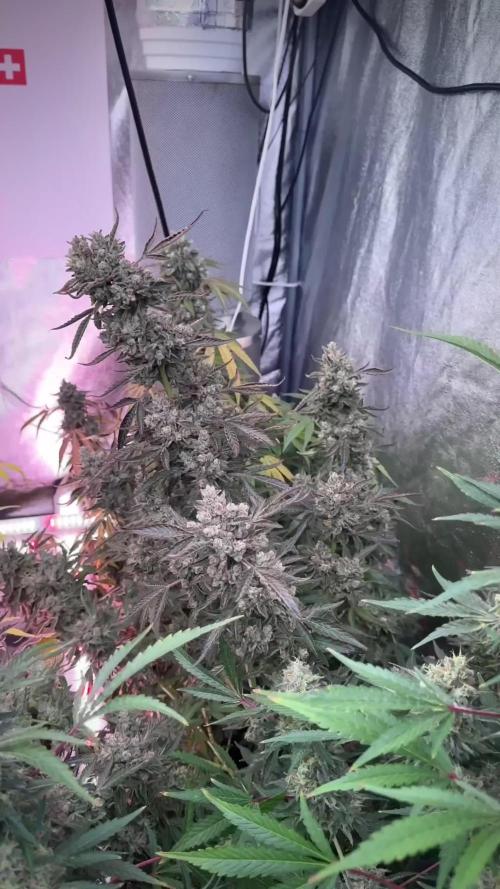
Week 13 from seed. Week 9 of flower.
And this one matters.
Not because everything changed overnight — but because this is where the run starts showing its final intentions. One plant came down, one plant keeps going, and both are teaching something different.
This week marks the point where observation becomes more important than intervention. The work is mostly done now. What happens here is less about pushing, and more about reading. Watching. Letting the plant finish saying what it has to say.
From seed to now, this run has stayed simple on purpose.
12/12 from seed, steady environment, minimal overcorrection, and a consistent approach from start to finish. No chasing numbers, no dramatic swings, no last-minute magic tricks. Just stable inputs, careful observation, and letting the cultivar express itself without interruption.
And that is exactly what this week reflects.
One of the two plants was harvested this week — not because she was clearly ahead, and not because the other was behind, but because this stage offers a rare opportunity to compare expression across harvest timing. Same cultivar, same room, same feed, same environment — slightly different finish line. That is useful information, especially when the goal is not just yield, but understanding the medicine at different stages of maturity.
This is less about “ready” and more about reference.
One plant comes down now to show what this cultivar offers at this point in ripeness.
The second stays standing to show what another few days may add, remove, or transform.
That kind of side-by-side tells more than any chart ever will.
The room itself remains unchanged and stable. Conditions are still exactly where they have been: controlled, calm, and predictable. No changes to the environment, no major changes to irrigation, and no attempt to force a finish. At this stage, consistency is the strategy.
Feeding is now reduced to enzymes only.
No base nutrients, no boosters, no extras — just enzymes and water.
At this point, the plant is no longer building aggressively. She is finishing. Enzyme-only irrigation helps break down residual organic matter in the substrate, keeps the root zone active and clean, and allows the plant to continue consuming what it has already stored internally. This is not about “flushing” in the old dramatic sense. It is simply about removing excess input and allowing the plant to finish on what it already carries.
And she is using it beautifully.
This is where the fade begins to tell the truth.
The shifting leaf color isn’t decline — it is redistribution. Nitrogen is being pulled, chlorophyll is breaking down, stored resources are moving, and the plant is redirecting what remains into final reproductive output. That is why the greens soften. That is why purples begin to appear. That is why red tones start surfacing through senescence and cooler expression.
This is the plant using herself completely.
And visually, she is doing it with style.
There is color now in every direction — softened greens, faded lime, muted reds, touches of purple, and that late-flower pale glow that only shows up when a plant is actually finishing instead of just aging. The flowers are dense, compact, and fully formed. Resin is heavy. Structure is holding. Light still catches everything.
The room is shining.
Both plants are carrying weight well. Dense tops, compact flowers, strong stacking, and resin coverage from crown to lower sites. No loose finish, no empty tops, no weak lower structure. Even now, late into flower, she still looks composed.
The harvested plant came down thick.
Big structure, strong frame, dense flower, and stems with enough development to show those hollow internal channels that often appear in vigorous, well-fed, fast-moving growth. Frost coverage is heavy, texture is compact, and she carried herself like a proper finisher from top to bottom.
She is now drying in a rack rather than hanging whole — not as a stylistic choice, just a practical one. Space dictates workflow sometimes, and good growing means adapting without romanticizing process. Same plant, same finish, different drying logistics. The important part is controlled handling from here.
And during harvest, she gave a little extra.
Fresh finger resin from harvest always deserves its own note.
What collects on the fingers during live harvest is not the same material as what comes later during dry trim. Similar in origin, different in state.
Fresh harvest resin is live expression — warm, volatile, aromatic, soft, and immediate. It is closer in spirit to charas in the traditional sense: resin gathered from living plant material by direct contact, long before modern processing tried to standardize everything. That matters, because what is collected in that moment still carries a different volatile profile than what comes later from dry trim.
Dry trim finger hash is still resin.
Fresh harvest finger resin is living resin.
They are related, but they are not the same conversation.
And for people who have never paid attention to that difference, this is one of those details worth learning once and never forgetting.
The second plant remains standing, and she is still earning her place.
Still dense. Still shining. Still building.
Not dramatically, not explosively — just quietly continuing.
And that is the point now.
Late flower is no longer about visible daily change. It is about subtle shifts. Trichome maturity. Water behavior. Leaf surrender. Aroma transition. Hidden risk. Final swelling. This is where “not doing much” becomes one of the most active parts of the entire cycle.
Because this is the stage where small mistakes matter most.
Now is when you watch for ripeness.
Now is when you watch for overstay.
Now is when you watch for mold that never comes.
Now is when you watch for trichomes instead of pistils.
Now is when restraint becomes part of the skillset.
She may come down next week.
She may ask for a little more.
That decision will not be made by calendar — it will be made by what the plant says next.
And that is where we leave her.
One harvested.
One still speaking.
Both worth listening to.
Big love to everyone following this run — old heads, new eyes, silent watchers, loud supporters, curious growers, skeptics, believers, and everyone who gave this diary even a second of attention.
To the GrowDiaries platform.
To the community.
To the people who watch closely.
To the ones who question everything.
To the ones who just came for pretty flowers and stayed for the process.
To Zamnesia for the genetics.
To Plagron for the feed.
To the gear keeping the room steady.
To the people behind the brands.
To the growers behind the screens.
And to both plants for doing exactly what they were supposed to do.
Week 13.
Week 9 flower.
One down. One still glowing.
📡 DELETED @ 1K Please stay tuned.we never quit https://www.youtube.com/@TheDogDoctorOfficial NEW 🙏 Thank you for your patience and continued support.
FOR DISCOUNT CODES AND MORE JUST FOLLOW THE LINK https://website.beacons.ai/dogdoctorofficial
📲 Don’t forget to Subscribe and follow me on Instagram and YouTube @DogDoctorOfficial for exclusive content, real-time updates, and behind-the-scenes magic. We’ve got so much more coming, including transplanting and all the amazing techniques that go along with it. You won’t want to miss it.
GrowDiaries Journal: https://growdiaries.com/grower/dogdoctorofficial
Instagram: https://www.instagram.com/dogdoctorofficial/
YouTube: https://www.youtube.com/@dogdoctorofficial Deleted by Youtube - https://www.youtube.com/@TheDogDoctorOfficial NEW
Vimeo : https://vimeo.com/dogdoctorofficial Under construction stay tuned
⸻
Explore the Gear that Powers My Grow
If you’re curious about the tech I’m using, check out these links:
🔆 Lighting & Environmental Control
• Future of Grow — Advanced LED lighting technology
https://www.futureofgrow.com/
DISCOUNT CODE: DOG20
• Lumiflora — Under-canopy LED lighting
https://lumiflorade.com/
• TrollMaster — Environmental controllers and automation gear (past collaboration)
⸻
Genetics
• Zamnesia Seeds — Genetics used in this project
https://www.zamnesia.com/
⸻
🌱 Soil, Substrates, Boosters & Root Support
• Plagron — Substrates, bio mixes, and supportive products
https://plagron.com/en/
⸻
🎒 Storage, Curing & Preservation
• Grove Bags — Curing and storage solutions
https://grovebags.com/
⸻
📸 Photography Equipment & Tools
(Not sponsors, but part of my creative toolkit)
• Sony A6700
• Sony full-frame macro lens + few more
• Stacking photography workflow - learning
• iPhone (for behind-the-scenes shots)
We’ve got much more coming as we move through the grow cycles. Trust me, you won’t want to miss the next steps, let’s push the boundaries of indoor horticulture together!
As always, this is shared for educational purposes, aiming to spread understanding and appreciation for this plant. Let’s celebrate it responsibly and continue to learn and grow together.
With true love comes happiness. Always believe in yourself, and always do things expecting nothing and with an open heart. Be a giver, and the universe will give back in ways you could never imagine.
💚 Growers love to all 💚
📸 P.S. – The Eye Behind the Lens
All photos in this diary (for now — except for the ones showing the camera, which I took with an iPhone) are taken with a Sony A6700 paired with a Sony full-frame macro lens and a few more.
Photography is part of the story — it’s how we share the fine textures, the glow, and the quiet details that words can’t always capture.
I’ve also started experimenting with photo stacking — a technique where multiple images, each taken at a slightly different focus point, are layered together to create one perfectly sharp image from front to back.
It’s not digital enhancement or AI; it’s pure photography — a way to reveal the plant’s beauty in microscopic depth, from trichome to petal.
You’ll even see a few shots of "ghost me" capturing the shots — camera, lens, setup — because every grow deserves not just to be cultivated, but documented like art.
FOR DISCOUNT CODES AND MORE JUST FOLLOW THE LINK https://website.beacons.ai/dogdoctorofficial
NEW DISCORD - Official Server Invite Link : https://discord.gg/ksjAkA5T74


Likes
Comments
Share


@hfwbr420
Follow
First week after light switch is done. Plants are growing very nice.
Tips for improvement are allways welcome! :)

Likes
49
Share


@masterofsmeagol
Follow
6/23 Due To The Two 8 Day weeks this week will only consist of five days to get me back on track. SEE LAST WEEK FOR DETAILS. I DID ANOTHER EIGHT DAY WEEK. I'LL DO THIS WEEK AS SIX DAYS. THAT WAY IM BACK ON SCHEDULE. WATERED 6/22. WENT BACK AT NIGHTCAND WATERED ANOTHER GALLON WITH 1/3 TSP Armor Si. I mixed the solution with kelp you kelp me but I dumped it out. I've mixed silica with other nutes before but I had read something earlier about bioavailability issues and I didn't want to risk it. My plants are the healthiest I've ever grown. I'm considering transplanting the large 10th planet that I'm light depping. I also need to develop my ipm and my nute schedule. Still gonna have to keep an eye onvthe water situation. Luckily I have a buddy in my corner that's co tinualkt Bern a great help.
WENT BACK OVER AROUND NOON. BEAUTIFUL OUTSIDE AND THE PLANTS WERE LOVING THIS SUN. I DEFOLIATED SOME BURNED LEAVES AND MIXED A SOLUTION IF KELP ME KELP YOU THAT I PLAN TO FEED TO THE GARDEN TODAY. IM HAPPY WITH HOW THINGS ARE GOING. WE HAVE SOME RAIN AND THINDERSTORMS COMING. I NEED TO GET MY IPM UP AND RUNNING AND THE NUTES ONLINE. I ALSO NEED TO DECIDE IF IM GOING TO TRANSPLANT THE LIGHT DEP 10th PLANET. Went back over to put the girls to bed at six and if was still 90 degrees. The water from yesterday had dissipated. The tops were dust dry. I mixed two gallons of kelp you kelp me and fed it to the garden. Afterwards I pointed qbd found a couple plants that were more open to the wind were a little lighter. I know tomorrow will be very hot. Maybe quarter inch of rain. However after that it will rain (showers) off and on for days. I wanted to make sure the girls had what the needed to make it through tjis heat wave until they get that rain. I had another gallon mixed up and I'm thinking I should've given it to them. Oh well. I'd rather underwater than overwater any day. I did notice a burnt top on the plant furthest from the tarp that the sun JUST BARELY TOUCHES when the rest are in shade. I'll just raise the tarp a little. These are tiny problems. Can't upload video until tomorrow.
6/24 Good thing u gave the plants that water. I know it wasn't much but we didn't get any rain. Suppised to get a qtr in today and another qtr in tomorrow. Then rain a couple more days. It's working our really good for my watering schedule lol. Yesterday the girls got there first dose of a bottled nute. They got two gallons of kelp me kelp you (1/3 tsp per gallon) and another gallon of just phed water. I was going to do another gallon but held off due to the threat of syring rain. Didn't get it bur it looks like the plants loved the kelp. It had reached 90 yesterday. They look better today. It's 70 at 9 today. I LST the 10th planet in the 3 gallon. It's getting huge. I should start a separate diary for those three light dep plants. Its cool as hell watching this. One of the purple punches is flowering pretty good. I probably should start another diary for them. I'll be starting to feed my plants soon. Wondering if I should pinch plants again. TUCKED THE LITTLE GIRLS IN AT SIX AND SHOT A VIDEO AND TOOK SOME PUCTURES. PLANTS LOOKED PHENOMINAL! GOT HOME AND AROUND SEVEN IT JUST STARTED RORREBTIAL DOWNPOURS! THE TYPE OF RAIN THAT BREAKS STEMS. I SHOULDVE PUT MY OTHET TARP UP BUT I DIDNT. I WISH I HAD. IM A LITTLE NERVOUS. I KNOW THESE GIRLS ARE STRONG THOUGH! TOMORROW. ILL ROLL THE RARP UP AND SECURE THE BOTTOM FOR FAST ACCESS. IM ALSO GOING TO KOOK INTO FINDING A TOP FOR MY CAGE I CAN USE IN INCLIMENT WEATHER.
6/25 That little qtr in of rain we were supposed to get turned into torrential downpours and high winds. Luckily no REAL damage. If you watch the video you'll see what I mean. I'm going to havecto be cognizant moving forward. Noticed a few chunks from leaves butvplants are still healthy. I'm surprised how well these girls withstood this storm. They are certainly resilient. The 2 purple punch 1 10th planet that I'm light depping are flowering nicely now. They missed all the commotion from the storm as they were inside. It's smelling good. I'm happy.
6/26 It's what a friend would say is "maineing") out. That mistcthe plants love. I'm surprised the plants are doing as good as they have been considering the wind. Will be adding nutes soon. Need to add extra supports too. Light dep
6/27 Brief periods or torrential downpours. Light depped 3 gallon 0lants are under an overhanfcwhete the hatsxrain can't hurt them but they still get sun. They are really starting to flower now! I'm going to begin feeding with a base nute and a flower nute I think. I'm thinking about giving the light dep some open sesame or something similar. I need to set up a nute program soon but the plants ALL look so healthy! And it's been raining! I've only watered like once or twice since they've been in the big pots. I've seen zero pests aside from a chunk missing from a grasshopper. Usually by now I'd have battled half a dozen things and be battling another half dozen. However I was posing from clones. These are seeds and boy don't I see the difference!


Likes
24
Share


@Natrona
Follow
Divine Seeds Auto V.2 Contest
Big Demon Auto
W5V5 7/6-12
Big demon auto is stacked close together. I think there were 5 or 6 nodes so I topped her and used pins to tie down the limbs. I also lollipopped and cleaned out all the under growth.. She is 6 inches tall after topping. Giving water only for this grow.
7/6 2 liters ph 6.5, ppm 238 to get the pot wet.
7/8 1 liter ph 6.6, ppm 262
I included videos of the ph meter with water, iridium glass & iridium glass and copper. When in water only, the ph meter climbs steadly, in iridium, there is slight jumping in the register. When the readings are taken with copper and iridium, the ph meter jumps up and down in wide ranges. So there is marked energy emanating from the glass and from the copper. What is it doing? I don’t know but stay tuned thru the grow to find out.
As aways, thank you all for stopping by, for the likes and most of all growers’ love and support.
Stay green, growers love 💚🌿o
💫Natrona💫

Likes
77
Share


@klimfish
Follow
9/25 - Top dressed with 3-9-4 flower girl a couple days ago. It had been 3 weeks since my last feed. Also watered on 9/22 with Fish Shit, CalMag Plus, and Tree Trunk at my usual doses.
The plants look amazing. Flowering is such a beautiful process. Can't wait for the next few weeks!
I've been doing light defoliation every day to keep top bud sites in the light and also keep airflow going.
Lesson learned, 2 plants in a tent this size with the way I train and top is plenty! Otherwise I run out of room!
9/27 - Did some defoliation and lollipopping today. Will likely water tomorrow.
9/28 - Watered today with my usual nutrient combo described in this weekly entry.
9/29 - Plants are SO happy. Leaves are up and praying! Flowers are starting to show a little density too!
Likes
5
Share


@CannaIGrow
Follow
Still just trying to be patient, waiting for harvest time, hopefully I don't go past the harvest window that I'm looking for. Wanting Milky tricomes.
Likes
55
Share


@Hempy_The_Kid
Follow
02/02/22 gave 2 quarts recharge, changed nutrient water PH 5.93 TDS 750, will give foliar feeding tonight at lights out.
02/03/22 PH 5.95 TDS 770 did small defoliation. Removed lower leaves touching media.
02/04/22 PH 6.10 TDS 774
02/05/22 PH 6.13 TDS 780 gave 2 quarts recharge. Gave foliar feeding at lights out.
02/06/22 PH 6.03 TDS 740 trimmed plant a little taking off small suckers and a few leaves under canopy.
02/07/22 PH 6.02 TDS 780
02/08/22 PH 6.03 TDS 778


Likes
5
Share


@CalGonJim
Follow
1/4/26 1:26 AM. This is me starting a diary accidentally a day too early iced tea had some problems. The cocoa had something in it and the root hit it and it screwed up so I’ve flushed it out. I put another seed in and she’s doing just great. I’ve never had this happen before so I must’ve. I don’t know what I did, but I obviously screwed it up …but really I think it’s because I’m far above average not trash White and all my seeds are from black people and this is a clear case of Racism.😡😂😂😂 I’m gonna write a book about my struggles. I think you’re all gonna really enjoy it.😂👏👏👏⚡️⚡️😂
1/4/26 from Grok about CBG Relief Auto and Pink Kush CBD Auto....
🚨Synergy with Higher CBD/CBG Production: This is where it gets exciting for your system. CBD and CBG plants (low-THC by nature) respond well to biostimulants like 👨🔬aminos because they emphasize therapeutic/terpene-focused traits over high-THC⚡️ potency. Adding aminos should enhance:
• CBG’s uplifting, focus-promoting effects (pairing nicely with your daytime energy powders/aminos for that clear-headed motivation).
• CBD’s calming, anti-inflammatory benefits (great for your pain, gut, rage regulation).
• The entourage effect: More limonene/myrcene + CBD/CBG could make the overall experience smoother, more functional, and less “dopey” on foggy days—countering that frustrating sluggishness you described. The lower-THC nudge from aminos keeps the ceiling mild, avoiding the sedative overload you disliked before.
• Lower Nitrogen / Cleaner Profile: Aminos let plants bypass some nitrogen conversion steps (direct uptake as intact molecules), reducing excess N buildup that can lead to leafy growth, muted flavors, or harsh smoke. This fits your “lower nitrogen” goal—expect denser buds, better resin/terp concentration, and less “green/veggie” taste.🚨
1/4/26 2:42AM The tub in 237 is clogged, AGAIN ..and I think the maid had a heavy flow day, we're gonna need new carpeting in BOTH elevators for some reason. And keep the butler out of the dogs room, he'll get carpel tunnel again!!
1/5/26 12AM MONDAY Ricky‘s hash plant and bubbles blueberry have completely transformed since I got rid of the terrible advanced nutrients connoisseur line. I’m not giving them any breaks. They are one star product and I’m done with them.
I’m gonna have to top all the plants now they are doing so good. They’ve become so big and bushy. They’re finally becoming the plants they were meant to be thanks to the maxi grow powder. No more burns. Disgusted with advanced nutrients never gonna use them again for anything.
1/5/26 11:20Pm...... Im so good at this, it's all too strong!! They all look great. THE TASTE HAS TOTTALLY CHANGED!!!! PERPETUAL SALAD GARDEN IMPROVED 100 PERCENT!! MAXI POWDER CHANGED THE FLAVOR PROFILE TO WAY WAY BETTER......AN WAS TERRIBLE FOR TASTE. EVERYTHING IS IMPROVING !!

