


Likes
Comments
Share


@HolySmokes2025
Follow
Great week overall-5 Gallons PH water every 72 hours. Added Beneficial microbes and Molasses to feed them is all. Due to new trich development she remains about 50 percent cloudy. Time will tell.

Likes
13
Share


@XanHalen
Follow
Mar 15:
Looking good, keeping rh down has proven difficult with 3 in a 2x3x4ft box, blasting intake and exhaust with 2 fans inside.
Otherwise good, did a 1/4 feed to use up stores and salts.
Mar 16:
Looking good, dialed back in RH, Temp lowered a couple degrees, no oscillating fan so I adjust the position every day.
Want to start using MonsterBloom for some fat buds but don't wanna start too early.
Also need info if incorporating run-off feeds is necessary if i do occasional 1/4 dose feeds.
Slowly dialing back grow nutrients, and upping bloom.
New light has made 100X difference.
Mar 18th:
Will be increasing of volume per feed over the next week to 1 - 1.2L per plant, or until I get 10% run-off.
keeping concentration of feed around 800ppm,
No signs of deficiencies or toxicities yet, though colour of leaves may be a tad dark, no signs of slowed growth.
Increased PPFD to 750 - 940 at the top of the canopy.
Mar 21:
Going to start counting days not weeks, its been 36 days since they popped, so just over 5 weeks now, I was a bit ahead.
Explosive growth, still playing the "increase volume of feed until I get 10-15% runoff" game, at 1L now, will up to 1.25L for todays feed.
decreasing FloraGro by .5ml/gal every feed till I get to 1 - 1.5mL/gal.
increasing FloraBloom by .5mL/gal every feed till I get to 7 - 7.5mL/gal, or until I see P or K toxicity, whatever comes first.
That being said if I get runoff today and its 300 ppm over input, i will flush with a mild feed until I get proper output/input ppm ratio.
PLEASE, IF YOU ARE READING THIS, IF YOU SEE ME DOING SOMETHING WRONG, OR IF THERE IS A BETTER WAY, COMMENT OR DM ME 😭😂💪

Likes
43
Share


@MangoDudu
Follow
Put them in a separate box and topped. Not yet transplanted because i’m in lack of space, they will raise and will be too high for this box ( dp60 with 2x20w cosmorrow led)

Likes
37
Share


@The_Bearded_Grower
Follow
welcome to Day 83 3/10/2021 the girl sure got super big but the buds still never got very fat. but still 400 Grams wet is good I estimate 80 grams dry there are more updates on the way as she dry's out and I get the real weight

Likes
6
Share
@ShizFunkyFresh
Follow
Hello growmies!
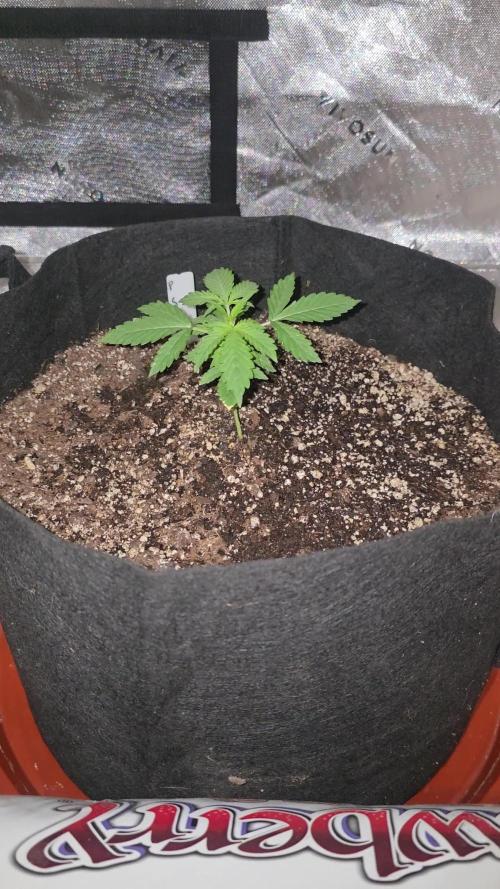
Been a great week of growth! They're all spreading their wings out! They've doubled in size and gained a lot more leaves. Thanks SensiSeeds for these for this grow ❤️.
All in all a very productive week, til next time happy growing all!!

Likes
4
Share

@Bncgrower
Follow
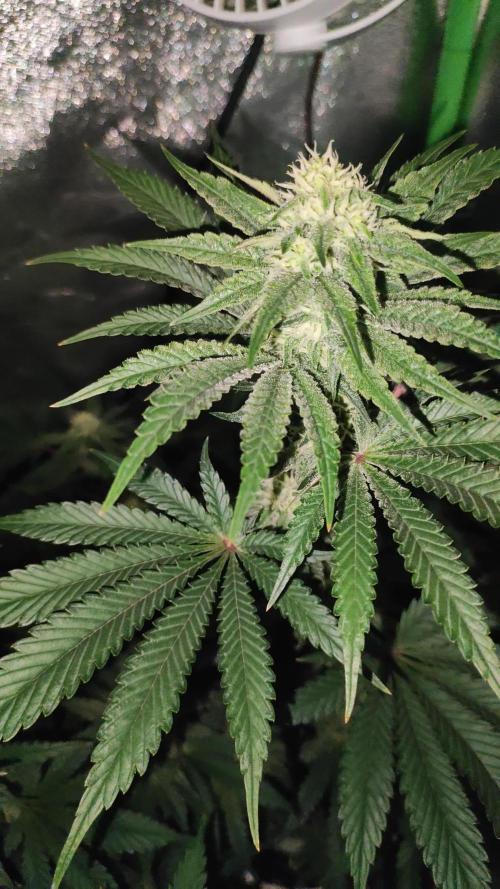
Week completed, these girls are developing great, the flowers already smell wonderful and are very resinous... Looking forward to the next few weeks.
Stay well! 💪🙏
Likes
16
Share


@DrLaggis
Follow
Day 72: The Finale 🌿🌟
It’s finally time. My very first grow is coming to an end—at least the cultivation phase. The plant is now ready for harvest, and I can’t believe how incredible this journey has been. I never expected to enjoy the whole process so much—from nurturing the plants to watching them grow and evolve. I’m absolutely hooked and can’t wait to dive into the next steps: harvesting, drying, curing, and of course, starting a new grow soon with fresh ideas and experiments!
While it may not be the largest yield, the quality of the buds speaks for itself. The time, love, and care I’ve put into this grow is visible, and I’m pretty proud of the results. I’ll admit, I was a bit impatient at times (which I think every first-timer can relate to 😅), but the experience was priceless.
Here are a few interesting highlights from my trimming and harvest process:
1️⃣ Dark Phase Before Harvest
Two days before harvest, I put the plant in complete darkness to encourage resin production. I'm not sure if it really made a difference, but it was worth trying!
2️⃣ Wet Trim vs. Dry Trim
I decided to go for a wet trim because the buds were really dense, and I wanted to avoid any risk of mold. I’ve read that wet trimming can speed up drying and may slightly impact the quality, but this is part of the learning experience. Next time, I’ll try a dry trim for comparison!
3️⃣ Yield Update
Wet, the total came in at 179 grams from my plant. Trimming took around three hours, and it was actually a lot of fun, despite the time commitment.
4️⃣ Curing Plan
The buds are now hanging in the tent for about 8 days. Once dried, they’ll go into jars with Boveda Packs (62% humidity) for another 3 weeks of curing. I'll update the smoke report once they’re fully cured, but I’ve already had a sample of the same strain from a friend, and I can say it’s pretty amazing.
Final Thoughts on My Grow 🌱✨
As mentioned earlier, this grow has been an absolutely incredible experience, and it has definitely set me on a path to jump right into my next grow. There were ups and downs along the way, such as over-pruning, which I believe stressed the plants a bit. Additionally, I think they could have benefited from an extra week to mature. We also faced many temperature fluctuations this summer, which impacted the plants due to external weather conditions.
I'm really pleased with the quality of the buds. The quantity is okay—I can’t fully gauge it yet—but I’m sure there’s more potential to unlock. I've gained valuable experience in what worked well and what didn’t. Overall, the countless lessons learned during this grow far outweigh the few mistakes made. I'm incredibly proud of my first results!
As this long journey comes to an end, I want to thank everyone who followed along. I hope you enjoyed all the content. In that spirit, happy growing, and see you next time! 🌟


Likes
3
Share

@Francuzzo
Follow
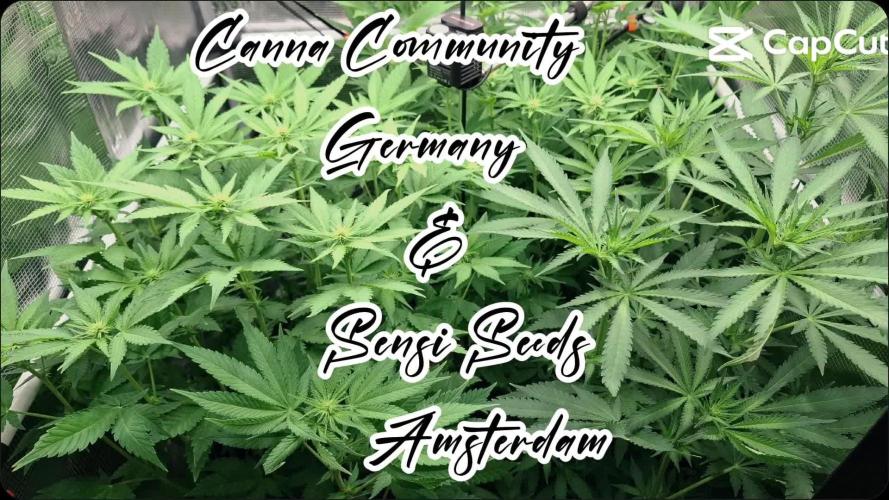
Ende Woche zwei der blüte und auf geht's in die dritte Woche. Sie entwickelt sich prächtig !!!


Likes
32
Share


@AsNoriu
Follow
Day 1. Ohh , what a long and painful attempt it was.
First seed - failed root
Second seed - I was impatient and dig her out, needed like 24 hours more, never made it, had root
Third seed - made it, but I started working and in the morning made a football of her ... died.
Forth seed - maybe will make it, brown start, could be Growing root up, covered with extra soil ... Will wait....
Have 5th seed soaked too ;)))
Later Day 1. She is out !!!! November 24 is first day.
Happy Growing !!!

Likes
2
Share

@Growfather1
Follow
Hello everyone.
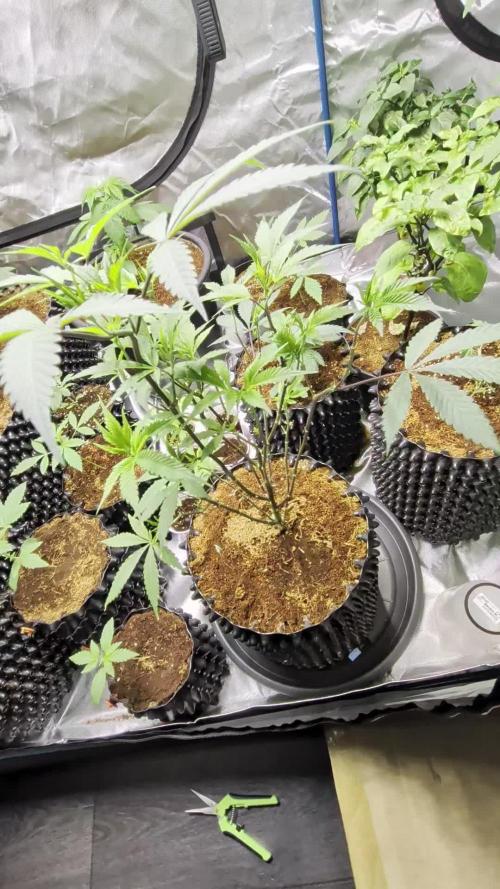
My MAC 1 F 1 hybrid clones are now entering week 6 of their vegetative stage.
I just finished defoliating them and topped them again today.Temperatures today are on the higher side at 27 degrees, and with the light running 24/7, it will drop to 24 degrees at night.
I'm feeding them on the lower side with 2 milliliters of Canna Coco A and B and 4 milliliters of Canna Rhizotonic.
They are ready to flower, but since I don't have a flower tent available for another 14 to 15 days, they will go into flower at week 8. I'm thinking this will make the pots too small and lead to underwatering, so I'll consider transplanting later.
At this rate, my pots are going to start charging me rent for all the extra space they think they deserve.
Thank you for stopping by, and have a nice day.
Best regard,
Growfather.

Likes
4
Share


@MoneyMorris
Follow
The plants have been flushing for almost a week now. Really starting to change colors. I can't wait to see how much I get from them.

Likes
5
Share


@Rizza78
Follow
2 weeks to flower in main tent. Red Hot May have had a little nute burn. Lighting is at 628 on Par meter. 78deg avg. Malt was accidentally super cropped. Healing from splitting her branch. Oozecake aka Judy is my prize now. She fought through some mold 1st week. Transplanted her with only 1 node. Then her 2nd transplant to 1 gallon she was stunted for a week.

Likes
12
Share


@NorthernChemist
Follow
May 28: Excited to start some new varieties for the 2022 outdoor season! Started seed indoor May 8th under Fluence LED and transplanted outdoor to farm garden May 24th. Watered transplant and covered with plastic house to protect from wind and sun until seedlings are hardened off.
Likes
3
Share


@CanarianGrow92
Follow
Week 5 already, thats why they call it fastbuds... In no time its harvest time! We had some bugs (trips) running around, i think i took them from outside as i was working on my garden, my outdoor plant is also affected, that happens for being a dirty old man 🤦🤷 but not much we can do now, i tried to clean the leaves a bit and remove some, but i think its better to harvest and clean the room as i dont eant any pesticides on the buds, but for the rest quite ok, we gave aome extra pk and bloom this week so lets see how the plants do next weeks 😁
Likes
21
Share


@GODSGIFT_2005_JM
Follow
🍼Greenhouse Feeding BioGrow
⛺️MARSHYDRO
The ⛺️ has a small door 🚪 on the sides which is useful for mid section groom room work. 🤩
☀️ by VIPARSPECTRA (models: P2000 & XS 2000)

Likes
19
Share


@Nofeckingclue79
Follow
Not a lot to say apart from both plants going a ok and humidity is where I want it now so hopefully I will be having a decent first crop of biscotti weed too smoke for my medicinal purposes i.e glaucoma he he ha ha, counting the days I can smoke my first grow🤞🙏😄💯


Likes
41
Share


@TerpTurtle
Follow
-Set up a 4x4 with the mars hydro FC6500 and planning to do a more hands off grow style the first run with clones in auto pots
-Swapped my older model AC Infiniti T4 exhaust with the cloudline T6 equipped with the new controller 69 for complete grow automation.
-Ordered the adapter to connect my HLG 350R with the controller 69 allowing automated light control dim switches between RH & temperature and sunrise/sunset effect.
-Flipping to flower
-Heavy selective defoliation /start lollipop cleanup
-Foliar fed

Likes
15
Share


@Messypies
Follow
Auto cinderella jack - Amazing week of growth. There are new nodes exploding from everywhere and its not showing signs of slowing down. They are currently loving the organic nutes and have started showing signs of flowering.
Auto critical cheese - this plant has shot up recently. It was planted a week later that the ACJ but is growing some seriously fat fan leaves. Should be a nice yeilder.
Peanut butter cookies - this girl is looking pretty sorry for herself. I am intentionally trying to keep her as small as possible so that I can get the autos out before flipping into flower but she is gonna be a beast. Will transplant into a final pot in the next day or so.

