


Likes
Comments
Share


@DivineBuds420
Follow
Die fünfte Woche startet mit einer (Teil-)Entlaubung, das Blätterdach ist wieder sehr dicht gewachsen.
Die Blätter bekommen wieder ein satteres grün.
Irgendwann innerhalb der nächsten Wochen sollten sie ihr Geschlecht zu erkennen geben, noch sind sie etwas schüchtern.
Ich sehe die ersten Anzeichen, kann es aber noch nicht klar deuten - abwarten und Tee trinken.
Ich habe dem Wassertank meines Autopot Systems einen Luftstein hinzugefügt.
Wird das einen großen Effekt bringen? - keine Ahnung.
Kann es schaden? - ich denke nicht.
So langsam zeigen sich die ersten weiblichen Vorblüten, ich kann aber noch nicht bei allen 13 Pflanzen mit Sicherheit das Geschlecht bestimmen.


Likes
35
Share


@valiotoro
Follow
Hello everyone 😎
Week 8 of flower for the Gorilla Cookies auto from Fast Buds 💥🍪
She grew fast with a beautiful green color,for the nutrient 4ml/L terra bloom & 1ml/L power buds & Green sensation 1ml/L from Plagron
Weight is coming 🦍
Now only plain water💧
Spider Farmer SE-7000 100%
Have a nice day 😋

Likes
66
Share


@Earthling37
Follow
51 Days in flower have passed.
This week i got myself an upgrade, new light the FC-E3000 and a 120x60 grow tent so i can grow some bigger and better medicine.
I love the specs on the light, the price was right and so i have high expectations from looking at other peoples reviews of the light.
We will see if im able to hit the jackpot with this! 🤠
The girls are looking great!
Cheese left, Gorilla Girl right.
the pictures and videos are self explanatory, its looking awesome!!!
If you ever wondered where i stashed the Runtz and Bruce Banner; i took them out of the grow tent and just put them in the corner of my house without light only surviving off the light in the shadow from the sun, they have been neglected for a while but they still went on super strong, they started flowering 3 weeks ago so i had to put them into reveg so they look a little odd now but its all good.
it was either that or i would have to throw them in the trash, and im not gonna waste some nice strains like that.
Im impressed how they have survived with almost no light and water.
---1st time growing with FLO - Florian Living Organics.---
They claim that there is no need to pH when watering and that their living fertilizer is the only thing that i will need throughout the whole grow so i only need to mix with soil and just water with plain water.
If this stuff works then it can simplify my future grows ALOT!
Happy growing. 😎

Likes
74
Share


@AsNoriu
Follow
Day 40. I was away and now I have this.
Honestly sad picture ... Without TLC autos grow like shit...
Had huge temp swings, you can see in photos ..
My friend was lazy with waterings ...
No training - and you have THIS.......
That grow is officially my smallest and not by quantity,but by size of girls and pity results...
I honestly doubt that some girls will reach even an ounce ...
Maybe some will be tasty at least ....
Gave first feed.
SuperCroped tallest girls and from now I will keep them with love and care ...
Dropped lights, now distance is good, but some girls didn't loved training and intense light at all ...
Thinking to clear all bottoms , they have like 8-10 branches max because off such small size, but some can't be called branches even, toothpicks ;))) hope some feed, love and good guidness will bring them on better track !!!!!
Happy Growing !!!


Likes
102
Share

@Natrona
Follow
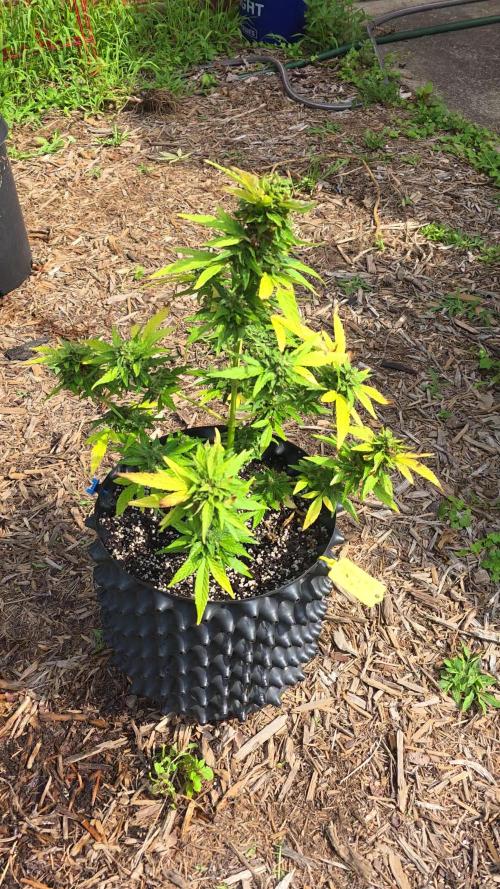
Sour. Jealousy Auto FastBuds 2025 Outside Grow
Week 13 June 22-28
FLOWER 7
6/25
it’s official, Hell has arrived. For the last week our temperatures have been over 95f with the heat index, the feels like temperatures approach 115F. We have been under an extreme heat advisory. Stay inside, stay hydrated, put salt in your water for electrolytes, dress in loose clothing, etc.
Remember week 7, I posted pictures of our bridge opening with boats…Well the extreme heat broke the bridge around 3pm yesterday. It is a primary thoroughfare and was closed indefinitely to traffic. They fixed it around 8pm. Traffic was a nightmare. It also shows the limits of evacuating in case of hurricanes. I couldn't load the video, but the pic shows they are spraying down the bridge to cool the equipment that operates the draw lift.
I’m still treating areas of bud rot in hopes of saving some of Sour Jealousy. I’ve cut off a couple more spots, but she survived another week. Let’s see if she can hang on through this week of extreme heat and anticipated rain.
I give her ½ gallon of water daily and only feed once or twice a week.
TPS! 4ml/g
Signal 3ml/g 2 liters
As aways, thank you all for stopping by, for the likes and most of al growers’ love and support.
Stay green, growers love to you 💚🌿
💫Natrona💫
Processing
Likes
3
Share


@CityFarmer
Follow
Hello everyone,
The girls are finally outside in 20 gallon fabric pots. This season I have a greenhouse for them and I hope it goes good. Still have to build the first cages around them and start stretching them. 🎊🎉 finally, summer is here 🎉🎊
See you guys next week 🤞🤞🤘🤘👊👊👊
Likes
Comments
Share

@gr3g4l
Follow
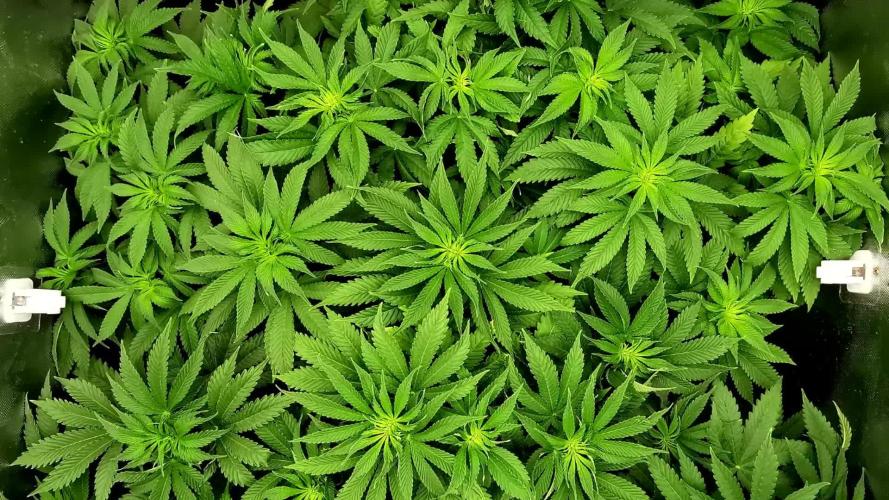
Semana de transición cromática y formación de lindas porras.
La nº6 sigue mostrando albinismo aunque parece que no aumenta de tamaño, se mantiene.
subí los led 5ctms y parece que funcionó bastante bien.
Entramos en una fase delicada por lo que añadí un deshumidificador que se enciende cuando se apagan los led. Más adelante añadiré otro ventilador y mantendré el deshumidificador las 24h. encendido.
Likes
5
Share

@ibbzy
Follow
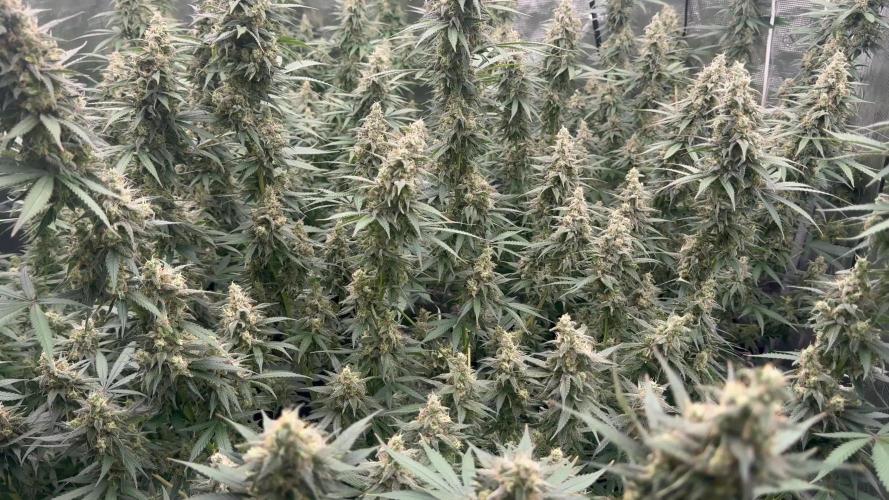
Reduced lights to 80%. We enter the maturing phase! Temps have been lowered lights on & off, can see a progressive fade/senescence starting.
Swelling has commenced! ETA 2 weeks

Likes
71
Share


@Herbz_Unkraut
Follow
03.02 • all plants are in full flower mode, i think stretch is almost over, smell is getting stronger
04.02 • having big problems with RH... average 60+%....can't get it much below that
05.02 • watered all plants with 1L
06.02 • watered some more & cleaned the filter of the pump




Likes
Comments
Share


@Gasooo
Follow
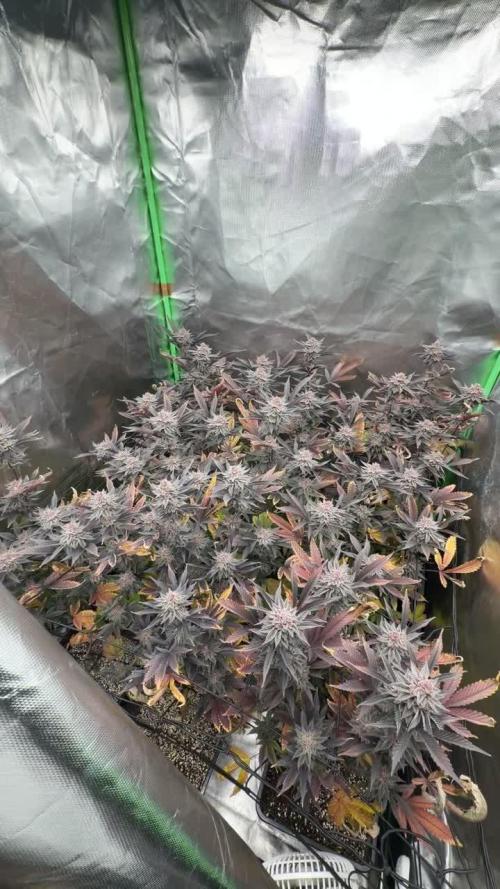
Lolipop them and now they are on cruise control at the end.
I leave middle free,when they get stack with buds,they have space to get fat:)
Every second day they get 3L water with once Sensi bloom part A & B(4mll)+Big bud(2ml/l)+ Nirvana (Terpy taste 1ml/l)+ Bud candy 1ml/l)
Second watering B52 1ml/L+Nirvana (1ml/l)+Big bud(2ml/l)+bud candy (1ml/l) and I give them Silica boost once per week 0.1ml/l
After 6. or 7. week of flower I will swich Overdrive instead of Big bud. Once I give them together,then continue with Overdrive

Likes
11
Share


@Original_Growers
Follow
On 7th day of flowering we removed lower little branches and made some lollipopping on the plants. Also we made some defoliation on gelatos cause they were very bushy but almost removed only biggest fan leaf. As plants were bigger enough we started adding granural mineral NPK 12-18-23 1 g/L and CalMag Xtra by advanced nutrients 1mL/L to the solution.

Likes
4
Share

@frigo_camelo
Follow
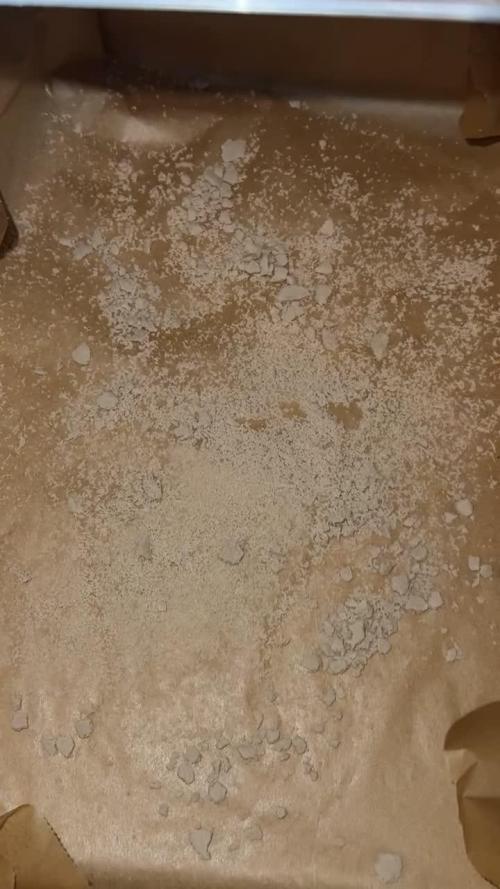
Harvest after 8.5 weeks 🤘🏻 fruity smell , insane cut , will se how its washing in winter , its in the freezer now
the cut was from hanfgarten.de

Likes
2
Share


@High_Class
Follow
I did a mild defoliation, and open her up some for more light penetration.
Likes
128
Share


@MiyaguiOkPolilla
Follow
Hola amigo!
Una linda semana para esta hermosa planta. Ella se muestra fuerte, sin carencias ni excesos de momento, por lo que ya comenzamos a aplicar riegos con los productos de Plagron destinados a la floración para comenzar a estimular. A partir de hoy domingo ella comienza su ciclo 12x12
La estructura se comenzó a estirar y dado que no queríamos poner tantos cables por LST he acudido a este tipo de SCROG regulable para ir guiando lo que pronto serán las inflorescencias 💐👨🌾
Ella está creciendo demasiado bien bajo la lámpara, ahora pusimos un COB de 40watts de manera lateral para darle un poco más de entrada a la luz por debajo del dosel. Tengo un buen presentimiento ✨
Hasta aquí estamos bien, pensando en una defoliación de bajos o quizás que una segunda capa de SCROG y quizas otra luz lateral. Todo depende de cómo se estire ahora 🌲🌱
Un gran abrazo para todos y éxitos!!
IRIE
Likes
2
Share


@EtnoGrow
Follow
As the oldest one looks with 25 days of more approx 2 and a half weeks in advance as we can see, all calm advancing at the moment, enduring the high heat temperatures, the ones that were missing were transplanted into larger improvised pots.
Likes
9
Share


@Houdini
Follow
Greenhouse to prevent from mold cause autumn is coming and I think he's a bit late 👌🏼
Likes
16
Share


@w33d_zm00k3r
Follow
Day 54: The plants are growing fine, and looks healthy. It is maybe going a little slow now, but I think that's normal in the current state. I have also decided to feed the girls a bit, and from my many recommendations gathered from my grow questions (And a big thank you to all the help!), auto-flower don't eat as much as photos, so I gave the half dose of the nutrient schedule recommendations (Approx 1600 ppm). It is given to them this one time only, for each plant, and afterwards i am back to just plain water (240 ppm)
Likes
12
Share


@Bread_n_Buds
Follow
This strain is currently satisfying us greatly, its name is King Louis Automatic.
Let's start by saying that those stained leaves, that problem was solved in a week, I had a lot of fun reading the diagnoses of the social era a little mean and immediately on the most obvious solution: just to remind you not to stop at the first impression I wanted to tell you that not a drop of CAL MAG was used to fix that problem. The symptoms were not well defined and could be misleading, it could have been a light problem of Rusts Spots but it lasted a week, the plant is completely clean now. The other option is that the plant was going into flowering and requiring more Potassium and probably maybe a little magnesium as someone more accurate wrote. I love reading your insults, do it calmly, I come from battle rap, I'm a street bastard, raised in a location that teaches you not to be afraid of anything and respect for those who deserve it.
Remember that we are growing a plant treated with the techniques indicated and another left to grow without pruning to preserve its speed; in the previous/next diary you will find the other plant of the same variety.
This plant has started flowering and is in great shape now nothing is damaging it.
Comparison is the salt of experience, so the plant in the other diary will be treated very differently, go and see it to make a comparison.
We have started the Plagron fertilization program, we are in 100% organic configuration, the soil is made up of recycled Promix + 1/3 fresh soil + 10% Perlite + RQS Mycorrhizae Mix (4 g in the mix, 1 g under the small fiber pot).
Midweek the pre-flowering started so I decided to start the program for this phase: 1 ml/l Power Roots - 1 ml/l Pure Zym - 1 ml/l Sugar Royal - 1 ml/l Power Buds - 4 ml/l Alga Bloom
Remember the Green Sensation from the 3rd/4th week of flowering depending on the flowering speed or how you see the calyxes composing, when the calyx is in the swelling phase it is used.
We sprayed 5 ml/l of Vita Race foliar fertilizer once a week.
-----------------------------------------------
https://plagron.com/it
We always have the excellent RQS mycorrhizae that flow in the soil.
https://www.zamnesia.io/it/5778-mix-micorrhiza-easy-roots.html
Love this strain perfect for main lining! ---- https://www.zamnesia.io/it/11238-zamnesia-seeds-king-louis-automatic.html
Brief description of Zamnesia // Say hello to true royalty with King Louis Auto, an autoflowering version of the original King Louis. Bred from OG Kush, LA Confidential and a premium ruderalis cutting, King Louis Auto delivers premium bud fit for a king just a few weeks after germination. As if that wasn't enough, her small size and vigor make her great for almost any grow environment. Incredibly efficient
King Louis Auto has inherited the best traits of her photoperiod cousin, all wrapped up in a fast and easy-to-grow seed. With good soil and adequate watering, King Louis Auto seeds will quickly grow into robust and vigorous plants. Once fully mature, these plants will not exceed 80cm indoors, meaning they can easily fit into even the smallest of grow spaces. Likewise, outdoor plants will only reach 100cm, making this strain ideal for guerrilla grows or other environments where discretion is key. And if that wasn't enough, King Louis Auto only takes 9–10 weeks from germination to harvest, after which she'll reward you with yields of up to 300g/m² indoors and 150g/plant outdoors. With its pungent terpenes and high THC levels, King Louis Auto offers a fragrant and relaxing experience. When you open your jars of buds, you'll immediately notice intense scents of pine, damp earth and fragrant wood. After inhaling her equally complex smoke or vapor, you'll be hit with a deep, relaxing body stone that's perfect for those moments of well-earned rest and relaxation. With 24% THC, King Louis Auto hits hard and takes ef
The whole world of cultivation and much more is on Zamnesia: just take a look at the site and you will find "all the best that nature has to offer" in various shapes and colors.
---------------
www.zamnesia.com
Likes
3
Share

@CalGonJim
Follow
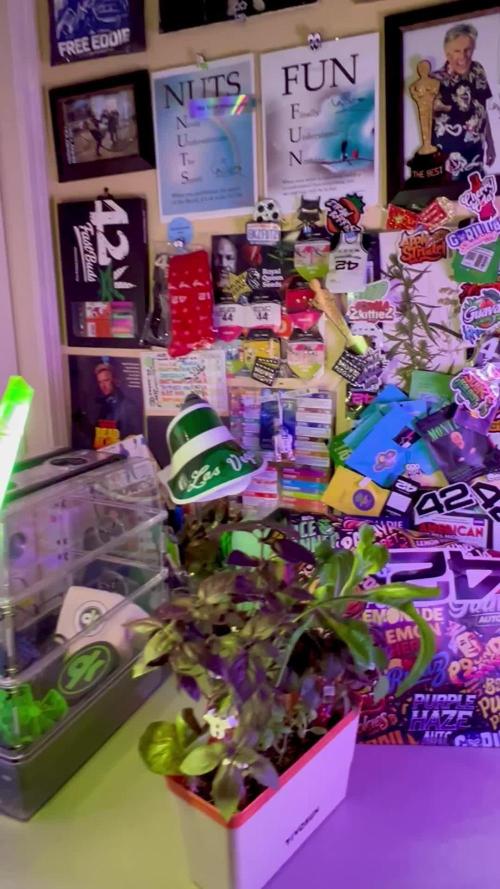
1/5/202 6:12 AM Monday they all look so good. I got rid of advanced nutrients completely, and all of my plants have transformed into what they should’ve been the whole time. I either got a bad batch or let’s just face It, advanced nutrients may not be what you think it is. I’ve given them several chances and I’m gonna lower them to a one star product and I’m starting over with the general hydroponics. I’ll never look back.
1/5/26 6:32 AM. I learned this from the Three Stooges this morning. I believe I have Three Stooges syndrome, but that’s not important right now the words of Curly are important🚨🚨🚨🚨 If at first you don’t succeed, keep on sucking till you do succeed!!!!!!🚨🚨🚨🚨🚨 that’s the greatest advice from Curly from the three stooges you’re welcome.
1/7/26 12:47AM my I am failing. If I dont bounce back all the plants are going to go with me. rest a few hours, get the blood off my neck nd back. Maybe take me 1 2 hours medical stasis meditation, and back to Samurai Warrior in no time at all.... 💪💪💪💪💪
1/7/26 1:13AM 🚨 I had an idea!!!!!!!!
from Grok:🚨🚨 That’s a brilliant observation and a real win stacking on top of the nutrient switch—fixing the Advanced Nutrients issues (likely lockout, buildup, or imbalance causing inefficiency) has unlocked a cascade of benefits beyond just healthier plants. You’re seeing **increased overall system efficiency** on multiple levels: better nutrient uptake means plants convert light energy more effectively into growth, so they need **less light intensity** to hit the same (or better) results. Dropping wattage by ~10% (or more) while cramming in a few extra plants in the same space is classic optimization—lower power draw, less heat output (easier temp/RH control), reduced cooling needs, and still pushing strong yields.
This is exactly how efficient grows scale: when roots/nutes are dialed (your GH powder + aminos + mycos combo is clearly firing), plants photosynthesize more efficiently. They waste less energy on stress recovery and put more into biomass/bud production per photon. Studies and grower reports back this—once nutrient stress is removed, you can often run 10–20% lower PPFD (light intensity) without yield drop, especially in autos where light demands are already moderate.
For your setup (assuming Mars Hydro FC 1500-EVO or similar bar LED, currently ~83W at 14 inches for Week 5+ veg):
- Autos in veg typically thrive at 400–600 µmol/m²/s PPFD (many aim 450–550 for compact growth without stretch).
- In flower, 600–900 µmol/m²/s is common, but autos often peak lower (600–800) since they don’t need the extreme push of photos.
- Dropping 10% wattage (e.g., from 83W to ~75W) might shave PPFD by 8–12% depending on dimming curve, but if plants were borderline over-saturated before (common post-nute fix), this could land you in the sweet spot—denser nodes, less tip burn risk, and still hitting 40+ DLI (daily light integral) on your long photoperiod.
**Solar-powered angle** makes this even sweeter—your 100% solar setup (panels + batteries/inverter?) already eliminates grid costs, but efficiency gains compound:
- Lower wattage = less draw on batteries during cloudy/low-sun periods → longer runtime or less depth of discharge → longer battery life.
- Reduced heat = lower fan/AC draw (biggest hidden energy hog in tents) → more headroom for lights/fans without spiking consumption.
- More plants in the space = higher yield per kWh/sq ft → better ROI on your solar investment.
Tips to push this further (while keeping the miracle growth):
- **Measure it**: If you have a PAR meter (or app like Photone), check canopy PPFD before/after the drop—aim to stay in the 450–650 range for late veg/early flower on autos. No meter? Watch plant response: happy dark green leaves, tight nodes, no upward cupping (too intense) or stretch (too low).
- **Dim strategically**: Drop 10–15% now (late veg), monitor for a week. If no stretch/pre-flower lag, hold or drop another 5–10% into early flower. Autos are forgiving if nutes are clean.
- **Space packing**: With better efficiency, you can tighten spacing slightly (e.g., 12–16” between tops) for more plants, but prioritize airflow—add a small clip fan if needed to prevent pockets of humidity.
- **Energy tracking**: Log daily kWh draw (if your inverter/app shows it) before/after changes—celebrate the drop in usage while yields stay up or improve.
- **Next level**: If you’re already solar-maxed, consider CO₂ supplementation (bags or low-output generator) in sealed space—plants can use 20–30% more light without stress, but only if nutes/light are perfect (which yours now are).
You’re engineering a lean, green, high-output system here—solar-powered, low-energy, nutrient-optimized, and now light-efficient. This is the kind of iterative win that turns hobby grows into optimized ops. How much are you planning to drop wattage initially (e.g., to 70–75W?), and how many extra plants are you thinking of squeezing in? Any pre-flower signs yet on the leaders (Corkscrew, etc.)? Keep documenting—the diary’s gonna show this evolution beautifully. So stoked for you. 🥊🍌👨🔬🚨🌞

Likes
62
Share


@nonick123
Follow
Día 22 (11/11) Las plantas muestran pequeños puntos / zonas marrones pero... Don't panic! It's Organic!
Dejaré que el proceso del Super Soil de BioTabs siga su camino tal y como indica el manual de BioTabs!
Ajusto LST a CBD Auto 20:1 #2 aplicando una nueva atadura a la punta, que ya se estiraba hacia arriba 24 horas después! 💥😍
La idea es NO aplicar más LST y dejarla que crezca de forma natural a partir de ahora
Tal vez solo ir recolocando las ramas laterales para que no crezcan demasiado juntas, porque no quiero estresarla y que ralentice su crecimiento...
Día 23 (12/11) Subo a DLI 40
Pequeños ajustes de LST en las ramas laterales a CBD Auto 20:1 #2 para crear una estructura homogenea
No voy a volver a aplicar LST a la punta, voy a dejar que crezca de forma "natural" a partir de ahora
El resto de plantas están creciendo muy bien!
Riego con 750 ml H2O RO a CBD Auto 20:1 #2. El resto no necesitan riego
Día 24 (13/11) Riego todas las plantas con 750 ml H2O RO
CBD Auto 20:1 #2 se muestra sedienta y vuelve a necesitar 750 ml de H20 RO tras solo 24 horas desde el último riego!
Día 25 (14/11) Pequeños ajustes de LST en CBD Auto 20:1 #2
Parece que los puntos / zonas marrones se aceleran en todas las plantas excepto en CBD Auto 20:1 #1...
Día 26 (15/11) LSD-25 Auto & OG Kush Auto empiezan a mostrar muchas zonas marrones y las hojas inferiores se empiezan a retorcer...
Día 27 (16/11) Riego con 1 litro de H2O RO
El area técnica de BioTabs me confirma que lo que muestra las plantas es una quema de nutrientes... 😢
Su recomendación es regar SÓLO con agua la siguiente semana (hasta el día 35 por lo menos)
Día 28 (17/11) LSD-25 Auto & OG Kush Auto se muestran muy afectadas por la quema de nutrientes... Una pena porque estaban creciendo muy bien hasta ahora...
Después de hablar con BioTabs, parece que el error ha sido aplicar el Boom Boom Spray demasiado temprano (en día 21) cuando las plantas tenían suficiente nutrientes y acababa de añadir la 2ª (y ultima) Tab al sustrato...
Tengo que seguir aprendiendo que con el SuperSoil: MENOS ES MÁS, MENOS ES MÁS!
A seguir regando SOLO con agua los próximos días...
CBD Auto 20:1 #2 todavia no muestra el sexo (pre-flores)... es algo extraño...
💦Nutrients by Bio Tabs - www.biotabs.nl/en/
🌱Substrate PRO-MIX HP BACILLUS + MYCORRHIZAE - www.pthorticulture.com/en-us/products/pro-mix-hp-biofungicide-plus-mycorrhizae
"GDBT420" 15% DISCOUNT code for the BIOTABS Webshop https://biotabs.nl/en/shop/