


Likes
Comments
Share


@Ninjabuds
Follow
The Blackberry Moon Rocks are looking promising. One of them is growing into this beautiful little bush, and I think it's almost ready to harvest. The other plant is stacking up buds, but I'm thinking it's still a couple of weeks away.
The past few weeks have been so beautiful, watching the plants grow and change. It's amazing how something so small and fragile can turn into something so strong and vibrant. Now that they're getting ready to bloom, it feels a little bittersweet. I'm so excited to see the finished product, but I'll definitely miss having them around while they're growing.

Likes
8
Share


@Professor_Daank
Follow
pH Target 5.9 - 6.2
EC Target 800-1000
Going really well. I put the second net up and it's alowing them to breathe in their own space. I really enjoy these nets now that I have had a chance to use them. Less LST, more nets for me!

Likes
33
Share


@XG_Jack
Follow
Trichs are starting to change to Amber about 10% giving it a flush for a few days then 24 hours darkness before chop. Very happy with the bud structure here. Very nice purple and red fade

Likes
10
Share


@TiRobotProds
Follow
J'ai pratiquer sur elles la défoliation extrême qui consiste a enlevé les grosse feuilles nourricière pour permettre une meilleure penétration de la lumière et de la circulation de l'air voyons ce que cela va donner au prochain épisode growers.

Likes
2
Share


@Ultraviolet_
Follow
Topped once, turned off IR @ nights, slowed vertical growth back down, and took off both of the very lowest internodes on each plant.
Eisenia fetida
Stratiolaelaps scimitus
Armadillidium vulgare
Red wigglers (Eisenia fetida) are highly beneficial. They are considered an ideal choice for "no-till" or container-based organic growing because they live in the upper layers of soil, feeding on organic mulch rather than the plant's root system. Red wigglers accelerate the breakdown of organic amendments and produce high-quality, nutrient-dense worm castings directly in the root zone. Clover is another exceptional component of an organic rhizosphere, offering a sustainable, self-sustaining alternative to synthetic nitrogen fertilizers produced via the energy-intensive Haber-Bosch process. By forming a symbiotic relationship with Rhizobia bacteria, clover converts atmospheric nitrogen N2 into ammonium NH4, providing a steady, slow-release nutrient source that enhances soil health and reduces environmental impacts. Red clover offers superior nitrogen fixation and biomass production compared to white or yellow clover, making it the premier choice for maximum soil vitality, particularly for improving soil structure and providing a high-volume nitrogen credit for subsequent crops.
If it is fully functional and efficient soil, the rhizophagy cycle is superior long-term than any synthetic delivery when it comes to preventing deficiencies, not because it's "better," per se. The medium will require a very high CEC to make it to harvest without re-fertilization. The rhizosphere acts as a dynamic, interactive exchange where plants and soil microbes trade resources based on immediate needs. When a plant lacks a specific nutrient, it changes its physiology and releases specialized chemical cocktails—root exudates—into the surrounding soil. These exudates, which include sugars, amino acids, and organic acids, serve as a "shopping list" to attract specific microorganisms, which in turn return higher levels of desired nutrients. There is nothing in comparison when using synthetic delivery, which can cause plants to stop producing exudates, effectively "starving" the beneficial soil life, over time turning the soil barren and void of microbial life. Responsible use, applying the right amount at the right time, can minimize these negative effects. Relying solely on synthetic fertilizers without replenishing organic matter is what typically leads to exhausted soil. The use of synthetic fertilizers can utilize the Cation Exchange Capacity (CEC) of the soil, but without a robust rhizosphere and active microorganisms, the efficiency of this process is significantly reduced. This makes synthetic growing more difficult to prevent deficiencies overall compared to an efficient organic living soil with a robust rhizophagy cycle, as there is no "one size, fits all" when it comes to different nutrient profiles of strains/genetics, making it trickier to "guess" and prevent creeping deficiencies.
CEC does not contribute towards EC. Add more CEC using biochar, problem solved. If you keep pH between 6.3 and 6.7, hydrogen is exudated to cycle the medium's CEC for its needs. Keeping the pH between 6.3 and 6.7 creates an environment where plants release H+ to displace positively charged nutrients (like Ca2+, Mg2+, K+ held on soil particles or within artificial media this cycle through nutrients via the medium's Cation Exchange Capacity (CEC)
Microorganisms generate a stable potential of approximately 0.5 V EC. The rhizosphere creates its own food, similarly to chelation, using 1000's of varying combinations to create its own food.
Start to finish, just add water. Eventually, more materials will need to be added at the beginning of each new grow, but very attainable to go from seed to harvest without ever fertilizing.
ATP is important when it comes to biomass accumulation. Cellular root respiration and cellular respiration are essentially the same biological process, the breakdown of glucose to create usable energy (ATP) in the presence of oxygen, just taking place in different parts of the plant. Synthetic (salt-based) grows have significantly lower levels of total rhizosphere respiration, often referred to as root-zone activity, compared to organic living soil grows. While the plant roots themselves may respire in both systems, the surrounding soil ecosystem in a living soil setup is vastly more active, teeming with bacteria, fungi, and beneficial microorganisms.
2 pools of ATP, it won't double in growth buuuut, but improving root respiration by ensuring high oxygen in the soil is crucial. Good aeration ensures roots can fully utilize glucose to generate the ATP necessary for nutrient uptake, leading to healthier and more productive plants, even if growth isn't exactly doubled. The ATP created using root respiration is dedicated to rootzone growth; the ATP created using regular cellular respiration in a synthetic system would have to dedicate a lot of ATP to the roots when there is little or no root respiration. It's true that there is less of an initial ATP cost in breakdown when nutrients are already in their final form (synthetic), but you lose a solid chunk of ATP when the entire plant is reliant on cellular respiration alone; a large portion of ATP is dedicated to root zones for "forced" nutrient uptake rather than traded. Making it overall less efficient, even if the initial cost of breakdown is higher. Not sure if I butchered that but one can hope It makes sense.
Oxygen is of critical importance when growing in living soil compared to synthetic soil because it supports the metabolic needs of the microbial, fungal, and insect ecosystem, rather than just the root respiration required by the plant itself. While synthetic grows can survive in lower-oxygen environments with precise mineral feeding, living soil systems rely on aerobic microbes to decompose organic matter (microbial mineralization) to create plant-available nutrients, which is an oxygen-intensive process. While a specific fair percentage is difficult to guess, my experience points to a massive, compound difference between the two methods and the amount of oxygen required. All the ATP spared is used on more biomass, not only that, but the extra root respiration can achieve a much higher CO2 compensation point naturally than you could with synthetic and atmospheric CO2 alone.
As a plant grows faster and increases in size, its demand for nutrients to support that growth increases, requiring a higher rate of nutrient uptake. As plants enter phases of rapid vegetative/floral growth, their metabolic demand for nutrients increases exponentially. Without a robust buffer zone—whether in the soil (cation exchange capacity) or in a hydroponic reservoir—deficiencies will occur rapidly because the instantaneous demand for specific nutrients can quickly exceed the rate of supply.
A growing body of evidence suggests that organic living soil provides superior long-term soil health and environmental benefits compared to synthetic fertilizers, which are often criticized for promoting a cycle of dependency and degradation. While synthetic fertilizers offer short-term convenience and high yields, they often come at the expense of long-term soil health, sustainability, and increased corporate control over growers/ farmers. Organic living soil, while slower and requiring more care to establish, creates a sustainable, resilient, and, ultimately, more fertile environment.
We don't really grow; we facilitate energy conversions, and energy is just numbers. Because the universe works the same way today as it did yesterday, there is a single, fundamental mathematical quantity that remains constant. We call this quantity energy. You cannot put "energy" under a microscope. You observe matter and forces (like heat, motion, or light), but energy is just a scalar number calculated to help predict how these things will change and interact. When an object falls, or when a battery powers your phone, matter shifts and changes form. Through it all, the universe ensures the "total score" of the numbers remains exactly the same.
Once all water is removed, approximately 95% to 97% of a plant’s dry matter consists of carbon, oxygen, and hydrogen. These three elements form the structural backbone of all plants. NPK & all the rest 3-5%.
Indigenous Amazonians created, or at least significantly enhanced, the fertile, dark soil known as Terra Preta de Índio (Portuguese for "Indian Black Earth") by incorporating biochar and other organic materials into the soil. This anthropogenic (human-made) soil technique, which dates back roughly 2,500 to 8,000 years, allowed ancient civilizations to flourish in regions with naturally poor, acidic, and nutrient-poor tropical soils.

Likes
7
Share
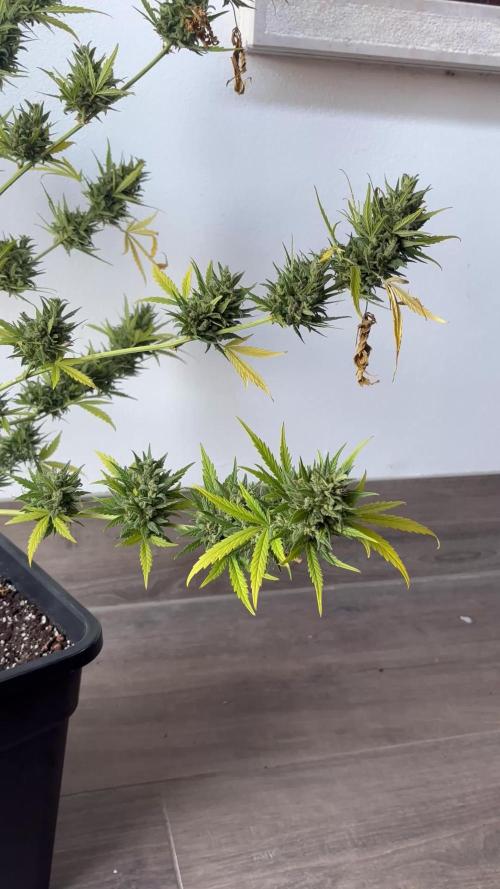

@Dagnele
Follow
Final Results & Conclusions – Harvest, Drying & Curing
The grow is finally complete, and it’s time to look at the results.
The main goal of this experiment was to compare natural growth vs LST on autoflowering plants, while also documenting two different trimming/drying approaches.
Final Dry Weight
Sour Jealousy Auto
* LST: 44.9 g
* Natural: 62.9 g
Banana Purple Punch Auto
* LST: 36.1 g
* Natural: 51.6 g
The results were surprisingly consistent across both strains. The naturally grown plants produced approximately 41% more flower than the LST plants on average, or, looking at it from the other direction, the LST plants produced around 29% less than their naturally grown counterparts.
This suggests that, at least in this small experiment, LST did not provide a yield advantage with these autoflowers. In fact, the naturally grown plants produced considerably more.
However, there are some important limitations. The sample size is extremely small, with only two plants per growing method. Individual phenotype and environmental variation can therefore have a significant impact on the results.
There was also an important difference in pot size: the naturally grown Sour Jealousy was grown in an 18 L pot, while the other three plants were grown in 14 L pots. From this grow, combined with my experience from previous years, I continue to see a relationship between available root space and overall plant development: more substrate seems to give the plant more room to develop.
The biggest advantage of LST was not yield, but plant structure and height control. The trained plants remained much shorter and more compact, making them considerably less conspicuous than the naturally grown plants.
Drying Comparison
I also experimented with two different trimming approaches.
The two LST plants were wet trimmed, while the two naturally grown plants were dry trimmed.
Throughout drying, I tried to maintain humidity between 55–65%. Temperature was unfortunately higher than ideal, staying around 26–28°C, as I didn’t have equipment to control it.
Despite the less-than-ideal temperature, the aromas coming from both groups are very promising. At this stage, both drying methods have produced flowers with excellent fragrances.
However, this comparison has an important limitation: because the LST plants were wet trimmed and the natural plants were dry trimmed, the two variables cannot be completely separated. Any differences in the final aroma or quality cannot be attributed exclusively to the drying method.
For that reason, I’ll wait until the curing process is further along before making any conclusions.
Final Thoughts
This experiment gave me some interesting empirical evidence about LST on autoflowers.
For my setup, natural growth clearly outperformed LST in terms of final weight, while LST offered a clear advantage in terms of plant size and canopy control.
The sample size is obviously too small to draw definitive conclusions, so I’d really like to hear from other growers who have compared LST vs natural growth on autoflowering plants, especially when using the same genetics, pot size and environmental conditions.
I’ll update this diary again in about a month, once the curing process is complete and I can compare the final aromas and tasting experience.
Likes
3
Share


@CaliJ
Follow
6 out of 8 plants in pre-flowering, i replaced my humidifier with the dehumidifier, very present smell when I open the tent, a little early like my last crop. ⚠️ Day 26: Green gelato is hermaphrodite, destruction of the Green gelato, burial of a northern light.


Likes
7
Share

@Organic473
Follow
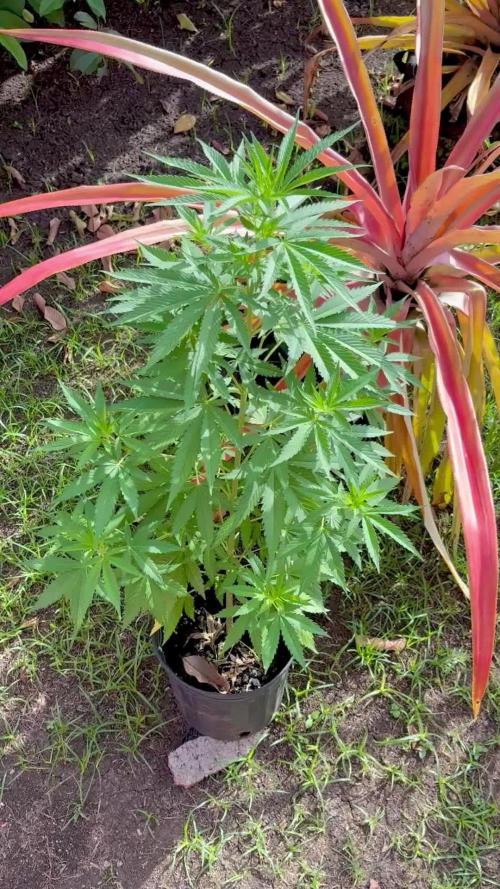
This girl is taking flight with her speed and height. Her branches are forming and soon would be transferred to a 5 gallon pot.

Likes
24
Share


@Horticulturehobbyists
Follow
Today is day 23 of flower. So I've been chasing a minor P-K deficiency. The plants are happy and healthy and are just feeding heavy at the moment. Well over and above any recommended servings with respect to the dry amendments and water soluble P-K inputs. As with any grow regardless of what you're using for inputs (organic amendments/salt based bottle feeding/crop salts/etc....) the recommended feed rates are never anything more than a baseline. So to remedy the deficiency I added the Flower 2 at 1.5 times the reccomended dosage (3 grams per liter of water) and a little over twice the dosage of Gaia Green 2-8-4 Power Bloom dry amendments (250ml per 7 gallon pot). I also fed a mung bean/barley seed sprout tea as well as a compost tea (2/3 of a cup of each seed). The feed rates will stay well above recommended servings for the Flower 2 but the 250ml addition of the 2-8-4 would be considered a large addition for a single serving so I will give the plants 5-7 days to see how they react to dry amendments before top amending again at any rate (you cant burn your plants with organic inputs but you can still suffer nutrient lockout so you need to be mindful and patient when feeding heavy.)
On day 19 of flower I did a large pruning/defoliation/lollipopping of the plants. Both from the top of the pot to the bottom of the first layer of trellis removing everything. I also cleaned the plants out from above the first layer of trellis netting to the top of the plant. As I waited to clean up the bottom third of the plants until my typical strip day in flower (day 18-21 depending on strain and flowering times, these are 9 week strains which is why the strip falls in the day 18-21 range, if they were 8 week finishers the leaf strip would take place somewhere between days 14-16). When running multiple layers of trellis netting it's best to prune/lollipop everything below the first layer of netting about 7-10 days before the flip. Odds are your lights wont penetrate that far down the plant so these areas of the plant typically only produce what's commonly known as larf. I'm running new lights so I decided I'd wait until the big strip I always do in flower. This was grower error. I know better and wont make this mistake again. Its unnecessary stress added during flower that could've been prevented. As I decided to wait to clean out the bottoms I didnt prune the plants as aggressively as I normally would (I adopted Grand Master Levels leaf strip practices years ago, check him out on IG or YouTube if you want to see what that looks like).
The week went smoothly with no major issues to report. The seasons are changing here so were getting rain, damp wet snow, and have very humid conditions outside. As a result this affects the atmosphere in my grow room but not enough to cause concern.
A little less than 6 weeks until the chop!

Likes
5
Share


@Happydays58
Follow
03/01 - Day 57
All the girls have their pistils changing colors, buds growing by the day, (B) has has very sweet aromas coming out, & (C) is more earthy and peppery.
Still losing some fan leaves here and there on (A) & (D) from the Cal/Mag & Phosphorus defiance but nothing like 2 weeks ago.
03/05 - Day 61
Enjoying the process and maintaining the environment. Buds on (B), (C), & (D) are starting to get heavy. Maybe some foxtails starting on (C)??
Likes
20
Share


@420DeepGrow
Follow
Gracias al equipo de Divine Seeds, Marshydro y XpertNutrients sin ellos esto no seria posible.
💐🍁Fractal:
La semilla de marihuana Fractal es una cepa especialmente psicodélica que Semillas Divinas desarrolló para experiencias esotéricas y místicas, meditación y creatividad. La potente y vívida Skunk#1 fue cruzada con una pegajosa Afghani Indica, y el resultado es ahora conocido como Fractal. Este exótico híbrido es resinoso, picante y productivo. La mejor opción para el cultivo comercial: un compromiso entre mayores rendimientos y maduración rápida.
En interiores se espera una altura de 1,70 m, en exteriores las plantas crecen hasta 2 m. Fractal se adapta a todo tipo de entorno de cultivo: cajas de cultivo, instalaciones hidropónicas o aeropónicas, plantaciones exteriores, balcones, terrazas e invernaderos. Para un mejor rendimiento se recomienda entrenar a las plantas de Fractal para ampliar su estructura y limitar su crecimiento vertical. Usar ScroG o SoG, LST, FIM o topping.
Fractal tiene una inmunidad inherente al moho y a las plagas de insectos, pero como sus colas son gruesas, proteja sus plantas del aire viciado. También durante las semanas de lluvia su plantación puede necesitar ser cubierta. Listo para la cosecha al aire libre en octubre. Grandes y densos cogollos.
Los cogollos de marihuana de la variedad Fractral huelen a hachís y algo a tierra, desprenden cedro y notas afrutadas al romperse. Mida su porción con cuidado: su potencia está por encima de la media. Con Fractal experimentas un apedreamiento general que te hace sentarte o frena tu movimiento. Perfecto para pasar una noche junto a una hoguera. Es mejor consumirlo por la noche.
🚀🌻 Consigue aquí tus semillas:
https://divineseeds.net/es/fractal-fem/
💡FC6500: Eficiencia líder en el mercado: la lámpara de cultivo LED FC-E6500, que ostenta un estatus líder en el mercado, es una solución rentable con un PPE de 2,8 µmol/J y un rendimiento máximo de 2,5 g/vatio. Ofrece un PPF alto de 2026 umol/S y es adecuada para una cobertura de vegetación de 1,50 m x 1,50 m y una cobertura de flores de 1,20 m x 1,20 m.
Iluminación versátil y uniforme.
https://marshydro.eu/products/mars-hydro-fc-e-6500-730w-commercial-led-grow-light/?gad_source=1&gclid=Cj0KCQjw1qO0BhDwARIsANfnkv9IIrYSbmJqz8PqpJOIyWwJfp5bc3SGJgUV68USLQ4tjmXDYwoBuAsaAue3EALw_wcB
🚥 MarsHydro ADLITE UV/IR/RED:
Para lograr un crecimiento óptimo de las plantas y maximizar los rendimientos es un arte simple que depende en gran medida de las condiciones ambientales adecuadas. Reconociendo las limitaciones de la iluminación natural y las soluciones de iluminación tradicionales para satisfacer estas necesidades únicas, lanzamos ADLITE. Estas luces especiales UV, IR y roja están diseñadas para llenar áreas del espectro, proporcionando las altas longitudes de onda que las plantas necesitan para un crecimiento y desarrollo óptimos.
Consigue aqui tu Adlite:
https://marshydro.eu/collections/adlite-supplemental-lights/
🏠 : Marshydro 1.50 x 1.50 x 1.80, carpa 100% estanca con ventanas laterales para llegar a todos los lugares durante el grow
https://marshydro.eu/products/diy-150x150x200cm-grow-tent-kit
🌬️💨 Marshydro 6inch + filtro carbon para evitar olores indeseables.
https://marshydro.eu/products/ifresh-smart-6inch-filter-kits/
🍣🍦🌴 Xpert Nutrients es una empresa especializada en la producción y comercialización de fertilizantes líquidos y tierras, que garantizan excelentes cosechas y un crecimiento activo para sus plantas durante todas las fases de cultivo.
Consigue aqui tus Nutrientes:
https://xpertnutrients.com/es/shop/
📆 Semana 6:
Debido a unos cortes en el suministro de luz, ellas han ralentizado algo su desarrollo.
Se siguen formando los cogollos aunque algo mas espigados de lo que me gustaría, algunas variedades han aguantado bastante bien este estres, lo que indica una buena genetica, entre ellas está esta variedad.
Continuo con las dosis de nutrientes recomendadas por el fabricante.
Potencia del foco: 100
Adlite: máximas horas.

Likes
12
Share


@brosef_b_baggin
Follow
Week 21: Decided to Flush the medium with pH tap water and reduce ppm to 850 in case of nutrient burn or toxicity.
Likes
5
Share


@TheGreenGroomer
Follow
Day 1, Week 4 of Flower – Things Are Getting Real
We’ve officially hit day 1 of week 4 in flower, and it’s starting to get real in here! Buds are growing fast, stacking up nicely, and the aromas are straight fire — it's getting stinky in the best way. The terps are really coming through now.
PPMs are sitting steady at around 1000, pH is hovering around 5.8, and everything’s been pretty dialed in on the feed side.
I do wish I had defoliated a lot more before flipping. Honestly, my whole training kind of went sideways when I switched to flower. I went a little too hard with the LST, and now I’ve got a jungle of leaves with loads of bud sites — way more than I expected. It looks like a big bushy mess up top with some nice buds, but quite a few lowers aren’t getting the light they need. I’ve said this before, but I won’t say it again — lesson learned.
Next round, I know exactly how I’m going to approach training, and I won’t be making the same mistakes. But all in all, things are still looking good. If everything keeps going as it is, I’m hoping to pull around 7 ounces of some solid, dank smoke

Likes
8
Share


@PollenSax
Follow
It's time to harvest the seedless plants.
The pigeons were very disapointed that there were no fem seeds to be had in theses first plants.
The seed mothers need another week to reach the 35 day from pollination mark. You can see seeds in a couple of the photos. They're already turning brown.
The plants are very hard, full and frosty!
They smell like sherbert, and they all look alike.
I'm very pleased:)
Time to get these cleaned up, chopped down, and hung up to dry!


Likes
16
Share

@LoopyTerps
Follow
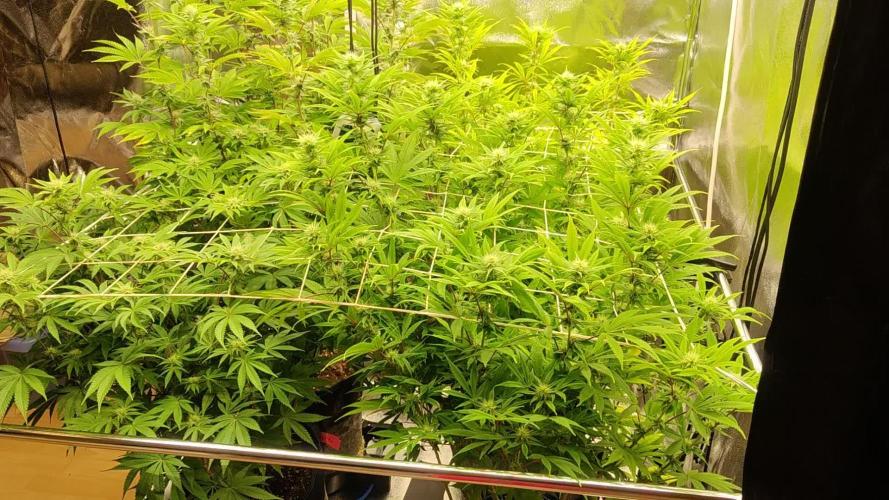
Everything going great beside the back right Original Oreoz which is very pale and looks either overfed or locked-out. I think this is due to poor genetics. She is still praying and growing buds so...
I cannot ajust the feed for differents plants since I use a single reservoir. That's one of the downsight of growing multiple strains on the autopot system.
First smell is here, very promising for the 2 tropics.
Getting ready for the bulking phase.
Happy growing !😊


Likes
Comments
Share

@Anon73
Follow
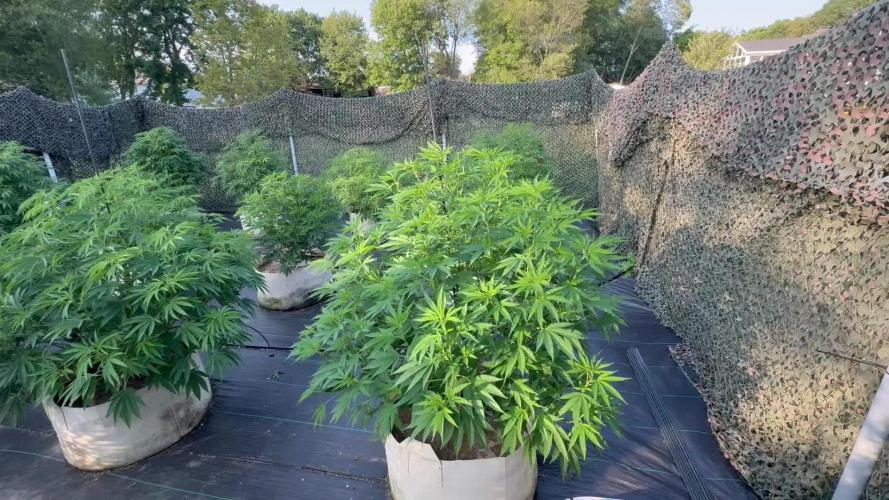
Still pinching out tops, clearing out wasteful inner growth points.
Growth is still very vigorous.

Likes
18
Share

@Northern_Ent
Follow
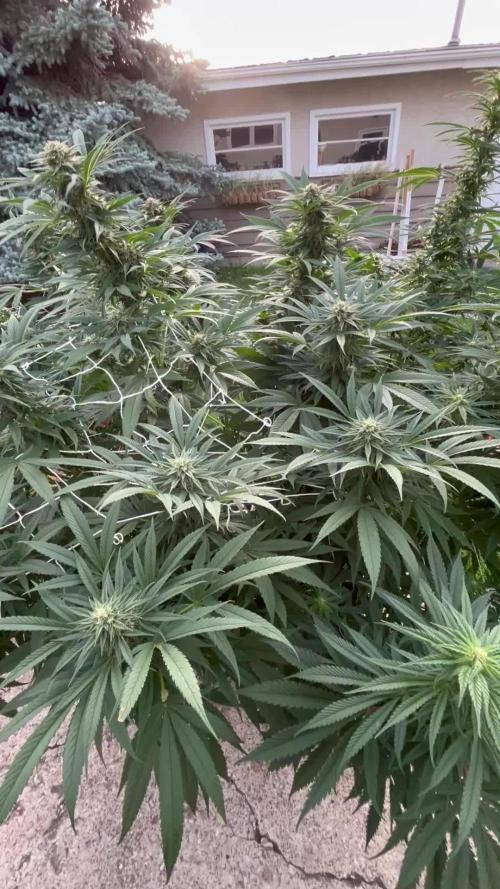
Aug 16: Sunday Punch EV is a strong plant and it will likely be my biggest yielder this year.
Have the UV lights going again today and the buds are looking great. Natural UV drops really fast here after mid-August so the UV lights should help them finish strong with higher potency.
