


Likes
Comments
Share


@Ninjabuds
Follow
My permanent marker plants are looking really interesting! The short and stocky one with the purple leaves is super vibrant. I love that pop of color against the green of the other plants. It's a little different from the taller plant, which has this really cool stacked-up look to it. I'm curious to see if those stacked-up leaves will change color too.
The past few weeks have been so beautiful, watching the plants grow and change. It's amazing how something so small and fragile can turn into something so strong and vibrant. Now that they're getting ready to bloom, it feels a little bittersweet. I'm so excited to see the finished product, but I'll definitely miss having them around while they're growing.

Likes
10
Share


@Willies_Organic_Gro
Follow
The very beginning of their third week of flower. Definitely starting to work on their bud development and the stretch is gonna slow down real soon. They're all doing really well and super healthy! Thanks for stopping by to see them! I'm sure they appreciate it! I sure as hell do!!!

Likes
43
Share


@Sabac
Follow
Semana 4 de flora están a full mis plantitas. Creciendo cada día más y más.
Sanitas.


Likes
16
Share


@DonKrika
Follow
Plants growing extremely well, the only problem I think I'm having is too many nutrients. Plant A is showing some strange signs. a few big fan leaves are becoming "crispy" I can see a bit of nutrient burn, but a minimal amount
I finally set up the drip system this week.
I started LST this week, I bent both plants pretty hard, they are almost parallel to the soil. On plant A I did super cropping by mistake, I was tieing a branch and I put too much force on the bend, but palnt didn't seem afected at all by this.
DAY 29 - Nutes
PH - 5.96
Solution Temp - 21.5
PPM-1600
Watering Volume per plant - 4L
DAY 32 - Water
PH - 6
Solution Temp - 21.2
PPM-560
Watering Volume per plant - 4L
Next week I will add the second ligh to the tent
Likes
12
Share


@Ieiogrow94
Follow
Eccoci qui...
Siamo quasi alla fine del cultivo, odore, resina e colore ci sono. Attendiamo solo la maturazione delle cime che richiederà 1/2 settimane....
NON VEDO L'ORAAAA...
Seguiranno aggiornamenti, grazie a tutti per il supporto🔥🌲❤️

Likes
4
Share


@Lazuli
Follow
Week8: today i defoliated for the last time now i let her go.
She gets 1000ppm flower nutrients
Ph 6.2
The strech is coming haha i have seen huge phenos of these


Likes
35
Share


@Chedderbob112
Follow
It was a roller coaster ride guys but I started with four harvested I earlier got two ounce quick dry wasent flushed properly but these ones hav been there a some nice buds here n a hopefully will get a decent seed harvest stoned @chedderbob112 s2340420 don’t hav dry weight bud av went for fullness plant
Likes
45
Share


@masterofsmeagol
Follow
8/21, 8/22 TOASTED TOFFY WAS TREATED WITH PLANT DOCTOR ON THE 22nd. It's been a few days of rainy dreary weather. This morning I went over and did some MORE defoliation on the toasted toffy trying to get all infected leaves off. I then used the rest of the k bicarb on the gmo in the middle. I haven't seen hardly any pm. So that seems to be working. However I don't want septoria to spread through my garden either. Hopfully the plant doctor will take care of the problem. If not I'll get something different. I can make a diy Dr. Zymes or I could just go to the store and buy something specific like trichodermia. The weather has been a fungus nirvana. The conditions couldn't have been anymore perfect for mold development. I'm super impressed with the k bicarb treating the pm. I took tons of pictures yesterday but I've been sick and couldn't upload them. I still need to sanitize and put my supports up. I'll keep this updated with what I'm doing.
UPDATE: AFTER UNCKES FUNERAL I WATERED THE SHERB PIE THAT I DIDNT LAST TIME AND THEN I FED. I DIDNT FEED THE TOASTED TOFFY DUE TO IT BEING TREATED WITH PLANT DOCTOR. EVERYTHING GOT A QRT THE 50GAL GOT MORE. TWO GALLONS TOTAL USED. I NOTÌCED SOME SLIGHT PM ON THE GMO IN THE MIDDLE. IT WOULD BE TIME TO TREAT AGAIN ANYWAY. I PLAN ON WATERING TOMORROW AND TREATING THIS PLANT AGAIN. IM HESITANT TO UsE PLANT DOCTOR (do to feeding tonight) RIGHT OFF SO ILL PROBABLY USE YHE K BICARD. IT WORKS GOOD. I SHOULDNT HAVE FED THAT PLANT SO I COULD APPLY THE PLANT DOCTOR INSTEAD. THAT SEEMS TO BE WORKING REALLY WELL. LAST TIME I USED IT WAS ON FUSARIUM AND THATS JUST A LOSING BATTLE. DID A QIICK VIDEO ILL UPLOAD TOMORROW.
8/23 I HAD A CRISIS SITUATION AND I FUCKED UP THE DIARY. I THINK I JUST DIDN'T RECORD WHAT I DID ON THIS DAY.
8/24 I checked the bags and they were heavy. I watered the sherb pie today as it missed the last watering. Everything but the toasted toffy got fed yesterday. I noticed some slight pm on the middle GMO that I've been treating with k bicarb. Just a couple leaves. Looks like a couple spots I missed. I was going to apply it again but I dodnt have time. I'll be back over soon and I'll treat it and do the defoliation needed. Maybe I'll even sanitize and get support up. Since I fed yesterday I don't want to use the plant doctor for a few more days. I'm thinking of treating everything with it. I need to read and see when the next application for toasted toffy is due. Things are really starting to flower. Once I get the work done I may add beastie bloom to my nute line up. I think I'll do another k-bicarb app on the plant with pm. It's doing a good job. Since the l bicarb I don't see any pm. I should've held off feeding it so I could've used plant doctor. I'm monitoring toasted toffy and if it keeps working good I'll treat everything preventatively.
WENT BACK OVER AROUND 11:30 BECAUSE IT HAD CLIMBED INTO THE UPPER 80'S. AS I SUSPECTED THE PLANTS NEEDED WATER. THEY COULDVE WAITED UNTIL TONIGHT BUT UNFORTUNATELY I HAvE TO DO THINGS WHEN IM ABLE TOO. EVERYTHING GOT A GALLON EXCEPT THE GMO IN THE MIDDLE IN THE 30, THAT GOT 1.5. SHERB PIE GOT IT YESTERDAY AND ISNT FLOWERING AS VIGEROUS SO IT USES LESS WATER. BEFORE WATERING I WENT THROUGH THE ENTIRE GARDEN AND DEFOLIATED WHAT NEEDED TO BE DEFOLIATED. I HAVE A FEW SMALL LIMBS I SHOULD PRUNE BUT THAT STUFF MAKES GOOD HASH MATERIAL AND ACTUALLY ADDS UP. I NOTICED A LITTLE BIT OF PM ON THE GMO I TREATED. Just a couple spots on a couple leaves and I removed them. I MIXED UP K BICARB AND ILL APPLY IN THE MORNING. I WANTED TO USE PLANT DOCTOR BUT SEEING THAT I FED ILL WAIT. ID LIKE TO GIVE THEM ALL PLANT DOCTOR AS A PREVENTATIVE. SUPPOSABLY IT STIMULATES AN IMMUNE RESPONSE WITHIN THE PLANT WHICH FIGHTS THE PATHOGENS THEN LEAVES POTASSIUM AND PHOSPHORUS BEHIND AFTER 4 DAYS FOR THE PLANT TO USE. I THINK ITS GETTING CLOSE TO TREATING THE TOASTED TOFFY AGAIN. ILL HAVE TO LOOK. I TOOK A VIDEO BUT ILL HAVE TO UPLOAD IT it.
8/25 I know the diary is fucked up. But I know I watered yesterday. Except the sherb pie. I didn't check the weight bit did a bunch of defoliation. I made another half gallon of k bicarb with a drop of dawn and sprayed all the gmos. I only saw a COUPLE spots with pm on them and I removed them. Still though I wanted to make sure it doesn't get out of control. I should've checked the weight of the sherb pie but I'm sure it's fine.. I took a video but I can't upload it yet.
WENT BACK OVER AROUND TWO. IT WAS A BLISTERING HOT DAY IN THE 80'S. THE BAGS WERE DRY. THEY HAD A LITTLE WRIGHT TO THEM AND MOST SOME LEAVES WERE PRAYING. SOME WERE STARTING TO DROOP THOUGH. I WATERED EVERYTHING A GALLON EXCEPT THE SHERB PIE I GOT THIS MORNING. I gave the gmo in the 30 1.5. THE EVENT HORIZON IN THE MIDDLE COULDVE WAITED UNTIL MORNING BUT AT LEAST I CAN KEEP TRACK OF IT EASIER THIS. MAYBE I SHOULD GIVE THE 50 MORE WATER AT A TIME. IM GETTING YELLOW LEAVES. I THINK ITS PROBABKY SENESCENCE. ITS ABOUT THE SAME TIME EVERY YEAR I START LOSING SOME LEAVES. IT SEEMS TO BE JUST THE SHERB PIE AND THE BIG ONE IN THE 50. THAT PLANT HAS QUARTER SIZE BUDS ON IT THOUGH. ITS AMAZIBG HOW MUCH THE WATER INTAKE CHANGES WHEN ITS 60 OR UPPER 50S WITH HIGH HUMIDITY TO WHEN ITS IN THE 80S ALMOST 90. I HOPE IM NOT WATERING TO OFTEN. ITS BEEN COLD AT NIGHT. IN THE 50S. THE EVENT HORIZON HAS TURNED A NICE PURPLE ON MANY LEAVES. THE GMO'S AND SHERB PIE ALSO ARE TURNING PURPLE AND OTHER FALL COLORS. I SAW WHAT LOOKED LIKE SEPTORIA SPOTS CRAWLING UP KY EVENT HORIZON IN THE BACK. IN GOING TO TREAT IT WITH PLANT DOCTOR TOMORROW.
8/26 Rainy day. I noticed some septoria on the toasted toffy climbing a bottom branch. But it is time to reapply plant doctor. I saw a couple spots on the event horizon and I treated it today with 1/4 gallon of 2tsp per gallon plant doctor. I sprayed the leaves then I used the rest on the soil. The k bicarb is still keeping any pm at bay. I haven't seen a spot. I hope the plant doctor helps the event hotlrizon. I'm not even sure if it has it but I want to be cautious. I'm thinking of treating them all with plant doctor. I'm also going to use beastie bloom on some of the more advanced plants. I wasn't expecting it to rain but it wasn't for at least a couple hours after I sprayed. I ran another support line across the cage. I need to lst both event horizons and defoliate the sherb pie. It's weird but it seems like EVERY day I go over the flowers are bigger! I see birds darting out when I approach. Maybe that's why i haven't been finding pillars. I found ONE hairy one this week trying to escape to the soil on a string. I got him though. We'll see how it goes. If not I have other options for treatments if needed. That plant in the 10 is HUGE. I'm suprised it got that big in 10gals! Trying to upload videos but they are LONG so I don't know if they


Likes
37
Share


@William137
Follow
Plants seem to have just dropped into flower🎉 all seem healthy to me, just took a few of the bottom leafes off for the air to circulate better. What does everyone think? Do they look healthy for their age?
2x sugar mama are shooting up past the other 2

Likes
62
Share


@SlowpokeFuegobud
Follow
Loved the whole grow, the plant was growing a loooot every day, smelling wonderful, love the weed she gave me, thank you @Seedstockers!! 🧡 😘
Thank you for having witnessed the career of Terp&Tonic Auto! 💚 💨
Genetics: (Freakum Zkittlez X Ghost Tonic) X Panty Punch Auto
Love this one! 😍 Smells like Bitter Lemon.. and look at her go!! 🚀
Thanks @SeedstockersOfficial for trusting me with this!! 🙏 ❤️ I already love the Terp&Tonic Auto!
Everybody please if you like, check out the other Seedstockers new variety of my current grow here:
https://growdiaries.com/diaries/178022-grow-journal-by-slowpokefuegobud
Thanks Aptus Holland for providing me with those badass nutrients! 💚 🥦
____________________________________________________
Strain description:
When we decided to cross two genetics as attractive as Freakum Zkittlez and Ghost Tonic to create our Terp & Tonic, we knew that the culmination of our work would be to provide this stunner with the autoflowering genes of the flawless Panty Punch Auto, so that she could be available to all growers. Mission accomplished!
This plant produces buds with a surprisingly refreshing aroma of summer citrus fruits, whilst the flavour of her smoke maintains that mix of lemonade and strawberries that will make you lick your lips non-stop. And if we add to this a happy and stimulating effect that takes you to a world of fantasy, then we can say that this strain is the perfect companion for those wanting to feel active and creative.
You can get all of this in a plant that can grow as tall as 1.5 m thanks to her 60% sativa dominance, rewarding you with up to 800 grams of buds which will be ready for you to sink your teeth into after only 65 days. Could you ask for more? Yes, another round of Terp & Tonic Auto, please!
___________________________________________________________________
SETUP:
80x80x180 cm Zelsius
Medic Grow MINI SUN-2
240W Full Spectrum LED
Built-in Timer
LCD Display
high PPFD of 2300μmol/m2/s
@ 6 ’’ in height, efficacy is up to 2.8μmol/J, and PPF is up to 672μmol/s
built in controller with timer and dimmer
www.medicgrow.com
Nutrients by Aptus Holland
https://aptus-holland.com/
Biobizz Lightmix
custom exhaust fan 320/270cm³/h
Carbon Active Granulate 240cm³/h
tab water pH 8 - EC 0,25


Likes
3
Share

@undermink
Follow
I grew this strain multiple times and still love it. So strong and so yummy. Can't wait to try her. She looks great 😻
Processing
Likes
8
Share


@Peter_Panther_420
Follow
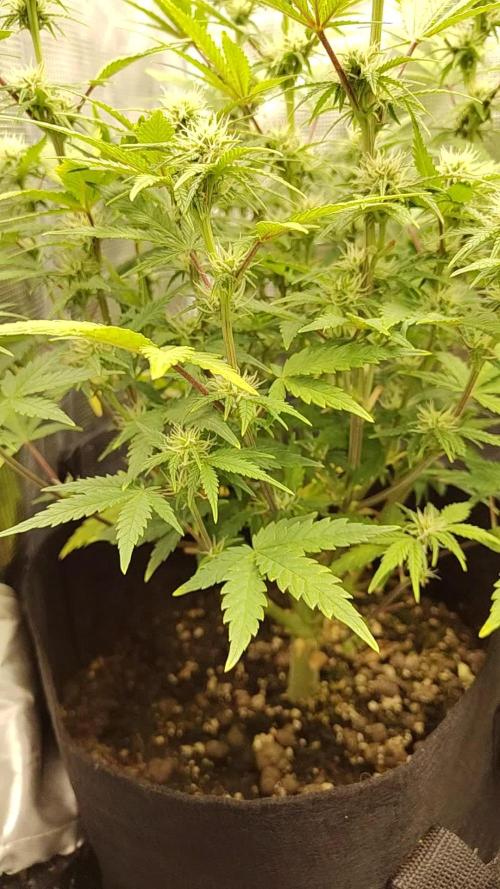
Girls are doing great the gelato and gg4 are already frosting up and there is bud sites everywhere these plants are stacked! Green crack still vegging but surely the stretch is coming soon they will be monsters 🤙🏼💯
Likes
12
Share


@mrHazeCake
Follow
26/09 Today, at the beginning of the second week of color, I nevertheless decided to remove a few unnecessary and interfering stakes. I also removed small shoots and some leaves that greatly interfered with the penetration of light to the shoots.
I connected the problem with an overabundance of N with the fact that I have both AD components mixed. It turns out the formula 4 3 8, I think to remove a little Grow 1-0-4 component and then you will get an excellent compote for these bushes, I will also change the irrigation scheme, I will give 400 ml per day, instead of 800 in two days with formula 3-3-4
Even today I mixed a new compote with formula 3 3 4 , and added AD Grow just 1ml/1L and decided to add a little 5ml less AD Micro and AD Bloom . Let's see how things go .
And I also took better photos, rate in the comments guys!!
30/09 Hi all! Continue. monitor the condition of the lowrider, it seems that the burnt edges of the sheets have begun to pass, periodically I just water it with water, and I made a little less content of the Grow element.
The babies are developing extremely cool, I think that so far I am moving in the right direction
I water 10% of the pot, they have 7 liters each


Likes
38
Share


@Epokwan
Follow
Howdy folks. This week had some turbulent weather, and is really testing the resistances of this strain. The days have either been hot and humid, or raining non-stop. Not exactly what you want late flower, but you get what you get with outdoors!
Spotted a few swollen calyxes so there must be pollen floating around. My neighbour just discovered a male plant over his side of the fence. Crossing my fingers that there were no open pollen sacks before he pulled it. Apparently the pods were tiny and hadn't opened yet but I never got to see and verify that. But... this is outdoors, and the area is very outdoorsy/foresty - so there's bound to be loads of stray males in the area.
Hoping that these don't turn into seed factories 🤞
What's the latest a flowering plant can get pollinated? Are you ever in the "safe zone"?

Likes
10
Share


Likes
137
Share


@MrJones
Follow
🌱Slurricane #7 S1
@inhousegenetics_official
👨🌾🏽GD Grower: MrJones
🔹🔹🔹🔹🔹🔹GOALS🔹🔹🔹🔹🔹🔹
🌞Environment - 75/80℉ and 60% Humidity Good Old Mother Nature
💧 Feeding - The Green Sunshine Company - Earth Dust All-Natural Plant Nutrients
⚗️Soil - 35% ProMix MP / 25% Ocean Forest / 20% Tupur Royal Gold / 10% lobster Compost / 10% Additional Perlite
🍃Training / So this girl was 60 Inches and spread out under a 5x5 Trellis
🕷️ IPM - Will be using Green Cleaner" 1 OZ per Gallon, and CannControl from Mammoth alternating between products each month
🔹🔹🔹🔹🔹🔹🔹🔹🔹🔹🔹🔹🔹🔹🔹
📜 Rambling - Week 28, The bigger of the 2 plants is doing great, the smaller one is looking root bound, not a lot I can do for it at this stage, live and learn, next year all 50-gallon fabric pots.
🔹🔹🔹🔹🔹🔹🔹🔹🔹🔹🔹🔹🔹🔹🔹
▶️ Sunday - 08.15.21 / JJust watering daily with Dechlirnated H20 using the BOOGIE BLUE PLUS+ (High-Capacity Filter) to remove the Chlorine and Chloramine out of the water.
▶️ Monday - 08.16.21 / Just watering daily with Dechlirnated H20 using the BOOGIE BLUE PLUS+ (High-Capacity Filter) to remove the Chlorine and Chloramine out of the water.
▶️ Tuesday - 08.17.21 / Just watering daily with Dechlirnated H20 using the BOOGIE BLUE PLUS+ (High-Capacity Filter) to remove the Chlorine and Chloramine out of the water. IPM Treatment today.
▶️ Wednesday - 08.18.21/ Just watering daily with Dechlirnated H20 using the BOOGIE BLUE PLUS+ (High-Capacity Filter) to remove the Chlorine and Chloramine out of the water.
▶️ Thursday - 08.19.21 / Just watering daily with Dechlirnated H20 using the BOOGIE BLUE PLUS+ (High-Capacity Filter) to remove the Chlorine and Chloramine out of the water.
▶️ Friday - 08.20.21 / Just watering daily with Dechlirnated H20 using the BOOGIE BLUE PLUS+ (High-Capacity Filter) to remove the Chlorine and Chloramine out of the water.
▶️ Saturday - 08.21.21 / Just watering daily with Dechlirnated H20 using the BOOGIE BLUE PLUS+ (High-Capacity Filter) to remove the Chlorine and Chloramine out of the water.
🔹🔹🔹🔹🔹🔹🔹🔹🔹🔹🔹🔹🔹🔹🔹
Earth Dust - DESCRIPTION
🔹Earth Dust is our all-natural plant nutrient designed for indoor and outdoor flowering plant growers. You can grow easily by “just adding water” to your soil for the entire growth cycle. It creates a “living soil” so your plants thrive from seedling all the way through flower and harvest. Earth Dust represents an organic dry amendment method of gardening, it’s made of a natural powder of ingredients.
🔹Because you only need to water your soil with Earth Dust, you can concentrate on caring for your plants and getting a healthy crop “on autopilot”. Now you can grow without spending hours of your life mixing chemical nutrients, and you can do it naturally. What’s more, is you will enjoy the cleanest, most aromatic, and flavorful harvest you’ve ever experienced when a plant grows in a rich, organic web of living soil.
Product Highlights
🔹All-Natural Ingredients – Mostly plant-based – Safe around children and pets.
🔹Packaged in kraft paper bags that are recyclable and compostable.
🔹Easy to Use – Just mix the powder into the soil 3 separate times – then water only.
🔹Packed full of rich microbe food & contains billions of beneficial fungi and bacteria! Creates a resilient, living soil that defends against pests and diseases.
🔹Rich in trace minerals and nutrients for full plant expression. Sourced from rock dust, sea-farmed kelp, and land-grown crops.
🔹Soil Conditioners help balance pH and make nutrients more available in the soil. Achieved with ingredients like bat guano, worm castings, limestone, molasses, and humic acid.
🔹The correct balance of N-P-K nutrients for each stage of growth:
🔹Earth Dust Base (3-1-2) contains key nutrients for sustained vegetative growth. High nitrogen (N), Low Phosphorous (P), and Medium Potassium (K).
🔹Earth Dust Boost (2-3-6) contains accelerated-release nutrients for powerful flowering growth. Low nitrogen (N), Medium Phosphorous (P), and High
Potassium (K).
🔹Re-use soil harvest after harvest by simply adding more Earth Dust Base to begin again. Create your own living soil that gets better every time it’s used.
🔹Go organic, save time, and get predictable, healthy harvests.
🔹🔹🔹🔹🔹🔹🔹🔹🔹🔹🔹🔹🔹🔹🔹
Compost Tea for Vegetative Stage
Water 4 Gallons
3 Cups Composr (Your Favorite Worm)
4 TBL Molasses
4 TBL Seaweed Extract
4 TBL Fish Fertilizer
Use air Stone o the tea for 24/3 hours 70/75F, use at full strength for establishing plants and a half-strength for younger plants
