




Likes
21
Share


@VicFor
Follow
So I chopped the plant today on day 48, so now it’s drying time. I’ll be back in one week to see the results.

Processing
Likes
4
Share


@Mr_nugs_lover_David
Follow
She is such a beautiful strain to grow,her aroma it's just so amazing like pure mango,it's just like fruit,can't wait to try her,I'm in love with her Aroma and this feno particularly it's purple so I'm very excited,let's see how she keeps developing on her 4th week

Likes
Comments
Share


@TGriner420
Follow
This week I transplanted them from the AC Infinity Seed Starter to their 5 gal grow bag or their final pot! I like to make my own super soil out of Root Organics Formula 707, Coco Coir, Perlite, Vermiculite, and amendments. Then I placed a hole in the middle of the 5 gal grow bag, for the plant being transplanted, and placed the young seedling into the hole. Then I lightly covered around the base of the young seedling. Then I watered with 250mL of pH balanced H20! From there that's it just checking on it daily and watering as needed daily with plain pH balanced H20. Then I amended the soil with 4-4-4, 4-6-3, Blood Meal, Bone Meal, Alfalfa Meal, Kelp, and Earthworm Castings. Then I gave nutrients every other day. First General Hydroponics MaxiGrow then plain pH balanced H20 the next day. Then amended the soil as noted above. Then plain pH balanced H20 the next day. Then I would feed The Stash Blend and then plain pH balanced H20. Then the General Hydroponics MaxiGrow and then plain pH balanced H20. Then Real Growers Soil Recharge and finally plain pH balanced H20 to finish the week off. I always pH at 6.0 for nutrient solutions and 6.8 for my plain pH balanced H20. My temps for solutions were 72° and ppm was 800-850 with EC 1600-1700. I always use my oxygenated H20 that is monitored by a professional meter and so are it's levels! I have oxygenated H2O with a pump ready to go at all times! This way I can just scoop up the water and go on demand without having to worry! All and all they're growing well and gaining a ton daily!!

Likes
10
Share


@eldruida_lamota
Follow
De nuevo familia, estoy de vuelta para actualizar la 5 semana y la verdad que mal, que no esperaba tantos errores en un cultivo , pero el trasplante no les sentó muy bien , empezaron amarillear por abajo por falta de nutrientes , ya aporte N nitrógeno para ponerlas verdes pero bueno eso ralentizó algo el crecimiento a ver si las recuperamos al 100% y las pasamos a floración, veremos cómo crecen estos días.
Seguiré aportando algún riego Rico en N nitrógeno para estimular el crecimiento y que cojan buen color.
Volví a colocar el humidificador, en principio lo quite pero también pienso que les falto humedad esos días y tampoco ayudo , hasta ahora esto es todo espero no cometer más errores aquí, Buenos humos 💨💨
Likes
45
Share


@masterofsmeagol
Follow
6/19 Knowing it was going to be over 100° for the majority of the day I WATERED the garden with 3 1/2 gallons. I went to check around 4 and everything looked amazing. We got some hard rain from a thunderstorm at 4pm but it seems like these girls like it rough and did fine. The take a beating and come back stronger. Knock on wood but I haven't seen any problems on the plant I snapped amd dict taped.. Everything seems to have toughened up and the leaves are an awesome healthy color. They grow observable every day now. Tomorrow is supposed to reach 100 again for most of the day before weather goes back to semi normal. I took a video but it will take way to long to upload. Tons of other pics didn't upload either.
6/20 Another day that's going to be over 100°. Plants seem to love it lol. I can't believe what I'm seeing. Bags still had some heft so I didn't water this morning. I figure I'll check them around noon and then plan on watering tonight if they need it. Hopfully they'll get some rain from thunderstorms. This crop has been through a lot. I think that has helped them significant deal with this unpredictable weather.
6/21 We had a MAJOR thunderstorm with sheet rain yesterday. I missed it but it was intense. I saw some videos. First time dad seemed concerned. Fortunately there was no damage. I was going to water today but I decided to hold off due to the look of the plants and the "praying leaves" at 4pm and feeling some moisture in the soil. Bags seemed to still have some heft. I'll probably water tomorrow. Need to transplant the 1 gals and need to figure out what I want to do for nutes this year. So far I've put in much less effort and I'm still doing great. I just don't have as many plants as usual.
6/22 Rained last night. Not much but the bags were heavy still so I held off watering. Plants looked happy and I can fix under watering much easier. It will rain tomorrow. I'll check throughout the day and update but things are going good. I should transplant those 3 seedlings in 1 gals.
6/23 It Rained last night and is suppised to rain today. It was raining when i went over. Just the kind if rain the plants love. I'll check again before church but I'm eventually going to have to water them. Those thunder storms helped a lot.
6/24 Rained about an inch yesterday. Plants loved it. Bigger everytime I see them. One seedling showed a pistol and I'll transplant it with the rest. It was the only one I was worried about. I've seen a FEW leaf hopper punctures and some other bites that could be anything. Time to get the ipm
6/25 Looks like its gonna be a nice sunny day. 75° at 10am. Plants are doing amazing and growing at a rapid pace. Haven't done anything ipm as of yet but any damage I've seen is localized to "A" leaf on "A" plant. I'll be paying attention and watching for signs of deficiencies. As of now though they LOOK great. I'll try to transplant the 3 seedlings today.

Likes
62
Share


@KellosaurusGrows
Follow
This girl was definitely one of the best looking plants I’ve ever grown, also outpaced all my other plants and didn’t have any problems like my others did Fast buds has clearly done a good job with the purple lemonade line huge yield this time at 138 grams plant finished around 34 inches from pot


Likes
1
Share

@Lynx_361
Follow
28.07.2025
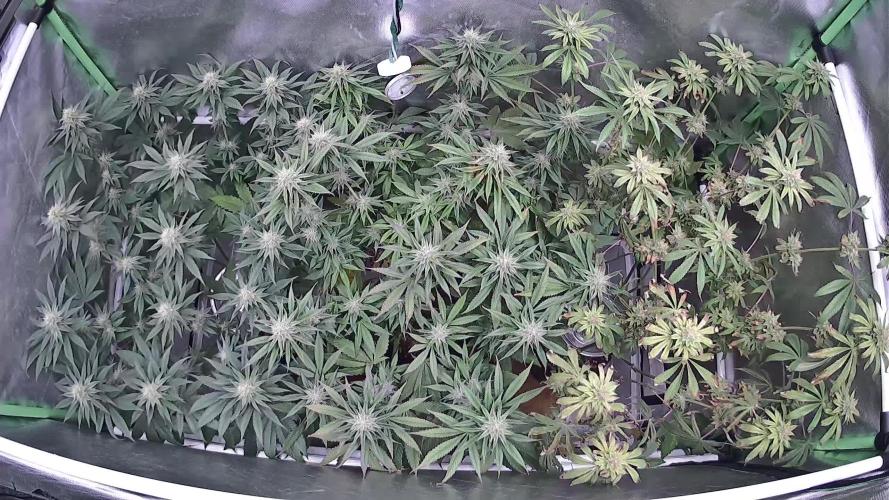
Something is wrong with the stretchy pheno. She is already finishing up. The Flowers are still small. And she looks hardly overfed.. I'll give her one ore two more days and hut her down. the other two look and smell great!


Likes
Comments
Share

@eldruida_lamota
Follow
Vamos familia, actualizamos la segunda semana de floración de estas Granny’s Home de Seedstockers, salieron las 2 de 3, 66% ratio éxito.
Aplicamos varios productos de Agrobeta, que son increíbles para aportar una buena alimentación a las plantas.
Temperatura y humedad dentro de los rangos correctos dentro de la etapa de floración.
La tierra utilizada es al mix top crop, por cambiar.
De 2 ejemplares me quede con los 2 para completar el indoor, también cambie el fotoperiodo a 12/12 y aplique una poda de bajos, se ven bien sanas las plantas, tienen un buen color progresan a muy buen ritmo por el momento, las flores están empezando a formarse, hasta aquí todo.
Agrobeta:
https://www.agrobeta.com/agrobetatiendaonline/36-abonos-canamo
Hasta aquí todo, Buenos humos 💨💨💨

Likes
3
Share


@Therapygrow
Follow
I’m letting this cherry cola literally do it’s own thing. I want everyone to see how little if done right it takes to grow an auto
Likes
4
Share


@The_Projexx
Follow
Welcome to week 4 of flower!!! I expect the ladies to slow right down in the stretch and start to focus on fattening up those flower sites. The plants have been going hard since day 1 of flower and I expect they will continue to go hard until the very end!
Huge shout outs to @MarsHydroLED and Hidden Vault Genetics for their outstanding work on gear and genetics that make growing a blast!
HUGE shout outs go to all my followers and people who stop into the diary alike! Keep on giving out those positive vibes!
Follow along and stay tuned wont be long now till we got monster flowers!
-The Projexx
Day#22F Ladies continue to stretch along , MacMelonz still has some stretch time on her.
Day#23F Pictures N/A. Some of the plants are beginning to focus on thickening up their flower sites!
Day#24F Ladies are still stretching it out , some are almost 4 feet tall now!
Day#25F Banana Smoothie is throwing off the wildest Banana Cream terpenes, the other plants are starting to throw smell too but not as hard as Banana Smoothie.
Day#26F Lots of the flower tops are starting to put on mass now.
Day#27F Pictures N/A. Creamy Cereal is deff pumping milk and fruit terpenes now.
Day#28F Ladies are just cruising along and mostly starting to focus on flowers now. MacMelonz will still stretch for a week or so.
Recap: Things went really well this week , the ladies are absolutely exploding and starting to put on mass. With 6-7 weeks left it will be quite exciting to see the end results and the terpene profiles of each plant! Overall really happy and cant wait to see what next week brings!
Likes
5
Share


@Skinnytalls420
Follow
So I would say this is day 77 start of week 11-06/12/22 she’s looking better new growth is nice and green but will need to give her more time I think before turning over


Likes
36
Share


@Salokin
Follow
Love Glookies, Glookies is loving the ScrOG ;) super vigorous plant, that handled and repaired more than a few broken branches amazingly. The pheno is awesome, with buds being light green with a ton of purple hues in them. A powerhouse that I can highly recommend. Took a bunch of clones so that I can grow her again right away. She is a stretcher so beware and factor that in when growing her.

Likes
26
Share


@pifflestikkz
Follow
Day 8
08/07/24 Monday
Light water with De-chlorinated tap pH 6.2 with half t spoon of DyNoMyCo.
They seem to be loving it!!
Germination week complete, Let's start the VEG 🤩
Updated short videos of strains ,✌️💚


Likes
132
Share


@Crashoverite
Follow
Hi all👨🌾👋
Welcome to my another week update
Hope everyone keeping well and having a great week 🧑🌾🤤
Week 2
Feb 9 - Feb 15
Very easy and steady week. Kitana and Aphrodite doing absolutely fantastic. Watered 2 times this week with approx. 300 ml each and on Feb 12 introduced foliar feeding, at start with few drops of biobizz fish mix in 100ml solution. They responded flawlessly😁🤤🧑🌾
Have a great and successful week everyone ✨🍀
Much appreciate all your likes, follows and comments. 🙏💚❤️💜
Peace and love brothers and sisters 👨🌾✌️💚
Links
https://2fast4buds.com/seeds/TROPICANA-COOKIES-AUTO
https://www.biobizz.com/
https://fishheadfarms.com/
Likes
8
Share


@buddhi_coop
Follow
I soaked the seeds for 24 hours in a mixture of BioAg Ful-power, 6.3 Ph water & aloe Vera. I then inoculated the soil with the mixture of ingredients I listed above. After that I placed the seeds 1/4” into the soil & placed them under the humidity dome after spraying them with my pump sprayer. Current temp is 75 degrees F & Humidity is 89%.
