The Grow Awards 2026 🏆 












Likes
Comments
Share
@tigerbomb
Follow
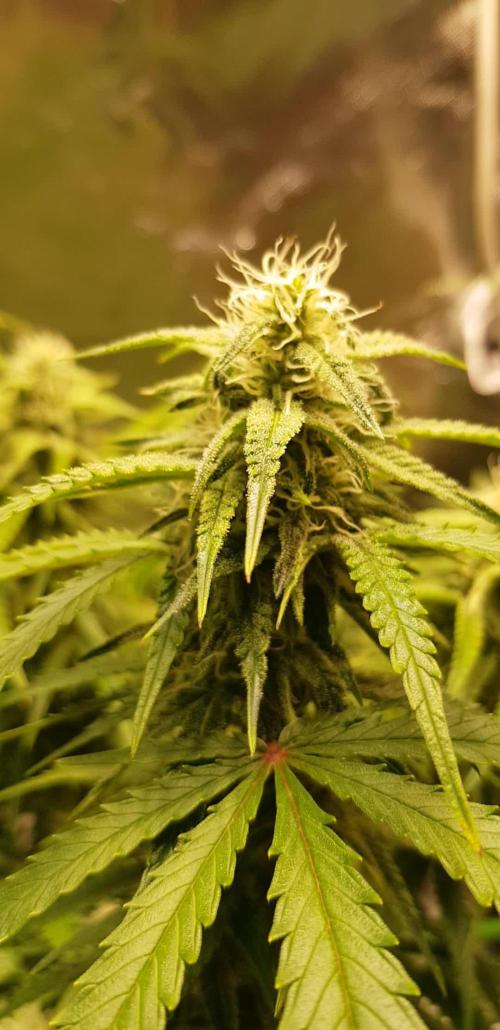
il ramo secondario piu esterno è anche quello piu cresciuto, è gia quasi al limite di altezza non so se continua cosi dovrò finire per topparlo o rischio che sia troppo vicino alla lampada ma se cosi fosse, quando sarebbe l'ideale topparlo? siamo gia in fioritura stresserei la pianta e rallenterebbe lo sviluppo, non so


Likes
3
Share
@OrganicPower
Follow
W10F and the end is near. The bud sites are small and internodes are spaced far apart. I neglected them and let the light intensity get too high during stretch. They are pretty frosty though. Fade has started and they are displaying nice colours
Likes
50
Share
@DogDoctorOfficial
Follow
Eternity Grow Cup - Week 7 Veg Report
Another week down, and what a week it has been! Our Runtz ladies are thriving, pushing forward in their vegetative stage with strength, beauty, and some seriously impressive root development. This week, we officially transplanted them into the Autopots, and let me tell you—the roots are stunning.
Root Health & Mycorrhizal Magic
The mycorrhizal fungi have been doing their thing, and it's truly a sight to see. When transplanting, I could clearly see how beautifully the roots had colonized the medium, forming a healthy, snow-white network that fully surrounded the pot. The Aptus Holland Mycormix is once again proving itself as an absolute game-changer in root development. Strong, well-established roots mean better nutrient uptake, stronger resistance to stress, and overall improved plant health. If you’re serious about growing, this is something you don’t want to overlook.
Aesthetic Update – Pink Vibes!
Yes, I know, I know—the pink background is still here, and I’m absolutely loving it! It’s giving the photos that extra pop, bringing out the vibrancy of the plants, and making every shot feel unique. Hope you all are enjoying these visuals as much as I am!
New Home - TrolMaster Ecosystem
This week also marked another major move—the plants officially transitioned into the TrolMaster Ecosystem. And guess what? They are absolutely loving it! With optimized climate control, precision automation, and a perfectly dialed-in environment, these plants are thriving under their new conditions.
Current Environmental Conditions:
Room Temperature: ~20°C
Relative Humidity: ~67%
CO2 Levels: ~1400 ppm
Light Intensity (PPFD): ~300
A balanced combination of temperature, humidity, CO2, and light intensity ensures that the plants continue to grow at their full potential. The high CO2 levels combined with the moderate PPFD allow the plants to photosynthesize efficiently, maximizing growth while keeping stress minimal.
Nutrient & Watering Program
Right now, I’m sticking with the Aptus Holland Clean Program, which consists of:
Regulator
System Clean
RO Water Conditioner
All-in-One Liquid
The water parameters are as follows:
EC: 0.55
pH: 5.86
Water Temperature: 15°C (a bit cold, but still manageable)
Ensuring clean, well-balanced water with optimal nutrient availability is essential for healthy root development and vigorous vegetative growth. With this setup, they are getting everything they need to flourish!
Shoutouts & Thank Yous!
Huge shoutout and thank you to all the amazing sponsors who help make this grow possible:
Aptus Holland – Premium plant nutrition
TrolMaster – Intelligent environmental control
Cannakan – Precision germination & planting tools
Grove Bags – Advanced curing & storage solutions
Ziggi Papers – Innovation in rolling technology
And of course, a massive thank you to Zamnesia, Plagron, and GrowDiaries for putting together this incredible Eternity Grow Cup!
Final Thoughts
Week 7 has been phenomenal—our girls are thriving, adapting beautifully to their new environment, and setting the stage for what’s to come. The next phase is going to be exciting, and I can’t wait to share every step of the journey with you all!
A big thank you to the community—whether you’re watching, supporting, learning, or even just stopping by out of curiosity. Lovers or haters, you all have a place in my heart!
Stay tuned for the next update and don’t forget to check out the exclusive content on Instagram and YouTube—let’s grow together!
Until next week—happy growing, and good luck to all competitors! 🌱🔥
Genetics - Runtz https://www.zamnesia.com/6000-zamnesia-seeds-runtz-feminized.html
Nutrients - Plagron https://plagron.com/en/hobby
- Aptus Holland https://aptus-holland.com/
Controls - Trol MAster https://www.trolmaster.eu/
LED - https://www.futureofgrow.com/en
LED - https://www.thinkgrowled.com
Soil - https://www.promixgardening.com/en
Germination - Cannakan https://cannakan.com/?srsltid=AfmBOopXr-inLXajXu3QFgKXCXXos4F1oEvScjMKIB5MR5dk8-GJ-F49
DOGDOCTOR 15% off
Smoking Papers - https://ziggioriginal.com/
Terpene saver - https://grovebags.com/
As always thank you all for stopping by, for the love and for it all , this journey of mine wold just not be the same without you guys, the love and support is very much appreciloved and i fell honored with you all in my life
With true love comes happiness Always believe in your self and always do things expecting nothing and with an open heart , be a giver and the universe will give back to you in ways you could not even imagine so
As always, this is shared for educational purposes, aiming to spread understanding and appreciation for this plant. The journey with nature is one of discovery, creativity, and respect. Let’s celebrate it responsibly and continue to learn and grow together!
Growers Love To you All 💚
#EternityGrowCup #RuntzHunt #GrowersLove #CannabisCommunity #AptusHolland #ProMixSoil #TrolMaster #Zamnesia #Plagron #ZiggiPapers #Grovebags
Eternity Grow Cup episode 08 uploaded at 720P ,4K will came out on youtube


Likes
8
Share
@Comfrey
Follow
The week was partly sunny and partly rainy and our plants had to be canopied on the balcony nearly every day. Rare sunny hours. Humidity is mostly ok, but I‘m checking now very regular if the plant need to be harvested. The flowers are covered in trichomes, she produces again and again pistills, the larger fan leaves loose a bit their color. No amber but blue trichomes.
Pure rainwater in the morning and in the evening. Flushing first time with a good drainage.
She smells very intense, like a mandarin juice in February: sweet, aromatic with a hazy undertone.
Trichome fotos at the end :)
Übersetzen


Likes
12
Share
@ciansta
Follow
I’m going to leave the seedlings in the small brown pots until their 1st node and then I’ll transfer them into bigger plastic 3.5gal pots with 80/20 soil to perlite potting mix. One Dosidos is looking a bit behind and the one with the weird leaves ended up catching up to the Northern Lights, maybe even growing faster than it. All Dosidos’ ended up dying but one and I’m sure it’s on the way out. Northern Lights has had no issues and growing perfect.


Processing
Likes
26
Share
@eldruida_lamota
Follow
De nuevo, actualizamos la séptima semana de floración y es que estas skunk están preciosas, es una Indica muy conocida y típica entre nosotros los cultivadores, muy sencilla de cultivar.
El ph, la humedad y la temperatura son correctos, zambezaseeds está haciendo muy buen trabajo con sus variedades gente, os lo aseguro que ya son varios los cultivos con ellos. Hasta la semana que viene.

Likes
17
Share
@Right2Flower
Follow
Day 29 - The lady that I accidentally topped seems to be responding well, her top two nodes are really stretching out and looking good. Still only have one lady clearly showing white hairs at the nodes, but the other lady looks like shes about to pop. I also defoliated them a bit to allow for better light penetration.
Day 30 - Did another round of light defoliation and rearranged the LST on both ladies. Still haven't noticed any white hairs on one lady.
Day 31 - Rearranged my equipment setup inside the grow tent. Still no white hairs on one lady.
Day 33 - More light defoliation and LST on both ladies. Starting to notice some white hairs on the lady yet to begin showing hairs. Both ladies are now in flower.
Likes
36
Share
@nonick123
Follow
Día 129 (07/10) Riego con 750 / 1.000 ml H2O de osmosis
Empiezan a moderarse las temperaturas con 28 ºC de máxima
Día 130 (08/10) Riego con 500 / 1.000 ml H2O de ósmosis
Las temperaturas están sobre 25 °C
Día 131 (09/10) Riego con 500 / 750 ml H2O de ósmosis
OnionOG #1 empieza a mostrar signos de que está en la fase final de floración!
Día 132 (10/10) Riego con 750 / 1,250 ml H2O de ósmosis
He revisado los tricomas de todas las plantas y OnionOG #1 está casi a punto!
Estamos a solo 2 días de la ventana de cosecha según el banco 😍💥💨😁
Día 133 (11/10) Riego con 750 / 1,250 ml H2O de ósmosis
Día 134 (12/10) Riego con 500 / 1.000 ml H2O de ósmosis
Día 135 (13/10) Riego con 1 litro H2O pH 6,5 + Kelp Hidrolizado 0,3 g/L
💦Nutrients by Lurpe Solutions - www.lurpenaturalsolutions.com
🌱Substrate PRO-MIX HP BACILLUS + MYCORRHIZAE - www.pthorticulture.com/en/products/pro-mix-hp-biostimulant-plus-mycorrhizae


Likes
107
Share
@Roberts
Follow
Ths is the last update. Strawberry cheesecake is going into darkness for 48 hours and I will upload my harvest video here. It did fox tail a lot. I was about a week and a half over time plus room temps were running warm. Smell is great. Thanks again seedsman. 🍻💯
Update. Plant has been harvested 2 days after last update. Video and pictures added
Thank you everyone in the GD community for your support. Please like, and follow along. Extra thanks to my YouTube subscribers as well. Stay safe everyone, and happy growing 🌱🌱🌱🌱🌱🌱🌱🌱
Likes
13
Share
@CURATI_DA_SOLO
Follow
Questa settimana come è andata? Hehehehe è andata a meraviglia!!! LEI E SEMPLICEMENTE PERFETTA!!! cresce sempre di più le cime si ammassano e diventano sempre più dure! I colori sono stupendi e il profumo di limone mi ha invaso la villa!!! La struttura della pianta e veramente robusta ovviamente dopo un lst molto scrupoloso! Veramente una grande bella signora! Rimango sempre meravigliato con i semi di fast buds, veramente secondo me e la più valida di tutti! Ho visto i tricomi con il mio lumagny 100x e sono ancora bianco/trasparenti e si ammassano sempre di più! Deduco altre 2-3 settimane penso di fare un ultima settimana di nutrimenti e poi via con il flush! Laverò le radici per almeno 10 giorni, voglio un fumo morbido e deciso! Ringrazio voi per essere qui a vedere i miei lavori e ringrazio i ragazzi di FAST BUDS per avermi dato l'opportunità di coltivare le loro genetiche!!! Un bacio a tutti voi! 💪🏼🌈🌱
Likes
2
Share
@GERGrowDesigns
Follow
Welcome to Flower Week 6 of Divine Seeds Auto Black Opium
I'm excited to share my grow journey with you all as part of the Divine Seeds Autoflowering Competition 2025. It's going to be an incredible ride, full of learning, growing, and connecting with fellow growers from all around the world!
For this competition, I’ve chosen the Feminized Automatic strain: Auto Black Opium
Here’s what I’m working with:
• 🌱 Tent: 120x60x80
• 🧑🌾 Breeder Company: Divine Seeds
• 💧 Humidity Range: 50
• ⏳ Flowering Time: 60-63 Days
• Strain Info: 25%THC
• 🌡️ Temperature: 26
• 🍵 Pot Size: 3
• Nutrient Brand: Narcos
• ⚡ Lights : 200W x 2
A huge thank you to Divine Seeds for allowing me to be a part of this amazing competition and Sponsoring the Strains. Big thanks for supporting the grower community worldwide! Your genetics and passion speak for themselves!
I would truly appreciate every bit of feedback, help, questions, or discussions – and of course, your likes and interactions mean the world to me as I try to stand out in this exciting competition!
Let’s grow together – and don’t forget to stop by again to see the latest updates!
Happy growing!
Stay lifted and stay curious!
Peace & Buds!

Likes
17
Share
@cdxxbuds
Follow
First BlackMuffin came doown. day 51.
The nostrills filled with flavor. Na sure if i am catching a hint of mint aswell. drying. And can't wait to smash these nugs. By far the biggest nugs i've grown. Still a newbie though😂. Thanks fr stopping by cheers

Likes
7
Share
@CanadianFillmore
Follow
Week 3F begins. Raised the light a bit, will see if it makes a difference with the leaves.
Bud sites are popping and looking good for their small size.
Thanks for stopping by.
Likes
12
Share
@farah4weed
Follow
Hello guys😍😍
We have reached the 5th week of flowering.
The plants are almost done with their longitudinal growth and most of the plant is focused on buds.
I used overdrive fertilizer this week.
The smell of the buds has increased a lot.
And the buds have a stronger smell than the mother (cakes n cream) and give off a stronger OG smell😍
Because I increased the temperature difference between night and day, the color of the buds started to change.
Thanks for commenting🙏
"farah4weed"
Likes
Comments
Share


Likes
6
Share
@4F1M6
Follow
Buds are really putting on weight! Frost is in abundance. Colas have really gained defined shape and structure. The aroma is getting intense. Full blown bloom is a wonderful thing.
Just watching as the sexyness gets more defined. We have hit the major bulking phase.
Do to the new phase of growth the feeding has once again changed. I added bud golem to the mix. To get every drip drop of flowering vigor this lady has to push. Really gives that extra umph for the bulking phase. Will eliminate that last bit of grow outta the mix next feed. Than ride that mix to the flush. Until next update . Happy growing and stay lit fam.