


@Organic473
Follow
Strong growth within her first week. She got fed and the rains been watering her also…I am satisfied with her do it week progress



@Chucky324
Follow
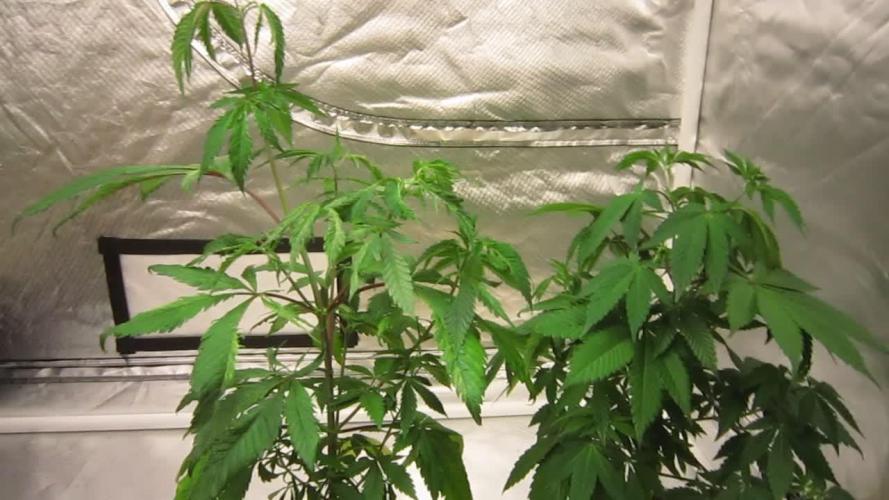
Hello This is the end of week 6 and the beginning of week 7 of veg.
I posted a question about plant #1's leaves last week on the questions page... and the answers were...
It's a Cal-Mag deficiency or A Mutation with 1 or saying it's tabaco mosaic and get it out of the tent quick.
I gave a 1/2 tsp of www.wollallo.com powder, (check it out) it got lots of Cal-Mag in it and other good minerals. To see if the Cal-Mag helps...
I might not keep plant #1 it's getting big and growing lopsided with the mutated leaves.
Plant #2 is doing good and looking normal.
OK. Be Great...
Chuck.


@Ultraviolet
Follow
Seedling managing 93F 30%RH, around 20 DLI. Vpd is in the 3's. No I don't recommend.
Signum Magnum.
"A great sign appeared in the sky
a woman clothed with the sun
with the moon under her feet
and on her head a crown of twelve stars.
Sing ye to the Lord a new canticle:
because He has done wonderful things.
Glory to the Father, and to the Son, and to the Holy Spirit
As it was in the beginning, and now, and ever shall be, world without end."
The plant nutrient nitrogen exists in forms with both positive and negative charges. Ammonium (NH4+)(immobile in soil)(Cation) has a positive charge, while nitrate (NO3-) (highly mobile in soil)(Anion)has a negative charge. Nitrogen is unique among plant nutrients in that it can exist in both positively charged (ammonium, NH₄⁺) and negatively charged (nitrate, NO₃⁻) forms in the soil. This makes it a special nutrient. In that it is responsible for providing balance for reactionary trade offs when it comes to ph. Because ph itself in the medium will always slowly drift towards acidicity, such is nature. 80% of nitrogen should be nitrate and no more than 20% ammoniacal nitrogen.
Ca, mg, and K are the big 3 cations related to soil composition, pH & base saturation.
When nitrogen is in the form of ammonium, it can compete with calcium, magnesium, and potassium for absorption sites in the plant root. This competition can lead to a reduction in the uptake of these other essential nutrients. Nitrogen, particularly in its nitrate form (NO3-), can increase soil acidity, which can also affect the availability of calcium, magnesium, and potassium. The form of nitrogen applied (ammonium vs. nitrate) can influence its interactions with other nutrients. Ammonium nitrogen can have a more pronounced negative effect on the uptake of calcium, magnesium, and potassium compared to nitrate nitrogen.
Common forms of ammonium nitrogen include ammonium ion (NH4+), urea, and ammonium compounds like ammonium nitrate, ammonium sulfate, and ammonium phosphate.
Common forms of nitrate nitrogen include potassium nitrate (KNO3), sodium nitrate (NaNO3), calcium nitrate (Ca(NO3)2), and ammonium nitrate (NH4NO3).
Phosphorus is an essential plant nutrient, and its availability in the soil is strongly linked to the presence of oxygen. Plants primarily absorb phosphorus as phosphate (PO4), and oxygen is a key component of this molecule. Furthermore, the availability of phosphorus in the soil can be impacted by factors like soil aeration and temperature, which in turn affect the oxygen supply to the roots.
Phosphorus uptake in plants is most critical during the early stages of growth, particularly within the first few weeks of plant development.
Young plants actively growing tissues have a high demand for phosphorus. They may absorb up to 75% of their total phosphorus requirements within the first few weeks of vegetative growth, with up to 51% of uptake happening overnight, primarily in the first few hours or early nightfall.
⑨Anaerobic root respiration, or respiration without oxygen, is detrimental to plants because it's less efficient and produces toxic byproducts, leading to reduced energy production, nutrient uptake issues, and ultimately, root damage and plant stress.
⑨Anaerobic respiration, unlike aerobic respiration, doesn't utilize oxygen as the final electron acceptor in the electron transport chain. This results in a significant drop in the amount of energy (ATP) produced, which is necessary for various plant functions, including growth, nutrient uptake, and maintenance of cellular processes.
⑨In the absence of oxygen, plants produce byproducts like ethanol and lactic acid during anaerobic fermentation. These byproducts can be toxic to the roots and inhibit their function,
⑨When oxygen is depleted in a medium, the pH tends to decrease (become more acidic) due to the production of metabolic byproducts. This is particularly relevant in biological systems where aerobic respiration relies on oxygen as the final electron acceptor.
⑨When oxygen is scarce, plants may switch to anaerobic respiration. This process produces carbon dioxide (CO2) as a byproduct.
⑨CO2 dissolves in water to form carbonic acid (H2CO3). This acid lowers the pH of the medium, making it more acidic.
⑨Anaerobic conditions can impair a plant's ability to regulate its internal pH, leading to a drop in cytoplasmic pH and potentially cellular acidosis.
⑨The change in pH can also affect the availability of certain nutrients to the plant, as pH influences the solubility of micronutrients like iron, manganese, zinc, copper, and boron.
⑨The lack of oxygen in the plant medium leads to a decrease in pH due to the production of carbon dioxide during anaerobic respiration and impaired pH regulation within the plant.
In plant cells, cellular acidosis, a drop in the internal pH of the cytosol, is a significant stress response, particularly during conditions like flooding or hypoxia. This acidification can be triggered by a decrease in oxygen levels, leading to the production of metabolic byproducts like lactic acid and CO2. The plant's ability to tolerate and recover from these conditions depends on its cellular mechanisms to regulate pH and mitigate the effects of acidosis. When plants are subjected to low oxygen environments, such as those experienced during flooding, anaerobic metabolism, which produces lactic acid and ethanol, becomes the primary source of energy. This can lead to a build-up of these acidic metabolites in the cytosol, causing a drop in pH.
OXYGEN
Atomic oxygen (single oxygen atom, O) is the lightest form of oxygen, as it has the lowest mass of the oxygen molecules. Oxygen also exists as a diatomic molecule (O2) and an allotrope called ozone (O3), which have higher masses due to the number of oxygen atoms combined.
Atomic Oxygen (O):
This refers to a single oxygen atom, which is the most fundamental form of oxygen.
Molecular Oxygen (O2):
This is the common form of oxygen we breathe, consisting of two oxygen atoms bonded together.
Ozone (O3):
This is an allotrope of oxygen, meaning it's a different form of the same element, consisting of three oxygen atoms bonded together.
Since atomic oxygen has the fewest oxygen atoms, it naturally has the lowest mass compared to O2 or O3.
Ozone (O3) Lifespan:
Ozone has a relatively long lifespan in the stratosphere, particularly at lower altitudes. For example, at 32 km in the middle latitudes during spring, ozone has a lifetime of about 2 months.
Oxygen (O) Lifespan:
Atomic oxygen, on the other hand, has a much shorter lifespan. At the same altitude, its lifetime is about 4/100ths of a second.
Ozone-Oxygen Cycle:
The ozone-oxygen cycle involves the rapid exchange between atomic oxygen (O) and ozone (O3). UV radiation can split molecular oxygen (O2) into atomic oxygen (O), which then reacts with O2 to form ozone (O3). Ozone can also be photolyzed by UV radiation, creating atomic oxygen again, which can then react with O3 to reform O2.
Dominant Form:
The partitioning of odd oxygen (Ox) between ozone and atomic oxygen favors ozone in the lower stratosphere. This means that a much larger proportion of odd oxygen exists as ozone than as atomic oxygen, especially in the lower stratosphere.
Recombination:
Atomic oxygen has a high energy and reactivity. When it encounters another oxygen atom, they can combine to form O2. This process releases energy, contributing to the heating of the atmosphere.
Ozone Formation:
Atomic oxygen can also react with molecular oxygen (O2) to form ozone (O3). Ozone plays a significant role in absorbing harmful UV radiation.
Other Reactions:
Atomic oxygen can react with various other molecules in the atmosphere, like nitrogen (N2), water (H2O), and carbon dioxide (CO2), forming different compounds.
UV light below 240nm (peak 185nm) creates ozone (O₃) through a process called photolysis, where UV light breaks down dioxygen molecules (O₂) into single atomic oxygen atoms (O). These single oxygen atoms then react with other oxygen molecules to form ozone (O₃). Specifically, UV-C light with wavelengths shorter than 240 nm can cause this photolysis.
UV light with wavelengths between 240-280 nm, (peak 254 nm) breaks down ozone (O₃) into dioxygen molecules (O₂) and atomic oxygen atoms (O). 280nm does not have the energy potential to break apart the stable bond of (O₂) into enough (O) to make (O₃)
At ground level, atomic oxygen (single oxygen atoms) has a very short lifespan. This is because it's highly reactive and quickly combines with other molecules to form stable diatomic oxygen (O2) or other compounds. While the exact timeframe varies depending on the specific circumstances, its lifespan is typically measured in nanoseconds or picoseconds.


@adam_pawloski87
Follow
Twenty20 Ateam R&D Update! Wow this week went so great, Germination was 100%successful!! We went with the usual paper towel method an they all popped up in the soil on Saturday the 28th! Let’s grow lil babies let’s grow!!


shorts_status_processing


@smokeycropping
Follow
- LAS PLANTAS CONSUMEN BUENA AGUA, BAJAMOS LAS DOSIS DE FERTILIZACIÓN Y YA EMPEZAMOS SOLO A REGAR CON AGUA Y PRONTO LAVADO
- NO SE VEN CARENCIAS NI EXCESOS
- el HPS de 600 MANTIENE MI AMBIENTE SIN MAYORES INCONVENIENTES
-ESTAS SATIVAS TOMARON UNA DUREZA INCREÍBLE EN SUS FLORES
- SATIVAS DE LARGA DURACIÓN MUCHA PACIENCIA PARA CULTIVARLAS




@Kocicak
Follow
Zdarec, 🌱💚
Začínáme 7. týden květu a holky nám dělají čím dál větší radost! 💪🌸 Květy krásně tvrdnou, vůně je čím dál intenzivnější a na celý stan je radost pohledět. 😍🌿
Zatím jsem moc spokojený s tím, jak to celé vypadá a jak holky prospívají. Jedeme dál! 🔥💚
Díky a ať to roste! 🤜🤛🌱


@dkchgrows420
Follow
I ended up with 2.5 oz of nice bud and about 8 grams of some very tasty cookes hash rosin. Great plant! I cloned her and am running her clones out side fo the fast flower. I will be washing it all it made some great rosin!!!!


@Captensmokey
Follow
They are now growing faster than fast... They are getting ready for flowering. I will soon switch to hesi nutrition... 🙌👍


@Ogchemst
Follow
First day in Flower! It's been... very interesting 2 weeks.. now that I survived tha, im having some lockout due to being unable to take care of my plants for the past 5 days and someone having no idea had to do the job, I'm not afraid of showing these mistakes I'm always looking forward to the outcome so I'm still having some hopes for this og kush, not everything here went as planned and that's why I want to focus on finishing up the grow and starting new ones, better ones as soon as possible, I will definitely never grow autos again as I'm just not a fan of them having to be on 18/6 schedule and I like having co trolley over my plants as sometimes things can go wrong.
Og kush had a lockout after flush it grew beautiful but still ate up some of the upper leaves.
Runtz.. yeah I like him he is a beautiful little bonsai he didn't get lockout too much but also did I'm looking forward to seeting the stretch on him if it so happens.
Cherry gusher, a tiny pheno I got this time I'm looking forward to growing 4 next time and hunt down a pheno.
They say outdoors you have to play with God and indoor you try to play God.. we are not perfect and that's why I'm looking forward to the finish line.
Will i scrog? I have the net setup but I'm not sure if I will get enough stretch.
Day 3 I noticed some light white spots on bottom leaves of the plant after a flush I did recently, I diagnose this as magnese or magnesium deficiency, I'm going to up the cal mag to 8 ml and a+b to 10ml per 5 L of water along with additives extra 0.5 ml just as a touch up. Also I noticed we are at 47cm at the tallest branch after topping and lst and this thing is an absolute bush.. I could probably hide behind it if I was a kid playing hide and seek!.



@hassehujasse
Follow
Level up with Clipping from HASSE
Gorilla Auto 33 days Twice topped, main lining, HST, LST ,Every ST)
Hasse style 70/70 box 6 plants


@LSchnabel
Follow
Week five in flower and not much change. The buds are starting to bulk up and get fat. I have noticed a color shift in the bud as well. They are developing a pink/purple hue with a gray undertone. It’s an unusual color because it’s very pastel looking.
Frost production is still on high, these things are coated like crazy already.
Magnesium issue has now stopped, I’ve been adding 1/16 teaspoon of magnesium sulfate to the water every time to keep up with the demand for this large plant.
Smell is very strong and hits you hard when you open the tent. When rubbing the bud I pick up a fruity pebbles smell.
So far watering every other day and she is sucking down about a gallon a day of water. Run off pH was reading 6.5 which has been spot on this entire grow so far.


@CanadianFillmore
Follow
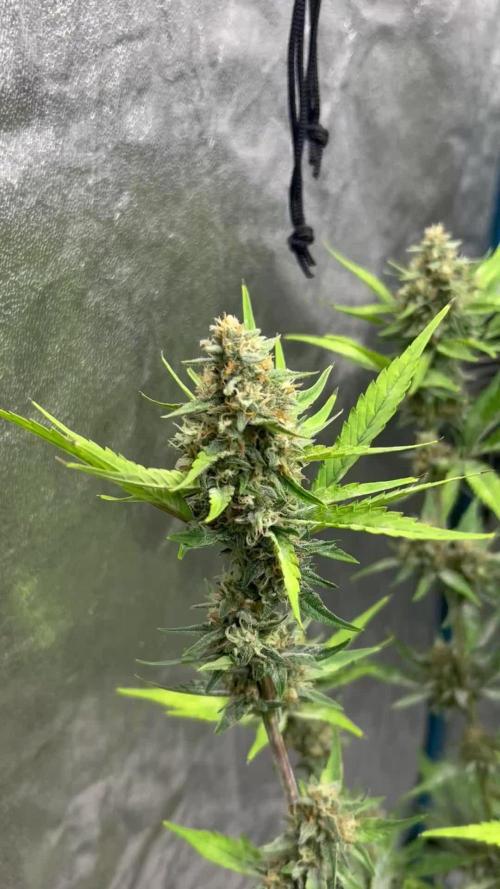
Start of week 5! Plants are doing great! Still some P & K deficiencies showing, but overall the bud development is phenomenal on the blueberries and is coming along nicely on the super lemon haze. I am still feeding an extra 2 liters to the Slh, this time at full dosage of part A & B, this seems to have helped with this past week (4). The blueberry are super sticky and smell amazing!





@Budking420
Follow
She’s doing amazing this week she’s really starting to ripen. I think 1 more week… granted I also like to really reduce the lights the last week to increase the chances of increasing yield. I’ve discovered that giving a 12/12 light schedule for the last couple of weeks really allows the plant to fill in its density, as well as allowing the roots a final stretch to access micro and macro nutrients. Check back next week to see just how fast she grows & remember it’s 4:20 somewhere


@GreenQueenz420
Follow
Started low stress training on June 29th in the first video. Second video is July 1st she grew quite a bit since adjusting the stakes. Really looking forward to her training seeing how big she can get.
shorts_status_processing


@FolloMiSensi
Follow
Tent filling up. Week 6 left, week 5 right. Topped up res, slowing transitioning to bloom regiment. Minor lst adjustments to even out canopy.


@Kynareth
Follow
hey
entering week 8 flowering, the smell is low but really nice.
still struggling with plants height, i had to supper crop the bigger one as i said, then another one, and today again the last one; anyway plants look healthy and happy so i am too.
day 59 update. I had to bend it over again the same two branches because the plant still try to get upper and upper.
