


Likes
Comments
Share


@Gruschel_Muschel
Follow
Purple Punch am 26.12.2024
Tag 49 / 14.02.2025
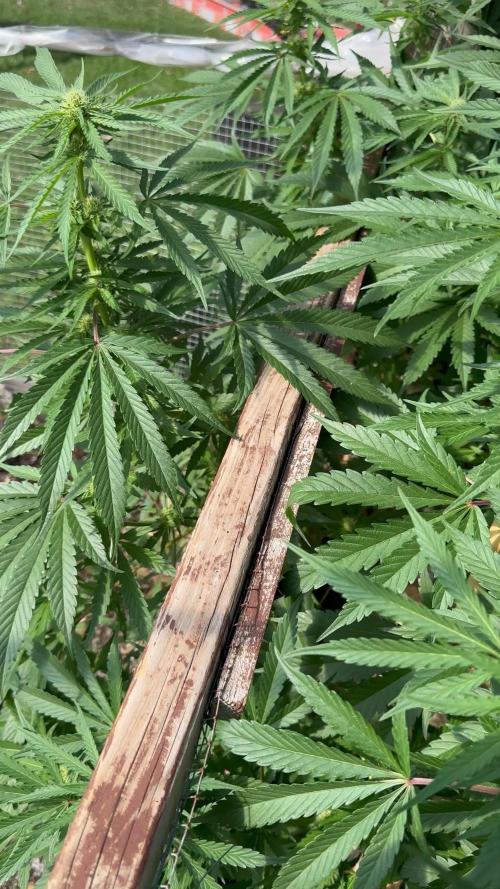
Meine Purple Punch steht schon in der 7 Woche, ein großer Erfolg für mich.
Habe mit Bio Bloom und Bio Grow in der letzte Woche sie gedüngt, das Ergebnis kann sich sehen lassen.
Heute, wird Acti Vera, Alg A Mic und Bio Heaven in das Gießwasser hinzu gegeben.
Feedback:
Ich bin überaus voll zufrieden wie meine Pflanze sich entwickelt hat, ich denke die gute Erde und der Dünger von Biobizz hat ein großen Teil beigetragen. Ich werde mal schauen wie die Pflanze in der 8 Woche aussieht.
Ich nehme gerne Ratschläge von der Community an.

Likes
8
Share

@The_Doctor_Green
Follow
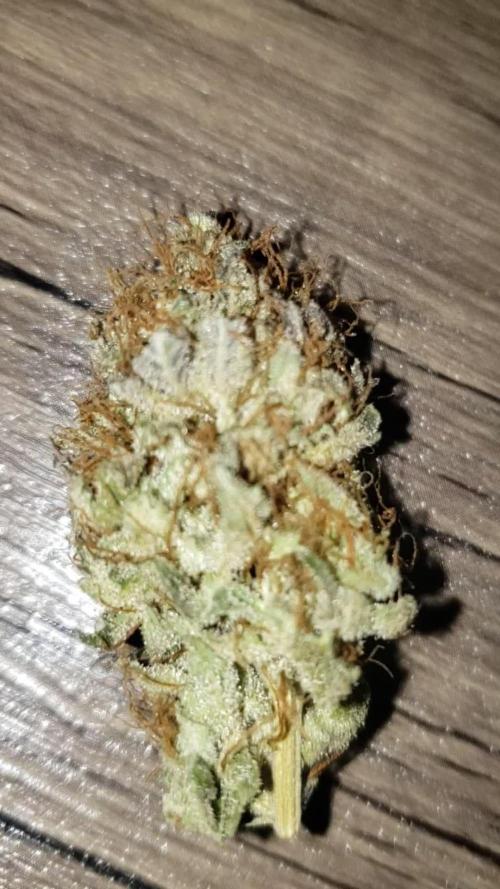
He dejado secar 2 semanas y enfrasque tan solo 20 gramos de flores secas, no se cual es el peso húmedo, creo que esa es la pregunta que se podría modificar😅.
En cuanto al cultivo de esta genetica , puedo decir que es una cepa que no genera problemas, en el cuarto ya en floracion avanzada tomo un color violeta, en cuanto al aroma, aun no se como describirlo😅.

Likes
6
Share


@Shotter
Follow
So were on day 26 of flower there looking good getting a nice smell starting to throw out trichomes
Have down loaded a thew videos of before and after removing fan leaves
Likes
4
Share

@Budoken
Follow
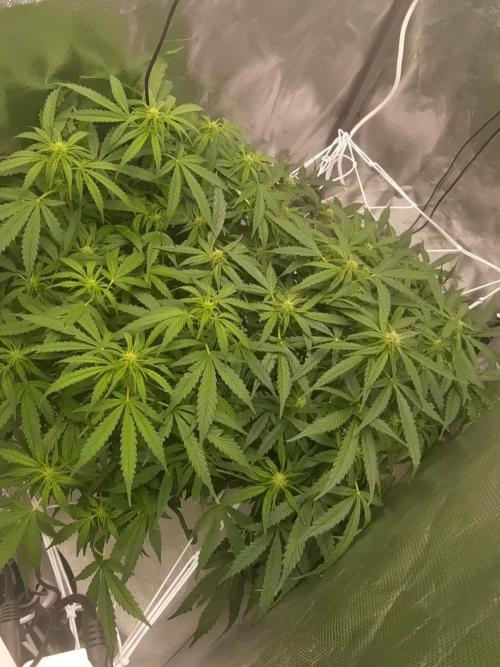
This week I lowered feeding to around 1.2 ec. I tried to increase light to 100% power, but with dehumidifier pushing hot air into the tent, plant was transpiring like crazy, 4-5 liters a day. I decided to keep it at 75% and closer to canopy, environment control is easier that way. Ppfd still reads 900 at top center, 600 at the lower sides.
Not much else was done to the plant, at the end of the week I did some selective leaf removal again. As can be seen from the pictures, it was getting real bushy and dense with foliage again. Just to help light reach bit further down, help airflow and unblock some of the bud sites.
All seems to be going well, smell is definitively getting stronger and buds are forming nicely, trichomes are appearing on sugar leaves. Leaves look quite dark green, I will start to figure out some adjusting to nutrients, cutting down Aqua Flores a touch, and introduce Atami Rokzbastic at low dosage to favor P and K more.

Likes
3
Share


@Aleks555
Follow
We are starting to grow a new autoflowering strain from 42Fast Buds under the number FBA2502. We don't know much about the strain yet, but we do know that its maturation period is around 70 to 80 days.
For germination, we used a reliable method: paper towel and cotton sponge. In just 24 hours, the seed sprouted with a root about 1 cm long. The next step will be planting it in soil composed of:
50% black soil (chernozem), 35% coconut substrate and coconut fiber, 10% perlite, 5% expanded clay.
We will continue to monitor its growth and share the results.
Likes
9
Share


@littlefoot
Follow
Strong smelling now and very sticky, started bloom, bulk and microbs from growgancia...not letting me add these. Not a lot of changes, watching the magic happen :)
Much love
Littlefoot


Likes
36
Share


@Salokin
Follow
All is developing nicely, introduced cannazym and boost to the mix. Finally I have access to a better camera which you will see on the later pics. The cuttings I took seem to survive for now, with some outrooting their cubes already.

Likes
13
Share


@Skinnytalls420
Follow
Day 16-27/12/21 still looking good haven’t got room in the other tent yet to remove some from this one but will in a couple days!!! Day 20-31/12/21 all looking good I’ll move half of them to another tent soon!!!!


Likes
26
Share


@GroloCup
Follow
She's moving along into flower and I've started using a little bloom nutes now that the stretch is tapering off. Took off a few fan leaves that were blocking some bud sites and removed some lower growth that wouldn't make much more than underdeveloped larf. She's definitely crowded in the tent, but she's continuing to go through her paces and should stay on track. She's starting to effervesce and it's a sweet earthy note with a more skunky stem rub. Lets see where this week takes us!
Likes
7
Share


@Mr_nugs_lover_David
Follow
My beloved Black cherry punch pheno 2 is looking absolutely stunning, those indica leaves makes me go nuts 🤪, absolutely beautiful strain not only for its grow patterns but also because her effects is really special to me, it's the perfect mix between sedative sleepy high but has a really mellow happy sensation, this is plant is the perfect choice for all of the people that consume pills that fucking kill you with overdose, cannabis is a miracle! Follow me on my journey growing my cannabis that I use with recreational intentions however It helps me with certain little pains due to sport. Hope you guys enjoy my work!!


Likes
9
Share


@my420experiment
Follow
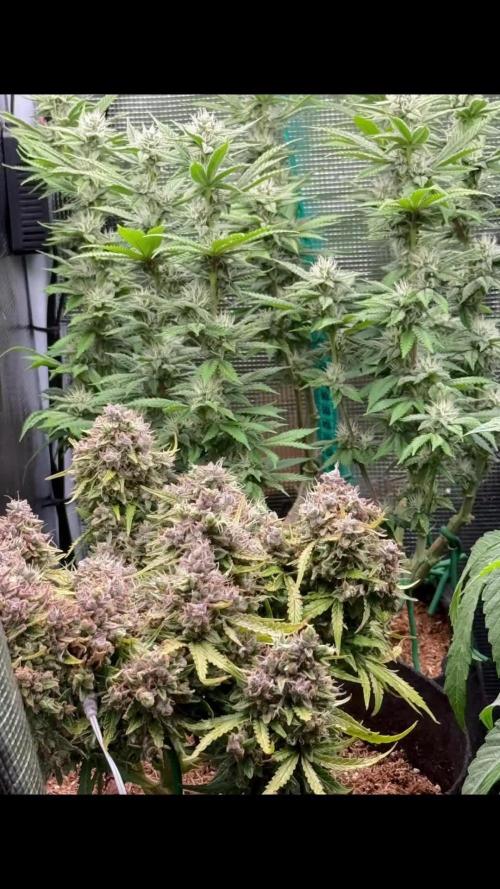
Day 29 - Second day of light defoliation only at the base. LST continues along with regular tucking
Day 30 - flowering is kicking in for two of the girls and they are starting to get some stretch going on. They are not very tall but sure seem happy.
Day 35? - Final pics posted for end of week 5 and week 1 of flower is killing it. Got the light dialed in after researching the par output on my light and watching some reviews. It’s now at 18 inches running 100%.
335 watt draw at the outlet. They seem to be loving it.
Day 32 - finally finished the watering system. I can travel now if I have to.



Likes
7
Share


@Riddle
Follow
Week 2 - the growth is very good and I can see a healthy root development at the bottom.
I watered twice this week - a little dryback in the first weeks should be good to promote roots.
DLI 20 / EC 1.2

Likes
24
Share


@00110001001001111O
Follow
Total Days: 70
Flower: 31
Vege growth is stopped or very slow at this point. Might eke out another inch or two. I'll raise the lights as far as they can go soon (only 3-4" for the 650w light on right), but with the higher operating RH%, I've yet to see any pistil burn.
The light cycle shift to accomodate the painters definitely stressed 2 plants. One was removed. The second i am retardedly going to keep. I stripped off lower weak buds that had the nanners. Pruned a few weak axilla, too. The nearby plant pistils are lily white, so it should be fine. The pistils will be changing color soon, so that will no longer be a good way to assess the risk going forward.
Meh, I know it was caused by light stress, so any seeds not selfed I'll probably keep them.
Overall, I'm relatively happy with development. Need to adjust some procedures in next cycle and maybe a few more tweaks in winter 2025-1.
Second irrigation went well, but i did find a partially clogged emitter. Probably a plastic bit from hold-punching. With 8 emitters per pot, the overkill makes it irrelvant and the pot wasn't the slowest to finish. A few emitters has some roughly milled inlets. I'll inspect them all over the next couple weeks and replace some as needed.
Just realized my new dehum was glowing in my tent the entire time. Luckily the display was facing away but now has a cardboard flap blocking it. If it was fine before, it's even safer now. Photons had to bounce of a wall and travel 5' before it could hit any plant.
-----
Early update before end of week upday:
So, I've been procrastinating replacing the irrigation setup. It's slowly gotten worse each year (3rd ongoing), but never had the dripper devolve into a dribble. I've been hand-watering 1 or 2 pots the last week or so. Replacing the mini sprinkler heads only fixed 1 of the problem-pots. Think the fittings are leaking on the one that did not improve.
All the pvc is gone. All the 1/4" manifolds and tubing are gone. The per plant adjustable nonsense is the worst idea ever as all it does is cause pressure changes and endless tweaking of all the little sprinklers, because changing one impacts all the others, or a speck of dirt might cause a new imbalance that requires adjustments etc - Fucking nightmare of useless repetitive behaviour.
Still have the 3/4" ID lead-in, heavy duty, 450psi graden hose with ball shut-off valve and pressure regulator. That is now connected to a 3/4" wye with two 1/2" irrigation tube adapters attached to each end. This forms a loop around the pots with a 1/2" tee per pot that leads to a gate shut-off valve and eight 2-gph pressure compensating emitters - 96 in total.
Will do first test run on Sunday.
The great thing is that this is all plug and play when I switch to injectors. That'll require some sort of pvc manifold and check valve at the utility tub, but otherwise just connect hose, and it's golden. That's the next step. I'll also re-incorporate the wifi-enabled solenoid valve at that point. Getting rid of the 55-gallon reservoir and pump would be nice. One less thing to maintain (rez) and less things that can break down (pump / powerhead).
------ Sunday Test
Flawless first run. Time will tell if they are resistant to clogging, but optimistic at this point. 18psi operational pressure at the irrigation loop. Didn't even need the regulator. The mesh strainer at the pump intake doesn't have the typical, small air-bubble, so the last setup was letting a little air in. The last setup was fatally flawed. Pressure compensating emitters for the win. They didn't even squirt wildly as the air was expelled from empty tubing on first run.
Took ~4mins or so. Some pots finished a bit sooner, but that's because they don't drink as much per 24 hours. I can live with that kind of waste. I'll get the timing down to reduce water usage even further. I don't need to wait for every pot to exhibit runoff as that is beyond 10% runoff needs. Might be able to get 4 fertigations before refilling reservoir instead of 3. We'll see. I don't like the minimum ~12-15 gallons sitting over night. It fouls the reservoir faster at low volumes.
Anyway, super geeked. They better not clog easily, lol....

Likes
31
Share

@GermanGrow182
Follow
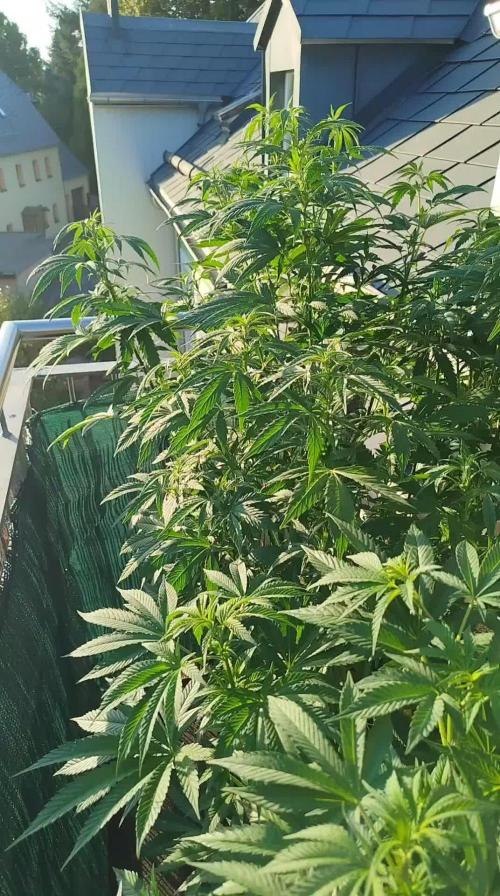
Top Wetter 👍 sie wachsen noch ein bisschen, der Stretch neigt sich dem Ende. Die Triebe fangen an, die Budstruktur zu etablieren. Endlich geht es los 😁 bei jeder wässerung gibt's biobloom dazu, alle 4 Tage calmag. Immer noch keine Mangelerscheinungen. Es läuft sehr gut ☺️👍 das wird endlich ein Rekordjahr 👌 bis nächste Woche ✌️

Likes
59
Share


@Ganjagrandaddy
Follow
Day 92: Now entering their 9th flowering week , I was convinced they would be done at this point. The #1 in the inactive los soil seems to have stalled with very little changes to her this week. I have given her a blast of Mc at full strength into hopefully boost her for this next weeks flowering time. All of these ladies want to carry on and are not yet showing all cloudy . There isn't any amber trichromes around at all and the #2 +#3 have been adding new pistils to their buds , this again makes me feel they will go the full 11 weeks in flower but that could also mean another swell !. I will be growing more of this strain for sure in the future. They are all very pineapple smelling up close and they are beginning to add more frost now too.


Likes
6
Share


@HowtoBubatz
Follow
The stretch is slowly coming to an end, and now it’s all about bud production!🌱
All three ladies are developing nicely without any noticeable deficiencies or issues so far.
Mid to late in the week, I spotted the first trichomes starting to glisten – always an exciting moment!
Next week I’ll start removing a few fan leaves to let more light through, but for now, they’re cruising along just fine.
Let’s see how juicy these berries get! 🍓✨