The Grow Awards 2026 🏆
Likes
Comments
Share
@Njanne
Follow
Of the four plants Barney's LSD Auto is the most vivacious, with the Strawberry Cheesecake and Onyx only a week or so behind. The Northern Lights Auto is very disappointing with absolutely no branching...and some discolouration in the leaves. If she doesn't show some branching after topping, I'm going to pull her and grow a different plant. Real estate in my grow room is in high demand and I won't waste it on a dud plant :D
Likes
1
Share
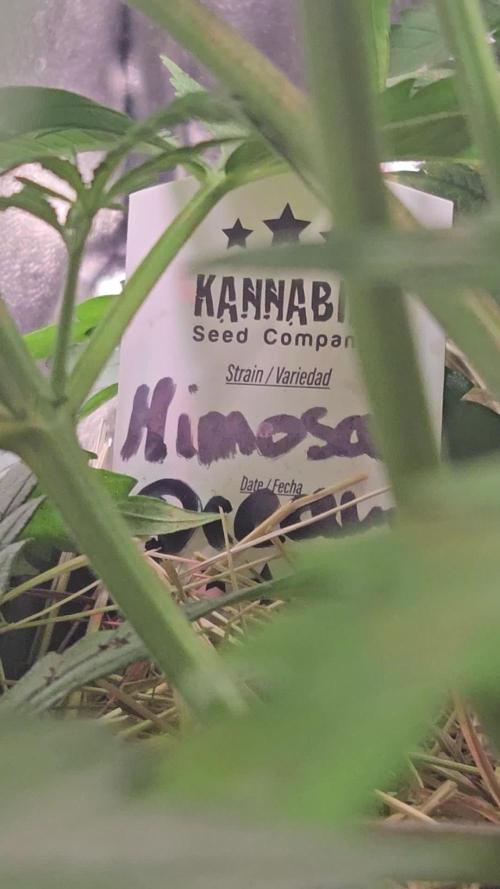
Hello Growers and Tokers! Welcome to another run where I'll be testing something from a local breeder. The cultivar is Orange Apricot x Mimosa from Mallorca Breeders. This cultivar is a treat, I've had the delight of smoking this grown from the actual breeder. If it comes out anything like that I'll be more than happy. Frosty buds, very oily, very tasty, very hard, very nice, very everything! It was a 10/10 smoke Let's hope we have a 10/10 grow to have some 10/10 nugs. Strain description from breeder: Genetic Background: Orange Apricot x Mimosa Type: Feminized Sativa 50% Indica 50% THC: CBD: Yield Indoor : gr/m2 Height Indoor: 0 - 0 cm Flowering time: 8 - 9 weeks ( 55 - 60 days) Aroma: 
Effect: Expectations and training method: I know these genetics are a bit delicate so I’ll be taking things very easy. 
The breeder suggests waiting until the fan leaves come out to decide the training technique. If the fan leaves are thinner then it’s leaning more towards Orange Apricot and will be a bit more sativa and has more ramifications so most likely LST. Thicker fan leaves would be leaning towards Indica which is what I actually want, the Mimosa side. Breeder recommends topping this Pheno to increase yields. Let’s hope they’re Mimosa leaning.. 
 As for the yields I’m not expecting more than 40 grams per plant but always shooting for more. I’ve already smoked this strain grown by the breeder and other local breeders, which is what made me want to grow it myself. I expect nothing but trichomes and terps from these ladies. Equipment used in this cycle: Tent: Dutch Masters 120x240x220cm Lights: 1 x Mars Hydro TSW2000 1 x Mars Hydro FC3000 Ventilation: Garden HighPro - ProFan TT Extractor Fan - 150mm Garden Highpro - ProActiv Carbon Filter - 150mm Garden Highpro - ProFan Oscilating Clip Fans - 25cm Blauburg - Inline Fan - 125mm Humidifier: Garden Highpro - Humipro Digital Humidifier - 4 liters Pots: Garden Highpro 11L Fabric pots Medium: Biobizz Light Mix Nutrients: Grotek - Mycrorizo Plagron- Alga grow, Alga Bloom, green sensation and royal sugar. PH down Calmag Measuring instruments: Hygrometer/Thermometer - Govee: EC Meter - HM Digital: COM-80S Hydrotester PH Meter - Vanguard Hydroponics Happy Growing! 😃
Likes
4
Share
@InsideAz
Follow
Added a second scrog net for the taller plants last Friday. Constantly defoliating to increase light penetration but not trying to stress the plants. (Selective leaf picking) Plants loved the tea I have them last week. Visual improvements in every plant 2 days later. Top dressing later this week on 9/29: 5 tablespoons Gaia green 444 5 tablespoons Gaia Green 284 15 tablespoon Wiggle Worm Earth Worm Castings *hard to get good pictures of this plant* Light increased to 75%
Likes
16
Share
Seedling managing 93F 30%RH, around 20 DLI. Vpd is in the 3's. No I don't recommend. Signum Magnum. "A great sign appeared in the sky a woman clothed with the sun with the moon under her feet and on her head a crown of twelve stars. Sing ye to the Lord a new canticle: because He has done wonderful things. Glory to the Father, and to the Son, and to the Holy Spirit As it was in the beginning, and now, and ever shall be, world without end." The plant nutrient nitrogen exists in forms with both positive and negative charges. Ammonium (NH4+)(immobile in soil)(Cation) has a positive charge, while nitrate (NO3-) (highly mobile in soil)(Anion)has a negative charge. Nitrogen is unique among plant nutrients in that it can exist in both positively charged (ammonium, NH₄⁺) and negatively charged (nitrate, NO₃⁻) forms in the soil. This makes it a special nutrient. In that it is responsible for providing balance for reactionary trade offs when it comes to ph. Because ph itself in the medium will always slowly drift towards acidicity, such is nature. 80% of nitrogen should be nitrate and no more than 20% ammoniacal nitrogen. Ca, mg, and K are the big 3 cations related to soil composition, pH & base saturation. When nitrogen is in the form of ammonium, it can compete with calcium, magnesium, and potassium for absorption sites in the plant root. This competition can lead to a reduction in the uptake of these other essential nutrients. Nitrogen, particularly in its nitrate form (NO3-), can increase soil acidity, which can also affect the availability of calcium, magnesium, and potassium. The form of nitrogen applied (ammonium vs. nitrate) can influence its interactions with other nutrients. Ammonium nitrogen can have a more pronounced negative effect on the uptake of calcium, magnesium, and potassium compared to nitrate nitrogen. Common forms of ammonium nitrogen include ammonium ion (NH4+), urea, and ammonium compounds like ammonium nitrate, ammonium sulfate, and ammonium phosphate. Common forms of nitrate nitrogen include potassium nitrate (KNO3), sodium nitrate (NaNO3), calcium nitrate (Ca(NO3)2), and ammonium nitrate (NH4NO3). Phosphorus is an essential plant nutrient, and its availability in the soil is strongly linked to the presence of oxygen. Plants primarily absorb phosphorus as phosphate (PO4), and oxygen is a key component of this molecule. Furthermore, the availability of phosphorus in the soil can be impacted by factors like soil aeration and temperature, which in turn affect the oxygen supply to the roots. Phosphorus uptake in plants is most critical during the early stages of growth, particularly within the first few weeks of plant development. Young plants actively growing tissues have a high demand for phosphorus. They may absorb up to 75% of their total phosphorus requirements within the first few weeks of vegetative growth, with up to 51% of uptake happening overnight, primarily in the first few hours or early nightfall. ⑨Anaerobic root respiration, or respiration without oxygen, is detrimental to plants because it's less efficient and produces toxic byproducts, leading to reduced energy production, nutrient uptake issues, and ultimately, root damage and plant stress. ⑨Anaerobic respiration, unlike aerobic respiration, doesn't utilize oxygen as the final electron acceptor in the electron transport chain. This results in a significant drop in the amount of energy (ATP) produced, which is necessary for various plant functions, including growth, nutrient uptake, and maintenance of cellular processes. ⑨In the absence of oxygen, plants produce byproducts like ethanol and lactic acid during anaerobic fermentation. These byproducts can be toxic to the roots and inhibit their function, ⑨When oxygen is depleted in a medium, the pH tends to decrease (become more acidic) due to the production of metabolic byproducts. This is particularly relevant in biological systems where aerobic respiration relies on oxygen as the final electron acceptor. ⑨When oxygen is scarce, plants may switch to anaerobic respiration. This process produces carbon dioxide (CO2) as a byproduct. ⑨CO2 dissolves in water to form carbonic acid (H2CO3). This acid lowers the pH of the medium, making it more acidic. ⑨Anaerobic conditions can impair a plant's ability to regulate its internal pH, leading to a drop in cytoplasmic pH and potentially cellular acidosis. ⑨The change in pH can also affect the availability of certain nutrients to the plant, as pH influences the solubility of micronutrients like iron, manganese, zinc, copper, and boron. ⑨The lack of oxygen in the plant medium leads to a decrease in pH due to the production of carbon dioxide during anaerobic respiration and impaired pH regulation within the plant. In plant cells, cellular acidosis, a drop in the internal pH of the cytosol, is a significant stress response, particularly during conditions like flooding or hypoxia. This acidification can be triggered by a decrease in oxygen levels, leading to the production of metabolic byproducts like lactic acid and CO2. The plant's ability to tolerate and recover from these conditions depends on its cellular mechanisms to regulate pH and mitigate the effects of acidosis. When plants are subjected to low oxygen environments, such as those experienced during flooding, anaerobic metabolism, which produces lactic acid and ethanol, becomes the primary source of energy. This can lead to a build-up of these acidic metabolites in the cytosol, causing a drop in pH. OXYGEN Atomic oxygen (single oxygen atom, O) is the lightest form of oxygen, as it has the lowest mass of the oxygen molecules. Oxygen also exists as a diatomic molecule (O2) and an allotrope called ozone (O3), which have higher masses due to the number of oxygen atoms combined. Atomic Oxygen (O): This refers to a single oxygen atom, which is the most fundamental form of oxygen. Molecular Oxygen (O2): This is the common form of oxygen we breathe, consisting of two oxygen atoms bonded together. Ozone (O3): This is an allotrope of oxygen, meaning it's a different form of the same element, consisting of three oxygen atoms bonded together. Since atomic oxygen has the fewest oxygen atoms, it naturally has the lowest mass compared to O2 or O3. Ozone (O3) Lifespan: Ozone has a relatively long lifespan in the stratosphere, particularly at lower altitudes. For example, at 32 km in the middle latitudes during spring, ozone has a lifetime of about 2 months. Oxygen (O) Lifespan: Atomic oxygen, on the other hand, has a much shorter lifespan. At the same altitude, its lifetime is about 4/100ths of a second. Ozone-Oxygen Cycle: The ozone-oxygen cycle involves the rapid exchange between atomic oxygen (O) and ozone (O3). UV radiation can split molecular oxygen (O2) into atomic oxygen (O), which then reacts with O2 to form ozone (O3). Ozone can also be photolyzed by UV radiation, creating atomic oxygen again, which can then react with O3 to reform O2. Dominant Form: The partitioning of odd oxygen (Ox) between ozone and atomic oxygen favors ozone in the lower stratosphere. This means that a much larger proportion of odd oxygen exists as ozone than as atomic oxygen, especially in the lower stratosphere. Recombination: Atomic oxygen has a high energy and reactivity. When it encounters another oxygen atom, they can combine to form O2. This process releases energy, contributing to the heating of the atmosphere. Ozone Formation: Atomic oxygen can also react with molecular oxygen (O2) to form ozone (O3). Ozone plays a significant role in absorbing harmful UV radiation. Other Reactions: Atomic oxygen can react with various other molecules in the atmosphere, like nitrogen (N2), water (H2O), and carbon dioxide (CO2), forming different compounds. UV light below 240nm (peak 185nm) creates ozone (O₃) through a process called photolysis, where UV light breaks down dioxygen molecules (O₂) into single atomic oxygen atoms (O). These single oxygen atoms then react with other oxygen molecules to form ozone (O₃). Specifically, UV-C light with wavelengths shorter than 240 nm can cause this photolysis. UV light with wavelengths between 240-280 nm, (peak 254 nm) breaks down ozone (O₃) into dioxygen molecules (O₂) and atomic oxygen atoms (O). 280nm does not have the energy potential to break apart the stable bond of (O₂) into enough (O) to make (O₃) At ground level, atomic oxygen (single oxygen atoms) has a very short lifespan. This is because it's highly reactive and quickly combines with other molecules to form stable diatomic oxygen (O2) or other compounds. While the exact timeframe varies depending on the specific circumstances, its lifespan is typically measured in nanoseconds or picoseconds.
Likes
30
Share
@SooSan
Follow
12/12 + 19 jours 1️⃣ 🏠 90x60x90 ☀️ FC-E 4800 => puissance a 30% 🍁 1x Black Bomb / Philosopher Seed 2x Amnesia Lemon / PEV Seeds 1x Blueberry / PEV Seeds 1x Blueberry / 00 Seeds 1x Wappa / Paradise Seed 1x Dark Phoenix / Green House Seed 1x Quick Sherbet / Exotic Seeds 1x Mango Cream / Exotic Seeds 1x Banana Frosting / Sensi Seed 1x Hindu Kush / Sensi Seed 4x Fast Mix / Sweet Seed 📎 https://growdiaries.com/diaries/122084-grow-journal-by-soosan 📎https://growdiaries.com/diaries/124052-grow-journal-by-soosan 2️⃣ 🏠 30x60x50 ☀️TS1000 => puissance a 60% 🍁 4x Quick Sherbet - Exotic Seed 📎 https://growdiaries.com/diaries/122080-grow-journal-by-soosan Sponsorisé par Mars Hydro
Likes
11
Share
Fantastic week. Lots has changed. Plants are stacking something fierce! I cut out the nitrogen completely this week, qnd that's how it will stay for the duration of the rest of the grow. I have found with autos, i have had the best luck when I push them hard with nitrogen up until this stage in growth. I then cut out the nitrogen completely and up the bloom nutes quite dramatically. For the rest of the grow I will feed every watering. Water at a 6.4 ph. Gro- 0ml per gal Micro- 10ml per gal Bloom- 15ml per gal Bug bud- 5ml per gal Very much looking forward to watching this batch swell!! These Hubbabubbasmellascope are a strange run! 3 plants look one way, the other 3 look totally different. But stacked with bud sites nevertheless. Next week I will add photos of them side by side. This strain is coming along nicely, with a strong smell of double bubble!
Likes
18
Share
@Ironblimp
Follow
I fed the plants 75% nutrients for it's very last feeding although 6 or more leaves are showing signs of nitrogen deficiency but the buds are still growing, all signs show that I think they need 2 more weeks. Most pistols are amber, and a few new pistols still grow from the tops or sides of each bud. New sugar leaf growth on the tops look more rounded. The trichomes on the oldest sugar leaves have turned amber, less so on middle and top. Trichomes on the buds range from appearing clear, cloudy and milky, but not amber. I want the trichomes on the buds to be anywhere between 10-30% amber.
Likes
21
Share
@Chubbs
Follow
420 Fastbuds Week 2 Amnesia Zkittlez Auto This has been a good week. One has really taken off on growth. The other is a but smaller but I think it is due to spouting upside down and having to be fixed. All in all both are super healthy with no signs of issues. Will keep up the same schedule we're on at the moment it seems to be working out good and plants seem to enjoy the environment. Happy Growing everyone
Likes
19
Share
Day 64 02/09/24 Monday Feed today using de-chlorinated tap water pH 6 with calmag. Day 66 04/09/24 Wednesday De-chlorinated tap water pH 6 today only. Smell is really coming on strong now!! Day 69 07/09/24 Saturday De-chlorinated tap water pH 6 only today. Depression has hit, so has mould 🤦‍♂️😔 Had to chop her main colar, and two sides, so the overall production will be more than halfed... But I will finish diary off till she completes. I hope I saved her
Likes
Comments
Share
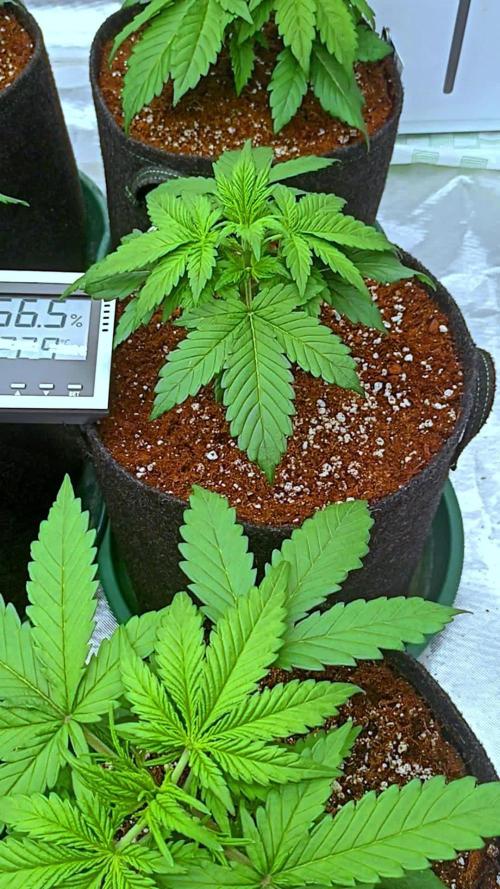
The third week is beginning, and the plants are showing healthy, steady growth. Soon I’ll be moving them into the vegetative stage, where they’ll start developing more vigorously. I’ve added more soil to the pots to give them better support and allow the roots to keep expanding properly. They’re already starting to release a noticeable scent, a good sign that they’re healthy and progressing well. The leaves have kept their deep green color, and the overall structure looks promising for a strong vegetative phase. I’m also starting to notice early signs of branching and an increase in the size of new leaves.🎅
Likes
12
Share
This week has been just keeping them happy/learning the needs of the grow room to keep a steady environment. The humidifiers are pushing hard to keep it at 65~70 so im sure once I bump the RH down next week It will be more manageable. I have to fill humidifier #1 once a day but have to keep a eye on #2. It picks up the slack but it runs out every few days. Will start feeding on Monday so the plant can take the days to start rooting in the new pots. If you live in the south Publix reusable bags are .99 and are great 5gl~ fabric pots. Will find bin to put in the bottom of tent to be able to water to run off but I have time for that.
Likes
15
Share
So another relatively quiet week for Cotton Candy Kush this week. Some minor LST adjustments as she grew, but she has recovered extremely well from her topping and is growing nicely. I love watching the time lapse seeing her leaves constantly changing position depending on the light cycle. I am not 100% sure why the one root grew sideways. I wonder if during one of my photo shoots if something got caught when I was putting her back in the pot. Its been this way for a while, and causing no issue so not overly worries. Once she gets into the Bloom tent, it will be even less of a concern. Not much change in height as I have been LSTing her, but I am good with that. Upcoming Plans - I expect with her growth to be topping her very soon again.
Likes
29
Share
@FishOil
Follow
This is a slow flowering strain, but things are progressing nonetheless. Plants have gracefully taken everything I've thrown at it and have presented no problems thus far.
Likes
15
Share
Almost there ..... 4 weeks to go... a little strange because I switched my super loud noisy ass metal 4 inch inline fan for a plastic 4 inch VORTEX brand inline fan and its great for being stealth but I noticed I developed a rust spore problem which is an air circulation issue I have my ph perfect and nutes dialed in I even started cleaning my roots with cannazyme its a dead roots nutrient that enhances the breakdown of old roots and keeps things regular. Now I am just dealing with strange orange colored rusty leaves but the bud development is great and stickier and stinkier than ever .... 4 weeks left for these baby's to swell up and puff out looking forward to this dry chop and trim then the final cure.....
Likes
3
Share
Stanno sempre meglio. Le mie Barney farm runtz ..
Likes
9
Share
KICKASS AUTO by KANNABIA Week #9 May 28th- June 4th Week #3 Flower This week she is doing great no issues being outside she has a nice short center balance that has helped her be a strong 💪 young lady outside!! Trichomes coverage looking good and buds looking 👍!! Stay Growing!!
Likes
12
Share
Esta por empezar el engorde final. Ya las flores estan casi formadas. La altura está al límite total. Uno o dos centímetros más y estaría en problemas de verdad. El engorde de muchas flores ya es notorio, pero creo que el uso de un bioestimulante que no es de primera línea, ha reducido el potencial de las plantas. De todos modos hasta no tener el resultado final no puedo afirmar nada. La solución de esta semana fue cargada con más pk booster para ver cómo funciona la linea de greenhouse en esta etapa. Suelo usar pk 13/15 de canna. Pero esta vez puse el que tenía. Seguiré actualizando. Día 31. Se nota mucho el engorde. Las hojas muestran pequeños signos de sobre fertilización, pero nada grave que no haya visto antes. Me suele pasar en esta semana en todos los cultivos en hidroponia. Pero las veces que ko me pasó, no tuve el engorde deseado. Por eso manejo mediciones de PPM superiores 1000. Se empieza a ver cuáles van a ser los cogollos más grandes, pero sigo con incertidumbre sobre cuanto más van a engordar. Estoy bastante conforme al momento. Hoy tuve contacto con plantas macho, pero me cambié toda la ropa antes de acercarme al indoor y le lavé. Además no sé si sumará, pero me rocío en alcohol cada vez que entro a casa, así que espero no tener problemas. Ya voy a ir preparando los esquejes para la próxima siembra. Quizá no logre sacar 10 de las madres que tengo. Pero quizá ponga menos y los haga crecer más tiempo y con bastante LST. Pero será en otro protecto. Por ahora espero que siga el engorde. Día 33. Ya el engorde es un hecho. Por el momento estoy bastante satisfecho. La solución se concentró demasiado así que tuve que agregar agua. Pero más allá de algunos signos de sobre fertilización mínimos y pasajeros en las hojas, la plantas se muestran saludables y firmes. Todavía sigo buscando la posibilidad de agregar overdrive la semana que viene. Todo está por verse. Ya puedo asegurar que va a haber una séptima semana de floración, sino debería empezar el lavado en 2 días, cosa que a la vista, sería muy apresurado. Así que seguiré esperando a ver las flores con los pistilos más secos. Entre tanto los tricomas ya están formados, pero recién van a empezar la maduración en unos días. No saco foto porque el celular no hace buen foco con la lupa, pero ya intentaré mas adelante. Día 35. Cierra la semana con una buena idea de lo que van a ser los cogollos. Según el calendario de la planta, debería empezar el lavado esta semana, ya que sería la última. Pero por la madurez de los tricomas, todavía le faltan entre 10 días y 2 semanas más. Así que se viene otra semana de sobrecarga de PK y voy a aumentar la dosis para aprovechar a medir el nivel de tolerancia de la planta a altos niveles producto. Al ser hidroponia y trabajar con el ambiente bastante controlado, confío en que voy a poder aplicar correctivos a tiempo, si empiezo a notar defasajes bruscos.
Likes
32
Share
@AsNoriu
Follow
Day 22. Girls back from few days ago transplantation stress. Leaves are still dark, but after today's watering I expect huge grow and loads of fresh green. Girls would need more light,but it is what it is ... Doubt that I will chop all old sooner than 4 weeks, so it will be huge challenge to keep them happy ... Most packed growing schedule, so I just jazz with the flow ... Just water all week. No feed, new pots are full of goodies, could easy overfeed and stunt them ... Happy Growing
Likes
10
Share
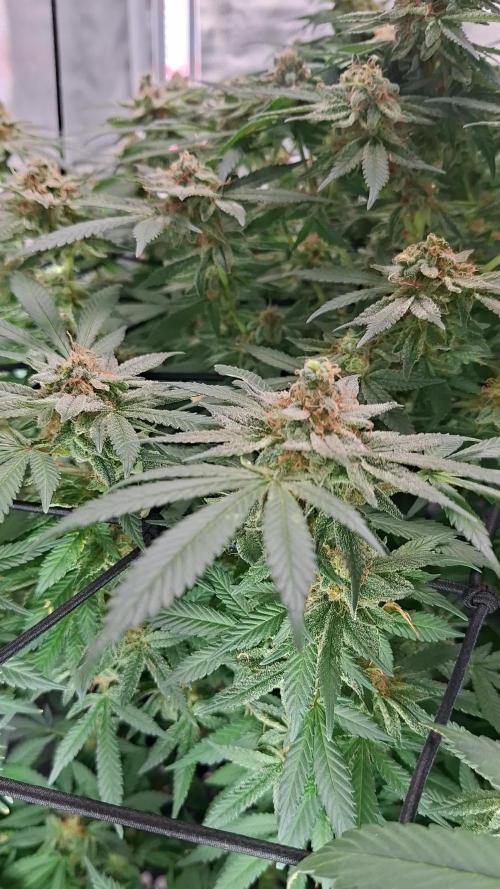
They have all exploded with pistils this week! Getting excited to see these babies swell up with flowers! I love this living soil tent, it just does so much better than individual pots 💪