


Likes
Comments
Share



Likes
39
Share


@J_diaz420
Follow
Realmente muy feliz con lo obtenido, 307g en 0.8me me parece genial, estas flores tienen un aroma genial entre el típico haze mezclado con cacao, un efecto muy agradable y confortable, rica al fumar y muy poco picante gracias al lavado de raíces con flawles finish 👌👨🌾🏻
Totalmente recomendable esta genética de royalqueenseeds muy agradecido por la oportunidad 👍👌👨🌾🏻

Likes
4
Share

@Hiperdobi
Follow
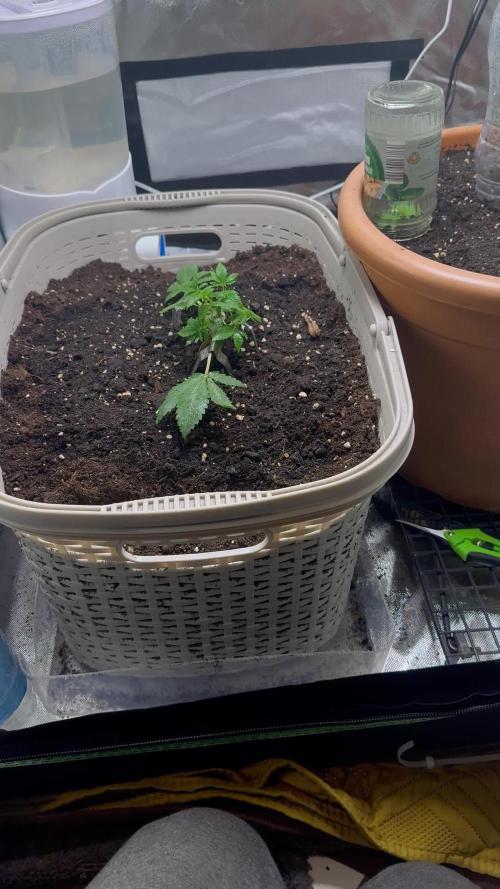
Hallo zusammen, wir sind gerade in den ersten Tag der vierten Woche gestartet und es läuft sehr gut.
Ich habe heute auch die Oberseite und die Seiten etwas abgeschnitten. ^_^(Bild 3.)
Er bekommt täglich 600 ml Wasser mit etwas Vitamin.


Likes
7
Share

@RockoCalenberg
Follow
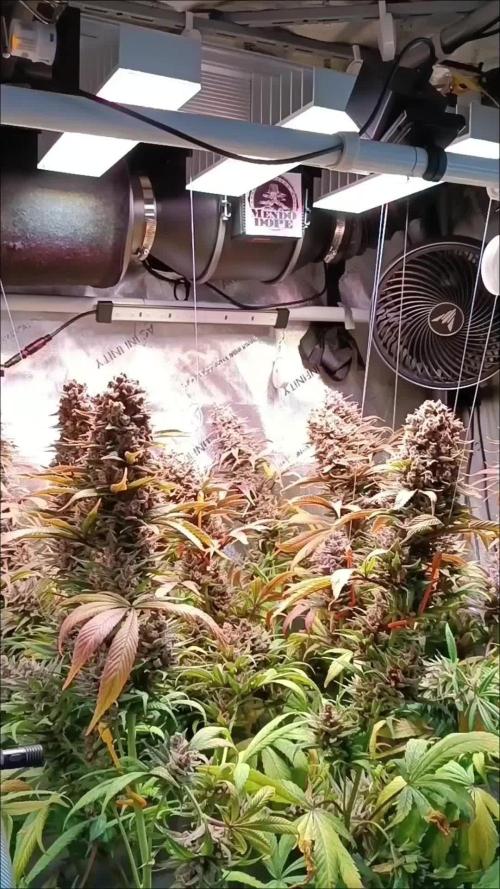
So nach 66 Tagen war es genug ! Es wurde geerntet. ✂️6️⃣6️⃣ ✅
Die trichome sind zwar immer noch nicht komplett milchig, aber die Dame zwittert wieder mehr und daher kann ich mit halb trüb auch gut leben. 😁
Mit der langen Reife hat sie auch Fuchsschwänze gebildet und sie ist mir insgesamt zu blättrig...
Likes
16
Share


@S1993
Follow
Buds starting to put weight on and plant has got quite frosty really surprised with how stocky she is!
Likes
1
Share


@PalmaGrow
Follow
19 - 25 noviembre
Se realiza amarre en brazos más altos poda de bajos y hojas al igual dóblanos estás dos ranas para generar estrés y emparejar con las demás

Likes
4
Share


@Coolbeanism
Follow
They popped up, I fed them some Iguana Juice grow, and am making sure they stay wet here at first. YouTube Grow Show Fast Buds Episode
https://youtu.be/jj7ZvAQepHM
Likes
27
Share


@ButterfliesLittleFarm
Follow
Hello Diary.
A new diary, a new beginning. In the fifth farm we have three residents again, two Haze Berry Automatic and Fat Banana Automatic, both strains from Royal Queen Seeds. 😍
I would like to thank the team from the Royal Queen Seeds who have recognized my efforts in keeping a diary and greatly support me in what I love. 🙏
I always try to make a balance between sativa and indica, since I do creative work, I am a big fan of sativa, although in the evening, when my obligations are over, I like to relax with indica. So this time I planted two Haze Berry Auto that are predominantly sativa and one Fat Banana which is more indica. 😵
WHY HAZE BERRY?
Haze Berry Automatic is the sativa-dominant successor to the legendary Haze Berry. Haze Berry Automatic inherited Haze Berry (Blue Dream’s) characteristic high. The sativa-dominant effects ramp up central nervous system activity and engage the mind. However, her flowers only contain a THC content of 13%. While this might seem comparatively low, it’s absolutely ideal for me. This makes it a great strain to use intermittently throughout the day. Haze Berry Automatic can be smoked in-between tasks or during a work break to produce a similar effect as a cup of coffee. It provides light stimulation and refreshes the mind for a more creative outlook.
LET'S START FIRST WITH THE FARM SET-UP:
Box - Secret Jardin DS120W 120x60x178
Lights - MIGRO 200+
Ventilation - Blauberg Turbo - E 100
Filter - Primaklima filter PK 100/125
Fan - Oscillating Koala Fan
Humidifier - Beurer LB 45
Soil - BIOBIZZ Light - Mix
Pot - 11L AirPot
Seed - Royal Queen Seed
Nutrition - BioBizz and RQS Organic nutrition
LET THE DIARY START OFFICIALLY:
14/09/2020
Planting. I prepared everything I needed for planting, cleaned the farm and changed the filter. I put Primaklima filter - PK 100/125. This time I decidet for AirPots, I also used them in the first two farms, BioBizz-Light Mix is already standard on my farm and Easy Boost and Easy Roots Mycorrhiza Mix from RQS as organic nutrition. Since the first farm I use only organic fertilizers and for now I have used BioBizz and RQS organic nutrition.
After I put the soil in the pot, I added 50g of Easy Boost Organic nutrition and mixed it well with the soil, after that I added 5g of Easy Roots Mycorrhiza Mix and also mixed everything once more.
I prepared 7 liters of water in which I regulated p.H with Plagron’s Lemon Kick, and soaked the soil well before making a hole in which I put the seed. Otherwise, the water would have pushed the seed much deeper into the ground.
After the planting is completed, they enter their new home. The temperature in the Box at that time was 26 degrees and the humidity was slightly below 60%.
I set the lights 35cm from the pots as Migro recommends.
14 - 17/09/2020
I sprayed the surface of the soil with water a couple of times to keep the soil moisture at the surface.
Also the humidity dropped so I put on a humidifier for a couple of days.
17/09/2020
The first Haze Berry has sprouted, and I'm still waiting for the second.
19/09/2020
The other Haze Berry didn’t germinate, so I soaked the soil with water again and put the seed back on. I hope it works out this time. This is the first time since I planted that my seed has not germinated.
Also the first Haze Berry got a liter of water with regulated p.H at 6.3
23/09/2020
The big day, the second Haze Berry sprouted the first one got watering. As for p.H. values, I always regulate, in my case I lower the value between 6.2 and 6.5. I removed the humidifier.
Temp / Humidity on the farm - 26 degrees and 57% humidity.
I would like to thank Grow Diaries for making germination week an option. I think that's a great thing. It will be interesting to follow the development of both Haze Berrys since the second one is a week late, but this time I will be photographing and filming just one plant in detail. See you next week.
Likes
4
Share


@FlowerPower559
Follow
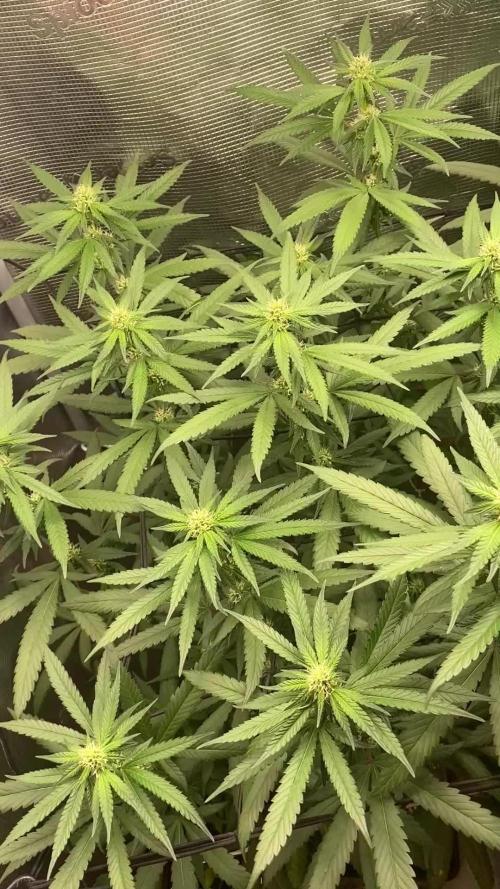
This week was busy.. feeding, training, defoliation, trying to figure out how I was going to handle the branches now that they're outside of the bag. This is what happens when you wing it. Worked out well though!
Likes
Comments
Share


Processing
Likes
8
Share


@Salgeezi
Follow
From the looks of it. I am in early stages of root rot. Plant is not growing as fast as it was at all. It can be a few things. Light penetration into the bucket. My water temps are around 70f. So I think that's okay. I had some extra mylar from a grow I did years ago. Cut pieces to go over the kids hopefully that helps.
I took out all additives besides CalMag. They were fouling the rez as usual. Dropping the Ph as usual. I think it's also the cause of the root rot. I have sprayed soaked with h202 and have added it to the reservoir after a cleaning and a water change. Looks a bit better.
I'm located in Canada and I cannot find hydroguard anywhere. Which kinda sucks. Any alternatives would be great. Thanks
Likes
7
Share


@Grisly
Follow
Harvest 2024
Total Hash: 102g
Total Kief: 95g
Total Flower: 3868g/138oz/8.6lb
Total Yield: 4065g/145oz/9lb/4kilo
———-/-////////—vs———-/////————/
Sugar Diesel #1: 117g
Sugar Diesel #2: 313g
White widow Clone: 14g
Dual OG:
112g
LA Affie North Field: 248g
Granddaddy Purple N: 63g
Black Raspberry Kush N: 210g
————————————————-
Total North: 1077g/38oz/2.5lb
————————///——/—————-/
Fruity Pebbles: 184g
Granddaddy Purp S H2: 54g
Granddaddy Purp S H1: 275g
Granddaddy Purp Total: 329g/12oz
Black Rasp Kush S H1: 160g
Black RaspKush S H3: 70g
Black Rasp Kush S H2: 511g
Black Rasp Kush S H4: 17g
Black Rasp Kush S: 758g/27oz
Blue Cheese S H1: 281g
Blue Cheese S H3: 83g
Blue Cheese S H2: 285g
Blue Cheese Total: 649g/23oz
Dr Grinspoon S H1: 485g
—————————————————-
Total South: 2405g/85oz/5.3lb
————————///——/—————-/
North Popcorn: 148g
BC Popcorn: 100g
GP Popcorn: 73g
BRK Popcorn: 65g
—————————————————-
Total Popcorn : 386g/14oz/0.9lb
————————///——/—————-/
Trim: 8lb
—————————————————
————————///——/—————-/


Likes
9
Share


@Doctor_Gonzo
Follow
-5/21//23 Start of Week
--Week 9/Flower 3
-5/21/23 (Day 64/Flower 15)
--Observations: still clustered, hard to see under the shade leaves
--Changes: started giving nutrients in waterings, added molasses to watering (today only)
--Comments: don't really know what it looks like under the canopy because of how clustered everything is. started giving nutrients in watering along with spraying twice daily, will stop spraying at the end of flower week 4. doing heavy defoliation at the end of this week, excited to see what it looks like under the canopy.
-5/27/23 (Day 70/Flower 21)
--Observations: large quantity of bud nodes revealed by defoliation
--Changes: heavy defoliation, repositioned some guiders
--Comments: this experimental grow style is doing far better than I expected. heavy defoliation revealed a sea of pre-flower beneath the canopy, far exceeding my expectations of what could not be seen before. moved some of the guiders to help with spacing of smaller branches so that everything get good lighting. sent is still mild and hard to distinguish from the lemon basil, should get stronger within the next few weeks.
-5/27/23 End of Week
Likes
5
Share


@Fefa128
Follow
More plant porn hehe... Not sure if that pollination was from the last week or the one before cutting. Either way this was the las week before chopping it down!

Likes
12
Share


@cookingwithninja
Follow
day 42 images are in last week, I can not count XD. bridal is stacking a lot of weight and is constantly shifting/leaning every morning, good things. I would chop any day but I will wait it out. water, tiny bit of humic and folvic to reduce chloromine, chlorine- air stones
day 45 took a few nugs off on day 42, dried for 3 days. Tried bridal and blackberry. As a heavy recreational, thc is up there! bridal felt like having a blindfold over your eyes somewhat sativa uplift but heavy weight feelings. Very good. Lasted as good as 30%'s. Dr. Thunder was also very nice, nug was smaller so mixed with blackberry to have a small j. Also feels very good indica. Both trials were chopped on week 6 day 1. Very pleased with the results. I was worried bridal was more sativa; which charasteristica I am not looking for. So I believe this is a very good heavy hitter run with 4 plants. I can chop any day, but I am waiting for pink paradise to finish seeds.
day45 took top nugs from bridal party, blackberry oreo bigstuff and dr. thunder. No touching pink paradise!!
day 46 can chop anytime just waiting on pink paradise seeds to finish, bridal party leaning more
day 47 bridal leaning hard from weight.
day 48 stacking, day 48 video

Likes
4
Share


@EileanDonanCastle
Follow
It’s been a long day potting these girls into there new home.
All is looking well. Little bit of heat stress but ime sure they will cope 🤞

Likes
5
Share


@Cousinrandy
Follow
flushing....ANXIETY...:)
well..sort of
just incredible how the ladies still develop in their last stage...; Humans could take an example
anyhow....almost everything milky..yet little amber...
patience my friends..patience 😅
Likes
36
Share


@ZigkGrow
Follow
ZigkGrow is back in the game😎
Hello to everyone guys. I hope everyone has been growing epic buds since the day I finished my first diary.
My first diary went pretty cool. I enjoyed a lot but knowing myself I knew that I had to learn more about growing cannabis to achieve higher levels and be okay with myself.
So Zigk after many hours of researching, smoking and having fun came up to this day with this diary. Hope everything goes well and what I've learned will bear fruit in this grow (literally😅)
Let's talk a little bit about my setup and the flashy "Automatic-Watering System" to shed some light in the tunnel.
I bought a tent 0.40x0.40x1.40cm so we are pretty tight here but I am hoping for a "one and good" plant. I am going to use for lighting the led panel from Spiderfarmer SF-1000, big upgrade compared to the 250w CFL I had back then.
I will be using coco coir in a 6lt airpot with high fertigation and a RTW/DTW hydroponic system. I've also got some pretty good meters. HM Digital PH-200 for pH and HM Digital COM-100 for EC. There is also a humidifier and a carbon filter from Airontek with a VKO 105m3/h exhaust fan.
So how does the Automatic-Watering System works and how do I achieve high fertigation with that :
There is a reservoir (blue box in my case) out of the tent where I keep my nutes mixed with water. Inside the reservoir is an airstone that provides oxygen and a submersible water pump connected to the pipe.
The water pump plug is connected to a timer which I set when to run and for how much time. When the pump is on is sending nutes to my plant and I can control the flow of it with a valve. Practically I dont have to water by hand and I can achieve high fertigation which means watering with nutes many times a day. My plan is to water 5 times a day.
Now is the time for the big question. Will this work and give me higher and better yields?
I am not going to explain the science behind this theory because I want to keep the diary clean and talking about this would need many rows of words. You can search it on internet tho and find many articles.
I am not capable of answering with confidence now and we will only be sure by watching the results. So let the time show us and have fun!😄
Likes
35
Share


@farahweed
Follow
#Day 123
#Week 6 flowering 💐
Oh my God, it's the 6th week of flowering
The smell of children is crazy.
This week I used advance hydroponics overdrive supplement at the rate of 2 mg/liter because it is really high quality.
Thank you for your comment🙏🙏🌷🌷


Likes
120
Share

@Hologram
Follow
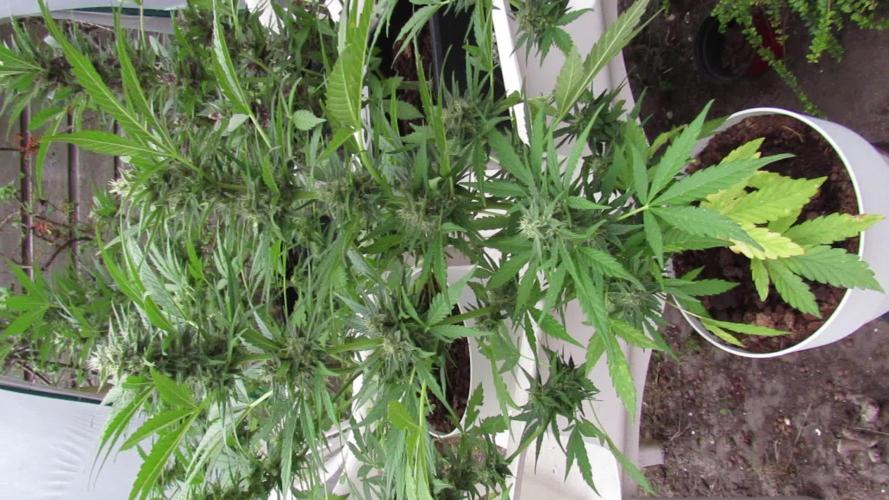
OK, im doing an update now becouse my breakup cake is going tranny!!(hermie)
I already have noiticed she was not growing as strong .. but u can blame that on anything , especially when growing outdoor..
but this morning i saw that she was g(r)oing 'bananas'!😢
I have put her aside from the rest (in the back of garden) but think gonna have to terminate her asap!..(and i will, right after this post👍)
The weed she will give will be filled with seeds and those seeds will be hermies too, so wothless..
and if i dont throw her away quick she can infect the rest.
So goodbye breakup cake..😢
who wants to eat a cake when they are breaking up anyway..😒 (just hiding my pain with lame humour 😳)
happy growing for all ✊
