The Grow Awards 2026 🏆 






Likes
Comments
Share
@Maximilian1234
Follow
Blütewoche 9:
Die Pflanzen sind am Limit, einzelne Buds werde. Einfach zu Schwert und rutschen aus dem Netz.
Dünger gibt es keinen mehr. Wahnsinn was sich hier die letzten 9 Wochen entwickelt hat.
Zu den Lampen von Sanlight gibt es nicht zu sagen, bin absolut zufrieden.
Rückblickend lässt sich sagen das die Skywalker Haze eine sehr einfach anzubauende Gentik der alten Schule ist. Der Geruch ist lecker aber kein völliger Wahnsinn. Da hat mir die Blue Zushi erstmal die Nase verdorben.
Nächste Woche wird geerntet 😙

Likes
31
Share
@Growi
Follow
Tag 92 ,
Noch 2-3 wenige Wochen und die Tage der Ladys sollten gezählt sein . 😍🙌👏

Likes
1
Share


Likes
59
Share
@Jsammy09
Follow
9/9 (Day 84)- Things are wrapping up I believe! Have continued to mainly just monitor and keeping the res topped with just the full tilt. Monday we be going RO water ph to 5.8 until finish. The leaves are starting to change to a yellow and the front and dive have been packing on! Looking forward to the finish and have ordered a rosin press so excited for it all and ready and looking forward to improving and learning from my mistakes this run.
9/11 (Day 86)- Did my final flush this morning and now just running RO water to flush. Just hoping I am not flushing too early. Everything is looking good. Dry tent is set up and ready to roll. I am able to get my area down to around 64. I am actually moving my set up after these girls finish to the room with my dry tent and have a better work area! I’m excited for the next run already!
As always any tips or recommendations always appreciated!

Likes
11
Share
@Ninjabuds
Follow
I started with three Blackberry Moon Rock seeds, and two of them sprouted – awesome! These girls are loving life, reaching for the sky as the tallest plants in my tent. They're already about six inches tall, and they're taking up all the nutrients very well without any nute burn.
Both blackberry moonrocks plants are very similar height although they have very different looks to them. The one of the 2 definitely going ti strech alot more than the other. One has internodes about 1 cm apart rn and the other is about 3/4 to 1 inch between nodes.
Happy late turkey day grow diaries world!!!! It's now day 24 from seed for all the seedlings I have going. The past few days the plants have really started to take off. There roots have really started to dig in. Every other water I am still giving 2ml per gal of fox farm grow big. I keep having to tell myself not to add any more nutes other than that. I don't want to fry my plants but I also want they to start jumping. I'm quite excited for the coming week, I think the next 7 days or so is when the plant really starts to transform and look more like a pot plant than just some random little green thing.
A few days ago I decided to move the plants from under my 55w cheep amazon light to under my spider farmer 100w newer version light with the good leds in it. The plants will hopefully be ready to up pot them here soon and get them in the large tent.
Sometimes when growing multiple different strains it can be really hard to balance giving to much or to little light. You don't want the faster growing plants to get to stretched out waiting on the slower plants to catch up
I spend Thanksgiving day morning transplanting the plants into 2gal pots. I am useing spme promix potting soil it's my 1st time tring this soil. It is actually doing really well the roots were all white and nice looking. I think next time I'm going to add some worm casting, kelp, granular mycos, and a little bit extra perlite. I just didn't have the money with christmas coming to splurge for all the extra stuff. I got rid of 2 plants 1 of the bubble og and 1 skunk apple runtz. There is only room for 10 pots in the 2x4 tent. I will peob only bring 8 of them to flower, always good to have back ups. Yesterday I also stuck the plants back under the 500w medicgrow mini sun 2 in my 2x4 tent. They did great under it the 2nd half the day I was happy they didn't get stressed. I had put them under that light a little early about 10 days ago or so. I am expecting in a week these plants will ge going crazy with growth

Likes
49
Share
@masterofsmeagol
Follow
6/23 Due To The Two 8 Day weeks this week will only consist of five days to get me back on track. SEE LAST WEEK FOR DETAILS. I DID ANOTHER EIGHT DAY WEEK. I'LL DO THIS WEEK AS SIX DAYS. THAT WAY IM BACK ON SCHEDULE. WATERED 6/22. WENT BACK AT NIGHTCAND WATERED ANOTHER GALLON WITH 1/3 TSP Armor Si. I mixed the solution with kelp you kelp me but I dumped it out. I've mixed silica with other nutes before but I had read something earlier about bioavailability issues and I didn't want to risk it. My plants are the healthiest I've ever grown. I'm considering transplanting the large 10th planet that I'm light depping. I also need to develop my ipm and my nute schedule. Still gonna have to keep an eye onvthe water situation. Luckily I have a buddy in my corner that's co tinualkt Bern a great help.
WENT BACK OVER AROUND NOON. BEAUTIFUL OUTSIDE AND THE PLANTS WERE LOVING THIS SUN. I DEFOLIATED SOME BURNED LEAVES AND MIXED A SOLUTION IF KELP ME KELP YOU THAT I PLAN TO FEED TO THE GARDEN TODAY. IM HAPPY WITH HOW THINGS ARE GOING. WE HAVE SOME RAIN AND THINDERSTORMS COMING. I NEED TO GET MY IPM UP AND RUNNING AND THE NUTES ONLINE. I ALSO NEED TO DECIDE IF IM GOING TO TRANSPLANT THE LIGHT DEP 10th PLANET. Went back over to put the girls to bed at six and if was still 90 degrees. The water from yesterday had dissipated. The tops were dust dry. I mixed two gallons of kelp you kelp me and fed it to the garden. Afterwards I pointed qbd found a couple plants that were more open to the wind were a little lighter. I know tomorrow will be very hot. Maybe quarter inch of rain. However after that it will rain (showers) off and on for days. I wanted to make sure the girls had what the needed to make it through tjis heat wave until they get that rain. I had another gallon mixed up and I'm thinking I should've given it to them. Oh well. I'd rather underwater than overwater any day. I did notice a burnt top on the plant furthest from the tarp that the sun JUST BARELY TOUCHES when the rest are in shade. I'll just raise the tarp a little. These are tiny problems. Can't upload video until tomorrow.
6/24 Good thing u gave the plants that water. I know it wasn't much but we didn't get any rain. Suppised to get a qtr in today and another qtr in tomorrow. Then rain a couple more days. It's working our really good for my watering schedule lol. Yesterday the girls got there first dose of a bottled nute. They got two gallons of kelp me kelp you (1/3 tsp per gallon) and another gallon of just phed water. I was going to do another gallon but held off due to the threat of syring rain. Didn't get it bur it looks like the plants loved the kelp. It had reached 90 yesterday. They look better today. It's 70 at 9 today. I LST the 10th planet in the 3 gallon. It's getting huge. I should start a separate diary for those three light dep plants. Its cool as hell watching this. One of the purple punches is flowering pretty good. I probably should start another diary for them. I'll be starting to feed my plants soon. Wondering if I should pinch plants again. TUCKED THE LITTLE GIRLS IN AT SIX AND SHOT A VIDEO AND TOOK SOME PUCTURES. PLANTS LOOKED PHENOMINAL! GOT HOME AND AROUND SEVEN IT JUST STARTED RORREBTIAL DOWNPOURS! THE TYPE OF RAIN THAT BREAKS STEMS. I SHOULDVE PUT MY OTHET TARP UP BUT I DIDNT. I WISH I HAD. IM A LITTLE NERVOUS. I KNOW THESE GIRLS ARE STRONG THOUGH! TOMORROW. ILL ROLL THE RARP UP AND SECURE THE BOTTOM FOR FAST ACCESS. IM ALSO GOING TO KOOK INTO FINDING A TOP FOR MY CAGE I CAN USE IN INCLIMENT WEATHER.
6/25 That little qtr in of rain we were supposed to get turned into torrential downpours and high winds. Luckily no REAL damage. If you watch the video you'll see what I mean. I'm going to havecto be cognizant moving forward. Noticed a few chunks from leaves butvplants are still healthy. I'm surprised how well these girls withstood this storm. They are certainly resilient. The 2 purple punch 1 10th planet that I'm light depping are flowering nicely now. They missed all the commotion from the storm as they were inside. It's smelling good. I'm happy.
6/26 It's what a friend would say is "maineing") out. That mistcthe plants love. I'm surprised the plants are doing as good as they have been considering the wind. Will be adding nutes soon. Need to add extra supports too. Light dep
6/27 Brief periods or torrential downpours. Light depped 3 gallon 0lants are under an overhanfcwhete the hatsxrain can't hurt them but they still get sun. They are really starting to flower now! I'm going to begin feeding with a base nute and a flower nute I think. I'm thinking about giving the light dep some open sesame or something similar. I need to set up a nute program soon but the plants ALL look so healthy! And it's been raining! I've only watered like once or twice since they've been in the big pots. I've seen zero pests aside from a chunk missing from a grasshopper. Usually by now I'd have battled half a dozen things and be battling another half dozen. However I was posing from clones. These are seeds and boy don't I see the difference!


Likes
20
Share
@Tracie67
Follow
Having a pretty quiet week. Still have some yellowing of the lower leaves but the nutrients have relatively low levels of nitrogen plus the plant is in mid/late flower so it's to be somewhat expected. Otherwise, she's getting thicker, stickier and smellier every day.
Likes
16
Share
@Legionofroots
Follow
A friend gave me a clone of his Black Domina. First week i added the recommended dose for a clone of the nectar line. I got a little nute burn so i flushed it a little with ph to 6,3 water.
Looking a little better. We will see what happens in the next few days.
Pictures are about a day and a half after i gave it the recommended nute dose for clones.

Likes
7
Share
@Eddjack
Follow
Come è questa settimana ?....non saprei sembra che si sia fermata ho fatto troppi errori ripartiremo da capo tra qualche giorno con qualche altro seme intanto vediamo come finirà questo ciclo. poca ma buona .
Dajeforte growers.
Likes
6
Share
@Ninjabuds
Follow
This Permanent Marker is a smaller plant, only about 4 inches tall. But what it lacks in size, it makes up for in those super distinct wide leaves that make it a standout. While it's a steady grower, it does have a big appetite, always seeming to need more nutrients.
The other Permanent Marker plant is also around 4 inches, but it's growing much faster than the other one. Its super skinny, pointy leaves are what really make it stand out from the rest. At 1st I thought this plant was going to be a dud but is starting to out pace the other plant.
Happy late turkey day grow diaries world!!!! It's now day 24 from seed for all the seedlings I have going. The past few days the plants have really started to take off. There roots have really started to dig in. Every other water I am still giving 2ml per gal of fox farm grow big. I keep having to tell myself not to add any more nutes other than that. I don't want to fry my plants but I also want they to start jumping. I'm quite excited for the coming week, I think the next 7 days or so is when the plant really starts to transform and look more like a pot plant than just some random little green thing.
A few days ago I decided to move the plants from under my 55w cheep amazon light to under my spider farmer 100w newer version light with the good leds in it. The plants will hopefully be ready to up pot them here soon and get them in the large tent.
Sometimes when growing multiple different strains it can be really hard to balance giving to much or to little light. You don't want the faster growing plants to get to stretched out waiting on the slower plants to catch up
I spend Thanksgiving day morning transplanting the plants into 2gal pots. I am useing spme promix potting soil it's my 1st time tring this soil. It is actually doing really well the roots were all white and nice looking. I think next time I'm going to add some worm casting, kelp, granular mycos, and a little bit extra perlite. I just didn't have the money with christmas coming to splurge for all the extra stuff. I got rid of 2 plants 1 of the bubble og and 1 skunk apple runtz. There is only room for 10 pots in the 2x4 tent. I will peob only bring 8 of them to flower, always good to have back ups. Yesterday I also stuck the plants back under the 500w medicgrow mini sun 2 in my 2x4 tent. They did great under it the 2nd half the day I was happy they didn't get stressed. I had put them under that light a little early about 10 days ago or so. I am expecting in a week these plants will ge going crazy with growth


Likes
17
Share
@RoyColt
Follow
Always R.O Water
Watering the plant 3 times for per week
1st Watering with nutriens. (750 ppm) (23.03.2023) 4 liter
2st Watering with nutriens. (750 ppm)
3st Watering with only R.O water & CalMag. (300 ppm)
1000 ppfd
Likes
3
Share
@mistaminista420
Follow
I really waited long to cut away the last leave as I thought it would maybe help the plant to still grow a little, but no no, she didn’t grow much more.

Likes
25
Share
@EBxAH
Follow
Really late update from last week, lol. Had a slight issue with trying to bottom feed but other than that it went well.
Happy Growing Everyone
✌️❤️😁🍀🎶👽
EB

Likes
3
Share
@Chubbs
Follow
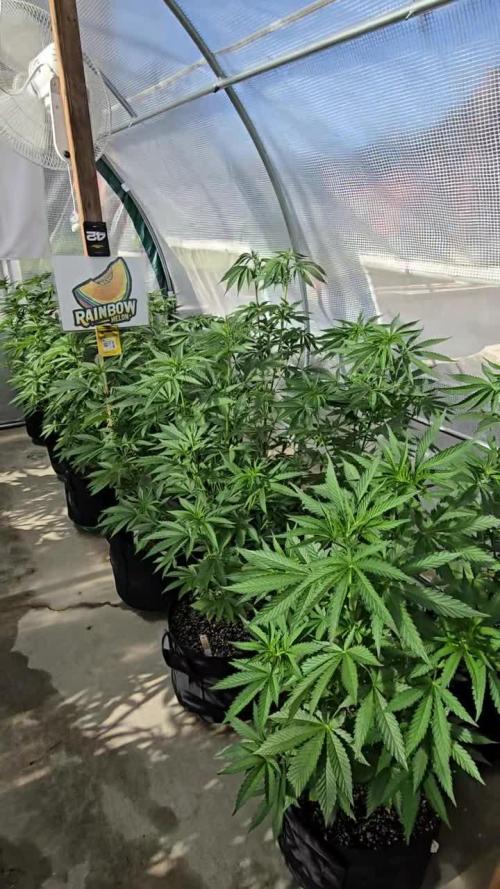
420Fastbuds-Week 6
What up, fam. Weekly update on the Photoperiod Femenized strains. GorillaMelon,RainbowMelon,
LemonManderian,LemonPaya,PapayaSherbet, and some FastFlowering GG4/Sherbet.
For just putting them outdoors 3 weeks ago, they've adjusted to the heat like a dream mid 90's and tripled in size. To think there's probably 4 more weeks of veg. These are going to get big. I might have to raise up the greenhouse or make it a convertible. I'm still just feeding well water, probably 2 liters, each straight from the hose daily. All in all Happy Growing
Likes
56
Share
@Tropicannibis_Todd
Follow
👉Alrighty Then👈
👉Cherry Punch F1👈 week 6 of flower
We had some real nice growth this , had to do a little leaf management👈 We be in full flower mode .....
Everything is looking good 👍Having issues due to using my well water , it's hard so I'm having slight issues but I am on it .....
So ive up'd the nutrients to accommodate pre flower .....
Soil by Promix
Nutrients by Cronks
Lights by MarsHydro.ca FC4800 X UR45 X Adlite Deep Red And Blue
Tent 4x4x6.5 & Equipment by MarsHydro.ca
High reflectivity inner mylar
Thick Oxford fabric
Smooth heavy duty zipper
Sturdy metal frame
Zipper blackout cloth
Good anti light leakage performance
The 6in Inline kicks ass moves alot of air
●Blue Light Effect:
Blue light shortens internodes, resulting in shorter, stronger plants, ideal for supporting fruit development later. During vegetative growth, blue light promotes lateral branch development effectively.
Well this should be fun 🙃
Thanks to all my growmies out there for stopping by its much appreciated 👈
👉Happy Growing👈

Likes
16
Share
@420DeepGrow
Follow
Gracias al equipo de Sweet Seeds, Marshydro, XpertNutrients y Trolmaster, sin ellos esto no sería posible.
💐🍁: Big Devil Fast Version:
Atendiendo a las peticiones de nuestros amigos y clientes, presentamos la versión feminizada y fotodependiente de nuestra apreciada variedad Big Devil Auto (SWS15).
Para el desarrollo de esta variedad utilizamos nuestras mejores cepas seleccionadas de Big Devil Auto. Hemos eliminado el carácter autofloreciente de la Big Devil Auto hibridando estas cepas seleccionadas con un clon élite de características muy semejantes a la Big Devil Auto original.
El resultado es una planta muy vigorosa, de gran porte y de muy alta producción, con cogollos muy densos y repletos de resina. Desarrolla un fuerte tallo principal y largas ramas laterales. Conserva el aroma y sabor de nuestra Big Devil Auto original, muy dulce e inciensado.
💡TS-3000 + TS-1000: se usaran dos de las lámparas de la serie TS de Marshydro, para cubrir todas las necesidades de las plantas durante el ciclo de cultivo, uso las dos lámparas en floracion para llegar a toda la carpa de 1.50 x 1.50 x 1.80.
https://marshydro.eu/products/mars-hydro-ts-3000-led-grow-light/
🏠 : Marshydro 1.50 x 1.50 x 1.80, carpa 100% estanca con ventanas laterales para llegar a todos los lugares durante el grow
https://marshydro.eu/products/diy-150x150x200cm-grow-tent-kit
🌬️💨 Marshydro 6inch + filtro carbon para evitar olores indeseables.
https://marshydro.eu/products/ifresh-smart-6inch-filter-kits/
💻 Trolmaster Tent-X TCS-1 como controlador de luz, optimiza tu cultivo con la última tecnología del mercado, desde donde puedes controlar todos los parametros.
https://www.trolmaster.com/Products/Details/TCS-1
🍣🍦🌴 Xpert Nutrients es una empresa especializada en la producción y comercialización de fertilizantes líquidos y tierras, que garantizan excelentes cosechas y un crecimiento activo para sus plantas durante todas las fases de cultivo.
Consigue aqui tus Nutrientes:
https://xpertnutrients.com/es/shop/
📆 Semana 1:
Ha sido una buena semana, ella ha dado otro gran cambio en su lugar definitivo 😎.
La carpa está ocupada al 75% y comienza una floracion explosiva gracias a @Marshydro y @Xpertnutrients y @Trolmaster con esta gran genética 💪.
A partir de ahora se riega manualmente con las dosis recomendadas por el fabricante.

Likes
4
Share